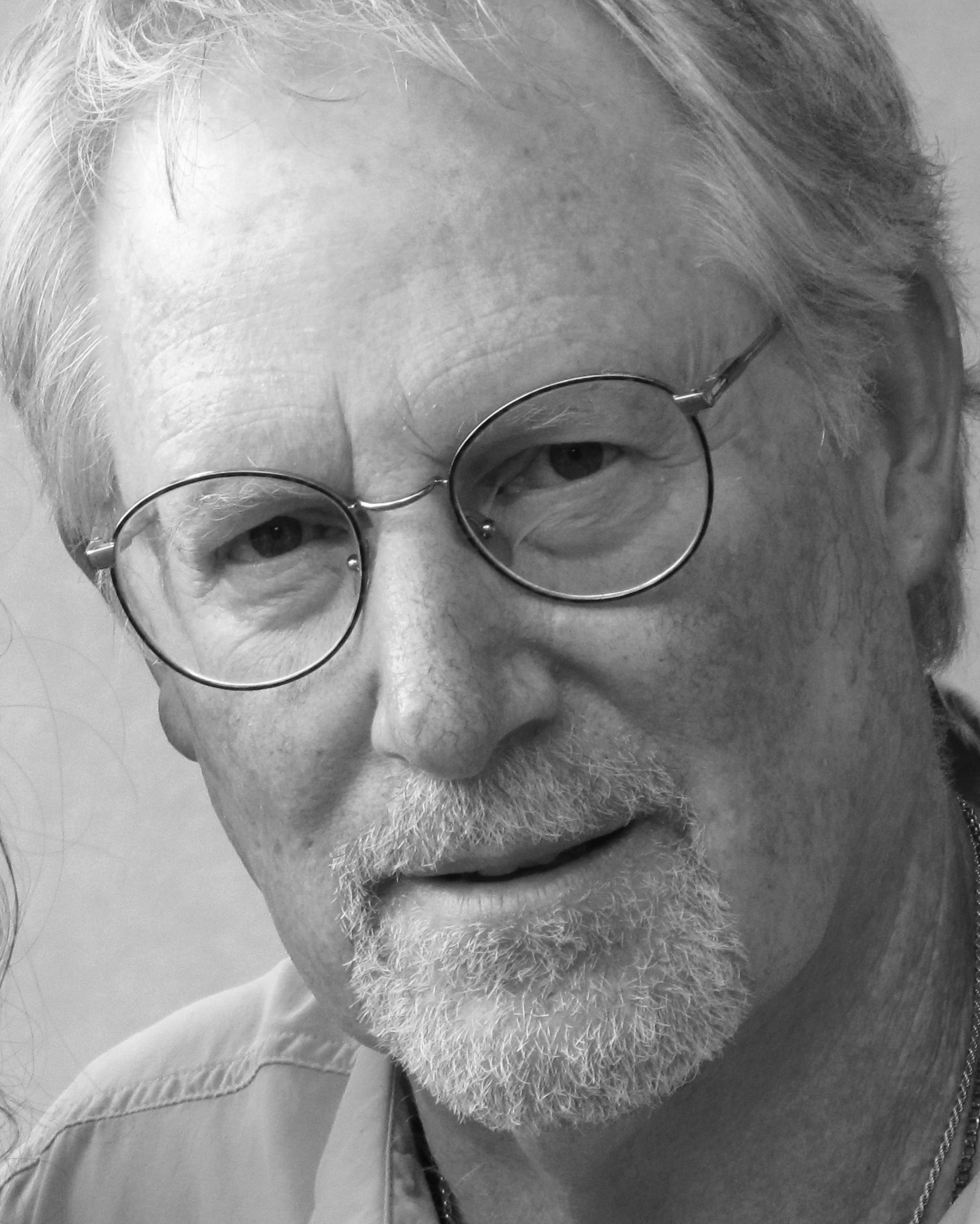
Contributor Spotlight: Heather Swan

September 26th, 2017

Heather Swan author photoHeather Swan’s piece “Liberty” appears in Midwestern Gothic‘s Summer 2017 issue, out now.

What’s your connection to the Midwest, and how has the region influenced your writing?

Although I have lived on both coasts and in Colorado, and, for a while, Nepal, much of my life has happened in the Midwest. My work is threaded with aspects of the Midwestern landscape––what light does to fields at different times of the day, of the year, which birds are singing, the drama of the harsh winters, the ecstasy of seeing a crocus emerging from the snow in spring…

What do you think is the most compelling aspect of the Midwest?

It’s always funny to me when I hear someone say that they find the Midwest to be lacking in natural beauty. While we don’t have mountains or oceans, we have undulating hills, gorgeous lakes of many sizes, prairies, forests, bogs, fens, drumlins, creeks, valleys full of Queen Anne’s lace and Black-eyed Susans…so much understated beauty, which I feel we need to work to protect.

How do your experiences or memories of specific places—such as where you grew up, or a place you’ve visited that you can’t get out of your head—play a role in your writing?

There are many places, and specific times, from my childhood that inform who I am in ways I can’t even comprehend, and I know that I am probably always writing to try to figure those things out. One example would be a barn we lived in with my mother when we couldn’t afford an apartment. We put hats on at night because there were so many bats living in there with us, and my mother didn’t want them to get caught in our curly hair. She named all of the insects and animals. Any bat was called “Angel” and the wasps were all called “Winthrop”…She did not want the nonhumans to be something separate or frightening. My identity has been shifted by that time and place, certainly. But more generally, I would say that the prairies and the woods of the midwest are where I feel most centered and connected, and where much of my writing happens.

Discuss your writing process — inspirations, ideal environments, how you deal with writer’s block.

I think I write around an idea or a question for a long time with poems which approach understanding it from a variety of perspectives. And the way I enter those poems is always a surprise. Like being on a treasure hunt and finding some clue as you’re walking around in your day and then thinking: Oh! That’s part of it. And then I write into that unexpected clue to learn what it has to offer, what part of the mystery it’s holding.

How can you tell when a piece of writing is finished?

I think as a poem begins, however it begins, with an image or a question or an ache, almost immediately it creates its own parameters which dictate form and rhythm and diction. My own practice is to try to figure those out and then fiddle within that set of guidelines that the poem demands until it seems to be doing what it set out to do. And some poems stay unresolved for a long time. It requires both attention and distance, I think, to get it. I feel really lucky when a poem finally sounds unified and compete.

Who is your favorite author (fiction writer or poet), and what draws you to their work?

Hmmm…such a hard question, a bit like asking painters to name their favorite color maybe! I will say that one writer who has had a huge influence on me is Jane Hirshfield. When I discovered her spare, beautiful poems, years ago now, they spoke to me of the honest nuances of being human in ways that other poets had not. In person, she is generous, fully present, and wise as well. More recently, Ross Gay’s work has been crucial to me, as it as it so elegantly encapsulates both the great suffering and the miraculous beauty of being alive in our human bodies.

What’s next for you?

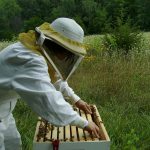
I am just finishing up two poetry manuscripts. One of them deals primarily with the relationship we (both human and nonhuman beings) have with pesticides. As I wrote my nonfiction book about honeybees, I became painfully aware of how many chemicals we interact with on a daily basis. I also continue to write nonfiction about environmental and other issues that we face in our current historical moment.

Where can we find more information about you?

My book Where Honeybees Thrive is forthcoming from Penn State Press in October, and I also have work at Edge Effects and other online and print journals.

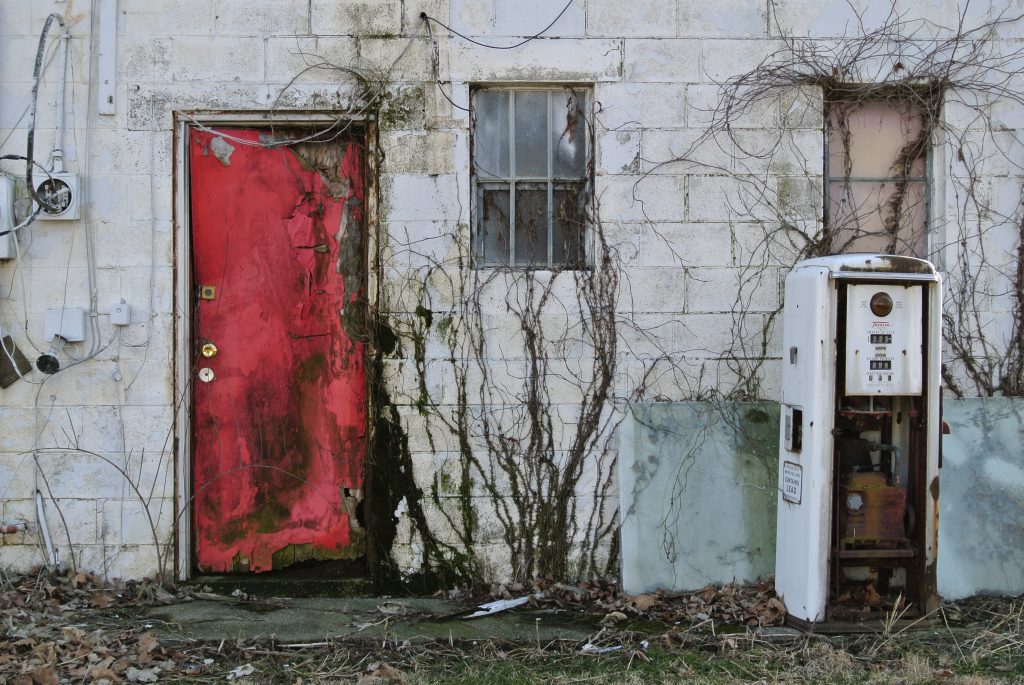
Midwest in Photos: Red Door

“He liked hearing voices attached to different lives, imagining the view of earth from their front door.” – Tyler Barton, “Boots on the Ground,” Midwestern Gothic Winter 2017.

Photo by: David Thompson

|

No Comments

|

Interview: John Smolens

John Smolens Author HeadshotMidwestern Gothic staffer Audrey Meyers talked with author John Smolens about his novel Wolf’s Mouth, writing from the point of view of the outsider, connecting imagination with research, and more.

**

Audrey Meyers: What’s your connection to the Midwest? How has living in Michigan impacted your writing?

John Smolens: My Russian and Irish ancestors came to the United States under dire circumstances; I’m the product of that great American immigration story, and fortunate to have lived in various parts of the country, never having to move because of my religion (as in the case of my Jewish grandfather’s family) or my farm was seized by the British army (as in the case of my Irish grandmother’s family). Where you come from is important; where you go is, too. I was born in New York, raised in Greater Boston, and at the age of 32 attended the Writers’ Workshop at the University of Iowa. In 1985 I began teaching at Michigan State University, and have lived in Michigan ever since. So I’ve now spent more than half of my life in the Midwest.

AM: What is interesting about the Upper Peninsula and how do you capture this in your writing?

JS: Everything. I’m not sure I do capture the U.P. in my writing. Certainly not all of it. I don’t know that anyone can. It’s not just that it’s “big” in the geographical sense; conceptually, it’s too mercurial to grasp. Sometimes a book can offer glimpses of this place, and I hope mine does for some people.

AM: Since Wolf’s Mouth takes place in the mid-20th century, how do you make historical accounts relevant to the modern reader?

JS: It depends on the reader, really. The novel spans nearly a half century, beginning in 1944 and ending in 1991. While writing the book I didn’t think that I was consciously trying to make it “relevant”; but I hoped it would be a fairly accurate portrait of the second half of the 20th century. The narrator, Francesco Giuseppe Verdi (who later in the story changes his name to Frank Green) is born in 1919, which is the year my father was born. I did this so that as Francesco’s story unfolds, his age in a given year is the same as my father’s. It made it easier for me to imagine Francesco, say, as a man in his mid-thirties in 1956.
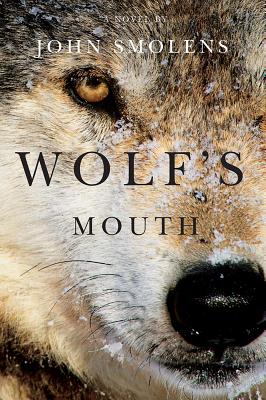
Wolf's Mouth book cover by John Smolens

AM: What inspired you to write Wolf’s Mouth from the perspective of a foreigner in Michigan during WWII?

JS: A lot of stories and novels are told from the point of view of the outsider, as well as the doppelgänger. Francesco/Frank is, to a degree, both. Working through a perspective of unfamiliarity seemed essential to this novel. When I began reading about the POW camps that were here in the Upper Peninsula, the initial news stories said that the majority of the imprisoned soldiers were German. I’ve never been to Germany, but I have taught in Italy, and have visited the country seven or eight times since spending a half year there in 2003. I don’t know that I could have written the book from the perspective of a German soldier. But Italian, it was worth trying. Furthermore, the tensions that arise in the POW camp at Au Train (which is about 30 miles from Marquette, where I live) aren’t really between the prisoners and their American guards, but between the prisoners themselves.

It was interesting that the Nazis, whom their American guards often called “true believers,” took control of the camps. They were in the minority; many German soldiers, and certainly the men from other countries, were not ardent followers of Hitler. But the “true believers” were adamant, and they utilized threats and intimidation. There were instances where prisoners were injured and in some cases killed. In one camp, a soldier who had developed an appreciation for American jazz was ordered to stop listening to jazz recordings; when he refused, his ears were cut off. For the most part, the American guards allowed the prisoners to run the daily operation of the camps, provided that they performed the work that was expected of them. In the U.P. camps, this meant cutting wood for pulp production. Wolf’s Mouth is told from the point of view of an Italian officer, who is both an outsider in America, and also in the eyes of the ranking German officer in the camp, who is adamant that all the prisoners adhere to Nazi principles.

AM: Through this unique point of view, did Michigan as a whole change for you? In other words, what did you notice or see differently about the Midwest while describing it in Wolf’s Mouth? Further, how are the themes of nature and regionality utilized in your novel?

JS: The first portion of the novel, Francesco is in the camp at Au Train, but after he escapes he remains in Michigan after the war. A small percentage of POWs did this; out of about 425,000 men who were brought to the camps in America (there were at least 170 camps throughout the country), approximately 2,200 men were somehow unaccounted for at the end of the war. Some fell through the bureaucratic cracks, I suppose, but a good number of them managed to remain in the United States; they changed their identities, and many lived for years here.

Francesco/Frank is a chameleon, and an astute observer. In order to survive in America, he learns to speak and look and behave like an American. By Part Three of the novel, he’s living in Detroit in the mid-fifties; he’s married, has a small business, and he’s a guy who after work sits at a bar, drinking Stroh’s, listening to the Tigers game on the radio. While writing this portion of the novel, along with reading news accounts, I gathered images from the period. Who called the Tigers games on the radio broadcasts in ’56? Who was in their bullpen? What were the popular songs that year? One of the hits in ’56 was “Que Serà Serà,” sung by Doris Day in Alfred Hitchcock’s movie The Man Who Knew Too Much. (Though the phrase is supposed to be Italian, meaning “Whatever will be will be,” the first word Che was changed to Que, because someone in Hollywood felt that an American audience was more familiar with Spanish.) I studied clothing, shoes, and cars. Because Frank has a small shop that sells lampshades (both retail and wholesale), I researched lamp shades. The name of his shop is Made in the Shade.

AM: What did you learn about yourself as a writer when creating a Wolf’s Mouth?

JS: I’m not sure how to answer that. It suggests that I take some kind of personal lesson or insight from my own books. Oddly (perhaps), while writing this book (and others) I’m of two minds (at least two, actually): I’m thoroughly steeped in the characters, to the point that they and the world they inhabit seem utterly real to me; and at the same time I feel quite distant from the whole enterprise. I don’t know if this is a matter of my own survival, or what. I do know I’ve read other novelist say how once they’ve finished a novel it’s like it’s not even theirs. I know what they mean.

AM: What genre do you think Wolf’s Mouth falls under? Why?

JS: I’m not fond of the notion that novels have to fit in a particular genre. Perhaps it’s easier to market them, but most novels contain elements we associate with several categories. Some—not all—of my books I suppose are considered “historical fiction,” simply because they are set in the past: the first months of the American Revolutions in 1775; an epidemic of a deadly fever in 1793; anarchism and political assassination in 1901; JFK’s assassination (1963) and the Salem witch trials (1692). Wolf’s Mouth is narrated by a man who is born in 1919, and it concludes when he’s an elderly man in 1991. Where does history give way to contemporary? For me, the fifties are contemporary; for a younger reader, the fifties is ancient history. I subscribe to the notion that the past and present are ineluctably linked.

AM: What research or references did you depend on for this book? How did implementing historical facts affect your writing, and were there any obstacles? How did you overcome them?

JS: I couldn’t write a book like Wolf’s Mouth without reading history, incorporating elements that I found in newspaper articles, interviews, books, etc. Some years ago, there was a novel (the name of which I forget) that won the Pulitzer Prize; it was set in a South American country (which one, I also forget), and when the author said in an interview that she had never visited that country there followed considerable criticism. Though I understand why there was such an outcry, the fact is she has the right to write about a place she’s never visited. A novel is, after all, considered a work of the imagination (“imaginative writing” is sometimes treated as an oxymoron, particularly by people with PhDs in literature). When I wrote about the American Revolution in The Schoolmaster’s Daughter, which was based on real events and, in some cases, people who lived in Boston in 1775, it was an exercise in the imaginary, regardless of how much research I did (and it was considerable). We can’t go back and visit the Battle of Bunker Hill. However, for me, attempting to find out what people were like during a given historical period is essential to writing a novel about that period. Diaries, letters, histories, articles, maps (I love maps)—I want to absorb as much as I can before I begin a book, and the search for material continues while I’m writing.

AM: What themes of Wolf’s Mouth resonated with you the most and why?

JS: One theme, really: survival. Jim Harrison thought all novels are about love, death. And perhaps food. I think some, including Wolf’s Mouth, are about survival.

AM: How do you make a tale an “American tale?”

JS: That’s an intriguing question. It’s not as easy as simply setting a novel in America. Some works of fiction have been set in other parts of the world and yet are truly American—which could also be said for British novels, maybe because England was an empire for generations. Think of E. M. Forester’s A Passage to India. As much as I love America, I don’t believe I’ll ever reach a point where I can say I know America. Perhaps that’s why I (and others) write about it? Actually, the older I get, the less I feel I know or understand who and what Americans are, and to pursue that line of thinking one would have to enter into an extended discussion of our current political and culture climate, and at the moment, as we are wont to say, I’m not going there.

Over the years, I read so many works of fiction with my students. William Carlos Williams’s short story “The Use of Force” and Shirley Jackson’s “The Lottery” are truly American stories. However, The Handmaid’s Tale, which is set in Cambridge, Massachusetts, and written by Margaret Atwood, who happens to be Canadian, also seems very much an American tale (though not exclusively so). E. L. Doctorow’s Ragtime was on my syllabus several times. One might say that it’s an American novel, yet there is a palpable “foreignness” about it. So there is no easy answer here, and justly so. If we can clearly define America, and the American tale, we might not bother to write novels about America. That would be an American tragedy, so to speak.

AM: What’s next for you?

JS: This spring three of my earlier novels have been reissued in paperback and as e-books by Michigan State University Press: Cold, Fire Point, and The Invisible World. Later this year, another of my earlier novels, The Anarchist, will also be reissued. Having these books reissued is truly gratifying. My next new novel will be published (also by Michigan State University Press) in 2018; it’s what I consider a “sort of sequel” to Cold. It’s set in the U.P. and it’s called Out.

And beyond that, who knows? I tend to binge read—just find what I can about a subject and go at it. For a good while I’ve been reading about 1927. An amazing year. I suspect there’s a story there.

**

John Smolens has published ten works of fiction, most recently Wolf’s Mouth, which has been selected as a Library of Michigan Notable Book for 2017. Four of his earlier novels, Cold, Fire Point, The Invisible World, and The Anarchist, will be reissued in paperback by Michigan State University Press in 2017. His new novel, Out, which is a sequel to Cold, will be published in 2018 by MSU Press. His work has appeared in publications such as The North American Review, The Southern Review, The Massachusetts Review, The Virginia Quarterly Review, Columbia Journal of Literature and Art, The Boston Globe, The Los Angeles Times and The Washington Post. He was educated at Boston College, the University of New Hampshire, and the University of Iowa, and he has taught at Michigan State University, Western Michigan University, and is professor emeritus, Northern Michigan University. In 2010, he was the recipient of the Michigan Author of the Year Award from the Michigan Library Association.

|

No Comments

|

Views From The Heartland: Dan Farnum


Midwestern Gothic staffer Ben Ratner spoke with photographer Dan Farnum about his creative process, the entwined history of words and pictures, and more.

Dan Farnum was born and raised in the blue-collar town of Saginaw, Michigan. His photographs address the American experience, landscape, and culture and have been showcased nationally in several exhibitions and galleries in San Francisco, Chicago, Los Angeles, and New York. Dan received his MFA from the San Francisco Art Institute and BFA from the University of Michigan. He is currently an Associate Professor at The University of Tulsa.

He is the recipient of notable awards such as Best in Show in the Midwest Contemporary exhibition from Natasha Egan and Karen Irvine at the Museum of Contemporary Photography, an award from Ann Pallesen at Photo Center Northwest in Seattle, two prizes from the Paul Sack Architectural Photography Contest at the San Francisco Art Institute, and the Juror’s Selection Award given by Christopher Rauschenberg in an exhibition at the Center for Fine Art Photography. For his work included in the exhibition Landscape Interrupted at the Coconino Center for the Arts, Dan received an award from William Jenkins, curator of the New Topographic exhibition at the International Museum of Photography at the George Eastman House.

Dan’s prints have previously been exhibited at the Marin Museum of Contemporary Art, Black Box Gallery in Portland, Root Division in San Francisco, and at the Center for Modern Psychoanalytic Studies in NYC. Dan’s photographs have also been featured in multiple solo exhibitions in venues such as the Milwaukee Institute of Art and Design, Newspace Center for Photography in Portland, University of Wisconsin, and at Alibi Fine Art in Chicago. Dan’s photographs where recently featured in the Beijing based magazine called Vision and in TIME Magazine.

* * *
Ben Ratner: What is your connection to the Midwest?

Dan Farnum: I grew up in Michigan and have spent the majority of my life living in the Midwest. I was born in Saginaw and lived there until I moved to Ann Arbor
for undergrad. I also lived in Columbia, MO working as a professor at the University of Missouri. I have been living in Tulsa the last four years and teach at the University of Tulsa. I also lived in Grand Rapids for a little while before moving to Columbia.

My hometown Saginaw really shaped the way that I view the world. Saginaw is an economically depressed auto-town. The city doesn’t get as much national news coverage as Flint and Detroit, but has parallel adversities. I grew up in a regular neighborhood, but spent most of my teen years hanging out and skateboarding throughout the city regardless of the condition of the areas. I also used to go skateboarding in both Flint and Detroit.

BR: What launched you into the world of photography?

DF: Skateboarding, the regional music scene, and road trips were my initial connections to photography. As I mentioned earlier, skating took me to a lot of different locations and brought me in contact with a diverse range of people. I started taking pictures of my friends and their tricks. I actually had a few pictures published in Thrasher Magazine early on. I loved skateboarding (still do), but wasn’t good enough to do anything serious with it. I started photographing that world to stay connected to it. My current photographic work is actually still influenced by those novice pictures I used to make.

Skateboarding was also very closely related to music for me. I mostly like indie stuff and some hip-hop. I used to listen to hardcore and punk more back in the day. I used to photograph at shows. I sometimes photographed for my friend Sikander’s hardcore band called Life Set Struggle. My friends and I would also go on road trips to skate and/or see shows so I documented those adventures.

When I was in college I started taking photography more seriously as an art form. I was lost the first couple years in undergrad in regards to a career choice. I had initially gone to the University of Michigan for engineering. That educational path ended up being very brief. Also, my father passed away while I was in school as a sophomore. His death motivated me to study and pursue something I loved. I started taking art classes. I found that photography was cathartic on a personal level. It also overlapped my other areas of interests that included youth culture, politics, and social engagement. My photographic practice grew into a way of seeing the world that was both personal and cultural. This was also partially informed by seeing Robert Frank’s book called The Americans. It was the first photo book I ever owned.

BR: What do you think photography as a medium can add to the literary profile of the Midwest?

DF: Words and pictures have a long history together. Whether it is in the journalism, literary, or fine art worlds they seem to compliment each other. Both images and text ask people to use their imagination in similar ways. Some parts of the Midwestern landscape tend to be subtle and nuanced. The details of these types of places and people can be brought out in creative fields through interpretive depictions. Places affect people and the way they think about their surroundings. This inevitably has an impact on the type of creative work that is made. I have been inspired by literature about the places I have photographed. I imagine that happens the other way around too.

There is also the possibility of doing collaborative work between writers and photographers. Alec Soth and Brad Zellar’s project called Dispatch was a compelling way to depict the lives of Midwesterners. Some of their adventures were based in other parts of the country, but their publications on Michigan and Ohio were a couple of their strongest releases. That series blended reportage, fine art, and subjectivity in fluid way.

BR: Your project The New Country is an attempt to break down the romanticized image of the Midwest as idyllic farmland and show how many Midwesterns live between past and present. Why do you think nostalgia runs so deep in the region? Do you think this false image might be self-created?

DF: This project originated after reading Allen Ginsberg’s piece called Kansas City to Saint Louis. I was living right in between both of those cities in Columbia when I started my photo series. Ginsberg’s piece recalls driving through this stretch of Missouri where the news of current events on the radio intertwined and contradicted the small-town life that he was seeing along the way. My project called The New Country was a modern depiction of this experience. The photographs were mostly shot in Missouri, but also included some images from Kansas, Illinois, and Michigan.

Nostalgia for the past has become part of the identity of rural America. Places are frequently defined by their histories. Overtime that identity morphs and blends with the present whether people want it to or not. It is inevitable that things change, but it is understandable that people cling to notions of an idealized past. The way this manifests is sometimes contrived. Although, if the experience isn’t too distilled, some places can still embody unique characteristics that have genuine connections to the past.

One of reasons that the romantic notion of small town American still exists is an attempt at tourism. When I used to drive along I-70, I frequently remember seeing signs that said things like “Visit Historic Blackwater” or something similar. There was also a string of stores on that drive called Nostalgiaville, which sold cheap and stereotypical mementos. The impact of pop culture in these places was distinctly evident though. The way people dressed, the music on the radios, and the cars people drove did not fit the idealized image of the past.

Recreation in the landscape also started to play a role in the project. Camping, off road vehicles, float trips, gun ranges, and things like dune rides were common activities that I found. These activities quickly broke the illusion of the beautiful pastoral landscapes. I don’t think there was anything necessarily wrong with most of these activities, but they were evidence of modern life. They were contemporary ways of enjoying nature. People can get stuck in the past. History is important, but it can sometimes hold people back from also seeing the present. I try to be careful of using the word beauty, but my goal for the project was to capture the experience of embracing the past and present at the same time. It was necessary to deconstruct idealized notions of rural American to see what life is like now in those places.

BR: We have a few of your photos here from your Young Blood project that are new to the MG site. Can you take us through the inspiration behind the series? How did you come across each of these shots and what is it that they convey to you?

DF: Young Blood focuses on teens and young adults living in Michigan’s auto-towns. Some of the cities in this project include Saginaw, Lansing, Ypsilanti, Grand Rapids, Flint, Pontiac and the Detroit metro area. I see many of the issues happening in Detroit and Flint as being a regional crisis. Each city has its own specific hardships, but there are also larger overarching themes related to the demise of the auto industry. This project is scene through the faces of young people since they are a generation that can help bring change to the area or fall back into the cycle of hardship.


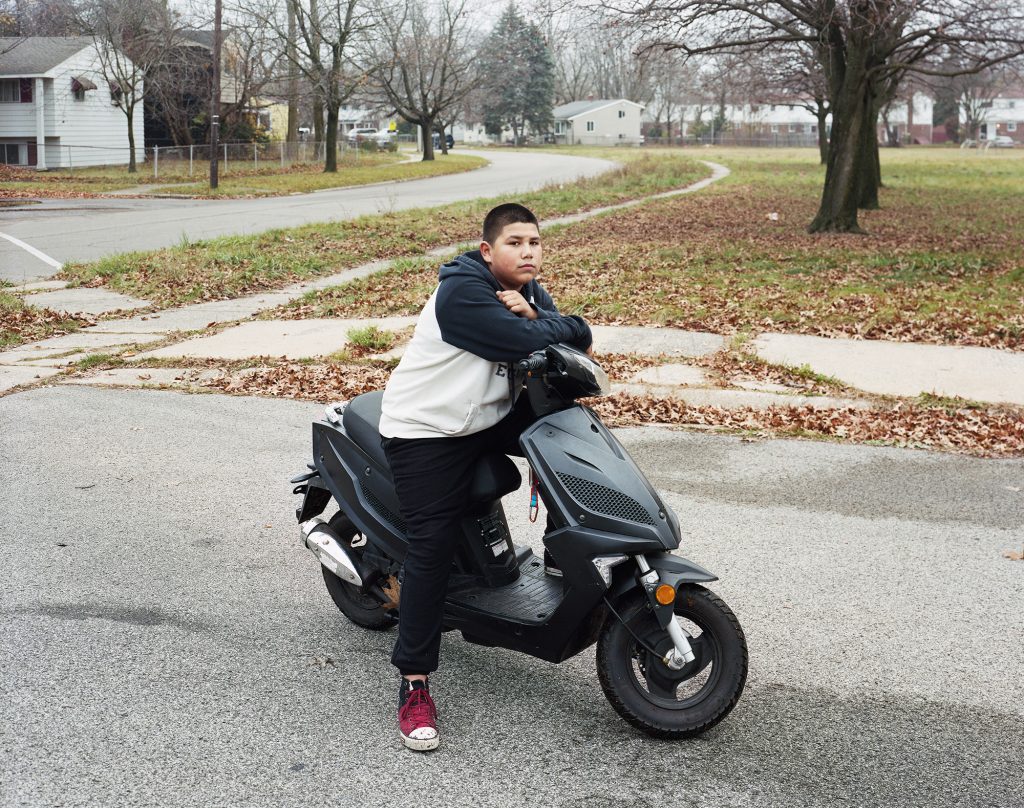
The portrait of the boy on the scooter was taken in Flint. This neighborhood was a few minutes away from the city’s water plant and was taken after the crisis was discovered. This spot was also in the driveway of a closed down school in a run down neighborhood. I was interested in how young this boy looked and that he was wheeling around on this scooter by himself. I also really liked the red laces on his shoes. Like many of the other national headlines about Michigan it’s easy to forget the individuals impacted by systemic failures of municipalities.


The picture of the guy with the backward red hat was also taken in Flint. This location was adjacent to the downtown river walk where I used to skateboard with my friends as a teenager. This image was also taken after the onset of the water crisis. The details of the text on the hat were of course the prime attraction to this person. I found the “Keep Calm and Get High” pin to be particularly interesting given what was happening in the city. My personal connection to this place made it easy to talk to this subject. I generally find that talking about skating and music helps my subjects identify with me.


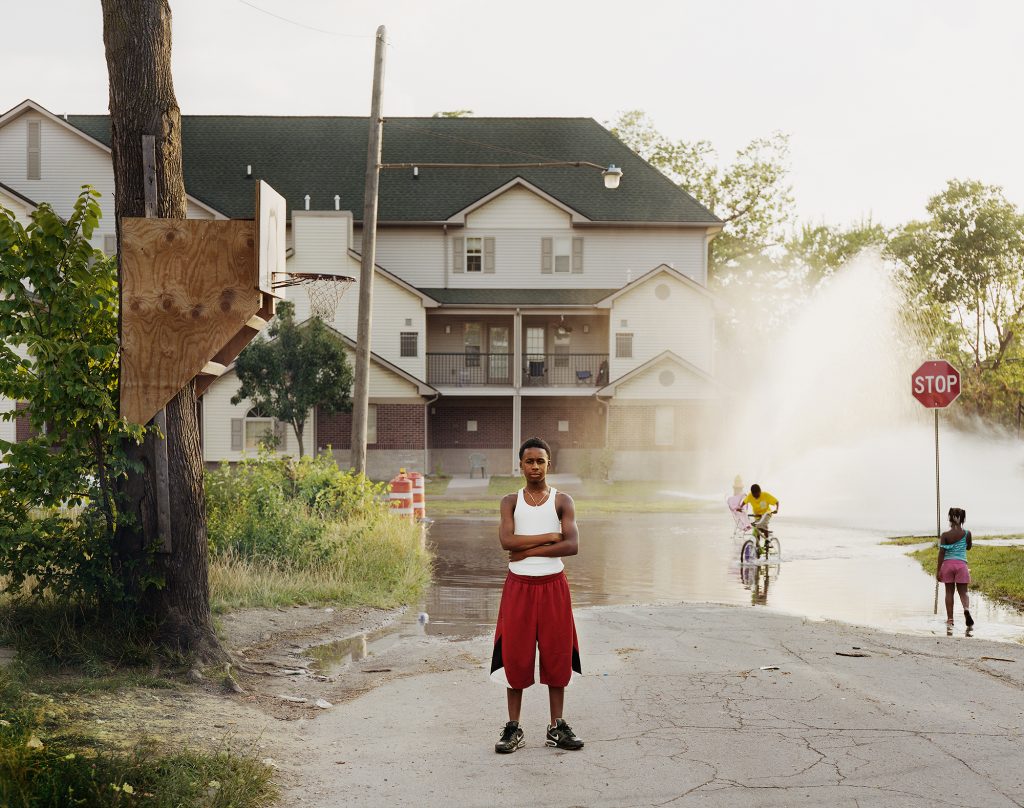
This is an image taken in Detroit near the Woodbridge and Corktown neighborhoods. These are some of the areas of the city where I have photographed periodically for around 15 years. These neighborhoods are being quickly gentrified a few minutes away from this line of houses. This stretch has newer townhomes for low-income families and is a pocket where hipsters haven’t moved into yet. The work I have shot in Detroit commonly deals with the intersection of where new residents and original Detroit natives live in close proximity. This particular moment in this picture was one of those gifts from the photo universe where everything came together. It was shot with a large format film camera and originally did not have any people in it. I set up my equipment and had already shot a picture of just the scene. Then the boy with the red shorts walked up and agreed to be in the next shot. The other children happened to travel through the frame while I was waiting for the primary boy to relax in front of the camera. This picture will actually be on display at the Aperture Foundation in New York City this summer in an exhibition called On Freedom.

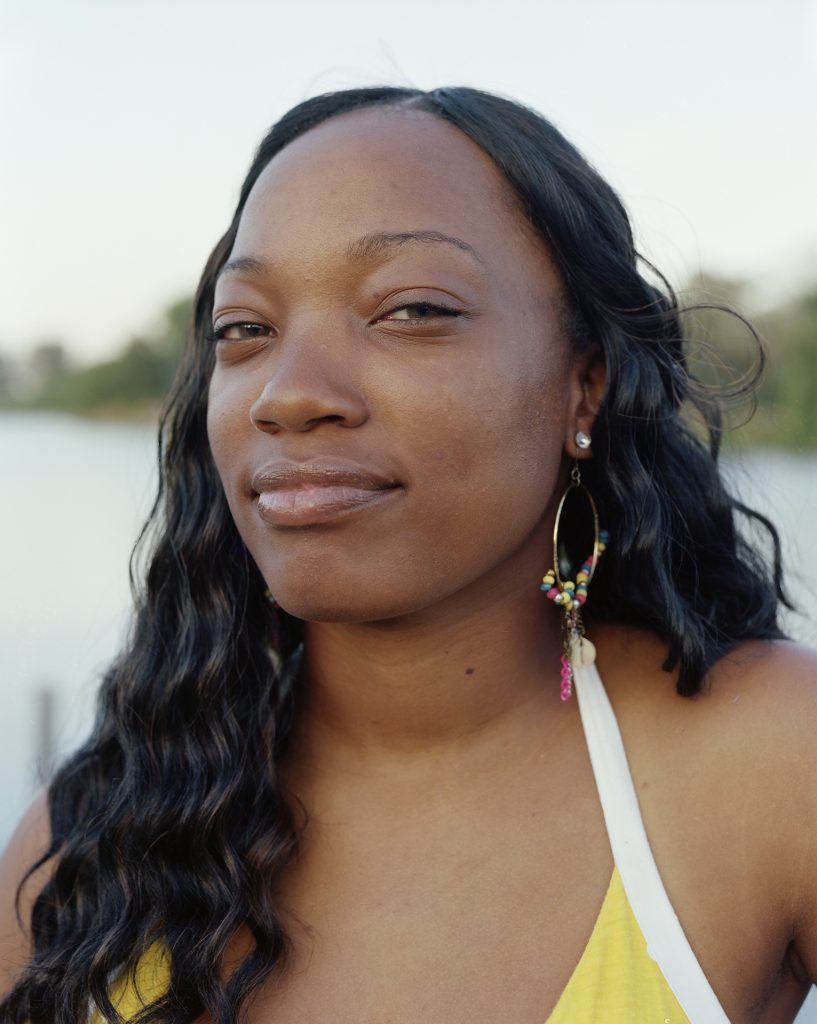
This picture is one of my earliest portraits from Young Blood. I recently found the scan of this shot on my hard drive and fell in love with the image again. This photograph was taken along the Saginaw River in my hometown. This location in Saginaw is where people from both the eastside and westside of town come together to hang out on nice days. The city of Saginaw is split by the river, which divides a really poor part of town from the slightly better off area. I really liked this portrait in retrospect because of the girl’s eyes and smooth smile. People in these types of cities are commonly shown as victims or as others. I felt that this portrait captured the sweet personality of the girl and had an endearing sassiness to it. This portrait has a presence to it that shows her individuality. This part of Saginaw is another place where I hung out as a teen.

BR: Is there a Midwestern author that speaks to your soul?

DF: I particularly respond to poetry. I really love Gina Myers’ work. Gina has moved around the country, but grew up in the same neighborhood in Saginaw where I’m from. She currently lives in Philly. I like all her books, but False Spring resonates the most with my photographs. This book was written when she moved back to Saginaw after living in New York City. I had a similar experience of circumstantially moving home after grad school in San Francisco. False Spring eloquently captures the experience of living in an economically depressed city through the lens of personal relationships and self-reflection.

Since I’ve moved to Tulsa the work of S. E. Hinton has played a significant role in my project called Rumbleville. The Outsiders was one of my favorite books and movies growing up. I’ve more recently been into Rumble Fish. Tulsa is a complex place, which was accurately reflected in Hinton’s novels. In many ways it hasn’t changed very much. Tulsa actually reminds me of Saginaw, but the specific histories are different. I’ve been shooting in the neighborhoods used in her books and from the Francis Ford Coppola’s movies. Tulsa is a city that is hard to categorize as part of a specific region of the country. It sits at the intersection of the Midwest, the South, the West, and the Southwest. Tulsa feels like both the beginning and end of the dividing lines of Middle America. This makes for a unique environment where diverse cultures, histories, and world-views collide. These qualities created an interesting setting for Hinton’s novels that I also utilized in my project. Recently I’ve also been getting into Ron Padgett, who was originally from Tulsa.

BR: What’s next for you?

DF: I have a few projects going. My portfolios tend to span several years. Sometimes this is because I don’t live where the photographs are being made and need to travel. Also, I sometimes need to take a rest from a project before I can resolve an idea. I’ll work on something else in the meantime.

I am headed to Michigan in a couple weeks to continue working on Young Blood. Whenever I think I am done, I have new chapters that come to mind. I am going to focus more on gentrification on this trip. There are already aspects of that theme in the project, but it is a subtopic that could be expanded. I am also going to shoot some more in Lansing. I had started photographing around Malcolm X’s childhood home on my last trip. I am in the process of putting something together to find a publisher. The project is pretty expansive at this point. I feel ready to put this into book form. A photo book will allow me to incorporate multiple aspects of my project into a longer edit in comparison to an exhibition.

I am still working on my project called Rumbleville in Tulsa and expanding into different parts of town. Recently I have been photographing more in North Tulsa. Black Wall Street was located there in the early 1900’s. The hundred-year anniversary of the 1921 race riot is coming up in a few years. Tulsa is unfortunately still very divided and there needs to be a contemporary look at the topic.

I have also been working on a project in Los Angeles called Syndicated. I’ve been making photographs in neighborhoods around Los Angeles that were used in teen movies and television shows. I just got back from a trip a couple weeks ago. This project is about the filming sites where regular people live that also serve as landmarks of collective childhood memories for millions of people. Some of the filming locations in the LA area were supposed to be situated in the Midwest in the Hollywood productions. Freaks and Geeks for example was supposed to take place in suburban Detroit, but was primarily filmed in Santa Clarita, CA.

***

Our Views from the Heartland series is a new series we started to give some recognition to the incredible photographers who submit their photos to us regularly. In it, we talk with some of our favorite photographers who we feel capture the essence of the Midwest in their incredible photos. Each month, we’ll post a new interview with a photographer in which we discuss their creative process, the intersection of photography and literature, and other fascinating topics.

|

No Comments

|

Contributor Spotlight: Michael Fischer

Michael Fischer’s nonfiction piece “The Spelling Bee” appears in Midwestern Gothic‘s Summer 2017 issue, out now.
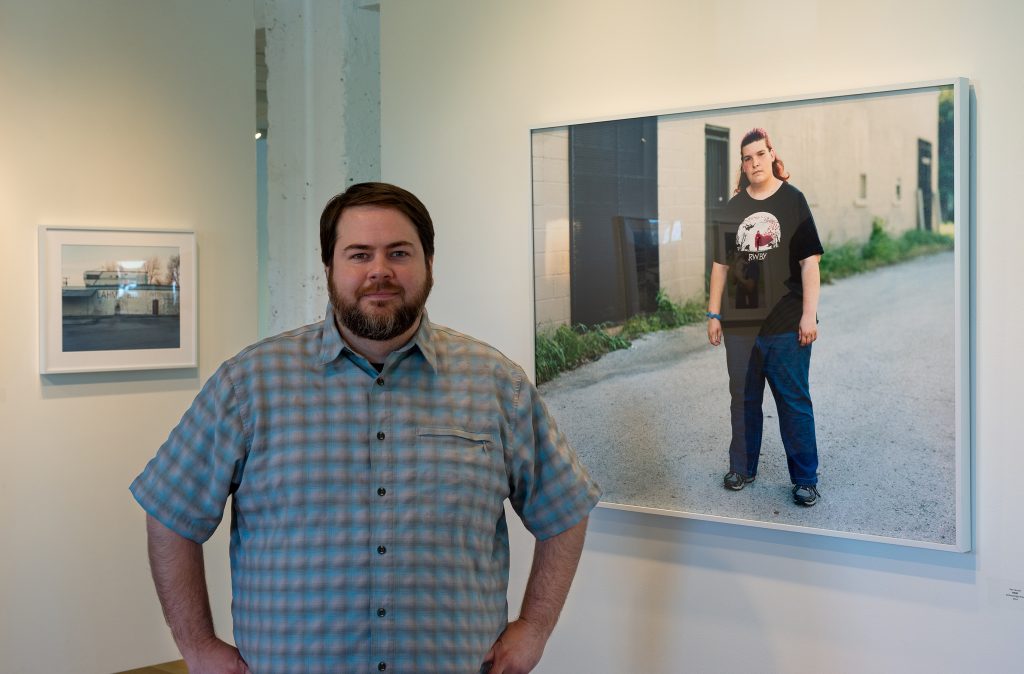
What’s your connection to the Midwest, and how has the region influenced your writing?

My father was born and raised in Chicago. My sister went to college here and never left; she got married and has a two-year-old. I moved here right after my niece was born so I could be near her, so now my father, my sister’s family, and I all live in different parts of Chicago.

The Midwest’s influence on my writing—as someone born and raised in the spin machine of the West Coast—has been to allow me to make a mess, so to speak. For me, the Midwest is about dispensing with the bullshit, the inauthentic, the illusion of the tidy life with the tidy ending. That makes it a great nest to write from.

What do you think is the most compelling aspect of the Midwest?

The weather. I like the fact that a generous slice of the population would never live in the Midwest because they either can’t stand the summer, can’t stand the winter, or can’t stand either. It’s a place for people who want to be here, who are stubborn and don’t care whether the landscape is trying to spit us out or not. The Midwest pretty much says, “Look: If you want to be here, great. Be here. If you don’t, then get the fuck out.”

How do your experiences or memories of specific places—such as where you grew up, or a place you’ve visited that you can’t get out of your head—play a role in your writing?

I write a lot about my time in state prison, so my memory and experience of that very specific place is the spine of that work. It’s a fascinating challenge because I’m dealing with an environment of enforced boredom, a monochromatic life in every way. But it still has to have vitality. The setting insists that I learn how to stretch what I have to work with on the page—which is exactly what prison life forces a person to do, in order to survive.

Discuss your writing process — inspirations, ideal environments, how you deal with writer’s block.

When my family would come visit me in prison, it almost felt like being in a one-man show. I didn’t want them to be scared or sad for me, so I would list words down my arm—short phrases, just to jog my memory—that would remind me of the stories I wanted to tell them. I would just sit there and spin these prison yarns for my family’s sake, so they would have a decent time at the visit and go home feeling like things were more or less okay.

So when I write, 90% of the time I’m writing for my sister or my parents. I’m trying to write what I think they would find funny or entertaining. The spelling debate that takes place in my piece for Midwestern Gothic was my sister’s favorite story from my time in prison. She thought it was hilarious​, even at the time​. So I wrote the essay for her.

I write while sitting on my bed. No distractions or music, and no one else can be around. I also never force myself to write. If I’m not feeling it, I don’t do it. I’m very streaky. I won’t write for weeks and then I’ll write twelve pages in a sitting—things like that.

How can you tell when a piece of writing is finished?

I’ve only been writing for about a year, but I read for two literary journals, so I’m getting pretty tuned in to what a piece needs. It’s never going to be perfect obviously, but I just revise until I can’t see any glaring holes. Then I put it away for a while, and if I still don’t hate it when I revisit it, it’s gone as far as I can take it in that moment in time.

Who is your favorite author (fiction writer or poet), and what draws you to their work?

This is an impossible question but I’ll say Julian Barnes. I love The Sense of an Ending especially, but all of his work—fiction and nonfiction—has an unflinching emotional life and some of the sharpest diction I’ve ever read.

What’s next for you?

Being a full-time student, twice over. I’m in a low-residency MFA program, but I never graduated college. I want to go back and clean that up, so while I’m starting the second year of my MFA this fall, I’ll also be finishing up my bachelor’s degree at a different school. I want to fill that gap and keep my educational doors open, in case I decide to move on to a PhD, etc.​

I’m also a Luminarts Fellow for this coming year, and I’m very excited and proud to be a part of that. It’s a great foundation that supports artists under thirty who live within 150 miles of the Chicago Loop. I’m hoping to get everything I can out of being involved.

Where can we find more information about you?

​I don’t have a website and I don’t ​have​ any social media except Twitter, so…Twitter.

|

No Comments

|

Midwest in Photos: The Bean

“I could be any of them, I could be all of them, I could be anywhere. I am here.” – Jessica Kashiwabara, “In the Middle,” Midwestern Gothic Winter 2017.

Photo by: Janice Davis

|

No Comments

|

Interview: Christian Winn

Christian Winn author photoMidwestern Gothic staffer Audrey Meyers talked with author Christian Winn about his short story “What’s Wrong With You is What’s Wrong With Me,” following his own advice, the right time to write a story, and more.

You can read his short story here.

**

Audrey Meyers: What’s your connection to the midwest?

Christian Winn: I am really a westerner, having grown up Eugene, Palo Alto, and Seattle, and then moving to Boise nearly twenty years ago. Boise is the furthest east that I have ever lived. Most of my fiction is set in the west – Washington, Oregon, Idaho, Nevada, California – where I feel most comfortable telling the stories right. Boise and Idaho overall are generally considered in the Intermountain West, but I think you can look at Idaho as perhaps the far west of the midwest. I have road tripped through the heart of the midwest a handful of times, can’t claim to know it intimately, but love the vast openness of it all.

AM: How has being a professor at Boise State University impacted your writing? What have you learned from your students?

CW: I really am always inspired by, and learning from, my creative writing students. Teaching fiction writing workshops, I feel, continually helps me evolve as a writer. Introducing contemporary short stories and modern classics to both young and experienced writers, I am constantly learning how to look at the fundamentals of storytelling in new ways because of the fresh takes my students offer to the workshop. As well, I am constantly having to ask myself if I am actually practicing what I preach as a writer. I suppose I can sound like I know what I’m doing most of the time, but I always try and ask myself if I am following my own advice, and the advice of the great writers that we read. Keeps me on my toes.

AM: What are the challenges and the benefits when writing short stories? How does this compare to writing longer forms of fiction?

CW: I love the short story form, in all its many forms. Short stories, I feel, are kind of the underdog of the literary fiction world, and often I equate writing and reading short stories and collections to listening to a slightly underground indie album, that band that not too many have heard of and I feel special to know. Both in writing and reading short stories I often feel like the insider, exposed and enlightened by shorter narratives that, when done well, are as impactful and memorable as any novel. I do love so many novels, and have now written a couple that are hopefully finding a good home soon. But, I have gravitated more to the short story in a manner beyond the novel thus far in my life as a writer, teacher, and reader.

AM: What are your techniques for conveying information to your readers in an efficient but clever way? And how did you utilize these techniques in your short story “What’s Wrong With You is What’s Wrong With Me?”

CW: In “What’s Wrong With You is What’s Wrong With Me” a number of my baseline tenets and techniques as a writer came into play – thorough characterization, sharp and unique voice, vivid setting, true conflict rising into crisis then resolution. In creating the protagonist, Samantha, as a snappy and slightly snarky woman in her early twenties, I was working to deliver a character who was putting up a kind of front in the face of a lingering and very-present tragedy – the loss of her older sister, Mary. I wanted to create an interesting and complex secondary character in her brother, Johnny, who was Mary’s twin and closest friend. As well, I worked to send them on a spontaneous quest – a road trip to their childhood home in Boise in a “kind of” stolen BMW that belongs to Johnny’s wealthy, older boyfriend. Then to ratchet up the tension, I introduced the heightened drama of their old house having been demolished to make way for the building of an apartment complex.

AM: When you get an idea for a story, how do you decide if it is the right time to write it?

CW: I’d say that this is really difficult question to answer for me as a writer because the process of story selection – when to write what – is so often shifting, morphing, evolving. Certain stories at certain times, they ask to be written, they need to be, and I do my best to get them written. But, there is definitely deeply rooted discipline in writing a story that tells you it’s the “right time” to write me. Sticking with those stories is not always easy because you don’t want to let them down, or tell them wrong.

AM: Why was it the right time to write “What’s Wrong With You is What’s Wrong With Me?”

CW: Well, it was a piece that I had begun writing, or at least had the initial idea for, a few years ago when a local church actually did buy a big piece of property and begin either moving, or demolishing these great 100-year-old houses in order to build an apartment complex. It made me think, what if one of those was the house you grew up in, and you returned to try and reconnect with your past only to find that this huge piece of your physical past had gone missing? I wasn’t sure what to do with the story from there until the voice of Samantha started talking to me one day, and the rest came piece by piece, scene by scene.

AM: As a writer, what is it like to see a familiar place through your character’s eyes? Did your perspective on Idaho change when writing “What’s Wrong With You is What’s Wrong With Me?”

CW: Seeing Idaho, and Boise in particular, through Samantha’s eyes allowed me to think about the state and city where I live from the point of view of a person who grew up here (as I did not), but also who has not returned to it for many years. The experience allowed me to take a fresh look at the neighborhood and city I walk, bike, and drive through just about every day of my life these last years. I wouldn’t say this experience opened up a fully “changed” perspective of Idaho, but it offered a few cool new angles.

AM: What did you learn about yourself when developing these characters?

CW: This is another tough question to answer without sounding too corny. But I feel I learned a further sense of empathy and understanding for siblings who have lost one of their own at a young age, another thing that fortunately I have not experienced. I certainly learned how Samantha and Johnny feel about the loss of Mary, and through that I hope that I was able to further understand how we work as humans at a baseline level.

AM: What genre or style of fiction would you label “What’s Wrong With You is What’s Wrong With Me?” Why?

CW: I would consider this story literary fiction, meaning that the characters – their conflicts, their voices, their takes on the world – are what drive the narrative, not simply the plot points, the setting, or the quest.

AM: How do you know when a story is finished?

CW: This definitely varies with every story I’ve ever written, but I’ll just speak to the ending of “What’s Wrong With You is What’s Wrong With Me” here. With this story, which pretty much operates within straight-up realism most of the way through, it wasn’t until I came across a writing moment that shifted wonderfully toward the dreamlike, the surreal, that I knew (or at least thought I knew) that I had my ending. I won’t divulge the specifics of the longer last paragraph that gets a little strange and hopefully poetic, (no spoilers!) but I will just say that Samantha is able to reach a kind of resolution and relative peace in a dream-layered story she will tell herself forevermore about her dead sister, Mary.

AM: What’s next for you?

CW: Well, this September a new collection of four longer stories, with the title story being “What’s Wrong With You is What’s Wrong With Me” will be released from Dock Street Press. As well, I have those two “incubating” novels, and a new collection of short stories I am shopping around. I’ve been writing a lot of poetry as well, and hope to get the poetry collections titled Stories About Girls, By Boys, and Every Day, A Gun out into the world soon. As well, I have the exciting privilege of being the 2016-2019 Idaho Writer in Residence and get to travel around the state giving readings, putting on workshops, and providing literary outreach to under-served communities.

**

Christian Winn is a writer of fiction, poetry, and creative nonfiction living in Boise, Idaho. His work has appeared in McSweeney’s, Ploughshares, The Chicago Tribune’s Printers Row Journal, TriQuarterly, Gulf Coast, and elsewhere. His debut collection, Naked Me, is recently out from Dock Street Press who will be publishing his second collection, What’s Wrong With You is What’s Wrong With Me in September 2017. He is 2016-2019 Idaho Writer in Residence.

|

No Comments

|

Contributor News

We’ve got a lot of incredible contributor news! Help us celebrate the accomplishments of our awesome contributors:

Jacquelyn Bengfort (Issue 22) has a story, “A Habitable Place,” that appears in Jellyfish Review. A poem of hers that previously appeared in Gargoyle will appear in an upcoming issue of Redux.

K. Chess‘s (Issue 20) debut novel, Famous Men Who Never Lived, will be published by Tin House Books in 2018. Find more information here.

Michael Fischer‘s (Summer 2017 issue) story, “Willie,” was recently published in The Sun and his story “Turn, Bend, and Spread” will appear in Brevity next year.

RaeNosa Hudnell (Summer 2017 issue) had her open letter, “Senator Kamala Harris is Black Girl Magic for the Month,” published by The Huffington Post recently.

Natalie McAllister (Summer 2017 issue) had her flash fiction piece, “Your Baby Boy,” selected for Glimmer Train‘s March/April 2017 Very Short Fiction honorable mention list. She also took part in the Tin House Summer Writers Workshop this year.

Carly Joy Miller (Issue 8) had her chapbook Like a Beast published by Anhinga Press after winning the 2016 Rick Campbell Chapbook Prize. Her forthcoming collection, Ceremonial, (which includes her poem “We Followed the River’s Loud Noise” from Issue 8) was the winner of the Orison Poetry Prize.

Leslie Pietrzyk (Issue 14) has a novel, Silver Girl, forthcoming from Unnamed Press in which her story, “The Devil’s Daughter” from Midwestern Gothic Issue 14, appears.

Heather Swan (Summer 2017 issue) has a book coming out in October titled Where Honeybees Thrive from PennState University Press. Find more information about it here.

Kali VanBaale (Summer 2017 issue) has an upcoming writer’s workshop at the Iowa Writers’ House Weekend Workshop in Des Moines titled “Revision Strategies for the Novel and Memoir.” Join her November 10-12!

Erika T. Wurth (Summer 2017 issue) had her book Buckskin Cocaine published by Astrophil Press this summer.

Huge congrats to you all!

|

No Comments

|

Contributor Spotlight: Jen Rouse

Jen Rouse author photoJen Rouse’s piece “Of Skeletons and Garden Parties” appears in Midwestern Gothic‘s Summer 2017 issue, out now.
What’s your connection to the Midwest, and how has the region influenced your writing?

I grew up driving through cornfields in Iowa and South Dakota, lurching through the brilliant sun dancing in the dust motes, climbing into the sky. Cities excite me. I’m a little bit Virginia Woolf like that, but they’re not always good for me. My deep longing is always to come back for the honey gold of a Midwest fall against the vibrant brilliance of heartbreaking blue horizon. Also, I think there’s something a little Hitchcockian about the Midwest, ya know? It’s super quiet here. A lot of ways to see oneself in shadow. So many ways to be lost. And never found. Or found in an entirely different guise.

What do you think is the most compelling aspect of the Midwest?

There’s a subtle hum of routine about the Midwest, a thrumming that lives in the heart. We wait for the seasons to change. We embrace the mythology of living here. And each other. In a place where one might not expect to find rich vibrant arts communities, I have found, perhaps, the most amazing place to make art—in the middle of the Eastern Iowa corridor. People here are steadfast, sturdy, grounded, and that means they are also incredibly comfortable taking risks. Risks in supporting new art—plays, poetry, spoken word, visual art, mixed media, everything. It’s all here. And the artists are some of the truest, most talented people I’ve ever met. Build relationships in the Midwest, and those relationships will withstand almost anything.

How do your experiences or memories of specific places—such as where you grew up, or a place you’ve visited that you can’t get out of your head—play a role in your writing?

This summer I had to say goodbye to a place where I spent the most beautiful moments of my life, a cabin that belonged to my grandparents in Hackensack, MN. I spent every summer there growing up—swimming, creating skits with my little sister, playing cribbage on the porch, sitting quietly in an old fishing boat with my grandfather, hunting for shells with my grandmother. At night, we’d fall asleep to the weeping of the loons. The smell of pine and cedar rooting us to the earth. There was no technology. We laughed and told jokes. We saw each other. And all that love that passes between people who really know each other in a place. Though I don’t directly address this aspect of my life very often in my writing, it is everywhere.

Discuss your writing process — inspirations, ideal environments, how you deal with writer’s block.

I write a few times a year, a month at a time, with a wonderful group of writers from the east coast. I went through an MFA program at American University with one of these delightful writers, Paulette Beete, as well as my spouse, Eve Rosenbaum, and others in this group—like Susan Kay Scheid—have provided such deep rich attention to my work. We write in a private online blog. We support and respect each other as professionals. I wrote my first chapbook, Acid and Tender (2016) by Headmistress Press, while working with them. Such an incredible debt of gratitude to these women! Fierce writers, all!

Honestly, I don’t really think about writer’s block. If I am not feeling like writing a poem, I look at a group of poems and think, huh, I wonder if this is really a play? And, often, that will transform writing that might have felt stuck to me. I also believe in finding other ways to think about writing while not writing. Painting, cooking, going to a new place, embracing a new relationship—these are all things that will bring me back to the page.

I’m really inspired by the ways in which people grapple with belief. As a person of little traditional faith, I am drawn to others who find so much in their various versions of god. I find in people of faith a kind of hunger to connect, and, somehow, those belief systems provide those moments of respite. Even when they seem to question, they find their answers—or expect that those answers will come. (And, really, isn’t that a kind of poetry?) I find that kind of thinking fascinating. So, you’ll hear a lot of voices in my poems grappling with issues of belief, forgiveness, longing, and loss—and often saints and gods—always women, of course—turn up to offer them solace.

How can you tell when a piece of writing is finished?

I always have a sense of the ending of a piece before I know where the beginning is going. It’s those moments of uncertainty when I write the opening lines that give me pause. I revise those most heavily. When those beginning lines live up to the end, then I know I’ve gotten somewhere.

Who is your favorite author (fiction writer or poet), and what draws you to their work?

I’ve recently been working on a collection of poetry about my relationship as a poet to the work of Anne Sexton, a complicated, brilliant, troubled figure. I’ve always considered myself a confessional poet, and there’s something tragically brutal and vulnerable in writing from that place. It also allows for incredible moments of joy. I think I learned that in studying Sexton’s work and in the fictional conversations I have with her in this new collection. Adrienne Rich, of course, was my hero. Is my hero. When I was younger, I was fearful of being a lesbian poet and sharing that voice outside of myself. But, then, I heard someone read “Diving into the Wreck,” and my life as a writer was forever changed. Never to be silent again. To write from the margins.

What’s next for you?

In some ways as a writer, I’ve been a kind of late bloomer. I began writing when I was 14, went through an MA and an MFA program in my twenties, but I was also taking care of a lot of people in my life during those years—so giving my full attention to a writing career or publishing wasn’t easy for me. But let me tell you at 44, I am ready for anything. I’m having a wonderful time. Publishing Acid and Tender with Headmistress Press last year was a delight. Exquisite women to work with, and they produced a gorgeous book. Because I’ve never considered writing my job, it has always remained my passion. Tonight, on August 11, my new play Conjure: A Cycle in Three Parts opens on the main stage at CSPS in Cedar Rapids, Iowa. I have great hopes for this piece, and I hope it finds its way outside of our small community. I’m working on two new plays, and my latest chapbook Riding with Anne Sexton is making the rounds. Truly for me the greatest success is when a reader, a cast member, an audience member says, I needed to hear that, see that, play that role—I’m in your words, I can tell my story now. It’s ok to understand bravery a little differently. Never to be silent again. And when my daughter tells her grandmother that my cast, my writing, is important because people don’t always see themselves in writing or plays but they do in mine. I’ll come back to the page every time for that. Every. Single. Time.

Where can we find more information about you?

I am always happy to answer an email: jenlrouse@gmail.com
Twitter: @jrouse
Instagram: jenlrouse
Website: jen-rouse.com
Facebook: @jenlrouse

|

No Comments

|

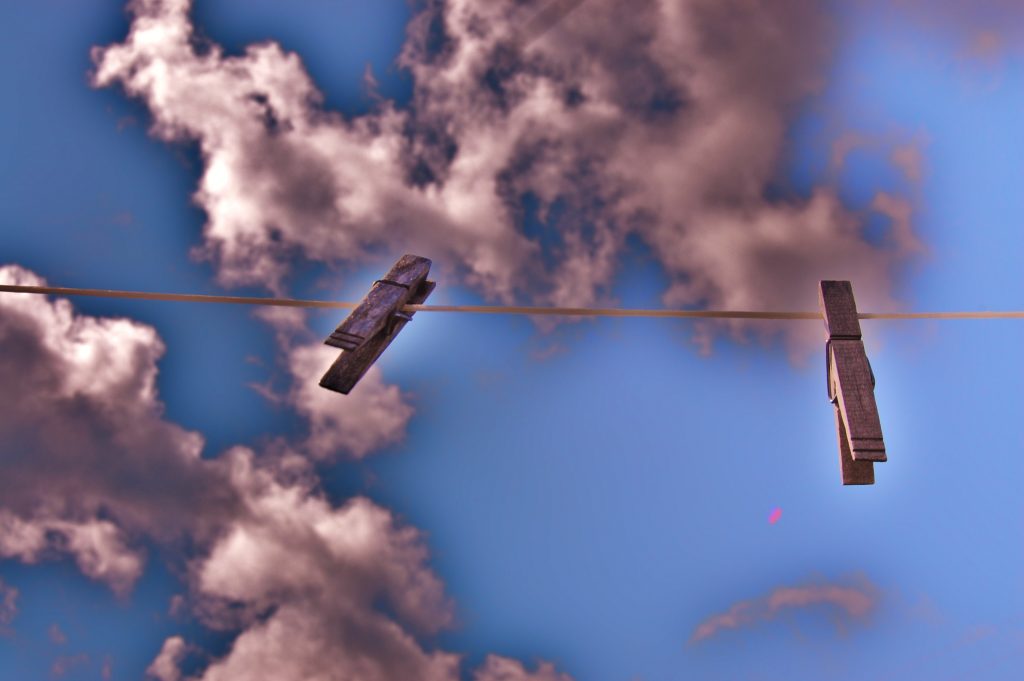
Midwest in Photos: Ambitious of Blue Sky

“This was all she’d ever had, and it was enough.” – Kelsey RonanThe Union Makes Us Strong,”  Midwestern Gothic, Winter 2017.

Photo by: Katelynn Bek

|

No Comments

|