Views from the Heartland: David S. Rubenstein

January 26th, 2018

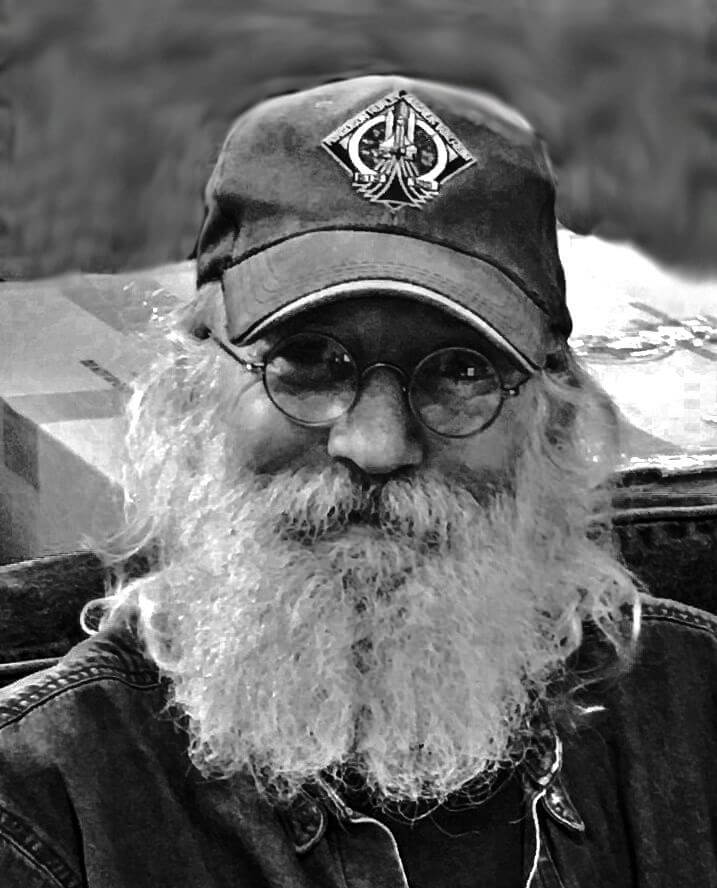
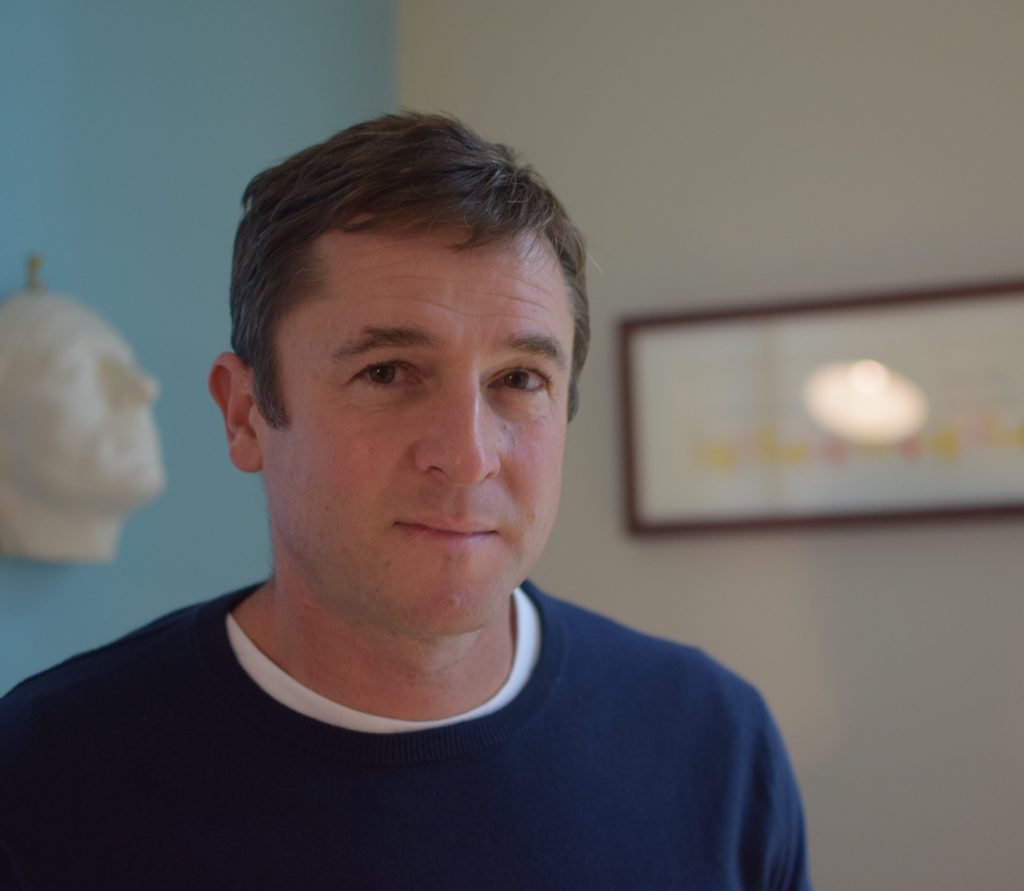
David S. Rubenstein author headshotMidwestern Gothic staffer Sydney Cohen spoke with David S. Rubenstein about his creative process, being a renaissance man, and more.

David S. Rubenstein is an American writer, photographer, poet, and painter. His short stories have appeared in Crack the Spine, Still Point Arts Quarterly, Blood and Thunder, Yellow Medicine Review, Chrysalis Reader (five stories), The MacGuffin (two stories), Owen Wister Review, DeathRealm, The Monocacy Valley Review, Half Tones to Jubilee, The Rampant Guinea Pig, The Mythic Circle, Alpha Adventures, and others, and have been nominated twice for the Pushcart prize. His photographs appear in Writing Disorder where he was featured artist, Chrysalis Reader, Midwestern Gothic, Blue Mesa Review, Drunk Monkeys, From Sac and others. His poem “High Place” appears in The Write Launch. A collection of his short stories can be found on Kobo here.

***
Sydney Cohen: What is your connection to the Midwest?

David S. Rubenstein: I grew up in Springfield, Illinois. Got degrees from Purdue in Indiana and Washington U in Missouri. Lived most of my life in Illinois. When I see images of home in my mind, the land is flat and fertile, wind-swept corn waving across the horizon.

SC: What launched you into the world of photography?

DSR: During my high school years in Springfield, I loved to drive in the country. I was attracted to vistas of traditional farms with barns of Indian red with their Dutch gambrel roofs, silos, and accompanying Aermotor windmills. My father let me use his old Leica, so I tried to capture those images. Those were the days of dark rooms and chemicals, and I remember burning soles from standing barefoot in spilled fixer.

Eventually I turned to painting, to have more creative control over the images that I was producing. I would photograph things of interest, and combine elements of different pictures into a painting. Recently people began to comment on these progenitor photographs, and I produced prints for them. Then, as I was submitting my short stories to various magazines, I noticed that they also sought photography submissions, so I sent some along just for chuckles and grins. They have been well received.


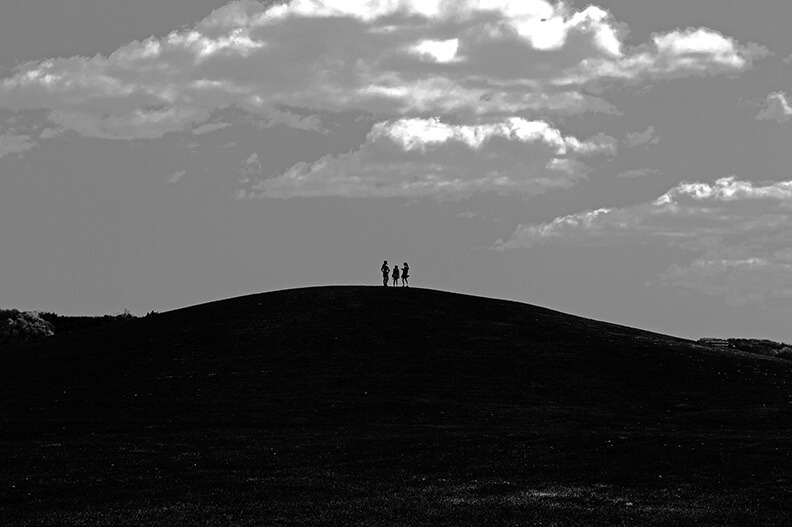
Summit - Views from the Heartland David Rubenstein

Summit

SC: You are a bit of a Renaissance Man, working as a photographer, writer, poet and painter. How does your photography inform your larger creative work? What is unique to the medium of photography, and what is shared by all the mediums you operate in?

DSR: The human experience is a result of sensory input to the brain. In all the media in which I work, I endeavor to generate in the mind a sense of place and a time or sequence of events within it. Many of my short stories began life simply as a sense of place, or a smell, or a vision. I endeavor, for example, to engender a smell, a feel, an image in a person’s mind, regardless of whether they are reading story or a poem or viewing a photograph or a painting. Photography has the advantage in triggering mental scenes via visual stimuli, a very strong input. But the printed word can coax the brain to create its own sense the many things that it manufactures which don’t require real-time sensory input. Painting can sometimes blur the difference between the two.

SC: Have any of your short stories been inspired by one of your photographs, and vice-versa?

DSR: Absolutely. Many stories start with just a sense of place, and events germinate there. “Shadows and Shades” started with a barn from a photo, and a sense of place from a song, and the events spiraled outward from those. “Canvas” has a painter making a colorful picture, but working it until it becomes all black, like day-for-night photos.


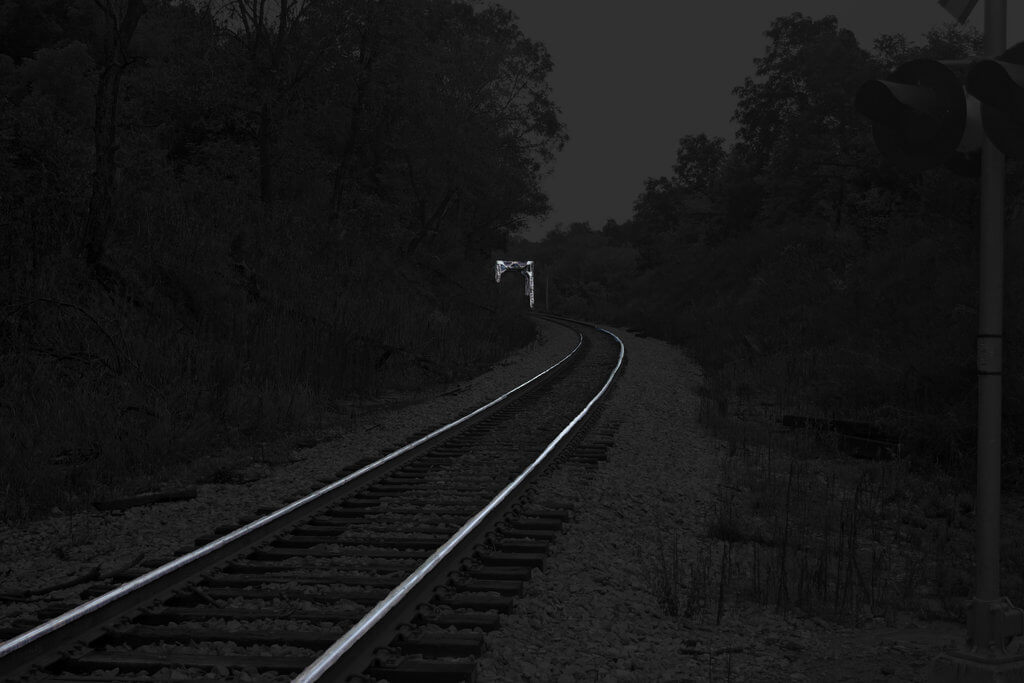
1112 - Views from the Heartland David Rubenstein

1112

SC: What do you try to capture in your photography of the Midwest?

DSR: I’m drawn to farm fields and traditional wooden buildings. Old equipment. I have an eighty-year-old tractor that I feature in many shots. Elevation changes are great, but rare. One advantage of flat land is that you don’t have to get very high to see forever.

I try to depict the relationship between the land and civilization. The farmer, the fields, the crops, repeat. The decay of lost land. The poison of urban sprawl. The endless rebirth. A sense of peace. A sense of sadness.

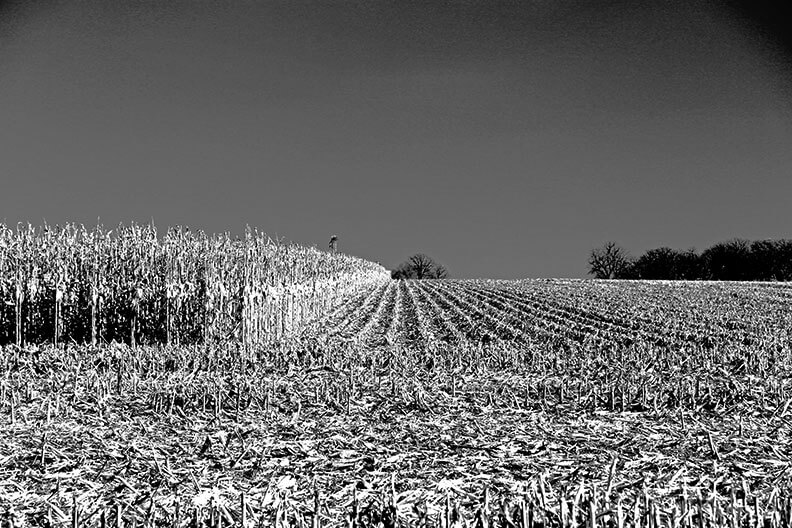
SC: I am particularly interested in your play with color. Some of your most striking photos, including “WIP,” “Summit,” and “1112” are in highly contrasted black and white. What interests you about color, and how does changing this element affect a photo?

DSR: Color is an amazing quality, and I spend many hours enjoying its creation when painting. But sometimes it can distract from the essence of an image. In painting, there is a technique called “en grisaille”, wherein the artist limits the palate to just values of black. And many times when I am painting from a color photograph, I will print out a black and white version to help me see what the values of the colors are.

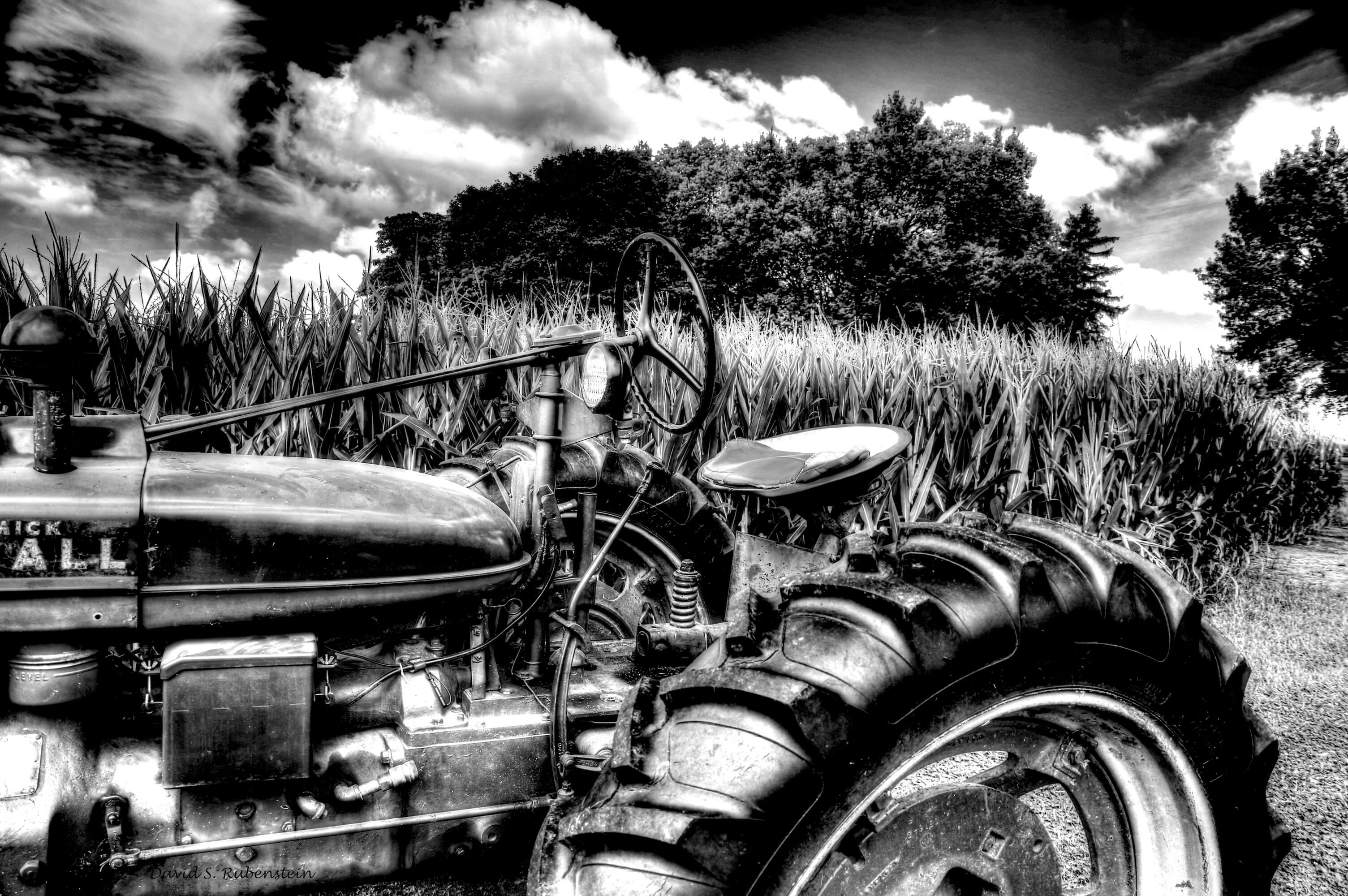
Suki in the Corn - David S. Rubenstein Views from the Heartland interview
I’ve attached a photo of Suki, my tractor, in a field of ripe corn. She’s red, and in the picture the corn is verdant green. The original raw photo is full of beautiful, saturated colors. It dazzles. But it’s almost as if the color is the purpose of the photo. It’s not. It’s Suki, still working the fields after eight decades. It’s the corn, still fighting its way from the earth, standing tall, reaching for the sun, making packets of genes for yet another generation, after a hundred thousand cycles. I feel as though that comes through so much better as the format approaches silhouette.

SC: How do you come across your shots – are they random, or do you go searching for them?

DSR: Both. I do take many drives specifically seeking photo opportunities. Since outdoor pictures are generally two-thirds sky, I look for days with bright, billowy clouds in a blue sky. Two-thirds of the picture a blank blue sky is pretty boring.

On the other hand, wherever I go, I am always on the lookout for interesting picture opportunities. There is a saying in photography, when asked “what is the best camera?”; it’s the one you have with you. I used to carry a small point and shoot in my pocket most everywhere I went, but inevitably would be without when I wanted one most. With the advent of decent cameras in smart phones, I’m pretty much always equipped.

One thing I’m constantly working on is scope. Given my affinity for wide-open spaces, I often find myself missing close up or macro opportunities. So I try to remember to observe the tiny as well as the grand.


WIP - Views from the Heartland David Rubenstein

WIP

SC: What’s next for you?

DSR: When I was in high school, I decided I wanted to be a writer and artist. I thought I could get rich, work independently, and that it would be a great way to attract girls.

Then I got married. But I continued on hoping to be able to quite my day job. But then I spent a career working for The Man behind a desk.

Then I retired. And I have enough to live on.

So now I do my art without ulterior motive. For the art itself. It’s wonderfully liberating.

***
Our Views from the Heartland series is a new series we started to give some recognition to the incredible photographers who submit their photos to us regularly. In it, we talk with some of our favorite photographers who we feel capture the essence of the Midwest in their incredible photos. Each month, we’ll post a new interview with a photographer in which we discuss their creative process, the intersection of photography and literature, and other fascinating topics.

Interview: Mike Harvkey

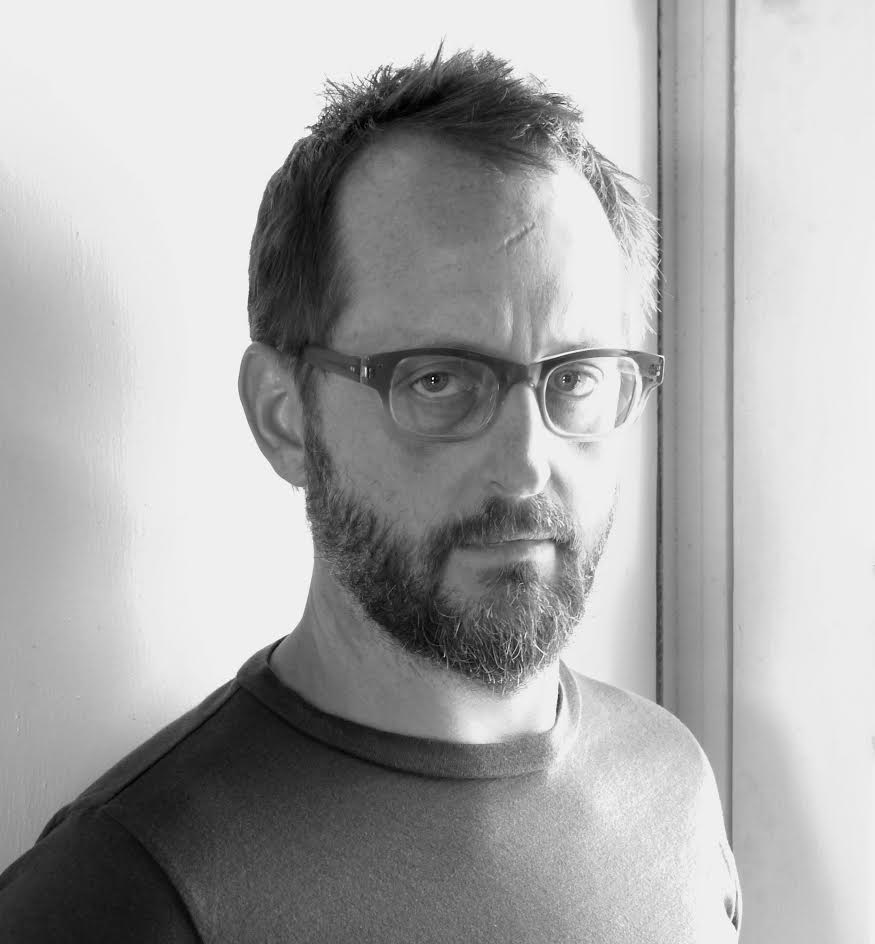
Mike Harvkey author headshotMidwestern Gothic staffer Sydney Cohen talked with author Mike Harvkey about his book In the Course of Human Events, Midwestern masculinity, the role of the cliché, and more.

**

Sydney Cohen: What’s your connection to the Midwest?

Mike Harvkey: I was born and raised in rural northwest Missouri, about an hour from Independence (birthplace of Harry S. Truman) and spent the first two decades of my life in a pretty small town, surrounded by farmland and chicken coops. Several generations of my family lived in the Midwest, mostly in Missouri, but my father’s mother was born in Alabama. My mother’s mother was born in Missouri but her culture —e specially when it came to food — was pretty southern. We had biscuits and gravy every Sunday, okra, black-eyed peas, ham and beans, and this dish everybody just called “Grandma’s noodles.” Years later, when I lived in California, I went to a soul food restaurant for lunch one day and ordered chicken ‘n’ dumplings, which I’d never had. As soon as I took my first bite I thought, Grandma’s noodles! So my Midwest has a lot of the South in it. And the southern end of the state and the northern end are worlds apart, as are the western side and the eastern; Kansas City and St. Louis might as well be in different states. Once I learned more about Missouri’s history it all made sense. So it’s this view of the Midwest that fuels my writing. It’s complicated, conflicted, even puzzling in many ways. Not everything makes sense no matter how long you look at it. No matter where I live I’ll never really leave it as a source of inspiration.

SC: Your debut novel, In the Course of Human Events, explores the gritty underside of the American Midwest, set in a “town the American Dream forgot.” How would you describe the duality of the Midwest, and how does your novel complicate the idea of the American Dream?

MH: That duality is almost the defining feature of the Midwest for me. Just like I find Missouri both Midwestern and Southern, I find most of the men I knew growing up both tough and sensitive, hard and soft. Of course the soft side was typically only shown to the women in their lives. That’s a difference, as I see it, between the Midwest and the South. The Southern men I’ve known have a far greater access to their hearts and aren’t afraid of showing their hurt — even to other men; especially to other men. A lot of the men I knew in Missouri hid their sensitivity through exaggerated masculinity — bigger trucks, fewer words, a tougher mask on their faces. A friend of mine once said that you couldn’t tell by looking at my face what was going on inside — no matter what it might be. I said, “that’s just how men are where I come from.” My dad and uncles and brother and many of my friends — these are laconic, blue collar guys, often with a military background, who look about as rough as concrete but are more often than not very sensitive and caring individuals. This duality was something I was always aware of growing up. And I slotted right in. I was highly sensitive but did everything possible to appear tough. The masculine culture surrounded me like a mob — you either join in or suffer the consequences.

When it comes to the American Dream, I wanted to investigate how the Dream, like any mythology, is pure unto itself but in someone’s hands easy to corrupt. The vision of the Dream that is embraced by this family of white supremacists is as true to them as the vision of the dream embraced by my uncle who retired from the Ford plant.

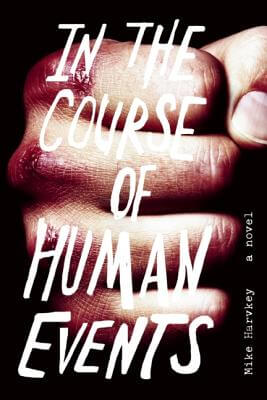
In the Course of Human Events book cover by Mike Harvkey

SC: In the Course of Human Events is also preoccupied by the mentor-apprentice dynamic, specifically with the characters Jay and Clyde. In the novel, Jay leads Clyde through a series of increasingly intense challenges that strengthen Clyde’s mental resolve, but also move him deeper into a world of criminality and extremism. How does your novel complicate the mentor-apprentice relationship? Is Jay a dangerous or righteous character?

MH: As much as my ego would like to think that my novel complicates the mentor-apprentice relationship I think it’s more honest to say that it just reveals it. The dynamic between Jay and Clyde goes back to the samurai age, when obedient and subservient “seconds” served their masters in life and death. A lot of people don’t know that when a samurai committed seppuku, the ritual disembowelment, his second would stand right behind him. After making the cuts across the gut, the samurai would hand the second his sword, and the second would cut the samurai’s head off — leaving a small sliver of skin on the neck so that the head would remain with the body. Then the second would kneel behind his dead master and commit seppuku himself. I guess his head got to stay on — a more agonizing death. I guess for me this, too, comes down to a system of practice or belief that can be interpreted and corrupted. Jay certainly abuses that existing structure to manipulate Clyde to become something useful to him. This happens every day on a large scale. The military is a system of belief and practice that exists to shape malleable young people, physically and mentally, according to the interests of someone else. The mentor-apprentice relationship has a long history of abuse, as far as I see it.

To me, Jay’s righteousness is what makes him dangerous.

SC: The novel also deals with radical extremism and passionate anger towards the government. How does your novel humanize the process of radicalization? Furthermore, how can your novel be read as a social commentary on radical extremism as a response to politics? How does satire reinforce this social commentary?

MH: I think In the Course of Human Events humanizes radicalization by popping the hood and allowing the reader to see the way the engine works. That process is the book’s plot, really. At some point in writing it I realized that I’d been toying around unconsciously with many of the steps involved in radicalization, and once I realized that, I was able to actually investigate the process fully and use the various steps along the way to increase causality. There are a lot of different processes of radicalization —from love to competition to the slippery slope concept — and I used them all. I really piled it on. Once I did that the book opened up to me and I could see how it could work. Clyde, the main character, is the beating heart of it all; the book’s point of view is his and we’re right there with him every difficult step of the way. I needed him to be a highly sympathetic character, pulled in two opposite directions—toward Jay and extremism and simultaneously toward his family and friends, good people who still believe in the Dream. At some point I realized that Clyde’s gripes had to be accessible, recognizable to readers. It couldn’t just be that he was racist. Racism is not only uncomfortable to write about; it’s difficult to understand in a dramatic sense that works in the kind of book I wanted to write. I didn’t want some clichéd “answer” to the question of these characters’ problem. Once I figured that out, the only question and answer was the economy. Maybe it’s a cliché. I saw an interview with the Coen Brothers talking about No Country for Old Men. Joel says that Carla Jean Moss’s character works at a Walmart. Then he says, “I don’t know if that’s a cliché but at least people know what we’re talking about.” So I see it like that, I guess. It’s not always the right thing to do to completely avoid the familiar. The familiar — or some familiar elements — can be a pathway into the book for some readers. A lot of people I’d known had been hit pretty hard by the downturn and it just made sense to use the factory moving overseas as the foundation of Clyde’s gripe. My brother worked in a Mr. Longarm factory and that factory did eventually close down and I just used those facts for my fiction. I hoped that by creating a recognizable foundation under the extremist position, the reader would be able to sympathize with it. In sympathizing, they become complicit, and then the reader connects in a very charged way with the characters.

Satire’s tough. I didn’t even understand that I was writing satire until quite late. And the book is complicated in this regard because some things are handled satirically and some aren’t. I couldn’t write about Walmart without making fun of it. Maybe that makes me a dick, I don’t know. But satire is another way to play around in the familiar. It’s like a shared wink between me and the reader — another way of laying a complicity trap. From the beginning I knew that I wouldn’t judge these characters, the white supremacists. I didn’t want to write a book with authorial judgement, where the reader could be let off the hook by a God-like intruding voice telling them that these characters were ridiculous and they didn’t have to take any of this shit seriously.

SC: What elements of your characters would you describe as specifically Midwestern? How would your novel be different if set in another region of the U.S.?

MH: Literally every aspect of these characters is typically Midwestern, from their haircuts and clothes to how they decorate their homes, to what they drive and where they shop and how they eat. And karate. When I was growing up karate was everywhere in the Midwest. I trained Shotokan for a couple years as a teenager with a guy called Machine Gun Mapes in Lee’s Summit. One of his black belts opened his own school in the Masonic lodge in my hometown and I trained there with him. There were guys I knew running classes out of their basements. It was everywhere. Clyde and his Uncle Willie share that tight-jawed laconic approach to conversation and that desperate suppression of feeling. Jay and his family are less like that, and J.D.’s manic style, which is a deflection technique, comes from a guy I know who spent a decade in prison. It’s a defense mechanism. I don’t think I would’ve been able to write this novel in a different part of the country. That would’ve required me to get to know an area in a way that I just don’t think I would’ve been able to know, for this subject matter. But I guess I could see a different version of this novel set in the south where all the men share their feelings, drink too much, and cry a lot. That could’ve been fun.

SC: In the Course of Human Events is your debut novel. What surprised or challenged you about the writing process? If you could do anything differently, what would it be?

MH: This was a hard novel to write, in part because it was the first novel I’d ever tried to write. It took five or six years, in the end. Some of those years I was working full time and writing only two or three mornings a week before work. Up at 5, write until 8, get going. What surprised me about those years was how much I was able to get done when the clock was ticking. I know the writer Dan Choan sometimes writes with a timer set for 15 minutes. He doesn’t allow himself to pause until that timer goes off. Some mornings once I got going I’d have an hour, hour and a half, and I’d manage 2,000 words. But in writing Human Events, I had to first figure out how to write a novel, then I had to figure out how to write this novel. That’s why it took me six years. When I started I had no idea of the story. It wasn’t even political in the beginning. It was just a domestic story about a passive guy marrying into a dynamic family. At some point early on I realized that that narrative wasn’t enough, for me. Then I remembered an argument I’d had with one of my best childhood friends. He’d just joined a militia and had read the conspiracy theory book, Behold a Pale Horse, which had had an enormous impact on him. He was trying to convince me of this, that or the other and I was pushing back and it ended badly and we didn’t speak for a good few years after that. But that argument had stuck with me, and the fact of this book’s impact on my friend. So another surprise was just about how our experiences and the various ideas that we are floating around with are probably a lot more connected than we might realize. I’m proud of the book. I don’t think it’s perfect. It was as good as I could make it given my abilities at the time. I ran out of steam in the end. The last thing I wanted to do was work another day on that book before it got published. But if I had it to do over again, I would’ve read the whole thing out loud and done another top edit. There are too many words.

SC: Who are some authors that inspire your work, and why?

MH: It used to be Cormac McCarthy until his language seeped its way into my writing and I had to stop reading him, though I love him still. In fact, my wife wrote in the margin of an early draft of my book, “Cormac called, he wants his language back.” Flannery O’Connor was one of the first authors who blew me away. She’s amazing, and the way she evokes place with the perfect detail is astonishing. Barry Hannah, Mark Richard, and Padgett Powell, also. For a while I thought I was a southern author and these people were to blame. James Salter and Christine Schutt both have a breathtaking economy in the way they move through time, just compression and grace and elegance. I’d love to be able to do that but just can’t. The book I would probably want to be buried with is Revolutionary Road. The more I read it the better I see it is. That this was a first novel just pisses me off. How was he able to pull that off? It’s crazy. It’s so, so good.

SC: What is your ideal writing environment — the sights, sounds, and smells?

MH: My wife says I have the nose of a bloodhound and I like comforting smells: pine, cedar, woodsmoke. So either I’ve got an expensive candle or I’m writing in a cabin in the Sierra Nevada mountains. I typically write early drafts by hand so all I need is a small space with a good chair that won’t destroy my back, a little stove, a wall where I can hang the structure and other macro thoughts, a bunch of books, endless coffee, and a footstool. A small desk would be handy but not totally necessary. It’s been tough having the perfect writing environment since I sold the book. My wife and I went traveling for a year before our books came out (her first book, Black Lake, was published a month before mine), slept in 20 different beds that year. Since then we just keep moving. We’ve moved three times in four years. Sometimes I get the spare room, if there is one, and sometimes she gets it. It’s only fair. Right now we’re living in a place that has a basement and I’ve sort of walled off a corner of it for writing. It’s dark and cold but I’ve got blankets.

SC: What’s next for you?

MH: I’m working on another novel set in the Midwest, in a town called Peculiar — which is real. It’s in the early stages and looks like it’s going to be brutal — the book more than the process. I’m also working on a bunch of stories and hope to have a collection together before too long. The last six months I’ve worked harder than I probably ever have doing research and reporting on a James Patterson true-crime book called All-American Murder about the football player Aaron Hernandez. It comes out January 22nd.

**

Mike Harvkey is the author of the novel In the Course of Human Events and a researcher-reporter for James Patterson & Alex Abramovich’s true-crime book All-American Murder. His writing has appeared in Esquire, Salon, The Believer, Poets & Writers, Nylon, Zoetrope, Mississippi Review and elsewhere. He’s the recipient of fellowships from the MacDowell Colony and Columbia University.

|

No Comments

|

Review of A Woman Is A Woman Until She Is A Mother

“An important contribution to the world of women’s stories.” —Cameron Finch, Hunger Mountain

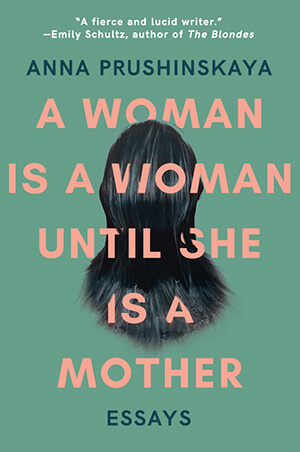
A Woman is a Woman Until She is a Mother book cover by Anna Prushinskaya
We’re excited to share another review of A Woman Is A Woman Until She Is A Mother with you! Recently, Hunger Mountain‘s Cameron Finch had this to say about Anna Prushinskaya’s collection:

“Through a mixture of her own meditations and examples given by respected female writers and thinkers, Prushinskaya illustrates that “mothers” are women as diverse, as complicated, as unique, as flawed as any other group of humans, and deserve to be recognized for their commitment to take on the demands of maternal work on top of the demanding struggle of being a woman in today’s society.”

Read the full review at Hunger Mountain‘s website.

While you’re at it, be sure to pick up your own copy of the book here.

|

No Comments

|

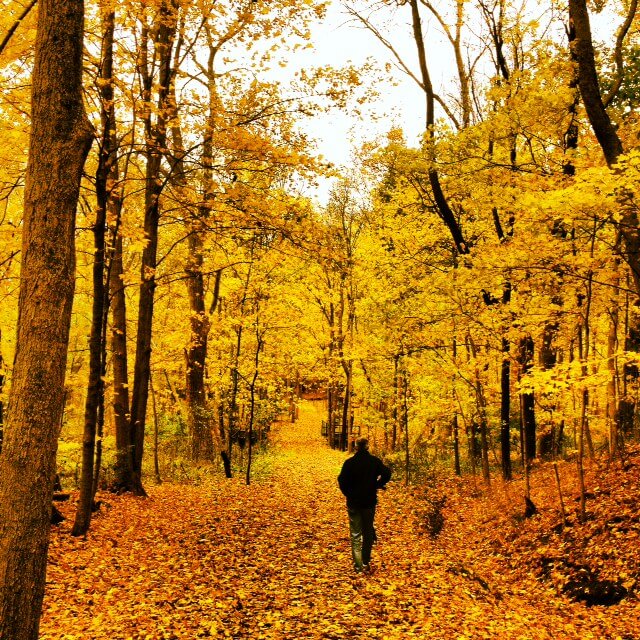
Midwest in Photos: October Trails

“Life starts all over again when it gets crisp in the fall.” – F. Scott Fitzgerald, The Great Gatsby.

October Trails by Julianne Drew

Photo by: Julianne Drew

|

No Comments

|

Interview: Jill Kolongowski

Jill Kolongowski author headshotMidwestern Gothic staffer Carrie Dudewicz talked with author Jill Kolongowski about her book Life Lessons Harry Potter Taught Me, how to juggle writing, editing, and teaching, her becoming a nonfiction writer, and more.

**
Carrie Dudewicz: What’s your connection to the Midwest?

Jill Kolongowski: I was born in a small town in Michigan, and lived there until I graduated from Michigan State University and moved to Boston for my first job. Now that I live in California, my connection to the Midwest feels even stronger—I feel like my whole identity was shaped by the long, gray winters and the summers in the lakes. It took leaving to realize that.

CD: You’re a writer, a professor at the College of San Mateo, and the managing editor at YesYes Books. How do you balance all of these roles? How do these different jobs connect to and influence each other?

JK: I don’t balance them. (Just kidding — kind of.) As far as balance, it’s not always terrific; I find I have to be very deliberate about how I spend my time. When I switch from grading papers to writing, or writing to editing — switching from one part of my identity to another — I attempt to close off the other parts of my brain. When I was writing my book, I sometimes spent 10 minutes meditating in between, or I had to move from my apartment to the library or a coffee shop, just to force my brain to switch gears and focus. It sometimes works, and sometimes doesn’t. It’s a balance I’m continually negotiating.

I grew up knowing I wanted to be a writer and editor, but insisting that I did NOT want to be a teacher. I had major stage fright and imposter syndrome. I still have stage fright and imposter syndrome, but when I received a teaching fellowship for my MFA, I fell in love with teaching. Now, I see teaching, editing, and writing as three prongs of the same impulse — loving writing, and wanting to share that with others. On some of my toughest teaching days, my students knock me over with their insight or their writing, which can shake me out of my own writing challenges and inspire me to do better. When I’m excited about a great writing day, or a breakthrough, or have read a new favorite essay, I share all of those with my students. I hope seeing me as a working, struggling writer can help them through their own struggles. And working with the innovative and boundary-pushing and blazingly insightful poets at YesYes makes me into a student, just reading and learning from them.

CD: YesYes Books is an independent press known for high-quality poetry, fiction, and art. What is the most rewarding aspect of being an editor at this press? How does it differ from other editing jobs you may have had in the past?

JK: The most rewarding aspect has to be the work I get to read (and the writers themselves!). The editors, KMA Sullivan and Stevie Edwards, somehow manage to find and amplify writers who not only make fresh and sharp and important work, but who are also wonderful, smart people to be around. I’m not a poet, but I feel like YesYes is giving me the poetry education I was too scared to seek out as an undergraduate. YesYes feels personal in a way that many other editing jobs have not.
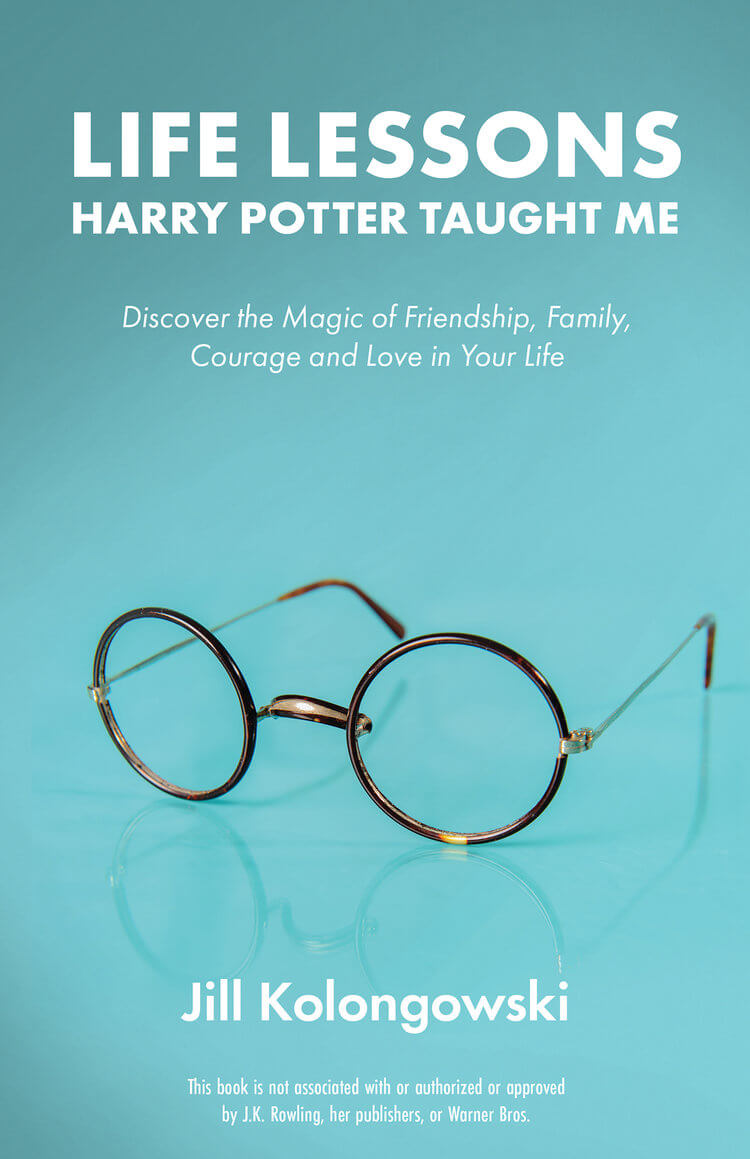
Life Lessons Harry Potter Taught Me book cover by Jill Kolongowski

CD: Your debut book is called Life Lessons Harry Potter Taught Me. The Harry Potter series is a cultural phenomenon, one that millions of people are familiar with and devoted to. Tell us more about your experience with Harry Potter. When did you start reading the books? What made you decide to write a book about Harry Potter?

JK: I read Sorcerer’s Stone when I was 12 years old. The first two books in the series were already out by then, and my younger sister read them first and told me I HAD to read them. I was hooked. I’d always loved books about kids being extraordinary on their own (I loved The Boxcar Children and Lloyd Alexander’s The Chronicles of Prydain), and my sister and I loved to play orphan (sorry, Mom and Dad). It wasn’t about the fact that most great children’s stories begin with lost parents, but it was about the idea that children had power and agency, and could really do something with that power. I’ve loved Harry Potter my whole life —reading and rereading, standing in line for each midnight movie showing. I’m kind of unusual in that I didn’t partake much in the online Harry Potter fandom — I didn’t read fan theories, I didn’t go to book release parties. I felt weirdly competitive and private about Harry Potter. I thought that someone couldn’t possibly love it more than I did, and in a way, I wanted to keep Harry Potter all to myself. That’s been one of the really beautiful things about writing this book—I’m engaging with the Harry Potter community in a way I was too afraid to when I was younger. And I’m so glad! I regret not having done it sooner. This book and Ulysses Press are unusual too—rather than authors submitting manuscripts, the press comes up with ideas they see as missing in the market, and find writers to do it. The editor put out a call for writers on a vague “Harry Potter project” and a friend of mine saw the call, knew I loved Harry Potter (I had once sorted all 50 members of our online writing group into Harry Potter houses, with detailed explanations about why), and sent the information to me. As soon as I heard that the project was a book about lessons learned from Harry Potter, I was elated. If you read the book, you’ll see that I don’t really believe in fate or destiny, but oh did I feel like this was the book I’d been waiting my whole life to write, even if I didn’t know it. I was ready to make that private love public. And thank the Goddess Hermione, Ulysses liked my pitch enough to choose me to write it.

CD: In your book, each chapter is named after a Potter-universe spell and subtitled with the subject/”life lesson” of the essay. How did you match each spell with each life lesson? Why did you choose to structure the book in this way?

JK: When I was considering how to organize the book, spells were my very first thought. I considered a few alternate ideas — organizing around people, or around places in the Harry Potter universe (the Divination classroom, Hogsmeade, the Gryffindor common room, etc.), but the spells felt right from the very beginning. Some of the spells came really easily (like “Wingardium Leviosa” for the chapter about Hermione, or “Riddikulus” for the chapter on laughter), but others were harder to match. Should “Legilimens” (the spell used to read minds) be about empathy and kindness, or about self-examination (which is where it ended up, in the good and evil chapter)? I made a list of spells that appeared in the books and when they were used, and tried to use them as a metaphorical bridge. Other than “Wingardium Leviosa,” my favorite is probably “Lumos” as a metaphor for curiosity and wonder. For us Muggles, the real magic in the series is the thing that’s most inaccessible to us, so pairing spells with themes seemed like a way to give readers metaphorical access to that magic.

CD: People of all ages are obsessed with the Harry Potter series and, like you, could or do write about their feelings for Rowling’s creation. What do you think makes these books so widely loved?

JK: The world of Harry Potter is so beautiful — I think as kids, it allowed us to enact many of our deepest-held fantasies — being able to breathe underwater, being able to fly, riding dragons, flying on broomsticks and petting baby unicorns, but also being powerful and being trusted to do great things. But even more than the aesthetic joys of the series, I think the genius of the series is in the complexity of the characters. Harry is the hero, yes, but he’s also kind of terrible — while often being fiercely good, too. Snape is a true hero, but he’s also a coward and can be cruel. And Dumbledore is kind and forgiving and also manipulative. Hermione is a beautiful, loyal friend, but is sometimes inflexible. Ron adopts Harry like he’s family, but his jealousy and insecurity make him occasionally fickle. And which of us hasn’t been all of these things at the same time? For many of the characters, those imperfections are what make them great, when they’re humble enough to trust each other and work together. They are allowed to succeed despite their flaws, and even because of them. The series is so beloved because we get to escape into the world, and at the same time, find ourselves there.

CD: You write primarily creative nonfiction and have had many essays published in various journals. Why do you choose to write creative nonfiction rather than fiction? Where do you find your inspiration to write essays?

JK: I started off as a fiction writer because I started off as a fiction reader. My first love was fiction, and I only discovered creative nonfiction in college. I needed an elective and since I was terrified of poetry, I took creative nonfiction with Marcia Aldrich and realized that that’s what I had been writing all along. All of my short stories had been true stories with my friends’ names changed, or wish fulfillment of some kind. As much as I still love and admire fiction, I feel incapable of writing it. I never had that thing that fiction writers seem to have of walking around with characters in their heads. All I had (and have) are true stories, and the only way I seem to be able to write is to try to render those stories as vividly and truly as I can. In college I read an essay by Lisa VanAuken in Fourth Genre called “Rooster-Fish.” The entire plot of the essay revolves around her finding a cockroach in her apartment (though it becomes about fear and self-doubt instead), and that was a revelation for me — that nonfiction doesn’t have to be big or splashy in order to create meaning. For inspiration, I love finding everyday oddities. I write down strange bits of overheard conversations, or images that strike me. I once heard a man on the bus say to the driver that he felt like his whole body was burning, and I made an essay out of that. My neighbor told me one day that a river runs underneath our street (I’m still not even quite sure what he meant), and I wrung an essay out of that. A few weeks ago, I came home to find the sky on my street full of bubbles. It took me several minutes to find the child using a bubble machine up on a high balcony, but it didn’t matter — the image of a sky full of bubbles stuck. I never really know what to do with these oddnesses, or what meaning or synchronicity I will find, but I enjoy the process of trying to find it. Like VanAuken’s essay, I think our lives are built on these small moments as much as the big ones, so I am always fascinated by that smallness.

CD: Aside from JK Rowling, who are some writers who you love and/or who inspired you to become a writer?

JK: I think I’m strange in that I rarely felt like I had to be a writer or that I wanted to be just like so-and-so. I loved (and love) reading so much that I was always writing, too, from a very early age. They seemed like two processes that went together, and I don’t remember ever making the conscious decision to be a writer. I just wrote — mostly terrible stories about finding baby deer in the woods and keeping them as pets. As a young reader I loved Brian Jacques’s Redwall series (for its lavish food descriptions and intricate plotting—kind of like Game of Thrones for kids), and Louisa May Alcott’s Little Women (for the characters), and as I got older I loved Lolita (for its language) and Middlesex and Margaret Atwood and Toni Morrison, even if I was still learning to understand them. By far the biggest influences on me as an essayist have been Eula Biss (for her braided and fragmented essays), and Ryan Van Meter (who is a sensory detail genius), and most especially, Jo Ann Beard. Her book The Boys of My Youth is the book of nonfiction I return to most often. Her voice, her rendering of young adulthood, and her interrogation of memory is something I aspire to with everything I write.

CD: Which Harry Potter house would you be in and why?

JK: I spent most of my life thinking I was a Ravenclaw (brainy, loves books, etc. etc.), but as I’ve grown up I’ve started to grow into and recognize my true Hufflepuff nature (where Pottermore has also placed me). I tend to associate being a Hufflepuff with the kind of work ethic I associate with being Midwestern, and my introvert tendencies also feel very Hufflepuff. I love books, but more as a reader than as a scholar. If I had to enter a common room with a riddle, I’d be trapped outside forever.

CD: What’s next for you?

JK: I’m taking spring 2018 off from teaching in order to do a bit of book touring for Life Lessons Harry Potter Taught Me and I’m also working on revising my second book. It’s a personal essay collection called (for now) Tiny Disasters, and explores the way disasters (large and small, natural and political and personal) and the ways we try to handle them shape who we are. I also have a very large to-be-read stack I can’t wait to get to, and some Harry Potter movies to rewatch. Thank you again for this opportunity!

**

Jill Kolongowski is a nonfiction writer and professor living in Northern California. She is the author of the essay collection Life Lessons Harry Potter Taught Me (Ulysses Press, 2017). She received her MFA from Saint Mary’s College of California, and is also the managing editor at YesYes Books. Jill has been a fellow at the Artist Artsmith Residency, Lit Camp, and the Squaw Valley Community of Writers. Her essays have won Sundog Lit’s First Annual Contest series and the Diana Woods Memorial Prize in Creative Nonfiction at Lunch Ticket magazine. She is a Hufflepuff who grew up in Michigan.

|

No Comments

|

Midwest in Photos: Maverick in the Making

“I don’t want to repeat my innocence. I want the pleasure of losing it again.” – F. Scott Fitzgerald, This Side of Paradise.

Photo by: Shay Appold

|

No Comments

|

Interview: Dan Beachy-Quick

Midwestern Gothic staffer Carrie Dudewicz talked with author Dan Beachy-Quick about his book Of Silence and Song, the formative experience of reading Moby-Dick, writing in the midst of family, and more.
**

Carrie Dudewicz: What’s your connection to the Midwest?

Dan Beachy-Quick: It’s two-fold, really. I was born in Chicago, though my parents left when I was just a toddler. I grew up in Colorado, spending summers in upstate New York. But I ended up going to graduate school in Iowa, and then followed my wife back to Chicago, which became for us a true home—a funny thing, as it was my first one. Stranger still, I worked a block away from where my mother worked, lived just a couple of miles from where she did, and had my first child in a hospital down the road from where I was born. Coming back to the Midwest felt as if it drew a kind of circle or cycle complete.

CD: You’ve lived in multiple regions of the U.S.—the Midwest, Colorado, New York, and Iowa, to name a few. How is the Midwest different from the East or West Coast? What aspect of the Midwest is the most impactful to you and your work?

DBQ: The image that most stays with me—one image in many iterations—is the presence of Lake Michigan on the east side of Chicago. I saw it in every season and mood (both its and mine), from a turquoise blue near tropical in its glow, to waves so wild and rough it looked like the North Sea. I suppose I began to fall in that wide expanse of water, so large it had no other side, no horizon of other land, that I began to feel that this inland sea was a symbol somehow of our human condition, that one contains an unimaginable expanse within the borders of one’s own life—heart and mind, memory and thought—and though the outside appearance is one of steady, almost geologic calm, inside the waves crash wild against those very shores. That paradoxical sense—as of a Russian nesting doll, save the one inside is larger than the figure that contained it—is I think the largest creative gift I received from living those years in the Midwest.

CD: You’ve written both essays and poetry about or related to Moby-Dick. Why does this novel influence so much of your work? What inspired you to write at length about Moby-Dick?

DBQ: I graduated a bit early without any planning to do so, and ended up working in a café in Denver, unsupervised for the most part, and in the midst of the shock of no longer being in school, felt very keenly gaps in my education—the most pressing of which, for some reason, was having not read Moby-Dick. So I got it, and read it during my work hours, helped by the endless coffee and almost complete lack of customers. It was the first time I had to do the work of reading all by myself—there was no one to ask questions to, no one to explain. It was, I think, the formative reading experience of my life. I had earnestly been pursing poetry since high school, and somehow I found within Melville’s pages all the questions about the nature of making, of creativity, of word and world, that I didn’t know how to ask myself. It was, and is, my greatest teacher—and most maddening. I came to feel after reading (twice in a row!) that I had some work to do in that book, though I had no idea what that meant or would entail. I felt like I had to investigate, to be responsible to it, to honor it and question it, to enter into it so as to learn to think according to its own inherent laws—and those instincts have come to shape my entire poetic and critical approach. I simply wouldn’t be the writer (or person) I am without it.

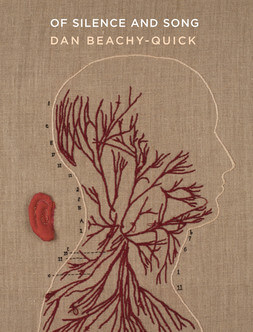
Of Silence and Song book cover by Dan Beachy-Quick

CD: Your most recent book, Of Silence and Song, is composed of many different genres—poetry, essays, travel writing, art, and more. Why did you decide to write across genres, rather than just writing a book of poetry or essays? How did the subject of your book inform the form you decided to write it in?

DBQ: I wanted to find a way to work toward other books I love deeply—the quality in them that any page can hold a small wonder that contains a thought or perception or quote or question that livens and almost enchants the page. The preeminent such author for me is Sir Thomas Browne, whose books are learned but never pedantic, personal but never confessional, philosophic but broken apart by wonder, historic but never pedantic. I also wanted a book that broke apart the expectations that one might have in reading it, and doing so, broke apart its expectations of itself. In some sense, the book is trying over and over again to get at the unspeakable thing hiding within words themselves, and to do so, it seemed the book itself knew it needed to work against the ease of its own consistency. I just kind of followed along. I also wanted to write a book that felt truer to our own inner lives, which seems always open to (and broken by) distractions, random tangents, looking up and away from the matter at hand to notice other things, some small and ephemeral, some annoying, some profound but fleeting. I think I’ve long had this sense, almost a kind of desire, to learn to write in such a way that attention became a form of inclusion rather than exclusion. What worried me in this book was the relationship of silence to sound, of oblivion to knowledge, those paradoxes that reveal and conceal at once the ways that what is known and what is unknown are intertwined—and I found myself writing in order to pursue such difficulties, which often meant giving up entirely any notion of easily coherent form.

CD: The description of your newest book says that one of the joys of life you write about is spending time with your daughters. How does your family, and your role as a father, influence your writing? Was there a shift in how you wrote from before you had children to after?

DBQ: As Robert Duncan said of reading William Blake, “it broke the husk of my hubris.” One of the strangest things I’ve found in being a parent is witnessing over the course of many years a person whose life is wholly tuned outward gradually gain this vast inner realm to which I have only the access of what they tell me. It’s both awe-inspiring and frightening, a kind of wonder-terror, a marvel-fear, as the old Greek word deinos implies. I think the most direct influence—and Of Silence and Song is, I hope, a kind of evidence of what I’m saying—is that I wanted to find a way in my writing to reflect the way in which having children wholly alters one’s sense of self and world, and this occurs at levels existential, intellectual, emotional, and putting aside the “high-minded” concepts, also means that while trying to write about the death of John Keats at 5:30 a.m., having woken up early to do so, sometimes you have to listen to Sesame Street while imagining your favorite poet dying in Rome, because the toddler work up, too—and that’s real, that’s necessary, and to deny it is a kind of violence to the rhythm of the daily-familial that I realized I no longer wanted to accept. The holy ground is continual upheaval, not placid hours. That realization, my two daughters, made me a different person, and to write otherwise would be a dishonor to them.

CD: You’re an accomplished writer and you also teach creative writing at Colorado State University. How do these two roles influence each other? What are the most joyful aspects of teaching for you?

DBQ: At times, I must admit, they feel wholly the same. I’ve come to suspect that the classroom-space and the poem-space are eerily similar. At the very least, a good class as I’ve come to consider it invites confusion in, invites in doubt, and in the midst of such complexities, such difficulties, says, “Here is the place of the gathering; here are the grounds of encounter.” That feels to me just what a poem does. Simone Weil writes of the ethical life of an “activity which does not act.” I’ve come to think of poems and classes in just such light: something occurs in each, an activity that doesn’t act, a radical passivity that isn’t indifference but participation at another level—heart, mind, soul. The joys? That indecipherable sense that understanding inches its way toward us because we’ve humbly asked for its approach.

CD: Nature is a theme in your poetry and essays. Do you write outside? Is there a specific place in which you write?

DBQ: In the summer time, and in nice weather in spring and fall, I’ll write in the gazebo in our backyard, dog wandering the lawn sometimes, sometimes asleep art my feet. But also—in the early morning in the living room, and speaking of family and writing, at the kitchen table, with the coffee pot on.

CD: What’s next for you?

DBQ: Oddly, I feel like I’m not the best one to ask. I just wait to see what arrives.

**

Dan Beachy-Quick is a poet and essayist, and author most recently of a collection of essays, fragments, and poems, Of Silence and Song, published by Milkweed Editions in December 2017. He teaches in the MFA Program in Creative Writing at Colorado State University, and his work has been supported by the Lannan and Guggenheim Foundations.

|

No Comments

|

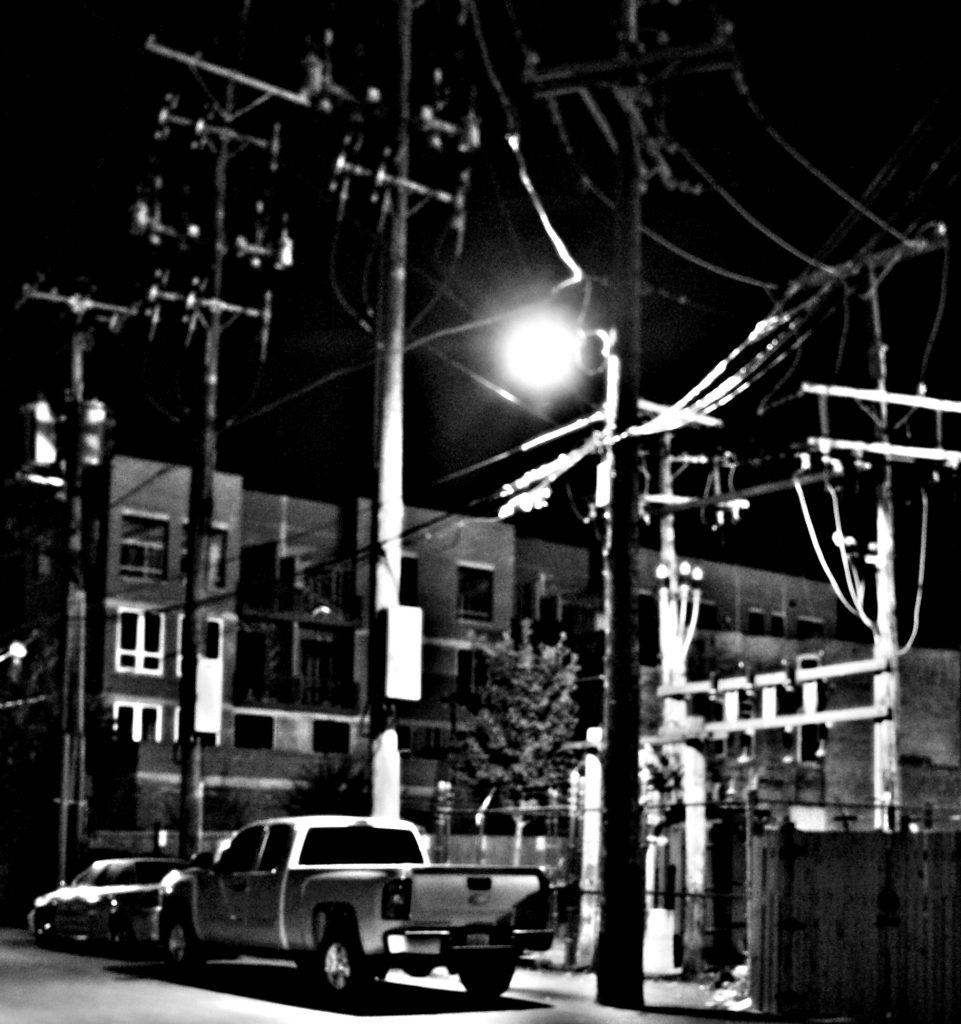
Midwest in Photos: Urban Jungle, S. Racine, Chicago, IL.

“I felt a haunting loneliness sometimes, and felt it in others–young clerks in the dusk, wasting the most poignant moments of night and life.” – F. Scott Fitzgerald, The Great Gatsby.

Photo by: George L Stein

|

No Comments

|

Interview: Caitlin Bailey

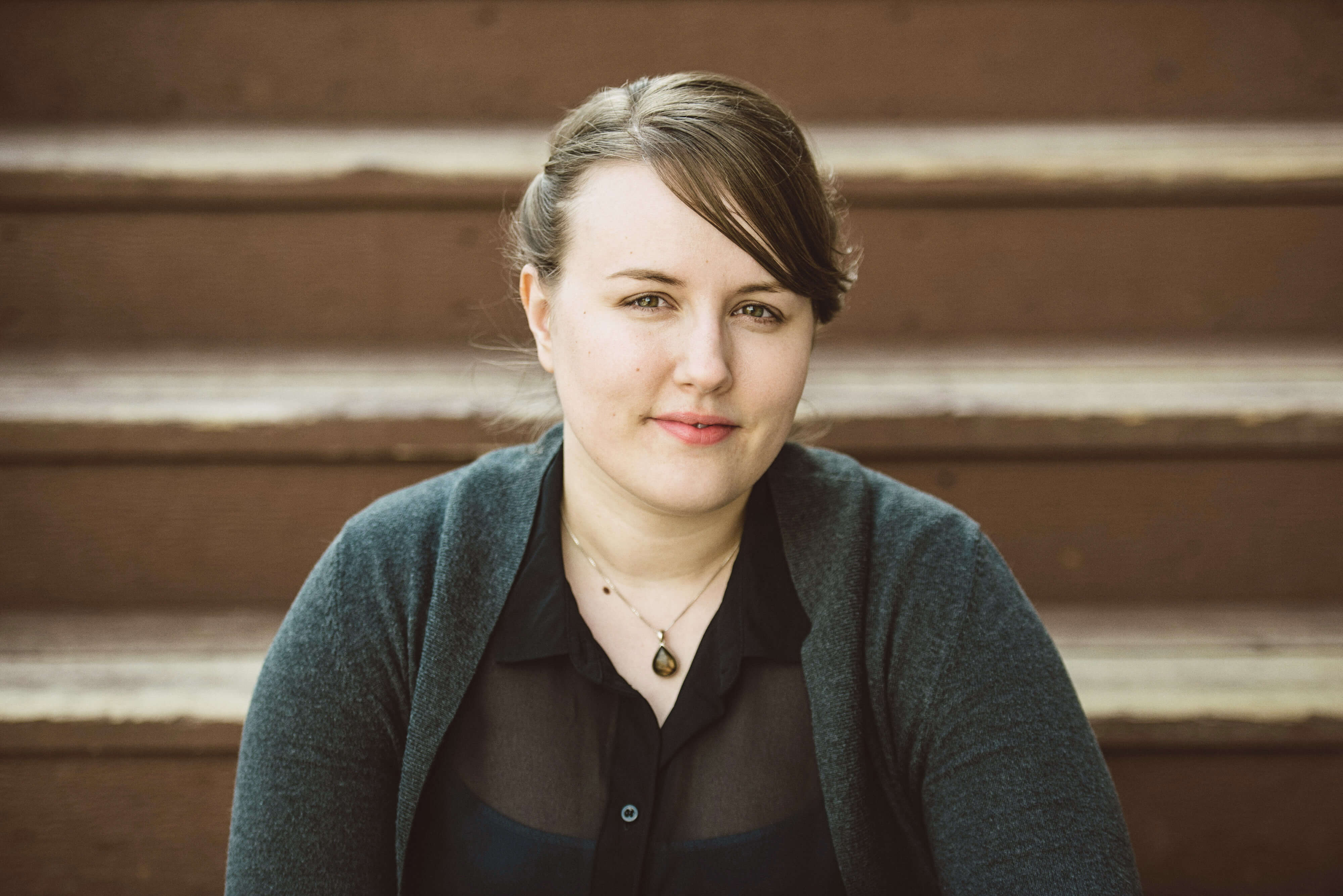
Caitlin Bailey author headshot

Photo credit: Lucas Botz

Midwestern Gothic staffer Marisa Frey talked with author Caitlin Bailey about her collection Solve for Desire, the driving force of unavailable information, researching for poetry, and more.

**
Marisa Frey: What’s your connection to the Midwest?

Caitlin Bailey: I grew up in Minneapolis, went to school in the Twin Cities, and now live in St. Paul, so my identity is firmly rooted in Minnesota. I love living here, and can’t really imagine living elsewhere.

MF: How does living in Minnesota influence your writing?

CB: I feel really lucky to be a part of the writing community in the Twin Cities. I think we’re fortunate to be surrounded by so many amazing writers—both new and established—here in Minnesota. In addition to being in the midst of such talented writers, we have wonderful arts organizations here. The Loft Literary Center, Minnesota Center for Book Arts, our amazing local presses, the folks who organize and run amazing reading series all over town—all of this adds so much to the experience of being a writer in Minnesota.

MF: Solve for Desire is your debut collection. How long did it take to write, and what was the process like?

CB: I’ve been working on this book for a long time! I wrote the bulk of the poems during graduate school and during the three years after it. Originally, I wasn’t sure how the poems I was writing about the Trakls would fit with the other poems I was writing. I’d set my original manuscript up in sections, separating the Trakl poems from my other work entirely. That arrangement wasn’t working; it felt uneven. In the end, I found that the poems I’d written without thinking specifically of Grete were speaking to similar concerns about desire and loss. Once I blurred the lines between the poems, something seemed to click.

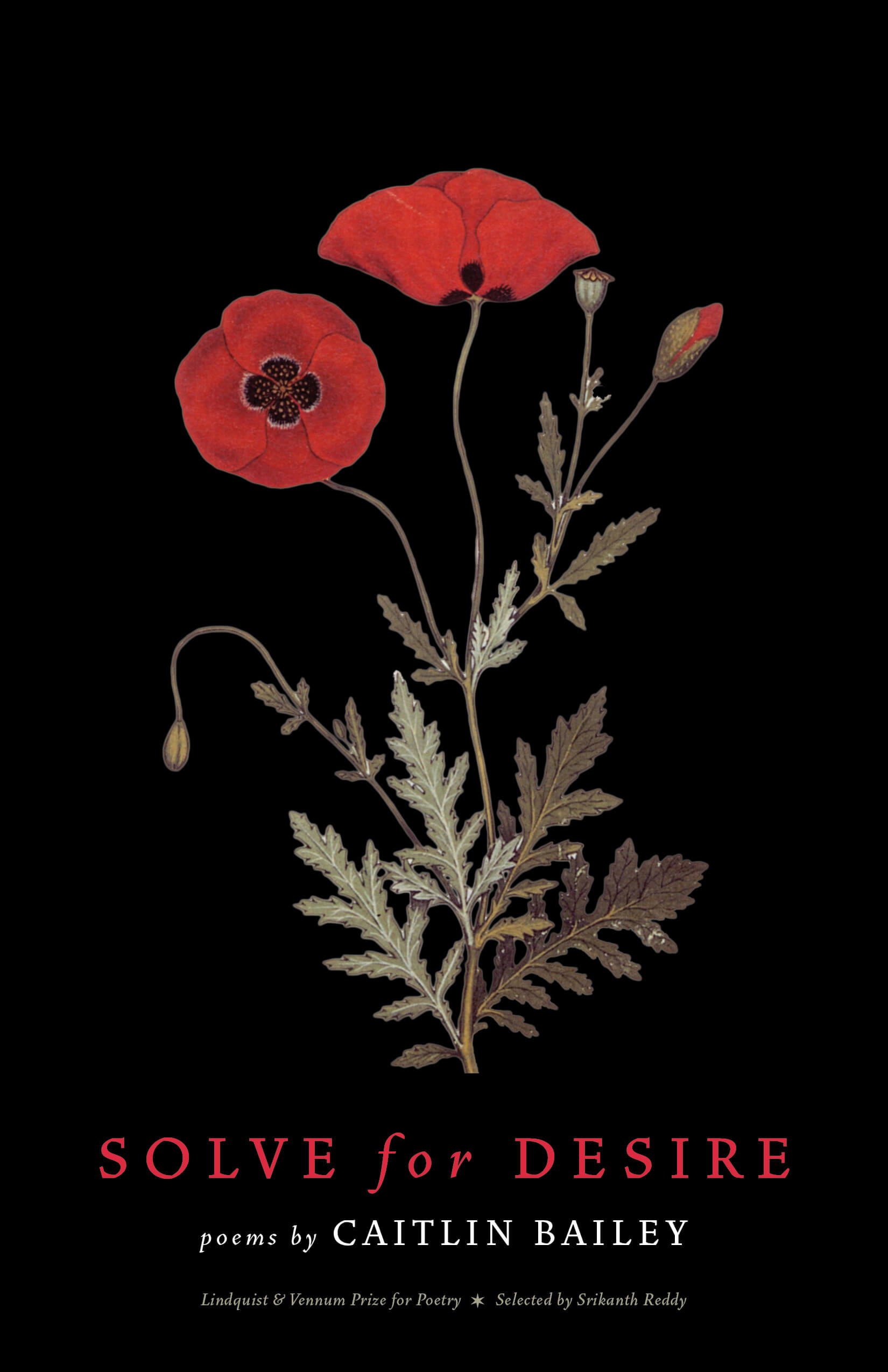
Solve for Desire book cover by Caitlin Bailey

MF: Solve for Desire explores the relationship between the siblings Grete and Georg Trakl—an Austrian pianist and poet, respectively—from the early 1900s. What drew you to writing about them, and focusing on Grete?

CB: When I started writing this book I was actually working on a series of poems about Miklós Radnóti, a Hungarian poet, and a friend of mine suggested that I look at Georg Trakl’s poetry in conversation with Radnóti’s. I quickly became obsessed with Georg and his sister, Grete.

When I started researching Trakl’s life, I was immediately drawn to Grete’s story, which was significantly less fleshed out than Georg’s. Some of my other work from that time was considering the erasure of women’s inner lives from history. Grete was known just as Georg’s sister, but I wanted to explore how she existed in the world as a human who was more than Georg’s sister—who had a rich inner life of her own.

I discovered that no correspondence between Georg and Grete is publically available, and that their letters to each other may have been destroyed. This seemed like a loss to me, but it was also an invitation. I wanted to know what their letters might have said, and it sort of haunted me that I might never know. That was the original impetus to begin writing these poems, and I started writing a series of imagined letters and persona poems in Grete’s voice.

MF: What is the relationship between playing the piano—Grete’s art form—and writing a poem?

CB: I played piano for years as a kid, and I think you can get lost both in writing a poem and playing a piece of music. There’s a sense of discovery and possibility in both kinds of art; writing a line that’s really working is a bit like finally playing a song effortlessly.

MF: How did you go about researching for the collection? When did you rely on fact and when did you rely on your imagination?

CB: I don’t speak German, so researching for the collection was definitely a challenge. Most Trakl biographies are written in German, but I bought any book on Trakl in English I could find. Most translated collections contain some biographical information, and I was able to find a few other books with a fair amount of information about Georg and Grete. Researching was also challenging in that not all sources agreed on basic facts. It’s unclear whether Georg’s death was a suicide, or at what age certain events occurred. I tried to be accurate when possible, but I also had to accept that I wasn’t going to have all of the facts.

I used the outlines of the Trakl’s lives as the backbone for the poems, but I expanded on what I could find and imagined some situations. For example, in the poem “Wild Boat,” I write that Georg died in Poland, which is true. The rest of the poem is an exploration of how Grete might have dealt with Georg dying. In “The Pond,” I write about a time when Georg was very young and walked into a pond. He almost drowned, and was only saved because someone spotted his hat floating on the water. I found brief mentions of this incident in books, but I imagined what it might have been like for Grete to observe and consider this incident and its implications.

MF: The collection began as an imagined letter from Grete to Georg. What are some challenges and benefits of writing a persona poem?

CB: I’ve always been drawn to research in the service of poetry, so persona poems are especially intriguing to me. I didn’t want these poems to be sensational, so I spent a lot of time thinking about how I could make them feel true. In Grete’s case, I didn’t have any source material to work from, so I was starting from scratch. Projecting my own feelings and desires onto someone else’s life isn’t something I did lightly, but my goal in writing these poems was to honor Grete.

MF: What inspires you to start a poem?

CB: Generally, I write poems in two ways. One way I start a poem is with a specific idea/person/event, like in some of my poems written about Grete and Georg. If I have something specific I want to convey, that can help me structure my writing. The other way I typically start a poem is with a particular line or image. Sometimes I’ll use a line written months or years ago and write from that. This way of writing a poem is much more open-ended, and where I find myself beginning lately.

MF: What is the best advice about writing you’ve ever received?

CB: Read more. Whenever I feel stuck in my own writing, I read. I have old favorites I can return to, but I’m always looking for new writers, too. When a poet does something with language that I find exciting it motivates me to write.

MF: What’s next for you?

CB: I spent the last couple of years editing and rewriting Solve for Desire, so I’m excited to work on some new poems. I’m in a space now where my next project is completely unknown, and that’s kind of exciting.

**

Caitlin Bailey is the author of Solve for Desire, winner of the 2017 Lindquist & Vennum Prize for Poetry, selected by Srikanth Reddy. Her poems have appeared in Prairie SchoonerHayden’s Ferry ReviewCarolina QuarterlyVerse Daily, and elsewhere. The recipient of a Loft Mentor Series award, she received an MFA from Hamline University and lives in Saint Paul, Minnesota.

|

No Comments

|

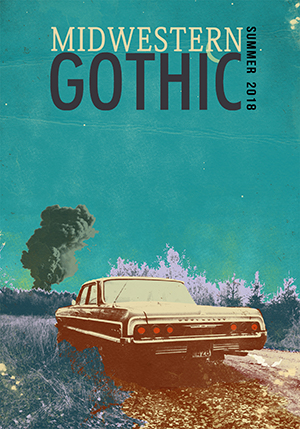
Summer 2018

Midwestern Gothic Summer 2018


Cover art by Chris Bigalke

OUT OF PRINT
Perfect to help cool you off at the beach, or keep you company under the shade of your favorite reading tree, the summer issue of Midwestern Gothic is here. Featuring new fiction, poetry, nonfiction, and photography about or inspired by the Midwest, you won’t want to miss it. Pick up a copy and enjoy work from the following talented writers:
Fiction
Marc Allen / Gail Aronson / Nathaniel Blaesing / Eimile Campbell / Michael Cebula / Scott Dorsch / Jen Ippensen / Laurence Levy / Sophie Paquette / Scott Onak / Jeremy John Parker / Chloe Seim / Aurore Sibley / Alyssa Striplin / Beth Weeks / Joliange Wright / Brian Zimmerman
Poetry
Erica Anderson-Senter / Nancy Botkin / Kai Carlson-Wee / Sanda Moore Coleman / Nicole Connolly / Savannah Cooper / Brian Czyzyk / Carthryn Essinger / Lara Frankena / Rae Hoffman Jager / Michael Kriesel / Gerry LaFemina / John LaPine / Lizzy Petersen / Samuel Piccone / Joseph Pritchard / Sara Ryan / Josh Weston
 

Nonfiction
Stephanie Anderson / Laura Dorwart / Stacy Boe Miller / Claire Moran / Cassandra Morrison / Elisabeth Giffin Speckman
 

Photography
Steve Frosch / Alec Josaitis / David McCleery / Kevin Yuskis

|

No Comments

|