Anna Prushinskaya Interviewed by Pulp

December 13th, 2017

We’ve got another interview to share with y’all!

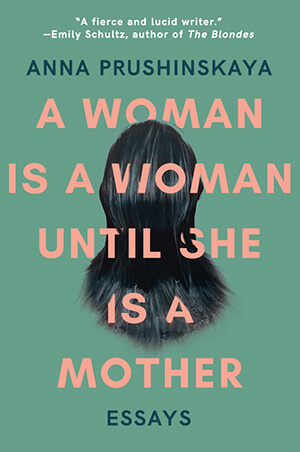
Anna Prushinskaya did with Evelyn Hollenshead of Pulp – Arts Around Ann Arbor about her book A Woman Is A Woman Until She Is A Mother, where she discussed her essay collection, motherhood, and how becoming a mother has changed her writing.

“…becoming a mom made me want to have more direct impact through my writing.”

Read Anna’s full interview about A Woman Is A Woman Until She Is A Mother here.

Anna Prushinskaya Interviewed at Electric Lit

More good news to share! Anna Prushinskaya, author of the recently-released MG Press title A Woman Is A Woman Until She Is A Mother, was interviewed by Juliet Escoria of Electric Lit!

“The title of the book is A Woman Is A Woman Until She Is A Mother in part because I was thinking about the categories of ‘woman’ that I have contended with in my life — motherhood being one of them — the broader implications of those categories, and about the power of a woman’s story.”

Check out the full interview on Electric Literature’s site.

|

No Comments

|

A Woman Is A Woman Listed on Entropy’s Best of 2017


A Woman is a Woman Until She is a Mother book cover by Anna PrushinskayaWe are beyond thrilled to share with y’all that MG Press book A Woman Is A Woman Until She Is A Mother was chosen as one of Entropy magazine’s “Best of 2017 Nonfiction” titles! We’re so proud of Anna Prushinskaya, and so honored that she trusted us with her beautiful collection of essays. Join us in saying congrats to Anna!

Here’s what the Entropy staff said about the collection:

“Anna Prushinskaya’s A Woman Is a Woman Until She Is a Mother is a frank, courageous, and beautiful meditation on the strange alchemy of migrating from one identity to another.” — Helen Phillips

The “Best of 2017” List is based on nominations from the staff at Entropy and nominations from readers. In no particular order, the list highlights the best nonfiction has to offer from the year. For more information on Entropy‘s “Best of 2017” List, click here.

If you’d like to learn more about A Woman Is A Woman Until She Is A Mother, check out our book page!

|

No Comments

|

Midwest in Photos: Beginning and End

“What did I know, what did I know / of love’s austere and lonely offices?” – Robert Hayden, “Those Winter Sundays.”

Photo by: Lindsey Steffes

|

No Comments

|

Interview: Dan Hoyt

Dan Hoyt author headshotMidwestern Gothic staffer Carrie Dudewicz talked with author Dan Hoyt about his book This Book Is Not For You, experimental and fragmented writing, the literature of Rock and Roll, and more.

**

Carrie Dudewicz: What’s your connection to the Midwest?

Dan Hoyt: In 1988, I did a reverse Gatsby: I left the East Coast (Massachusetts) to go to the University of Missouri, where I completed a bachelor’s and stayed for a master’s. While at Mizzou and right after, I worked at both of the daily papers in Columbia, Missouri: The Daily Tribune and the J-School-run Missourian. I taught for a semester in Romania, and I lived in Binghamton, New York, for a year and a half or so, but since 1988, those are the exceptions, and I’ve mostly been a Midwesterner for my entire adult life: In the 1990s, I worked at two other Midwest newspapers (The Kansas City Star and The La Crosse Tribune), I got my PhD at the University of Kansas in the early oughts, I taught for six years at Baldwin-Wallace University in Ohio, and now I’m an associate professor at Kansas State University. I’ve got the golden handcuffs, so Manhattan, Kansas, is probably where I’ll spend the rest of my days. I’m the aesthetic and intellectual product of large public Midwestern Land Grant universities, and I’m so grateful for that. The Midwest made me a journalist. The Midwest made me a fiction writer. The Midwest made me a teacher. I don’t even say “cah” for “car” much anymore.

CD: You’ve spent much of your life in the Midwest. How does living in this region influence how and what you write?

DH: I write about the fucking messed-up and wonderful lives we have here, just like on the coasts. I write a lot of Midwest realism and Midwest magical realism, too, like my story where a man gets decapitated at a Burger King (the one right here in Manhattan, Kansas, actually) and then both halves of his body live on. A lot of people on the coasts don’t know that, that we have supernatural powers out here and that we live and bleed and we listen to punk rock in the basements of homes of very cool people and we make art and we wash out as purple politically and we give some of that blood to people in need and we plug into the internet and we drive faster than Springsteen and then we die here and we die a little bit every day, like everybody everywhere, and I don’t know what that really means, except our lives are messy and complex and not at all flat or boring or worth being fucking flown over, so I try to tell stories of those lives: of the 21st-century Midwesterners being caught looking silly on security cameras and trying to be rappers and trying to love without getting too fucking hurt. These are my people because I am these people. Neptune, the first-person narrator of This Book Is Not for You, has spent all but a couple of weeks of his life in Missouri and Kansas. He’s an anti-racist skinhead, and a punk, and a reader, and a writer, and he has a criminal past, and he’s an alcoholic, and he flails at love, and he tries, and he does stupid shit, and he’s haunted by ghosts, and he belongs to Lawrence, Kansas, and all of him belongs to this land. He belongs to Bloody Kansas. I don’t know — did I answer this one? Sort of maybe?

CD: This Book Is Not For You is a fascinating combination of multiple genres, told in a chain of “first” chapters. What inspired you to write such an experimental novel? How did that experience compare with writing more in more traditional forms?

DH: Oh, man, I’m going to answer the second question first, perhaps in a clever attempt to evade the first question. I started this book in 2003, when I lived in Lawrence, Kansas, and I didn’t finish it until 2014, and if it hadn’t been experimental and fragmented, I don’t think I could have finished it. I kept putting it down and picking it up and letting it sit for years, but because I was writing Neptune’s voice in these small bursts — in some ways I think of them like punk songs, short, fast, loud rude — I could summon him up somehow. He’s lived with me a long time. That’s how he thinks. That’s how he works. With more traditional forms, well, with short stories I tend to write in fragments too, but there’s a stronger process of sewing them together, of trying to hide the ragged seams. Neptune’s all ragged seams: they can show. Okay, now, that first question: I’m not sure what inspired me to write an experimental novel, except the book was born in this experimental town, in Lawrence, Kansas, a place that belonged to Native Americans and to abolitionists and to rock and rollers back in the day when it was going to be the next Seattle and to William Burroughs who lived there and to all the folks hanging out at the Replay Lounge. I wrote some of the first snippets on bar napkins, on the back of junk mail. I knew I wanted the voice to be punky, to challenge the reader. Man, that was a long time ago. I suppose something inspired me.
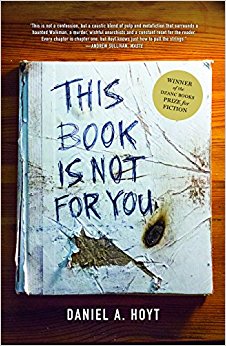
This Book Is Not For You book cover by Dan Hoyt

CD: Early reviewers say that the structure of the story, being told in only chapter ones, acts like a reset to the reader. Where did you get the idea to do this? Does this novel require that reader reset? If so, why?

DH: Yeah, I think there’s a really nice blurb that says there’s a reset for the reader on every page or chapter, but although I think that blurber is an incredibly astute judge of literature (Thank you, Andrew F. Sullivan! He was one of the judges of the Dzanc Fiction Prize, and because of his kindness and generosity — along with Kim Church and Carmiel Banasky—Neptune got to live a life in other readers’ heads. I’m so, so grateful to y’all), I don’t think the book resets. Neptune typically — eventually! — picks up where the last chapter left off, but, of course, the bigger point is that Neptune himself wants a reset: he doesn’t want to write the book or can’t write the book or can’t quite open up, but despite all this he still tries, and he tries to stop doing shitty things, and he tries to escape from his past, and each new chapter of course is something new, a fresh start. I think this idea came because, oh, hell, I think because it was fun?

CD: Similarly, was one experimental element more difficult to write than another? Was one more enjoyable?

DH: So many parts of it were enjoyable. It was superfun to bring in the ghost animals, and it was superfun to be snarky with the reader, and it was superfun to get all meta on the reader’s ass, and it was superfun to add the inside jokes and the noir elements and the Ghost Machine, which is a haunted Sony Walkman. Man, it was all fun! Which, I have to tell you, is so much easier to say and actually believe when the book is finished and printed!

CD: Are there specific experimental novels that inspired you? If so, which ones?

DH: Well, there are all those folks who did and are doing metafictional type stuff, and she hasn’t written a novel (at least that I now of), but I admire Kelly Link’s amazing prose and her sheer bad-ass bravado: Fuck yeah! Throw a zombie in! Apparently, too, there’s some sort of moment in House of Leaves that says “This book is not for you,” and the weird thing is, I’ve tried to read that book, and it just doesn’t kick into gear for me (that clutch just grinds), and I didn’t even know about the reference until after This Book Is Not for You was published, so I think the answer here is maybe? But, no, definitely not House of Leaves.

CD: As a professor at Kansas State University, how does your teaching influence your writing career and vice versa?

DH: Well, I love my students, and their work means a great deal to me, and because of that, during the school year, I spend a lot more time on their writing than on mine, but that’s kind of a shitty way to start here, so, well, shit, I get to be engaged in stories all the time, to think about narrative, to meet strange and wondrous characters that I would never create myself. I get to be inspired by my students, and I get to be energized by their hope and their possibilities. I try not to let my own writing influence my teaching beyond that I think people should try to do their damned best to write the richest versions of their own stories, the ones they want to tell, the ones they need to tell.

CD: You do a lot of teaching about literature and rock and roll. What drew you to this subject? How is rock and roll (generally) written about in fiction?

DH: I’ve been a rock and roll fan since my age was in single digits, but I probably got into rock and roll novels in my 20s. It’s a genre that allows for all kinds of cool interactions between form and meaning. My students seem to think that rock and roll literature is mainly about bands that fail, and, okay, they have a point there, but the literature of rock and roll does so many interesting things, like let us observe a really close friendship between a brother and sister (in Stone Arabia), or let us think about what being a “real” punk means (in A Visit from the Goon Squad). I’ve been putting together the Rock and Roll Reading at AWP (the fifth-annual will take place in Tampa), and it’s great, and everyone reads a piece that’s only as long as a song — just a few minutes — and let me tell you, the literature of rock and roll can do any damn thing it pleases. It’s up to the singer. Just sing loud, even if you can’t even sing.

CD: Is there a specific time of day you write best? If so, what is special about that time?

DH: I am a believer in writing pretty soon after you get up, so that the day doesn’t swallow you up along with your chance to write, and so that you can go through that day knowing you’ve written, that you’ve done it, and you, you my goddamn son, you do not have to feel guilty. But I teach and really care about it, and we have a 13-month-old, and the internet announces a fresh new catastrophe every second in 2017, so I’m fucking busy all the time, and accordingly I don’t have a special time to write, not really. I try to grab whatever I can. I’m 47 now, which feels ancient (thanks again, year 2017!), so all time feels special. I’ll take any hours you’ve got, minutes even.

CD: What’s next for you?

DH: Fiction-wise, I’m working on two novels, a realistic one set in Manhattan, Kansas, on Fake Patty’s Day (a day when students often begin drinking at 6 in the morning) and a more magical one set during the first 100 days or so of the Trump administration. I’m also working on a nonfiction book about the 1991 Fifth Down Game, when the officials made a mistake, and Colorado beat Missouri with an extra down on the final play of the game: It’s about the growth of big-time college football and mistakes and psychology and leadership. Life-wise, during the winter break, I’ll be roughhousing with Sey, our son, reading a stack of novels, playing some new vinyl, listening to bands at Manhattan’s Church of Swole, cooking some meals, taking walks, and calling my elected representatives: I’ll be yelping at them. I’ll be making New Year’s resolutions. I’ll be making up people who don’t exist, and, you know, they’ll feel alive.

**

Dan Hoyt’s debut novel, This Book Is Not for You, won the inaugural Dzanc Fiction Prize and was published on November 7, 2017. Dan’s first short story collection, Then We Saw the Flames, won the 2008 Juniper Prize for Fiction. Dan’s stories have appeared in The Sun, The Iowa Review, The Missouri Review, and other literary magazines. Dan teaches creative writing, mainly fiction, and lit classes, such as The Literature of Rock and Roll, at Kansas State University.

|

No Comments

|

Interview: Holly Amos

Holly Amos author photoMidwestern Gothic staffer Kristina Perkins talked with author Holly Amos about her poetry collection Continual Guidance of Air, her obsession with experience, finding her community, and more.

**

Kristina Perkins: What is your connection to the Midwest?

Holly Amos: Born and raised. I was going to say that I spent over 20 years there but then I realized I STILL live in the Midwest, though Chicago and rural Ohio are two very different places. When I think of the Midwest I think of my childhood—ditches, fields, small patches of trees. The middle of nowhere being everywhere. It’s a place that has deeply informed who I am (and who I am not). It’s a place I both reject and embrace. At some point I forced myself to stop saying “pop,” and I’ve been saying soda for so long now it was hard for me to remember that “pop” is what I used to call it. THAT was the Midwest marker I just couldn’t keep!

KP: How has your relationship to the Midwest influenced your writing?

HA: In the landscapes, the animals. In the colors. I think certainly in the wanderlust—in the yearning (I hate that word). Growing up where I did is probably part of the reason I read so much as a kid. I read Michael Crichton’s Sphere a lot. The idea that nobody had really seen a giant squid alive, that it lived that far down, was and still is comforting and exciting to me. I think it represents possibility. Not many people leave where I came from, and growing up, my brother and I walked across the field to play with our cousins. In some ways it was really lovely. I’ve just always wanted something back home couldn’t give me. Not that I’ve exactly found it.

KP: You work as an assistant editor for Poetry, a highly esteemed literary magazine. How has your job—and all the copy editing, proofreading, and fact-checking it entails—changed how you read and write poetry?

HA: Every time I use a tab I feel bad! They’re very unhelpful for typesetting in almost all cases. It’s also made me slow down and better try to recognize the immediate bias I’m bringing to a poem, whether it’s my mood, how much time I have or don’t, what else I’ve been reading lately. I think (and hope) I’ve become a more patient reader. There are a lot of poems I came to love while proofing an issue of the magazine that I didn’t love at first. So if I can tell I’m just not in the mood for something I check myself and come back to it later with a better head. I think that’s helpful for writing, too.

KP: In a previous interview, you’ve noted a rise in political, social-justice oriented poetry. Your own work in your debut full-length collection, Continual Guidance of Air, is similarly political, centering the lives of animals in the fight for animal and environmental rights. How do you understand the relationship between poetry and activism? How might poetry be wielded as a tool for political change?

HA: I think poetry can be an empathy conductor. It can also be a channel for information. I did a RHINO Poetry Forum recently (shoutout to RHINO!) where I talked about this and used a couple of examples, like the poem “I am not the most important forest you’ve been in” by Beyza Ozer. We are overloaded with headlines all the time, and at some point, I think most people just shut off. It’s easy to not read an article because you see the headline and you know what you’re getting into, so you sort of skim that information because it’s important, but you don’t necessarily engage with it. And sometimes that’s just self-preservation, you know? But poems, by nature, are things you have to engage with. If you don’t, there’s no point in reading. So poets have a rapt audience. It might be limited, sure, but it’s the best audience in the world for creating change, in my opinion. The poem by Beyza Ozer is not titled in a way that alerts you to the fact that it’s political, which I think broadens its reach, in a way. Like if someone is just DONE for the day, just wants to read a poem to sort of escape, they might come to this one. Except the very first line is the type of thing you read in the news. The rest of the poem is political in various ways and not political in various ways. By I think there are so many ways a poem can sneakily encourage openness and empathy in even the most DONE readers.

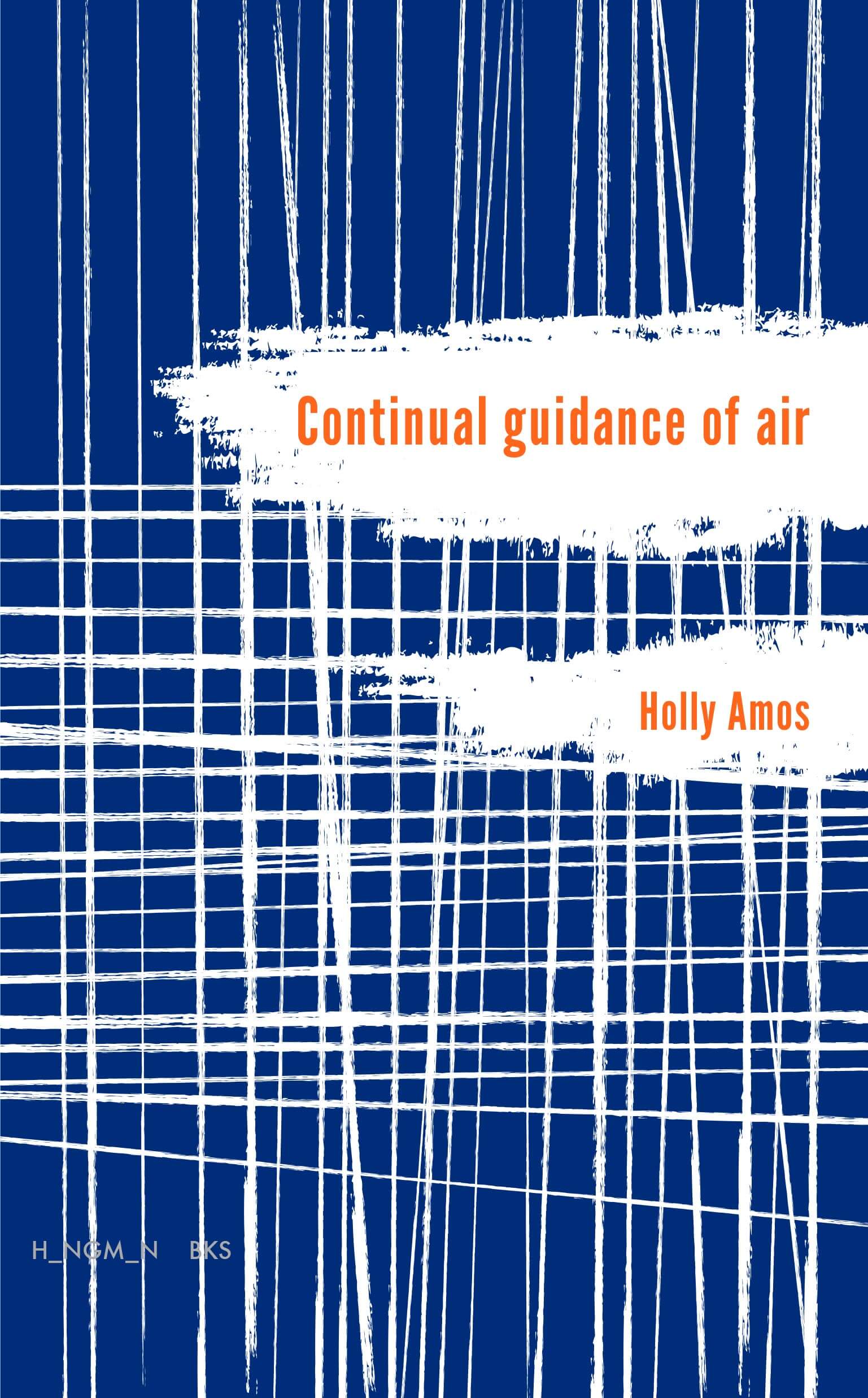
Continual guidance of air book cover by Holly Amos

KP: Your poems in Continual Guidance of Air are rawly emotional and beautifully corporeal, navigating the embodied spaces between anger and pleasure, pain and hope. How do you understand the relationship between the body and the poem? How does your work capture this relationship?

HA: Thank you for this! I’ve been asked about the relationship between the body and the poem before and it’s really tough for me to answer. The way I think and the way I write are both definitely a product of my obsession with experience. Of how we experience. Of the fact that that it’s physical and mental—that the physical is filtered through our mind, that there are things we can do mentally to impact the physical experience and vice versa. While running my first marathon my feet started hurting a lot toward the end, and I decided to try and control it mentally, since pain is a mental message. In my head, I just started repeating “no pain no pain no pain” and after maybe 30 seconds or a minute it stopped. (This is part of one of the poems in my book, “Specific Motion.”) I’m obsessed with this. I’m obsessed with experience as something we craft, whether directly or indirectly, for ourselves or for other selves, and as something we respond and react to. I mean what else is there? In writing a poem, we are deliberately crafting experience and responding to it simultaneously. I think writing alters the origin experience(s), and also creates a new experience. It’s a blossoming effect. That in and of itself is an incredible thing, and an exciting thing.

And to go back to your question, the body is very much part of that. Without the body there might be a type of experience (the soul—or being part of the universe—just atoms, just matter—that’s still a type of experience, in my mind—and it might be something we feel or sense as beings—I don’t know)—but as long as I’m a bodied individual my experience is always going to be directed through that body, until it isn’t. So that feels really necessary to me in writing a poem, because ultimately I am trying to get somewhere deeper or more illuminated.

It’s also something I think about all the time in terms of animal rights. What does it feel like to be a chicken in a battery cage, what does it feel like to be a cow who’s just given birth and had her baby physically removed from her hours later so that a person can drink her milk. I’m talking about empathy, but for me empathy is very much tied to mentally trying to imagine a bodily experience. Like a chicken in a battery cage—I know what it feels like to feel cramped on a train. How awful that can be. How anxiety ridden and just physically uncomfortable. And then thinking about my entire life being that experience only. It’s devastating.

So what I’m also arguing is that empathy is something we practice—it’s not something we have. And the more we practice it the easier it is. Which can be uncomfortable, just like running, or yoga, but its worthy of the discomfort. And eventually we find ways to cope with the discomfort, ways to get beyond it while not foregoing the practice. Like foregoing cheese. It was uncomfortable at first. I craved it for a while and just had to sit with those cravings. But eventually my reaction, my response to not eating cheese changed and I no longer felt discomfort. Sorry for all that, but you know that old saying, “If you give a vegan a platform, they’ll take it.…”

KP: Relationships—between humans and animals, between humans and humans—form the backbone of your poetry in Continual Guidance of Air. Previously, you have offered a series of “Notes for a Young Poet,” writing: “Find your people / (I’m your people) and hold them all together. A small but / powerful porch of humanness.” How has finding your community—be it among co-workers at Poetry, former peers from your courses, or the animals in your home—influenced your identity as a writer?

HA: Oh my god well it’s everything. The first time I really, really felt like I found my community was in grad school. I know I was very lucky to have the people with me that I had. And then I started going to AWP and to readings and was like, “Wait there are more people like this??!!” But up until that point I’d been working at a company that bought real estate tax liens. It wasn’t something I wanted to keep doing, but I had always imagined that I’d keep one foot in the “real world” and one foot in the “poetry world.” When grad school was ending I realized I didn’t want to lose the community I’d found, so I quit that job and decided to apply to anything arts-related. Interacting with poets and poetry lovers at the Poetry Foundation, through The Dollhouse (a reading series I co-curated), and just through being a writer in the world, allowed me to no longer see the “real world” and the “poetry world” as separate. I think that’s a big deal. I also think it influences my identity as a writer. We are all soooo affected by one another, on micro and macro levels. I don’t think everyone wants to feel that all the time, but I think that’s a really important thing to honor AND to wrestle with, and I think doing so is crucial to social change.

KP: Describe your ideal writing environment. What (or, perhaps, who) is around you? What are you listening to? What utensils are you using? What are you looking at?

HA: I actually don’t like the idea of an ideal writing environment. I am very wary of routine when it comes to writing, wary of developing specific habits. I just worry about stasis and stagnation and I also think it’s important to cultivate openness. So I have a tendency to write lots of places. On a scrap of paper on the train to work, in my phone when I’m outside with the boys who have become ever-present in my writing (they’re dogs!), or on my laptop during a quick break at work because I just read something that did that thing where you immediately need to move with it.

KP: Who do you write for?

HA: Everyone, I hope.

KP: What’s next for you?

HA: I’ve been writing new poems that I think/hope are engaged in a broader sense. But I also have been thinking about non-poetry writing a lot and just started an essay about something that is very uncomfortable for me to talk/write about. It’s something that consumes me in many ways, and I’m hopeful it will be cathartic but also helpful to other people. Really, I’ve written barely anything so far because it takes a lot to get into it, but I’m excited about it, which is something!

**

Holly Amos is an animal rights advocate and vegan. She is the author of the full-length poetry collection Continual Guidance of Air as well as the chapbook This Is a Flood. Currently living in Chicago, she is the assistant editor of Poetry and a poetry editor for Pinwheel; she also co-curated the Dollhouse Reading Series.

|

No Comments

|

Contributor News

We’ve recently received some stellar news from our contributors! Join us in celebrating these awesome folks:

Jacquelyn Bengfort (Midwestern Gothic Summer 2017) had her story, “And So She Did,” appear in the latest issue of New Flash Fiction Review. Read the full story here.

Andrew Johnson (Midwestern Gothic Issue 8) released a debut collection of essays, On Earth As It Is, with Possum Trot Productions. Read about the collection here.

Jim Daniels (Midwestern Gothic Issue 12) released two new books recently: Street Calligraphy, a collection of poetry, and Challenges to the Dream, an anthology of writing from the Martin Luther King, Jr. Day Writing Awards at Carnegie Mellon.

|

No Comments

|

Midwest in Photos: Mayan Mayhem

“I want to see what the sun / sees before it tells / the snow to go.” – Kevin Young, “Ode to the Midwest.”

Midwest in Photos: Mayan Mayhem by Joel DeCounter

Photo by: Joel DeCounter

|

No Comments

|

Interview: Tatiana Ryckman

Tatiana Ryckman author headshotMidwestern Gothic staffer Marisa Frey talked with author Tatiana Ryckman about her book I Don’t Think of You (Until I Do), translating longing to written word, shorter-length publications, and more.

**

Marisa Frey: What’s your connection to the Midwest?

Tatiana Ryckman: I was born in Cleveland and went to school in central Ohio until college, when I moved to Nebraska. I’ve heard from impassioned Minnesotan and Michigander friends that neither of “my” states are the Midwest, but I politely disagree. The longer I spend in Texas, the more obvious it becomes that I’m from someplace else.

MF: Readers don’t know much about the identity of the characters in I Don’t Think of You (Until I Do)—they are nameless and genderless. What advantages and disadvantages did this pose while you were writing?

TR: The absence of names and genders happened surprisingly organically. I wrote section 1 in a single sitting and didn’t realize it would be part of a longer work. It seemed natural that a narrator would not talk about their name or their gender, nor the name/gender of the person being addressed. That section is really an admission of embarrassing longing across a great distance. The real struggle was maintaining this throughout the entire book when the characters were in the same place. As you mentioned, the reader never really gets a sense of what these characters look like. A benefit, or at least what I hoped would happen, is that readers would begin to see themselves as the narrator, and they would know exactly for whom they longed, or for whom they had once longed so tenaciously.

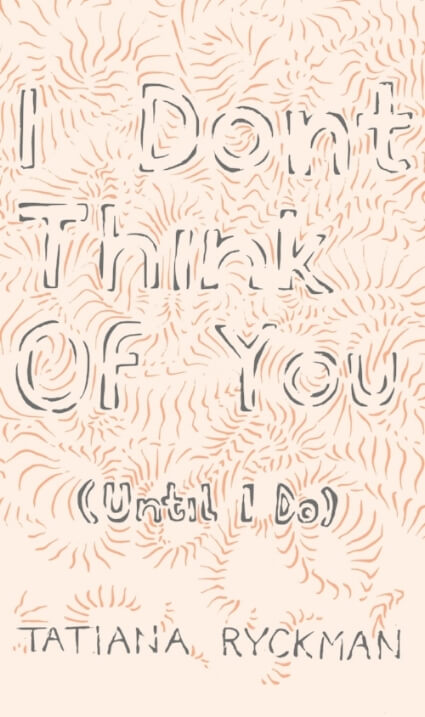
I Don't Think of You (Until I Do) book cover by Tatiana Ryckman

MF: I Don’t Think of You (Until I Do) is deeply confessional, probing at the innermost reasons for longing and loneliness. What was it like to write it?

TR: I love this question, though I don’t particularly love answering it. Writing this felt embarrassing, and shameful, and very depressing. I am not the narrator, but I (and I assume most people) have longed for someone far away, or who feels far away, and I found myself digging up and mining those old feelings, as well as creating/imagining new ones. How strange to make oneself obsessed with someone who doesn’t exist! And having that realization while writing was what ultimately led the narrator to understand that even if there was a real, breathing person on the other side of their obsession, the person they were longing for was really an object of their own creation.

MF: Do you consider I Don’t Think of You (Until I Do) a love story?

TR: Kurt Vonnegut says that all stories are love stories. Certainly by those standards it is.

MF: In addition to I Don’t Think of You (Until I Do), a novella, you are the author of two chapbooks, one flash-fiction and one flash-nonfiction. What appeals to you about these shorter-length publications?

TR: Lately I’ve heard comparisons to Twitter stories and about diminished attention spans, but I don’t find that to be my inspiration or motivation. I like them physically. They’re easy to stick in a purse or a pocket. My reaction when I see a very thick book is generally, “This must not have been well-edited.” Naturally there are many times when I’m wrong, and I am glad to be. Yet there’s something really wonderful about letting a single moment stand in for significantly more. One can dip into that world and emerge slightly different. There’s something poetic about it—as in poets do this all the time. And I like making words work a little harder, to earn their keep.

MF: You released a four-part video trailer for I Don’t Think of You (Until I Do). What was the inspiration for that? Can we expect more multimedia projects from you?

TR: I was incredibly fortunate to have a filmmaker friend, Robert Moncrieff, offer to make those trailers for me. He did a beautiful job. I have recently gotten excited about printmaking, so I do have hopes of mixing mediums in the future, though I’m not yet sure how that will happen or when or in what capacity.

MF: What are some advantages and disadvantages of writing books in the digital age?

TR: The advantage is, in theory, increased exposure. The inverse, then, is the disadvantage—the sheer glut of information potential readers are exposed to. Why should they read this book?

MF: What’s your ideal setting to write in?

TR: Physically, anywhere. Mentally, it seems to come best in a liminal space. While traveling, or moving from one task to the next. Long road trips or while switching between books. There’s something about disparate ideas or actions or places rubbing up against each other that seems to get me going.

MF: What are you reading right now?

TR: I’m drifting through many books right now. Very slowly. I’ve been revisiting To the Castle and Back by Václav Havel and have just started The Power Broker by Robert Caro. I’m very excited about Caca Dolce, by Chelsea Martin and Circadian, by Chelsey Clammer. And I think it’s just good practice to always have James Tate and Thomas Paine on hand. I’ve had Memoir of the Hawk (Tate) and Paine’s collected essays by my bed for a few months.

MF: What’s next for you?

TR: This is the question I’ve been fearing since the book came out last month. I haven’t started anything new. I have an old novella manuscript and a short play that I’m thinking about dusting off and working on. Also a few essays. I’m just waiting for something to catch.

**

Tatiana Ryckman was born in Cleveland, Ohio. She is the author of I Don’t Think of You (Until I Do) as well as two chapbooks of prose. Tatiana is the editor of Awst Press and has been an artist in residence at Yaddo and Arthub. More at Tatianaryckman.com.

|

No Comments

|

2017 Pushcart Prize Nominees

Pushcart Prize logoWe’re thrilled to announce our nominees for the 2017 Pushcart Prize!

For those who aren’t familiar, the Pushcart Prize is an annual award handed out to short stories, essays and poetry originating from small presses. At Midwestern Gothic we are so fortunate to read and publish some amazing pieces from folks all over the country, and while it’s hard to pick only a few to nominate, there were some that stood out as pure excellence.

That said, please join us in congratulating the following contributors who were nominated:

And be sure to take a closer look at the issues these contributors appear in here!

For more information on Pushcart Prize nominations, visit their website.

|

No Comments

|