Happy Pub Day to A Woman Is a Woman Until She Is a Mother

November 15th, 2017

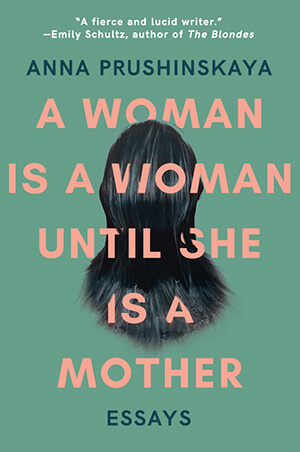
A Woman is a Woman Until She is a Mother book cover by Anna PrushinskayaWe’re so excited to announce that A Woman Is a Woman Until She Is a Mother is available now! Please join us in saying happy pub day to the incredible Anna Prushinskaya and her nonfiction collection about motherhood and its complexities!

A Woman Is a Woman Until She Is a Mother has received praise from the likes of v (The Miles Between Me), Helen Phillips (Some Possible Solutions and The Beautiful Bureaucrat), Amber Sparks (The Unfinished World and Other Stories) and Juliet Escoria (Witch Hunt and Black Cloud), among others. The collection has been hailed as “a frank, courageous, and beautiful meditation on the strange alchemy of migrating from one identity to another.” Trust us, it’s a must read with stories that are “meditative, curious and intriguing…[and] help us consider whether ‘the things that come with life are worth it.’”

In A Woman Is a Woman Until She Is a Mother, Anna Prushinskaya explores the deep life shifts of pregnancy, birth and motherhood in the United States, a world away from the author’s Soviet homeland. Drawing from inspirations as various as midwife Ina May Gaskin, writer and activist Alice Walker, filmmaker Sophia Kruz and frontierswoman Caroline Henderson, Prushinskaya captures the inherent togetherness of motherhood alongside its accompanying estrangement. She plumbs the deeper waters of compassion, memory and identity, as well as the humorous streams of motherhood as they run up against the daily realities of work and the ever-present eye of social media. How will I return to my life? Prushinskaya asks, and answers by returning us to our own ordinary, extraordinary lives a little softer, a little wiser, and a little less certain of unascertainable things.

We have copies in paperback and in Kindle eBooks – something for everyone! Be sure to pick up your copy of A Woman Is a Woman Until She Is a Mother now!

Contributor Spotlight: Milton Bates

Milton Bates author photoMilton Bates’ piece “Tragedy at Presque Isle” appears in Midwestern Gothic‘s Summer 2017 issue, out now.

What’s your connection to the Midwest, and how has the region influenced your writing?

Though I’ve lived on both coasts and briefly in the South, I grew up in Wisconsin and spent most of my working life there. On retiring, I moved to the Upper Peninsula of Michigan, where I’ve joined a lively community of writers who both challenge and encourage me.

What do you think is the most compelling aspect of the Midwest?

In a word, water. I live on Lake Superior and enjoy kayaking and fishing in the lake. Not surprisingly, the Great Lakes and the rivers of the upper Midwest figure prominently in my writing, including both of the poems I’ve published in Midwestern Gothic.

How do your experiences or memories of specific places—such as where you grew up, or a place you’ve visited that you can’t get out of your head—play a role in your writing?

After publishing several academic books, I asked myself what subject I knew well enough to address in a more creative way. The result was The Bark River Chronicles: Stories from a Wisconsin Watershed (2012), which distills three decades of exploring a single river with my family and learning as much as possible about its natural and human history. That book was my bridge to poetry, the genre in which I’ve apprenticed for the last half-dozen years.

Discuss your writing process—inspirations, ideal environments, how you deal with writer’s block.

There are two kinds of writer’s block. The first is when you don’t know what to write about; the second is when you’ve found a subject but can’t get started. I cope with the second kind by putting words on the page or computer screen until I understand where I should begin and how I should structure the piece.

The first kind of writer’s block is more challenging. Sometimes the answer is immersion, going more deeply into a potential subject until I discover why it’s worth writing about. Other times the answer is escape—through travel, let’s say, or wide reading. Both strategies may be simply ways to distract the conscious mind while the unconscious goes about its work.

How can you tell when a piece of writing is finished?

As a compulsive reviser, I rarely reach a point where I feel a piece can’t be improved with further revision. But it occasionally happens, and I’m grateful for those moments when a poem or a prose passage seems absolutely right and inevitable. (This isn’t one of those moments.)

Who is your favorite author (fiction writer or poet), and what draws you to their work?

My favorite is William Faulkner, whose best fiction is at once deeply tragic and delightfully comic. Add to that his command of a regional idiom and his willingness to address the big issues—racism, for example, and the devastation of the natural landscape—and you have a writer who inspires me even though I don’t plan to write a novel.

What’s next for you?

When I find a publisher for my current poetry collection, I will move on to the next chapbook or collection. And then the next.

Where can we find more information about you?

http://www.marquette.edu/english/bates.shtml

|

No Comments

|

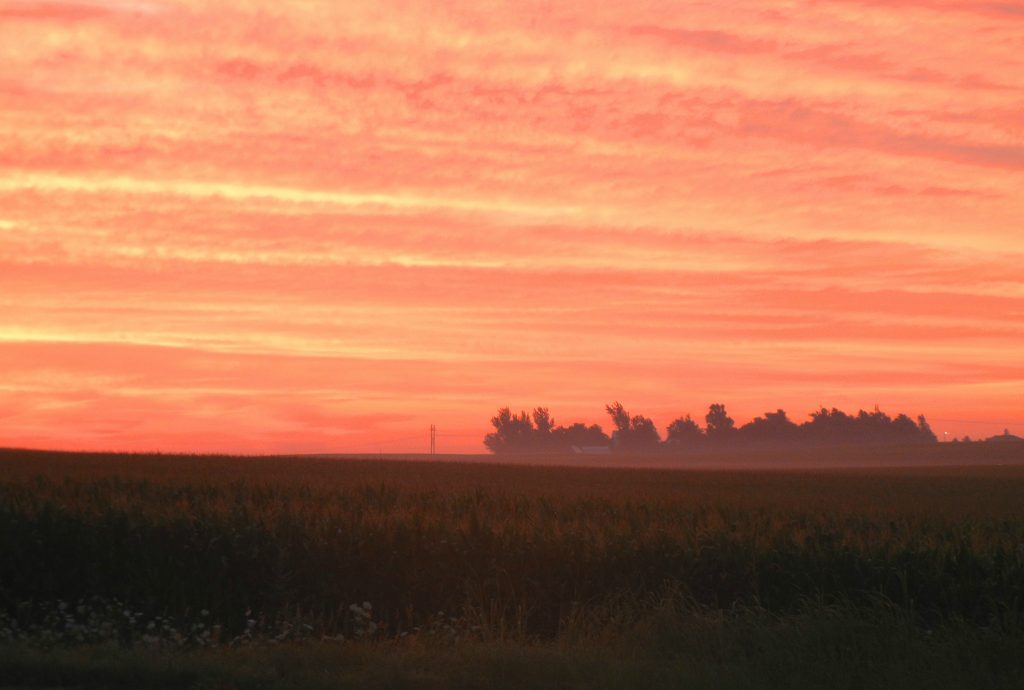
Midwest in Photos: Iowa Sunrise

“When things fall apart, the children of the land scurry and scatter like birds escaping a burning sky.” – NoViolet Bulawayo, We Need New Names.

Photo by: Kristina Rust

|

No Comments

|

Interview: Kathleen Rooney

Kathleen Rooney author headshotMidwestern Gothic staffer Marisa Frey talked with author Kathleen Rooney about her book Lillian Boxfish Takes a Walk, changing the world through writing, balancing fact and fiction, and more.
**

Marisa Frey: What’s your connection to the Midwest?

Kathleen Rooney: I grew up in the Chicago suburb of Woodridge, Illinois and went to high school at Downers Grove North. As a kid, I couldn’t stand the suburbs (still can’t) and couldn’t wait to move to the actual city someday. Since 2007 (after quite a bit of moving around), I’ve been living the dream. Martin and I have resided in the far north side neighborhood of Edgewater in Chicago for a little over 10 years now, and living in the city itself is every bit as marvelous as my kidself thought it would be.

MF: Lillian Boxfish Takes a Walk takes place in one day—New Year’s Eve of 1984—but is interspersed with scenes from the past. Why did you choose this structure?

KR: Because Lillian is based on Margaret Fishback, the real life highest paid female advertising copywriter in the United States in the 1930s, I needed to find a way to help myself move from the facts of her life and into the realm of fiction. Fishback’s own life and work are fascinating (I wrote an essay about her and helped get some of her light verse on the Poetry Foundation website here, if you’re interested) and I wanted my character of Lillian to be equally so. The key that let me unlock the novel was to give her not just an illustrious past but a really long and incident-filled 10-plus-mile walk across the city she’s known and adored for close to six decades. St Martin’s, my publisher, put the map of her walk on the inside covers, so you could take her walk yourself if you were so inclined.

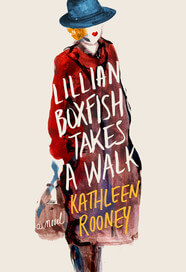
Lillian Boxfish Takes a Walk book cover by Kathleen Rooney

MF: Lillian Boxfish is loosely based on Margaret Fishback, a poet and the highest-paid female copywriter of the 1930s. How did she come to be the inspiration for the book?

KR: My high school best friend, Angela, was doing an internship at Duke University for her library sciences degree, and she got to help process the Fishback papers when her son donated them to the Hartman Center for Sales, Advertising & Marketing History. Angela is an amazing person and wonderful friend, so she knew that I’d be intrigued by Fishback’s life and work—her proto-feminism, her pursuit of both a career and a family, her serious publication record as a poet, and on and on. Thanks to her, I was able to learn about, apply for, and receive a travel-to-collections grant to be the first non-archivist to work with Fishback’s materials back in 2007. I was immediately smitten with Fishback and knew I wanted to do something with her story, but it took me a while to realize that it would be a novel.

MF: Several of your works—notably Lillian Boxfish and O, Democracy!—are based on real people or events. How do you balance fact and fiction?

KR: Research is inevitably one of my favorite phases of a project because everything at that point is potential energy–you haven’t started really writing yet so you haven’t started making mistakes. For that reason, I could happily dwell in the realm of research indefinitely, but of course that’s no way to get a book written. So when I move from research into writing, I try to be sure that I’ve given myself enough of a plot and enough of a compelling set of characters to sustain the narrative–and hopefully the reader’s interest–beyond the perhaps initially intriguing notion that it’s “based on a true story.” If a novel is too faithfully adherent to the facts of whatever really happened in its real life inspiration, then it probably won’t have the depth of character, the psychological realism, or the plot momentum to keep people reading. You need to give yourself the space to get imaginative and make stuff up, rather than merely novelizing actual events.

MF: What role does this kind of fact-based fiction play in our current cultural environment?

KR: Fiction that’s based on fact ideally calls attention to the fictional aspects of all the things we are encouraged to consider “true.” History, as the cliche goes, is written by the victors, and so good fact-based fiction can offer differing accounts of events that we may think we already know a great deal about. And the fact that fiction has a clear and artificial (albeit hopefully convincing) point of view can in turn emphasize that everything has a point of view–a perspective, an agenda, however you want to put it–and can invite readers to see even real life more complexly.

MF: As a poet, fiction writer, and nonfiction writer, how do you choose what medium to approach a subject with? How do the writing processes differ for you?

KR: Every project needs to find its own best form–you can say things in a poem that you can’t in a novel and vice versa. So I usually know before I even begin writing what genre something is going to be in because form is such a determining factor for content.

And that’s part of why Abby Beckel and I founded Rose Metal Press back in 2006. Our work as editors there has deepened our appreciation of the fact that these genres aren’t really stable and distinct anyway, and that the ones we normally identify are not remotely exhaustive in their description of the forms that creative work can take.

MF: You’re a former U.S. Senate aide—how does having worked in politics shape your approach to writing?

KR: My development as a writer ran in a simultaneous parallel track to my work in Dick Durbin’s office, and I was writing and publishing creatively in the same years as I was working, for instance, as a member of his communications team. (When my memoir Live Nude Girl came out in 2009, they held my job for me while I went on a book tour.) The kind of writing that I was doing in my role as a Senate Aide–speaking as or on behalf of someone else–is vastly different from the creative writing I was doing then and that I do now. Aside from employing basic English language mechanics, the two really did not resemble each other at all.

MF: You’ve said in a previous interview with Chicago Magazine that people can change the world, but not through politics. Do you think people can change the world through writing?

KR: To clarify, I said that people can’t change the world through the politics industry — e.g. working inside a senator or other elected official’s office — because the primary objective in such a situation, especially for a low-level staffer, like I was, is to keep your head down and do what you’re told. Specifically, I said that “Idealists are cannon fodder of the political industry. People most committed to making a positive difference are exploited the most. People who do rise are interested in consolidating their own power.” I think that people can absolutely change the world through politics if by that we mean being politically active–voting, marching, protesting, calling one’s representatives, canvassing and so on and so forth; I believe that being an informed and participatory citizen is part of politics and that you can change the world that way without a doubt.

Writing can change the world, too, yes, for better or for worse. Good writing, hopefully, helps readers develop their sense of empathy for people unlike themselves and for people facing complex moral and ethical situations. But then again, The Art of the Deal came out in 1987 and helped make Trump a household name, and now we’ve got a racist, misogynistic, xenophobic malignant narcissist in the White House and that happened in part because journalist Tony Schwartz helped him write that book.

MF: What’s next for you?

KR: I’m closing in on finishing a World War I novel, which is based on a couple of real-life figures. And I have another novel that’s set in 2016 about a couple of eerie and precocious tween girls in the Quad Cities. Stay tuned.

**

Kathleen Rooney is a founding editor of Rose Metal Press, a publisher of literary work in hybrid genres, and a founding member of Poems While You Wait. Co-editor of The Selected Writings of René Magritte, forthcoming from Alma Books in the UK and University of Minnesota Press in the U.S. next year, she is also the author of eight books of poetry, nonfiction, and fiction, including, most recently, the novels Lillian Boxfish Takes a Walk (St. Martin’s Press, 2017), O, Democracy! (2014) and the novel in poems Robinson Alone (2012). With Elisa Gabbert, she is the author of the poetry collection That Tiny Insane Voluptuousness (Otoliths, 2008) and the chapbook The Kind of Beauty That Has Nowhere to Go (Hyacinth Girl, 2013). Her essays and criticism have appeared or are forthcoming in Allure, The Rumpus, The Chicago Tribune, The New York Times Magazine, Salon, the Poetry Foundation website, and elsewhere. She lives in Chicago with her husband, the writer Martin Seay, and teaches at DePaul University. Follow @KathleenMRooney

|

No Comments

|

Interview: Nick White

Nick White author headshotMidwestern Gothic staffer Meghan Chou talked with author Nick White about his book How to Survive a Summer, exploring nontraditional queer spaces, outsmarting the hurdles to keep writing, and more.

**

MC: What’s your connection to the Midwest?

Nick White: I’ve called the Midwest home for most of my twenties. I moved to Ohio when I was twenty-three because I had been accepted into Ohio State’s MFA program. After I graduated, I went on to the University of Nebraska to earn a Ph.D.—technically, Nebraska is considered the Great Plains, but I always thought of it as further adventures in “the Middle West.” During my last year, I was offered the teaching job back at Ohio State, which I gladly accepted. The Midwest has become my home.

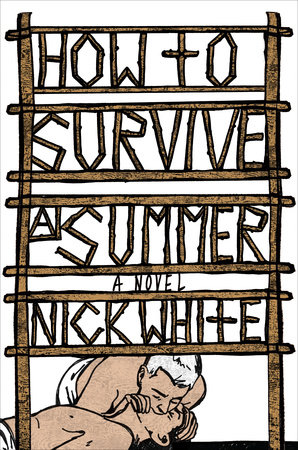
MC: Will Dillard, the main character in How to Survive a Summer, is a graduate student from the Midwest who reflects on his traumatic memories at a teenage gay-to-straight conversion camp in Mississippi. Between the South and the Midwest, what regional differences did you explore in How to Survive a Summer with regards to the attitude towards queer youth?

NW: I wanted to set the book in the Midwest and in the South—primarily because both spaces have been home to me, a gay man of a particular age, and because both seem to be unpopular locales to set queer dramas. I think there was this assumption—which is slowly being chipped away at—that if you are gay and from a small town or rural area, then your best bet for a happy life is to get thee to a metropolis. While this migration to urban centers can certainly be beneficial to many of us in the queer community, there are others, myself included, that love living in a small town, or in what people refer to as “flyover country.” I find it exciting to explore queerness in places and spaces that have traditionally been seen as not having room for it.

As far as attitudes toward queerness, the Midwest and the South have some differences. Living in Nebraska, Ohio, and Mississippi, I have spent most of my life in red states. But I never came out while I was in Mississippi—I am not sure if that is because of the place, itself, or because of my proximity to my family, who are very religious and conservative. Either way, I felt safer in Columbus—safe enough, at least, to start facing up to questions I had long since tried to ignore.

How to Survive a Summer book cover by Nick White

MC: Many gay-to-straight conversion camps follow the misguided notion that one can “pray away the gay.” In addition to this aspect, what role does religion play in the telling of Will Dillard’s story and in understanding the cultural differences between the Deep South and Midwest?

NW: The South is home to many evangelical churches, particularly the Baptist Church, which played a huge role in my growth and development. In the book, Will’s journey to Camp Levi, the conversion camp, is one that both he and his father see as a necessary step for him. They are both true believers, as I once was. They believe they know the Gospel and want to do what is “right.” Will is not sent to Camp Levi because his father doesn’t love him; on the contrary, Rev. Dillard loves his son a great deal and feels he is doing his best for him, and that’s what, in my mind, makes the decision to send one’s child to conversion therapy so complicated and fraught. When Mother Maude and Father Drake appear in town, asking for money to help jumpstart their camp, both father and son see this as nothing less than a sign from God. Mother Maude and Father Drake offer what both men have been seeking: deliverance.

MC: The release of a horror movie, called Proud Flesh, triggers Dillard’s search for closure. Proud Flesh draws inspiration from events that transpired at the Mississippi conversion camp, Camp Levi. The gay serial killer central to the movie wears a princess mask, which the gay community around the country begins to wear with pride. Why did you choose a princess mask as the symbol of terror and solidarity?

NW: I think I wanted to illustrate, in some way, the resiliency of queer culture, how many in our community can take something that is deemed offensive (such as this princess mask, or even the word “queer”) and reclaim and repurpose it.

MC: Why did people react to Proud Flesh with pride and not offense? In other words, what about the horror movie brought about feelings of solidarity?

NW: Well, at first, the movie caused much offense, and I don’t know that Bevy ever bought the reinterpretation. I’m not sure that many people reacted with pride, either. When Will and the others see the movie in Memphis, the audience boos at the end. I think the movie becomes, at best, a mild curiosity—something to see with people and cheer and jeer. There’s a campiness to it that many find appealing, a kind of “it’s so bad that it’s good” response.

I tried to be very careful that the book didn’t come down one way or another on it. I wanted the movie to be one of those enduring mysteries that the reader will still ponder about once she has finished reading.

MC: Will’s family appears progressive in some ways—his father is forward-thinking on the topic of race, his mother lived in an all-female woodland community—yet neither can accept their son’s sexuality. How does the portrayal of Will’s parents shed light on the homophobia towards and mistreatment of queer youth?

NW: I didn’t want the parents, particularly the father, to be two-dimensional, flat. I wanted to show him to be a thoughtful and conflicted man. He was very naïve about the depth and breadth of racism in his community, just as he was about his son’s sexuality. I wanted to show that, as the years passed, the father had the capacity to grow and, what’s perhaps the hardest thing for people to do, change his mind. He may never be comfortable with his son’s queerness, but he is determined to stay in his life, no matter what.

MC: What is one piece of advice you give your students at Ohio State University about writing?

NW: Respect the work. What I mean by this is, I think, make sure you remember that the putting of the words onto paper, then revising the hell out of it, is all that matters. There’s so much in our world that wants to keep us from writing, and half the battle, I think, is finding out ways to outsmart the hurdles and get back to the desk. Do it. Do it as much as you can, for as long as you can. Then, once you’re finished with that project, move along to the next one. Don’t look back.

MC: What’s next for you?

NW: I am finishing up a story collection with should be out soon with Penguin, and dabbling with a new novel.

**

A native of Mississippi, Nick White currently teaches creative writing at the Ohio State University. His fiction can be found in The Kenyon Review, Guernica, The Literary Review, Indiana Review, Day One, and elsewhere. His debut novel, How to Survive a Summer, was published by Blue Rider Press, an imprint of Penguin-Random House.

|

No Comments

|

Contributor Spotlight: John Yohe

John Yohe author photoJohn Yohe’s piece “The hunter down the road” appears in Midwestern Gothic‘s Summer 2017 issue, out now.

What’s your connection to the Midwest, and how has the region influenced your writing?

I grew up in Jackson, Michigan. It’s a quiet place to grow up, but has no economy, like Michigan in general, so people have to leave, economic refugees. I’m not sure regions influence us so much as just appear in our work because that’s what we know.

What do you think is the most compelling aspect of the Midwest?

If you mean the land, then the Great Lakes. Or the snow. The quietness after a big snow, the burrowing inward. If you mean something else… I’d say the Rust Belt and all that implies: the abandoned factories, the general dismal economy.

How do your experiences or memories of specific places—such as where you grew up, or a place you’ve visited that you can’t get out of your head—play a role in your writing?

You of course write about places you know. Interestingly, I tend to write about places after I’ve left them. But I travel a lot, move a lot. The poem you’ve accepted was written in New Mexico. I think. Or Oregon? Not Michigan though.

Discuss your writing process—inspirations, ideal environments, how you deal with writer’s block.

Just reading a lot inspires me. Writers should read a lot. I tend to write in spurts: I can’t work on something for years, even longer stuff like a novel: If I’m inspired I try to knock out the rough draft quickly, though then may let time go by. Poems too: The general draft comes out quickly, then I’ll spend time tweaking. Though I think you have to let stuff sit away for at least a little while, in order to come back to in with fresh eyes/ears.

How can you tell when a piece of writing is finished?

I’ll tweak things for years, but really I just go on with other stuff. After a while, you just have to think “good enough” and move on. That said, there are poems of mine from fifteen years ago that I still like (not all, just some) even with their imperfections. But I also realize that I get better as a writer as I go on, everyone does. But I’d say only about fifteen to seventeen years ago was where I really started to keep works, to feel I was someone good enough. And, I still write crap….

Who is your favorite author (fiction writer or poet), and what draws you to their work?

Charles Bukowski. For his poetry and his fiction. He’s from the Hemingway lineage of clear language, but also has an irreverence I love, and need. I feel joy when I read him, and his whole attitude towards the so-called American Dream, which is that it’s a lie.

What’s next for you?

Survival. Finding a job that’s meaningful and not time-consuming. But if you mean writing, I’m working on a novel about the metal scene in ’80s Jackson. I continue to seek either an agent or a publisher for some books of poetry and some novels. That goes in spurts—I get energized, then feel despair and stop. It’s hard, knowing the Big 5 publishers probably don’t want my stuff, and that the indie publishers are inundated with writers like me, so why would they even notice? But the process of writing is interesting, powerful, and I guess I have enough ego to keep thinking people might like my stuff. I get individual pieces accepted on a regular basis, and that’s gratifying. Still, it’s madness… all of it….

Where can we find more information about you?

www.johnyohe.com

|

No Comments

|

Interview: Kristen Radtke

Kristen Radtke author headshotMidwestern Gothic staffer Meghan Chou talked with author Kristen Radtke about her book Imagine Wanting Only This, visiting ruins around the globe, the unique genre of graphic memoir, and more.

**

Meghan Chou: What’s your connection to the Midwest?

Kristen Radtke: I grew up in Wisconsin, went to college in Chicago, and went to grad school in Iowa. I’ve spent a lot of time in the Midwest.

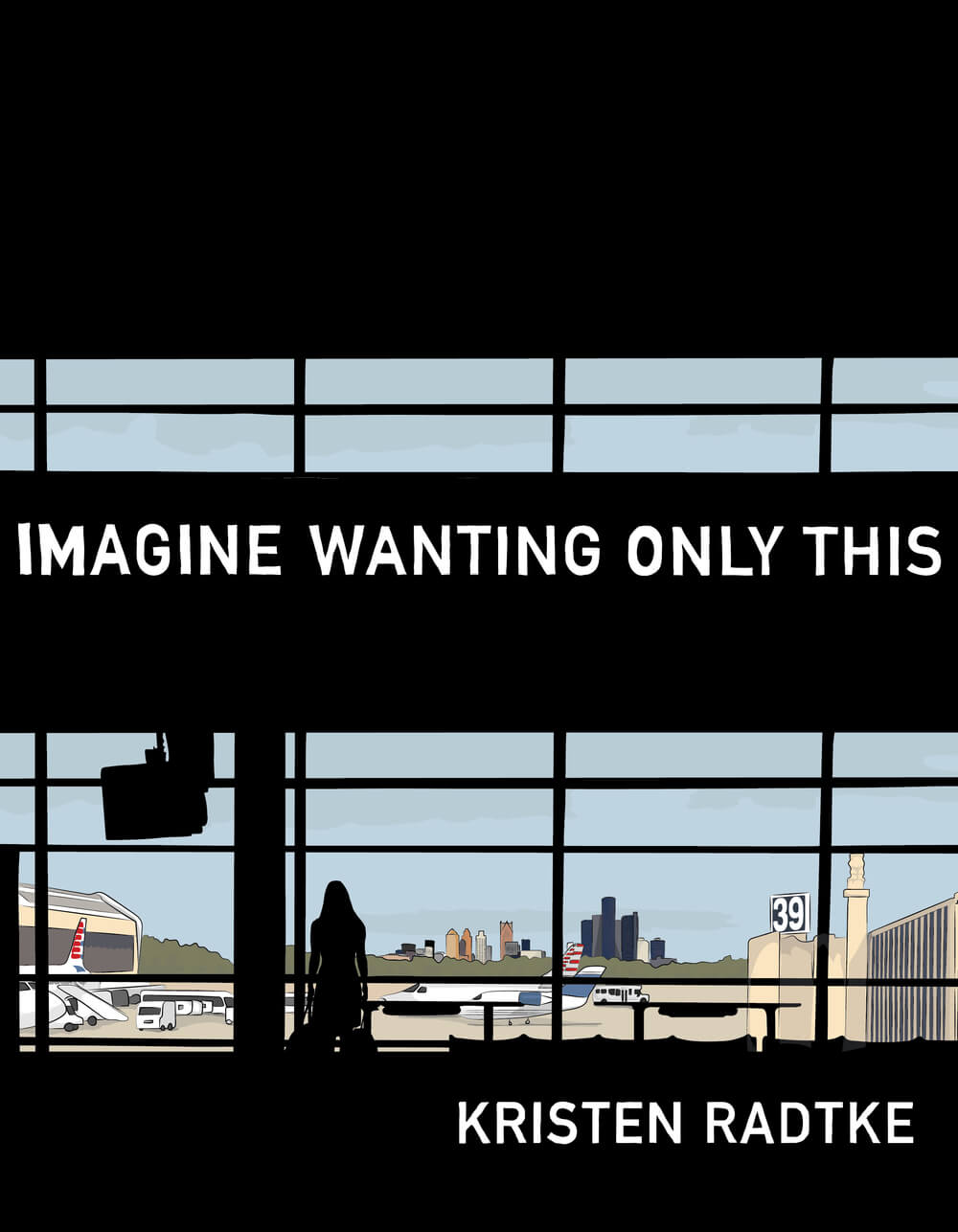
MC: Imagine Wanting Only This tells the story of your travels to visit the ruins of places around the world from the killing fields of Cambodia to the empty streets of Burma. Along the way, you stopped by Gary, Indiana — a boom-bust city that is nearly abandoned. What did you hope to convey about the lives of the Midwesterners near Gary, Indiana, and what sort of lessons did you learn from exploring those ruins?

KR: This is a tough question. I didn’t set out to convey much—or anything—about the lives of Midwesterners near Gary. My experience there was so limited—I went there as a college student and had no understanding of the city’s past or present economy or challenges. I wandered through the town like a tourist looking for experiences I could grab for myself. I was 19, and I didn’t understand yet how flawed and wrong that was. I can’t honestly say I learned anything from exploring the ruins or the town. That learning came years later, in retrospect.

Imagine Wanting Only This book cover by Kristen Radtke

MC: What was your motivation for going on this worldly adventure? What were you searching for?

KR: Restlessness? Boredom? Being young? I’m not sure. The world is big, I want to see it.

MC: You researched and wrote Imagine Wanting Only This after the death of your uncle. Over the course of your travels and creating the book, how did your understanding of why we are here, and what we leave behind change?

KR: If it did change, it just became more complicated.

MC: Imagine Wanting Only This falls in the unique genre of graphic memoir. How do drawings enhance and add another dimension to the story?

KR: Images are just another entrance point into the work. I think the book could have been written in straight prose, too, but this is just the medium and form that made the most sense to me.

MC: The artwork in Imagine Wanting Only This is entirely black and white. Why did you choose to use only black and white illustrations throughout rather than color? Was this a metaphor for grief?

KR: It wasn’t. Can I claim that it was? Black and white just made sense to me for this project—I can’t say that it was a conscious choice at all.

MC: When creating this graphic memoir, in what order did you formulate the many elements such as the plot, dialogue, and drawings?

KR: I often start with a script, but I try to move back-and-forth between text and image as fluidly as possible. Once I’m deep into a project, they start working in tandem, and the ideas start coming to me in both mediums at once.

MC: What’s next for you?

KR: I’m working on an essay collection about loneliness and a graphic novel. I like working on more than one thing at once. When you’re stuck with one you can move to the other.

**

Kristen Radtke is the author of the graphic nonfiction book Imagine Wanting Only This (Pantheon, 2017). She is the art director and New York editor of The Believer magazine. Find her on Twitter @kristenradtke.

|

No Comments

|

Midwest in Photos: Reflecting Pool

“We tried to outpace the thing that chased us, that said: You are nothing. We tried to ignore it, but sometimes we caught ourselves repeating what history said, mumbling along, brainwashed: I am nothing. We drank too much, smoked too much, were abusive to ourselves, to each other. We were bewildered. There is a great darkness bearing down on our lives, and no one acknowledges it.” – Jesmyn Ward, Men We Reaped.

Photo by: Robert Norton

|

No Comments

|

Interview: T. C. Boyle

T. C. Boyle author photo

Photo credit: Jamieson Fry

Midwestern Gothic staffer Meghan Chou talked with author T. C. Boyle about his book The Terranauts, climate change, reality TV, and more.

**

Meghan Chou: What’s your connection to the Midwest?

T. C. Boyle: I discovered it on Route 80 after crossing the Hudson for the first time in my life. I was twenty-five at the time, with a girlfriend, a dog and two cats. We settled in Iowa City for five and a half years, where I earned my M.F.A. and Ph.D. degrees.

MC: How did your time in Iowa at the University of Iowa and Iowa Writers’ Workshop influence you as a writer?

TCB: While I haven’t written much about my time there, it was formative. Not only were the bars and music scene lively beyond compare (Duck’s Breath Mystery Theatre was doing its thing at Gabe & Walker’s then), but the intellectual ferment just began to produce a fine ripe old vintage deep inside me. I saw most of my heroes onstage—Lenny Michaels, Kurt Vonnegut, William Styron, Ray Carver, Stanley Elkin, Grace Paley and a hundred others—and plunged deep into the literature of the nineteenth century. See my essay, “This Monkey, My Back,” and, more recently, my short story, “The Night of the Satellite” for the flavor of Iowa.

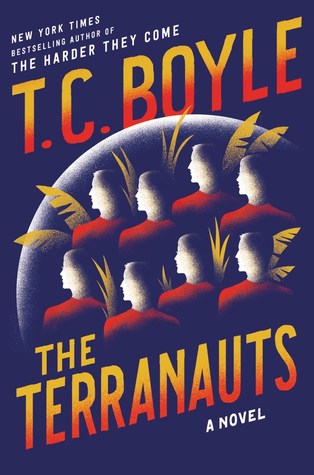
MC: In The Terranauts, a group of individuals agree to live in a contained biodome in Arizona. E2, the nickname for this isolated dome, is a social and scientific experiment, testing alternative habitats should the climate change problem escalate. What real-world experiments did you draw inspiration from for The Terranauts?

TCB: The Terranauts jumps off from the actual Biosphere II experiment of the early 1990s. It was meant to last one hundred years, but only made it through two and a half. That’s where I stepped in.
The Terranauts book cover by T. C. Boyle

MC: What message does The Terranauts convey about how we as a world and country should approach climate change?

TCB: The message is for the reader to interpret. Novelists do not explain; they entertain and provoke. That said, I like what Elizabeth Kolbert had to say about the latest Mars venture—that is, while it is all but impossible to recreate a self-sustaining environment that has had millions of years to evolve, it shouldn’t be quite as hard to pay more attention to the one that sustains us.

MC: The inhabitants of E2, deemed the Terranauts, follow the motto, “Nothing in, nothing out.” How is this theme echoed throughout different aspects of the book and in the real world with regard to climate change?

TCB: Obviously E2 is a microcosmic world. Our water can take years to percolate through the ground and wind up in our glasses; in E2, it takes days. Similarly, no artificial scents or products were allowed inside, because the Terranauts would be absorbing them in their tender cells much more quickly than that process happens out here.

MC: Not only does the omniscient Mission Control observe the inhabitants of E2, but cameras also broadcast their daily activities to the greater public. How does this constant surveillance and high-profile publicity affect the behavior of the characters in E2 and the way you chose to examine human nature?

TCB: In some ways, Biosphere II was the original reality TV show. I exaggerated Mission Control’s oversight for my own purposes. Big Brother, indeed. Hello, God!

MC: This constant surveillance and the public’s obsession with the happenings of E2 sounds similar to the setup of some reality television shows. What truths did you want to bring to light about the business and attraction of reality television?

TCB: Again, we must leave interpretive questions for the audience. I do find it interesting that the scenarios I’ve written about in the past are now codified as reality TV (see “Peep Hall” and the naked-in-nature section of my global-warming novel, A Friend of the Earth).

MC: Three characters narrate The Terranauts: Dawn Chapman, an environmental scientist; Ramsay Roothorp, a flirt; Linda Ryu, a candidate not selected for the mission. What perspective does each narrator bring to the story? How do you, as a writer, decide how many narrators are needed to best tell a story?

TCB: I am always trying to do something different with any given narrative. In this case, I have experimented with three first-person narrators. If the experiment works, I believe it brings great intimacy to the narrative—each character is essentially soliloquizing to the reader and each has a very different perspective from those of his colleagues.

MC: What’s next for you?

TCB: My new collection, The Relive Box and Other Stories, hatches in October. I am two-thirds of the way through the next novel, which I hope to finish by the end of the year. Since it is about the early days of LSD, I am hoping my publisher will include a tab of blotter acid on the title page of each copy.

**

T. Coraghessan Boyle is the author of twenty-six books of fiction, including, most recently, After the Plague (2001), Drop City (2003), The Inner Circle (2004), Tooth and Claw (2005), The Human Fly (2005), Talk Talk (2006), The Women (2009), Wild Child (2010), When the Killing’s Done (2011), San Miguel (2012), T.C. Boyle Stories II (2013), The Harder They Come (2015) and The Terranauts (2016). He received a Ph.D. degree in Nineteenth Century British Literature from the University of Iowa in 1977, his M.F.A. from the University of Iowa Writers’ Workshop in 1974, and his B.A. in English and History from SUNY Potsdam in 1968. He has been a member of the English Department at the University of Southern California since 1978, where he is Distinguished Professor of English. His work has been translated into more than two dozen foreign languages, including German, French, Italian, Dutch, Portuguese, Spanish, Russian, Hebrew, Korean, Japanese, Danish, Swedish, Norwegian, Lithuanian, Latvian, Polish, Hungarian, Bulgarian, Finnish, Farsi, Croatian, Turkish, Albanian, Vietnamese, Serbian and Slovene. His stories have appeared in most of the major American magazines, including The New Yorker, Harper’s, Esquire, The Atlantic Monthly, Playboy, The Paris Review, GQ, Antaeus, Granta and McSweeney’s, and he has been the recipient of a number of literary awards, including the PEN/Faulkner Prize for best novel of the year (World’s End, 1988); the PEN/Malamud Prize in the short story (T.C. Boyle Stories, 1999); and the Prix Médicis Étranger for best foreign novel in France (The Tortilla Curtain, 1997). He currently lives near Santa Barbara with his wife and three children.

|

No Comments

|

A Woman Is A Woman Until She Is A Mother Release Date

We’ve been incredibly busy over the past few weeks putting the finishing touches on MG Press’s upcoming release, the essay collection A Woman Is A Woman Until She Is A Mother by Anna Prushinskaya, sending out advance review copies and spreading the word for the debut on November 15, 2017.

That being said, we wanted to take a moment and fill you in on all the latest news! In particular, that the collection is set to release in just a couple weeks on November 15th!

Preorder A Woman Is A Woman Until She Is A Motherfor $1 and Save 20%

About the Collection

In A Woman Is a Woman Until She Is a Mother, Anna Prushinskaya explores the deep life shifts of pregnancy, birth and motherhood in the United States, a world away from the author’s Soviet homeland. She plumbs the deeper waters of compassion, memory and identity, as well as the humorous streams of motherhood as they run up against the daily realities of work and the ever-present eye of social media. How will I return to my life? Prushinskaya asks, and answers by returning us to our own ordinary, extraordinary lives a little softer, a little wiser, and a little less certain of unascertainable things.

Advanced Praise

“Motherhood is an encounter, a shadow in mirrors, a beast lying low in the grass in the field,’ writes Anna Prushinskaya as she grapples with the strangeness of pregnancy and birth. Russian-born, she swoops across the frontiers of country and motherhood as she contemplates the nature of language, pain, compassion, and the power of a woman’s story. Meditative, curious and intriguing, these essays help us consider whether ‘the things that come with life are worth it.”
Toni Nealie, author of Miles Between Me

“You are lucky to be holding this book, because in ten or twenty years, you will be able to say, “Anna Prushinskaya? I have the original edition of her first book,” which will impress all your friends because by then Prushinskaya will have won all the awards and prizes, and will have taken her well-deserved place in the canon of early 21st Century literature. But more than that, you are lucky to be holding this book because Prushinskaya is one of the few writers out there who possesses a wholly unique vision: her writing is as concise as it is poetic, her outlook as tender as it is analytical. This is a beautiful book.”
Juliet Escoria, author of Witch Hunt and Black Cloud

Put A Woman Is A Woman Until She Is A Mother on Your “To-Read” List
For the folks who like keeping score on their reading list at home and sharing what they’re reading with friends and family, you can now find A Woman Is A Woman Until She Is A Mother on Goodreads:

Find AWIAW on Goodreads

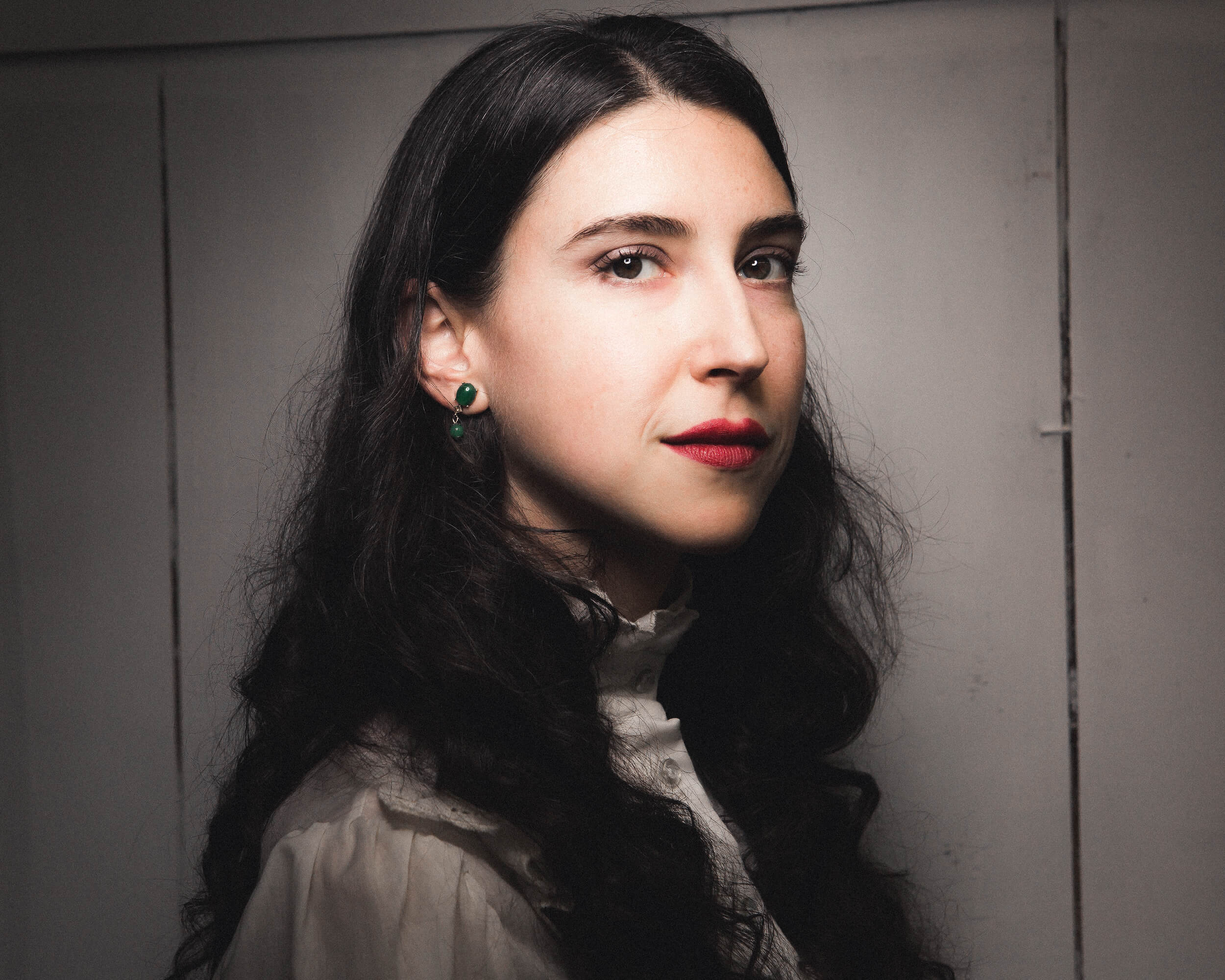
Anna Prushinskaya
And last but not least, if you want to follow along with Anna, learn more about her work and just see what she’s up to in general, you can find her on Twitter or request to follow her on Instagram!

And don’t forget! You can still preorder A Woman Is A Woman Until She Is A Motherfor $1 and Save 20%

|

No Comments

|