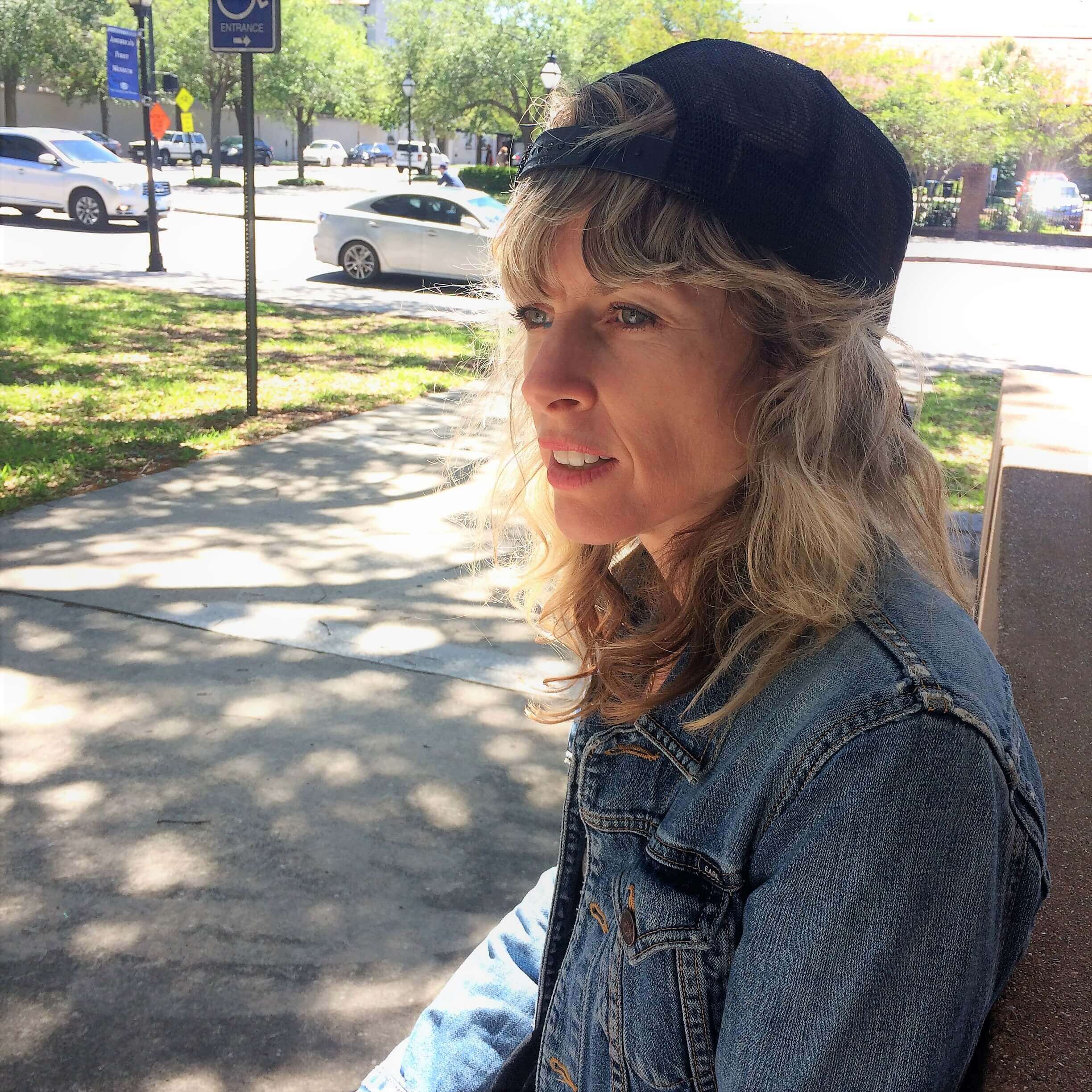
Contributor Spotlight: Michelle Webster-Hein

October 30th, 2017

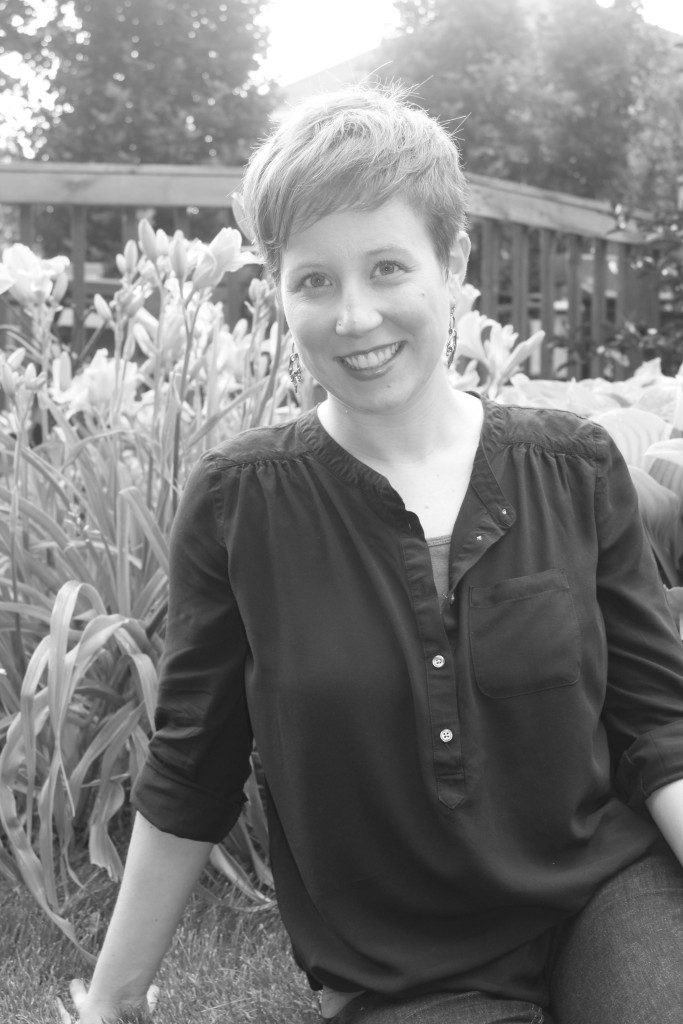
Michelle Webster-Hein author photoMichelle Webster-Hein’s piece “The Mail-Order Bride” appears in Midwestern Gothic‘s Summer 2017 issue, out now.

What’s your connection to the Midwest, and how has the region influenced your writing?

I was born and raised in rural Michigan, and, besides volunteer stints in Georgia and Lithuania, I’ve lived in the Midwest all my life. So the region has formed me. It’s in my bones and in my blood, especially the Michigan countryside. Now, when I drive out of the city and the buildings fall away, my body releases. It’s like the rest of me knows I belong there, even if my brain has other ideas.

What do you think is the most compelling aspect of the Midwest?

If the Midwest was a person, I think it would be an unassuming one—kind of humble, maybe a little bumbling, and reticent with its gifts. I’m always more drawn to people and places who don’t announce themselves, who don’t claim themselves so much. It’s the Midwesterner in me, I guess.

How do your experiences or memories of specific places—such as where you grew up, or a place you’ve visited that you can’t get out of your head—play a role in your writing?

Though I live now in a city neighborhood, my fiction springs from a town I’ve renamed “Esau,” the small village where I attended school and church until I turned eighteen. It’s got all of these places that only now strike me as wild—the fundamentalist Baptist church, the antique organ museum, the abandoned art gallery. Stories, stories, stories.

Discuss your writing process—inspirations, ideal environments, how you deal with writer’s block.

I don’t know that I believe in writer’s block. I think it’s just the same old resistance anyone encounters when trying to create. I don’t wait until I’m inspired. I write at the same time every day, which, with small children, is way too early in the morning. That being said, my goal when I wake up is not actually to write, but to sit with my notebook and pencil and do nothing else. Sometimes I have to wait a while for the words to come. Very rarely I have woken up and waited for two hours and not written anything. But for me waiting is also the work; it’s just as valid as putting down words.

As far as inspiration goes, I always start with some vague, compelling curiosity. I wrote “The Mail-Order Bride” because I’d just read about how Sherwood Anderson, one of my favorite writers, had abandoned his wife and young children. I kept on thinking, “How would someone get to a point where they’d do such a thing?” I couldn’t get the question out of my head, so I wrote a story to try and answer it.

When I’m not writing, I’m raising my daughter and son, which is an inspiring complement to the writing life. There’s a lot of tears and laundry, of course, but there are also reading sessions and painting on the porch and long, aimless walks in the woods where the kids keep stopping me and reminding me to look at things. They take nothing for granted. They slip constantly into that enviable zone of slow wonder. And I get to be close to them—and close to that—every day.

How can you tell when a piece of writing is finished?

I can’t. I think Raymond Carver said that you’re done when you start putting in commas and then taking them back out again, which sounds like good advice. I generally take my work as far as I can on my own, and then I ask trusted readers for their feedback. I revise A LOT, so it’s a long process. My husband can usually tell me if a piece is done or not. He’s my secret weapon.

Who is your favorite author (fiction writer or poet), and what draws you to their work?

Sheesh. I think I’ve got to pick Marilynne Robinson. Lila and Gilead are tied for my favorites. Her books are so wise, and her prose is so quietly stunning. Also, her material seems ordinary on the surface, but her exploration of her material reveals how extraordinary the ordinary actually is. I love encountering that in a book. It makes everything around me come more alive.

What’s next for you?

I just signed with my dream agency to represent my first novel Out of Esau, so hopefully that will find its way out into the world in the not-too-distant future. I’m also working on a memoir with a global child psychiatrist about her work with former child soldiers, among other things. And I’ve been playing around with a children’s novel for my daughter, who reads like a house afire. Finally, I’m bouncing around some fragments for a second Esau novel. So my head’s delightfully busy at the moment, though perhaps a little too much so.

Where can we find more information about you?

Someday I will lay my banner down and start a Twitter account, but today is not that day. I try to keep michellewebsterhein.com updated. I try to post updates on Facebook. Feel free to friend me, though if your profile picture involves a shirtless selfie, or if you address me as “Madame,” I may politely decline.

Midwest in Photos: Traveling the Midwest

“I take my old seat by the window and start rapidly boozing. The lights change colors in ways that suggest I’m going too fast, and that is the speed I want to go.” – Alissa Nutting, Unclean Jobs for Women and Girls.

Photo by: Samantha Navarro

|

No Comments

|

Interview: Theodore Wheeler

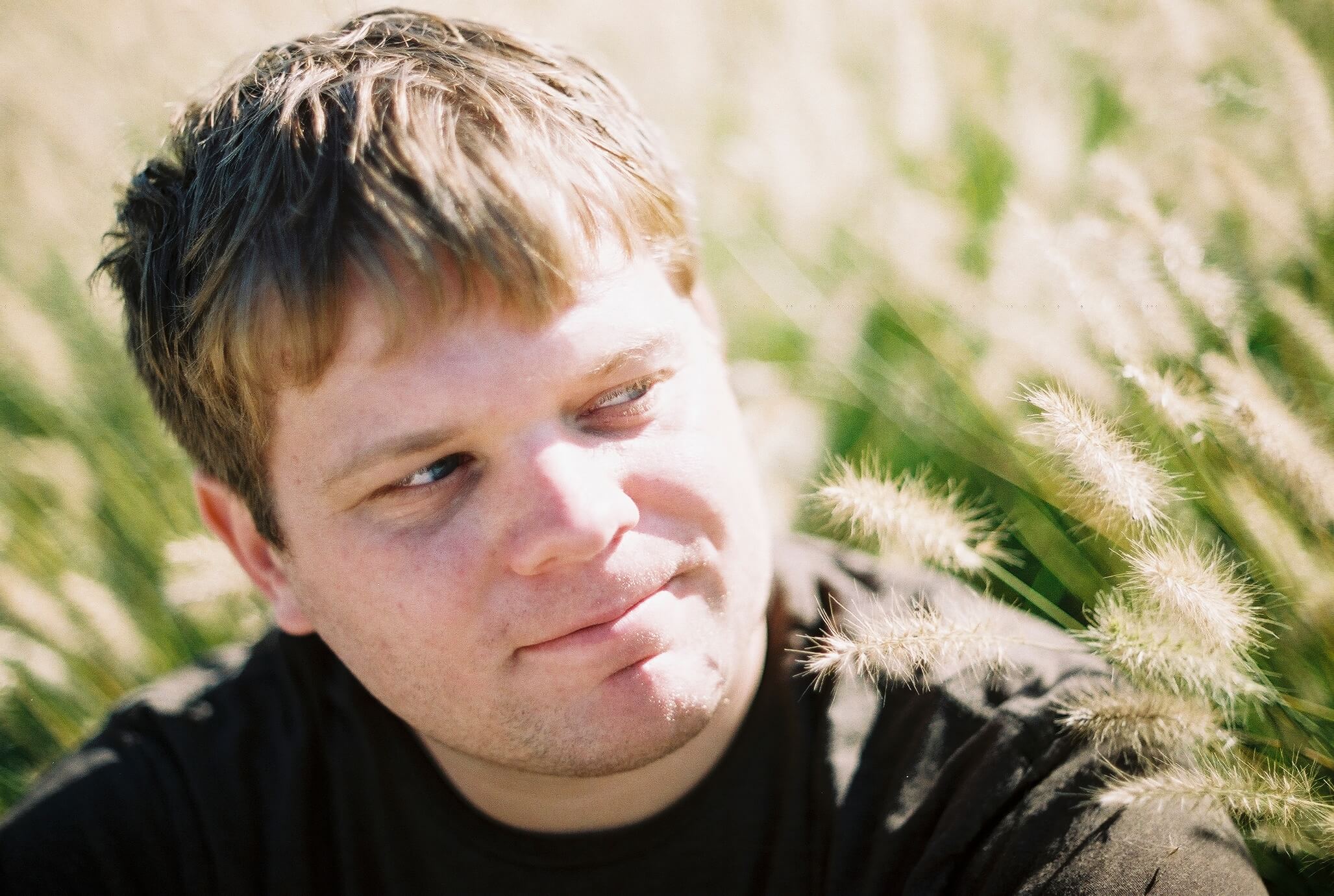
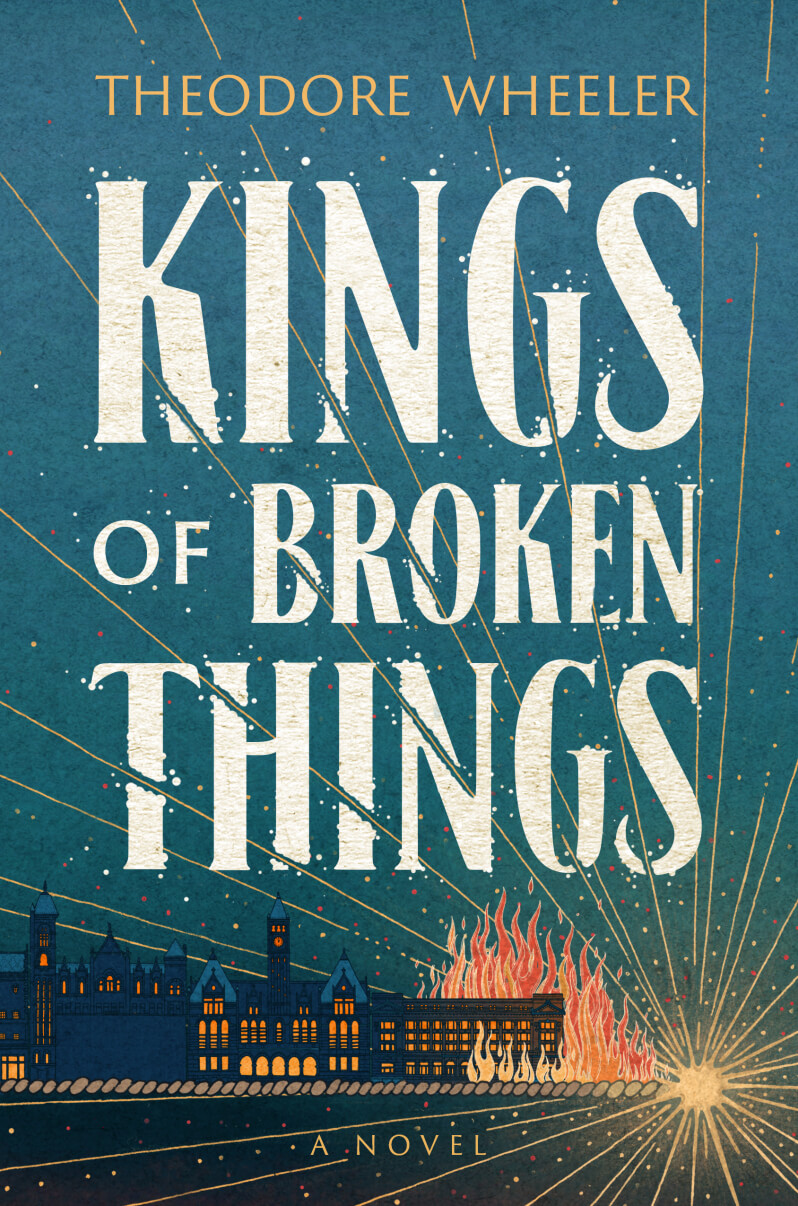
Theodore Wheeler 2 author headshotMidwestern Gothic staffer Sydney Cohen talked with author Theodore Wheeler about his debut novel, Kings of Broken Things, the advantages of youthful perspective, tackling the challenge of writing a novel, and more.

**

SC: What’s your connection to the Midwest?

TW: I was born in Iowa and have lived my entire life between that state and Nebraska—mostly in Nebraska. Along the way I’ve lived in a small town (pop. 1500), a college town, and for the last twelve years in the prairie metropolis of Omaha.

SC: Your debut novel, Kings of Broken Things, is a historical fiction piece set in the tumultuous Red Summer of 1919. The novel focuses specifically on the Omaha race riot of 1919 and discusses themes of racial violence, nationalism, and immigration. Almost 100 years later, these themes are still salient in the American sociopolitical landscape. How, if at all, was your exploration of the tensions in 1919 influenced by contemporary instances of race riots and political unrest? How does your novel offer historical perspective on these issues?

TW: Kings of Broken Things was influenced a lot by the current troubles, though mostly in nuanced ways, the most significant being how perspective functions in the novel. When I started working on the novel, Obama had just been elected and there was a lot of discussion about the post-racial age we’d begun. Of course, our days of supposed racial harmony didn’t last long. I worked on the book from 2008 to around 2015, to give a frame of reference. The first drafts focused mostly on how anger and prejudice were directed at German-Americans in the Midwest at the beginning of World War I, as the Tea Party movement was ascendant and the anti-immigrant Minutemen vigilante group was very active. That mantle, Minutemen, has been taken by numerous anti-immigrant groups over the last century, so it was interesting to think about the phenomenon while trying to tie together anti-German sentiment during WWI to anti-immigrant movements now—though that didn’t really hold together as much as I thought it would.

When police killings, race riots, and the BLM movement became prominent while I was working on Kings, I felt it became incumbent on all of us to think about our complicity in this system, so that spurred a lot of changes in what the novel focuses on, after being compelled to think about privilege and personal freedom in uncomfortable ways. The main thing was to stop viewing my main characters as these precious figures who were incapable of committing horrid acts. The race riot and lynching of Will Brown comes at the end of the novel, but it never really felt like the story was done well until I put some of my main characters (in particular, Karel Miihlstein, a teenage boy who was displaced from Austria by the war) right in the midst of the riot and lynching.

Since the book has been out, a few readers have told me they were unsettled by the story because they didn’t know who the “good guys” are, or were caught off guard when a character who they saw as the “hero” of the book did something unforgivable. The point is to unsettle, so hopefully the story helps give perspective on these issues along these lines.

Kings of Broken Things book cover by Theodore Wheeler

SC: Interestingly, you approach the context of your story through the point of view of three young men and women. How does youth offer a unique space in which to explore morality and identity? How would your novel be different if the protagonists were adults?

TW: Oh, good question. In some ways a youthful perspective feels more natural and is more easily consumed because identity is more fluid in children and young adults, and their metamorphoses maybe a little more poignant. Showing young people being corrupted has a little more teeth than showing adults losing their way, like how we see the Eden myth playing out over the course of our early lives, that we all experience a fall at some point.

More specific to the plot, the mob that lynched Will Brown began when a group of teenage boys marched to the courthouse and demanded that he be handed over to them, and many boys were party to the raids that eventually got to Will Brown. Knowing what was coming at the end of the novel, it allowed me to play around with good-old-boy and sowing-wild-oats rituals that invoke more traditional ideas of maturing and juxtapose that with the riot and lynching.

SC: Evie, the only female protagonist, is a kept woman indebted to her male keeper. This concept is both old fashioned and largely prominent today in the form of human trafficking. How did you go about depicting the female condition? What was your purpose in writing Evie’s narrative and how does her experience fit into the larger story?

TW: At the time the story takes place, women had a limited place in society, of course, but there was a lot going on to change that during these years. The 19th Amendment was ratified in 1920 and Progressive Era advances were largely powered by women like Jane Addams, Ida Tarbell, and Ida B. Wells. The headway Evie Chambers makes in the book toward controlling her own destiny is representative of this in some ways. Ruth Rosen’s The Lost Sisterhood: Prostitution in America, 1900-1918, Josie Washburn’s The Underworld Sewer, Jessie Redmon Fauset’s Plum Bun, and Willa Cather’s Nebraska novels were invaluable while depicting Evie. In particular, I was interested in how fallen women were able to rise in society at the time, even though it was rare, as part of a broader preoccupation over who gets to move on after the riot and who doesn’t. Starting from when she’s a teenager, Evie’s life is about gaining will to power with the intention that she will someday have economic freedom and freedom of movement. Everything she does (down to presenting herself as a flighty waif) is actually very practical.

SC: What interests you specifically about the geographical-political intersection of race relations in the Midwest? How does Omaha in 1919 contradict or reinforce your personal relationship with and ideas about the city?

TW: It surprises a lot of people to learn that Omaha has a long history of race troubles, including efforts to drive out Irish and Greek populations that go back to the city’s founding, through several riots in the 1960s and continuing issues with police and lack of economic opportunity today in the traditional African-American neighborhoods on the north side. It’s no secret that Omaha has been the most dangerous city to be black over the last decade, but it’s not something to be talked about in polite company here, and Omaha doesn’t have enough national prominence to matter on a bigger scale. These pervasive, macro issues don’t get a lot of play unless a riot breaks out.

As far as personal relationship with the city and these issues, it goes back to the idea of being complicit in the system. Though I’m not a bad person, you can trust me, I do enjoy my privilege and the spoils that go along with that. A lot of my interest while writing the book—beyond learning the history itself in a deep, meaningful way—was the idea that many people who live in Omaha now have a family connection to the race riot in 1919, whether they’re aware of it or not. This suspicion has borne out in these two months since Kings of Broken Things was released, as there’s usually somebody who steps forward at the end of an event to tell me about their uncle or great-grandparent who participated in the riot in some capacity. Not that I’m walking around the city staring at people and wondering what their ancestors were up to in 1919. Well, I guess that’s kind of what I have been doing after all.

SC: While you have a rich repertoire of successfully published short story fiction, Kings of Broken Things is your first full-length project. How was the process of writing a novel different from writing short stories? What surprised or challenged you about this process?

TW: Not to sound too simplistic, but the main challenge is that novels are a lot bigger. My typical process with a short story is to work from an idea (usually some inciting conflict, a bit of dialogue, or abstract idea) and pound out a first draft over a week or two, then agonize over the key scenes for a few weeks until a voice is established, then rewrite the story in that voice and perspective. It’s pretty succinct, I think, for process, and while it’s somewhat similar for how I write a novel, a part that might demand a couple weeks for a short story demands about a year when it comes to a novel. As an example, it took me about five years of tinkering to figure out what perspective my novel should be told from. There’s an astonishing number of variables that have to be held in one brain to pull a novel together, and constantly that mental process is being assailed and distracted. The surprising thing is how enjoyable tackling this challenge is, once I get over my nerves about being able to finish a book, getting it published, not wasting my life, etc. There are few things more satisfying than tackling that challenge and coming out on the other side with a solution.

SC: In describing your award-winning collection of short stories, you write “the herd can’t always outpace the predator.” What does this mean in the context of the themes present in the book, including domesticity, family, and the human condition?

TW: I think my editor at QFP, Erin McKnight, actually wrote that, to be honest. It’s a nice thematic summation of the book, though, in how many of the characters are overwhelmed by their troubles—whether that’s childhood, illness, mortality, or even a rocky marriage or two. Like most characters in short stories, these are folks on the brink of change. The wolf is already amidst the sheep, so to speak. That’s also literally the case with Aaron Kleinhardt, who reappears throughout the collection to spread his misery and general unsavoriness.

SC: You also report a civil law and politics beat for a news group in Omaha. How has your journalistic knowledge and experience influenced your writing?

TW: I’ve learned solid research skills. My beat mostly involves checking court dockets, searching for a specific type of case, and tracking them down. I’m comfortable in archives now and had to develop the kind of interpersonal skills that appeal to bureaucrats—that is to say, being patient and trying to understand how to make the lives of clerks and librarians more pleasant, rather than just imposing my needs on them. Beyond that, reporting and fiction writing share a lot of the same challenges: finding compelling stories that people will actually read, being able to get at the heart of an issue and effectively communicating why that issue is meaningful. The form and style vary, but it’s all storytelling.

SC: Who are some writers you admire, and how does their work inspire your own?

TW: Specifically for this book, my big influences were Ralph Ellison, to see the politics of race and the eruption of a riot; Marilynne Robinson, for her depictions of quiet do-gooder Midwesterners trying to make small differences in the world; Don DeLillo, for his lyric to the Bronx, both the current one and one that’s disappeared; E.L. Doctorow, James Weldon Johnson, Theodore Dreiser, Willa Cather. Reading Uwe Johnson and Denis Johnson always recharge my batteries and challenge me to be a better writer than I am, mostly just because I love reading them so much. The possibility that somebody could love my work in that same way is intoxicating.

SC: What’s next for you?

TW: Earlier this summer I finished a first draft of a new novel that’s set in Omaha and Chicago in 2008 and deals with loss, family, and a sense that humanism has failed in the decade following the economic collapse, all narrated in the context of a post-9/11 domestic spying campaign. It’s been a challenge to combine some high-concept elements within the smaller drama of a domestic betrayal novel, but I feel like it’s coming together.

**

Theodore Wheeler is the author of the novel Kings of Broken Things and a collection of short fiction, Bad Faith. His work has appeared in Best New American VoicesSouthern ReviewKenyon ReviewCincinnati ReviewBoulevard, and Midwestern Gothic Issue 8, and has been recognized with an AWP Intro Journals Award, a Marianne Russo Award from Key West Literary Seminar, and a fellowship from Akademie Schloss Solitude. A graduate of the MFA program at Creighton University, he currently teaches writing at the University of Nebraska at Omaha.

|

No Comments

|

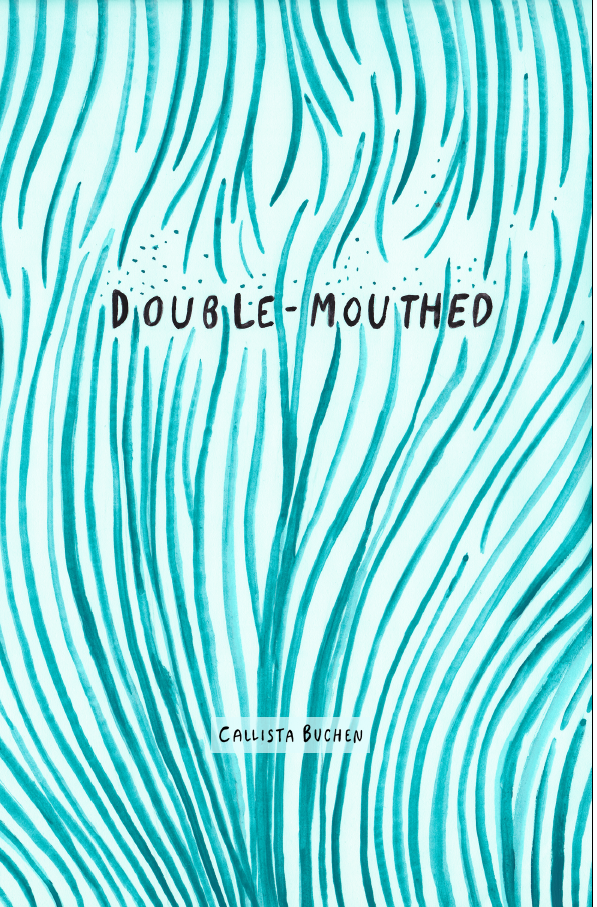
Interview: Callista Buchen

Callista Buchen author photoMidwestern Gothic staffer Megan Valley talked with author Callista Buchen about her poetry chapbook Double-Mouthed, making sense of motherhood, collaborative writing, and more.

**

Megan Valley: What’s your connection to the Midwest?

Callista Buchen: The Midwest is woven into my experience of and view of the world. I’m originally from Wisconsin, and I’ve lived for long stretches in Ohio, Kansas, and Indiana (after a brief stint out west in Oregon). These are my people.

MV: How has teaching writing at Franklin College influenced how you approach your own writing?

CB: Teaching writing gives you the opportunity to talk about writing a lot—I’m constantly thinking about writing and how best to discuss it with my students, how I can help them find their way in this field. All this thinking helps me stay engaged with my own writing. After all, I’m a working writer honing her craft, just as they are. Plus, I love reading and responding to student work—they’re brilliant and challenging, and they keep me reaching to do better.

MV: What’s the most important piece of advice you have for your students?

CB: I tell my students to read and to think about what they read, and to do so with rigor and compassion.

Callista Buchen Doublemouth book cover

MV: Double-Mouthed, your collection of poetry, acknowledges the “collapse of the self that can accompany motherhood.” How does the title reflect that theme of destruction and rebuilding?

CB: This is a chapbook about what happened after I became a mother, and how that experience made me think in new ways about identity and selfhood, and the fragility of what I had once believed to be stable. The title reflects a kind of doubleness that is bound up in contemporary motherhood, this desire to be multi-faceted, what it means to be a mother and an individual and how to be both, and what it means to be a woman and an individual. It speaks to how women have access to/must rely on a kind of double-speak to function in a culture that reduces them, through motherhood (among other social constructions), to objects and containers. But, is also a nod toward women as mysterious and powerful, including the way the female body operates.

MV: Your collection also calls into question how a woman determines her sense of self. How has your perception of yourself changed throughout writing your book?

CB: I composed these poems as I was trying to make sense of this experience of becoming a mother. I’m several years removed now from that initial experience, and while I can recognize the woman I was before (I’d wave to her from across the street), I’m fundamentally different now, both in ways I appreciate and in ways I mourn. Writing the book was an elegiac project, a way to acknowledge the rapid changes in my life and in my relationships and in my body and even in my own understanding of myself, all of which culture pushes us to ignore. In writing poems to understand this, I was able to take more imaginative leaps, to consider wider questions of selfhood and determination, to explore what happens when what one believes is stable is destroyed and rebuilt. My perception has changed in that I recognize myself to be both more vulnerable and more powerful than I previously understood, and this is the paradox of the poems are most interested in.

MV: You frequently write with poet Amy Ash—why is collaboration important to you?

CB: I love working with Amy. Writing with her is good for my soul, both my writing-soul and my person-soul. When we write together, something freeing happens in the process and in the poem. We usually work by alternating lines or phrases, and we often leave one another in the middle of an idea, so I simply trust that Amy will know what to do. It is never what I expect or what I would do, which is wonderful. Our poems are constantly turning from line to line, in a way that is energizing and urgent. Yet, they are still whole (we don’t remember who wrote what and there aren’t two voices in our pieces). There is also intimacy in collaborating. Writing never happens in a vacuum, but the drafting and composing process is sometimes lonely. When I write with Amy, I have a partner, not just a soundboard or a reader, but a true partner. We’re in it together.

MV: Your last book, The Bloody Planet, takes readers on a tour of the solar system, while Double-Mouthed focuses much more closely on a “smaller,” but not less important topic. What is the connection between the two books?

CB: Both books are interested in relationships and relationality, how things and objects and people relate to one another—relationships between lovers, between parents and children, between one and one’s self, between a planet and its moons. The books are, perhaps, different sides of the same coin, with The Bloody Planet turning outward and to the sky to understand the relationships between bodies and the gravities between them, and Double-Mouthed turning inward, toward the universe inside a mother.

MV: How do you know when a poem is done?

CB: I go by feel. I’m looking for complete or contained but not closed. I want poems that have a power that spills past the last line more than I want the final word.

MV: What’s next for you?

CB: I’m putting the finishing touches on a longer manuscript that expands the themes introduced in Double-Mouthed, as well as working on chapbook and full-length manuscripts with Amy.

**

Callista Buchen is the author of poetry chapbooks The Bloody Planet (Black Lawrence Press, October 2015) and Double-Mouthed (dancing girl press, April 2016). She is the winner of DIAGRAM‘s essay contest and the Langston Hughes award, with work appearing in Harpur Palate, Fourteen Hills, Puerto del Sol, Salamander, Whiskey Island Review, and many other journals. She teaches writing at Franklin College in Indiana.

|

No Comments

|

Views From The Heartland: David J. Thompson

David J. Thompson photog headshotMidwestern Gothic staffer Ben Ratner spoke with photographer David J. Thompson about his creative process, being a postcard poet, and more.

David J. Thompson is a former teacher and coach who worked at prep schools in New York, Texas, Florida, and Michigan. He grew up in Hyde Park, New York, and currently spends most of his time in Chapel Hill, North Carolina. He loves Spain, Bill Evans, Raymond Carver, and Krusty the Clown. His latest chapbook, It’s Like Losing, is available on Amazon. Please visit his photo website at ninemilephoto.com.

***
Ben Ratner: What is your connection to the Midwest?

David J. Thompson: I grew up in New York’s Hudson Valley and spent many years after college in Texas. I moved to the Detroit area in 1997 and left in 2013 although I still visit frequently. That was my first real exposure to the Midwest. In those years I drove all over the Midwest from Youngstown to Sioux City, International Falls to Evansville and most places in between.

BR: What launched you into the world of photography?

DJT: My dad always took lots of photos during family events and vacations, so, for me, photography always seemed very normal. In the early 1980’s I was lucky enough to spend some time in Asia where camera gear was a real bargain, so that’s when I started taking pictures and I did a lot of film photography back then. That ended when I spent much of the 1990’s in graduate school, too poor for travel or photography. I started again when I bought my first digital camera in about 2005 and began a series of photo road trips around the U.S.A. For me, photography is pure fun. Trying to write poetry or prose is work.

BR: What do you think photography as a medium can add to the literary profile of the Midwest?

DJT: As long as the Midwest is viewed simply as “flyover country,” photography can show that there is actually plenty to see in the Midwest. The prairie might not have the immediate dramatic beauty of great mountains or ocean coastline, but I think it has its own unique quiet charm. I love the little farm towns and huge grain elevators and, of course, the prairie sky. You have to get off the Interstate highways and drive country roads. The Interstate highway system is amazingly efficient, but it is misleading. Spend a little time exploring the Ohio River valley and perhaps you’ll better understand the political/social divide in our country.

BR: Your photography of Detroit–which interested readers can find on your website features street art from across the city. Why was this your choice of subject in depicting Detroit? What story do these images convey to you about the city, past and present?

DJT: Well, one reason is because it’s easy. You can’t drive around Detroit without running into great street art. I don’t know why, but I am drawn to outsider art, not just in Detroit but anywhere. I love Carhenge in Nebraska, Salvation Mountain in California and Old Car City in Georgia. I like graffiti and any kind of posters or signage, especially political or religious, and especially if it looks a little worn out. I don’t have anything new to say about Detroit, but I suppose the street art is an expression of resistance to a difficult environment.

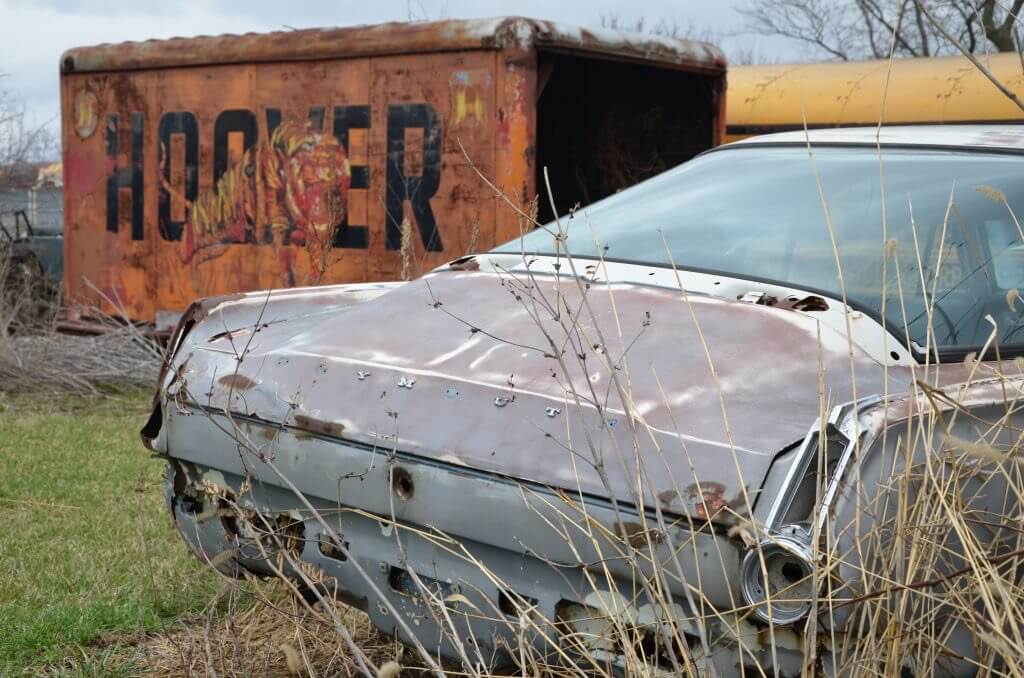
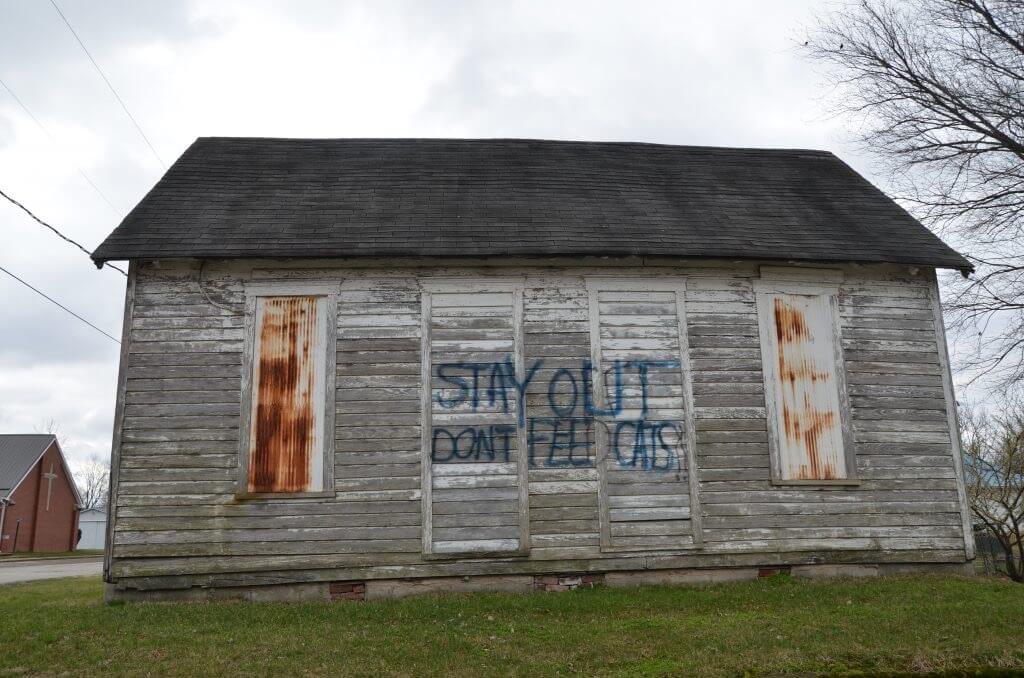
BR: We have a few of your photos here that are new to the MG site. Can you take us through the inspiration behind these photos? How did you come across each of these shots and what is it that they convey to you?

David J. Thompson Midwestern Gothic VH photo
 

David J. Thompson Midwestern Gothic VH photo
 

David J. Thompson Midwestern Gothic VH photo
These three photos are from small towns in Indiana or Illinois. If they are effective, it’s because they contain a mixture of humor and sadness. I rarely go out with a specific subject that I want to photograph. Usually I have a destination, but my route will meander and I’ll stop and photograph whatever I stumble upon. Some days are more productive than others and sometimes I encounter local people who are very suspicious of anyone with a camera, and sometimes I run into friendly local people who want to talk my ear off.

BR:You have done a lot of travelling in your day, capturing large swaths of the United States and various countries abroad. How have these voyages changed the way you see the Midwest, both artistically and otherwise?

DJT: That’s tough. I think wherever you go, Prague or Peoria, with a camera you’re trying show what most people don’t notice or, at least, portray things in a new way. That’s, of course, the difficult part. The more you travel, I suppose, the more you appreciate what’s unique about a particular country or region, what makes it special. When I go someplace new, I try not to bring too many expectations. I don’t know if I’ve answered your question, but I guess I don’t think other travel has affected my perception of the Midwest.

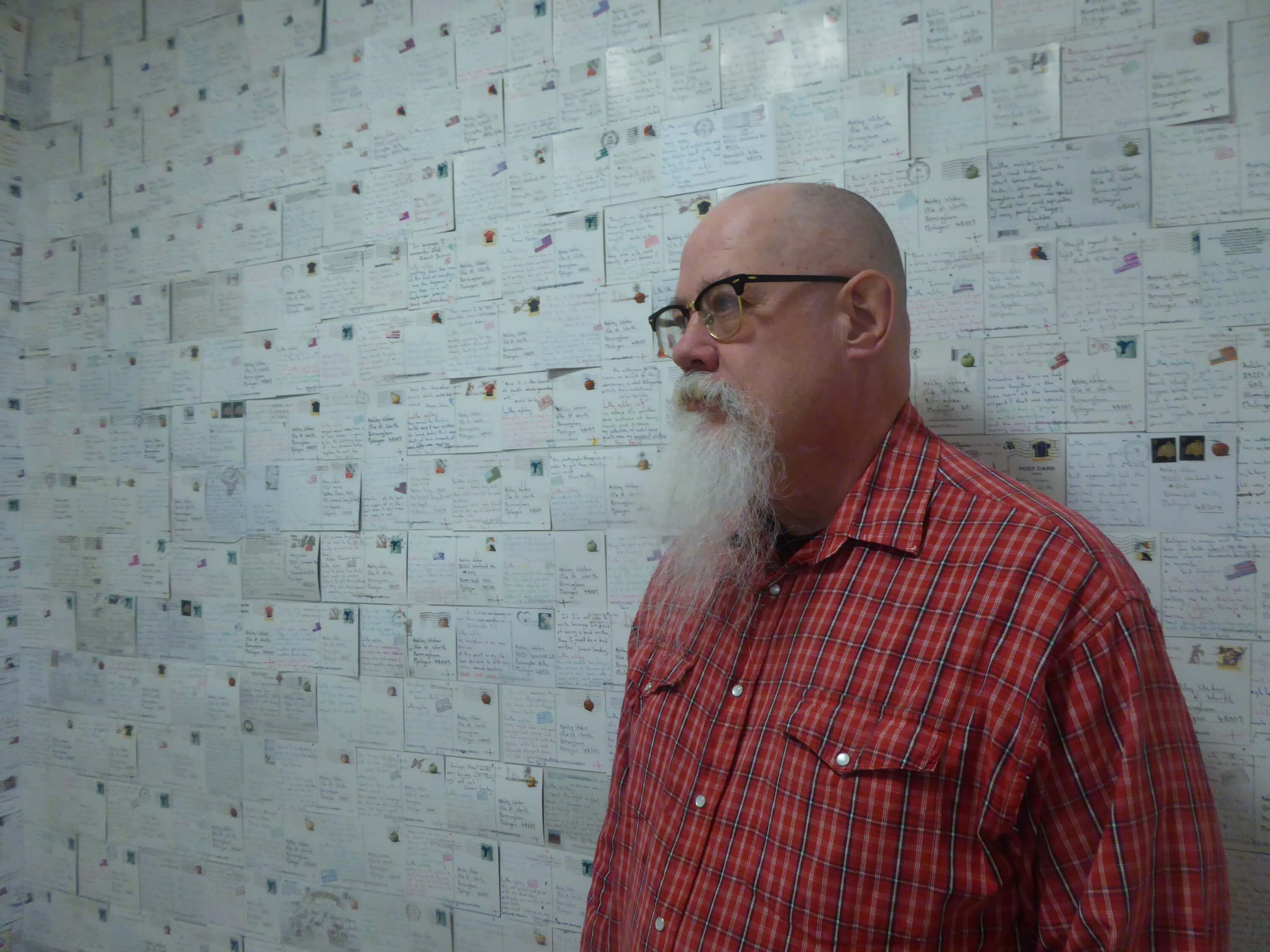
BR: It is my understanding that you are a poet who is well-versed in the art of postcard-writing. Would you care to tell us how you came across these skills?

DJT: My family lived in Germany when I was a kid, and we did a lot of travelling. Back then, in the mid-1960’s, postcards were just part of what you did on a trip, so I’ve been writing postcards as long as I can remember. When I got started with digital photography I started using my own photos to make postcards. About ten years ago, I was out of work recovering from a serious illness, and I started sending out daily batches of postcards. I have sent somewhere between 10 and 40 postcards every day that there is mail delivery since then. Seriously, I have. My work can be seen on refrigerators around the country. There are people who have thousands of them. Eventually, I’m sure they’ll be viewed in the same way as Van Gogh’s letters (that’s a joke).

BR: Is there a Midwestern author that speaks to your soul?

DJT: Bob Dylan! Bob Dylan! Bob Dylan! How many times did I listen to “Girl From The North Country” in high school? Let’s not forget that James Dean, Steve McQueen, and Miles Davis are all Midwesterners. They define “cool,” don’t they? I’m wary of the term “soul,” but I loved Jane Smiley’s 1000 Acres and Don Kurtz’s South Of The Big Four before I was familiar with the Midwest. Kenneth Patchen, from Ohio, is one of my favorite poets, but I don’t see much “Midwestern” about his work. I also admire the work of my Midwestern poet friends Don Winter, Steve Henn, Troy Schoultz, and Kaveh Akbar.

BR: What’s next for you?

DJT: Boy, I’m not sure. I’d like to go back to Spain and I’m thinking about going to stay in Paris for a while, but those might just be dreams. Sometimes I even think about getting a job, but that usually passes pretty quickly. We’ll see.

***
Our Views from the Heartland series is a new series we started to give some recognition to the incredible photographers who submit their photos to us regularly. In it, we talk with some of our favorite photographers who we feel capture the essence of the Midwest in their incredible photos. Each month, we’ll post a new interview with a photographer in which we discuss their creative process, the intersection of photography and literature, and other fascinating topics.

|

No Comments

|

Contributor Spotlight: Annah Browning

Annah Browning author photoAnnah Browning’s piece “Where to Look for Ghosts” appears in Midwestern Gothic‘s Summer 2017 issue, out now.

What’s your connection to the Midwest, and how has the region influenced your writing?

I moved to the Midwest in 2008—first to St. Louis, where I lived for three years, and then to Chicago, where I’ve lived for going on seven years now. I grew up in upstate South Carolina, so moving to the Midwest was a big change for me. The thing that has most influenced my writing has been the winters—I grew up in a place where you’d get snow maybe twice a year, an inch or so, and the world shut down for it because there just wasn’t the infrastructure and machinery in place to deal with it. School was cancelled; grocery store shelves were emptied in panic. It was a cross between the apocalypse and a festival for a kid. Snow always had an element of magic, of a special occasion. So when I moved to the Midwest, it was incredibly strange to me how much more mundane and absolutely more intense the experience of extreme winter weather is here. There’s something both admirable and nuts to me about how little the piles of snow and inches of ice will affect people’s movements, how almost invisible it is. I find this attitude fascinating, and the weather itself beautiful and overwhelming. Looking back over my writing since I moved here, I have accumulated (ha) tons of references and extended metaphors to do with snow, ice, and cold in my work: ways of talking about depression, invisibility, grace, various kinds of ghostliness. The sensory input of the Midwestern climate has changed the physical environment of my poems drastically. The flatness of scope and absolute cold, the variance of textures, the numbness—they’ve all found their way in.

What do you think is the most compelling aspect of the Midwest?

I have a weird love and fascination for the climate, as I wrote above. Seeing snow coming in over Lake Michigan for the first time felt almost religious to me. I also appreciate the particular kind of friendliness I see in the Midwest a lot. As compared to the South, there’s not an over-sweetness or effusiveness; it’s more often a quietness and practicality. I love the instant camaraderie you get with strangers in inclement weather, whether its just a shared expression of exasperation getting on the train out the sleet or a conversation about projected snow totals with an old lady at the bus stop. I love how in Chicago you can meet so many different kinds people, and how on the train you can so clearly feel what the Dictionary of Obscure Sorrows calls “sonder,” “the realization that each random passerby is living a life as vivid and complex as your own,” that you’re standing at the fringes of so many beautiful and heartbreaking lives.

How do your experiences or memories of specific places—such as where you grew up, or a place you’ve visited that you can’t get out of your head—play a role in your writing?

The rural landscape of my Southern childhood, the oppressive heat of the summer and its particular range of flora and fauna is absolutely a part of the emotional architecture of my mind, and I think it always will be. I reach for those images in my writing over and over again because they continue to have the depth that comes from being soaked in my first awareness of being a person. Creeks, fields, rats, horses, an endless line of black dogs, glass jars and old wood. Woods and hills you can vanish inside of, and feel your vanishing completely, a rush of both exhilarating fear and creepy freedom. When I find these things again in the Midwest, or something that reminds me of them, on my long walks up the lakefront or in certain neighborhoods, that happy thrum of solitude and its companionate sore spot of loneliness gets switched on in me again, and I want to write.

Discuss your writing process—inspirations, ideal environments, how you deal with writer’s block.

I do whatever works. I write on my phone on the train during my commute. I write on the back of loose assignment sheets on my desk. If I have a period where I’m not able to write much, where my mind is more hushed, I try not to let it upset me too much. I grew up with gardeners and farmers and country cooks. Making good things requires fallow periods just as much as times of frenetic creation. While I am a believer in the stubborn task of putting the work in, I also I subscribe to a crockpot theory of mental artistic life: everything goes in your head, and you give it time to stew. I read a lot, and a lot of strange things, from different genres and historical periods. I follow my hungry interests—what tastes good to me now? What do I really need to read/know/see/listen to, even if I can’t articulate why right now? And somehow, at the end, with enough patience, usually some form of intelligent life rises from this primordial muck. I think a lot of the time what we call writer’s block is actually impatience with the time it takes to really follow our obsessions, to write while trying to put the question of “is this good?” out of mind altogether. (Lynda Barry has written about this latter idea wonderfully in her book What It Is, which I think everyone should go out and get right now if you haven’t already. Reading it is like getting a warm meal from someone who loves you. Here is an excerpt.)

How can you tell when a piece of writing is finished?

Hell if I know. When the bits that poke out stop bothering me? When I’ve sanded down all the parts I can sand down? Short answer: When its existence stops bugging me.

Who is your favorite author (fiction writer or poet), and what draws you to their work?

Shirley Jackson. She is wickedly funny and scary and smart as hell. The way she can hypnotize you with the voice of a character is like no other. And Emily Dickinson is my favorite, too, of course. There’s no other poet that lives in my bones as much, for pure music and inventiveness and unrepentant oddness. Both Jackson and Dickinson have an outsider, wry, slanted view of things I’m very much sympathetic and indebted to.

What’s next for you?

I am in the process of finding a home for my first full-length manuscript, Witch Doctrine, a collection of gothically-influenced poems in the voices of ghosts, witches, and a spirit medium. I’ve also written some new poems that feature spinsters, canines, and a dead woman. We’ll see if they come to anything.

Where can we find more information about you?

I have a website at www.annahbrowning.com. I am also an editor of Grimoire, an online magazine of the dark arts, which you can find at www.wearegrimoire.com. We also have an amusing Twitter and Instagram, both @WeAreGrimoire. Come hang out with us and send us your poems, prose, spells, and chats with your dead influences.

|

No Comments

|

Contributor Spotlight: Kyle Impini

Kyle Impini author photoKyle Impini’s story “Lester Tchotchke Hawker” appears in Midwestern Gothic‘s Summer 2017 issue, out now.

What’s your connection to the Midwest, and how has the region influenced your writing?

I’ve lived in Indiana since age four, and I still haven’t spent much more than two weeks outside of it. I’m sure a lot of different facets of the Midwest have influenced me, but I think a big one is that the Midwest seems to have this healthy cynicism regarding anything too modern, and I think that’s influenced the kind of stuff I like writing about and the way I write it.

What do you think is the most compelling aspect of the Midwest?

The sheer variety of the place. It gets really cold in the winter and really hot in the summers. There are big cities and small towns.

How do your experiences or memories of specific places—such as where you grew up, or a place you’ve visited that you can’t get out of your head—play a role in your writing?

I spent a lot of time in Bloomington visiting my Grandmother when I was really young, and we’d follow a creek in her backyard all the way to Cascades Park. She was an old woman at the time but she had no trouble keeping up with me and my brother. I have all sorts of memories of that creek—finding geodes, reading foul graffiti surely written by college students, and seeing a deer carcass in the middle of the stream. It’s one of those things that I’ve always wanted to write about, but I’m afraid I wouldn’t do it justice.

Discuss your writing process—inspirations, ideal environments, how you deal with writer’s block.

I only write in my bedroom. I usually just brew a big pot of coffee and turn off the internet. The only way I can deal with writer’s block is to write a lot of trash and try to find a salvageable sentence or two. Reading out of my comfort zone can also help.

How can you tell when a piece of writing is finished?

At a certain point I just call a piece done and move on to the next one. I usually spend around six weeks working on a piece, and after a while I just start feeling the need to move on. That being said, I’ll often come back to stories after a month or so and make really minute changes.

Who is your favorite author (fiction writer or poet), and what draws you to their work?

I’m a really big fan of Tobias Wolff. His stuff is so readable that it’s tempting to blow through it, but he draws up such interesting situations that you’re forced to put the book down and think through the implications of a bit of dialogue or an action. There’s this weird thing he does where the emotional content of the story/book is insanely complex, but he manages to get his point across with really simple and direct prose. It’s almost like a magic trick. He can be hilarious without being insincere, intelligent without being pretentious, emotional without being sappy, and though his stories feel hyper-realistic they’re really super bizarre. I honestly can’t say enough good stuff about his stories.

What’s next for you?

I just graduated from Indiana University so I’m just gonna be working and writing for the foreseeable future.

Where can we find more information about you?

If you want to get in touch with me, just send me a message on Facebook.

|

No Comments

|

Midwest in Photos: Why Die?, Saginaw, MI, 2011

“The main thing you got to remember is that everything in the world is a hustle.” – Malcolm X, The Autobiography of Malcolm X.

Photo by: Daniel Farnum

|

No Comments

|

Interview: Dan Chaon

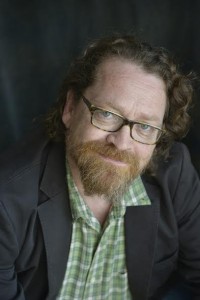
Dan Chaon author photoMidwestern Gothic staffer Meghan Chou talked with author Dan Chaon about his book Ill Will, writing from multiple perspectives, balancing suspense and tension, and more.

**

Meghan Chou: What’s your connection to the Midwest?

Dan Chaon: I grew up in Western Nebraska—in Sidney, just north of Sterling, Colorado, about a hundred miles east of Cheyenne, Wyoming. I went to undergrad at Northwestern, in Chicago. I have lived in Cleveland since 1990. So I have three very different ties, but all of them definitely a kind of “Midwestern.”

MC: Ill Will is set in the city of Cleveland, Ohio, where you currently reside. Why did you decide the Midwest was a valuable setting for your work?

DC: I’m not sure it’s a “decision,” honestly. I think as a writer I’m stuck with my landscape the same way I’m stuck with my eyes or my skin. But it’s definitely meshes with my work in a vital way, to the extent that I don’t think most of my stories could really be set anywhere else.

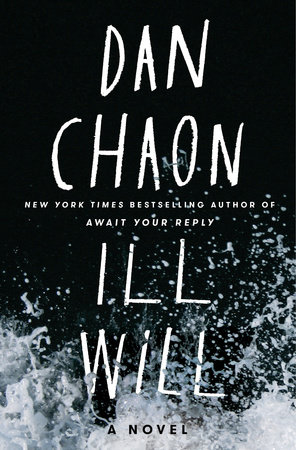
Dan Chaon Ill Will book cover

MC: Ill Will introduces us to Dustin Tillman, a psychologist in the suburbs of Cleveland. He says, at one point, “We are always telling a story to ourselves, about ourselves.” Do you create characters that reflect a part of your personal story or do you maintain a distance from your characters?

DC: Both, I think. Dustin is a lot like me in many ways, circa 2010—a widower living in Cleveland with two teenaged sons. At the same time, Dustin’s backstory is quite different, and so is the present action of the novel. Maybe you could say that I use my personal life as a battery to power these very fictional, fantastical stories.

MC: Dustin Tillman finds himself tangled up in two murder mysteries from different time periods and in contrasting circumstances. One, in the past, involves his adopted brother, Rusty, who Dustin accused of murdering their parents, aunt, and uncle. The other, in the present, involves a patient of his who draws him into a novice investigation. How do the murders relate and trigger actions and feelings in Tillman?

DC: That’s kind of a spoiler question. I don’t want to ruin the surprise.

MC: What difficulties did you encounter in weaving together multiple narratives through the perspective of one character?

DC: I don’t usually use one character. All my novels have been multiple perspective—it’s a trick that I’ve tended to go back to—primarily because I’m writing about stories that actually can’t be told by one person. I tend to write about characters who are secretive, or liars, or self-deluded, and with that kind of person we always need to see multiple sides.

Ultimately, I think the issue with this kind of book is that once you have multiple narrators, you have multiple narratives, and things can spread and branch out too diffusely. There has to be a strong central plot to keep it all bundled together. The main struggle for me is trying to keep it focused, rather than following an extraneous thread that catches my attention.

MC: How do you provide and draw out suspense without killing the tension?

DC: I think you make an interesting distinction between suspense and tension, but it’s a complicated and subtle difference. They’re both about wanting to know what happens next but I’m guessing that what you’re suggesting here is that “Suspense” = withheld information of some sort, and “Tension” = willingness to turn pages?

I think that’s the trickiest balance, and I always have a hard time with it. I’m tolerant of a lot of ambiguity and uncertainty, but a lot of readers aren’t. There have to be little nuggets or bread crumbs along the way that make them feel like they’re making progress in putting the puzzle together, or folks get frustrated.

I have to hope for a reader that, like me, enjoys a certain level of suspension that may not ever fully be answered. Otherwise, “tension” feels mechanical, like one of those first-person shooter video games from the 1990s, where you’re just on a single path through the level on your way to the big battle with the boss. But for me, the questions have to be bigger and more compelling than any one solution.

MC: What’s the most important advice you give your creative writing students at Oberlin College?

DC: Read.

MC: What’s next for you?

DC: Two new novels, and possibly a limited TV series based on Ill Will.

**

Dan Chaon‘s most recent book is Ill Will, a novel. Other works include the short story collection Stay Awake (2012), a finalist for the Story Prize; the national bestseller Await Your Reply and Among the Missing, a finalist for the National Book Award. Chaon’s fiction has appeared in Best American Short Stories, The Pushcart Prize Anthologies, and The O. Henry Prize Stories. He has been a finalist for the National Magazine Award in Fiction, the Shirley Jackson Award, and he was the recipient of an Academy Award in Literature from the American Academy of Arts and Letters. Chaon lives in Ohio and teaches at Oberlin College.

|

No Comments

|

Interview: Jardine Libaire

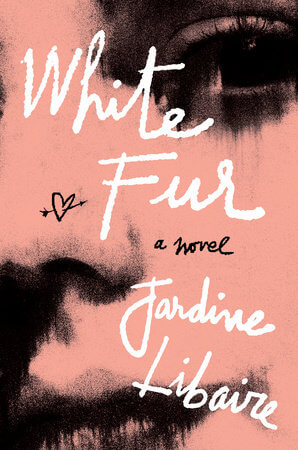
Jardine Libaire author headshotMidwestern Gothic staffer Kristina Perkins talked with author Jardine Libaire about her book White Fur, struggling to be a midwestern insider, mindfulness in writing, and more.

**

Kristina Perkins: What is your connection to the Midwest?

Jardine Libaire: My main connection is the two years I lived in Ann Arbor, 1995-7, when I got my MFA at the University of Michigan while working as a cocktail waitress at the Bird of Paradise jazz club there. I lived in a development that I think was called the Strawberry Estates, and living there felt a bit anonymous, and like a bridge from school to adulthood. There were only twenty or so students in the Hopwood MFA program, and a handful of (great) teachers, so school—for the first time in my life really—didn’t provide a readymade society. This was exciting and also lonely. Memories include starting my car (a tacky little tinted-out gold Jetta) in the deep winter before going back inside to have breakfast so that the engine could warm up enough to drive; realizing this was not the east coast nor the west coast, and that I had a lot to learn; getting my mind blown by Detroit when I went to see music there; partying with a local news anchor in Shaker Heights, Ohio and watching her throw up into an indoor pool at the end of the night; knowing I was an outsider, wanting to be an insider, knowing I didn’t know how to make that happen in two years and leaving somehow enriched and defeated.

KP: You spent four years at a boarding school in Connecticut. You earned your MFA in Ann Arbor, Michigan. You’ve lived in Brooklyn, New York and Austin, Texas. How does your sense of place—and, with it, your sense of belonging—inform your writing?

JL: Writing to me (ideally, hopefully) starts with being mindful, being present of where I am, and so location is often an entry point in thinking about things. Location is also available to study in a way that people aren’t sometimes, if that makes any sense. If I want to drill down and get into a piece of writing, find a way into it that feels real and not like literary fabrications, I often start with a place—either a town, or country, or one square foot of a street, or one particular room, or a field at a certain time of day in a certain season. Then I can figure out some language or detail that feels true and fresh to me, and then I can be excited about the piece. Being excited about it feeling real is so important because even though the piece might still be a mess, that’s what makes it possible for me to sit down to it and work.

Growing up on Long Island, on the south shore, my brothers and I would just ride our bikes for endless hours, investigating miniscule stuff, the details that kids get hung up on—a dead seagull could take up a whole afternoon, an abandoned house could provide new information for months. I love feeling like I’m on that level of exploring when I write, just picking up garbage and leaves and walking slowly through hallways and surveying the candy rack at the deli forever.

Moving around my state, this country, and internationally when I’m lucky, even if it’s just for a minute, always stirs up my heart. In addition to those places listed above, I’ve also lived for a month or more in a bunch of other places, from Vashon Island to Costa Rica to Paris to Wyoming to Vail to Cape Cod to Charleston. I’ll jump at offers of off-season vacation houses from friends—I spent a winter on Martha’s Vineyard, a summer in a ski house. Those month-and-then-some trips have always opened me up to new thinking, new sensibilities, since “place” is physical, but also cultural, and so it’s the people who live there, and it’s how they live, and what they believe that gets “visited”.

And being in a new place is the quickest way I know to wake up, to turn on all my senses and be aware of the moment and the environment. If I’ve gotten into a rut of daily life, then going to a new place for one, two, three days wakes up all the stuff that is good for writing.
White Fur book cover

KP: Thirteen years passed between your debut novel, Here Kitty Kitty (2004), and your newest novel, White Fur (2017). How would you describe your growth as a writer between and among these books?

JL: It looks more ordered when I see it from this perspective, but the time I spent between those books felt chaotic, like I was urgently seeking something and I had no idea what it was. (Maybe many of our lives feel that way…?)

The first thing I worked on after Here Kitty Kitty was a television series I dreamed up called The Desire Project. In 2005 I lived in Williamsburg, Brooklyn, which had blown up artistically (for good and bad), and I conceived of a show that was part scripted, starring a character who had her own cable show, and then partly unscripted, using actual interviews with the skateboarders, DJs, sculptors, drag queens, etc, who she had on her own show. I actually shot the pilot with friends, and while we didn’t sell it, it introduced me to the experience of collaboration, and also got me crazy for creative nonfiction.

After that, I pitched a TV series treatment about the modern boarding school, and how strange and dark and wonderful it can be, and the project instead turned into a four-book YA series with Harper Collins that I wrote (under the pen name Caroline Says) with two friends I went to boarding school with: The Upper Class series.

I moved to Austin 10 years ago, and found my way into a loose collective of lunatics and artists headquartered around this place called Justine’s Brasserie, and we have been dreaming up and staging big immersive art events for the past seven years. I also got invited to write the text for a nonfiction book by the photographer Phyllis B. Dooney, and I spent time in the last couple years in Greenville, Mississippi with the family who stars in the book, and we published it earlier this year: it’s called Gravity is Stronger Here. I also started writing screenplays and obsessing over that format in the past decade, so when White Fur got optioned last year by FilmNation for TV, I was able to adapt and develop it myself, and we just got picked up by Amazon Studios.

In terms of growth, I see myself—through the years since Here Kitty Kitty — discovering and relishing the joy of working with other people and with their imaginations. I love the “real” and the “unreal” meeting somewhere and joining forces, and I love rethinking what nonfiction means, and what fiction means. Allowing writing to merge with my life.

KP: White Fur embraces the gritty, the raw, and the heavy, discussing themes such as drug use, mental disorder, racism, and poverty. When conceiving your plot and characters, how do you find balance—in the form of hope, love, or growth—within this heaviness?

JL: There were times when I was writing White Fur when the balance was off, it was too negative, and I have to admit, it felt grim, icky, to be involved. It became a process not unlike some sort of self-care to recognize that this imbalance was happening, and, as in life, to seek out the positive. And that rhythm of ups and downs is woven into the book itself because of that process.

In life, I’m often overwhelmed or enchanted by the darkness and the ugly parts, and just as overwhelmed and enchanted by the beauty and the joy and the eccentricities too. So I kept calibrating the book to some internal register of what felt like a correct ratio. White Fur is a little bit noir, so it does lean slightly more to the sinister than (in my eyes) life does. But not much.

KP: Your prose—easy, graceful, precise—often reads like poetry. Notably, you switched from studying poetry to pursuing fiction halfway through your MFA at the University of Michigan. How would you describe the relationship between your prose and poetry? What does this sort of lyricism add to a novel?

JL: First of all, thank you!

Well, I’ve done experiments trying to write in a more straightforward and storytelling manner, focusing purely on plot and conventional detail, to see if I could do it. And I realized that for me the story is in the tiny details, the juxtapositions, the meter, and the shape of the lines, to a large extent. Those aren’t ornaments or cherries on top, they’re the meat of the story. If I’m not able to write using a poetic sensibility, I can’t really make a story. I wish I could.

If anything, I try to alternate modes—between poetic and more prose-like, so there will be a scene which feels like a standing pool of details and ideas and sensations, and then I’ll push the next scene to be more active and streamlined. But I can’t seem to abandon poetry completely for prose. To mention noir again, I think it was in Raymond Chandler books that I realized even very plot-driven stories can pivot on the jewel in the stickpin in the strangers’ lapel—not that it’s an outright clue, but it brings the scene to life. Even mysteries can be driven by a tiny little detail chosen and used the way it would be in poetry.

I don’t know that the poetic element adds lyricism as much as that the lyricism is simply in the DNA of any story I’m writing. It can’t be broken down and summarized as concrete plot points or themes in a Cliff’s Notes way, but the lyricism is an essential engine in communicating to the reader what is happening, what is at stake—it is the action, it is the character development, it is all the things that another writer might be able to do in something more akin to prose.

KP: In previous interviews, you’ve discussed your own shyness. How does introversion affect your identity as a writer—if at all?

JL: Oh my goodness, I think being introverted for me is at the core being a writer. From a very young age, I can remember feeling outside looking in, and I can remember wanting to connect, and those feelings are braided into feelings about wanting to make meaning out of life.

I remember reading the Joan Didion essay “On Keeping a Notebook” for the first time, where she talks about how some people are born needing to rearrange things on paper all the time, and my reaction was: oh wow, so this is a thing. This is something other people experience the same exact way. It was like looking up some bizarre set of symptoms on webMD, and feeling relief that it had a name. Because from the earliest age of consciousness, I can remember this incredible drive to rearrange things, or make sense of them, or push them past how they began (and ended) in reality toward some new existence.

And then for me it’s been a learning curve in that I’ve gone from being a fairly heavy drinker and “party person” who relied on that lifestyle to get out of innate awkwardness, to connect to other people, to feel like I have freedom and agency—to becoming sober almost 5 years ago. I finally realized that the general discomfort I’ve often felt over the years (that is associated with introverted-ness in my mind) is so important, and should not be numbed or rampaged over. It’s out of that discomfort—and a need to resolve that discomfort—that writing comes. There is tension between my consciousness and the world, to put it another way, and I write to try to rectify it. So by drinking it away, I was forfeiting this incredibly valuable situation.

KP: What is the best piece of writing-related advice you’ve ever received?

JL: I hate when I hear writers say there’s no secret, no back route, no shortcut to creating work, and I also love it, because it shuts down my fantasies and I have to embrace that the only way out is through. The draft is always going to be a mess until one day when it finally feels slightly more ordered than disordered, and the only way to get there is to keep working and keep working. Whenever I’m reminded of that by a writer talking about their own work, it revitalizes me to go out into the brush and keep forcing a path.

I also try these days to treat myself kindly, to gently push myself to work, as opposed to when I was younger and I would be mean and cruel to myself if I didn’t get it done or if I didn’t show up. It was in meditation classes that I was told it’s not effective to berate myself if I drift—that I should just gently lead myself back. This was quite revolutionary advice when I heard it.

To work steadily, with a discipline enforced gently—that’s a compound of ideas I’ve found myself relying on more and more.

KP: Who do you write for?

JL: The reader who will not only tolerate something unfamiliar, something strange and not easily categorized, but the reader who actively wants that.

KP: What’s next for you?

JL: I’m writing the TV series of White Fur now, and we’ll see if we can get it greenlighted into production. That’s a truly fun collaboration, as of now, since I love the producers and the director. I’m also finishing a book about a teenaged girl who is deaf, and who falls in love with a cheetah at a West Texas biker compound. I facilitate a Truth Be Told class at a prison here in Texas, too, in which women learn to write their own stories, to sort out their own lives, to trace, and to describe the path that led to where they are now. It’s a beautiful, humane, dynamic curriculum, and so a lot of my heart is currently invested there too. I’m making these weird tiny little zines with my artist friend Beth Middleworth, just because. And I’m also working on the next event at Justine’s here in Austin, which will be a protest fundraiser to benefit HALT, and will star a Marilyn Minter “Resist” poster she made for us, and will involve musicians and set designers and other friends and family, and will be imperfect and chaotic and full of life and art and love.

**

Jardine Libaire got her MFA in Writing from the University of Michigan, having loved writing and books since she was a kid. Her most recent novel White Fur (Hogarth) was published in May 2017, and was chosen as a Barnes & Noble Discover Selection, an Amazon Best Book, and a Book of the Month Club pick. Her first novel Here Kitty Kitty (Little, Brown & Co. 2004) will be re-published by Hogarth in 2018. Her television-series adaptation of White Fur with FilmNation Entertainment just landed a home at Amazon Studios. Her creative nonfiction collaboration with photographer Phyllis B. Dooney, Gravity Is Stronger Here, (Kehrer Verlag) came out in April 2017. She’s been a recipient of the Hopwood Award, the Glascock Poetry Prize, and Honorable Mention for the Dorothea Lange-Paul Taylor Prize in Documentary. She also belongs to a collective of artists who put on immersive art events at Justine’s Brasserie here in Austin, and she volunteers for Truth Be Told, a writing program for incarcerated women in Lockhart, Texas.

|

No Comments

|