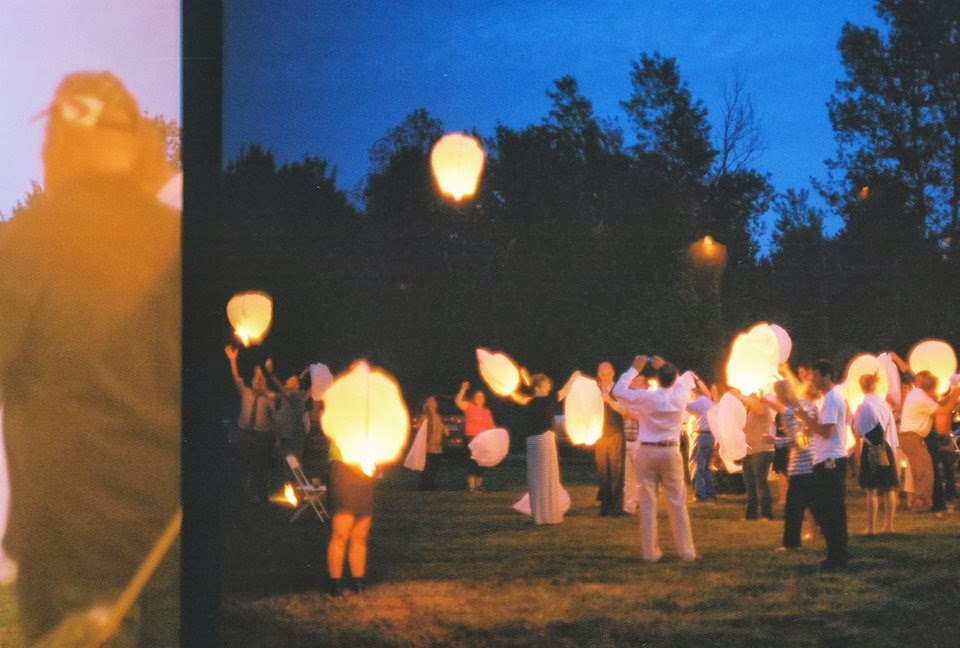
Midwest in Photos: Hotel Phillips

July 15th, 2017

“In the end we had the pieces of the puzzle, but no matter how we put them together, gaps remained, oddly shaped emptinesses mapped by what surrounded them, like countries we couldn’t name.” – Jeffrey Eugenides, The Virgin Suicides.

Photo by: Stewart Melton

We Could’ve Been Happy Here review from Atticus

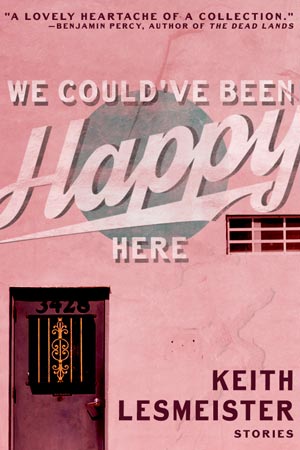
We’re so thrilled to share that We Could’ve Been Happy Here just received a stellar review from the wonderful Atticus Review! High praise from an excellent source!

Here’s what Atticus Review had to say about the “life rattling” MG Press title:

“There’s a wonderful endlessness in these stories.” – Barrett Warner, Atticus Review

Read the full review on Atticus Review‘s website.

WE COULD'VE BEEN HAPPY HERE by Keith Lesmeister book cover

For more information and to buy a copy of We Could’ve Been Happy Here, see the book page on our website.

|

No Comments

|

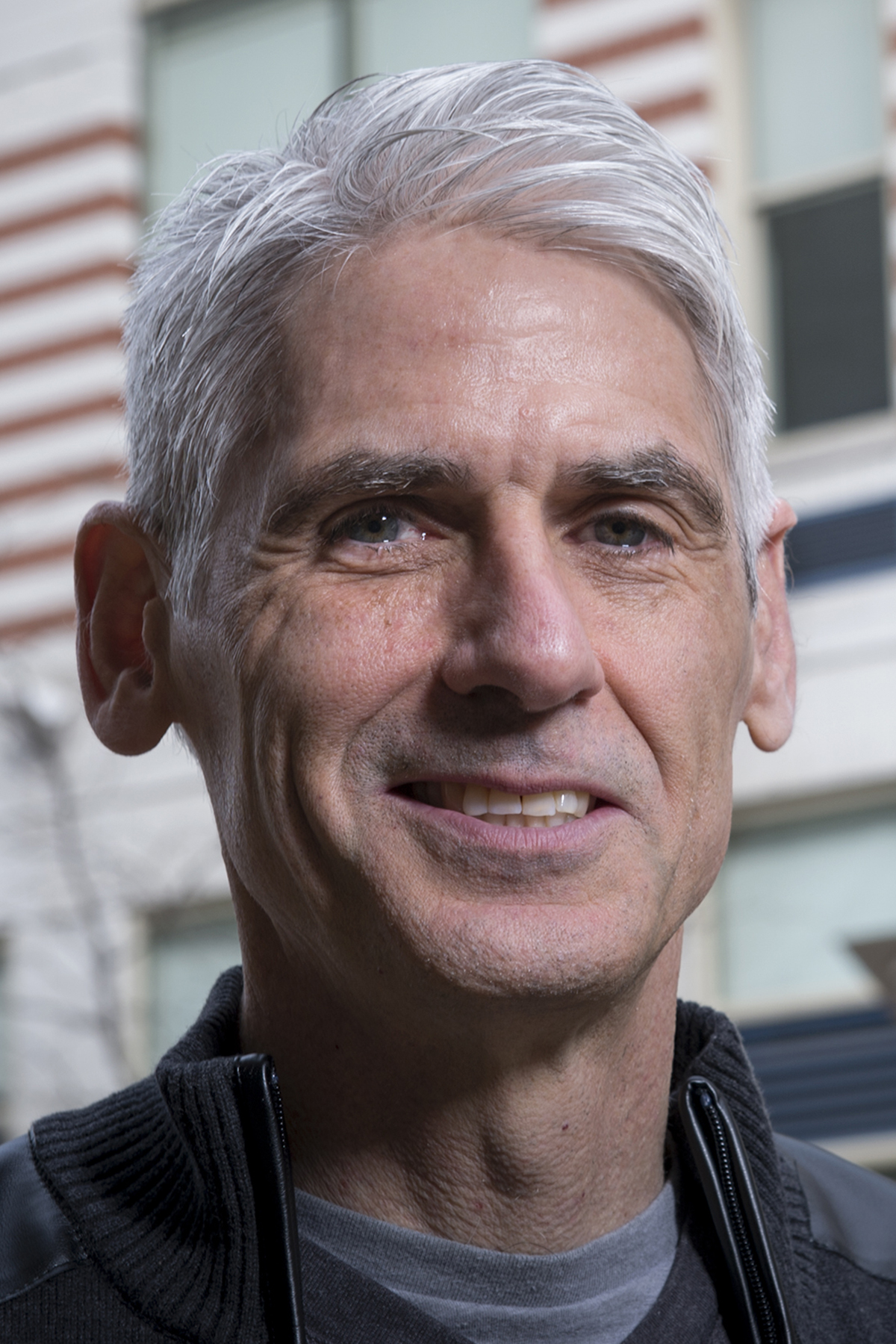
Interview: Jim Daniels

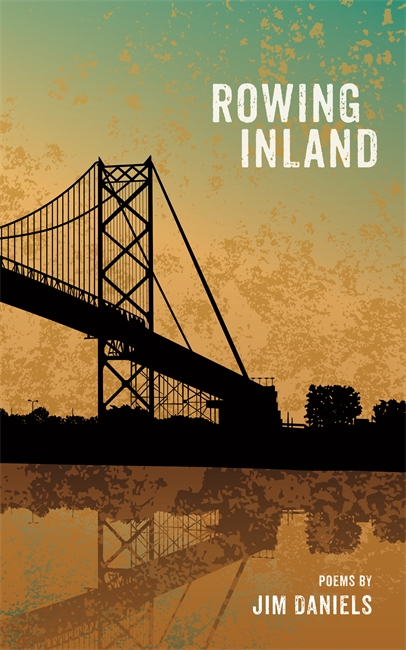
Midwestern Gothic staffer Audrey Meyers talked with poet Jim Daniels about his book Rowing Inland, being a poet of place, learning about oneself through writing, and more.

**

Audrey Meyers: What is your connection to the Midwest?

Jim Daniels: I was born and grew up in and around Detroit, spent three years in Ohio, and have spent many years living in Pittsburgh, which is where I believe the Midwest ends, though others would probably say it ends at the Ohio border.

AM: How has living in the Midwest impacted your writing?

JD: I am a poet of place, so a majority of poems are set in the Midwest, so it’s the firm ground on which my poetry treads.

AM: What inspired you to write about Metro Detroit in Rowing Inland?

JD: Most of my books, both poetry and fiction, use the Detroit area as a setting, so Rowing Inland is a continuation of my obsession with industrial, urban, Midwest landscapes. I find that a lot of literature—particularly poetry—tends to either ignore or distort working-class life, and I’ve always seen it as part of my work to say, hey, these lives are important.
AM: Since Rowing Inland is your 15th book of poetry, what inspires you to keep writing?

JD: Like most writers, I don’t need inspiration to keep writing. I need to write—it’s a big part of what sustains me in my daily life. I just hope I can continue to find readers interested in what I have to say.

AM: A lot can be said with just the placement of words in poetry. How did you use this technique when writing Rowing Inland?

JD: Since I write fiction and screenplays as well as poems, I work to take advantage of the poetic line to create music and emphasis, and work on the intense compression of language into imagery, important characteristics of poetry that distinguish it from other kinds of writing.

AM: Since Rowing Inland is about traveling through time and history, how do you think your style carries the emotions of your readers to another place?

JD: The challenge for me as a poet is to take readers to the times and places of the poems and bring them to life, no matter where or when they are set. I often use narrative to try and bring the readers into the scenes, and lots of concrete detail. I spend a lot of time thinking about titles and opening lines because I want readers to land in the poem with their feet on solid ground.

AM: How were your own emotions utilized when writing this poetry?

JD: The emotions are the sparks for the poems. Without the emotion, the poem is going to fall flat. If I don’t care about my subject, readers aren’t going to care.

AM: What did you learn about yourself as a poet when creating Rowing Inland?

JD: I am always learning about myself as a person when writing. As a poet, I was reminded what an important role Detroit continues to play in my work—I seem to still have a lot to say about it.

AM: How did you infuse humor into a community’s struggle for survival?

JD: While I’m not consciously trying to get humor into the poems, humor is certainly a survival technique to help us cope with hard times, and Detroit’s sure had more than its share of hard times over the years.

AM: What do each 4 segments of your book represent? Why did you divide your book into these parts?

JD: I see the sections as representing family, community, childhood, and social class, though there’s obvious overlap across the sections.

AM: What key life experiences influenced your poetry in Rowing Inland?

JD: One event that shows up in three poems in the book is the death of a girl who lived down the street from me in a freak fire. She was the first girl I kissed, and she was the first person I loved who died. First kiss, first death—that combination creates a pretty powerful haunting.

One other thing that I found myself doing here was consciously trying to create a sense of Warren as a community as opposed to Detroit. I tend to say I’m from Detroit because most people outside the Detroit area are not familiar with Warren, but anyone from that area knows Warren is a very different place, on the border with Detroit, but very different. White working-class, mostly, but that is slowly changing.

AM: What do you hope readers take away from your poetry?

JD: For one thing, I value clarity in my writing, so I’m hoping readers find the poems clear and accessible, regardless of their geographic or economic backgrounds.

AM: What’s next for you?

JD: Current projects include two forthcoming books of poems, Street Calligraphy and The Middle Ages, and two anthologies, Challenges to the Dream: The Best of the Martin Luther King, Jr. Day Awards at Carnegie Mellon University, and, with my friend M.L. Liebler, I Just Want to Testify: Poems About the Music of Detroit. I continue to work on short stories and screenplays, and to collaborate with the photographer Charlee Brodsky, writing poems to go with her photos. We currently have an exhibit of our work on display at Michigan State University

**

Jim Daniels’ fifteenth book of poems, Rowing Inland, was published earlier this year by Wayne State University Press. Forthcoming books include Street Calligraphy, Steel Toe Books, and The Middle Ages, Red Mountain Press. His previous book, Birth Marks, was the recipient of the Milton Kessler Poetry Book Award, and the Poetry Gold Medal in the Independent Publisher Book Awards. His fifth book of short fiction, Eight Mile High, was a Michigan Notable Book and a finalist for the Paterson Fiction Prize. “The End of Blessings,” the fourth short film he has written and produced, appeared in sixteen film festivals in 2016. His poems accompanying the photographs of Charlee Brodsky were recently displayed in galleries at Robert Morris University and Michigan State University, and his poem “Factory Love” is displayed on the roof of a race car. His poems have been featured on “Prairie Home Companion,” Garrison Keillor’s “Writer’s Almanac,” in Billy Collins’ Poetry 180 anthologies, and Ted Kooser’s “American Life in Poetry” series. A native of Detroit, Daniels is a graduate of Alma College and Bowling Green State University. He is the Thomas Stockham University Professor of English at Carnegie Mellon University.

|

No Comments

|

Contributor Spotlight: Orey Wilson Dayne

Orey Wilson Dayne’s piece “Soundtrack for the Apocalypse” appears in Midwestern Gothic‘s Winter 2017 issue, out now.

What’s your connection to the Midwest, and how has the region influenced your writing?

I was born and raised in the Midwest. I could see cornfields from my bedroom window and my high school had fields on three sides (the last side was forest). My town didn’t have a McDonalds, a stoplight, or a gas station. For me, getting into a big city was always the dream. It wasn’t until I moved to Philadelphia that I realized how much of an Ohioan I was. I think the sky is different everywhere you go and I can always pick out a Midwestern sky. My Ohio-ness is something I hope always comes through in my writing.

What do you think is the most compelling aspect of the Midwest?

The most compelling aspect of the Midwest is it’s perceived normality. So many movies and TV shows are set here because of how “normal” everything is. To outsiders, it’s just a huge, flat expanse with nothing but cows, fields, and farmers. So, that gives us, as writers, a chance to exploit that stereotype. We can play off the normality of the things that happen here, even normalizing things that aren’t. Or, by letting my Midwestern settings shine through, even the smallest things can look extraordinary. In doing so, I can show how un-normal it all really is.

How do your experiences or memories of specific places—such as where you grew up, or a place you’ve visited that you can’t get out of your head—play a role in your writing?

My poetry tends to focus heavily on the concept of “Place”, un-doing and remaking it’s definition. I’ve done a lot of moving which has resulted in me forming roots in odd ways. Like a tree by a sidewalk, I have hooked onto places like my High School choir space and wiggled beneath the image of the peach tree in my childhood backyard. These memories and places resurface in my writing often; they’ve become motifs that I return to, even when I can’t go back to the true location.

Discuss your writing process — inspirations, ideal environments, how you deal with writer’s block.

I’m one of those annoying people that doesn’t believe “Writer’s Block” exists. There are scheduling issues that keep me from writing. Often my to-do list overshadows my list of poem ideas. But, if I can buckle down at my laptop, I can always crank something out. I wish I had more elbow room in my schedule, but work pays the bills and, as of late, I tend to eat food. As far as process goes, I work better with a keyboard than pen and paper. I also like working in the early morning/late evening. I also find myself building up ideas over a span of time and bursting out with a few pieces all at once during a single sitting. This is better for me because I see most of my poems as pieces of a bigger concept or collection.

How can you tell when a piece of writing is finished?

Deciding when a piece is “over” isn’t easy for me. I could pick at a piece endlessly. Like I mentioned, I typically think of my poems as limbs of a bigger creature. So, I don’t always feel done with a piece until I’m done with the whole collection. This might not be the most efficient way of doing things, but it’s what puts my inner-editor at ease.

Who is your favorite author (fiction writer or poet), and what draws you to their work?

My favorite writer (at this exact moment) is Billy Collins. He is able to take little moments from his life, work them in his hands like Silly Putty, stretch them across a page, and, when he pulls it back from the paper, there’s an imprint of him that is artful and precise. He also has some really great titles, of which I’m totally envious.

What’s next for you?

As far as writing goes, I’m working on completing my poetry collection, Soundtrack for an Apocalypse. Meanwhile, I’m attempting to get pieces of my collection Edges of Men & Kings published. Basically I’m trying to feed one toddler while the other one runs under my feet, screaming and throwing toys.

Where can we find more information about you?

If you want to know more about me, I have information and a blog on my website oreywilsondayne.com. I also am constantly tweeting nonsense on my Twitter, @OreyOreyOrey.

|

No Comments

|

Summer 2017 Flash Fiction Series – Prompt #2

Midwestern Gothic Flash Fiction Contest Series 2017
 

During the summer of 2015 we introduced our Summer Flash Fiction contest series, and we’re thrilled to be continuing it this year! (And you can read all of our winners from 2015 and 2016 here.)

What is it? Our flash fiction series invites writers to write short pieces in response to photos we post.

How does it work? We’ll supply an image from our photography archive and invite writers to respond with flash fiction inspired by the photo, up to 500 words. Remember: You, or your piece, must have a Midwest connection. Each image will be open for submissions for just under 1 week, and we will take a few days for reading and balloting before beginning the next round. At the end of all three rounds, the top 2 entries we feel best represent the photos from each round will be published on the Midwestern Gothic website.

How long is the series? We will be doing this throughout the month of July and early August — which nets out to three rounds of images (three submission periods). Round 2 starts on Monday 7/10, when the photo prompt will be posted via blog and social media. Winners will be announced and winning pieces (winner + runner-up) will be posted after the submission periods for all three rounds are finished, in the first week of August.

How do you submit? Send submissions to Ben at ben@midwestgothic.com. Use the subject line “Summer Flash Round X – Author Name – Name of Piece.” For example: Summer Flash Round 2 – Joan Smith – “Eyes of the Wild.” Remember: Include a third-person bio of up to 150 words with your submission.

You can find all guidelines here, including how to submit (and where!). We can’t wait to read your work!

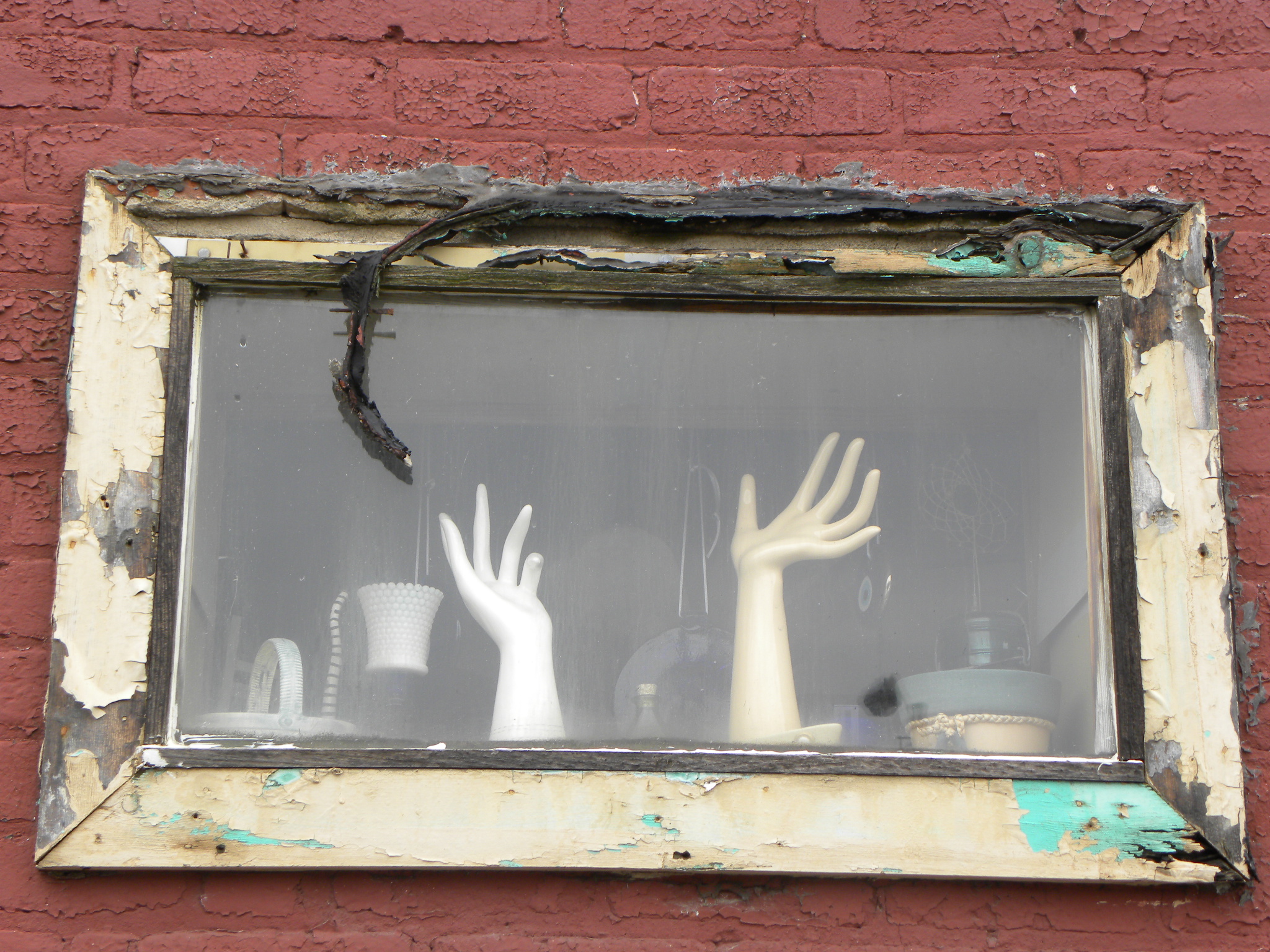
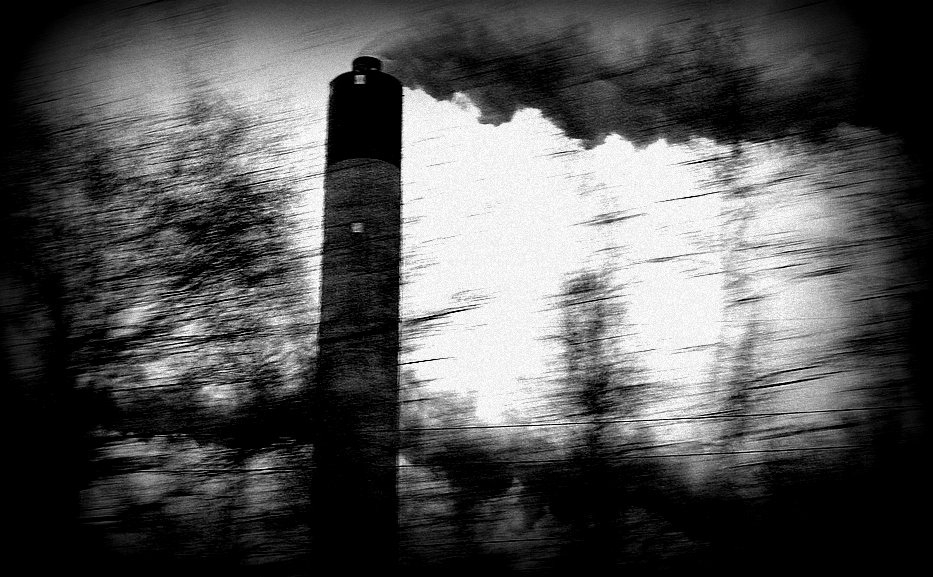
Prompt #2: Take a look at the following photo, and create a piece of flash fiction inspired by it.

Prompt #2 due date (before midnight EST): Saturday July 15, 2017

Prompt #2 winners published: August 7 – August 13, 2017

Prompt #2: “Hands” by David J. Thompson

Midwestern Gothic Flash Fiction 2017 - Hands by David Thompson
 

Audible logoOur 2017 Flash Fiction Contest is sponsored by Audible. Get a free 30-day trial and 2 books, on us when you sign up. Start your free trial
|

1 Comment

|

Midwest in Photos: Passing Springfield, Illinois

“I would hurl words into this darkness and wait for an echo, and if an echo sounded, no matter how faintly, I would send other words to tell, to march, to fight, to create a sense of the hunger for life that gnaws in us all.” – Richard Wright, Black Boy.

Photo by: Justin Hamm

|

No Comments

|

Interview: Gabe Habash

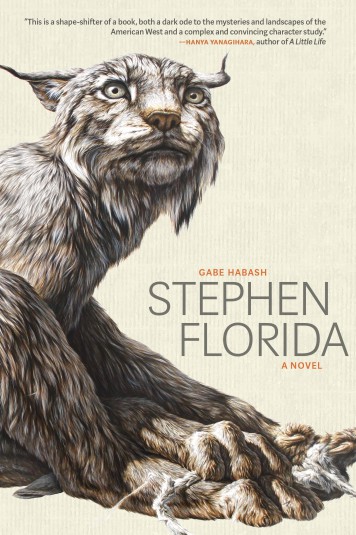
Midwestern Gothic staffer Kathleen Janescheck talked with author Gabe Habash about his novel Stephen Florida, “nowhere space,” being unsettled, and more.

**

Kathleen Janescheck: What’s your connection to the Midwest?

Gabe Habash: I was born in Columbus, Ohio, and lived there until going to Florida for college. Most of my family lives in the Midwest, and my wife is from Michigan.

KJ: In your novel, Stephen Florida, your main character is a college wrestler who travels around the Midwest—including North Dakota, Minnesota, Wisconsin, along with other states—as he attends various competitions. Are any of the places he visits of particular significance to you?

GH: I hadn’t actually seen any of the book’s locations in person before writing. I like to have room to make the story. A story can’t be too close to my own experience or I’ll get bored. For instance, I live in New York and so I’d never write anything that takes place in New York. I live here every day, so to remain there when I sit down to write is just kind of claustrophobic and airless to me. So North Dakota and the smallish Midwestern towns that are in the book like Winona, Minn., Kenosha, Wisc., etc., were at the opposite end of the spectrum. The places in the book are significant to me because they had no prior significance; in fiction you have the chance to make them into something significant.

KJ: What made you choose to set your novel in the Midwest, particularly North Dakota?

GH: When I was growing up, we’d drive to the edges of Ohio to visit my grandparents. My mom’s parents lived in Lorain, which is near Cleveland, and my dad’s parents lived in Steubenville, which is right on the state border for both Pennsylvania and West Virginia. Between Columbus, which is in the middle of the state, and Lorain/Steubenville there are these long stretches of farmland and small towns. I always found these nowhere spaces interesting. You can see them in the photographs of Stephen Shore or Ed Ruscha, or even in Edward Hopper’s paintings. When you drive past a big field with a farmhouse plopped in the middle, it naturally makes you wonder because there’s so much to fill in, there’s so much emptiness and room. In my head, North Dakota was the most extreme version of this “nowhere space.” I liked the idea of a character doing something great there, but something only great to him, not because it isn’t impressive but because no one is paying attention. There was so much space to imagine the story.

KJ: Stephen lives and breathes wrestling—he’s more than a little obsessed. When writing about obsession, do you notice any uncomfortable parallels between the story you’re telling and your own experience as a writer?

GH: Yes, my relationship to writing and Stephen’s relationship to wrestling are not dissimilar. I’m not sure how many writers can finish a novel and not be obsessed with it. But the act of writing this book was also cathartic because I had a place to put my frustrations. Writing is usually uncomfortable. Sometimes it’s easy or you can amuse yourself but mostly it’s difficult to articulate the fog in your head, to transfer that onto the page. Then after you finish the first draft, your entire job becomes trying to fix and clean up all the little ways you failed to articulate what you wanted to articulate. When you write a novel, it takes years of your life and occupies so much of your mental space there’s not that much room left over. And the way Stephen handles his wrestling career is similar.

KJ: What about obsession do you think we, as a culture, are attracted to?

GH: I think we like to watch people commit to something, and to grow. Bildungsromans or coming-of-age stories, those imply movement or growth in a character. Obsession is just the extreme version of commitment. So if an obsession story is the most extreme version of a straightforward character arc, the stakes are naturally higher because the character is risking everything, and so will either be massively successful or a catastrophic failure. Then, as a writer, your job becomes making the reader care about the obsession of the character.

KJ: What made you want to write about wrestling? Do you have any personal experience?

GH: I’ve never wrestled, but I was drawn to how intense and unforgiving it is. The brain of a wrestler seemed to me fertile territory for a novel—what kind of person would commit to something so punishing? And the sport itself, with its weight management and fast physicality, was inherently dramatic.

KJ: Much of your novel focuses on the disgusting and the disturbing, and your writing emphasizes these aspects—how do you write about the unsettling?

GH: I like to be surprised both in books I read and in what I’m writing. Being scared or unsettled or disgusted or laughing all come from being surprised. I wrote the first draft of the book in about fifteen months. Because of the relatively quick pace and because I didn’t have all of the blanks filled in for certain scenes, I was able to surprise myself with unsettling or disgusting details.

KJ: How do you write a character with a voice as strong and, presumably, different from your own (such as Stephen’s)?

GH: I’m not sure! I had Stephen’s voice down when I sat down to write the first page, so that made the writing go quickly. I think generally I wanted to keep the voice from being boring and to make it consistently surprising. If I could surprise myself and not be bored, I figured that’d be a good foundation to build on.

KJ: You’ve worked as the Fiction Reviews Editor for Publishers Weekly for a while now. What insights about writing have you gained from that experience?

GH: I’m lucky that my job exposes me to books every day, and forces me to think about them critically as I work through the reviews. The style for our reviews is very short and straightforward—they typically run around 225 words—so editing those reviews every week made editing my book easier and more streamlined because if a sentence wasn’t doing what I wanted it to do, it was easier to think about why it wasn’t succeeding or to be okay with cutting it altogether. Most of the editing process with the book was cutting, and I’m sure it would’ve been a bit more agonizing if I didn’t edit reviews every day for my job.

KJ: Your wife, Julie Buntin, is also a writer—what is it like to have two writers in a household?

GH: We’re both the other’s first reader, and I know I don’t feel good about my writing unless Julie looks at it and gives her approval. When I wrote the first draft, I showed her the first 50 pages and only continued after she approved. Then I didn’t show the book to anyone or talk about it at all until I’d finished the whole draft. Then Julie read it, and after I’d incorporated her edits, only then other people gradually got to read it. The book would certainly be worse if Julie hadn’t helped edit it. And we’ve both largely gone through the first novel process together, so it’s been a lot easier to have someone next to you the whole way.

KJ: What’s next for you?

GH: It’s not real yet so if I articulate it now, then I’m afraid it will disappear and I’ll never get it back.

**

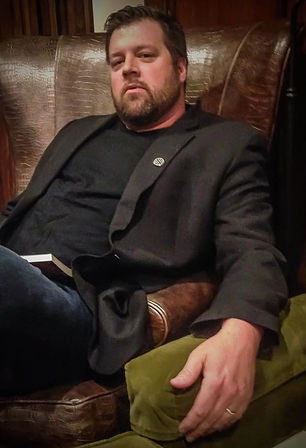
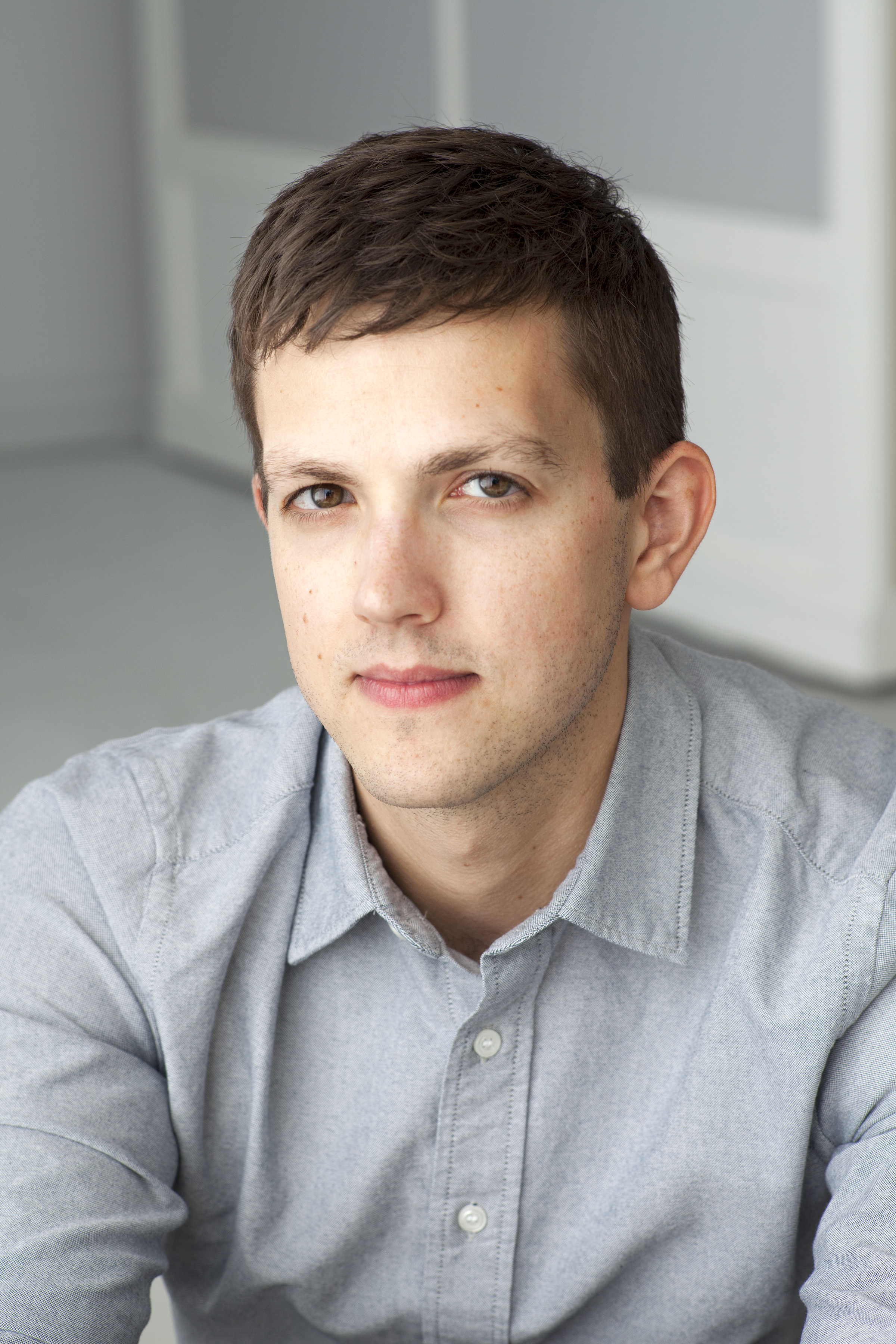
Gabe Habash is the fiction reviews editor for Publishers Weekly. He holds an MFA from New York University and lives in New York.

|

No Comments

|

Contributor Spotlight: Norman Minnick

Norman Minnick’s piece “Midwest Soliloquy” appears in Midwestern Gothic‘s Winter 2017 issue, out now.

What’s your connection to the Midwest, and how has the region influenced your writing?

I live between Indianapolis and Brownsburg, Indiana surrounded by cornfields. I had never given much thought about how the region may have influenced my writing before now, but this line from a blurb that Denise Duhamel wrote while I was living in Florida elucidates it pretty well: “Minnick has been able to weave his no-nonsense Midwestern-ness with colorful Miami imagery.” I like that. No-nonsense. I think I’ll give that a try.

What do you think is the most compelling aspect of the Midwest?

Summers. The stillness of summer nights. The crack of baseball bats. The train whistle in the distance. Long stretches of highway. The Mississippi River. People on porches. The smell of manure on corn fields in spring. The excitement of driving into a city like Chicago, Minneapolis, Cincinnati, Indianapolis, Columbus, Detroit, Milwaukee, St. Louis. The tranquility of driving into small towns like Burlington, Iowa or Paris, Illinois or Rockville, Indiana.

How do your experiences or memories of specific places—such as where you grew up, or a place you’ve visited that you can’t get out of your head—play a role in your writing?

There is a small, one-signal town in central Indiana called Bainbridge where I have found myself waiting for my mother-in-law to pick up or drop off my children for the weekend. Since she is always running late, I have found myself sitting with the regulars on the porch of the Country Mark convenience store listening to their stories. Many poems have come from hanging about in this small town and others like this.

Discuss your writing process — inspirations, ideal environments, how you deal with writer’s block.

When I have writer’s block, I don’t write. Period. I never force it. On the flip side of that, when I am going through a period of inspiration and the ideas are flowing, I try every way possible not to impede it.

I have a bad habit of writing when I drive. I keep a small notebook on my right thigh and a pen in hand.

A lot of poets like myself go through pregnancy periods where ideas are in gestation. During this period I like to nourish the fetus-poem with as much beauty as I can handle through reading poetry and fiction and philosophy and history and so on, viewing good film, attending plays, looking at and pondering great art, listening to fine music, having stimulating conversation, taking long walks, making love, drinking rich spirits, and so on. I try to stay away from social media and off Internet as much as possible.

How can you tell when a piece of writing is finished?

I can’t. I have revised, sometimes drastically, poems even after they’ve been published in books as well as journals. I like to work on poems, put them in a file, and come back to them after substantial time has lapsed and tinker with them some more. After several rounds and the poem cannot take any more, I leave it alone. Too many poets today are in too much of a rush to send their poems out for publication. I am not innocent in this.

Who is your favorite author (fiction writer or poet), and what draws you to their work?

I don’t appreciate having to choose just one. If that’s the case, I have to go with Shakespeare. A bust of The Great Bard sits on a shelf in my office and watches over me.

There are so many other authors I rely on; this question is always difficult to answer. For me, the deader the better. For example, I get more out of the poets of The Greek Anthology than I do most contemporary poetry.

What’s next for you?

My third collection is finally out of diapers and is being sent out into the publishing world. I have two plays, a memoir, three screenplays, a children’s book, and about ten or twelve essays waiting to be written.

Where can we find more information about you?

The best place would be to visit me in Indiana. We could grab a drink. Otherwise, my website www.buzzminnick.com will be a good place to start.

|

No Comments

|

Summer 2017 Flash Fiction Series – Prompt #1

Midwestern Gothic Flash Fiction Contest Series 2017
 

During the summer of 2015 we introduced our Summer Flash Fiction contest series, and we’re thrilled to be continuing it this year! (And you can read all of our winners from 2015 and 2016 here.)

What is it? Our flash fiction series invites writers to write short pieces in response to photos we post.

How does it work? We’ll supply an image from our photography archive and invite writers to respond with flash fiction inspired by the photo, up to 500 words. Remember: You, or your piece, must have a Midwest connection. Each image will be open for submissions for just under 1 week, and we will take a few days for reading and balloting before beginning the next round. At the end of all three rounds, the top 2 entries we feel best represent the photos from each round will be published on the Midwestern Gothic website.

How long is the series? We will be doing this throughout the month of July and early August — which nets out to three rounds of images (three submission periods). Round 1 starts on Monday 7/3, when the first prompt will be posted via blog and social media. Winners will be announced and winning pieces (winner + runner-up) will be posted after the submission periods for all three rounds are finished, in the first week of August.

How do you submit? Send submissions to Ben at ben@midwestgothic.com. Use the subject line “Summer Flash Round X – Author Name – Name of Piece.” For example: Summer Flash Round 1 – Joan Smith – “Eyes of the Wild.” Remember: Include a third-person bio of up to 150 words with your submission.

You can find all guidelines here, including how to submit (and where!). We can’t wait to read your work!

Prompt #1: Take a look at the following photo, and create a piece of flash fiction inspired by it.

Prompt #1 due date (before midnight EST): Saturday July 8, 2017

Prompt #1 winners published: July 31 – August 6, 2017

Prompt #1: “Everyday” by Sarah Williams

MG Flash Fiction 2017 - Everyday by Sarah Williams

FIND SUBMISSIONS INFORMATION HERE

Audible logoOur 2017 Flash Fiction Contest is sponsored by Audible. Get a free 30-day trial and 2 books, on us when you sign up. Start your free trial
|

No Comments

|

Winter 2018 submissions are open: Fiction, Poetry, Nonfiction

Submissions are now open for our WINTER 2018 issue! We’re accepting fiction, nonfiction, and poetry! Read about what we’re looking for here.

All subs are open until August 31. We can’t wait to read your work!

|

No Comments

|