Midwest in Photos: 15

July 1st, 2017

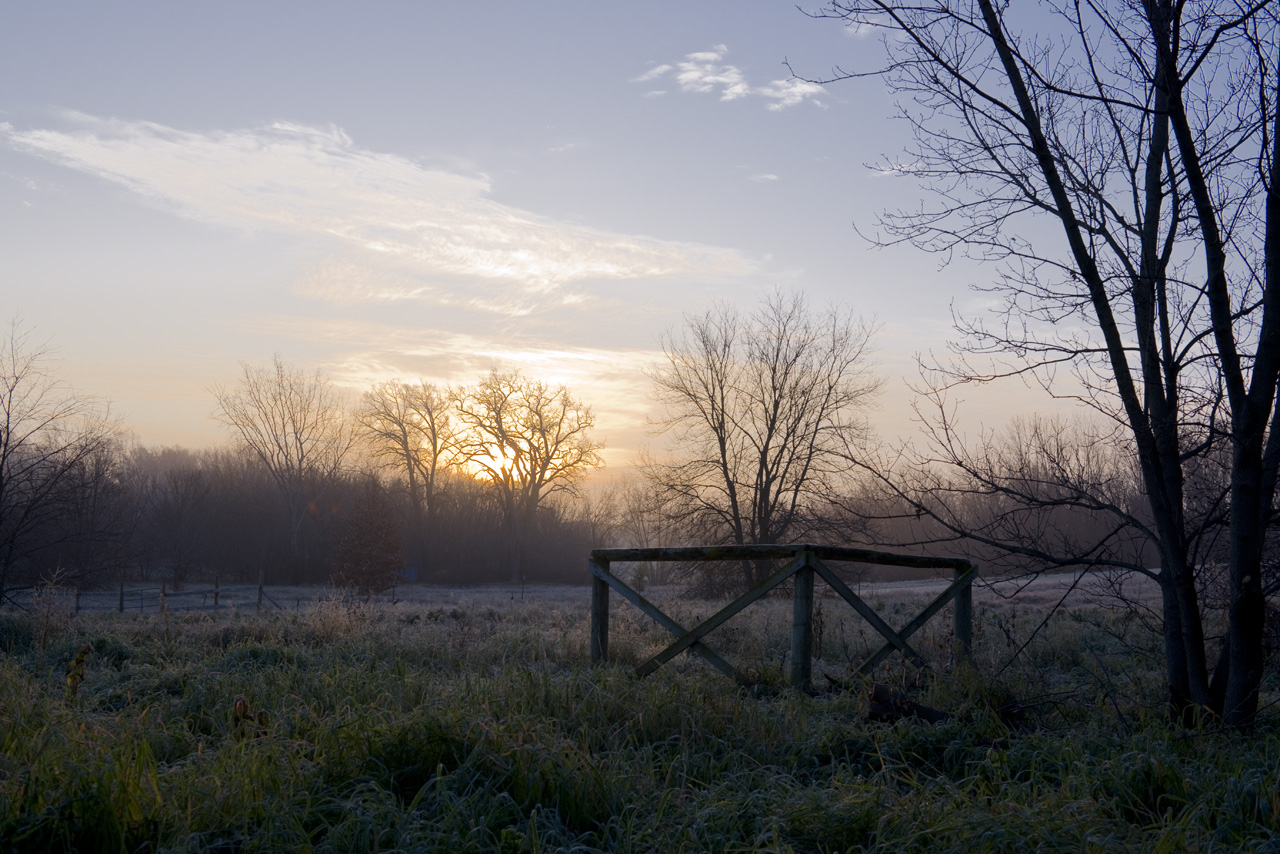
“Anything seemed possible, likely, feasible, because I wanted everything to be possible… Because I had no power to make things happen outside of me in the objective world, I made things happen within. Because my environment was bare and bleak, I endowed it with unlimited potentialities, redeemed it for the sake of my own hungry and cloudy yearning.” – Richard Wright, Black Boy.

Photo by: Paul Carpenter

Interview: Julia Fierro

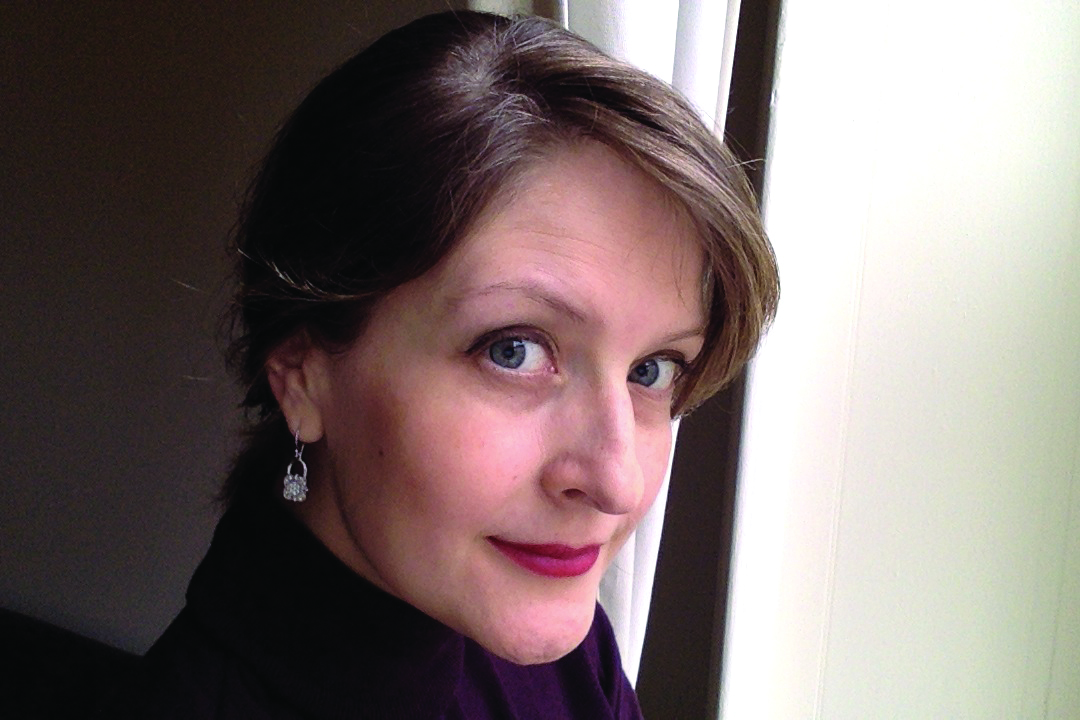
Julia Fierro author photoMidwestern Gothic staffer Meghan Chou talked with author Julia Fierro about her new book The Gypsy Moth Summer, cultural appropriation in writing, having empathy for characters, and more.

**

Meghan Chou: What’s your connection to the Midwest?

Julia Fierro: I lived in Iowa City while I was a student at the Iowa Writer’s Workshop from 2000-2002. Although it was just two years, my experience in the Midwest changed me, and I try to get back to Iowa City every chance I get. In fact, I have a trip planned in fall of 2017 for a reading in Chicago, to teach a workshop at the Iowa Writers House in Iowa City and participate in the Iowa City Book Festival.

In many ways, my time in the Midwest taught me to be a better person. I am a natural cynic—maybe because I was raised in New York, but I suspect it has more to do with my growing up with a father who was raised in Southern Italy before and after World War II. When you experience such extreme poverty, as my father did, it makes trusting people extra challenging. So when I arrived in Iowa City, twenty-two and somewhat terrified that I’d been accepted into this prestigious graduate program, I had quite a chip on my shoulder, and the kindness of the Iowans overwhelmed me. The first time a stranger said hello as they passed me on the street, I almost jumped at him to ask What do you want from me? As much as it is a cliché, the Midwesterners were the friendliest people I had ever encountered, and definitely the friendliest I’d ever lived among.

The postmaster at the local post office beamed when I walked in the door. Asked how my day was going and was insistent on a response. In New York and Boston and Washington, D.C., the cities I’d lived in before Iowa, a trip to the post office was well…different.

It took me about six months to adjust (to stop flinching when strangers said hi to me on the street) and now I love talking to strangers. In fact, as a closeted introvert, a person who appears extroverted but who needs a lot of time alone, some of my best conversations during the day are with strangers—the checkout guy at the convenience store, a Lyft driver, or a person admiring the same magnolia in full bloom on a street corner. Living in the Midwest taught me how to let go, allow myself to be a bit vulnerable in my daily interactions. To say hello and smile back.

Iowa was also important to my husband, writer Justin Feinstein. I met him when I was just twenty-one. I knew he was the one when he agreed to pack up his life, and give up his professional music gigs (he was a Berklee-trained drummer) and move to Iowa with me where he had an assortment of jobs—from secretary at the University of Iowa Biochemical Engineering Dept. to waiting tables at a restaurant that made fried cheese curds to holding an ad sign outside the Iowa City mall in the dead of winter—all while I attended the Iowa Writer’s Workshop. Spending all that time among writers inspired him to become the great writer he is today.

MC: How did your time in Iowa at the Iowa Writers’ Workshop influence your writing?

JF: There are only a few moments in your life that you can look back on and see how your path, so to speak, shifted. For me, it was receiving that acceptance letter to the Iowa Writer’s Workshop. I don’t believe a graduate degree in creative writing is for everyone, and writers can find what they need outside of academia, whether that is community, craft, publication or simply inspiration. That said, being accepted into an MFA program (and the Iowa Writer’s Workshop no less) changed the course of my life. I often wonder if I’d be a published writer if it wasn’t for the Workshop, or if I’d be writing at all. As I mentioned above, although my parents are intelligent and inquisitive (despite a lack of education), artistic creativity wasn’t valued as work in my house growing up. Work created financial stability, and when I was accepted into Iowa, my parents were concerned. They had hoped I’d be a lawyer, my brother a doctor—the stereotypical wish many immigrants have for their first-generation American children. Now, my parents are proud of what I’ve accomplished, and the most emotional moment of each of my publications is handing them that first bound copy. The Gypsy Moth Summer is dedicated to them both.

It wasn’t an easy two years at the Workshop—the students were incredibly competitive, tensions high, the threat of negative judgment lurked around every corner—but I hadn’t even known any writers before Iowa, other than my undergrad creative writing professor. Two years surrounded by writers was an incredible comfort and showed me that there wasn’t anything wrong with me, a fear I’d harbored most of my life—there were other obsessive, hyper analytical, word and story-obsessed people out there. Books had always been a haven for me but I hadn’t dared to imagine that I could create my own world, one that readers would escape into. The two years I spent surrounded by writers in Iowa—talking, breathing, living, thinking of nothing but the craft of writing and books and story and language—gave me the permission I needed to take myself seriously. Many writers do not need that permission but I did.
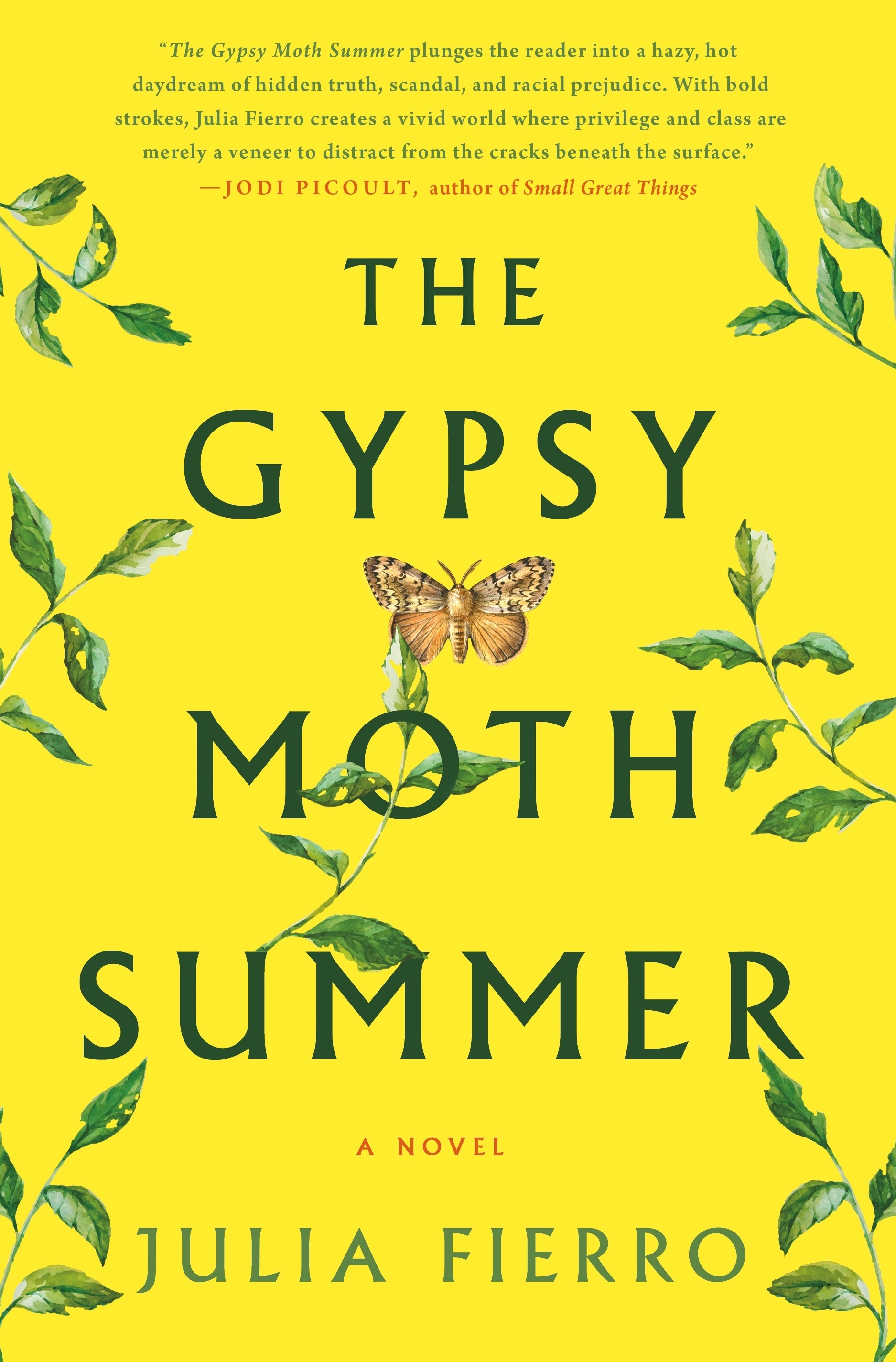
The Gypsy Moth Summer book cover

MC: Leslie Day Marshall, the daughter of the most affluent family in Avalon Island, returns to the island with her black husband, Jules, causing divisions and dissent to spread through the community as people take sides over the controversy of interracial marriage. As a white-passing woman, how did you research racial prejudices and oppression for The Gypsy Moth Summer in order to have an authentic voice?

JF: I read memoirs by African American writers, specifically books that focused on the experiences of young Black men, including Jesmyn Ward’s memoir Men We Reaped and the recent essay anthology she edited, The Fire This Time: A New Generation Speaks about Race; Ta-Nehisi Coates’ memoir The Beautiful Struggle; D. Watkins’ The Beast Side: Living and Dying While Black in America; and James McBride’s The Color of Water: A Black Man’s Tribute to His White Mother. One of my favorite autobiographical novels is Mitchell Jackson’s The Residue Years, set in the ‘90s in Portland, Oregon, one of America’s whitest cities, and so I reread that along with novels by Colson Whitehead (Sag Harbor), and Paul Beatty’s recent The Sellout.

I also reread books that had shattered, and then rearranged, my limited and privileged perspective as a young reader (the most important books in a reader’s life), novels like Richard Wright’s Native Son, Ralph Ellison’s Invisible Man, Gloria Naylor’s Mama Day, Toni Morrison’s Tar Baby. I also reread James Baldwin’s nonfiction, especially his book of letters, The Fire Next Time, which is one of the most important books I’ve ever read, and I wish I’d been assigned it in high school, and then again in college, and when I was a professor at predominantly white universities in Iowa and NYC, I assigned the book every semester. The New York Times Book Review said it best, The Fire Next Time is “sermon, ultimatum, confession, deposition, testament, and chronicle…all presented in searing, brilliant prose.”

I listened to many of the above books on audio, which I often do so I can knit and “read” at the same time, and I’ve found that a book performed by a talented audio narrator can capture the emotional intensity as the author intended it to be experienced.

Social media, with its infinite voices, is always informative. Scrolling through Twitter, reading the observations of brilliant writers like Roxane Gay, Kiese Laymon, Victor LaValle, Emily Raboteau, Saeed Jones, and many others, and witnessing their reactions to current political events in real time is an education I’d never imagined I’d have the opportunity to experience.

MC: There has been much discussion about whether or not writers should write from the perspective of another race, particularly a minority character written by a white author. You did a brilliant job representing the voices of Brooks, a bi-racial teenager, and Jules, a black man. How did you tread the line between telling an important story and not exploiting the struggles of another race?

JF: When I first began writing The Gypsy Moth Summer, I thought of it as “historical fiction.” 1992 seemed so distant—the culture, the fads, the uninformed pre-Internet consciousness, the racial prejudice and sexism and homophobia. Perhaps, I wanted to believe these were issues of the past and that I was raising my children in a better and greater America, not a larger version of the novel’s fictional Avalon Island—racist, sexist, greedy.

Then the 2016 election revealed to us the America many people, many white and privileged like myself, did not want to see. Who hears “Make America Great Again” and does not think of the crimes in our recent past committed against African Americans, gays, immigrants, women—crimes that are committed again and again every day? Perhaps, the only good thing about the election result is that we cannot lie to ourselves any longer but must accept that we live in a country that chose hate over inclusion.

The debate concerning cultural appropriation is an important and necessary discussion and writers, like me, writing outside our privileged perspective and experience must be open to criticism. And fully aware of the great responsibility placed on us when we use a minority character’s story—because, as much as a writer can try to convince herself that she is not using her characters to show the world as he or she sees it, or the world she wishes existed, she is. Our characters are the filters through which we make sense of life. I’ve read many insightful essays on the topic of cultural appropriation and writers often preach empathy as the key. Yes, empathy is essential in writing in a perspective that is not your own but is it enough? I don’t know.

To write only from within my narrow experience seems impossible, and somewhat cowardly. I write for the same reason I read, the page is where I practice my humanity, where I shatter my preconceived notions and reassemble them, all in the hope that I’ll learn something, become a better person. Reading and writing is my checks and balances, so to speak, where I go when my limited perspective clouds my vision, my privilege allows me to grow too comfortable, and I lose sight of the infinite multiplicity of experiences that Americans have. We cannot afford to feel comfortable right now but need to remain alert, disturbed, because disturbing things are happening on our streets, in our government, our schools, every day.

Jules is the character I feel the most deeply for. Maybe because he is the dreamer, the believer. Maybe because he loses the most. I will worry about his loss always, and wonder if it was necessary. Because the most important part of your question is the possibility of “exploiting the struggles of another race” and this responsibility was with me every chapter, and I think that is necessary. It was in the Midwest, at the Iowa Writer’s Workshop, that I learned possibly the most important writing lesson (and life lesson). Marilynne Robinson taught us that the highest priority is having compassion for your characters. I think about this nearly every time I sit down to write because bad things do happen to my characters, and I owe it to them to make sure their pain is meaningful.

MC: Maddie Pencott LaRosa understands life on both sides of town and falls madly in love with Leslie’s and Jules’ son, Brooks. How does the romance between Maddie and Brooks parallel and contrast that of Leslie and Jules?

JF: Ah, young love… I can still conjure that feeling from so many years ago, when, for the very first time, I was mad in love. When the person you love pales in comparison to who you imagine your lover is. I think it is a bit unfair to compare Maddie and Brooks to the weathered love of Jules and Leslie because what has ever, in the history of humanity, trumped pure first love?

I wrote an essay for The Millions on the topic of writing about sex in literary fiction, and, specifically, the fear and avoidance I’d witnessed, and experienced myself, in writing about sex and emotion in creative writing workshops at Iowa as a student, and later as a teacher at the Sackett Street Writers’ Workshop, the writing school I founded in 2002 after Iowa. It was the first critical essay I’d published and I was shocked when it was read widely. I began receiving invitations to speak on panels at writers’ conferences on the topic, and I learned so much from my more experienced co-panelists (writers Gina Frangello, Elissa Schappell, Wendy Ortiz, Pamela Erens and more) about the challenges and rewards of writing about sex and love.

I realized there should be an infinite variety of “literary sex” just as there is in real life—passionate, awkward, violent, tender, disappointing, epiphany-inducing and plain mediocre. Before The Gypsy Moth Summer, most of the sex scenes I’d written were negative in that they highlighted a flaw or conflict in the characters’ relationships. I wanted Maddie and Brooks’ sexual relationship to be positive—tender, supportive and free from guilt or shame. The kind of relationship many of us, myself included, wished we’d had as a teenager. Add to that idealization innate to young love—first love—where a young man or woman can look at another and believe he or she embodies all that is good, and Maddie and Brooks are a modern-day Romeo Juliet. They believe their love is the only good on the poisoned island that is their prison.

The writer Elissa Schappell, who was on many of those panels about sex in literary fiction, claims sex, in life and in fiction, is about power, and this dynamic rules Jules’s and Leslie’s relationship. There is a line in one of Jules’s early chapters in The Gypsy Moth Summer where he is thinking about the role sex has always played in his and Leslie’s relationship. “He’d learned this about her when they first met in Cambridge years ago: She was a woman who understood that men needed sex.”

It was one of the first lines I wrote from Jules’s consciousness and I can see now that I knew early on sex would play a significant role in the power balance, or imbalance, in their marriage.

MC: The arrival of caterpillars and the gypsy moth that fly out of their cocoons play a central imagery throughout The Gypsy Moth Summer. What metaphor did you craft between the gypsy moth and the drama unfolding in Avalon Island?

JF: Hmm, metaphors… I have to admit that my intent is purely emotional when I write. I’m focused on creating a certain psychological experience for the reader through the characters, the setting, and through detail (and ravenous caterpillars make quite the atmosphere). The caterpillars and moths create an otherworldly mood that I wanted the reader to feel trapped in, just as the characters are trapped. After many drafts, once I have structure and character and story refined, only then can I see any kind of metaphorical meaning. I do believe that kind of thematic meaning has to reveal itself organically to the author or the reader will feel the “hand of the writer” so to speak, the author manipulating too heavy-handedly.

Frank Conroy was the director of the Iowa Writer’s Workshop during my time there and I studied with him. He had this pyramid he would draw on the blackboard. The base of the pyramid was LANGUAGE and he would scrawl across the base “Meaning, Sense, Clarity” and explained that without clear language no story was going to have a stable foundation. Then came the smaller upper sections of the pyramid—CHARACTER, STORY, and at the very top, SYMBOL. A writer couldn’t start from the top down, he explained, or the pyramid would tumble over.

The metaphorical meaning of the gypsy moths became clearer to me on who-knows-what # revision, when I added a line to one of Veronica’s chapters. The plotting matriarch of Avalon Island is inside her estate, White Eagle, looking out the window and watching the caterpillars crawl across the glass, and she thinks, “Perhaps a plague was just what the island needed.”

This felt like a revelation for me. It is impossible not to see the plague as a sort of punishment for the crimes Avalon Island–and its Grudder Aviation military factory, its bread-and-butter—has committed. This is an island where bombers are made, machines that have killed countless lives from WWII and on. How can that kind of destruction go unpunished?

MC: What’s next for you?

JF: I’m ready to write the BIG book. The one every novelist waits (or should wait) to write when she is more grown up, a bit wiser, and has learned to write a story. This next book is based on the convergence of two very different “American Dream” stories. The first is my father’s childhood during and after WWII in Southern Italy (his entire village hid in a cave for weeks during the Allied liberation bombing), and his immigration to the U.S. in the early ‘70s. The second is based on my maternal first generation Irish-American grandfather’s life–he was the inspiration for the Colonel in The Gypsy Moth Summer, although unlike the fictional colonel, my grandfather was a bona fide colonel and served in the U.S. Army during and after WWII. Although he had no college education, and had grown up working class, the son of a Brooklyn firefighter, he had an uncanny understanding of business and politics and charmed his way into the real estate boom of the ‘60s and early ‘70s. He founded an electrical engineering company, despite his total ignorance of engineering, and the company helped build the Twin Towers, an endless source of pride for my family. Eventually, his mania (the same that was responsible for his charm) caught up with him and the fortune he made lasted only a single generation.

Before I throw myself into this next project—and it is hard not to when inspiration bites and I already have pages of notes—I need to spend some time with my kids. When they heard I was almost ready to start another book, they may have cried a little…. It isn’t easy having a mother who writes books and runs her own business (running Sackett Street Writers is a full-time job plus). I often have to “steal time” from my family to work. The concept of motherhood work-family balance that we hear parroted in mainstream media again and again (and, yes, I am thinking of Ivanka Trump) is a myth, and perpetuating it is a disservice to women.

So I’ll take a few months off from writing to play Legos and read graphic novels with the kids, including many trips to the library (they are both book worms, thank goodness), all the time responding to the many Sackett Street Writers applications we receive daily, and then it is back to writing.

**

Julia Fierro is the author of the novels The Gypsy Moth Summer (out now) and Cutting Teeth (2014). Her work has been published in The New York Times, Poets & Writers, Buzzfeed, and other publications, and she has been profiled in Brooklyn Magazine, the L Magazine, The Observer and The Economist. A graduate of the Iowa Writer’s Workshop, she founded The Sackett Street Writers’ Workshop in 2002, which has grown into a creative home to 4,000 writers in NYC, Los Angeles, and Online. SSWW was named “Best Writing Classes” by The Village Voice, Time Out New York, and “Best MFA-Alternative” by Poets & Writers. Julia lives in Brooklyn and Santa Monica with writer Justin Feinstein and their two children.

|

No Comments

|

Interview: Greer Macallister

Midwestern Gothic staffer Kathleen Janescheck talked with author Greer Macallister about her novel Girl in Disguise, breaking barriers, the bad-ass women of history, and more.
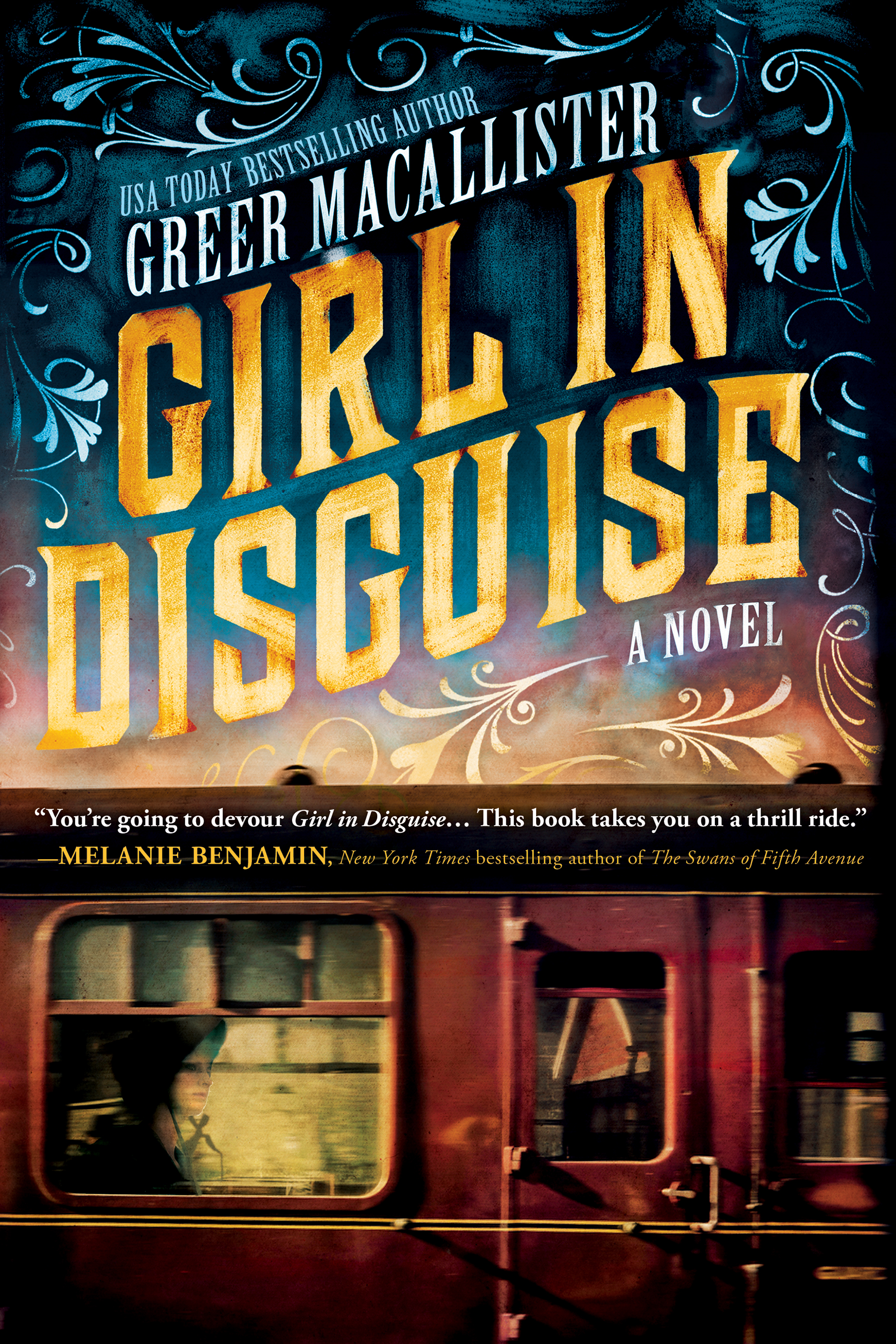

**

Kathleen Janescheck: What’s your connection to the Midwest?

Greer Macallister: I was born in Michigan and raised in Iowa from a very young age until I went to college, so I consider myself a Midwesterner who happens to live on the East Coast. Growing up in the Midwest is core to my identity.

KJ: Both of your novels, The Magician’s Lie and Girl in Disguise, have had Midwestern settings-Iowa and Chicago, respectively-so how has the physical landscape of the Midwest shaped your works?

GM: Small-town Iowa was an easy choice for the present action of The Magician’s Lie, because it’s somewhere the protagonist, famous illusionist The Amazing Arden, has no familiarity with. She’s on unknown ground, literally. The policeman who has her under arrest has lived there all his life. I wanted them opposed in as many ways as possible, and geography is part of that. For Girl in Disguise, the Pinkerton Detective Agency was based in Chicago at that time and the real-life Kate Warne really was hired there, so I had no choice! But it was a growing, vibrant city still finding its identity in the 1850s, still somewhere between the staid East Coast and the truly Wild West. So it’s a great setting for the first female detective in the U.S. to make her mark.

KJ: Do you think the literary world has ignored the Midwest?

GM: I think the myth of “New York City” as the be-all and end-all of the literary world has been a disservice to writers in general. You can be an amazing writer from anywhere. You can bloom anywhere you’re planted. I’ve been a writer in Iowa, I’ve been a writer in Brooklyn, I’ve been a writer in Philadelphia, and so on. New York is just more expensive. Some of the best writers got their education in Iowa City and some didn’t. I just hate the idea that any writer is self-limiting their potential by thinking that a particular geography or program is going to make or break their career. Your opportunities aren’t identical everywhere, of course, but there are still opportunities.

KJ: Girl in Disguise is a work of fiction, but inspired by the true story of Kate Warne, who is considered the first female detective. How do you navigate the line between fact and fiction?

GM: Very happily! For better or worse, the historical record doesn’t give us a lot to work with as far as Kate is concerned. So I’m writing historical fiction that’s a little history and a lot of fiction. If you have letters, diaries, extensive records, you have a different challenge – you have to pare it down. I was building up. I gave Kate the personality I think she would have to have had to do the things she did. She walked into Allan Pinkerton’s office in 1856 and told him a woman could do things men couldn’t do. Obviously she was bold. Everything started there.

KJ: What drew you to write about Kate Warne in the first place?

GM: The fact that I made it to my late 30s without ever having heard her name told me that someone absolutely needed to tell her story. I decided it should be me, and my agent and editor quickly agreed. All I had to say was “first female Pinkerton detective” and they said “Oooh!” As a writer, you want that “oooh.” Especially from the reader. You want to pique their curiosity right off the bat.

KJ: How do you think writing about women of the past can affect the present?

GM: There are two reasons I do it, and they’re kind of opposites. One is to inspire and inform – look at these things women have been doing all along that they didn’t get credit for! If they could break those barriers, what amazing things can we do today? The other is to draw a direct, possibly unflattering parallel to the present – are things really so different, have we come as far as we’d like to think? The audience members of Arden’s time, the 1900s, are made very uncomfortable by an illusion in which a woman cuts a man in half – are there parts of our country where that would still be true today? I bet there are. And those same people would say, “Oh, sure, a male magician cuts his pretty assistant in half, that’s just how it is, you can’t read anything into that.” But you flip it, and they freak out. Showing a woman in a position of power over a man is still challenging to some people’s worldview. It shouldn’t be, but here we are.

KJ: Your work has been praised for its vivid and immersive depictions of the past-how do you construct an atmosphere in your works?

GM: The careful selection of detail, which I think is one of the hardest writing skills to develop and one of the most important. I was reading a historical novel the other day that referred to someone “singing a popular tune.” If I’m writing that book, I’m probably going to tell you he was “laboring through a halting version of ‘Sweet Rosie O’Grady’ that would have put Gaskin in his grave.” The name of the song might not mean anything to you, but it’ll pull you a little bit more into that world. Similarly, I don’t want to bring an action scene to a halt to give you a dissertation on the history of corsetry, but if a character can’t catch her breath because her corset is too tight and the whalebone’s digging into her skin, that helps put you in the scene.

KJ: You’ve written a bit of everything-poetry, fiction, plays-what has each genre taught you about writing?

GM: I feel very lucky to have studied and written widely across genres. Poetry helps you perfect the art of word choice – it gives you the luxury of playing around with particular words and hearing how they sound next to each other, the patterns, the rhythms. Plays are great for improving your dialogue. But fiction is where I feel most at home, and I think it benefits from the skills I developed elsewhere. All writing is related. Practice one and you get better at the others, even as you have to make sure you’re also working on what your particular genre requires. For novels that’s character development within a coherent and compelling plot.

KJ: What women writers have most inspired you and influenced your work?

GM: Margaret Atwood, first and foremost. Talk about someone who works across genres, my goodness. Madeleine L’Engle from the time I was very young. Barbara Kingsolver. I’m also challenged and inspired by my fellow historical fiction writers who are always producing amazing new work. Readers today have so much to choose from, which can be daunting as a writer, but it’s really exciting as a reader, too.

KJ: What’s next for you?

GM: I’m working hard on promoting Girl In Disguise now that it’s out in the world, and also working on my next novel in the meantime. That’s a hard balance, so Girl In Disguise is taking precedence for the next couple of months. (Readers can find my tour schedule on greermacallister.com/events.) I’ve been saying my work in progress is more work than progress lately. But my third novel is another story partially inspired by history, featuring a strong female protagonist. That’s my sweet spot right now: the bad-ass women of history.

**

Raised in the Midwest, Greer Macallister is a poet, short story writer, playwright and novelist whose work has appeared in publications such as The North American Review, The Missouri Review, and The Messenger. Her plays have been performed at American University, where she earned her MFA in Creative Writing. She lives with her family on the East Coast. Her debut novel The Magician’s Lie was a weekly or monthly pick by Indie Next, LibraryReads, People Magazine, SheReads, PopSugar, Publishers Weekly, The Boston Globe, and Audible.com.

|

No Comments

|

Contributor Spotlight: Kimberly Grabowski Strayer

Kimberly Grabowski Strayer’s piece “The Cicada Sleeps” appears in Midwestern Gothic‘s Winter 2017 issue, out now.
What’s your connection to the Midwest, and how has the region influenced your writing?

The influence the Midwest has had on my writing—and who I am—is almost too immense to be able to do this question justice. I was born in Kalamazoo, Michigan—and yes, I do point out where I’m from on the back of my hand—and grew up in a rural farming town about a half an hour south. Michigan-as-home is absolutely pivotal to my writing, and to the way I construct my identity. The Midwest is a question I continue to try to answer.

I remember, when I was pretty young, reading a book series about super-rich teenagers that was set between New York and L.A. They would call the spaces in between “the flyover states.” I think poetry is about resisting the flyover—digging down into the muck, into the seemingly empty fields and abandoned buildings—and finding what else is there.

What do you think is the most compelling aspect of the Midwest?

I think the element of in-between-ness itself is one of my fascinations with the Midwest. In some ways, there’s this sense of suffocation that leads to a certain kind of desperation (which I will fully own lives inside of me in the same way it lives inside of a lot of Midwesterners). So much of poetry is about the interplay between freedom and constraint—and where better to find those intersections in the flesh than in the Midwest? Places like New York and L.A. strike me as places of accumulation—image on top of image, meaning on top of meaning. There’s just enough space in the Midwest for the seams to show a bit more—and I love that. In poetry, and in life.

How do your experiences or memories of specific places—such as where you grew up, or a place you’ve visited that you can’t get out of your head—play a role in your writing?

I need a sense of place in a poem in order for my work to find some solid ground. There’s an element of airiness to the way I think and the way I write, so it doesn’t quite come alive until I bring it down into the bog and the bugs and the lakes that are my home. I feel a deep connection to and reverence for the Great Lakes, each of which have their own character and sense of self. I grew up going to Lake Michigan year-round, and up to Lake Superior on special occasions. Lake Michigan is dirty and mercurial, the first lake that most people see when they discover that there really are lakes that disappear into the horizon. Superior is like a cold, distant mother. When I was in high school, a boy drowned from the undertow in Lake Michigan. But Superior is the queen of shipwrecks. And so cold that the water is cleaner than you could ever imagine, shipwrecks and all. When we were little, we had to be warned over and over again not to swim in Superior for too long, lest nerve damage begin to set in.

Aside from the Great Lakes, there were all the inland lakes I grew up with—dirty daughters of Superior just like I was, opaque and mysterious, with grey grime at its core instead of sand. I think, even when I’m not writing about the lakes, I’m writing about the lakes.

Discuss your writing process—inspirations, ideal environments, how you deal with writer’s block.

My writing process has shifted relatively recently, and I’m sure it will shift even more in the future. I used to write everything on a computer, because that’s where I found the most freedom in terms of formatting a first draft. Eventually, my self-doubts and perfectionism made it so that I would write lines and immediately delete them, making writing anything at all extremely difficult. I eventually started writing poems longhand, in messy, prose-y blobs. The informality of writing this way frees me from my self-doubt, and allows my first draft a bit more wildness.

I often find inspiration in subjects that get me thinking—philosophy, scientific articles, facts about the natural world. So often, metaphor is shimmering right there on the surface of such sources—so much so that sometimes I forget to reframe them in a new way, or to frame them at all! I love putting disparate images in conversation with one another (often, I find that they’re not as disparate as I originally thought).

I enjoy prompts with a lot of restrictions. For me, great creativity is often born out of great restraint.

I find it difficult to write in summer. There’s something about direct light that stops up the ink for me. Fall and (especially) winter are my most productive seasons.

I deal with writer’s block by taking the extra time to read more. I try to remember that it’s hard to change directions without slowing down. When I go back to the page, I know the poems will have grown or changed without my having tried to change them. Recently, it’s helped me to write letters to the dead. They’re still poems, of course, but I’m able to trick myself into feeling like they’re something else—something that’s a little easier to begin.

How can you tell when a poem is finished?

More often than not, I end a poem too early. I have to remind myself to keep going, even if it feels like I’ve hit upon an ending. The poem keeps going and eventually gets to a more exciting place than I’d originally thought possible. That isn’t necessarily to say that the line or lines that I’d originally thought were an ending are not an ending anymore. The probably still are, in their own way. I’m not really sure poems are ever “finished” in the way a cake is finished baking, or the process of knitting a sweater is finished. They’re abandoned, or set free, or thrown out of a moving car. Thinking of it that way helps me move on.

Who is your favorite author and what draws you to their work?

This is another immense question. At some point, when I admitted to myself that I’m a writer, I began to look past what I like and what I don’t like, and thought more about what I could take away from other writer’s work in terms of craft and style. So, then it becomes a question of both pleasure and permission. On the subject of permission, for example, reading Louise Glück in high school really unlocked something in me that I didn’t fully understand until I was in college. I had heard the phrase “no ideas, but in things,” which I think is utter bullshit. I struggled to suspend my thinking mind for something else in poetry, a dedication to image alone. When I read The Wild Iris, I understood that it was okay to think through concepts in poems—what it means to be an artist, arbiter, a human woman.

Last year, I taught The Wild Iris in my Intro to Poetry class, and a vocal majority of the students reviled it. This, too, was a kind of gift.

What’s next for you?

I’m working on a book-length manuscript of poems centered around Kafka, perception, and anthropomorphism. Pretty soon, I’ll graduate from The University of Pittsburgh with my M.F.A., and make the move back to Michigan.

Where can we find more information about you?

Check out my website, which is currently in its larval stage: www.kimberlygrabowskistrayer.com

|

No Comments

|

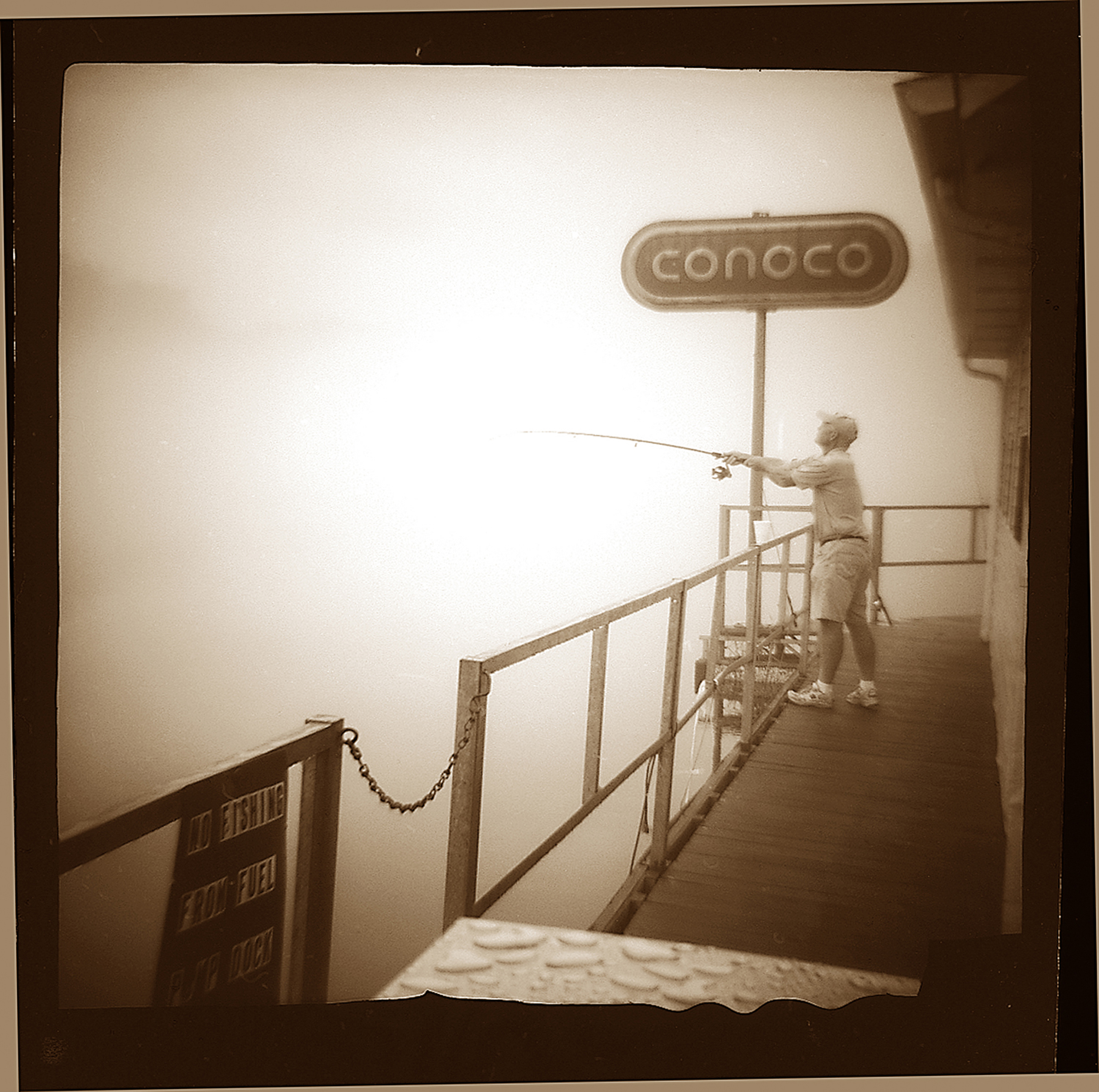
Midwest in Photos: Conoco

Because, once alone, it is impossible to believe that one could ever have been otherwise. Loneliness is an absolute discovery.” – Marilynne Robinson, Housekeeping.

Photo by: Perry Roach

|

No Comments

|

Interview: Laura Hulthen Thomas

Laura Hulthen Thomas author photo Midwestern Gothic staffer Allison Reck talked with author Laura Hulthen Thomas about her collection States of Motion, the danger in fearing to write what you don’t know, the shortcut to writing success, and more.

**

Allison Reck: What is your connection to the Midwest?

Laura Hulthen Thomas: I’m a Midwestern almost-lifer. When I was very young, my parents moved from New Hampshire to Southeast Michigan to work in the auto industry. We spent a couple of years in a Wisconsin paper mill town, too, before becoming permanent Michiganders. Midwestern living hasn’t taken the Yank out of my family, or me, although I like to think my rougher Eastern edges—quick, white-hot opinions, no space for gray areas (Live Free or Die! is my birth state’s motto)—have been sanded down by the Midwest’s pace, and patience.

AR: In your recently published collection, States of Motion, the stories are set in Michigan – a place you are very familiar with as a professor at the University of Michigan’s Residential College. Do you believe that authors should only “write what they know” or is it important to explore the unfamiliar?

LHT: I encourage my writing students to seek out the unfamiliar as much as possible! Maybe this is because, as a transplant from the East, Michigan has never felt all that familiar to me. Moving while very young means having to navigate new, strange situations and friendships before your first, original home ever had a chance to claim your heart. I don’t think I had learned the ropes of what a hometown is, or what friends mean, before having to start all over a couple of times in a few short years. I’m also lucky to live in the very diverse Southeast Michigan region. Just when you think you have this place all figured out, well, guess what. I played with assumptions about place when writing the stories that became States of Motion. Hippy-dippy stronghold Ann Arbor isn’t the whole story of that town, and our rural places aren’t just farmer-in-the-dell burgs. This region brings town and gown, rural and urban, absolutely cheek to jowl with one another, but the various economic classes and identity groups can form their bubbles if they choose. You can isolate, congregate, avoid or mix-and-mingle with ease. It’s a weird place, which is the best place to be.

The trick to writing fiction is to make the unfamiliar natural, and to make the familiar odd, strange, worth a deeper look. This leads to wonderfully compelling stories. It can be really tough to find the unknown about home, but if the writer can de-familiarize what she knows so well, she can make the landscape part of the trouble, and then maybe, part of the epiphany.

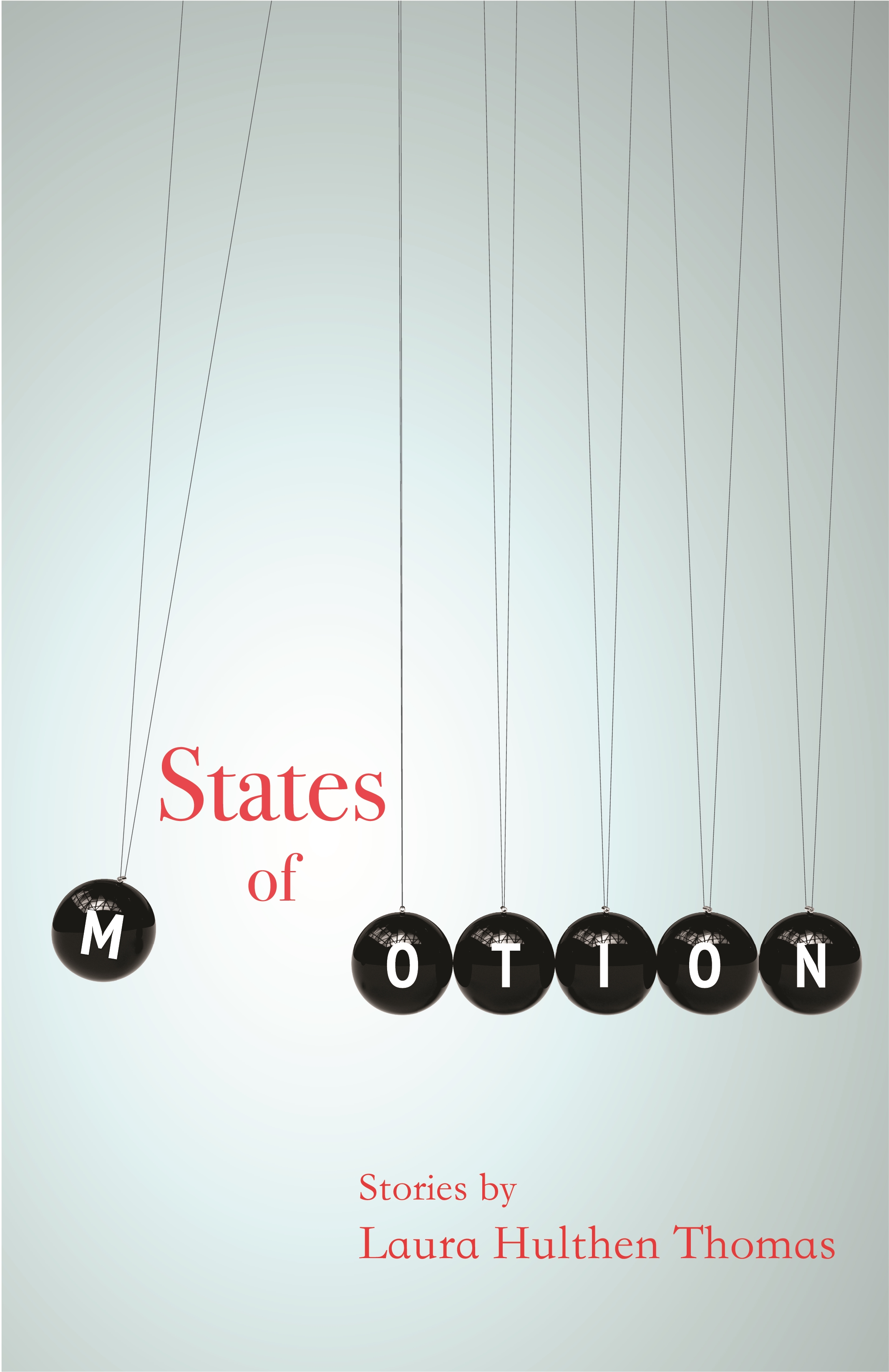
States of Motion Cover

AR: Drawing on the previous question, do you think that this could be dangerous for a writer, to write about something they haven’t personally experienced or known?

LHT: I find my imagination is set in motion most passionately when wondering how someone different from me experiences the world. A great example is Emily, the scientist turned lab manager in “Lab Will Care”. Science was my absolute worst subject in school, especially chemistry and biology. I never even took physics, having by that point given up all hope of understanding any scientific subject matter. Even now, I’m not at all a logical thinker! It’s really embarrassing how befuddled I am by equations, beakers, and data points. But Emily is built for the lab; that’s where the world makes sense, where she feels useful. She can systematize. She can work for something greater than herself, save people, change the course of human knowledge. She can also nurture, in ways she can’t in her family life. I have never experienced anything remotely like Emily’s daily doings, but it’s her life, not mine. I have to go where she lives and learn what I can about what she experiences and knows.

I think it’s dangerous for any writer to be afraid to write about something they haven’t personally experienced or known. We wouldn’t have fiction, journalism, poetry, or nonfiction without writers figuring stuff out, inhabiting other perspectives, in their mission to bring full stories to the page. Sometimes writers get the facts wrong, or don’t capture an experience authentically; sometimes tone undermines integrity, and intent. That’s the breaks—writers make mistakes, and some published writing is in poor taste, whether intentionally or not. I understand the purpose of this question is to comment on the current conversations around the appropriation of identity and experience. More than ever, writers and readers are questioning authenticity and a story’s true owner. These are marvelous and important conversations to have, and I have them with my own students. We watch Chimamanda Ngozi Adichie’s TED Talk, “The Danger of a Single Story.” Then we read Adichie’s Half of a Yellow Sun, in which the character of Richard, a white Briton, leaps off the page with the same intensity as Nigerians Olanna, and Kainene, and Odenigbo. Adichie’s novel can only tell the whole sweeping story of Biafra’s short-lived independence by inhabiting the perspectives of women and men of all races. I’m glad she didn’t think this work dangerous, but necessary.

AR: Explain the inspiration behind this collection’s theme. Why did you decide to highlight Newton’s Laws of Motion (inertia is referenced in the epigraph and the Third Law of Motion is represented in the cover art) and how are they relevant to the stories?

LHT: Yes, Wayne State Press designer Rachel Ross’s wonderful cover features a Newton’s Cradle, those cool swinging balls that demonstrate the law of energy conservation; that energy can’t be created or destroyed, but can only change form. In this case, the balls change from potential to kinetic energy. While writing these stories, I saw how my characters so often made choices and chased desires to spark reactions from their families or their communities. I think the stories question whether laws of the heart are as inevitable as physical laws. Many of the characters come to learn that love, or hate, are neither created nor destroyed, but only change form once they are set in motion.

I’m married to an architect, and one of the ways Ron and I are most different is how we relate to inertia. In my view, if that ugly wall is chopping up the floor plan, hang a pretty picture, arrange a couple of comfy chairs around an end table, create a conversation nook. You make the best of what’s already there. In my husband’s view, if that wall isn’t load bearing, out it goes. Open up that plan, let the light in. Don’t accept what’s ugly unless ripping it out will bring the house down. Both views make sense of the environment and the world, but the stakes and outcomes are different.

My daughter and two sons turned out to be scientific types, mechanically skilled, brilliant logical thinkers. The Bionicles they built!! The Lego cities and outposts they created!! All I could ever do at those tender ages was read an effing book! I was fascinated by this construction crew I was living with, and through them drawn to spend time with characters who take on inertia directly, and then hope for an equal and opposite reaction. But, do passion and love create kinetic energy, or are they just different forms of inertia, as Moor wonders in the title story? In States of Motion, the characters are either awaiting an unbalanced force to set them in motion, or they are that unbalanced force!

AR: States of Motion features eight stories that have vastly different subjects. How do you think they are all connected – is there one common theme, or a general feeling or idea that you are trying to convey throughout the stories?

LHT: At my book launch, someone pointed out that animals play a role in nearly every story, and they don’t usually meet happy ends. I had to admit to the questioner that I hadn’t caught this connection! She asked if I was trying to say anything about the fate of animals at human hands. I didn’t realize how many of these stories mirror morality through pets, or suburban wildlife, or lab subjects. How lucky, that readers are so much smarter than writers and can pick out themes the writer only subconsciously intends.

As far as the glue I consciously intended to connect these stories, the variety you point out in subject matter, characters, and place is most definitely a driving force. I also wanted variety in story length, and I am super grateful to my editor Annie Martin and Wayne State University Press for including the long stories alongside the more standard length stories in this collection. Southeast Michigan is a connector. The great recession and its aftermath is a recurring character. And, as we’ve talked about above, physical laws were an early inspiration, too.

AR: In the initial pages of the book, you include two very different epigraphs – one is Newton’s Law of Inertia and the other is from a Shakespeare play. Traditionally, science and literature are considered opposites, yet you connect them here and in one of the stories, “Lab Will Care,” – why?

LHT: One could say science and literature are not opposites, since they both share the mission of serious inquiry. The scientific method seeks to answer a question through systematic observation and experimentation. Literature also poses questions, and then presents the investigation. I believe where the disciplines differ is that science is out to explain a discovery and supply solutions, while I think the best writing complicates, asks more questions than it answers. Even this is not always true, as some scientific inquiry reveals complexity, or only intends to bring us one step closer to a resolution. Another difference between the two disciplines is that literature is out to entertain us, while science, not so much; but then, the Newton’s Cradle is crazy fun to play with, so there you go.

The Shakespeare quote, from The Merry Wives of Windsor, reads: “O powerful love! that, in some / respects, makes a beast a man, in some other, a man / a beast”. It’s really just another way to state the law of energy conservation – the different forms a man will take when love sets him in motion.

AR: If your students leave your class having learned just one lesson from you, what do you hope that important lesson was?

LHT: Eat your chocolate, and don’t let the poets have all the fun. Just kidding, plus that’s two lessons. I think my students would say I teach them how important it is to come back to the work, find the gaps and mysteries to explore. As a very young writer, I thought revision meant failure; shouldn’t a story just flow the first time out? Looking back, I realize I just didn’t understand how to find what comes next for each story. It took me so long to figure out how to revise on my own, I want to spare every writer I can that grueling waste of time. I want my students to feel more excited writing the third draft, or the fifth, than writing the first. Inspired, disciplined revision is the ultimate short cut to writing success.

AR: Describe your writing process. How do you approach crafting a story?

LHT: Every story has its own unique ratio of winging it, whining, avoiding, and just doing it already, so I can’t claim a consistent craft approach. I try to write in the mornings when I’m fresh, but because of juggling a full-time job and kids for so many years, I have had to learn to be more flexible about the conditions for inspiration. I also have learned to be ok with really crappy writing, or a terrible writing session. A paragraph that seems like a bad idea at the time can turn out to have a sentence or two that takes a story in a new direction. To the extent I have a process, I usually have already fallen for a character I’ve carried around for a bit, and then I think of, or hear about, a situation that might drive that character crazy, or maybe drive them to do something they would never have done before, or couldn’t imagine ever doing; and then I can begin a new story. I like to read scene-driven stories, so I keep things moving along for my characters rather than trap them in chunks of narrative.

AR: What’s next for you?

LHT: I’m writing a novel about a rural Southeast Michigan cop whose unraveling marriage distracts him from the search for a missing Detroit teen. Love, that most wonderful, and terrible, diversion!

**

Laura Hulthen Thomas is the author of the short fiction collection, States of Motion, published by Wayne State University Press. Her short fiction and essays have appeared in a number of journals and anthologies, including The Cimarron Review, Nimrod International Journal, Epiphany and Witness. She received her MFA in fiction writing from Warren Wilson College. She currently heads the undergraduate creative writing program at the University of Michigan’s Residential College, where she teaches fiction and creative nonfiction.

Be sure to check out the follow events for Laura’s book:

Reading with Kelly Fordon on July 26th in Cleveland at the Cleveland Inkubator LitFest.
Reading with Kelly and Lolita Hernandez at Kazoo Books on Saturday, Aug 5th at noon.

|

No Comments

|

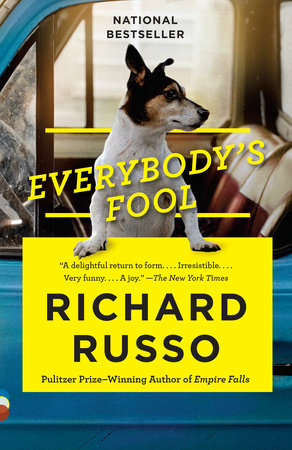
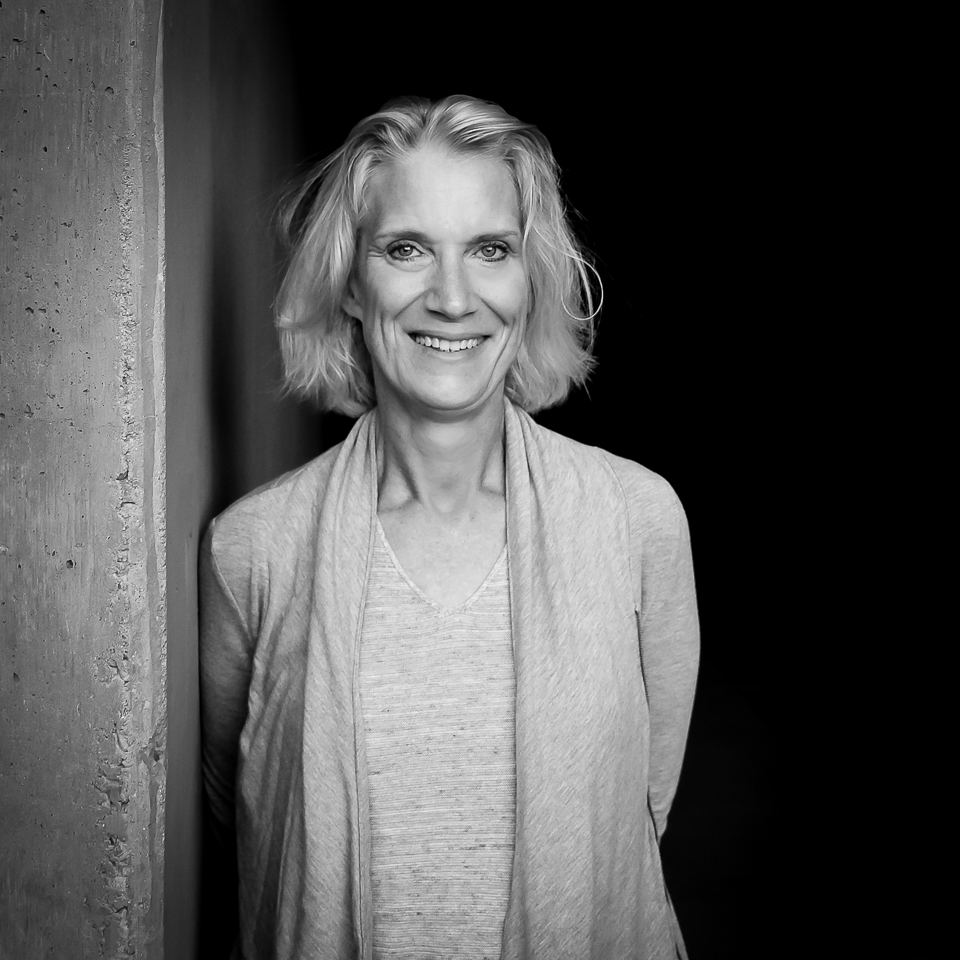
Interview: Richard Russo

Midwestern Gothic staffer Meghan Chou talked with author Richard Russo about Everybody’s Fool, remembering people through characters, broken ankles, and more.
**

Meghan Chou: What’s your connection to the Midwest?

Richard Russo: I should probably confess that with the exception of three years when I lived in southern Illinois—which many people seemed to think was the deep South—I don’t have much connection to the Midwest beyond literature (Sherwood Anderson, F. Scott Fitzgerald, or rather his narrator in Gatsby). People sometimes ask if I feel about the Midwest the way the way Jack Griffin’s snobbish parents do in That Old Cape Magic (“the mid-fucking-west,” they call it). No, of course not, but I’m more of a tourist there than an expert

MC: Nobody’s Fool, a now classic text published in 1993, has been adapted into a feature film and received great critical acclaim. Why did you decide, now, to write a sequel?

RR: The main character of Nobody’s Fool, Donald Sullivan, was based on my own father. Because my parents separated when I was young, I didn’t see much of him as a boy. I really got to know him only as an adult. Because he became ill and died relatively young, I never really got my fill of the man. Writing Nobody’s Fool brought him back to life, allowed the two us to continue our father/son conversation. Twenty-three years later, I think I must’ve been lonesome for him, or Everybody’s Fool wouldn’t have been written. I was also lonesome for Paul Newman, who brought Sully so vividly to life in the movie and who had died in between the two books.

MC: In what ways did Nobody’s Fool confine or give you freedom when writing Everybody’s Fool?

RR: I never felt confined in writing the sequel, though I had to reread the book and re-familiarize myself with its details. Obviously you want to preserve the continuity of the two stories as much as possible. What gave me the freedom I needed was shifting the emphasis from Sully to Chief Raymer, who was a bit player in the first novel. Many of the other characters—Ruth, Roy Purdy—had depths I never suspected when I wrote the first novel.

MC: How does the new protagonist, Raymer, compare and contrast to the protagonist in Nobody’s Fool, Sully, and what do these differences and similarities in character reveal about Sully?

RR: In most respects Sully and Raymer are polar opposites. Though he’s made his share of mistakes, Sully made a pact with himself long ago not to indulge in regret. By contrast, Raymer regrets just about everything he’s ever said and done. He is, in that sense, the fool of the title. But Sully’s refusal to regret, to just keep moving, is dangerous too. I suspect most people try to find a middle ground between admitting regret and not being overwhelmed by past mistakes.

MC: Reviewers note that Everybody’s Fool differs most from its predecessor through the way it acknowledges evil, especially through the villainous Roy Purdy. Roy Purdy, connected to Sully through complicated family ties, is released from prison. He was indicted, in Nobody’s Fool, for physically abusing his ex-wife, Janey, and for pursuing her with a gun, which he used to shoot up a house. How did you establish a villain as something more than just a caricature?

RR: Good villains must be understood. The why of their behavior is always important, often more important than the what. Roy beats on women because it satisfies some deep urge. As appalled as we are by his behavior, we don’t really understand it until near the end of the book when he remembers his father taking him to that diner. It’s there that Roy, just a kid, learns that woman—in the form of the waitress who takes his side—is the source of all evil and humiliation for males. He learns his lesson well.

MC: The dynamic between Sully and Rub, his sidekick, provides a great source of humor in the story to combat the hardships the characters face. What power and purpose did you envision humor to play in setting the tone of Everybody’s Fool and in developing relationships between characters?

RR: I grew up among people who used humor combat the realities of hard lives. Air, water, laughter—these things were free and necessary. Power? As Twain put it in “The Mysterious Stranger,” “Against the assault of laughter, nothing can stand.” We laugh about the things that worry us most—sex, death, our own foolishness in the matter of living.

MC: What’s the most important advice you gave your students while you taught at Southern Illinois University Carbondale?

RR: Many of my students at Carbondale were a lot like me—first generation college students from working class backgrounds and off the beaten track home towns. Which means they had stories to tell but were probably reluctant to tell them. Coaxing those stories out, convincing such students that their stories were as valid as stories about New York or Chicago or L.A. was Job One.

MC: How do you overcome rejections or failures during the writing process?

RR: I’m not sure you ever really do overcome rejection or failure. Sometimes it’s possible to accept them and learn from them. Mostly they’re beside the point. You failed? So what? It happens. In fact, it’s supposed to happen. They didn’t like your story? Okay, write another. Maybe they’ll like that one. You internalize what you know to be true across the entire spectrum of the arts; the more you practice, the better you get. (“I can’t go on; I’ll go on.”)

MC: What’s next for you?

RR: What’s next? Well a couple months ago I managed to break my ankle. At the time I’d been reluctant to begin a new novel because I had a lot of travel coming up that would interrupt it. But then there I was, sitting in front of my computer, trapped in my office, my foot in a cast. Why not write the first chapter? By the time the cast came off two months later, I had 150 pages, a very good beginning. I’m thinking about breaking the other ankle.

**

In addition to The Whore’s Child, Richard Russo is the author of nine novels, most recently the best-selling Everybody’s Fool and That Old Cape Magic, and the memoir Elsewhere. In 2002 he received the Pulitzer Prize for Empire Falls. He lives in Portland, Maine.

|

No Comments

|

Contributor Spotlight: Joanne Nelson

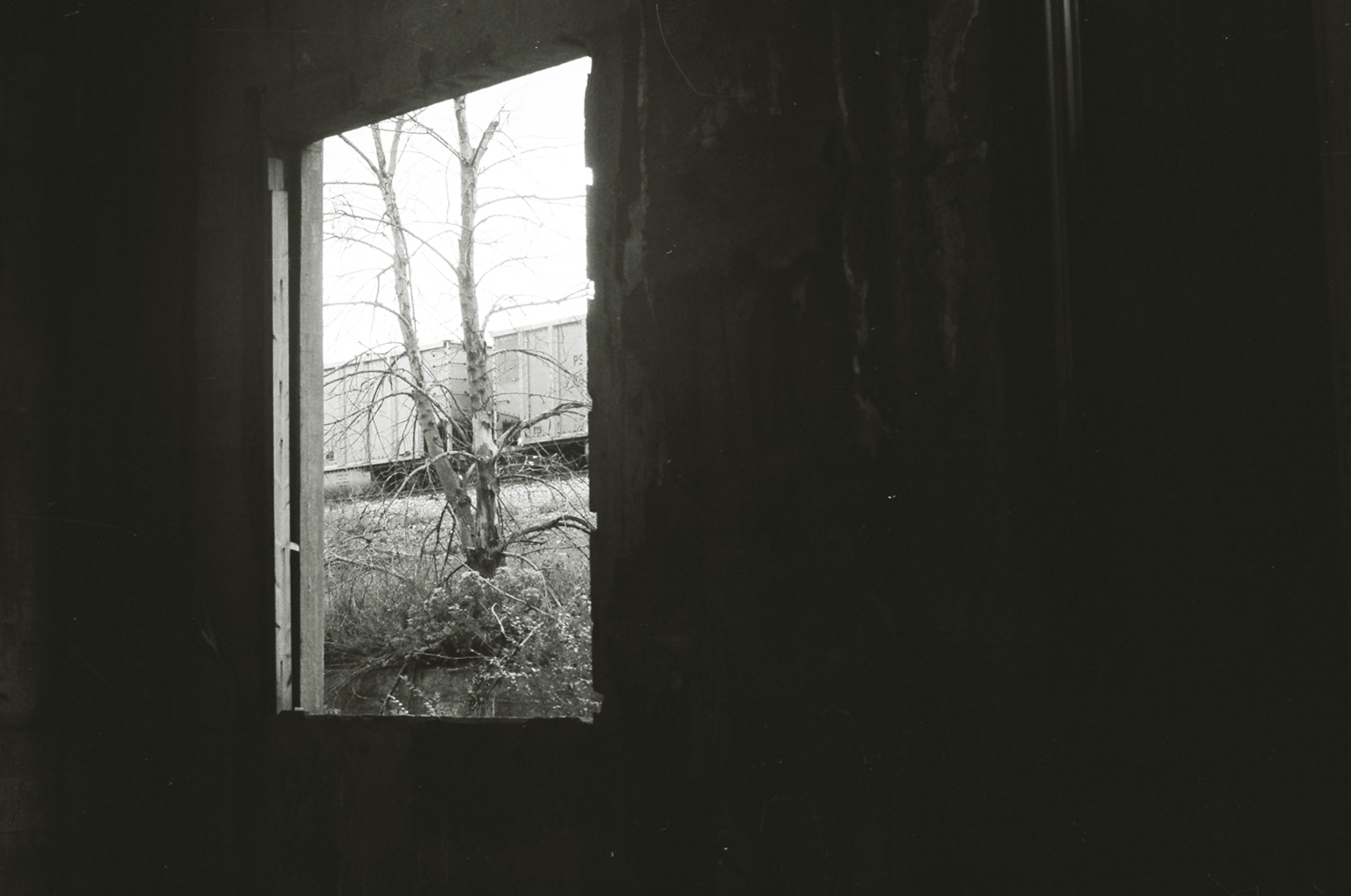
Joanne Nelson’s nonfiction piece “If Not for the Mess” appears in Midwestern Gothic‘s Winter 2017 issue, out now.
What’s your connection to the Midwest, and how has the region influenced your writing?

I was born and raised in Milwaukee, attended college in Eau Claire and Madison (BA, MSSW in Social Work). I currently live in the village of Hartland, which is between Milwaukee and Madison. Although I’m tempted to say that place—meaning the land, and the seasons’ effects on that land—is the biggest influence on my writing, I think that the truth is more about socio- economic status. In my neighborhood, the dads were laborers and the moms were housewives. There were lots of kids and parents stayed together. My parents divorced, my mom needed to work, and my two brothers were much older than me. I was the only kid on the block attending Catholic grade school, not to mention an all-girls high school. Let’s just say I didn’t always fit in. College was a continuation of this in many ways, as I often felt I was trying to catch up with what came easily to others about how to act. I think that juxtaposition of how we fit in and don’t fit in plays out in my writing.

What do you think is the most compelling aspect of the Midwest?

What is compelling is how people can be counted on. Neighbors and neighborhoods are important. I think about this when I think of home. I can count on my neighbor to take care of whatever is necessary if I’m out of town. I can ask people I barely know on my block for help and it will be provided. Send one guy out to the yard with a chainsaw and soon a group will gather. Start shoveling your snow and someone with a snow blower is likely to come over and help. Get stuck in a drift and several people will soon be helping push. I guess a summary statement would be that we notice each other and what is going on around us. Perhaps this happens in many places, but I think that the change of seasons in the Midwest gives people an immediate discussion topic, and immediate reason to connect with each other.

How do your experiences or memories of specific places—such as where you grew up, or a place you’ve visited that you can’t get out of your head—play a role in your writing?

Hopefully place ends up being as much a character as anything or anybody else in my writing. Any particular story/memory that I’m telling ultimately couldn’t have happened in any other setting. Currently I’m working on a project that focuses on “up north,” the Door County area specifically. It’s about the ways we try to claim locations—in this case, places only borrowed and make them our own. That said, my writing usually starts with an action—someone does or says something that I can’t stop thinking about, that reminds me of something in the past.

Discuss your writing process — inspirations, ideal environments, how you deal with writer’s block.

Mornings work best for me. It seems like my head gets to full of the rest of life and I can’t sink into the writing if I try to start later in the day. Meditating as soon as I get up and right before I start to write has been the most valuable addition to my writing process in the last few years. I like to write in my basement office, a quiet, plain place. When possible I also like to get away for a few days to a small retreat center, The Bridge-Between in Denmark, WI, just north of my house and concentrate on writing for a few days. So far, writer’s block hasn’t been a problem, but time constraints certainly have. Well, getting in the way of myself by, for example, going on social media certainly also gets in the way. I did, during my MFA thesis semester finally beat my online solitaire addiction. It wasn’t easy.

How can you tell when a piece of writing is finished?

Usually I have that, “Yes!” experience when I think I’ve found a last line that wraps things up (or doesn’t wrap things up if that’s what I’m going for). However, so much happens on the way to that. At some point in the drafting process I’ll ask a few trusted buddies to read my work and send comments. Off and on I’ve participated in round tables through Red Oak Writing, so I add that ongoing feedback to the drafting process also. My final steps involve fixing at least half of the fragments readers have commented on (I do love fragments!), reading my work out loud to see where I stumble, and using the find function to look for words I tend to repeat way too much.

It seems to me, that a piece can be finished in theory only. I don’t think I’ve ever reread my own work without changing something.

Who is your favorite author (fiction writer or poet), and what draws you to their work?

Oh boy, no way can I name just one—this list changes too frequently!

Favorites include Anne LaMott—especially her early work. I still recommend Bird by Bird to students, and they love it. I’ve learned a lot from Lynne Sharon Schwartz’s essays—she’s so funny—and return to those also. Other writers that I reread include Patricia Hampl, Abigail Thomas, and Brenda Miller (most currently The Pen and The Bell as I develop my own Mindfulness and Writing classes). When the new The Best American Essays anthology comes out each year, my favorite becomes each of the authors featured. Favorite essay of all time: “The Fourth State of Matter,” by Jo Ann Beard. Every time I read it I’m completely immersed in the narrative and learn something new about the creative process. I read Lee Martin’s blog posts nearly weekly, he’s a wonderful, down-to-earth teacher.

I like the work of essayists who are compelling, who take your breath away, and yet, who sneak in some drop dead funny lines in the most serious of situations.

What’s next for you?

I’m currently working on a creative nonfiction project about what moors us, what holds us to the base of who we are. I want to explore how specific places, how rituals—even the same conversation over and over—keeps us connected. I want to explore what I mean by the word connected in that last sentence! Although I’ve been at this for over a year and have a good number of pages, you can probably tell I still have more questions than completed narrative. I’m still intrigued by the project and enjoy working on it, so I’ll keep moving forward and see what happens.

In addition, I’m offering workshops and classes (online and in my community) on mindfulness and writing. I love the intersection of a mindfulness practice and the writing process. So much creativity is awakened at that juncture!

Where can we find more information about you?

I now have a website that lists several of the programs I run: wakeupthewriterwithin.com. Besides Midwestern Gothic, my work can also be found in Redivider, Consequence, Brevity, The Notebook, and at WUWM (wuwm.com/programs/lake-effect).

|

No Comments

|

Midwest in Photos: Union Station (abandoned), Gary Indiana, 2012

“The strangeness of Time. Not in its passing, which can seem infinite, like a tunnel whose end you can’t see, whose beginning you’ve forgotten, but in the sudden realization that something finite, has passed, and is irretrievable.” – Joyce Carol Oates, Foxfire: Confessions of a Girl Gang.

Photo by: George Stein

|

No Comments

|

Interview: Bill Beverly

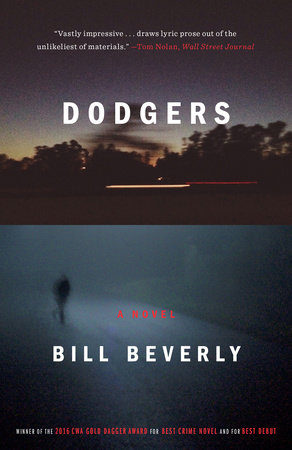
Midwestern Gothic staffer Audrey Meyers talked with author Bill Beverly about his novel Dodgers, the inescapability of weather, dreaming of L.A., and more.
**

Audrey Meyers: What’s your connection to the Midwest?

Bill Beverly: Born and bred in Kalamazoo out of Illinois and Michigan parents. Grew up listening to Tom Hemingway calling Michigan football games. College in Ohio, couple years in Minnesota and Wisconsin and Iowa. Likes pie and animals and driving a car.

AM: How has the Midwest influenced your writing?

BB: Childhood shapes everyone’s writing, and mine was a Midwestern childhood. The weather and the light, the towns and the orchards, the big lake – the Midwest has its luxuries. The long evenings at the western end of the Eastern time zone.

AM: What about your move from Michigan to Florida sticks with you most? How did you adjust and what (besides weather) were the biggest differences between the two places?

BB: Well, there is no besides weather. There is no way we can disregard weather’s difference. Despite every effort to cement-mixer us together into one grand undifferentiated CNN-loving mass, the difference weather makes is intractable. It refuses to stay within parentheses. Minnesotans are never happier than when their bloody-hearted winter bravery is in high season. Shoveling out their cars brings them close to God. And the subtropical is an entirely different mode, even though you can follow I-75 all the way down from Detroit and never even have to take out a map. In the subtropics, the seasons are flattened out. It changes but not much. This affects everything, from architecture to the way you eat to your relationship with the bugs and the grass and the sky.

Florida is a strange case. It is lumped with the South, for cartographically obvious reasons. And north Florida is really South Georgia or east Alabama. But much of Florida is still being overrun by settlers, constantly. So tropically fecund is the land and water and even the air that the notions of frontier and of wilderness are never entirely obsolete there. Nature will grow on anything there. It will grow in your shirt if you leave it outside all weekend. If everybody just let Florida alone for about twenty years, there would be dinosaurs again.

AM: Since you grew up in the Midwest, what drew your interest to criminals in L.A.?

BB: Oh, the movies. In the movies, everyone in L.A. is a criminal.

AM: What inspired you to write about L.A. gangs in your latest novel Dodgers?

BB: It does have a gang in it. But Dodgers isn’t really a gang novel. The novel follows one character, a 15-year-old kid named East. He is part of a gang, but the gang is circumstantial to his story. The story is about him.

I don’t mean these last two replies to be flip. I loved L.A. from the time I got a first-grader’s idea of it. Who wouldn’t. It even sounds cool – Los Angeles. I grew up on Chinatown and Nathanael West and The Last Days of the Late, Great State of California and Blade Runner. Some kids dream of New York or Paris or Dallas, Texas. I dreamed of L.A.

AM: What kind of research was required in order to write Dodgers? How do you intertwine facts and fiction?

BB: As a graduate student at the University of Florida, I wrote a book called On the Lam. It’s about fugitive stories and how we tell them. Part of its research involved reading dozens and dozens of fugitive slave narratives. Some are bare-bones; some are highly detailed. And the similar stories they tell form, over time, like weight on wood, an impression. A consensus.

Those stories confirmed again and again that the landscape was dangerous. Everyday life was dangerous, but the land – which white Americans look at as a sort of birthright, a traveler’s medium – was a space where black Americans were visible, vulnerable. The landscape and the laws and the local manners were all mechanisms for controlling them.

A story that evokes the contemporary remnants of that paranoia is Richard Price’s Clockers, right at the end, where Strike leaves New Jersey into an America that is – what? The book ends before we find out. And that mystery is one of the germs of Dodgers.

AM: Do you consider yourself a narrative journalist? If not, how do you define yourself as a writer?

BB: No. I don’t consider myself a journalist in any way. I was trained, not altogether successfully, as a journalist, but I did not have the discipline of attention that a young journalist needs. I would cover a meeting and miss the point. I was too interested in various and sundry peripheral details. I was not long for that world.

There’s something nice about this sort of failure. Things are always surprising me, long after everyone else has already taken cover.

It’s early to define myself as a writer. Ask me when I’m dead.

AM: Since you’ve written other stories about criminals, what is distinctive about Dodgers?

BB: Dodgers is lucky to find an intersection between a number of American stories – it is a road story, a lam story, a story about family and about coming of age. I didn’t plan that intersection, but I am fortunate to have found it.

AM: What do you hope Dodgers accomplishes as a novel?

BB: I was taught to believe in my characters and give them moments of intelligence, courage, and grace. This is something a young writer is taught, but it’s also a spiritual task – to watch others with empathy, with compassion, with hope.

AM: Do you hope Dodgers will have an impact on the current controversies between African-American men and police officers?

BB: No. I think a novel is at best a very indirect way to make such an impact. Of course one would like to see this violence ease. But I don’t think fiction accomplishes this. I think building respect and community is far more direct.

AM: I think your choice to bring criminals from a west-coast city to Wisconsin is fascinating and thought-provoking. What writing techniques did you implement when personifying the characters that endure this cross-country journey?

BB: Brevity. Dialogue. Having one character through whom the narrator can see and speak, and letting that character be sharply observant.

AM: Since Dodgers is a piece of fiction about plausible circumstances, how do you make the unreal, real? How do you convince your readers to believe in your narrative?

BB: In any fiction, you have to build from a first brick. That first brick is a perception that is both surprising and obviously right.

AM: In the future, do you think you’ll continue writing within the crime novel genre? What’s next for you?

BB: Yes. But most novels are crime novels, aren’t they?

I don’t work fast. I have a day job and it’s a busy one. There are a couple of pots on the burners, and we’ll see which one steams first.

**

Bill Beverly grew up in Kalamazoo, Michigan, and studied writing at Oberlin College and the University of Florida. He is the author of On The Lam: Narrative of Flight in J. Edgar Hoover’s America and the novel Dodgers, winner of the 2016 Crime Writers Association Golden Dagger and John Creasey Dagger awards. He lives in Hyattsville, Maryland.

|

No Comments

|