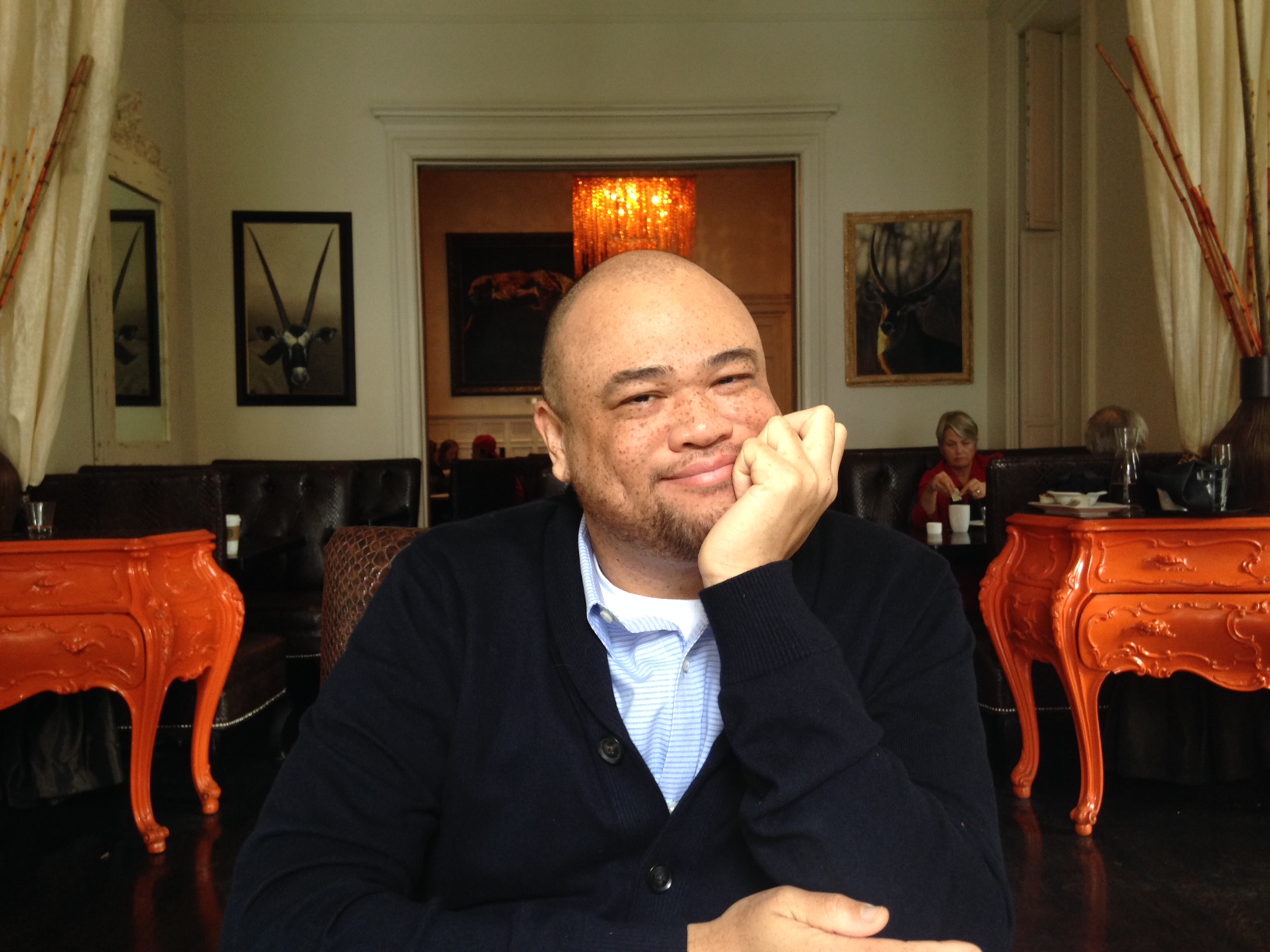
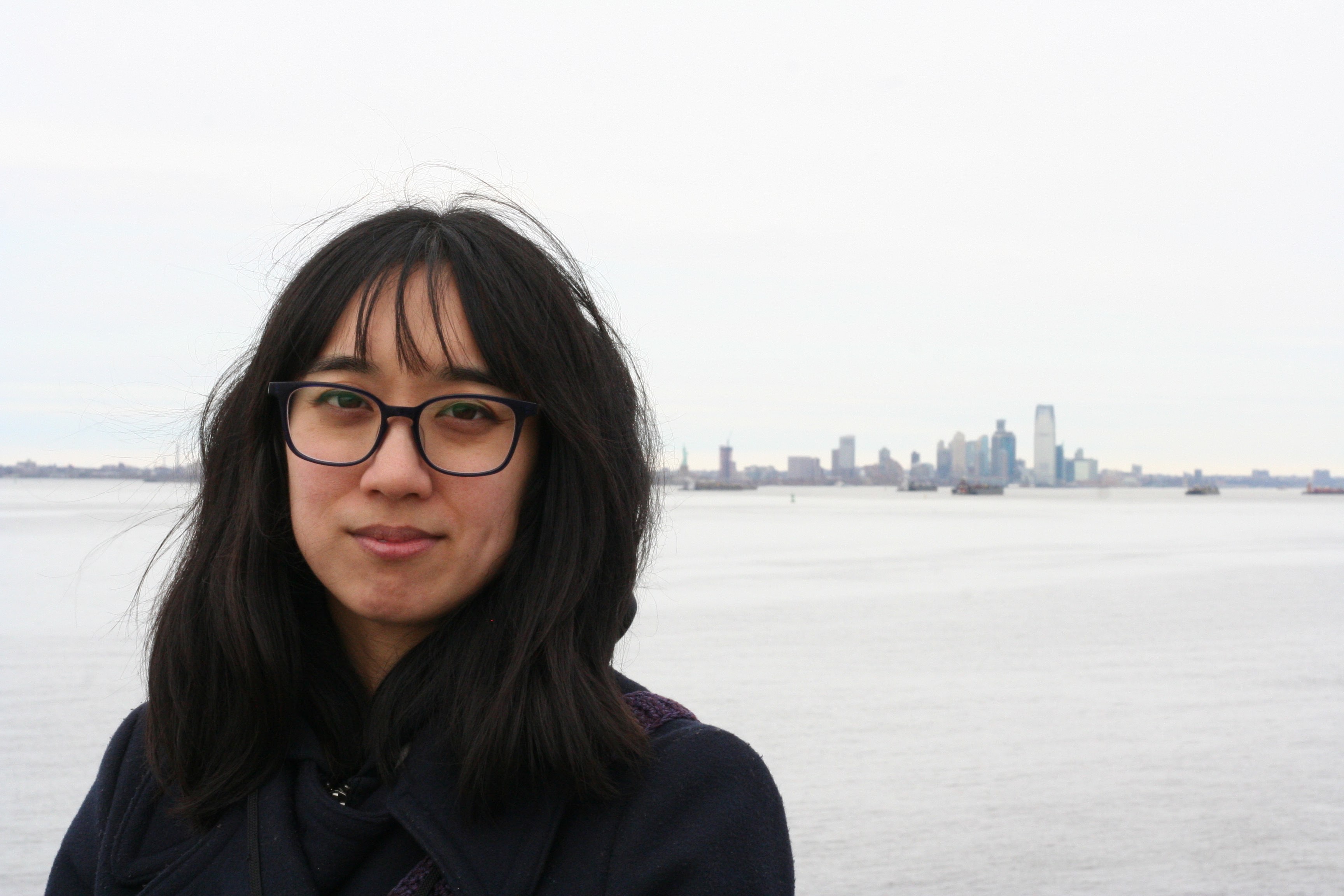
Contributor Spotlight: Anita Koester

June 13th, 2017

Anita Koester’s piece “Preserved Embryos” appears in Midwestern Gothic‘s Winter 2017 issue, out now.

What’s your connection to the Midwest, and how has the region influenced your writing?

I was born and raised in Chicago so I’m a city girl through and though. The grit and hardness of our sprawling metropolis definitely enters and alters my work, though since I became a writer, I’ve been fortunate to travel to residencies in Nebraska and Michigan and my time there connected me to the countryside. A month nestled in the flat cornfields of Nebraska in the middle of nowhere will tug the city out of you. There I felt my exoskeleton dissolving until I could simply experience the silent beauty of a starlit night or whittle away days writing in a dilapidated barn.

I suppose my view of the countryside is entirely romantic while I turn a more critical and emotional eye on Chicago which for me is forever entangled and woven with my family history. Chicago is where my immigrant grandparents settled in early adulthood and worked hard to build a better life and a better city. My mother continued this tradition, but my father was corrupted by organized crime and perhaps by the way Chicago mythologized its criminals, he lived a secret life as a thief and bank robber until he was imprisoned. Those choices he made affected my life profoundly and I’m still trying to unpack all that hurt and loss through my writing.

What do you think is the most compelling aspect of the Midwest?

For me, it’s the people, Midwesterners don’t care about how the outside world perceives them, our facades, when or if we build them, are half-hearted at best. Designer labels and the moneyed classes are not celebrated here, we’re more like people in a Frank Capra film, and I like that, it keeps me humble. It keeps me real. There is a healthy lack of pretension in the Midwest. There is also a lot of empathy here, I think Midwestern people in general are family oriented; they want to be there for the people they love. I don’t want to say that the dreaming here is smaller, because in America smaller is not always recognized as better, but Midwestern dreaming tends to have a limited radius.

How do your experiences or memories of specific places—such as where you grew up, or a place you’ve visited that you can’t get out of your head—play a role in your writing?

Well, it’s always the places I can no longer visit that I’m drawn to, like my grandparent’s home in Andersonville. I’ve been working on some poems about that house and how since it was torn down to make way for a new condo building it only exists in memories as this ghostly structure that once stood but no longer stands. I suppose in some ways that ends up representing my grandparents, and perhaps even their values, some of which are outdated.

I’ve come to realize many of my favorite poems involve houses, Neruda has this gorgeous poem where he describes a destroyed dining room where nevertheless roses are still delivered, indicating that someone still believes there is love or someone to love there. I tend to feel like my poems about places are like that, like a late delivery of roses. I think what people don’t always see in poems are that even when the poet displays hurt and anger there is a kind of devotion indicated by their act of writing that poem.

Discuss your writing process — inspirations, ideal environments, how you deal with writer’s block.

I have yet to write in my ideal environment, though some have come close. I wrote “Preserved Embryos” in an old Michigan farmhouse that butted up against a nature preserve. I knew I wanted to write about something I saw recently at a museum that had touched me, unsettled me, as well as stirred up my anxieties and there was this petite bedroom teeming with another writer’s books, it was this quiet sanctuary, a place in which you could feel a writer’s spirit, and in that room the poem came gushing out. It became my writing room for the rest of the residency. Now, if that window had overlooked a lake that would have been my ideal environment, the mysteriousness of water and aquatic life is always such a fitting metaphor for writing.

As far as writer’s block, I’ve been lucky so far, I think because I spent 10 years not being a writer even though it was this secret desire of mine, that since I started writing, I haven’t been able to stop. But if it does dry up, if I were to use up even the smallest nuggets of memory, then I’d better get living, or reading, reading usually works for me. I read for an hour and I’m anxious to write.

How can you tell when a piece of writing is finished?

I’m the wrong poet to ask, I’m wrong about this too often. A poem for me is rarely done until it’s published in a book, and I’ll work on them right up until the galleys are done. I submit work I think is finished, but then a month later I see the flaws and I completely rewrite it. Though occasionally, there are these “ah, ha poems” that are usually written in one sitting and when I finish them I feel the urge to celebrate, and those are the rare poems I never rewrite. Those are also usually my personal favorites, not because I didn’t have to spend days, weeks, or months on them but because I knew they felt right, felt unalterable. Otherwise, I tinker and reorder and rewrite endlessly.

Who is your favorite author (fiction writer or poet), and what draws you to their work?

I have a lengthy list of favorite writers, so each year I focus in on the one or two who seem to be influencing my work the most. This year I felt pulled to both Larry Levis and Sharon Olds. Sharon Olds in part because I had the pleasure of workshopping with her, and when you have a chance to spend time with a poet you idolize, their work becomes more accessible. When I went back to visit her work I could actually hear her soft yet commanding voice as I read, I could hear that four beat rhythm and the way she pauses and says “hmm” just before she says something brilliant. I admire her ability to stay close to a single moment in all its exacting detail and yet retain the awareness of how her scene fits into larger thematics. I can only hope to one day be capable of that kind of nuanced recording of life.

And Larry Levis’ work, especially in Elegy, gives me a kind of permission to allow more organized chaos into my work, let lines and images unravel, to be abstract or prosaic and then come back to the narrative or musical thread. There is this expansive quality to his elegies that makes each poem feel epic, symphonic really, and no matter how many times I read them they continue to excite me.

What’s next for you?

Well, I have two chapbooks coming out in the first half of 2017, Arrow Songs will be coming out with Paper Nautilus in the next few months, and Apples or Pomegranates will be out in the spring with Porkbelly Press. In the meantime, I will continue to write and sculpt my full-length manuscript and I hope that when I’m finally satisfied it will find the right publisher. I’ve felt so fortunate to work with such supportive chapbook presses, I can only hope that my full-length will find an equally loving home.

Where can we find more information about you?

I’m fairly good at updating my website – anitaoliviakoester.com! Thanks for asking!

Announcing our Summer 2017 Flash Fiction Contest!

Midwestern Gothic Flash Fiction Contest Series 2017During the summer of 2015 we introduced our Flash Fiction contest series, and we’re thrilled to be continuing it this year! (And you can read all of our winners from 2015 and 2016 here.)

What is it? This is a collaboration between photography and writing. We’ll supply a compelling image from our photography archive, and invite writers to respond by writing short fiction inspired by the photo of up to 500 words. Each image will stay up for about one week and the top two entries (winner and runner-up) we feel best represent the photo in question will be published on the Midwestern Gothic website.

We will be doing this throughout the summer—which nets out to three rounds of images (three submission periods). Round 1 starts on Monday 7/3, when the first prompt will be posted via blog and social media. The due date for the first round will be Saturday 7/8 (before midnight EST).

A full list of guidelines, as well the contest schedule, can be found here (the main contest page). Winners will be posted (and linked to) on this page as well.

We hope you’ll think about submitting, and we look forward to reading your work!


Audible logoOur 2017 Flash Fiction Contest is sponsored by Audible. Get a free 30-day trial and 2 books, on us when you sign up. Start your free trial

|

No Comments

|

Midwest in Photos: A Traveler’s First Impression of Wisconsin Cold

“We are not separate, and I want you to know that. We are all part of one thing, and nothing good has ever passed or ever can pass away. There is no way out, but there is a way in, and when one person feels lonely like a ghost it touches us all.” – David Rhodes, Driftless.

Photo by: Gail Jeidy

|

No Comments

|

Interview: Sjohnna McCray

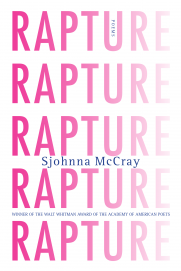
Midwestern Gothic staffer Megan Valley talked with poet Sjohnna McCray about his collection Rapture, dreaming of being a dance DJ, being raised by a Vietnam vet, and more.

**

Megan Valley: What’s your connection to the Midwest?

Sjohnna McCray: I’m originally from Cincinnati, Ohio. It’s not a big city and it’s not a small town. I grew up in different working class neighborhoods: Colerain Township, Evanston, Pleasant Ridge, and Walnut Hills. I remember things like pawn shops, chicken joints, Oktoberfest, bootleg cabs, The Cincinnati Kool Jazz Festival, and local chili parlors. Cincinnati was diverse enough that when I went to college in Appalachia (Ohio University in Athens, Ohio) that I felt “urban.”

MV: Your debut poetry collection, Rapture, was selected by Tracy K. Smith as the winner of the Walt Whitman Award of the Academy of American Poets. What part of the collection are you most proud of?

SM: I’m certainly not the first, but I like the work being done in the latter half of the book. It tries to portray some intimate and middle-age aspects of being gay. More interior and less physical. Although, there is a poem dedicated to glory holes comparing a man climaxing to Athena springing from Zeus’ head. So, there’s that…

MV: What authors have been the most influential to your own writing?

SM: There are so many! It changes from week to week. I think of the poets that were given to me by professors when I was an undergrad. I would cling to these poets and carry them in my bag or check out all of their books from the library. I’ll just name a few: James Wright, Robert Kinsley, Sharon Olds, Robert Hass, and Louise Gluck. I loved how cerebrally easy Lucille Clifton’s poem read but how each word and line break was doing maximum work. One could probably say my entire early writing life was influenced by Robert Hayden’s “Those Winter Sundays”. Also, the poet Tom Andrews introduced me to Rita Dove. I remember going to the Little Professor Bookstore and standing in the aisles and reading “Grace Notes”. I probably couldn’t afford it so I would come back every other day to read little bits of it.

MV: In Rapture, you explore your father’s experiences in Vietnam. How does that backdrop work with how you bluntly present human bodies in all their imperfection?

SM: Blunt is a good word. What I know of war is filtered through my father’s experience — through his body. He would probably say, “John, it was so f—ked up over there.” And yet, he met my mother and probably had the best sex of his life. There were so many physical and internal conflicts. He was drafted and served his country but when he came home Vietnam Vets were not considered heroes. He told me of instances where soldiers were spit on. The war changed the way he related to the world. Also, he was black and there were still civil rights battles. I suppose being raised by such a damaged person made me see things in a more lyrical way. It’s like being raised by a tragedian.

MV: What would you be doing if you weren’t a writer?

SM: I actually love teaching and creating safe spaces for dialogue. It’s a skill to create an atmosphere where students feel comfortable enough to share their thoughts and opinions. Listening to students, I think, keeps me young. I love when they begin to discover ideas for themselves. The “ah-hah” moments in class are golden.

However, in my secret heart, I’d love to be a globetrotting, electronica, dance DJ. The kind who spins records with no shirt on, a big gold chain, a Kangol hat, and Adidas track pants! I’m working on my Brawny paper towel, hipster, lumberjack beard.

MV: While your poems stand on their own, the way they’re presented in Rapture follows a chronological narrative. Was that always the intention when you began working on the collection?

SM: No. The book took several different shapes before it settled into a more chronological narrative. I was shortsighted and wanted to be dramatically lyrical and arrange the book like a mix tape moving from one poem to another based on mood. Finally, I had a moment of clarity and my revision brain told me what to do.

MV: In your essay “The Marble Queens,” you recount your time as an undergraduate when your professor, Henri Cole, said your poem seemed to be the work of a “flowery, pretentious decorator.” Now, with a highly regarded collection under your belt, how do you hope your readers characterize you?

SM: Recently, I was talking to a friend of mine. I told her, I felt like we were living in a highly charged political time and writers were doing some serious work and heavy lifting. I didn’t feel like one of these poets. My poetry is kind of like meatloaf or comfort food. I hope my readers feel the way I have always felt reading poetry; it’s comforting to know another human being is out there being empathetic to the world. Documenting existence. Being thoughtful.

MV: What’s next for you?

SM: I’m finding that tackling a second book of poems may be more challenging than the first volume. I have a book of memoir-like essays that I need to finish. It talks about growing up with a severely schizophrenic mother and being closeted and gay in the Midwest.

**

Sjohnna McCray was born and raised in Cincinnati, Ohio. He was educated at Ohio University and received his MFA from the University of Virginia where he was a Hoyns Fellow. He has a master’s degree in English Education from Teachers College, Columbia University. McCray was the winner of the 2015 Walt Whitman Award from the Academy of American Poets. He lives and teaches in Savannah, Georgia.

|

No Comments

|

Midwestern Gothic at Printers Row Lit Fest 2017

chi-printers-row-lit-fest-2013-20130520Once again, Midwestern Gothic will be at this year’s Printer’s Row Lit Fest in Chicago (Saturday-Sunday June 10-11).
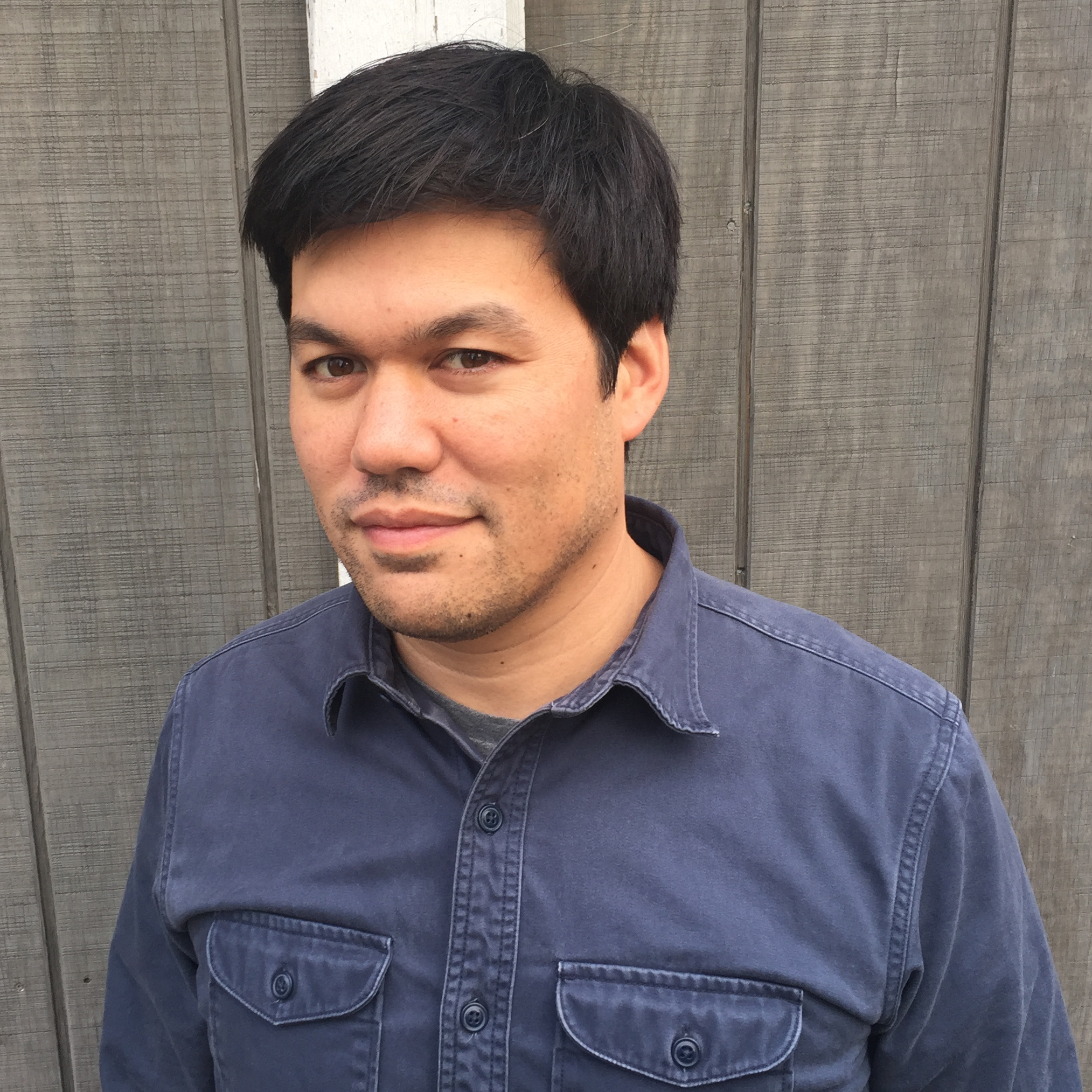
We’ll be setting up shop in the Book Fort, Tent M, so if you’re in the area, please stop by—we’ll have back issues of the journal at a reduced cost, deals on subscriptions, and more!

This is a fantastic event that celebrates small presses and journals all over the country and is definitely worth checking out. For those who don’t know, “the Printers Row Lit Fest…is considered the largest free outdoor literary event in the Midwest-drawing more than 125,000 book lovers to the two-day showcase.” So don’t miss out on this incredible event!

For other information (including directions), check out the Printer’s Row website.

|

No Comments

|

Keith Lesmeister Interviewed by Michigan Quarterly Review

Keith Lesmeister Author PhotoMake sure to check out another interview with Keith Lesmeister, now up on Michigan Quarterly Review‘s blog site! Keith discusses We Could’ve Been Happy Here, emotional connections in literary fiction, sharing pain with characters and more. WE COULD'VE BEEN HAPPY HERE by Keith Lesmeister book cover
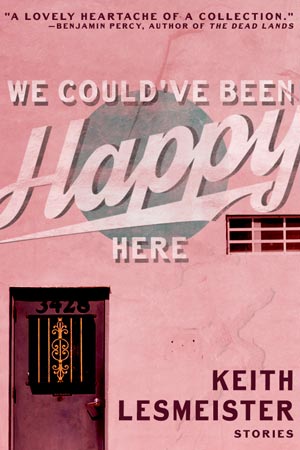
Here’s a quick excerpt from the interview:

“Getting to know a character is much like getting to know a co-worker or friend… I spent a lot of time talking to my characters, asking them questions, figuring out their wants, desires, insecurities, vulnerabilities, fears, loves, and once we shared our secrets with each other, I could hear them talking to me.” – Keith Lesmeister on finding a character’s voice

Read the full interview here.

|

No Comments

|

Contributor Spotlight: Jessica Kashiwabara

Jessica Kashiwabara’s nonfiction piece “In the Middle” appears in Midwestern Gothic‘s Winter 2017 issue, out now.
What’s your connection to the Midwest, and how has the region influenced your writing?

I grew up on the West Coast in the suburbs of Los Angeles, went to college in San Diego, then moved to New York City in the hopes of a writing career, in music journalism at the time. So I’ve lived on either coasts for half of my life and flown over the Midwest often. The Midwest remains mysterious and vast to me, but I have visited Chicago once, and it had a strong enough impact on me to write the essay in the new issue of Midwestern Gothic called “In the Middle.”

What do you think is the most compelling aspect of the Midwest?

The Midwest always seems expansive to me, just open and wide. Especially compared to my hometown full of cul-de-sacs with cookie-cutter houses and the streets full of skyscrapers in New York City. Even in Chicago, there was more space and air, and it created this sense of calm for me. “In the Middle” started with a line that didn’t end up in the final piece, but summed up that feeling and got me thinking about my time there and what I wanted to say about it: “Chicago showed me that there could be a different way of life with wider sidewalks and smiling faces, a body of water that runs instead of waves.”

How do your experiences or memories of specific places—such as where you grew up, or a place you’ve visited that you can’t get out of your head—play a role in your writing?

I’m working on a collection of essays about my divorce and that relationship, but I’m interested in digging into the right after when the hurt is still present and ongoing. So a lot of that does have to do with place and the home, and what home means. I’m trying to work out an idea that started with a joke about how my ex-husband and I thought our apartment was haunted. It’s now become about what things (actual objects like old fly paper) and energies people leave behind in these shared spaces, tenant to next tenant, and how to keep going and create new spaces for yourself.

Discuss your writing process — inspirations, ideal environments, how you deal with writer’s block.

I work in spurts, which maybe isn’t the best writing practice. I’ve been thinking more about whether I need more discipline, but I think there are all kinds of writing practices for all kinds of personalities. I’m trying to balance not beating myself up and getting the work done.

Writing at home is hard for me, I usually end up on the couch with a blanket and my dog and a hot laptop, which sometimes works. I get ideas on my subway commute to and from work, and write in a notebook, usually when I’m reading a book and something hits me. A lot of times it’s unrelated to what I’m writing but something in the words will spark a line or a paragraph to get me started. When I really want to work, I go to a coffee shop with my notebook or printed copies of drafts where I can’t escape and there’s treats. Writing groups, friends willing to read and give feedback, participating in readings, and submission deadlines are also good motivation.

How can you tell when a piece of writing is finished?

At some point you do have to stop with the revisions and edits, but maybe “finished” isn’t quite what happens. I’ve been going back to older pieces and reworking them, and since it is creative nonfiction, there is an element of me being further away from an event or experience and seeing it in a different light. That has been helpful and enlightening, both as a writer and a person. There comes a point though, when you’re ready for the rest of the world to see your work and to share it and hope the words connect.

Who is your favorite author (fiction writer or poet), and what draws you to their work?

Toni Morrison and Ernest Hemingway are my first favorites. Morrison for the beauty and lyricism in her words, and Hemingway for his succinctness. I’ve been reading more new work these days (a mix of fiction, creative nonfiction, and poetry), and some that have hit me hard are Chloe Caldwell’s Women, Sean H. Doyle’s This Must Be the Place, Tracy O’Neill’s The Hopeful, Lidia Yuknavitch’s The Chronology of Water, and Ross Gay’s Catalog of Unabashed Gratitude.

What’s next for you?

I’m currently at work on a collection of essays that will include “In the Middle” so I’m grateful to Midwestern Gothic for giving it a home. I recently had an essay published in Black Renaissance Noire about my grandfather, photography, and growing up Japanese American. I hope to explore more on heritage and history.

Where can we find more information about you?

I’m on Twitter @JessKashiwabara. Occasionally I am brave enough to tweet!

|

No Comments

|

Midwest in Photos: An Autumn Saunter

“I was thinking how amazing it was that the world contained so many lives. Out in these streets people were embroiled in a thousand different matters, money problems, love problems, school problems. People were falling in love, getting married, going to drug rehab, learning how to ice-skate, getting bifocals, studying for exams, trying on clothes, getting their hair-cut and getting born. And in some houses people were getting old and sick and were dying, leaving others to grieve. It was happening all the time, unnoticed, and it was the thing that really mattered.” – Jeffrey Eugenides, Middlesex.

Photo by: Alec Josaitis

|

No Comments

|

Interview: Thomas Mullen

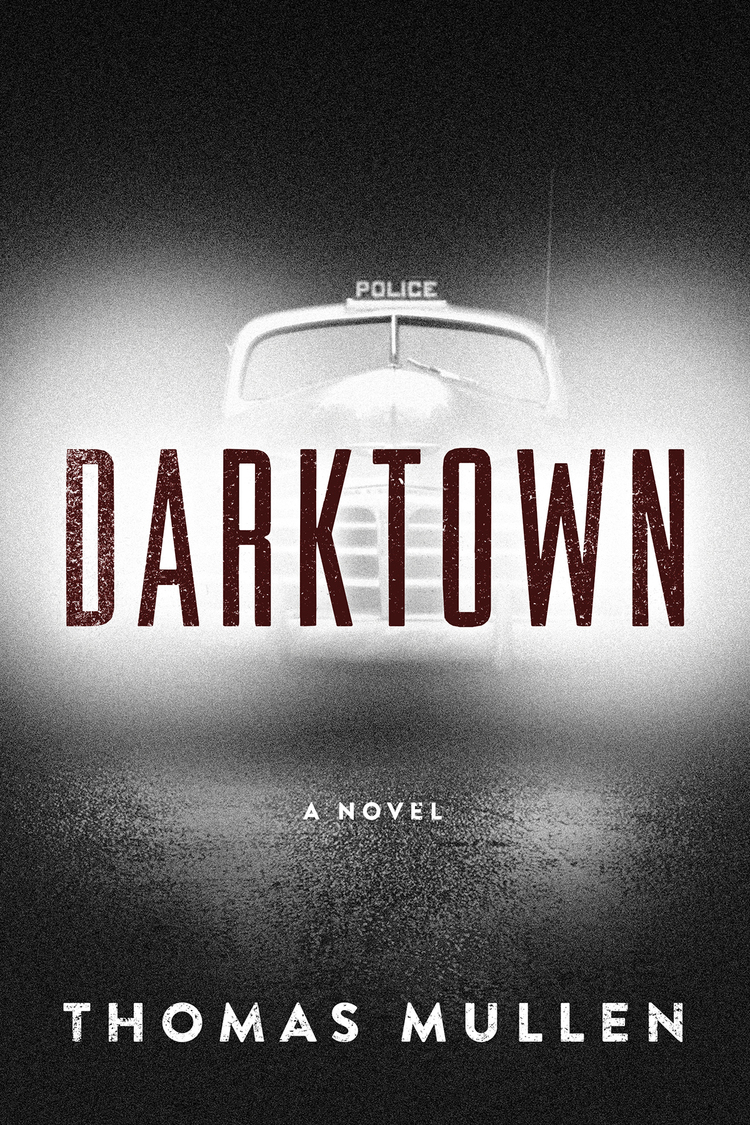
Midwestern Gothic staffer Kristina Perkins talked with author Thomas Mullen about his novel Darktown, crime in history and present time, the choices a writer must make, and more.
**

Kristina Perkins: What is your connection to the Midwest?

Thomas Mullen: I went to Oberlin College for four wonderful years. Like a lot of colleges, it could feel very set apart from the town, and I imagine a lot of students graduate from the school with little perspective on the town itself. I had a different experience; my work-study job for all four years was at a second-hand clothing store, Senior Thrift, run by the local senior citizens’ center (the school paid students to work some jobs in the community). Senior Thrift received donations of old clothes, often from folks downsizing from a home as they prepared to move into small apartments in assisted living facilities or nursing homes. So not only did I work with a lot of senior citizens from the town (black and white, poor and well-off), some of the seniors and I often went to people’s houses to pick up stacks of clothes, furniture, and various knick-knacks. I saw inside dozens and dozens of houses all over town, met a lot of people, heard a lot of stories. I learned that retired folks really, really like to gossip. And that out-of-style plaid pants and blazers from the ’70s were really quite amazing to wear again in the ’90s.

And my wife was raised outside Chicago; she has a deep fondness for the area, and we travel back when we can.

I set my second novel, The Many Deaths of the Firefly Brothers, in a fictional Ohio city; it’s about a pair of Depression-era bank robbers. The Midwest was particularly fertile ground for such thieves, like John Dillinger and Pretty Boy Floyd, so in a lot of ways that book was an homage to my time in Ohio.

KP: You were born in Rhode Island, attended college in Ohio, and currently live in Atlanta, Georgia. How has your understanding of place — as well as the memories, people, and values tied to place — influenced your approach to the settings in your novels?

TM: I love to travel. This might partly be due to the fact that I’d never flown ’til age 17 and never left New England and New York ’til age 17 — I desperately wanted to get out and see more of the country, the world. I’ve now lived in several places, and yes, I certainly pick up on regional differences, cultural markers, political opinions that may differ from place to place. On the one hand, I think your average RI town and OH town are more alike than different. On the other hand, part of the fun of setting a novel in a certain place is fully building its world, and a strong sense of place is so important. What jobs do people there work? Where do they go to church, if they do go at all? What are their biggest hopes and fears and obstacles? Particularly with fiction set in the past, I ask myself these questions constantly.

KP: Your newest novel, Darktown, blurs the lines between traditional genres, combining elements of crime fiction and historical fiction as it follows the narratives of Atlanta’s first black police officers. What initially drew you to this particular blend of genres?

TM: There was never a conscious attempt to combine genres. This book came about when I heard the true story of Atlanta’s first black cops in 1948 and all the ridiculous Jim Crow restrictions they had to work under, and I wanted to write about it. Because they’re cops, it’s a crime story, and because it’s the past, it’s historical, but I didn’t come at it from that angle. I just loved the story and went from there. (And I’d argue that historical fiction isn’t really a genre, it’s more of a setting; it’s like calling novels written in second-person a genre, or books with multiple protagonists a genre… but that’s a digression!)

KP: In a previous interview with Publishers Weekly, you mentioned that you considered approaching Darktown through nonfiction. Why, ultimately, did you choose to fictionalize this story? And, when planning the novel, how did you navigate the relationship between fact and fiction?

TM: I considered it as nonfiction, or even a magazine story, mainly because I was at a point in my career where I felt like trying something new. I’d just written a long-form true crime story that had gotten some attention, so I wondered if I should try a true crime book, but ultimately I decided against it. I’m a fiction writer. The two are very different types of writing, and, although I do a huge amount of research, the amount of research required for a nonfiction history book would dwarf that. I didn’t want to live in libraries for years. I enjoy research, but as a means to an end. I would always rather be writing.

KP: Darktown is your fourth published novel. How do you feel you’ve grown as a writer between and among books? What did you find most surprising — or, perhaps, most challenging — about writing and publishing Darktown?

TM: I like to think that I’m better at it, that I’ve learned from certain mistakes, failed manuscripts, bad ideas, poor execution, etc. I think I have a better sense earlier on as to whether an idea will work or whether I need to tinker with it more. And I think I have a better sense of the marketing of fiction, which can sound mercenary but is, in fact, quite important if you want to keep writing books. My first three books were very different from each other — this was a conscious decision, as I love a lot of writers who change every time (Michael Chabon, Jonathan Lethem, Margaret Atwood, Colson Whitehead). But that can make it very difficult for people to know what box to put you in, who to aim your work at, etc. With Darktown and the idea to write a series of crime novels set in Atlanta during the Civil Rights era, I realized it would be easier for people to understand who I was and what I was doing: oh yeah, he’s the guy who writes those literary crime novels about the South. I can always branch out from there, but I think people need a baseline understanding of what makes you unique.

KP: The story of Darktown is notable for its timeliness: much of this history of systemic police racism is reflected within today’s Black Lives Matter movement. How has writing Darktown influenced your understanding of current tensions between race, mass incarceration, and policing — if at all?

TM: These are huge issues that continue to shape politics and policy in this country. Part of why I find 1948 fascinating as a setting, and the idea of a series so fun, is that it’s just before the first victories of the Civil Rights movement. But those victories also led to a massive white backlash, white flight, the new conservative movement with anti-tax and anti-urban policy, and so many other things that would shape the world of the 1980s and 1990s, when I grew up. And it informs much of what we’re seeing today, with another white backlash and the reshaping of a Republican party that was last reshaped in the late ’60s, partly in reaction to the Civil Rights movement. So in drilling down into 1948 and the following 15-20 years, I can better understand the world I inherited and the one we’re all dealing with today.

KP: You’ve spoken about your plans to expand Darktown into a series of books; however, you’ve also mentioned that you had previously been weary of literary series. What changed your mind?

TM: I don’t think I was weary of them, I just hadn’t really thought about them much. But for the reasons I just mentioned, a series here makes a lot of sense. There’s so much I’d like to explore, and I think it will be fascinating to trace the changes in Atlanta—and America—that come with 1954’s Brown v. Board of Education and the backlash to it, that come with the return to Atlanta of Martin Luther King Jr. 1960, that come with the big generational disagreements among activists in the early 1960s. There’s a lot to work with, and rather than feeling the need to write an overstuffed 900-page doorstop with too many characters and subplots, I can try to give each story the attention it deserves.

KP: You announced that Darktown will be produced by Sony Pictures Television as a TV series! How involved will you be in this process? What do you think may be the biggest challenge in transferring this story to the screen?

TM: It’s an ongoing process so a lot of the specifics remain to be seen, but I’m certainly thrilled and looking forward to it. I think that a lot of the better TV shows today (many of which have novelists as show runners, from True Detective to Game of Thrones to The Americans) borrow novelistic storytelling in exciting ways, and can even tell more complex stories than you can get away with in a novel without confusing or overwhelming your reader.

KP: What do you wish you had known before you started publishing your writing? Do you have any advice for young writers seeking publication?

TM: When my agent was trying to sell one of my earliest manuscripts (something we ultimately failed to do), she warned me that the process was an emotional rollercoaster. I thought she’d meant that in terms of selling a book (an editor likes it! But her boss doesn’t, etc). But it turns out it applies to a writer’s entire career (you get a great review! You get a poor review. You have a great event! You have not-so-well-attended event. You have a great day of writing! You have a terrible day). Pretty much the entire career is an emotional rollercoaster, with great highs and sinking lows, and you constantly need to adjust. So, to the young writers out there, don’t think publication will erase all that. The torturous experience of trying to land an agent is actually wonderful practice for what lies ahead!

KP: What’s next for you?

TM: I’m working on edits now for the second book in the series, called Lightning Men. It’s set in 1950 and involves tensions in a neighborhood turning from white to black, and a real-life Nazi organization called The Colombians, and the Klan, and bootleggers, and convicts readjusting to life after being released. Fun stuff.

**

Thomas Mullen is the author of The Last Town on Earth – which was named Best Debut Novel of 2006 by USA Today and was awarded the James Fenimore Cooper Prize for excellence in historical fiction – The Many Deaths of the Firefly Brothers, The Revisionists, and his new novel, Darktown.

His works have been named to Year’s Best lists by The Chicago Tribune, USA Today, The Atlanta Journal-Constitution, The Onion’s A/V Club, The San Diego Union-Times, Paste Magazine, The Cleveland Plain-Dealer, and Amazon. His stories and essays have been published in Grantland, Paste, The Huffington Post, and Atlanta Magazine. He lives in Atlanta with his wife and sons.

|

No Comments

|

Contributor Spotlight: Jason Arment

Jason Arment’s piece “VA Mental Health Waiting Room” appears in Midwestern Gothic‘s Winter 2017 issue, out now.

What’s your connection to the Midwest, and how has the region influenced your writing?

I was born in Des Moines, Iowa, and served with Echo, 2/24, the reserve unit that encompassed Iowa and the surrounding rural hinterland.

What do you think is the most compelling aspect of the Midwest?

No free passes when it comes to art scenes. If you want community, you have to build it.

How do your experiences or memories of specific places—such as where you grew up, or a place you’ve visited that you can’t get out of your head—play a role in your writing?

I write about Iraq to keep it alive, and about my experiences as a veteran because I don’t know what else to do. While the war in Iraq was still a thing veterans already talked about Afghanistan being the good, or “righteous,” war and Iraq the bad war. Now it’s like there was no war. Maybe it has to do with the birth of ISIS really emphasizing how it was all for naught—even if it was ever for anything real.

Discuss your writing process — inspirations, ideal environments, how you deal with writer’s block.

I’m inspired by humanity’s strength to persevere and overcome. My ideal writing environment is alone in a small room with no windows, preferably with a view of the corner. I deal with writers block by reading.

How can you tell when a piece of writing is finished?

The work stops feeling alive and becomes something other than. But words can reanimate, so I hesitate to turn my back on any of it.

Who is your favorite author (fiction writer or poet), and what draws you to their work?

I’m drawn to John Fante’s work because he believed in literature that thrived no matter what the world’s whims.

What’s next for you?

My memoir is forthcoming from University of Hell Press. Musalaheen, the title, is Arabic for gunslingers. In one of the chapters I ask a child where the musalaheen are, and he points at me—no white saviors in this book.

Where can we find more information about you?

My twitter, @jasonarment, is a great starting place.

|

No Comments

|