Midwest in Photos: Riding Out the Storm

April 8th, 2017

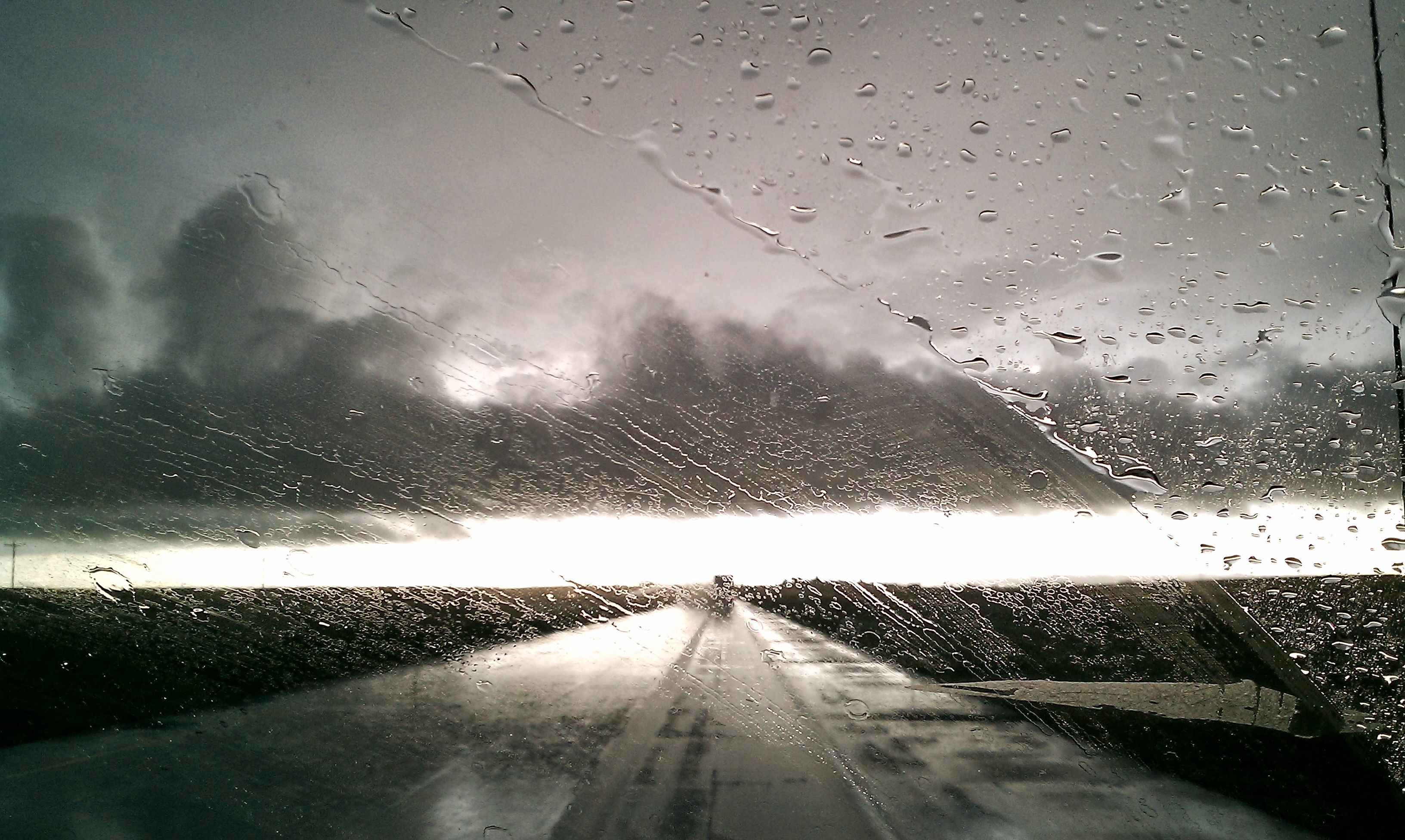
“Love, it’s such a night, laced with running water, irreparable, riddled with a million leaks. A night shaped like a shadow thrown by your absence. Every crack trickles, every overhang drips. The screech of nighthawks has been replaced by the splash of rain. The rain falls from the height of streetlights. Each drop contains its own shattering blue bulb.” – Stuart Dybek, The Coast of Chicago: Stories.

Photo by: Leah Angstman

Interview: Steve Yates

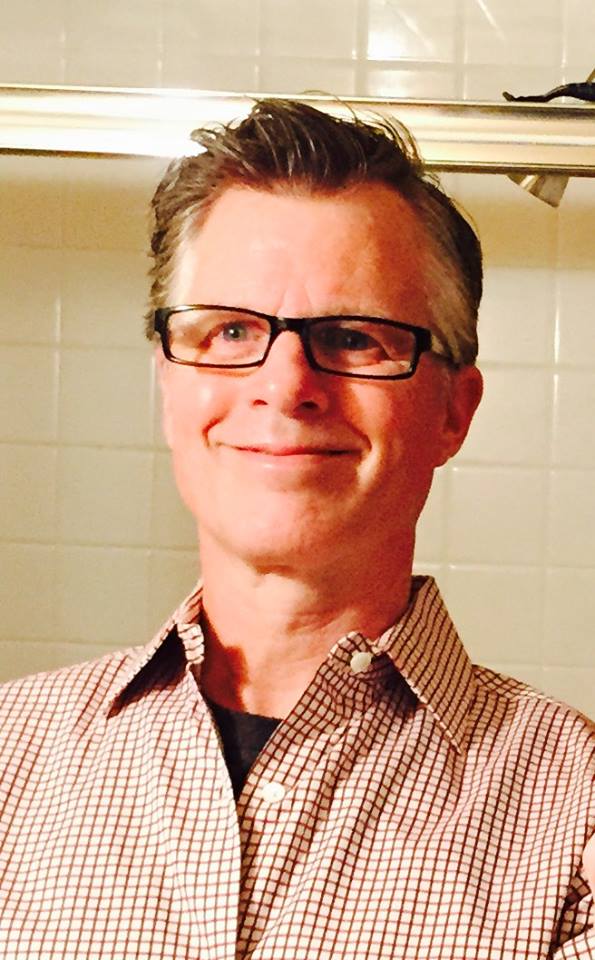
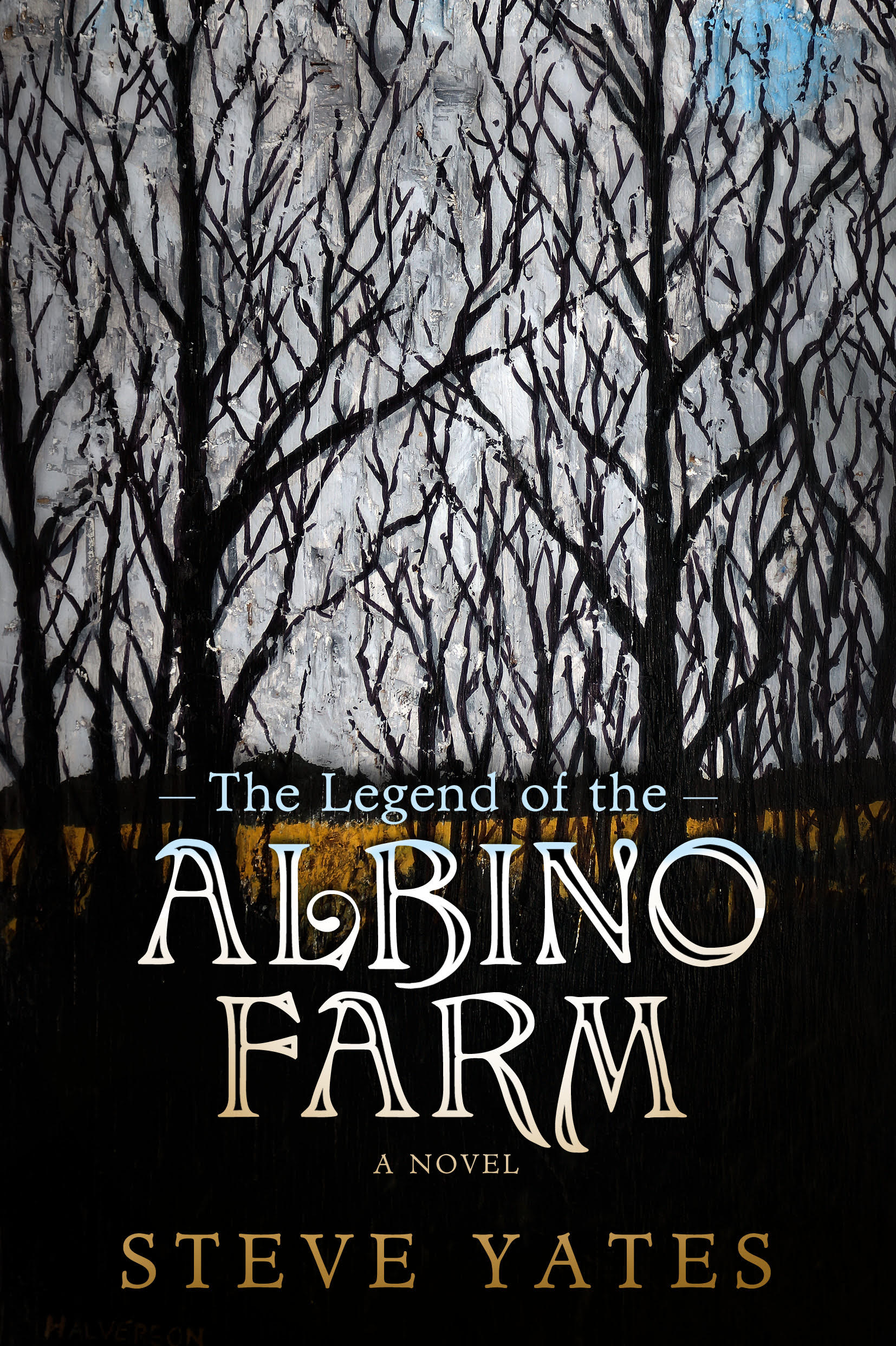
Midwestern Gothic staffer Audrey Meyers talked with author Steve Yates about his book The Legend of the Albino Farm, the dangerous implications of legend, telling a horror story inside-out, and more.

**

Audrey Meyers: What is your connection to the Midwest?

Steve Yates: I was born and reared in Springfield in the Missouri Ozarks, that hilly borderland between the Midwest and the Upland South. Two counties separate my hometown from the Arkansas line. It is the largest city and chief mercantile hub of the region. On a high plateau before the White River Hills begin, Springfield has long been the last market crossroads where provisions from Chicago, St. Louis, and Kansas City could be found. South of town the adventurer descends into a wilderness as oaken and beautiful as it is flinty and perilous. Springfield, Queen City of the Ozarks, lit the stage for Porter Wagoner and gave Bob Barker his start in radio. While with us, Brad Pitt learned to fire pistols and play tennis. We educated the mighty John Goodman and the luscious Kathleen Turner. We are the genius homogenizers who gave you Bass Pro Shops, O’Reilly Automotive, and the first Sam’s Club. You don’t know us, but we sell you everything.

AM: How has the Midwest influenced your writing?

SY: I am the grandson of a St. Louis bank president and a Dallas County tenant farmer. Those worlds, four hours separated by car, are as far apart as the proving grounds at Lockheed Martin and the limestone chasms of Smallin Cavern. My ancestry combines English, French, German, Irish, Scots Irish, Scottish, and (according to family lore) Blackfoot. Maybe that mad mess opens me to writing from multiple strains. I’m a fiercely loyal fanatic for Daniel Woodrell and Donald Harington, the Tom Sauk and Mount Magazine of Ozarks letters. But I am most often rereading Joseph Roth, Henry Green, Alice Munro, Herman Melville, and Anton Chekhov. The Ozarks was and still is a place where the Midwesterner, in dire straits, can vanish into forbidding hills and shadowy hollows, then emerge resolved with a steeled (if not stolen) identity. I think, sometimes, my writing is that — each novel, novella, or story a plunge into a borderland wilderness hoping to forge something new.

AM: What inspired you to write your latest book, The Legend of the Albino Farm?

SY: This may sound cold and analytical, but this is how I came to it. In 2013, I was casting about for what to write next. In my two published novels, Morkan’s Quarry and its sequel, The Teeth of the Souls, I felt I had treated the two cataclysms in Springfield’s history — our Civil War and the 1906 Easter Lynching. In Some Kinds of Love: Stories, I had tackled the Ether Eddie case and several other Springfield incidents. In Sandy and Wayne: A Novella, I managed to tell a love story about the building of an interstate through the Ozarks. What next? The strange old muddle of The Albino Farm, a legendary haunt north of town, came to mind. Researching, I found a 2006 column by a trusted journalist I had worked with at the Springfield News-Leader. In her column, Sarah Overstreet attempted to track what was behind our town’s bizarre tale of a vicious albino caretaker, or a sequestered colony of tortured albinos. A distant relation to the wealthy, prominent Irish Catholic family that had actually lived on this farm refused the chance to speak with her. He was too upset that this nonsensical legend had so long obscured the glory of a golden family and a home place he believed was paradise. Decades after vandals had burned the twelve-room mansion to the ground, he remained too distressed to set the record straight. He had given up on telling his truth. I was all in.
AM: When and how did you first hear about the Albino Farm?

SY: Freshman year at Greenwood Laboratory School, the instant a friend secured a car, a Missouri driver’s license, and a bottle of Cosca Bolla red wine. My friend, Eric Anderson, gravitated to supernatural lore and adventure. We were inventively and criminally irresponsible. Journey, Story, Thrills, and Music meant everything.

AM: What was your immediate reaction and how did this lead to writing your book?

SY: I think even then, to Eric’s great annoyance, I did not understand and vehemently questioned what was so frightening or supernatural about the place. There was to me nothing threatening or magical about persons who happen to have the genetic difference of albinism. I knew quite a lot about the difference, back then considered an affliction — I was an obsessive child, and any human distress compelled me to hours upon hours in the Brentwood Public Library. If you live with a hometown legend that horrifies by making a monster of someone who is not monstrous at all, how could you avoid as a writer trying to deal that legend a death blow?

AM: What genre do you think The Legend of the Albino Farm most closely belongs to?

SY: Family saga. It’s a horror story told inside out. The family’s problem, the family’s affliction is that their home place and farm have acquired a nonsensical legend that unleashes a torrent of thrill seekers, drunks, druggies, vandals, bikers, and Goths. The Sheehys of Emerald Park—a family I invented but based closely on the Sheedys of Springlawn Farm—are just a large, thriving Irish Catholic family in the Ozarks, and there are no albinos among them. Yet, subjected to this cursed legend, their lives transform from idyll to hell in just a decade.

AM: Were there any difficulties or problems while researching this topic?

SY: Astonishingly none whatsoever. Every time I conceive a story about Springfield or the Ozarks, I’m terrified someone else will write and publish that fiction before I do. With the publication of this one, I am five-for-five, a streak too lucky to continue. The story of the family that actually lived, loved, and thrived on the farm is well documented in newspaper archives at the Springfield-Greene County Library Center. At the Greene County Archives, the family’s copious, meticulous wills detail their rise and fall into decrepitude and oblivion almost as completely as would a videographer. Death Notices, Tax Records, Deeds of Trust, even a commissioned Historical Survey — all so simple to access. The intensive research really took but a blizzardy fortnight in December, and photocopying fees. And I should add a lot of talking with my father, a lawyer, and father-in-law, descendant of a farming family.

AM: What did you learn from your research process?

SY: Never assume. Let the money speak. Don’t read the abstracts; read the letters. The story is always sadder, stranger, and more beautiful than you imagined. The drama waits not in what we obtain, but in when we abstain. Obsession with property is a powerful curse. Get your own Will in order. Everything is narrative.

AM: How do you believe a story should be told? In other words, do you follow a guideline for telling a story?

SY: To me, every story is different, different in voice, in ambition, in scope, different in the consciousness and the universe it creates. The living characters will show you how to tell the story. That said, researching this novel afforded me valleys and summits, horrors and triumphs along the timeline of a family’s reign. So in many ways I had a guideline or outline. The danger of an outline is that the strict adherent to it will crush his living characters with it.

AM: Do you believe your book provides justice for the terrorized Sheedy family?

SY: When I began writing, that Quixotic gleam flashed in my eye, and Hettienne Sheehy, my Dulcinea del Toboso, consumed my heart. I saw her at awards banquets, spotted her waiting for school buses in our subdivision, recognized her in the icy superiority of a manager’s face and body language. But, alas! The legend is a giant, a windmill churning to sweep the horseman to his death, or at least to his hilarious shame. Our compulsive desire to believe the outrageous, the preposterous, the sensational, the grotesque, and the depraved is affirmed every day by our credence in fake news.

AM: What do you think the Sheedy’s would think of your book?

SY: They would never read it. Near the end of their lives, the three spinster sisters, last to live and die in that twelve-room mansion, could not even trust workmen to perform routine maintenance, they had lost so much faith in Springfield, in humanity. I have done all I can to give them back a life, love, passion, and dignity by inventing the cartilage, blood, and skin ennobling the bare bones of life events. Yet too much has been trampled, too much burned, too much shattered in ruins. They would think I was just another liar and vandal.

AM: What perspective is your book written from and how did you create this voice?

SY: I knew I had to discover a witness, an heir, the Last Sheehy, a child at the beginning of the novel and a mature woman at its close. Otherwise my choices for protagonists — the spinsters Agnes, Helen, and Margaret — would have me rewriting, “The Jilting of Granny Weatherall.” So with the Sheedy story in my mind, in August of 2013, we were in Oregon with our nieces. The eldest, Lauren Grace, is quite tall, nimble, blonde, humble, and caring, and so lovely, I have witnessed this teenager’s entrance to a restaurant or to a train car silence all conversation. Beauty like an overpowering force field. On the mountain road to Netarts Bay, she took her first meclizine tablet to fight car sickness and rode in the front with me. Along the winding highway, I happened to look over at her — she had fallen so quiet. To my shock, she had been for some time staring intensely at me, quite through me, her face frighteningly blank, mouth gaping. This continued for several intense miles until I whispered her name. With a jolt Lauren Grace returned to us. There was Hettienne, the last Sheehy, who saw the fire, the vandals, and the legend that was looming to curse and consume her family.

AM: What are the differences between a good and bad legend?

SY: If a legend’s tenor and vehicle relies on making a person or a family into a monster, you can almost count on that producing evil, cosmically and practically. And the Albino Farm legend was always so badly told, such nonsense. Yet look what destruction it unleashed! I would rather rewrite “The Fall of the House of Usher,” turn it inside out, illuminate the family story and the love story Edgar Allan Poe missed, transform the affliction of sensitivity into somewhat empowering visions, and place the monstrosity out in the community where horror originates. I didn’t set out to do all that—but that’s how it feels now. There’s no need to rewrite a crazy legend, and you can only rectify some of its impact.

AM: How is The Legend of the Albino Farm similar to your other works? How is this book different?

SY: All that is for readers, if I ever gain any, to determine. I will say this book would not exist without the intervention and shepherding patience of my editor Greg Michalson. I had lived so long in the consciousness that narrated The Teeth of the Souls — a nineteenth– and early twentieth–century novel with bombast and flourish and lush, arcane language — that I almost lost the capacity to write in a contemporary idiom. Greg saved my writing life by never letting up and never letting go.

AM: What’s next for you?

SY: Read, read, read, read. I’m terrified that I almost lost my ability to write in a plain American, Ozark idiom. I’ll be devoting myself to getting this book to every reader it can reach. And then I will be heavily devoted, as I always am, to my work at University Press of Mississippi, where I am associate director / marketing director.

**

Steve Yates is the author of the Knickerbocker Prize-winning Sandy and Wayne: A Novella, the Juniper Prize-winning Some Kinds of Love: Stories, and the novels Morkan’s Quarry and its sequel The Teeth of the Souls. The recipient of three individual artist fellowships from the Mississippi Arts Commission and another from the Arkansas Arts Council, he lives in Flowood, Mississippi, with his wife, Tammy Gebhart Yates. Born and raised in Springfield, Missouri, Yates is the associate director and the marketing director at University Press of Mississippi.

|

1 Comment

|

Interview: Janie Chodosh

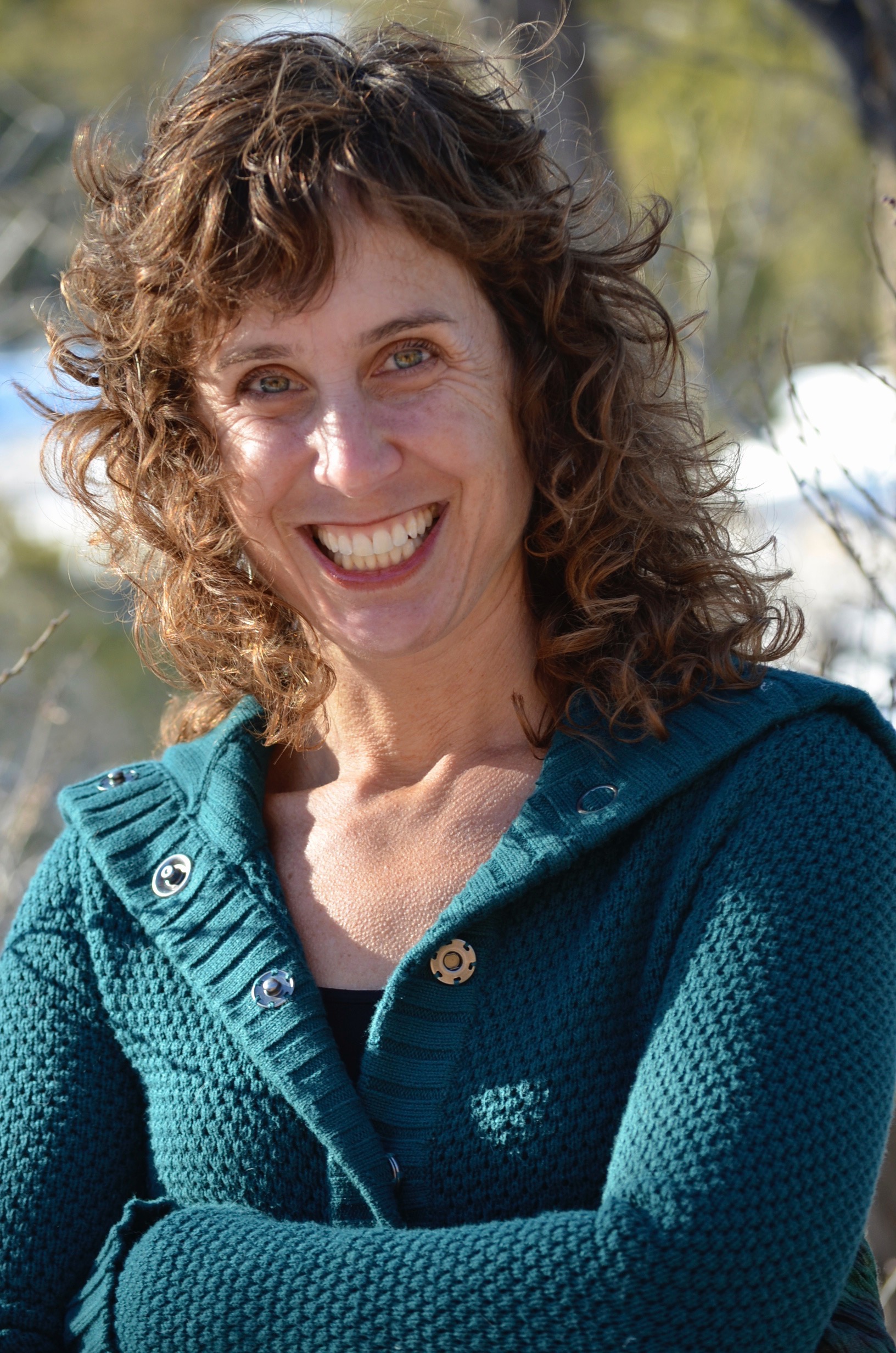
Janie ChodoshMidwestern Gothic staffer Audrey Meyers talked with author Janie Chodosh about Wild Lives, ecological despair, stubborn optimism, and more.
**

Audrey Meyers: What is your connection to the Midwest and how has the Midwest influenced your writing?

Janie Chodosh: Although I grew up in Upstate New York, a place filled with beautiful forests and lakes, my awareness of the natural world blossomed when I went to college at the University of Michigan. Part of this awareness was due to the university itself, in particular, the School of Natural Resources—and even more particularly with Dr. William B. Stapp, in whose classes I first became deeply conscious of global environmental issues and all we stood to lose. Besides the academic connection to the environment, I found a deep connection to the natural beauty of Michigan. My first real camping trip was in the Sand Dunes along Lake Michigan. Later I explored the north shore of Lake Superior where I saw the Northern Lights for the first time. In addition to these “big ticket” experiences, I remember countless hours walking among the trees of the arboretum; the afternoons wandering through various forests and bogs with my ecology class; the vibrant fall colors and the stark November skies. And then I took a poetry class, and all I wanted to write about was natural history and nature.

AM: How has nature influenced your writing? And more specifically, how did your time in Yosemite National Park affect you as a writer?

JC: Living in Yosemite was all about making our own fun. We didn’t have Internet or cell phones or movies or streaming, so whatever we did, we did in the outdoors, whether it was active fun—rock climbing, backpacking, and skiing, or more contemplative fun—sitting by the river and writing, reading, and watching birds. Living in Yosemite truly made me realize that I am a naturalist at heart. I see the world through a naturalist’s eyes. But I am also a writer at heart, feeling and experiencing the world best when I put it into words. Living in Yosemite provided the inspiration and the space to start blending these two aspects of myself.

AM: How do you make room for “all things interesting” in your life?

JC: I’ve always made time for my various interests by doing as many things as I could, not slowing down, and being good at time management. When I started to get really serious about writing and getting published, though, my friend sent me an article called, “The Working Mother’s Guide to Writing a Novel.” Since my daughter was a baby at the time and since I was also working, I took the advice of that article to heart. The article essentially said that you no longer have hobbies— meaning, use whatever moments you can find to write. Now, this is what I do. While I haven’t giving up everything I love to do, I focus on writing and have narrowed the time spent doing everything else.

AM: What’s one thing you wish you’d known when you first began writing?

JC: I wish I’d known that to be a writer I have to create the space to write every single day. What I write doesn’t have to be a finished product, but I have to engage with the process and connect with whatever it is I’m working on. Also, I have to silence those internal voices that say unproductive things like I’m not talented enough or who will ever publish my work or this is a waste of time. I’ve met a lot of people who want to be writers or say they are writers, but who don’t actually sit down and write. Also, I carry a notebook with me wherever I go. I constantly take notes and jot down ideas because even when I’m not writing, I’m writing.

AM: What does it mean to be a writer to you? How do you define yourself as a writer?

JC: Before I was published I was afraid or maybe embarrassed to call myself a writer. But what someone told me is you write, so you’re a writer. I mean if you’re swimming laps for exercise are you not a swimmer? Do you have to be Michael Phelps before you claim yourself as such? What I realized is that I could spend hours on revisions, on working a sentence, on searching for the right word or phrase. These things made me a writer. But I wasn’t an author until I first got published. Giving myself permission to call myself a writer freed me to stop worrying and to write. Another thing being a writer means for me is being a reader.

Wild Lives

AM: What do you hope Wild Lives will accomplish? Or what was the purpose of the book?

JC: Although the “purpose” of Wild Lives changed from its initial conception to its completion, I think its essential truth or purpose always remained the same, and that is to tell the stories of some great conservationists, and in doing so, remind people of the beauty and fragility of our world and the obligation that every person has towards preserving it.

Personally it is so easy to give into despair, the feeling that we have passed the tipping point and are too far into the age of extinction to stop it. But then if that’s the case, why even try? So I wanted to write a book that offered, as I said in the query, an antidote for ecological despair. And I don’t mean a book filled with easy tips like “don’t forget to recycle,” but with meaningful messages from 20 leading conservationists on the front lines of saving species. These people refuse to give up hope. In fact, as famed field biologist George Schaller said, “I don’t deal in hope. I deal in action.” Or, as Mike Chase, one of Africa’s leaders in elephant conservation said, “I’m a stubborn optimist.” In writing the book, in being immersed for 5 months in stories of people fighting to protect species and ecosystems across the planet, I too became a stubborn optimist. Their energy and commitment infected me with a new commitment and desire to do my part to help save species.

AM: How do you remain hopeful and positive for the future of the planet?

JC: I put it this way to a group of students I was teaching: If someone said dogs and cats were going extinct would you just give up and stop taking care of your pet? Of course not. You care for what you love. I love animals of every kind and therefore I can’t give up trying to save them. I love the quote, “It’s better to light a single candle than to curse the darkness.” I tell myself that every day, especially now. Also writing this book has inspired me. Each person more or less said the same thing, in his or her own words: There is no choice but to have hope. As Dr. Thomas Lovejoy said in my interview with him, “What good is it waking up each morning and wringing my hands in despair?”

AM: What is it like working with 20 contributors in order to create the book? What were the interviews like? How did you prepare and organize for the diverse set of stories?

JC: Challenging! This was truly a two-person effort. I did all the writing and Lori Robinson, who originally had the idea, did all the organizing. She found many of the people in the book and kept track of them, followed up, and kept lists in a way I could never have done. While I did a few of the interviews on my own, or re-interviewed people when I had more questions, Lori conducted most of the interviews, which, as we both realized, was a crazy way to write a book. But the deadline we had was tight, so each week I basically had to move on to a new person. I would read everything I could find about a person, taking notes as I went, sending my notes to Lori, talking to her sometimes fifteen times a day, or an hour! She (or we) would conduct the interview and I’d search for both the hook and the thread of the narrative, often needing to go back to the person five or six times for clarification and for questions that came up as I was writing. I might start off with a few specific questions, but writing is an exploratory process, and as I explored each person’s story, I often found myself going in a new direction I had not anticipated, which meant going back to the person, which could mean a lot of hurry up and wait. These people are in the field, sometimes in remote places like the Democratic Republic of Congo or Botswana or Assam, India, and it could be days—sometimes weeks—before we heard back. When this was the case, given our deadline with the publisher, I’d sometimes have to put a story on hold and start a new one. I could not have done this without Lori who followed up with people with an enthusiasm and persistence I would have found far too anxiety provoking. Not having to do this part, in other words, putting that stress on Lori, freed me up to stay with the creative process and look for the most compelling ways I could think of to tell their stories.

AM: What’s next for you?

JC: A series on conservation for the middle grade reader, book three in my Faith Flores Science Mystery series, and continuing to find ways to blend conservation and writing.

**

Janie Chodosh’s life’s work and passion has been a mix of natural history and writing. Besides her book, Wild Lives, she has two novels for young adults, Death Spiral, A Faith Flores Science Mystery (2014, Poisoned Pen Press), and Code Red (February 2017, Poisoned Pen Press). Janie earned a master’s degree in environmental science from the University of Montana and has worked as a naturalist in Yosemite National Park, a wilderness guide for the Colorado Outward Bound School, a trip leader for the Montana Natural History Center, as the state education director for the New Mexico chapter of the National Audubon Society, and as an adjunct professor in various colleges in Santa Fe, New Mexico where she lives with her husband, daughter, and stepson. Currently she is involved in elephant conservation in Assam, India.

|

No Comments

|

A Woman is a Woman Until She is a Mother: Essays by Anna Prushinskaya (MG Press)

We are thrilled to share more details about our upcoming MG Press title to be published in the Fall of 2017, the essay collection A Woman Is a Woman Until She Is a Mother by Anna Prushinskaya!

From the back cover: In A Woman Is a Woman Until She Is a Mother, Anna Prushinskaya explores the deep life shifts of pregnancy, birth and motherhood in the United States, a world away from the author’s Soviet homeland. Drawing from inspirations as various as midwife Ina May Gaskin, writer and activist Alice Walker, filmmaker Sophia Kruz and frontierswoman Caroline Henderson, Prushinskaya captures the inherent togetherness of womanhood alongside its accompanying estrangement. She plumbs the deeper waters of compassion, memory and identity, as well as the humorous streams of motherhood as they run up against the daily realities of work and the ever-present eye of social media. How will I return to my life? Prushkinskaya asks, and answer by returning us to our own ordinary, extraordinary lives a little softer, a little wiser, and a little less certain of unascertainable things.

Advance Praise:
A Woman is a Woman Until She is a Mother has already received some incredible advance praise from the following:

“Anna Prushinskaya’s A Woman is a Woman Until She is a Mother is a frank, courageous, and beautiful meditation on the strange alchemy of migrating from one identity to another.”
Helen Phillips, author of Some Possible Solutions and The Beautiful Bureaucrat

“Anna Prushinskaya’s essays are maps, are mirrors, are the magical objects lost and found by every wayward traveler in a faraway/familiar land. Every woman’s experience of motherhood is unique, and yet I traced my own footsteps on the paths this marvelous writer laid before me. A lovely book – the kind you find yourself pushing into friends’ hands and bundling up into care packages.”
Amber Sparks, author of The Unfinished World and Other Stories

“Motherhood is an encounter, a shadow in mirrors, a beast lying low in the grass in the field,’ writes Anna Prushinskaya as she grapples with the strangeness of pregnancy and birth. Russian-born, she swoops across the frontiers of country and motherhood as she contemplates the nature of language, pain, compassion, and the power of a woman’s story. Meditative, curious and intriguing, these essays help us consider whether ‘the things that come with life are worth it.”
Toni Nealie, author of Miles Between Me

“You are lucky to be holding this book, because in ten or twenty years, you will be able to say, “Anna Prushinskaya? I have the original edition of her first book,” which will impress all your friends because by then Prushinskaya will have won all the awards and prizes, and will have taken her well-deserved place in the canon of early 21st Century literature. But more than that, you are lucky to be holding this book because Prushinskaya is one of the few writers out there who possesses a wholly unique vision: her writing is as concise as it is poetic, her outlook as tender as it is analytical. This is a beautiful book.”
Juliet Escoria, author of Witch Hunt and Black Cloud

Pre-Order:
In addition, you can pre-order a copy of the book for only $1, and save 20% off the cover price when it launches in Fall 2017.

Read more about A Woman is a Woman Until She is a Mother: Essays

|

No Comments

|

Contributor Spotlight: Stephen S. Mills

Stephen S. Mills’ pieces “The Day Miss Cleo Died” and “On Watching the O.J. Simpson Verdict” appear in Midwestern Gothic‘s Winter 2017 Issue, out now.
What’s your connection to the Midwest, and how has the region influenced your writing?

I was born and raised in Richmond, Indiana and went to college at Hanover College in Southern Indiana, so I spent the first 22 years of my life in the Midwest. When I first started writing, I often avoided my own background and connection to the Midwest. This partly came from my false sense that it wasn’t very interesting or that I needed to be from somewhere more exciting to be an “important” writer. It wasn’t until I left Indiana that I realized its significance for me as a poet. We can leave where we grew up, but someday we have to face it and realize it is what helped shape us. As I’ve gotten older, I’ve often returned to those roots and discovered the richness of the region.

What do you think is the most compelling aspect of the Midwest?

I’m most compelled by the juxtaposition of the open space of the Midwest and the land-lockedness of the Midwest. It works well as a metaphor for the place and my own experience with it. As a gay man growing up in a conservative area, I have a complex relationship with the region that is embodied by that trapped feeling, but also a sense of space and supposed “freedom.”

How do your experiences or memories of specific places—such as where you grew up, or a place you’ve visited that you can’t get out of your head—play a role in your writing?

Because I lived there for my full journey into adulthood, I pull a lot from my experiences and memories of those 22 years. I would say I most frequently return to cornfields. Growing up my grandparents had a farm and my own family had a large garden. I spent many summers helping my grandmother or mother work outside in those spaces. Cornfields are so iconically Midwest, but they very much make me think of family and growing your own food to eat and of the passing of time since cornfields change so much throughout the year from lush green mazes to brown dried stalks. This image never really leaves me.

Discuss your writing process — inspirations, ideal environments, how you deal with writer’s block.

To be honest, I don’t struggle with writer’s block. I typically have the problem of too many ideas and too little time to devote to all of them. I’m very much inspired by my daily life and experiences as well as our connection to history and popular culture. In recent years, my process has very much shifted to looking at work in connection to other pieces. I’m often working on a poetry project or manuscript that ties my work together around a central idea. I’m very interested in the larger picture and writing work that fits together yet can stand on its own. I like the idea of poetry as investigation, which often means I’m drawn to longer work. A lot of my work could fall into what is called documentary poetry. Nearly all my pieces come from a place of research that is then filtered through my own experiences. I also often work from titles. Meaning that I come up with the title first.

How can you tell when a piece of writing is finished?

That is a tough question. I revise heavily, so it can be difficult to call a work “finished.” I typically just have to go with my gut feeling that the piece is ready to see the world. That doesn’t mean I don’t change it later (I often do). Part of my process is also getting feedback from others, so that often helps me decide when a piece feels ready.

Who is your favorite author (fiction writer or poet), and what draws you to their work?

I would say the two writers that have influenced me most are Frank O’Hara and Virginia Woolf (one poet and one fiction writer). O’Hara is perhaps the more obvious influence. I’m drawn to his fascinating combinations of his personal life and the world around him whether that be art or the movies or his friends. Woolf, on the other hand, represents for me my fascination with how our minds work and the question that is often at the root of my work: Can we ever really know another human being?

What’s next for you?

I am currently finishing a new book manuscript, which will hopefully become by third poetry collection. It is titled Not Every Thing Thrown Starts a Revolution.

Where can we find more information about you?

You can visit my website www.stephensmills.com.

|

No Comments

|

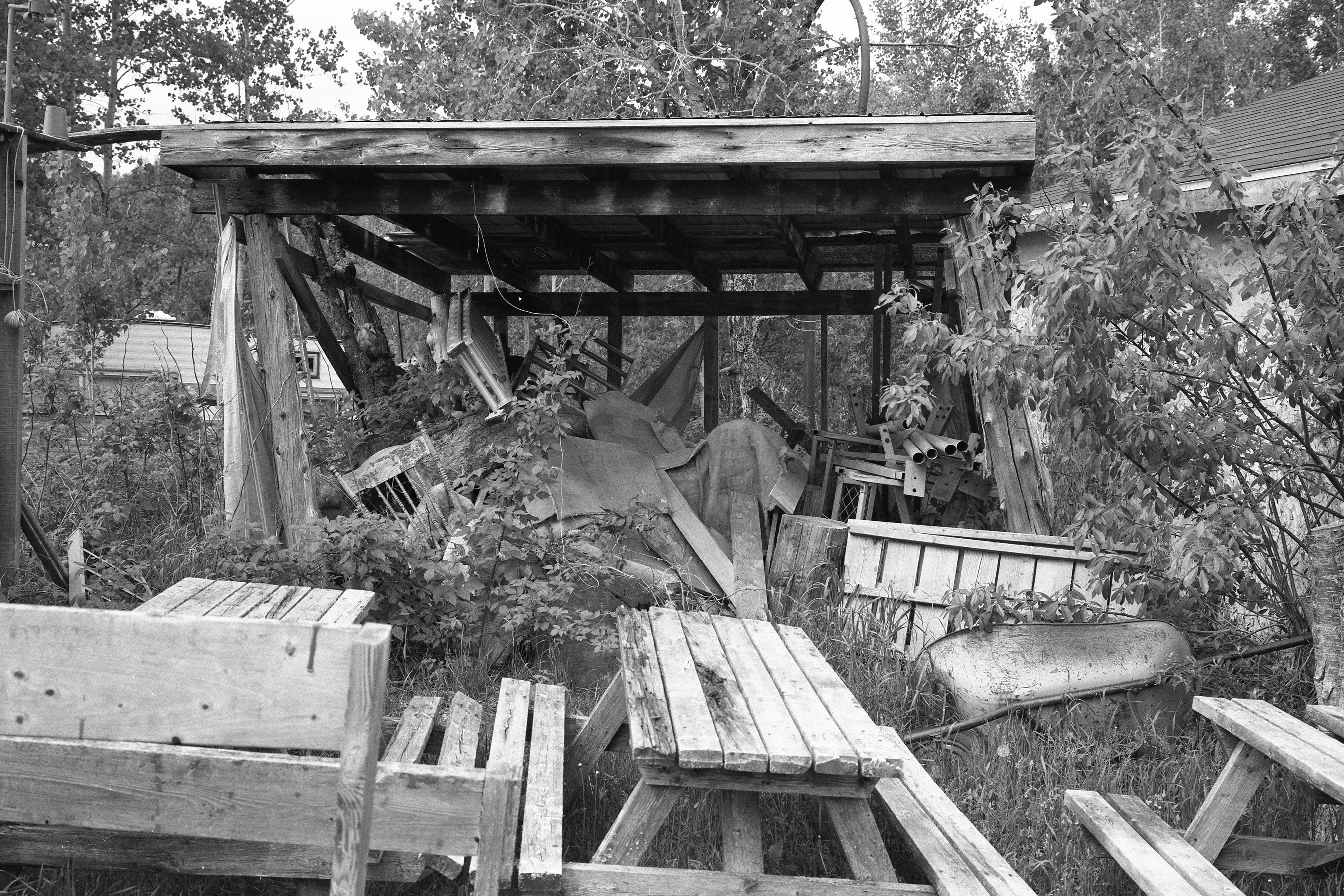
Midwest in Photos: Heap

“There is so little to remember of anyone – an anecdote, a conversation at a table. But every memory is turned over and over again, every word, however chance, written in the heart in the hope that memory will fulfill itself, and become flesh, and that the wanderers will find a way home, and the perished, whose lack we always feel, will step through the door finally and stroke our hair with dreaming habitual fondness not having meant to keep us waiting long.” – Marilynne Robinson, Housekeeping.

Photo by: Timothy Albon

|

No Comments

|

Interview: Robert Vaughan

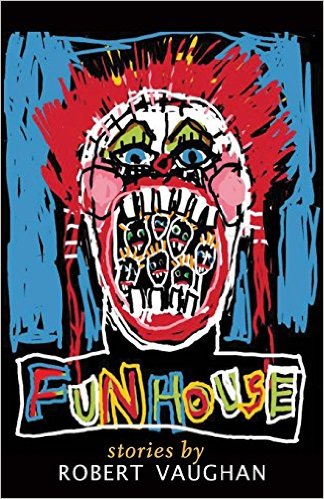
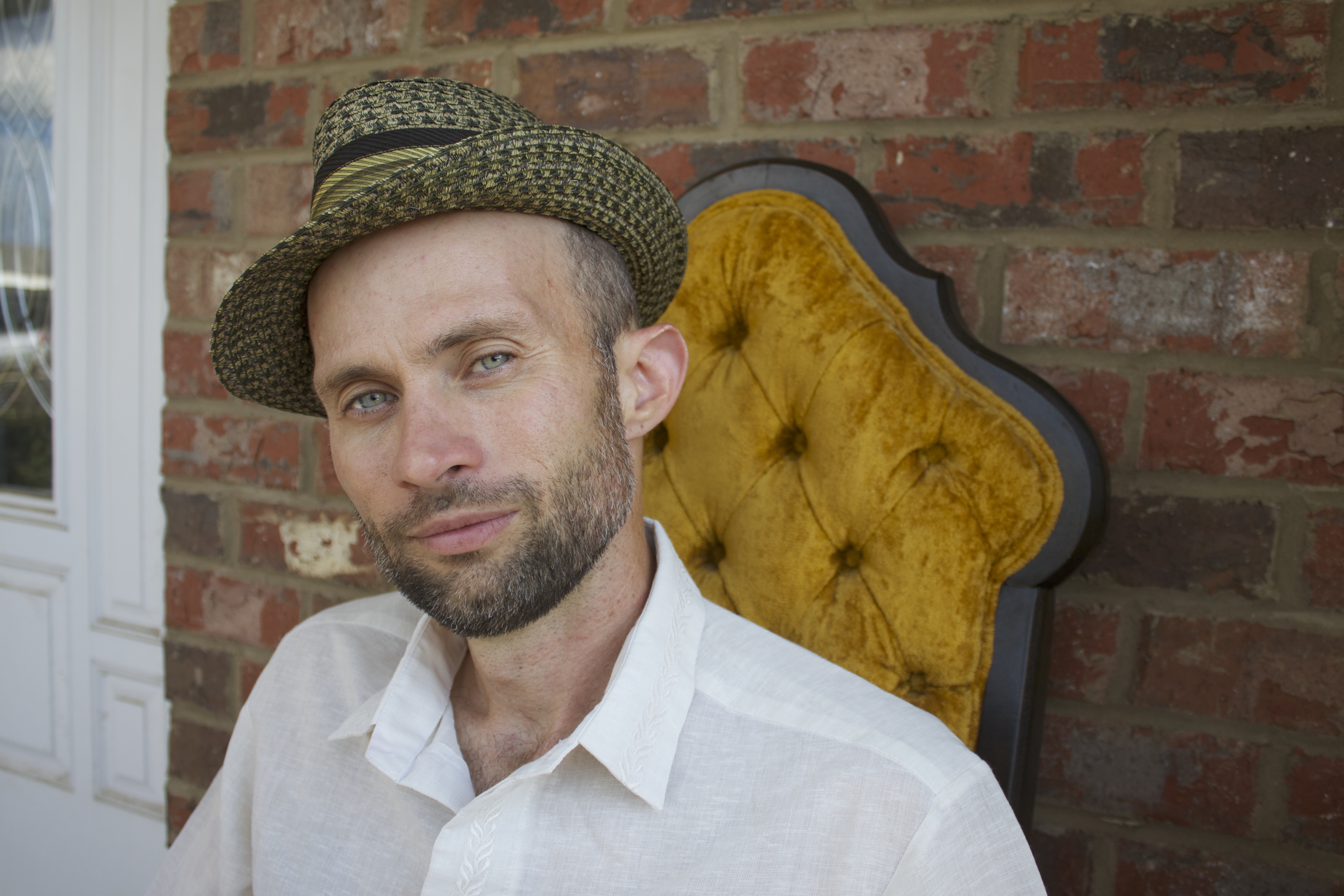
Midwestern Gothic staffer Audrey Meyers talked with author Robert Vaughan about his book FUNHOUSE, the rhythmic tone of his prose, letting the story tell you, and more.
**

Audrey Meyers: What is your connection to the Midwest?

Robert Vaughan: I moved to Milwaukee in 2003. It’s the longest I have lived in any one place, in the same house, since I was born. I’m from New York and have previously lived on mostly the East or West coast as an adult. And on Maui briefly. Milwaukee is a nice sized city, and has a large number of artists and writers. It’s the city that has made my writing “come alive,” or provided the conducive backdrop, or vessel in which my writing could emerge.

AM: How has living in Milwaukee impacted your writing style? What about Milwaukee inspires you to write?

RV: I write mostly in a studio in my house, but also have been part of a vibrant writing community called Red Oak Writers, and have lead a writing roundtable group for the past 12 years. On occasion, I like to write in local cafes, coffeehouses, or bars. Milwaukee has a plethora of these, and they are conducive to the stories I enjoy writing. Often you read or hear that Milwaukee is one of the most segregated cities in America, but there are places I like to hang out, (Riverwest, for example), that seem very integrated to me.

AM: FUNHOUSE reads like a collection of classic American memories written from a unique perspective. Your writing is packed with hard-hitting one liners that have the reader stop and consider the power of life’s little moments. Do you have any advice for developing a personalized style that resonates with a diverse readership?

RV: Thanks! My largest advice would be to write as often as you can, even if you aren’t necessarily working on any one particular story, or poem, or longer project. Just keep at it, and read as much as you possibly can, both in the genre you write, as well as outside that genre, too. Another thing you can do is to read for a literary magazine. I’ve done this many times in my writing career, and although it can be consuming, it helps guide one’s own personal style.

AM: Each segment of your book feels like a song on an album because your prose is connected by a rhythmic tone, bringing each individual piece together. What are your intentions for writing in this style?

RV: Again, that is really kind of you, to compare my writing to a musical origin or essence. I was in two bands, and went to college originally for music. I think this aspect of my work grows much more in the numerous edits of every single piece. Also it helps to read one’s work aloud, listening to the sounds and the sentence structure, the pitch and timbre.

AM: During the course of writing FUNHOUSE, was dividing the book into four sections a deliberate choice from the beginning, or did the idea develop as you wrote?

RV: The two middle sections of FUNHOUSE, “Another Brick in the Wall” and “DIVA”, were sections I’d started years ago, possibly as early as 2010. The first and fourth sections came about much more recently. I talked over the section components with Bud Smith, my publisher at Unknown Press, and he liked the idea of the four sections.

AM: How do the four sections — “Balloon Darts,” “Hall of Mirrors,” “Tunnel of Love,” and “Ferris Wheel” — relate to one another? Why did you decide to put them in this order? What was the overall process like for structuring FUNHOUSE?

RV: I am not quite sure how the sections within the book “relate” to one another. I’m intrigued to hear more about this from its reviews. The order came organically, once I’d assembled the majority of the material, and with help from Unknown Press. It always feels a little bit risky, and yet this is part of what makes a collection fun, overall. It’s the same way I like to write, incidentally- into the dark, without knowing where I am going. No maps.

AM: How would you describe the voice of narration in FUNHOUSE?

RV: I’d say it’s a book filled with multiple voices, all screaming to get out. All stuck in one huge amusement park. Probably not willing to share their cotton candy, and all fairly clueless.

AM: Where did the idea of alphabetizing a collection of kids in the “Another Brick in the Wall”/”Hall of Mirrors” section come from?

RV: One of my favorite childhood books is Edward Gorey’s The Gashleycrumb Tinies. It’s a stunning book, also A-Z, all told in iambic pentameter, in which each kid dies (“A is for AMY who fell down the stairs; B is for Basil assaulted by bears”. Etc.) And so, “Another Brick in the Wall” is an homage. My kids don’t die, and they are “stuck” inside the same classroom. And I chose flash fiction (free form) for each student.

AM: How do you believe a story should be told? In other words, how do you find direction when telling a story?

RV: I don’t think there is any one way to tell a story – typically the story tells you (the writer). One of the reasons I wanted to include the fourth section, “Ferris Wheels”, is because I do write more traditional length stories, which are included here. But especially in first draft, just let it out, get the words onto the page. It’s in the editing stages that you can “steer” or “guide,” slightly more. But not too much – it’s such a delicate balance.

AM: What do you enjoy most about writing flash fiction?

RV: The tempo, discovery, pace, getting in and out quickly. No rules, per se. The satisfaction of feeling as if you have nailed a great piece. It’s a rare, uncanny thing.

AM: What did you learn about yourself as a writer when creating FUNHOUSE?

RV: I learned it is okay to not know whether or not a book has “succeeded” or “failed” during the writing process. I can step off the proverbial ‘cliff,’ and land on my two feet (or maybe one).

AM: What’s next for you?

RV: I have nearly completed a full-length play. I’m working on an epistolary project. And I am teaching three workshops this year, so getting all of those organized and (hopefully) full! I’m also in one of those “gestation” periods. Not fallow, but also unclear. And that feels, for the most part, great!

**

Robert Vaughan teaches workshops in hybrid writing, poetry, fiction, and hike/ write. He has facilitated these at locations like Alverno College, UWM, Red Oak Writing, The Clearing, Synergia Ranch and Mabel Dodge Luhan House. He leads writing roundtables in Milwaukee, WI, and he’s an editor at (b)OINK zine. He was a finalist for the Gertrude Stein Award for Fiction twice (2013, 2014). He was the head judge for the Bath International Flash Fiction Awards, 2016. His short fiction, ‘A Box’ was selected for Best Small Fictions 2016 (Queen’s Ferry Press). Vaughan is the author of five books: Microtones (Cervena Barva Press); Diptychs + Triptychs + Lipsticks + Dipshits (Deadly Chaps); Addicts & Basements (CCM) and RIFT, a flash collection co-authored with Kathy Fish (Unknown Press). His new book is FUNHOUSE (Unknown Press). He blogs at www.robert-vaughan.com.

|

1 Comment

|

Interview: Abraham Smith

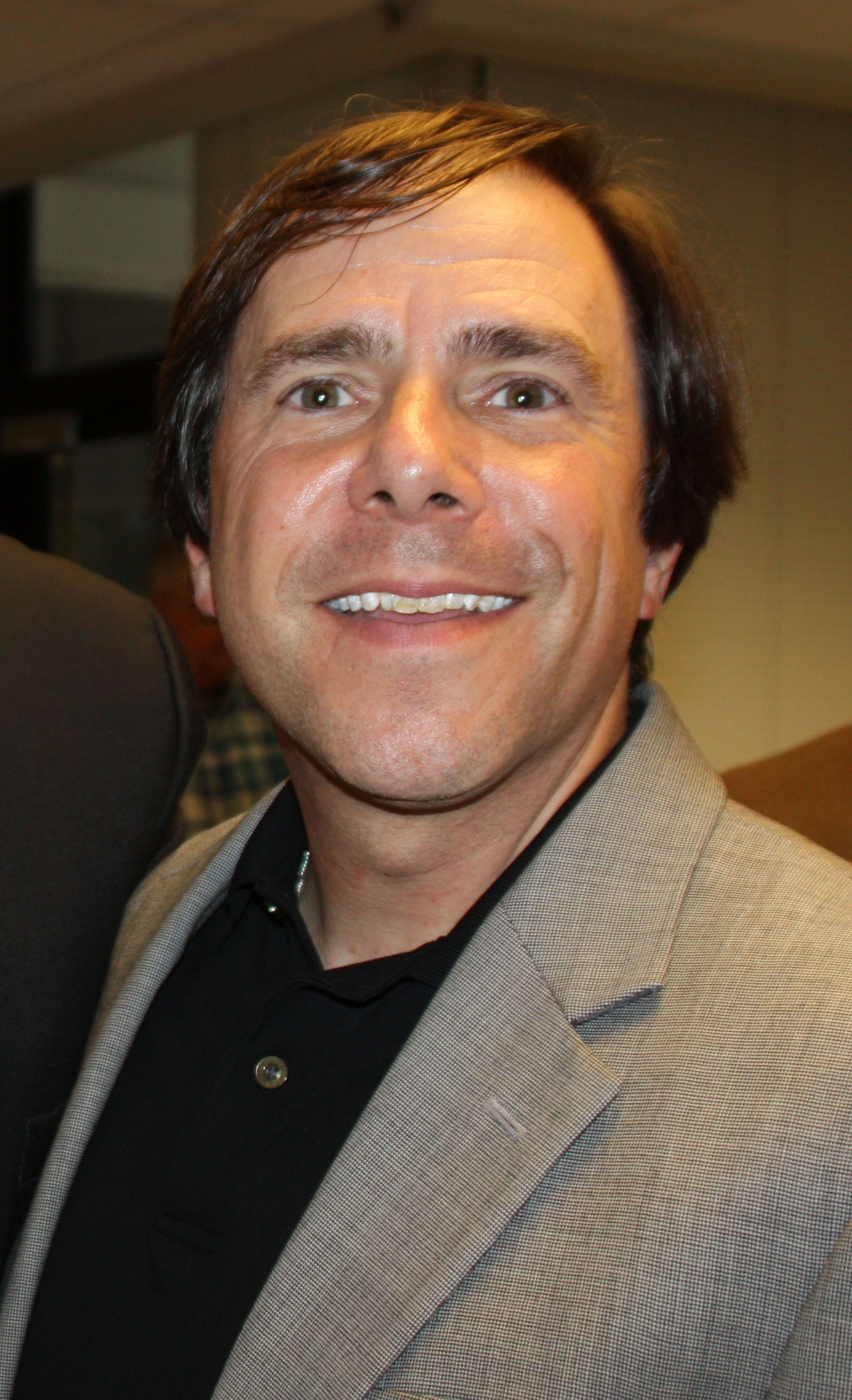
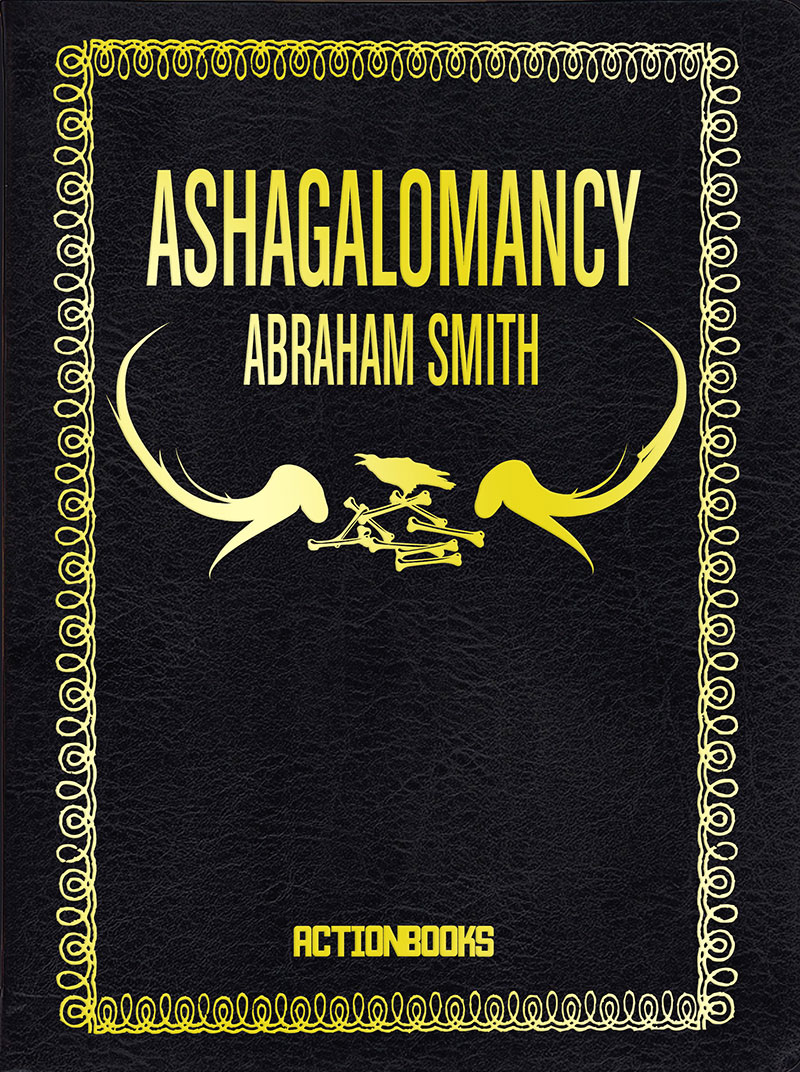
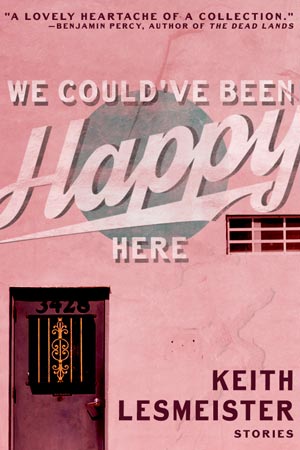
Abraham SmithMidwestern Gothic staffer Megan Valley talked with poet Abraham Smith about Ashagalomancy, the relationship between the performance and the page, writing with the body and more.
**

Megan Valley: What’s your connection to the Midwest?

Abraham Smith: i was born in madison, wisconsin; raised in rusk county and taylor county, wisconsin; did my undergraduate degree in archaeology at the university of wisconsin; plus I return to wisconsin every winter – to chop wood – and every summer – to help on the farm.

MV: Ashagalomancy, the title of your collection, is divination through animal bones — what are you trying to divine through your poetry?

AS: i am yanking my totemic animals – my favorite wild ones – into my family. i am reaching and yanking ’em pretty hard into the scrabble of woebegone, messy people. while i feel a little like a jerk for folding them into soap operas, i am indebted, and one might say wed – upon the weft of musical words – to ’em. the condition of devotion. of love. is the impetus for poetry. for me.

ashagalomancy

MV: I’ve seen several videos of your readings, and your performances are completely captivating. What’s your inspiration for this reading style and how do you incorporate that into your writing?

AS: way back when i tried for townes van zandt’s stoical nature; greg brown’s head wag; and chris whitley’s foot stomp. years later, i am sure the patinas of all three remain. but i have always been a squirmer up there on the stage. pretty sure i won a few speech contests when i was a kid because the farmer judges thought i was possessed – and feared my wrath should i not win. teehee. the performance and the page tip back and forth. i roar the poems – and the poems, unpunctuated, stream along i hope in a somewhat freshety style.

MV: How has teaching at the University of Alabama influenced how you approach your own writing?

AS: not sure that it has. on the other hand, teaching is a lot about cultivating listening spaces. and writing is a big ear – as much as it is a big pair of wriggling hands.

MV: You spend your summers as a farmhand in Wisconsin — how does this affect your writing?

AS: that is my writing. my writing is my body. and hauling my body there where i trap sound and let it ferment is key to my process. i absorb over summers. let things percolate. then reach and screech come the fall.

MV: How does splitting your time between Alabama and Wisconsin help shape your poetry? What does each place add that the other can’t?

AS: both are out-of-the way places. i appreciate the liminal spots i get into, here and there. all rural places elide. as i was saying, i turn into a butterfly net in summers; in falls i clip all the mesh in the net and pluck at it – lute-style – seeking song.

MV: The poetry in Ashagalomancy explores how our natural and man-made environments interact with each other. How does this relate the the idea of divination?

AS: that’s the point of all loosely or tightly spiritualized wordmaking. to doodle in the dusty. to pinch a mustard seed between lip and gum. how else get at the holy? one must loam truffle in the main.

MV: I’ve noticed you don’t use traditional capitalization, even in your emails. What’s the reasoning behind this?

AS: i used to say it was because i didn’t feel i had anything – through a MEGAPHONE – to say. but i don’t think that’s true. i know it’s not from laziness. i know it’s not from mimicry. at the end of the day, it suits me. and i am not sure why. as i say, i write with my body. and it feels good to my cells. good to my finger bones. good to my eyes. to write this way.

MV: What’s next for you?

AS: i have a forthcoming book about farming. i can’t say where yet. but when i can, i will indeed lift the MEGAPHONE to my lips and yodel that good news forth. i am working on a manuscript about cranes. they are high on my list of soarers. the whole human planet is coocoo for ’em. i am enjoying riding the myths and legends of old, all the while trying to glue a few new wings of my own to the deep old lore.

**

Abraham Smith is the author of four full-length poetry collections: Ashagalomancy (Action Books, 2015); Only Jesus Could Icefish in Summer (Action Books, 2014); Hank (Action Books, 2010); and Whim Man Mammon (Action Books, 2007). In 2015, he released Hick Poetics (Lost Roads Press), a co-edited anthology of contemporary rural American poetry and related essays; contributors include Michael Earl Craig, Juliana Spahr, G.C. Waldrep and Mei-mei Berssenbrugge, among others. His poems have appeared widely in journals and anthologies such as The American Poetry Review, jubilat, Fence, Denver Quarterly, Ecotone, and The Volta Book of Poets (Sidebrow Books, 2014). His creative work has been recognized with fellowships from the Fine Arts Work Center, Provincetown, MA, and the Alabama State Council on the Arts. Recently, he completed Destruction of Man, a book-length poem about farming; presently, he is at work upon a poetry manuscript about cranes – birds whose song and stature electrify him. He teaches at the University of Alabama.

|

No Comments

|

Upcoming Events – Keith Lesmeister / We Could’ve Been Happy Here

We have some great events coming up that our followers will want to check out! We hope to see you there!

We Could’ve Been Happy Here Book Tour

Keith Lesmeister has a series of events coming up for his debut collection of short fiction, We Could’ve Been Happy Here. Don’t miss out on these opportunities to meet him and hear about the collection that’s been receiving stellar reviews from Kirkus Reviews, Nickolas Butler, and Benjamin Percy.

Upcoming Events:

Saturday, September 23, 2017
Plot Twist Bookstore
Where: Ankeny, Iowa
When: 11:00 a.m. – 2:00 p.m.
Event info: here

Thursday, September 28, 2017
Visiting Writers Series at Mount Mercy University
Where: Cedar Rapids, Iowa
When: 7:00 p.m.
Event info: here
Also, don’t miss Keith’s Q&A session for the series at 3:30pm!

Friday, September 29, 2017
Midwest Writing Center Presents: Regional/National Poets at Rozz Tox
Where: All Senses Festival at 2108 3rd Ave, Rock Island, Illinois 61201
When: TBA
Event info: here
RSVP to the event on Facebook here!

Thursday, October 5, 2017
Book signing
Where: Buena Vista University
When: 7pm
Event info: TBA here

Saturday, October 7, 2017
Luther College Homecoming signing
Where: Luther College Bookstore, Decorah, Iowa
When: 11:00 a.m. to 2:00 p.m.
Event info: here

Saturday, October 14, 2017
Iowa City Book Festival
Where: TBA
When: TBA
Event info: TBA here

Wednesday, October 25, 2017
Book Signing
Where: Loras College in Dubuque, IA
When: 7:00 p.m.
Event info: TBA here

Thursday, October 26, 2017
Book Signing
Where: Western Illinois University in Macomb, Illinois
When: 7:00 p.m.
Event info: TBA here

Friday, November 10, 2017
Streamlines Conference
Where: Dubuque, Iowa
When: 7:00 p.m.
Event info: TBA here

Past Events:

Sunday, April 2, 2017
Reading with the Driftless Writers’ Group
Where: Milty’s Pub, Lansing, Iowa
When: 2:00 p.m.

Thursday, April 27, 2017
Final Thursday Reading Series
Where: Hearst Center for the Arts, Cedar Falls, Iowa
When: 7:00 p.m.
Event Info: here

Tuesday, May 2, 2017
Magers & Quinn Bookstore with Peter Geye
Where: Minneapolis, Minnesota
When: 7:00 p.m.
RSVP to the event on Facebook here!

Thursday, May 4, 2017
Pearl Street Books
Where: La Crosse, Wisconsin
When: 7:00 p.m.
RSVP to the event on Facebook here!

Monday, May 15, 2017
Prairie Lights Bookstore with Peter Geye
Where: Iowa City, Iowa
When: 7:00 p.m.
Event info: here
RSVP to the event on Facebook here!

Tuesday, May 16, 2017
Elgin Public Library
Where: Elgin, Iowa
When: 10:00 a.m.
Event info: find their website here and Facebook page here

Tuesday, May 16, 2017
Official Launch Party! Hosted by Dragonfly Books
Where: Pulpit Rock Brewery, Decorah, Iowa
When: 6:00 p.m.
Event info: here
RSVP to the event on Facebook here!

Wednesday, May 17, 2017
A Room of One’s Own Bookstore
Where: Madison, Wisconsin
When: 6:00 p.m.
Event info: here
RSVP to the event on Facebook here!

Friday, May 19, 2017
River Lights Bookstore
Where: Dubuque, Iowa
When: 5:30 p.m.
Event info: here
RSVP to the event on Facebook here!

Saturday, May 20, 2017
Beaverdale Books with Casey Pycior
Where: Des Moines, Iowa
When: 2:00 p.m.
Event info: here
RSVP to the event on Facebook here!

Sunday, May 21, 2017
The Bookworm with Casey Pycior
Where: Omaha, Nebraska
When: 1:00 p.m.
Event info: here

Monday, May 22, 2017
Indigo Bridge Books with Casey Pycior
Where: Lincoln, Nebraska
When: 7:00 p.m.
Event info: here
RSVP to the event on Facebook here!

Friday, May 26, 2017
Burlington Public Library
Where: Burlington, Iowa
When: 10:00 a.m.
Event info: here
Please be sure to register for the workshop ahead of time here

Saturday May 27, 2017
Burlington by the Book
Where: Burlington, Iowa
When: 11:00 a.m.
Event info: find their website here
RSVP to the event on Facebook here

Wednesday, May 31, 2017
McIntosh Memorial Library
Where: Viroqua, Wisconsin
When: 7:00 p.m.
Event info: here

Wednesday, June 7, 2017
Next Page Books
Where: Cedar Rapids, Iowa
When: 7:00 p.m.
Event info: here

Thursday, June 8, 2017
Revival Food Hall with Toni Nealie and Ben Tanzer
Where: Chicago, Illinois
When: 6:00 p.m.
Event info: here
RSVP to the event on Facebook here

Wednesday, June 14, 2017
McLean & Eakin bookstore signing
Where: Petoskey, Michigan
When: 2:00 p.m.
Event info: here

Thursday, June 15, 2017
Literati Bookstore with Alexander Weinstein and Marlin Jenkins
Where: Ann Arbor, Michigan
When: 7:00 p.m.
Event info: here
RSVP to the event on Facebook here

Saturday, June 24, 2017
“Why There Are Words” Reading Series with Sherrie Flick, Jane McCafferty, and Peg Alford Pursell
Where: White Whale Bookstore, Pittsburgh, Pennsylvania
When: 7pm
Event info: here
RSVP to the event on Facebook here

Thursday, June 29, 2017
Apostle Islands Booksellers with Peter Geye
Where: Bayfield, Wisconsin
When: 5:00 p.m.
Event info: here
RSVP to the event on Facebook here

Saturday, July 1, 2017
Beagle & Wolf Books book signing
Where: Park Rapids, Minnesota
When: 12:00 p.m.
Event info: here

Wednesday, July 12, 2017
Reading and Music with Jeni Grouws and Jake Manders
Where: Driftless Books & Music, Viroqua, Wisconsin
When: 7:00 p.m.
Event info: here
RSVP to the event on Facebook here!

Saturday, Just 15, 2017
Nebraska Book Festival
Where: Lincoln, Nebraska
When: 9 a.m. to 6 p.m.
Event info: here
RSVP to the event on Facebook here!

Wednesday, July 19, 2017
The Hook — Drop the Mic reading series
Where: Indian Creek Nature Center, Cedar Rapids, Iowa
When: 7:00 p.m.
Event info: here

Thursday, July 20, 2017
The Arbor Bar with N.J. Campbell and others
Where: Fairfield, Iowa
When: 7:00 p.m.
Event info: here

Tuesday, August 8, 2017
City Stacks Books & Coffee with Erika T. Wurth
Where: City Stacks Books & Coffee, 1743 Wazee St. #100, Denver, CO 80202
When: 7:00 p.m.
Event info: here
RSVP to the event on Facebook here!

Wednesday, August 16, 2017
Happy Hour Book Group discussion hosted by Decorah Public Library
Where: Rubaiyat Restaurant
When: 5:00 p.m.
Event info: here
Find out more about the venue here

Thursday, September 14, 2017
Why There Are Words series
Where: Studio 333 in Sausalito, California
When: 7:00 p.m.
Event info: here

|

1 Comment

|

Contributor Spotlight: Robert Young

Robert Young’s piece “11 Useless Kitchen Appliances: Crock Pots” appears in Midwestern Gothic Winter 2017, out now.

What’s your connection to the Midwest, and how has the region influenced your writing?

My connection to the Midwest is something that’s deeply ingrained in my character, but also something I’ve only recently begun thinking about. I’ve spent my whole life here: born and raised in Fort Wayne, IN, went to college in Muncie, IN, never going far. As I talk with writers and people who come from other parts of the country, I find myself seeing the ways that place and hometown inform personality more and more. The Midwest, like anywhere, is more than just a place. It’s a spirit. It’s a character and a personality unto itself, and when you spend as much time as I have in a single place, in seeps into you. I think the Midwest has made me and my writing more subdued, quiet on the outside, but with a lot going on under the surface, which I think is emblematic of the region as a whole.

What do you think is the most compelling aspect of the Midwest?

I think what interests me most about the Midwest is how undefined the region is. All the states are so different in a variety of subtle ways, and yet they get lumped together so often. Heck, it seems like sometimes there’s debate about which states can even be considered Midwestern.

How do your experiences or memories of specific places—such as where you grew up, or a place you’ve visited that you can’t get out of your head—play a role in your writing?

I think that I, like many other writers, use locations from my youth or my memories as settings for my writing—a friend’s basements, a small wooded area near my parent’s house, an airport, etc. Sometimes you visit a place and you just got to write a poem about it, or set a flash piece there. As I said earlier, I think places are characters unto themselves with their own personalities. I think, beyond just setting a story in a particular place, I strive to have the personality of a that place shine through.

Discuss your writing process — inspirations, ideal environments, how you deal with writer’s block.

I always always listen to music when I’m writing. I like having a melody that I can lose myself in. I try and just write loose and let words flow once I get in the groove, and music can help me get there. Sometimes, when I’m really blocked, I’ll write a poem using only words that appear in the songs I’m listening too—pick a word out of a song, skip to another song, pick out another word or two, or a phrase even. At that point I’ve got a line or two to work with and I go stream of consciousness from there. In terms of writing environment, I don’t have an ideal place, but I do need to be alone.

How can you tell when a piece of writing is finished?

Nothing’s ever really finished, but I think I consider something finished when I’ve done so many drafts and worked on something so much that I’m sick of looking at it. You can drive yourself crazy with editing, especially if you’re like me and you worry over the finite details endlessly. At some point you need to just stop, look at your piece, and decide that it’s good enough.

Who is your favorite author (fiction writer or poet), and what draws you to their work?

This question is something I agonize over, and the answer can change from week to week. Off the top of my head: I’ve always loved Kurt Vonnegut, fellow Hoosier, but in terms of poets I love Sharon Olds’ The Gold Cell, Rilke’s The Duino Elegies, and have recently gotten into Emily Dickinson. I also like a lot of genre fiction as well, stuff like Stephen Donaldson’s Thomas Covenant series, Frank Herbert’s Dune, Ursala Le Guin’s The Lathe of Heaven or The Left Hand of Darkness, etc.

What’s next for you?

Right now I’m working on a chapbook manuscript. It’s going to be a collection of poetry, prose-poetry, and flash fiction with unifying plot and character. I’ve also got some flash fiction forthcoming in The Evansville Review.

Where can we find more information about you?

I’m active on Twitter (@rjyoung1174), which is where you can also find a link to my website. I’ll also be at AWP 2017 so maybe I’ll see you there.

|

1 Comment

|