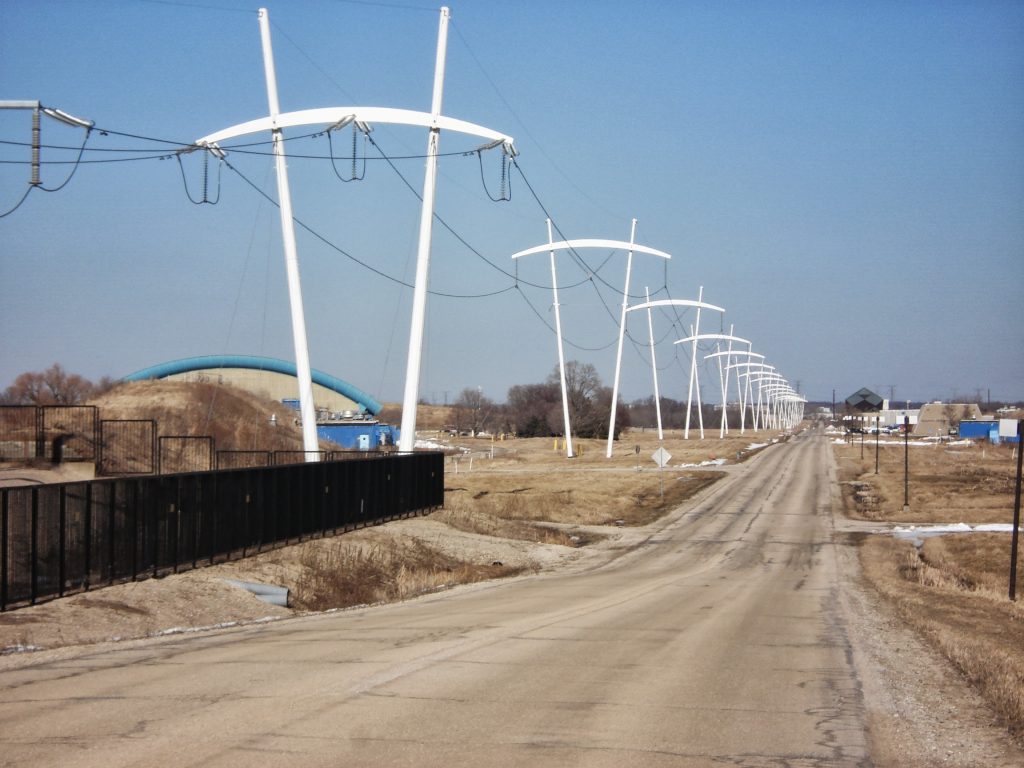
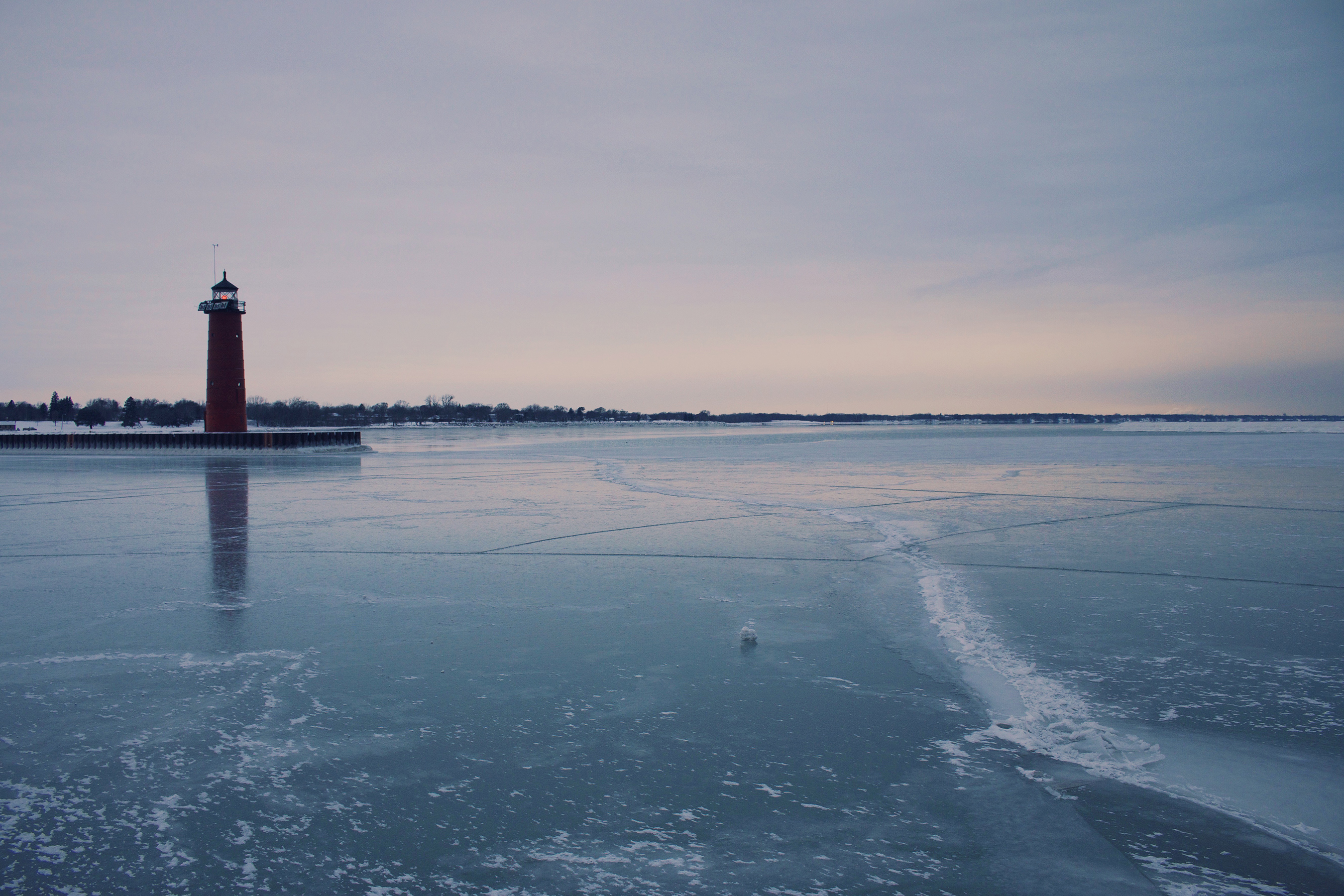
Midwest in Photos: Aurora, Illinois (#1)

October 14th, 2017

“There are those who speak with the dead, / like radio waves from every war / bouncing around the stratosphere, / never alone” – Jason Arment, “VA Mental Health Waiting Room,” Midwestern Gothic Winter 2017.

Photo by: Leah Angstman

Interview: Jacquelyn Vincenta

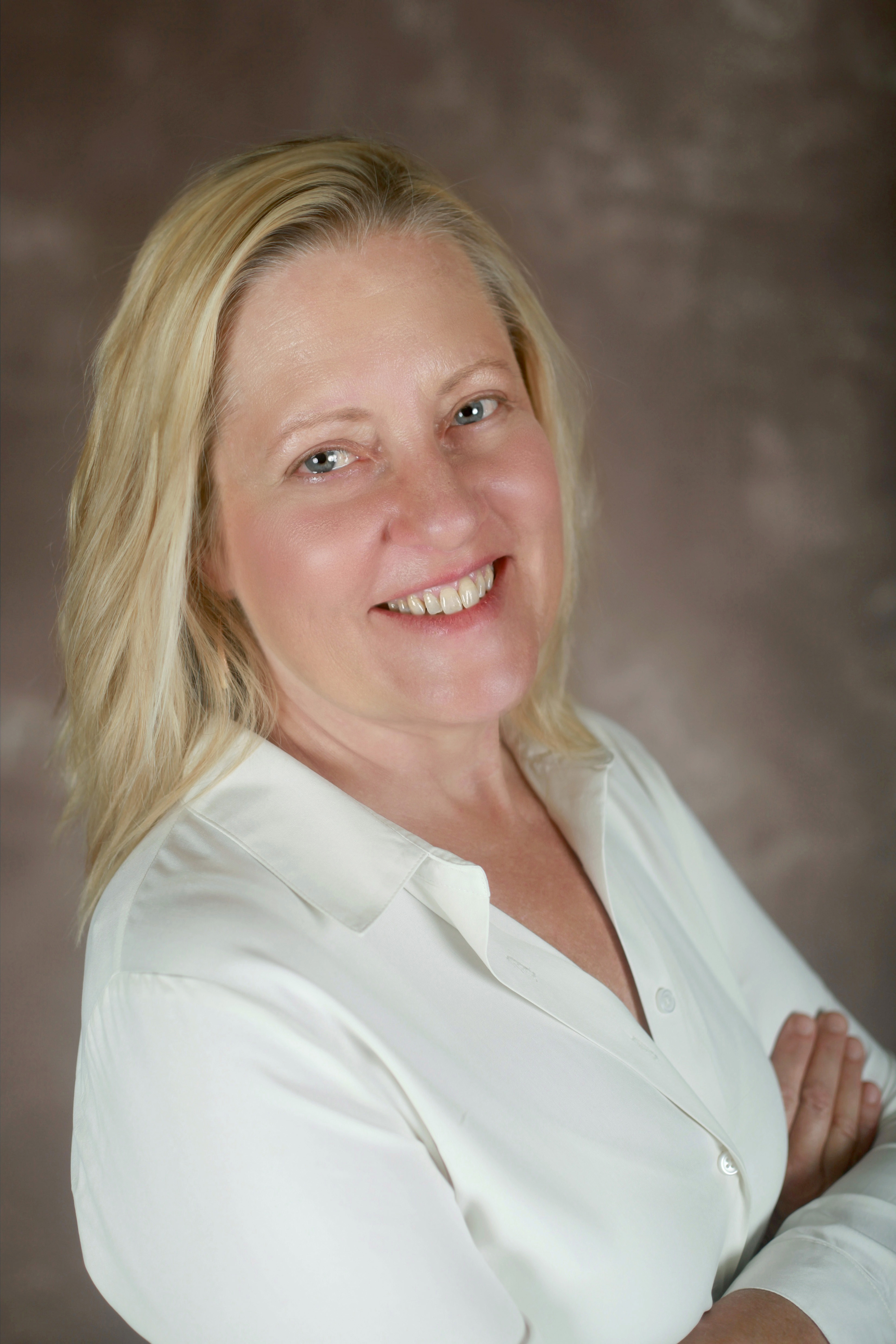
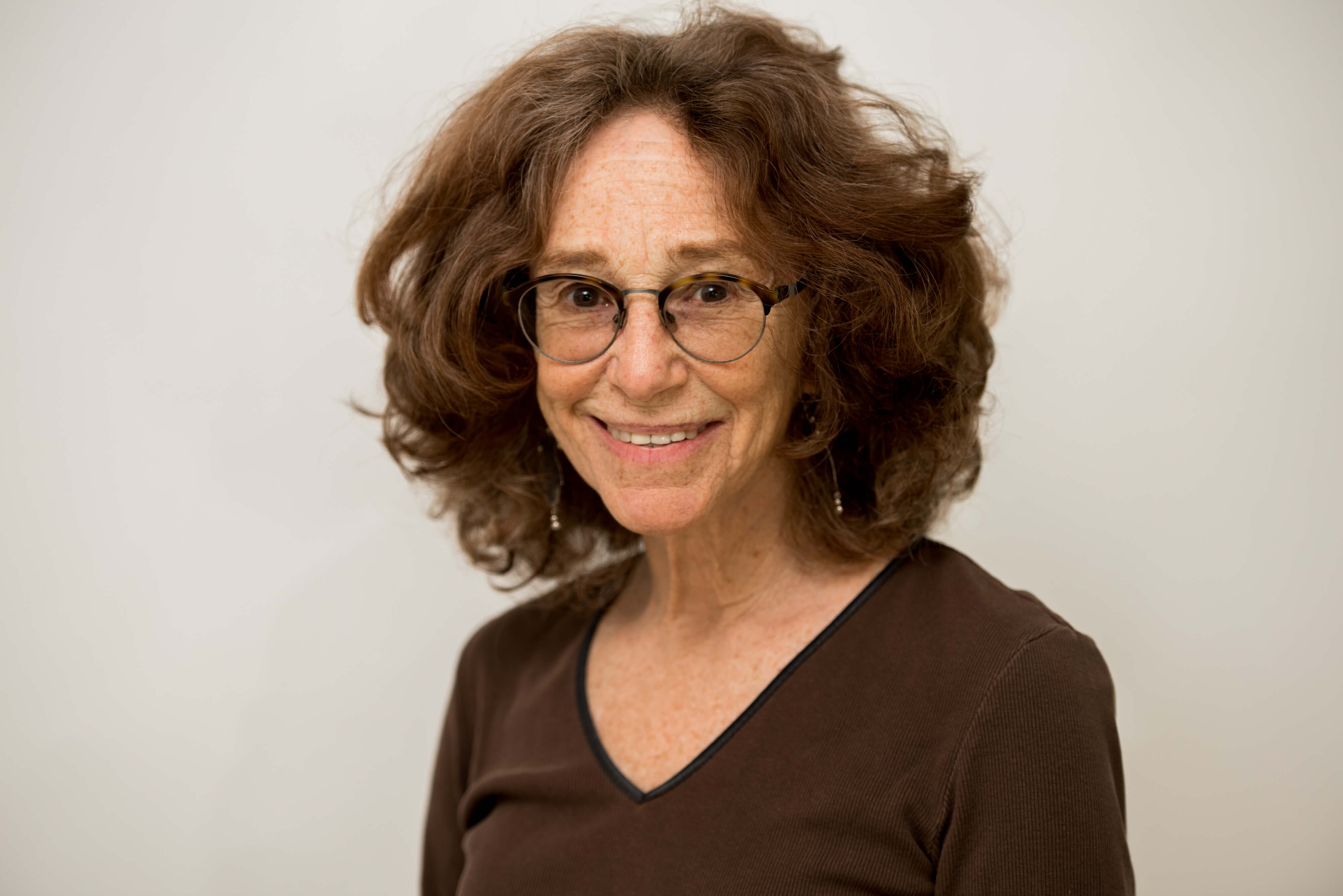
Jacquelyn Vincenta author photoMidwestern Gothic staffer Kathleen Janeschek talked with author Jacquelyn Vincenta about her book The Lake and the Lost Girl, the intimacy of poetry, piecing together a mystery, and more.

**

Kathleen Janeschek: What’s your connection to the Midwest?

Jacquelyn Vincenta: I grew up in a suburb of Washington, D.C., and left for college in Iowa City without ever having visited the Midwest beyond Ohio. As I crossed the Mississippi River into Iowa for the first time, I unexpectedly felt like I was coming home, and I loved every aspect of my years there. After college I lived in Louisiana, Texas, Virginia, back in Maryland for a time, and then sought out the Midwest again, this time the Great Lakes area. Michigan’s west coast completely captured my heart and I have lived within an hour of it for over half my life now.

KJ: You’ve lived in a variety of places over the years—what drew you to settle in the Midwest?

JV: The balance of water, agricultural land, wilderness, orchards, open space, and interesting human communities was enchanting to me from the start, and continues to holds me here. It’s inconceivable to me now to think of leaving this place, and when I spend any time in areas where the human presence overwhelms my ability to feel close to the natural world, I miss my home in the Midwest deeply.

KJ: Lake Michigan features heavily in your novel, The Lake and the Lost Girl. How does the lake function as a force in both your fiction and your life?

JV: In The Lake and the Lost Girl Lake Michigan is a force of both danger and possibility, providing Mary Stone Walker with companionship, hope, inspiration, and challenge, while it also beckons her toward a different future. The boatbuilder, Jack Kenilworth, thrives on the joy the lake brings him on a daily basis, and he is linked by it to his father and grandfather, in a lineage of men who relied on the Lake for sustenance. My teenage character, Nicholas, goes there for artistic inspiration and relief from the tension of his family. The Lake draws and holds people, yet always remains a force larger and more mysterious than we can fathom, thus it provides balance for our nervous systems and represents the unknowable aspects of life. As I answer this question, I am also struck by the transformative effect of the way the lake reveals light to us. In my own life the lake and its variations of light are one of Lake Michigan’s most deeply moving aspects. The fact that it’s hard to explain how this works inside us illustrates how the lake functions in my life: It connects me to aspects of myself I might not experience without it.

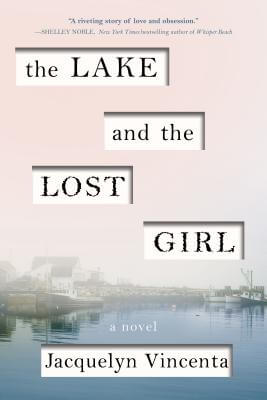
The Lake and the Lost Girl book cover by Jacquelyn Vincenta

KJ: A family in crisis is at the heart of this narrative. How does your own family life influence your writing?

JV: The family in crisis at the heart of the novel is also the potent seed that generated a full-length narrative. I experienced a family dynamic with some shared characteristics: denial of realities, unreasonable hope that unhealthy relationships would just heal themselves, and emotional and physical violence that caused constant undercurrents of fear and self-doubt among the non-violent members. I wasn’t sure I would be able to write “accurately” about it, portraying the types of problematic family exchanges that I have witnessed and been part of, but in fact the scenes unfolded with the fluency of something long memorized.

KJ: Your story features not one, but two fictional writers. Did you encounter any difficulties when writing two different narratives about writing?

JV: Now that you mention it, no, I didn’t encounter any difficulties with this. I wonder if that’s because writing is something that I imagine to be a natural part of everyone’s relationship with the world, an extension of their internal and external dialogue with life. Writing is not a part of every person’s life, of course, but self-development and self-expression are. But distinctly different for each person, from the way they see to the way they feel about their medium.

KJ: Furthermore, it is Mary Stone Walker, the poet, that the story revolves around. What made you want to write about a poet and not a novelist like yourself?

JV: I admire poets and many of their works resonate like timeless songs through our literary inheritance. There is something so intimate and romantic (sometimes negatively so) about the way the poet sees the world and the unique and fleeting glimmers of it that she reflects back to others, across time. I suspect that if one were inclined toward falling in love with a dead writer and developing an obsessive fantasy about her—as Professor Frank Carroll was—it might be easier if she were a poet than a novelist, partly because you could imagine that lyrical intimacy shared with the absent poet. From a novelistic point of view, it is an important part of the plot that she left fragments of poetry behind, hiding lines and verses that were found years later, and hidden fragments of poetry make more sense and are potentially more beautiful than small bits of prose.

KJ: What do you think is the most important element in crafting a mystery?

JV: I am still learning the answer to this question. But it seems to me that one of the most essential and yet most difficult elements in crafting a compelling mystery is to bring the secrets at play within the story as close to the surface as possible without anyone fully understanding them for what they are until the end. When these motivating, disruptive energies are present but not revealed they should give rise to words, behavior, and intriguing events that drive the story logically forward, even without the full truth of them being available to the reader… and yet we feel them there so that when the facts are all made clear, they resonate back through the tale. One of the deepest pleasures of reading a mystery is that experience, as you complete it, of reviewing the tale with newly enlightened eyes.

KJ: Each chapter of your novel, The Lake and the Lost Girl, features a few lines of verse from various poets. How did you choose these lines?

JV: The quest for lines of poetry by American female poets of the same era in which fictional Mary Stone Walker lived was extremely interesting. There are a handful of women poets we run across commonly, but most of the poets I found were less well known. I had to search online and in specialized anthologies and obscure volumes not available at the library, writing down verses that seemed like they might provide an interesting complementary “note” for a theme or scene in my novel, and I collected many more than I used. I discovered poets and volumes of poetry I had never heard of, including one exquisite poem I used a few lines from but for which I could never track down information about the author (“Not Again,” by Mildred Amelia Barker). Partnering poetry with my chapters based on intuitive connections was an aesthetic and emotional puzzle.

KJ: Who is a poet that has inspired you most?

JV: The Russian poet, Anna Akhmatova, of whom it has been said that she has captured in her poetry the very land and soul of her country, and that feels true to me when I read her work. She paid a high price (she was a poet during the Bolshevik Revolution and beyond) and is inspiring as a strong woman as well as a poet. She was amazing, and I believe that all the Akhmatova poetry you might ever read had to be memorized by her because she had to destroy the evidence of her honest subversion of oppression.

KJ: You previously worked as police beat reporter—how has that experience shaped your fiction?

JV: I jumped out of college and into my Louisiana reporting job from a highly sheltered life, and learned quickly that there are a lot more characters, alarming and fascinating stories and lifestyles in the world than I had any inkling of. I also had some up-close exposures to extreme corruption through that job, and again, I had no idea such things were real, as embarrassing as that is to admit. A thick blindfold was torn away—I saw stories everywhere in the structure of life after that.

KJ: What’s next for you?

JV: Thank you for asking. In fact, thank you for asking all of these questions—they are extremely intelligent and interesting.

I am currently working on another novel, and this one also happens to include the presence of Lake Michigan, troublesome secrets, and a few characters wrestling with loss and love. Events from the past have a role in this narrative as they do in The Lake and the Lost Girl, and so far I am hypnotized by the whole process of listening to this tale ascend from nothingness onto my page.

**

Jacquelyn Vincenta began her writing career as a police beat reporter for a daily Louisiana newspaper. She established and acted for many years as managing editor for a publishing company specializing in international trade issues. She lives in Kalamazoo, Michigan, where she focuses on writing, environmental projects, family, friends, and nature.

|

No Comments

|

Contributor Spotlight: Nick Caccamo

Nick Caccamo author photoNick Caccamo’s story “Transubstantiation” appears in Midwestern Gothic‘s Summer 2017 issue, out now.

What’s your connection to the Midwest, and how has the region influenced your writing?

Born and raised in Rockford, Illinois, a mid-sized Rust Belt city in seemingly perpetual decline. Despite its flaws, I have fond memories of it from growing up. My family still lives there, so I visit often. I’ve lived my whole life in Illinois; undergrad at University of Illinois in Champaign, grad school in Chicago. I work in downtown Chicago and live in the suburbs. My wife and her family are from Illinois as well. I suppose it’s influenced my writing because it’s all I’ve ever known—the places, the people. I can’t imagine living anywhere else. Everything I write is set in the Midwest. Trying to write a story set in California or New York would be as difficult for me as writing science fiction.

What do you think is the most compelling aspect of the Midwest?

I find many things compelling about the Midwest. I think most people tend to view the Midwest as pretty homogeneous, but there are many extremes in the Midwest, in terms of people, climate, geography. We have major metropolitan areas like Chicago, which can be indistinguishable from the large cities on the coasts. But drive an hour or more outside of the major cities, and you’re surrounded by flat, empty, desolate nothingness (and corn). We have oppressively hot, humid summers, and brutally cold winters. In the large cities, you’ll find incredible diversity among the population, while in the exurban and rural areas, the people tend to be more reminiscent of the “stereotypical” Midwesterner.

I also find it compelling that the Midwest is the only region in the U.S. where the population is actually shrinking. Each year, populations decline in both urban and rural areas. Midwesterners are fleeing the Midwest for the South and the coasts. Houses and buildings become abandoned and fall into disrepair, businesses fail, industry shutters. The region as a whole, to me, feels as if it is slowly decaying or receding, becoming deserted. What will it look like twenty to thirty years from now? I hope to stick around and find out.

But what I find most compelling is that while an outsider may view the Midwest as being the “real America” that politicians refer to, having “small town” or “main street” values, there’s a lot more under the surface. Drive through any typical small Midwestern town and you’ll find the local diner, hardware store, mechanic, bank, and friendly people who seem to exemplify the good, honest, hard-working stereotype of the Midwest. But spend enough time there and you’ll find the darker aspects as well—Midwestern small towns suffer from meth and opioid addiction, chronic joblessness due to the local industry closing up shop, and depopulation, I always think back to the opening scene of the David Lynch’s Blue Velvet, which opens with long shot of a perfectly manicured suburban lawn, but then slowly zooms into the grass to ultimately reveal an insect infestation. I find it symbolic of the social rot underlying some of small town Midwestern America. I think most of my stories tend to focus on this aspect of the Midwest—something off or sinister or grotesque beneath the wholesome outward appearance.

How do your experiences or memories of specific places—such as where you grew up, or a place you’ve visited that you can’t get out of your head—play a role in your writing?

Most of my stories are based on something I’ve observed, witnessed, or experienced, at least tangentially. Chicago is a setting for many of my stories, and places that I frequent or neighborhoods where I used to live often play a role in my writing. That doesn’t necessarily mean that a story has autobiographical elements; it could be a simple image that I encounter which may inspire a story. Something as simple as an ice cream truck on a suburban street on a hot summer day near my home can be an influence, as with my story in the current issue of Midwestern Gothic. The experience or memory doesn’t need to be profound or significant. Sometimes just the image or memory itself is enough to conjure something much more.

Discuss your writing process—inspirations, ideal environments, how you deal with writer’s block.

I’m not sure there’s really any “process” involved. Between work and chasing my four-year-old son around, there’s very little time for writing. I write whenever I can find time. Sometimes early in the morning while I’m on the train on my way to work, struggling to type a few sentences on my phone screen. More often, I write very late at night after my wife and son are in bed, usually after midnight, maybe for an hour or so, sitting in the dark. Preferably, I will have a beer or two while I write, and will be listening to some sort of ambient/drone/noise music at ear-bleeding levels on my headphones (lately, the album Going Places by Yellow Swans) in order to establish the appropriate level of existential dread necessary to create the best fiction.

I don’t really stress out about writer’s block. I don’t give myself deadlines to finish a story, so I am fine whether it takes me a week or two years to finish a piece. It is not unusual for me to go months without writing, followed by a couple weeks or a month where I will write every night. I write when I feel like I have good ideas. If I don’t have good ideas, I simply don’t write—I never try to force it.

How can you tell when a piece of writing is finished?

For me, it’s finished whenever I get tired of trying to “finish” it. I think any writer probably has the same problem of feeling like a story is never really finished or polished enough. And personally, I hate editing and refining my work, even though I recognize that the story needs it. By the time I’m done putting the words on the page of the first draft, I’m often ready to be done with it. I force myself to edit and distill what I’ve written, but it’s a slow, painful process. Eventually, I just decide I’m done once I’ve had all the reworking that my stomach can stand.

Who is your favorite author (fiction writer or poet), and what draws you to their work?

My favorite authors of all time would be David Foster Wallace, Don DeLillo, and Donald Barthelme. Each of them had such a unique style and could craft the most ingenious and beautiful sentences. As for more contemporary authors I’ve been reading recently, I really enjoy Blake Butler’s work—like the other authors I mentioned, his way with language and the way he constructs his stories is endlessly impressive (and unrelentingly dark). Ben Lerner’s 10:04 is one of the best novels I’ve read recently—he seems like the rightful heir to DeLillo. I also recently finished Does Not Love by James Tadd Adcox, which I read in just a couple sittings. The fragmented vignettes coupled with the sparse and clinical dialogue perfectly suited the story, and I can’t wait to read whatever he puts out next.

What’s next for you?

Well, I’ve got the weekend off, and then I go back to work Monday through Friday, for the foreseeable future, probably for the next 40 years or so. Over the span of those decades, I’ll probably have a beer or two, watch the Cubs game, mow the lawn when I have to, catch a movie, and will inevitably disappoint, impress, annoy, excite, and frustrate certain people every once in a while. Maybe I’ll write another few stories along the way and attempt to get them published here or elsewhere.

Where can we find more information about you?

I suppose I am destined to remain obscure and mysterious for now. This is the first piece I’ve published, so I have no other prestigious literary journals to which I can refer you. I have no website or blog. I have a Facebook page where I post a presumably excessive amount of photos of my son, a Twitter handle that I never use, and an Instagram that I don’t do whatever it is one does on Instagram. Otherwise, you can probably find me chasing my son down the street as he learns to ride his bike faster than I can run.

|

No Comments

|

Midwest in Photos: 10

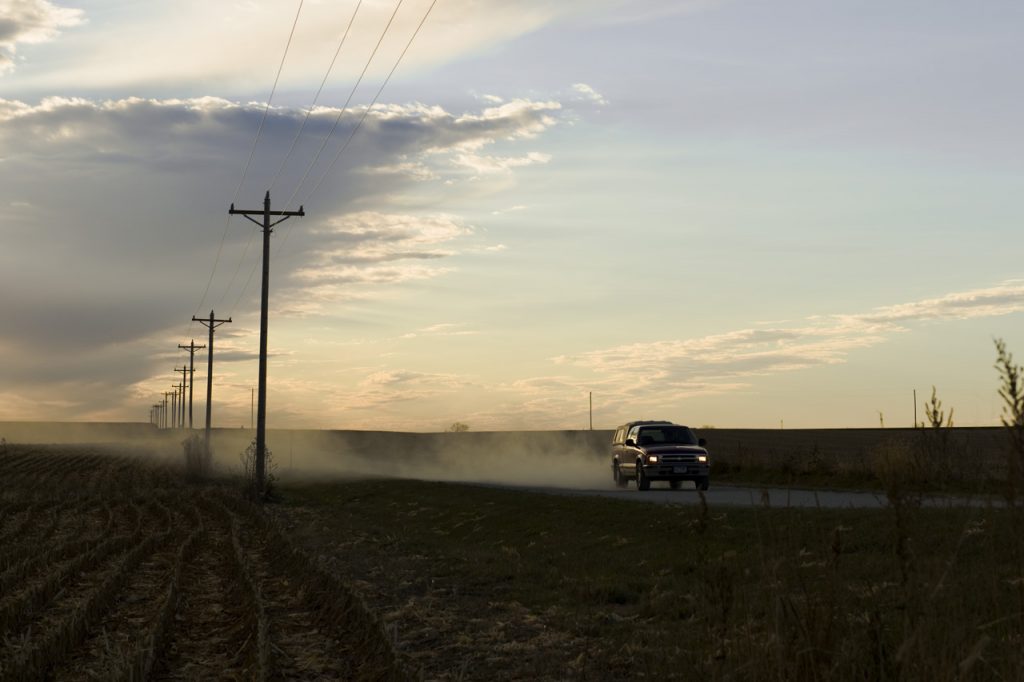
“And soon a new brain will be ashamed of this current one, but instead of writing another story to justify my failure, my future self will memorialize his shame with silence because silence is what remains when the music stops, and silence is what will remain of me when I stop writing, and I am afraid of silence, and I am still afraid, but I will not always be.” – Kaj Tanaka, “If I Had My Way This Story Would Be a Song,” Midwestern Gothic Winter 2017.

Photo by: Paul Carpenter

|

No Comments

|

Interview: A. A. Balaskovits

A. A. Balaskovits author headshotMidwestern Gothic staffer Kristina Perkins talked with author A. A. Balaskovits about her book Magic for Unlucky Girls, why fairy tales are the most dangerous stories, female monsters, and more.

**

Kristina Perkins: What is your connection to the Midwest?

A. A. Balaskovits: I was born and raised in the Chicagoland area (often, I say Chicago, but people from the actual city are quick to correct me). From there, I went to undergrad in Iowa, did my master’s in Ohio and my Ph.D. in Missouri. I live in the South now, but I miss the Midwest dearly. People are very enthusiastically polite in grocery stores down here. I miss shopping without expressing how my day is going every aisle.

KP: How does your relationship to the Midwest impact your writing?

AAB: I’ve come to understand more about the Midwest having lived outside of it. Down here in the South, everyone is polite, everyone waves at everyone else, and small talk is an art form. There’s a bit of that in the Midwest as well, in certain parts, but the Midwest is, to me, a land of people whose lives are defined by their work. They toil and, historically, have had jobs that saw down your bones through continuous and difficult labor. We’re polite, but we’re a realistic folk, and there’s a dark humor—a gallows humor perhaps—that is as unpredictable as the weather. I think that sensibility has been a major impact on my writing. A lot of my work is pretty dark, but it’s tongue-in-cheek as well.

KP: In your recent debut collection, Magic for Unlucky Girls, your stories span time and space, jumping from modern suburbias to ancient castles to American farmlands. How does your understanding of place—and, with it, your senses of belonging, familiarity, and adventure—influence these settings?

AAB: I have a very at-odds take with setting. A lot of other writers I admire use it to a great and often astonishing degree, but I tend to use it as “this is right for this story.” For the stories that do take place in a fairy tale world, that ever-so-wonderful once-upon-an-unspecified-time (but it’s totally in the past) I wanted to specifically comment on that genre, that kind of story. For the ones that take place in our farmlands or in suburbia, those stories comment on how the stories from our past still resonate within our communities today. We’ve never really escaped from them. If we think about fairy tales, they were told orally at first, written down, and then constantly rewritten to fit the expectations and mores of the time and place they were being retold. So, on one hand, I’m nodding to the past and its influence on me, but I’m also centering these stories in our world today because they reach out from the past and hold tight to our necks.
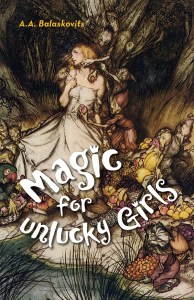
Magic for Unlucky Girls book by A. A. Balaskovits

KP: Magic for Unlucky Girls plays beyond the limits of fairy tale, twisting, distorting, and breathing fresh air into the genre. What draws you to fairy tale, as a genre? What do you see as the purpose of the genre? How does your work contribute to, complicate, or alter this purpose?

AAB: The purpose of fairy tales is two-fold: They’re entertainment, but like all forms of entertainment, they teach a lesson. There is a heavy moralistic imperative to them. Unlike other stories, fairy tales are very decisive: Things are good or they are evil, and complexity is often hard to come by. They create a very one-dimensional world, and considering what an incredible influence they have held onto our cultural mindset, and continue to have, I think they are the most dangerous stories ever told. For the most part, my work in this collection has been to expose how dangerous they are, as well as twist them so they have more—and perhaps this is a strange word for it—realistic consequences. The men aren’t always gallant heroes or evil incarnate, and women are not passive princesses or clever girls waiting to be rescued. We’re all somewhere in between, but once you add magic to it, all hell breaks loose.

KP: Breaking from the genre’s tradition of one-dimensional heroes and archetypal villains, the female characters in Magic for Unlucky Girls are remarkable in their complexity: They are equal parts strong and malicious, independent and violent. In a previous interview, you note that this collection was driven, in part, by a desire to “explore women as monsters.” What inspired this desire? What do you seek to accomplish by embracing this side—the monstrous, the vindictive, the viscous—of your female characters?

AAB: We don’t really get to be monstrous, not really, in our daily lives. It’s unforgivable, for a woman, to break from archetypal roles, be it mother, daughter, lover, wife, etc. Go to any comment section of an article about a woman who broke the social bonds of their role and you’ll see how understanding we are about it. There is a precedent, of course, for the woman monster: Baba Yaga, Charybdis, Medusa, Lilith, the rusalki, mermaids, the Harionago, the stepmother. They’re often one-note and, a lot of times, are there to be defeated in a man’s more interesting and complex adventure. So I wanted to explore what it would be like to dive into the mindset of a female monster. That kind of monster is, certainly, a woman who simply does not act in their established role, or who is honest and reactive to their emotions, or who desires something they cannot have but tries anyway, or is furious with an injustice done to them or their loved ones. So an unrestrained human being. When I was growing up, I really longed for that kind of woman-protagonist. Someone who fucked up, was hurtful to others even if they did not mean to be, or in some ways exposed, through their own story, how messed up the world is. Monsters, in fiction, are reflections of our anxieties, and Magic for Unlucky Girls is a pretty anxious collection.

KP: As an editor for Cartridge Lit, you publish fiction, poetry, and nonfiction inspired by video games. How would you describe the relationship between writing and gaming? How has this position changed how you read and write—if at all?

AAB: It has! I play a lot of video games and love the medium. There’s a lot going on in games: One, you’re roleplaying, even if it’s not a traditional roleplaying game. Even if you’re stuck in the body of a squat, jumpy plumber, you do still grow to care about what happens to him and feel genuine frustration when he falls down yet another pit. Have you ever seen those animations of Sonic drowning in the water levels? Heartbreaking. So on one level, you’re connecting with the character, the actions you perform on the controller dictate their actions (and the thrust of the story) and, whether you play the game to the end or not changes how everything resolves. It’s made me think about the way that stories can be crafted. With a story or a novel, the author has complete control over what happens, but in a game, a lot of what happens will change depending on who is playing, their choices and their skill. Playing games has certainly made me consider the audience with a much more open mind: There’s what I want, but I have to write with a the reader in mind, and their imaginations could—and should—go anywhere.

KP: Who do you write for?

AAB: That’s a really interesting question. I think, honestly, that I am writing for a younger version of myself. I’m writing stories I would have liked to have read as a child. I did read a lot of dark, violent work—what we all consider Classic Western Lit—but I always felt the women in those stories were often relegated to side roles, prizes to be won by the male protagonist, or did not have a very vibrant inner life, and they certainly were rarely the types to have grand, epic adventures (though I did eventually come across those novels—they just weren’t in the Norton anthologies).

KP: What is the best piece of writing-related advice you’ve ever received?

AAB: To be okay with getting rejected and to always expect it. And, ninety percent of the time, that’s been accurate for me. So my expectations are pretty damn low, so it’s always a thrill when something works out. That, and, while I don’t think it’s ever been voiced but mostly been implied—get involved in a community, whether it’s writers or whoever they are for you. You’re going to need the support.

KP: What’s next for you?

AAB: I just finished a chapbook of short fairy tales—all under (or close to) 1,000 words—that essentially didn’t make it into Magic For Unlucky Girls. I’m trying to make that as perfect as possible, because I think these kind of stories still need rewriting. Additionally, I’m currently writing a novel that seems to get worked on in a great rush and then ignored for weeks at a time. The novel is going to be one of those grand, magical adventures that I would have liked to have gone on when I was a little girl, but with the sensibilities I have as an adult. So, you know, kind of dark, very violent, lots of fun.

**

A.A. Balaskovits is the author of Magic for Unlucky Girls (Santa Fe Writers Project 2017). Her fiction and essays appear or will appear in Indiana Review, The Madison Review, The Southeast Review, Gargoyle, Apex Magazine, Shimmer and numerous other magazines and anthologies. Her short fiction was named one of Wigleaf’s top 50 fictions in 2017. She was awarded the New Writers Award from Sequestrum in 2015 and won the grand prize for the 2015 Santa Fe Writers Project Literary Awards series.

|

No Comments

|

Contributor Spotlight: Caitlin Hill

Caitlin Hill author photoCaitlin Hill’s nonfiction piece “Living Where No One Wants To” appears in Midwestern Gothic‘s Summer 2017 issue, out now.
What’s your connection to the Midwest, and how has the region influenced your writing?

I was born and raised in the farmlands of East River South Dakota, and for a long time the region influenced my writing in the form of a background, haunting villain. I’ve been continuously moving farther and farther west over the past six years, and during much of this time I would write in terms of the Midwest culture being the driving force of my exodus. I keep going farther west because I keep wanting to write about the West and my attraction to its offerings. But as it turns out, the more distance I put between myself and the Midwest, the more I am drawn to it in my writing—to pull my childhood and youth in the region apart and analyze just exactly what I think I’m running from.

What do you think is the most compelling aspect of the Midwest?

Its stigma. Or, maybe better put, its legend. Every U.S. region has its socially ingrained quirks and stereotypes, but I think there’s something particular about how the rest of the world views the Midwest. Or, perhaps, it’s not exactly how the rest of the world views the region, but the impossibility of the existence of their perceived image. People picture corn fields and Minnesota Nice when asked to picture the Midwest. Which isn’t exactly wrong, but nor is it absolutely correct. What the Midwest is is a boiling pot of the rest of the regions—you can find southern hospitality and Wild West mentality and East Coast hard-headedness. The middle of anything is where everything comes together, and the middle of the country is no exception.

How do your experiences or memories of specific places—such as where you grew up, or a place you’ve visited that you can’t get out of your head—play a role in your writing?

I have always considered myself to be a place-based writer. Location is continuously the core of anything I write. And right now, where I grew up is everything in my writing. The essay that is appearing in this issue, “Living Where No One Wants To,” is an essay that opened up an entire essay collection project for me in terms of exploring my personal history with my hometown of Veblen, South Dakota. I’m working out what this place means to me—means to who I was and who I am and who I will eventually become—as well as what it means to an entire generation of people. There’s something special about Veblen that is also not special at all—something that extends to any tiny nearly-ghost-town throughout the entire region. And what that something special is is the resilience of memory keeping the place alive when the evolution of time wants nothing more than to kill it. And what I’m working on right now is unearthing those memories and preserving them—both the good and the bad—in order to better understand this complicated part of the world and its connection to my current actions. And it’s about time that I do.

Discuss your writing process—inspirations, ideal environments, how you deal with writer’s block.

I have an entire cabinet full of scented candles. To any outsider it would look like I have certain candles for certain seasons (and a little bit of an obsession), but in reality, I have certain candles for certain writing moods I want to encapsulate my space with. I’m burning a sea grass candle right now because I’m starting an essay on the Veblen dairy farms. I switch it out with black cherry Merlot when I jump to working on a piece about Veblen’s street violence. Just as places are pivotal to my writing, place is pivotal to my writing process—I can spend upwards of an hour working to create the perfect setting for my writing before actually writing a single word. My go-to fix for writer’s block is to move somewhere else, because obviously the place isn’t fitting the story.

How can you tell when a piece of writing is finished?

Does anyone actually know? I would like to talk to that person.

I’m a chronic reviser. I hate drafting. But when a generally complete full draft is done, I could spend possibly an entire year revising and revising and revising. I have journalism roots, so sifting through words and memories and events to find that perfect story is something that’s just in my blood. I think the closest I get to knowing something is finished is when it’s reached a point where it’s taught me something new about myself, my world, and someone I love (or hate). I never start an essay that I already know all the answers for in regard to the context. I write to explore, to investigate, and to learn. So when I have achieved that goal, I would say my writing is complete.

Who is your favorite author (fiction writer or poet), and what draws you to their work?

Meghan Daum. It’s one of my biggest dreams that I can somehow have a conversation with her before I die. Beyond the fact that she is one of the masters of the personal essay, she is a master of adopting place studies into the personal essay. I just spent my summer reading everything I could get my hands on by her, and Life Would Be Perfect If I Lived in That House is full of so much of what I’m working on right now in terms of place aesthetics of the rural versus the urban. Also, I think she is the only person on the planet who loves dogs as much as I do.

What’s next for you?

Thesis, thesis, thesis. I am just beginning my second year as a nonfiction candidate in the MFA program at the University of Idaho, and I’m currently answering these questions within a pile of essay drafts and Thorstein Veblen books. It’s my hope to get my thesis as close to a publishable draft of an essay collection as possible because I want to share my experiences with those who’ve lived similar lives as well as those who find the Midwest a completely foreign concept. There’s something to study here, and a whole lot to learn from.

Where can we find more information about you?

You can visit my website, caitlinhillside.com.

|

No Comments

|

4th Annual Midwestern Authors Book Giveaway

We’re thrilled to bring back our Midwestern Authors Book Giveaway, where you can win signed copies and eBooks from some of the best talent the Midwest has to offer! The best part is, all you need is a Twitter account to enter.

TO ENTER: Retweet the contest tweet from @mwgothic. That’s it! For each prize we’ll draw a winner (at random using Random.org) from the collected pools of entries.

CONTEST DATES: Monday, October 2nd, through Friday, October 6th

PRIZES: We’re giving away a slew of daily prizes, with bigger prizes at the end of the week.

The big prizes at the end of the week are:

Grand Prize: 1 Yearly Print Subscription to Midwestern Gothic (2 issues), and a bundle of MG Press books (Above All Men by Eric Shonkwiler, Autoplay by Julie Babcock, The Good Divide by Kali VanBaale, Tell Me How it Was anthology, and We Could’ve Been Happy Here by Keith Lesmeister).
1st Prize: 1 Yearly Digital Subscription to Midwestern Gothic (2 issues), and a pack of MG Press eBooks (Above All Men and 8th Street Power and Light by Eric Shonkwiler, We Could’ve Been Happy Here by Keith Lesmeister).
2nd Prize: A pack of this year’s Midwestern Gothic print issues (Winter 2017 and Summer 2017).

Not only does re-Tweeting the contest tweet put you in the running to win one of these prize packs, but it also enters you automatically into the drawing for a daily prize.

Daily prizes include:

Monday: 1 MG Press eBook (This Jealous Earth by Scott Dominic Carpenter), a bundle of books from Midwestern authors (The Baby that Ate Cincinnati by Matt Mason, Some Luck by Jane Smiley, and The Miles Between Me eBook by Toni Nealie), or a yearly digital subscription to Midwestern Gothic (2 issues).

Tuesday: Mystery box of books and journals, 1 MG Press eBook (Autoplay by Julie Babcock), or a bundle of books from Midwestern authors (When I Return To You, I Will Be Unfed by Christopher Bowen, The Baby that Ate Cincinnati by Matt Mason, Early Warning by Jane Smiley, The Soul Standard stories, The Telling eBook by Zoe Zolbrod, and The Mutual Admiration Society eBook by Lesley Kagen).

Wednesday: 1 MG Press eBook (Ghost County by John McCarthy), a bundle of books from Midwestern authors (Golden Age by Jane Smiley, The Miles Between Me eBook by Toni Nealie, When I Return to You, I Will Be Unfed by Christopher Bowen, and The Mutual Admiration Society eBook by Lesley Kagen), or Midwestern Gothic journal pack (Winter 2017 and Summer 2017 issues).

Thursday: Mystery box of books and journals, 1 MG Press eBook (The Good Divide by Kali VanBaale), or a bundle of books from Midwestern authors (When I Return To You, I Will Be Unfed by Christopher Bowen, Zero Fade by Chris L. Terry, The Telling eBook by Zoe Zolbrod, Juventud by Vanessa Blakelee, and The Mutual Admiration Society eBook by Lesley Kagen).

Friday: Grand Prize, 1st Prize, or 2nd Prize (see above).

The nitty gritty:

  • Once you retweet the contest tweet you are automatically entered into the drawing for the prizes for that day and the grand, 1st, 2nd and bonus prizes at the end of the week
  • Must have a valid Twitter account to enter
  • You get one entry per day—that means if you RT the contest tweet every day of the contest, you have a shot at winning all the daily prizes, and you get 5 chances to win the prizes at the end of the week.
  • Winners are chosen by Random.org random number generator after each RT is assigned a number.
  • Daily winners will be announced on Twitter, and only RTs from that day will count toward that day’s prize.
  • If you enter and win a daily prize, you can still enter, once per day, for the rest of the contest duration for a better shot at the final prize. You can only win one daily prize per twitter account.
|

No Comments

|

Midwest in Photos: Kenosha, Wisconsin 3

“You know that old saying, Lake Superior never gives up her dead? She gave one up, Marit. It doesn’t matter who he is. She gave one up.” – Elsa Nekola, “Then I Will No Longer Be Me, But the Forest,” Midwestern Gothic Winter 2017

Kenosha WI 3 by Tara Reeves

Photo by: Tara Reeves

|

No Comments

|

Interview: Sharon Solwitz

Sharon Solwitz author headshotMidwestern Gothic staffer Meghan Chou talked with author Sharon Solwitz about her book Once, In Lourdes, the process of growing up, influential coming-of-age stories, and more.
**

Meghan Chou: What’s your connection to the Midwest?

Sharon Solwitz: I was born in Pittsburgh, grew up in Beachwood, a suburb of Cleveland, married and divorced a man from Chicago, remarried a man from Minneapolis. We raised our children in Chicago and still reside there, four doors north of Cubs Park. I seem to be Midwestern through and through.

MC: In Once, In Lourdes, four teenage friends—Kay, Vera, C.J., and Saint—make a pact to sacrifice their lives by jumping off a lake cliff, called the Haight, after they live the next two weeks to the fullest. What does their pact show about teenage friendships and stepping into adulthood?

SS: In adolescence, friendship supplants the interest in and reliance on adults. Your friends are your universe, and their opinions and tastes and love or lack thereof become the touchstone of yourself. I see adolescent friendships as an essential step on the road to adulthood. Teenagers have to relinquish their dependence on their parents in order to understand themselves. For some years they replace dependence and love for their parents with dependence and love for their circle of friends. There’s nothing wrong with dependence; we’re social beings and need one another. But to become an adult, you have to enlarge and vary your group, the wider the better. I see growing up in Jungian terms as a process of individuation, of gaining access to more and more distant or recalcitrant parts of yourself—which enables you to form wider connections with other people. There may be other paths for the human heart and soul, but I haven’t figured them out yet.

Once In Lourdes book cover by Sharon Solwitz

MC: How does the suicide pact change the way Kay, Vera, C.J., and Saint approach the supposed last two weeks of their lives?

SS: Good question. Really, the central question. It makes them daring—dangerously candid, self-revealing. If you only have two weeks to live, you are less afraid of telling the truth to your friends, enemies, loved ones. The only one who doesn’t tell the truth is Vera, with disastrous consequences. She was the one who started the process, who challenged them, but she never told the whole truth.

MC: While the four friends try to cement their friendship forever, America fights in the Vietnam War across the world. How do the events of the ’60s influence the tone of Once, In Lourdes, specifically on topics of violence?

SS: At first all the evils of the Sixties, the social injustice, assassinations, the pointless, devastating war, are background to the world these kids live in. Lourdes is a resort town, fairly wealthy, and even the least privileged of the four friends is safe from most forms of want and physical danger. Current events form a kind of bass line against the four-part upper register of the characters’ thoughts and actions. Although they occasionally refer to current events, they remain largely subconscious, rising only at the end to the level of actuality.

MC: Since Once, In Lourdes follows teenagers in the summer before their senior year of high school, one could categorize the book as a coming-of-age story. How do you feel Once, In Lourdes fits in with and differs from other coming-of-age books?

SS: Whoa! Beeg question. Coming of age requires an encounter with oneself and others. Books that accomplish this? Catcher in the Rye, Little Women, “The Bear” (from Faulkner’s Go Down, Moses.) All of these books place their protagonists in a situation where they have to come to terms with death. Holden Caulfield is sharp, humorous, suicidal and hates most of the world, at the end arriving at a kind of marginal acceptance. The sisters, distinct personalities, are obliged to face the death of one of their band while the Civil War rages on. Young Ike is made to witness not just the death of the seemingly all-powerful bear, but of the wilderness and the antebellum Southern life that the book depicts. In a way, all of these are my influences—Alcott’s four loving and questing sisters, Salinger’s alienated school boy. But Faulkner is my touchstone. I want to write something as monumental as Go Down, Moses.

MC: On sensitive subjects, such as suicide, how do you as a writer tread the line between honoring and exploiting the topic for storytelling?

SS: Frankly, I don’t think about exploiting, don’t try to avoid it or stay on the other side of it. My goal is simply to write the truth of my characters as honestly and fully and deeply as I can. So there is no question of exploiting the topic, no glamorizing, or making suicide seem like something other than a tragic mistake. The result of a confluence of mistakes.

MC: Once, In Lourdes takes place in Lourdes, Michigan, in the summer of 1968. Why did you feel the Midwest, particularly Michigan, was the most fitting setting for this story about friendship?

SS: In my central image for Once, in Lourdes, the four characters align on a bluff, holding hands, about to jump to their deaths. I once drove along the Michigan coast in search of a house I never found, and I came across a house with a peach tree in front. The backyard was high above Lake Michigan and at the same time eroding, grass that was once part of the lawn growing down the nearly perpendicular slope. It was uncanny.

MC: What sort of research did you perform to accurately portray this time period?

SS: Ha! Most of it came from memory. I was at Woodstock too. I lived on a commune and rode a horse through Afghanistan. Honest to God. As for research, I did some Googling, for Allen Ginsburg’s “America,” and for other famous figures in the battle of Chicago. Most of it got absorbed by the imaginary, though.

MC: What’s next for you?

SS: I’m looking for a publisher for Abra Cadabra, a novel in stories about a family in which a child gets cancer. I’m in the middle of work on Boy in Exile, which took me to Israel, where I may need to go again. In that book, 20-year-old Jacob goes to Israel and disappears, and his schoolteacher mom (whose husband has just left her), goes in search of him.

**

Sharon Solwitz’s novel Once in Lourdes just came out from Random House (Spiegel & Grau). She has also published a novel Bloody Mary and a collection of stories Blood and Milk, the latter of which was a finalist for the National Jewish Book Award. Awards for her individual stories, appearing in such magazines as TriQuarterly, Mademoiselle, and Ploughshares, include the Pushcart Prize, the Katherine Anne Porter Prize, and the Nelson Algren Prize. Her stories and essays can be found in numerous anthologies and creative writing textbooks, and in Best American Short Stories 2012 and 2016. She teaches fiction writing at Purdue University and lives in Chicago with her husband, the poet Barry Silesky.

|

No Comments

|

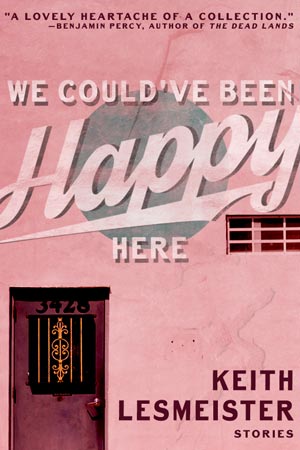
We Could’ve Been Happy Here reviewed by Rain Taxi!

We Could've Been Happy Here book cover by Keith LesmeisterEven months after the initial release of We Could’ve Been Happy Here, Keith Lesmeister’s outstanding collection is still heaping praise!

Rain Taxi recently published their review of We Could’ve Been Happy Here in their current print issue, and author Bret Farley notes the collection “assumes the straightforward, no-frills nature of the [Midwestern] region surrounding its characters.”

Here’s an excerpt from the review:

“The significance of such tiny [human] interactions, and how they change people and their circumstances, is the heart of Lesmeister’s collection, pumping its essence throughout each story and infusing it with life.”
Bret Farley, Rain Taxi

Purchase your copy of We Could’ve Been Happy Here and see for yourself what all the praise is about here!

And read the full review in Rain Taxi‘s current issue here.

|

No Comments

|