Interview: Michelle Herman

December 15th, 2016
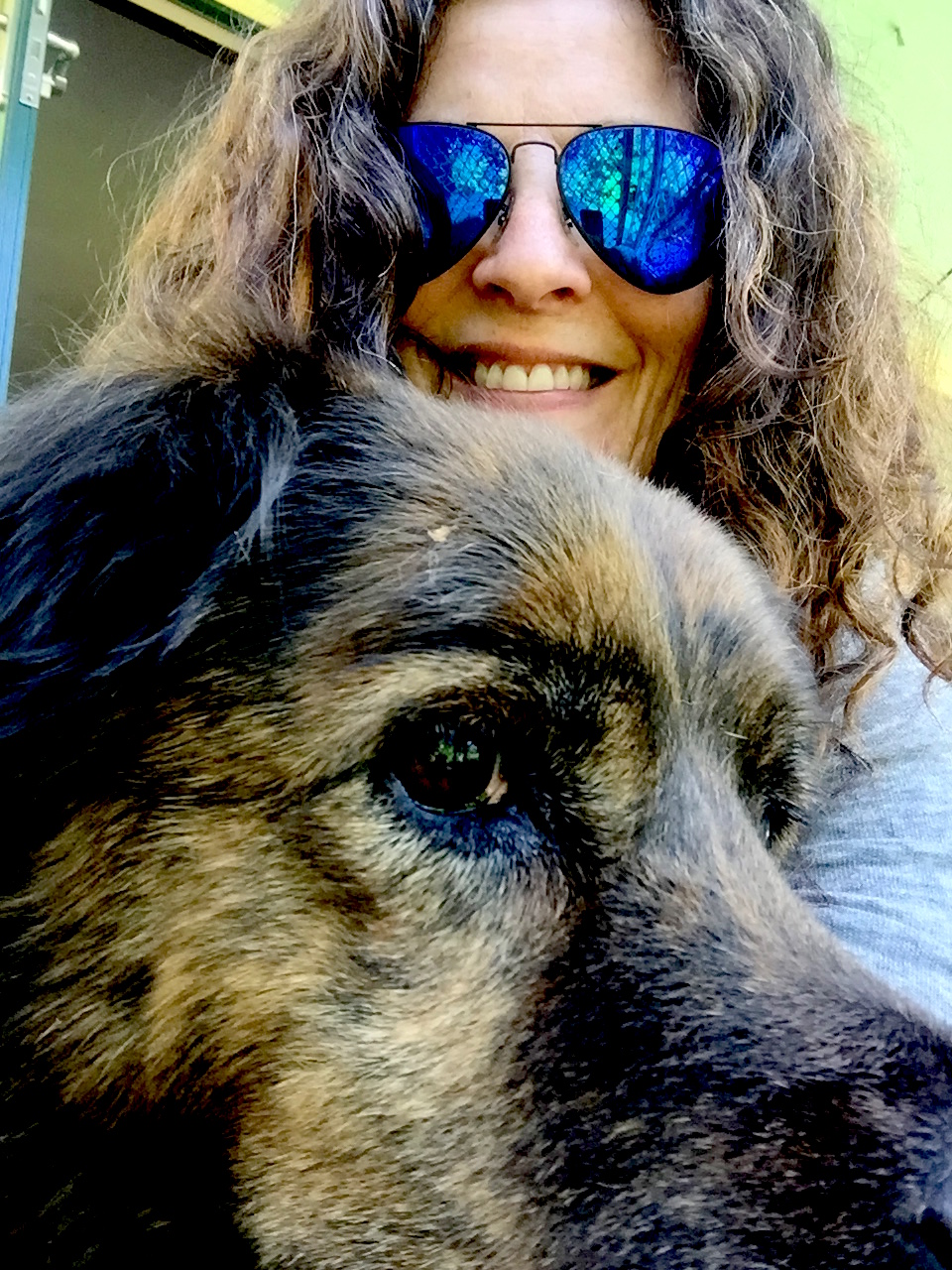
Michelle HermanMidwestern Gothic staffer Sydney Cohen talked with author Michelle Herman about her novel Like A Song, using writing as a vehicle for the spoken word, exploring a relationship in fiction and more.

**

Sydney Cohen: What’s your connection to the Midwest?

Michelle Herman: I’ve lived in the Midwest in 1984: first in Iowa City, for graduate school — after which I fully expected to return to New York (I’d sublet my sublet! I was only going to be gone for two years!) — and then in Omaha, NE for two years; in 1988, I was offered a teaching job at Ohio State and I finally realized I wasn’t going home. I moved to Columbus and have been there since.

SC: Your book of essays, Like a Song, explored your relationship with your daughter Grace from her childhood to young adulthood. What was your process when writing the book – did you write as you experienced things in the moment, or write in reflection of those events?

MH: First in the moment, then in reflection. It’s actually the process of going back to what I’ve written “in the moment” that’s most interesting to me. And in the case of the first essay in that book, “Performance,” the first draft was written in 2005 — and even by the third of fourth draft everything I was writing about was changing (this is the joy and peril of writing personal nonfiction). I published a version of that essay in 2005, in American Scholar, and it was only much later, when I decided it had to be a part of this book, that I returned to it with the perspective of some years removed… and then again, once more, during final revisions of the book, in 2014. Every time I returned, I felt another layer had been added. And the last, long essay in the book, “Where You Start,” was written, first, during a difficult summer (that I ended up writing into the essay, later): I wrote a version of it during the summer of 2011 and then rewrote and rewrote it for the next few years.
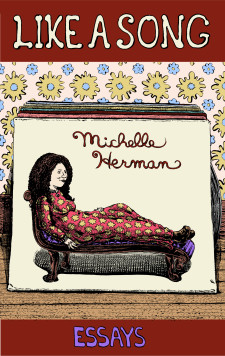
Like A Song

SC: Your last essay in Like a Song discusses your love of talking, and how that love is translated to the page. As an author, how do you use writing as a vehicle for the spoken word? In what ways are your thoughts and words different, or the same, in writing versus conversation?

MH: That’s an interesting question, because the rhythm of (my) natural speech is important to me when I’m writing narrative nonfiction — I want to write the way I talk (which is not something I think about when I write fiction). It’s highly crafted “natural” speech, of course (if only I could revise what I say in life, and make sure I’ve always chosen exactly the right word!). But one of the great joys of this genre for me is ability I have within it to “be myself” on the page — just as expansive and exhaustive and digressive (etc.) as I am in life, just as interested in telling you not only what happened but what I thought and felt about it when it happened and what I think/feel about it now, and what the space between those means (and then this other thing that made me just think about, and what that means, too). And it pleases me very much when people who know me — even people who’ve known me only briefly, passingly — tell me that these essays “sound” like me, that they can hear me speaking the words as they read them.

Can you describe the process of writing about a passion for singing, and how you navigated between the two different forms of communication to reach a meaningful expression of your feelings?

MH: Well, here’s a question I don’t know how to answer! Unlike talking/writing, singing/writing seem to me to work on two different channels altogether. The communication of singing is more like the communication of kissing than it is like writing — in other words, it’s far less about language than emotion (for me, anyway). Because I’m interpreting lyrics, not writing them — and because so much of the interpretation stems from the music and not the lyrics (or the two are inextricable!) — singing feels like something far removed from writing. Thus, writing about my love of singing was like writing about my love of anything or anyone else — my daughter, my hometown, my father, my grandmother, certain books — whatever it is that I am writing about tenderly and/or longingly or with simple affection. I never thought for one moment about “navigating” between the two. Sometimes I was singing, sometimes I was writing, sometimes I was writing about singing (which made me want to take a break from writing and do some singing), but it was never confusing to me — it never seemed to require navigating beyond the daily navigating of writing about anything.

SC: As an accomplished author, you have in your repertoire numerous novels and essay collections. What’s important to keep in mind when writing fiction versus nonfiction? What excites you about each genre?

MH: I’ve already mentioned something of what I love about writing nonfiction, what was a joyous discovery for me when I began to write it (after many years as a fiction writer). But I am always so happy and relieved to return to fiction! There is nothing quite like building a human being of your very own from scratch — figuring him out, learning as you go, seeing what happens when you put him into situations that he must instinctively react to. There’s nothing like exploring a relationship in fiction — taking two of your inventions and locking them in a room together to see what happens between them. And I love — I have always loved (which is why for years I didn’t understand why anyone would write nonfiction about their own life) — taking bits of my own life, my self, others I’ve known or observed, situations from life, little moment and big ones, and exploring them to see what I might make of them. I like the putting-it-together of fiction, and the growing from a small thing — an image, a phrase that has somehow stuck with me, an idea of what something might have meant. Really, from anything – and I love taking disparate “real” things and seeing how they grind against each other, how a story starts to emerge from that.

I would say I love the “freedom” of it, but I never feel terribly free, writing fiction. I always feel as if the house is on fire and I’m just running around trying to save things before they burn.

The answer to the question about “what to keep in mind” is: when writing nonfiction, tell the truth; when writing fiction, just make sure it seems true (which often, I’ve found, requires more research).

SC: While a native New Yorker, you have lived and taught for many years in Ohio. How has the Midwest influenced your writing? Would you say there are any components of your work that are distinctly regional?

MH: Well, I have been setting stories in the Midwest for a long time now — I can’t seem not to. Ever since my second book, I’ve used a Midwestern setting. It’s uncanny, really. I never intended this. Often (but not always) my characters are transplanted New Yorkers.

When I do set stories in New York – or when I write about my own life in New York – I have a perspective (a useful distance) I certainly never would have been able to attain had I not left. I think I’m writing about New York very differently than I would have otherwise.

I would say, though, that my stories are much less about place than they are about character, that place takes a back seat to person (which is how I live, too; I’m not much interested in travel, for example — I mean, I like it fine, but I don’t yearn for it the way so many people I know do). I think I use a very light touch when it comes to setting — but I also think that my fiction probably seems to be distinctly of New York, even when it’s set in the Midwest. I think it’s probably a sensibility coming through (you can take the girl out of Brooklyn, but…) as well as a cadence and, for lack of a better word, a spirit. But maybe I’m kidding myself.

SC: What’s next for you?

MH: A novel set in both New York City and a fictional Midwestern city. It concerns the lives of five characters, together and apart, and covers a good bit of time, as they try to understand each other and do a better job of loving each other, and make peace with loss (as must we all). (It’s also full of magic, as one of the five protagonists is a young magician.)

**

Michelle Herman was born and raised in Brooklyn and attended New York City public schools and Brooklyn College, after which she spent eight years eking out a living (mostly as a freelance copyeditor, but with stints at wire service reporting and other short-lived, ill-fated jobs) in Manhattan. When she left New York for graduate school in Iowa in 1984, she had no idea that she was leaving New York for good (or at least for the next 30+ years). Her eighth book, a novel, Devotion, came out just this past spring; her 2005 novel Dog was reprinted this year too. Like A Song, her third collection of personal essays, came out in 2015.

2016 Lake Prize Fiction Finalists

We’re thrilled to share the winner and finalists for the 2016 Lake Prize! Thank you to everyone who submitted – reading your work was a pleasure. It was so difficult to choose only three, as always, but we think that’s a great problem to have.

All of the stories listed here will be featured in our first bi-annual issue (out in 2017).

Fiction

Winner: “Outlier” by Daniel Giloth

dan gilothDan Giloth was raised in South Bend, Indiana, by radical Christian parents, who conscripted him as a pre-schooler into grassroots organizing in their white-flight neighborhood. In addition to short fiction, he’s completed two novels, one (Move) about two boys coming of age in the civil rights movement in 1967-68, and a second (Humboldt Park) about day labor agency workers in Chicago. He works as a community-based labor organizer in the Chicago west side Austin neighborhood, and teaches introductory courses in Buddhist meditation.
Fiction judge Emily Schultz had this to say about Daniel’s story: What is fiction’s responsibility to the present? Everything. During just the night I read “Outlier” my social media feed filled up with two real police shootings. But “Outlier” does more than rage. With precise language and an understanding of how stories move and live, “Outlier” looks inward and deeper into the state of poverty, race, violence, and the protagonist’s role of privilege in it all.


Runner-up: “Boots on the Ground” by Tyler Barton

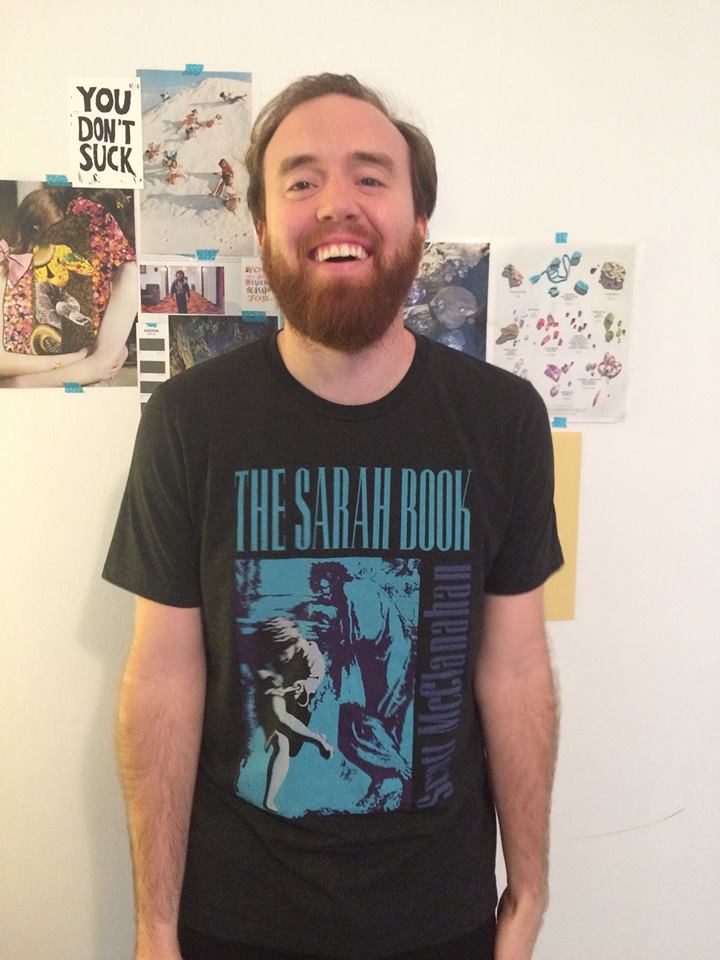
Tyler BartonTyler Barton is one half of FEAR NO LIT. He lives in Mankato, Minnesota where he serves as a fiction editor for The Blue Earth Review and a host of the local radio show, Weekly Reader. His fiction has appeared in NANO Fiction, Smokelong Quarterly, Hobart, Monkeybicycle, and others. Find his stories at tsbarton.com. Find his jokes at @goftyler.
Fiction judge Emily Schultz said this about Tyler’s story: Can writing be both spare and explosive? “Boots on the Ground” is the story of a man in the “wrong house” and how he got there. The everyday—dinner, work, family—takes on the lethal fog of a military surge, as in this line, “She wears tights tucked into hot-pink snowboots. She could end or begin his life.”


Honorable Mention: “Then I Will No Longer Be Me, But The Forest” by Elsa Nekola

Elsa NekolaElsa Nekola is a writer from Wisconsin. She currently lives in Oxford, MS. Her work has been featured in Rosebud Magazine.

 

|

No Comments

|

2016 Lake Prize Poetry Finalists

We’re so excited to announce the poetry finalists for our 3rd annual Lake Prize! Big thanks to all who participated, and congratulations to the winners! The submissions we received were amazing and made it nearly impossible to narrow down the selection. Thank you to everyone who sent in their work, and we hope to see you all next year.

All of the poems listed here will be featured in our first bi-annual issue (out in 2017).

Poetry

Winner: “Preserved Embryos” by Anita Koester

Anita Koester Anita Olivia Koester is a Chicago poet. She is the author of the chapbooks Marco Polo (Hermeneutic Chaos Press), Apples or Pomegranates forthcoming with Porkbelly Press, and Arrow Songs which won Paper Nautilus’ Vella Chapbook Contest. She is the poetry editor for Duende. Her poetry is published or forthcoming in Vinyl, Tahoma Literary Review, CALYX Journal, Pittsburgh Poetry Review, and elsewhere. Her poems have been nominated for Best New Poets and a Pushcart Prize, and won the Jo-Anne Hirshfield Memorial Poetry Award as well as the First Night Evanston Poetry Contest. She is the recipient of the Bread Loaf Returning Contributors Award and her writing has been supported by Vermont Studio Center, Art Farm, and Sundress Academy for the Arts. Anita is also an artist and photographer, her work is published or forthcoming in SKY+SEA Anthology, Paris Lit Up, Photographer Forum’s Best of Photography 2016 and elsewhere. Visit her online at www.anitaoliviakoester.com
Poetry judge Airea D. Matthews had this to say about Anita’s poem: The progression of images and logic plays on tension between preserved as an inert state and preserved as a verb in action, a completed act—what this says about life and effort is complex and allows light to enter any space, even fetal death. The most successful element here is preservation as a mantle, as the blessing we wear moment to moment. The mix of evidence of life and evidence of spirit drive the reader forward to an ending that is a prayer and a benediction into this messy, chaotic world.


Runner-up: “A Powerful Weapon” by Steve Henn

Steve HennSteve Henn is the author of 2 collections from NYQ Books, Unacknowledged Legislations and And God Said: Let there be Evolution! His 3rd, Indiana Noble Sad Man of the Year, will be released this school year from Wolfson Press. He wants to acknowledge that the boy in the poem is an actual person, though not someone he knew well, who died by turning his father’s handgun on himself. Steve thinks it’s a bad idea to keep guns in the house, though he knows for many in the Midwest and in his home state of Indiana, this is not a popular opinion. He couldn’t’ve written his poem without slightly misinterpreting a conversation with his friend Anna and thanks her for the inspiration. Links to books and recordings can be found at www.therealstevehenn.com.

Poetry judge Airea D. Matthews said this about Steve’s poem: This poem seems to operate on the absurdity of death by surprise, death by a manufactured object. This engagement with public gun deaths in broad daylight, now too often in the news cycle, acknowledges that the tenuous nature of our claim to life is ridiculous. Maybe more pressing is our reliance on tenderness, and how the absence of it may drive us to destroy ourselves and others.


|

No Comments

|

Midwest in Photos: South Street Dairy Queen

“Is it a slivered moon or the corner streetlight that casts silver, illuminating blown glass on bare bark?” –Kaitlyn Teer, “Making Light,” Midwestern Gothic Issue 19.

South Street Dairy Queen, David McCleery, davidmccleery.com

Photo by: David McCleery

|

No Comments

|

Interview: Steve Castro

steve castroMidwestern Gothic staffer Megan Valley talked with poet Steve Castro about Latin@ Rising, trends in poetry, circular poems and more.


**

Megan Valley: What’s your connection to the Midwest?

Steve Castro: I came to the U.S. from Costa Rica when I was eleven years old. I spoke no English when I first arrived in this country. The Midwest is where I learned to read, write and speak the English language. I speak English with a Midwestern news reporter accent. It is where most of my formative years were spent.

From the time I came to this country in the fifth grade, to my senior year of high school, I lived mostly in the Southern Indiana region. Mostly in Evansville, but also in the nearby Indiana towns of Newburgh and Boonville and right across the border in Henderson, Kentucky. I also hold a couple of undergraduate degrees from Indiana University-Bloomington, so the Midwest is a big part of who I am.

MV: How has working with journals and magazines — poetry editor of FOLIO, assistant poetry editor of decomP, and co-editor of Public Pool — influenced your writing?

SC: I have read many different styles of poetry from poets from all over the world, and I’ve been introduced to many wonderful voices of poetry that I would not have otherwise known had I not been a poetry editor. I think that sort of diversity has helped me creatively as a poet.

MV: In your editing experience, what sort of trends have you noticed across multiple publications?

SC: As to trends regarding actual content, I see many love poems about a significant other, confessional poetry, poetry lamenting the loss of a loved one. I do not think there is anything wrong with this, but many poems I read deal with those topics. I have also come to realize that our poetry community is small. I recognize numerous poets who have submitted to all three of the publications that I’m a part of. I also receive poetry from young poets and poets who have never published before, and some of those poems are excellent and do get published.

MV: Your work will be featured in Latin@ Rising: An Anthology of U.S. Latin@ Speculative Fiction alongside authors like Junot Díaz, Ana Castillo and Carl Marcum; what are you trying to add to the current Latino/a literary scene?

SC: I’m just trying to write what comes from my heart. That is all. I love to write about the surreal, the strange, the speculative, the magical. My poetry manuscript, Blue Whale Phenomena is tailored that way. Every individual who has ever lived, has had unique fingerprints, and the same applies to my creative mind.

MV: Latin@ Rising features science fiction and fantasy, two genres that are often very white-centric or whitewashed. How does this collection address and challenge those norms?

SC: Matthew David Goodwin, the Latin@ Rising editor, answers this question beautifully in his foreword to this anthology when he writes, “What we hope to do in this anthology is to counter the separateness of Latin@ science fiction and fantasy by presenting a thrilling multiplicity of writers and stories, and by demonstrating that these writers have been part of the genres all along.”

MV: Which publication are you most proud of?

SC: I am a contributor to three highly anticipated U.S. based anthologies/special issues featuring Latinx poets, writers and artists coming out right now. One is the aforementioned Latin@ Rising anthology (Wings Press, Jan., 2017) and the others are the Green Mountains Review Special Issue dedicated to U.S. Poet Laureate Juan Felipe Herrera, guest edited by Allison Hedge Coke (Winter, 2016) and The Wandering Song: Central American Writing in the United States (Tia Chucha Press, Feb. 2017) edited by Héctor Tobar, Rúben Martínez and Leticia Hernández-Linares.

I also found it interesting that I’m the only Latinx poet, writer or artist that appears in both the Latin@ Rising anthology and the Green Mountains Review special issue. I haven’t looked at the table of contents for The Wandering Song anthology yet, but it would be surreal if I’m the only contributor that’s featured in all three anthologies/special issues. If that happened, then that would be amazing. It would be similar to what American Pharoah did in 2015, i.e., winning the Triple Crown.

MV: You were the poetry editor of FOLIO while earning your MFA from American University. What was the most critical thing you learned during that period of your life?

SC: Inclusion. During my first year as FOLIO’s poetry editor, I felt shackled. During my second year as poetry editor when Priyanka Joseph and Joellyn Powers took over as Managing Editor and Editor-In-Chief, respectively, they told me that they believed in my vision and gave me full creative control of our poetry content. The same thing happened during my third year when Stephannie Sandoval and Kangsen Wakai took over as Managing Editor and Editor-In-Chief; they both also believed in my vision as the poetry editor. I therefore gave an equal voice to my two poetry readers during my second and third years at FOLIO. I didn’t have poetry readers during my first year at FOLIO.

MV: How can publishing help people understand the issues people of color face?

SC: My fellow Latin@ Rising contributor, Daniel José Older, in his BuzzFeed article “Diversity is not enough: Race, Power, Publishing” talks about the apartheid of literature in which “characters of color are limited to the townships of occasional historical books that concern themselves with the legacies of civil rights and slavery but are never given a pass to traverse the lands of adventure, curiosity, imagination or personal growth.” I believe publishing can help people understand the issues people of color face by unshackling the writer’s creativity and allowing them to express themselves in any way they see fit. This way, people will see the complex issues that people of color face, expressed in creative and diverse ways.

MV: How do you know when a poem is done?

SC: I have multiple methods in how I end poems. I will provide one example.
I tie my endings to the opening lines of my poems or my titles. In my poem “Amnesia,” which was published in decomP before I became the assistant poetry editor, my final stanza is as follows, “A precious metal is that fragment of shrapnel / that missed you by inches; the deadly explosion / that made you forget alchemy.” That’s how my poem ends. When you look at the title, “Amnesia,” it makes you rethink the poem and start it all over again. The ending is connected to the title. The poem is circular.

MV: What’s next for you?

SC: God willing, the publication of my first poetry manuscript.

Not long ago, I finished revising my manuscript, “Blue whale phenomena.” I recently got an encouraging personal note from Ron Wallace, the series editor to the Wisconsin Poetry Series’ Brittingham and Felix Pollak Prizes at the University of Wisconsin Press. “Steve, Sorry! It’s a very strong ms., and was read with pleasure here. I wish I had better news. RW.”

P.S. – I’ve been editing “Blue whale phenomena” a bit since the uplifting note I received from RW. I’ve replaced a couple of poems with two others that I feel make it a stronger manuscript. I’ll continue to edit/revise my manuscript until it gets published, lol. I have a mild case of Walt Whitman in that regard.

|

No Comments

|

We Could’ve Been Happy Here, a novel by Keith Lesmeister (MG Press)

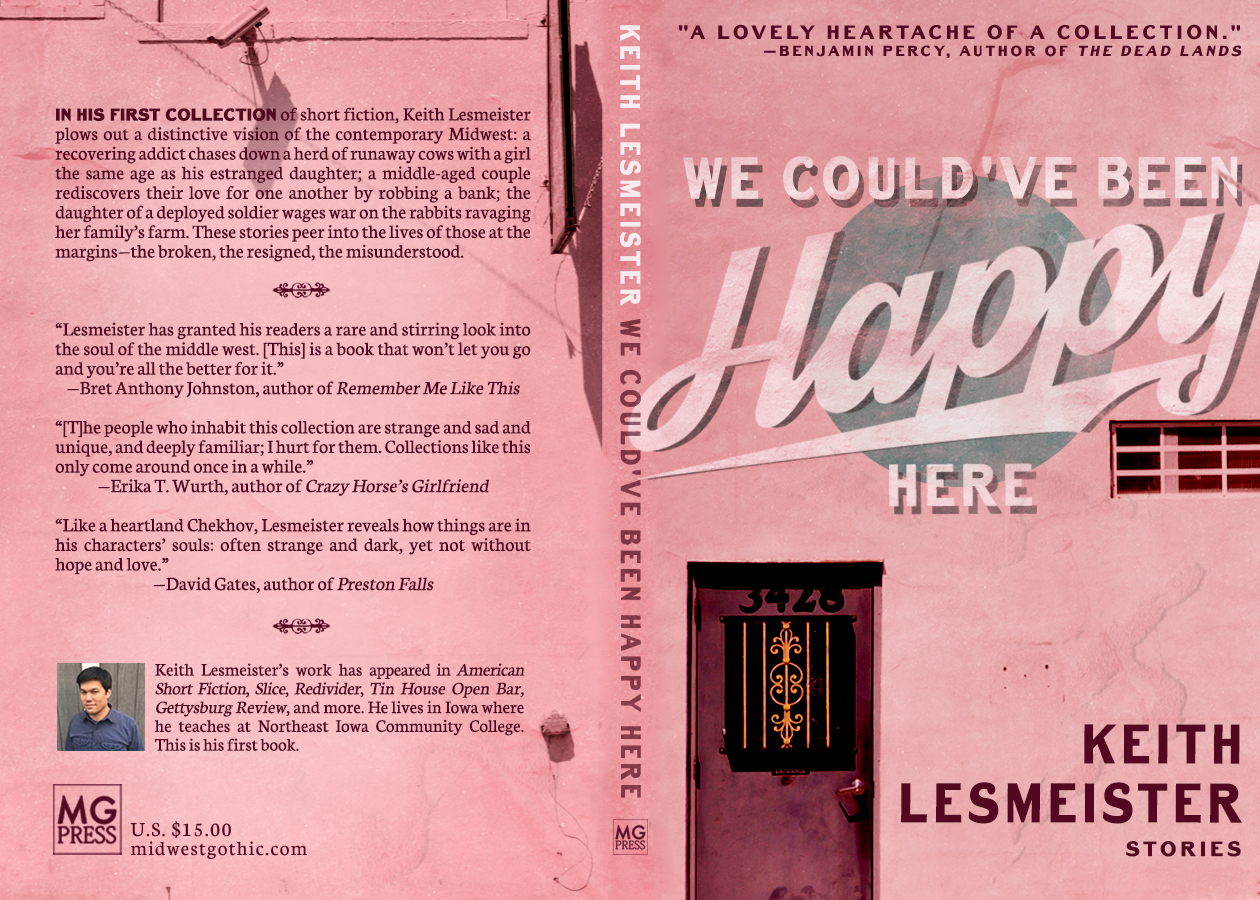
We are so excited to share more details of our upcoming MG Press title to be published Spring of 2017, the short fiction collection We Could’ve Been Happy Here by Keith Lesmeister!

12-1-spine-edits-2-1

From the back cover: In his first collection of short fiction, Keith Lesmeister plows out a distinctive vision of the contemporary Midwest: a recovering addict chases down a herd of runaway cows with a girl the same age as his estranged daughter; a middle-aged couple rediscovers their love for one another by robbing a bank; the daughter of a deployed soldier wages war on the rabbits ravaging her family’s farm. These stories peer into the lives of those at the margins–the broken, the resigned, the misunderstood.

Advance Praise:

We Could’ve Been Happy Here has already received some wonderful advance praise from the following folks:

“A lovely heartache of a collection.”
Benjamin Percy, author of The Dead Lands, Red Moon, Thrill Me, The Wilding and Refresh, Refresh

“These are brutal stories—brutally good, brutally urgent, brutally hopeful. In this extraordinary collection, Keith Lesmeister has granted his lucky readers a rare and stirring look into the soul of the middle west. His prose is as clean as the prairie wind, his characters as dangerous and refreshing as summer storms. We Could’ve Been Happy Here is a real achievement, a book that won’t let you go and you’re all the better for it.”
Bret Anthony Johnston, author of Remember Me Like This and Corpus Christi: Stories

“Once in a great while, you pick something up, and its great, subtle beauty hits you slowly and hard like the wave of an ocean. That’s the case for We Could’ve Been Happy Here, except the ocean is in Iowa. I’ve lived in the world that Lesmeister is showing us for over a decade, and the people who inhabit this collection are strange and sad and unique, and deeply familiar; I hurt for them. Collections like this only come around once in a while.”
Erika T. Wurth, author of Crazy Horse’s Girlfriend

“The deceptively quiet stories in Keith Lesmeister’s We Could’ve Been Happy Here lay bare the inner lives of deceptively ordinary people in the deceptively normative state of Iowa. Like a heartland Chekhov, Lesmeister artfully refuses to tell us how things turned out—did that slacker stay sober? did that nice middle-aged couple who robbed a bank on a lark ever get caught? Instead, he reveals how things are in his characters’ souls: often strange and dark, yet not without hope and love.”
David Gates, author of Preston Falls and A Hand Reached Down to Guide Me

Pre-Order:

In addition, you can pre-order a copy of the book for only $1, and save 20% off the cover price when it launches in 2017.

Read more about We Could’ve Been Happy Here

|

1 Comment

|

Midwest in Photos: For Sale or Trade

“Over the past year they’d took shelter amongst the dilapidated houses within the hollers of shunned vehicles on cinder blocks, where dry-rotted tires hung from limbs and un-raked leaves piled to the shade of bourbon and replaced the grass.” –Frank Bill, “Grasshopper Diptych,” Midwestern Gothic Issue 10.

Sera Hayes-For_Sale_Or_Trade

Photo by: Sera Hayes

|

No Comments

|

Interview: David Trinidad

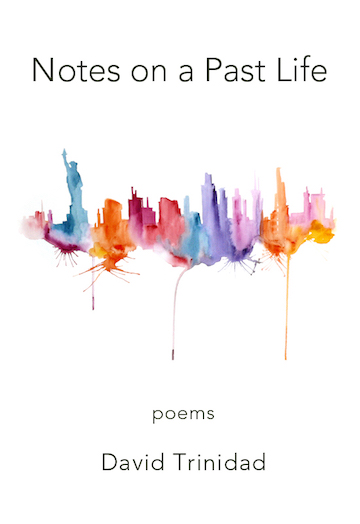
David TrinidadMidwestern Gothic staffer Lauren Stachew talked with author David Trinidad about his collection, Notes on a Past Life, unsettling emotions in poetry, letting poems be and more.
**

Lauren Stachew: What’s your connection to the Midwest?

David Trinidad: I live in Chicago. That’s about it!

LS: You grew up and attended college in California, then spent several years living in New York City. Now that you live in Chicago, how has your understanding of the Midwest changed in comparison to when you lived in the West and East Coasts?

DT: When I lived in Los Angeles and New York, I had very little knowledge of the Midwest. It was that vast (seemingly mindless) space I’d sometimes fly over, on the way to either coast, and that I always equated with that Talking Heads’ song: “I wouldn’t live there if you paid me.” Well, I do live here now, and they do pay me.

I love the personal space here. After fourteen years in New York, I really longed for a more civilized way of life. People don’t push you here, they’re not always trying to edge you out. In general, I find people quite friendly. There are flowers and trees and this beautiful sky. There’s this real sense of nature. In New York, I forgot that nature existed. That the sky existed! I just never looked up. And in Los Angeles . . . well, you’re always in your car there.

It’s strange: I live in Chicago, but I don’t feel like I live in Illinois. What does it mean to live in Illinois? I don’t know!

LS: Your most recent collection of poetry, Notes on a Past Life, details your time spent in the New York poetry scene. In a sense, these poems are like memoir-verses, but you describe this collection as more of an “experiment in memory.” How did you begin the process of telling this story? Do you feel that memory and poetry are inextricably linked?

DT: Notes on a Past Life began as an experiment — I tried to touch, lightly, on some opaque moments in the past. Remembering a color or an object and letting the poem take shape around that. Before long it grew into a book-length project, and took on a — I hate to say “heavy” — a more “serious” tone. It all became very urgent and intense, to remember the significant incidents and relationships from those years, and pin them down in poems. I think I do believe that memory and poetry are linked. At least they are for me. I seem to need to write poems to make sense of what I’ve experienced. It can take me a very long time — years, decades — to be able to address painful or traumatic experiences.

Notes on a Past Life

LS: You’ve said in a previous interview that “certain poems should trouble you.” What do you think is the value in poetry that may yield unsettling emotions? Do these kinds of poems reveal a different kind of truth that other poems cannot?

DT: I do think they can, yes. These kinds of poems help you see things clearly, or for the first time. They shed light on the dark corners. I know that sounds trite, but it’s true. Poems that can help you live, that you can live by. I imagine such poems are different for each of us, and are not what critics usually tout as “great.” It’s more of a private thing, between the poet and the reader.

I like poems that challenge or disturb me, that I have to come to terms with. Obviously I’m thinking of what a poem is saying, its content, rather than any so-called formal or aesthetic innovation. That’s all just surface dazzle. I get impatient with poems that are too evasive. As much as I love James Schuyler’s poems, he does this thing where he gets right to the verge of really saying something revealing but then turns away, goes in another direction. You can almost feel it coming, that turn, that evasion. I prefer poems that go in more directly for the kill, so to speak.

One poem that bothered me for a long time is Thom Gunn’s “Famous Friends.” It’s about an encounter with J.J. Mitchell in a gay bar in New York. Mitchell, who is dying of AIDS, is still cashing in on his one claim to fame: that he was Frank O’Hara’s last boyfriend. Gunn is brutally honest in his portrayal of Mitchell as a shallow character. I thought the poem was insensitive, even cruel. I argued with this poem — it really unsettled me — but finally made peace with it. I talked about it with my students and they helped me see it differently. Certain of Sylvia Plath’s poems trouble people, don’t they? I think people find her anger “unjust.” Richard Wilbur says as much in a poem, “Cottage Street, 1953.” That’s another poem I’ve argued with.

LS: Your first collection of poetry, Pavane, was published in 1981, and you’ve since published many other collections. How do you feel your writing style has evolved or changed with each collection?

DT: My writing has gone through a number of phases over the years, for sure. All along I’ve been in conversation with the poets I’ve admired (though I might not have always known it). I suppose I’ve been drawn to them because they do something that I want to learn to do myself. Touch the reader. Describe something beautifully. Open a window on the creative moment. Engender a sense of intimacy. My recent books seem to take shape much more organically than my earlier books. I try not to overthink what I’m doing. I just do it. My last book I wrote without even trying to write it. It just happened. That was a first. It showed me how fluid the process of writing has become.

LS: Do you ever revise your early poems, or prefer to leave them be once they are finished?

DT: I revised my early poems for the longest time. There seemed to be so many things wrong with them. I had to fix them! At some point I just surrendered. I had to accept that they were early poems, young poems. I had to let them be. It all moves much faster now. I rarely revise beyond a certain point. You work on a poem, it feels alive, you keep tinkering with the things that bug you. But then it’s done, finished. The door closes. The poem begins to feel inviolable.

LS: As a professor of Creative Writing and Poetry at Columbia College Chicago, what is a piece of advice you always give your students?

DT: Read as much as you can. Don’t put all your faith in contemporary poetry. The wind, to paraphrase Ted Hughes, will blow most of it away. Read dead poets. Read collected poems cover to cover. Focus on the writing, not the politics. Embrace variety.

LS: Which poets have had the biggest influence on your writing?

DT: Anne Sexton, Sylvia Plath, Ted Hughes, Ann Stanford, May Swenson, Frank O’Hara, James Schuyler, Alice Notley, Joe Brainard, Tim Dlugos, Amy Gerstler, William Carlos Williams, Elizabeth Bishop, Pablo Neruda, Emily Dickinson. Kind of, but not strictly, in that order.

LS: What’s next for you?

DT: I’m editing Ed Smith’s poems and notebooks. Ed was a wonderful poet, a friend from Los Angeles in the early ‘80s. His two poetry books are long out of print. He died in 2005. I’m also working on a prose memoir. And several other projects. Lately I don’t seem to be as single-minded as I have been in the past. There are a lot of projects in the works.

**

David Trinidad’s latest book is Notes on a Past Life (BlazeVOX [books], 2016). His other books include Dear Prudence: New and Selected Poems (2011) and Peyton Place: A Haiku Soap Opera (2013), both published by Turtle Point Press. He is also the editor of A Fast Life: The Collected Poems of Tim Dlugos (Nightboat Books, 2011). Trinidad lives in Chicago, where he is a Professor of Creative Writing/Poetry at Columbia College.

|

No Comments

|

Contributor Spotlight: Nicholas Ward

nicholas wardNicholas Ward’s piece “All Who Belong May Enter” appears in Midwestern Gothic Issue 23, out now.
What’s your connection to the Midwest, and how has the region influenced your writing?

I’ve spent my entire life here. I grew up in Farmington, Michigan, a suburb of Detroit; I attended college at Miami University in southern Ohio; and I lived in Chicago for twelve years before recently returning to Michigan. I write primarily nonfiction about my life. The Midwest is a character in every story in a small way. The cities and communities I’ve known here have influenced how I think about both my relationship to other people and the stories we carry with us, as well as the country as a whole. To tell a Midwest story is to tell an American story, from its segregated cities and metro areas to its pockets of depressed industry; its resilient citizens, elites living in lakefront mansions, local government’s erosion of the public trust. And that doesn’t even begin to encompass the actors, writers, musicians, and visual artists who call the Midwest their home and/or their inspiration, and who’s export defines and challenges the American mythos.

Discuss your writing process — inspirations, ideal environments, how you deal with writer’s block.

I can’t write in public. When I’m working on a piece, on the first draft, I need to get it out as fast as possible, like vomit; to do so, I talk out loud and walk around and make notes and take breaks. I’m a restless active person, so I try to have a centralized location in my apartment with which to work. For writer’s block, or if I’m thinking through a tricky bit of text or thought, I often get on my bike and go for a ride.

How can you tell when a piece of writing is finished?

It’s usually never finished. One of the privileges about also dabbling in live storytelling is that I can constantly go back to the work, shape and edit and fine-tune and craft it and deeply search to make it better.

Who is your favorite author (fiction writer or poet), and what draws you to their work?

Because this feels impossible to answer, I’m going to talk about what I’m reading currently. The History of White People by Nell Irvin Painter, is a survey of history that examines how “scientific thinking” and race theory and the worship of whiteness going back to the Scythians influenced thought, policy, and power structures all relevant to today’s white supremacy. It’s recommended reading for all white folks who want to study whiteness in order to abolish it (which should be all of us).

What’s next for you?

Well, I just moved from Chicago to Ann Arbor, where I’m still getting settled. Even though I grew up a half hour away, and Chicago is still really close, it feels like entirely new terrain for me. So finding ways to get in community with this place is my next on-going project.

Where can we find more information about you?

You can find me on Twitter @NicholasCWard, where I post too often about basketball (I’m a blogger for BTPowerhouse) and do a healthy amount of re-tweeting.

|

No Comments

|

Midwest in Photos: Eastside Lawn Party

“Humans haunt more houses than ghosts do. Men assign value to brick and mortar, link their identities to mortgages paid on time. On frigid winter nights, young mothers walk their fussy babies from room to room, learning where the rooms catch drafts and where the floorboars creak. In the warm damp of summer, fathers sit on porches, sometimes worried and often tired but comforted by the fact that a roof is up there providing shelter. Children smudge up walls with dirty handprints, find nooks to hide their particular treasure, or hide themselves if need be. We live and die in houses, dream of getting back to houses, taking great care in considering who will inherit the houses when we’re gone.” –Angela Flournoy, The Turner House.

Eastside Lawn Party

Photo by: Alec Josaitis

|

No Comments

|