Contributor Spotlight: Ben Tanzer

November 22nd, 2016

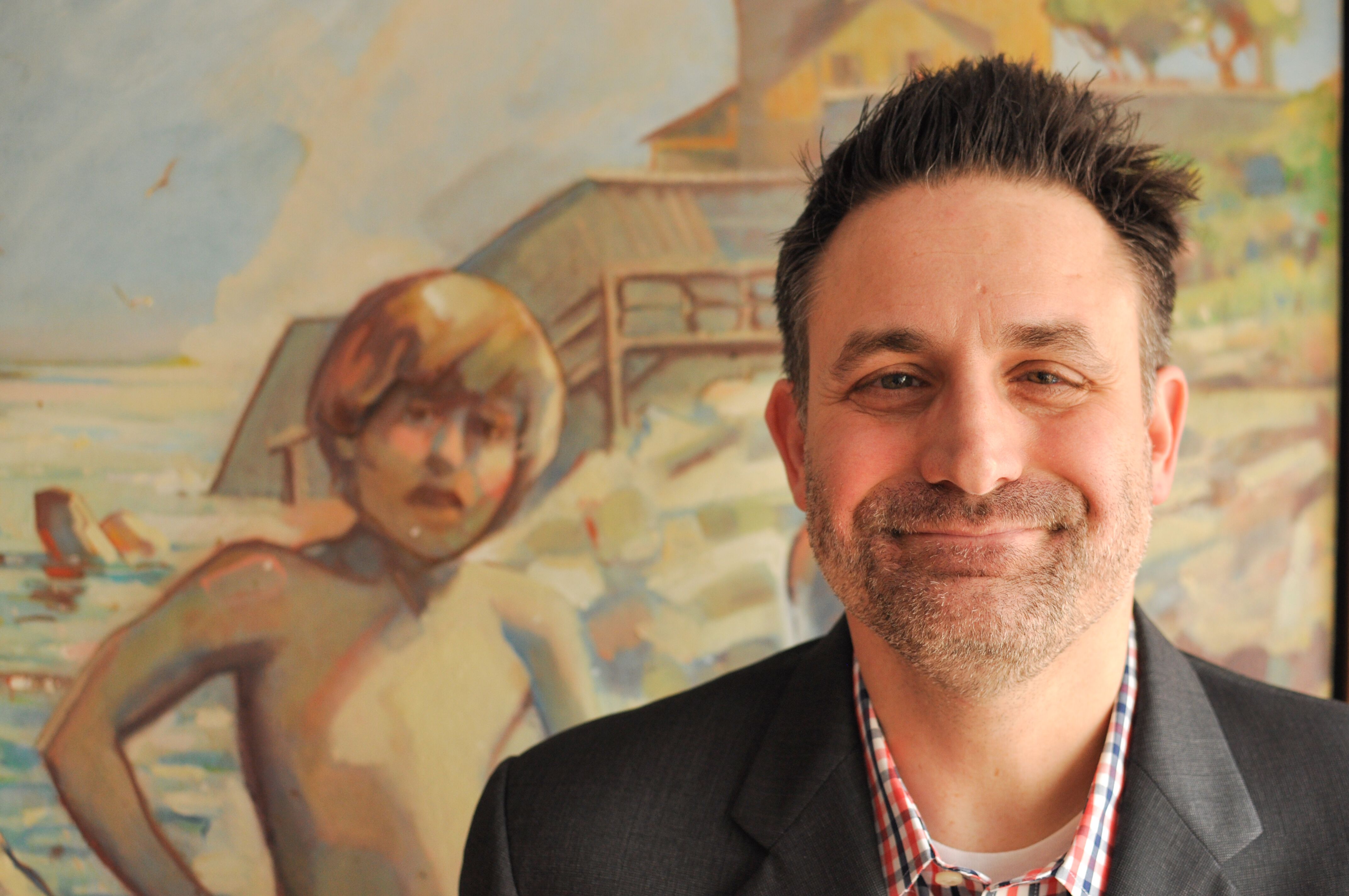
ben tanzerBen Tanzer’s piece “Never Better” appears in Midwestern Gothic Issue 23, out now.

What’s your connection to the Midwest, and how has the region influenced your writing?

I am a native New Yorker, sorry, but have lived in Chicago for the last twenty years. I had not written even one sentence before moving here, and while I want to believe I would have started writing, eventually, wherever I might have ended-up, the fact is I started writing here, and I have only lived here as a writer, and so whatever influences exist, or do not, I don’t know anything but what it means to be living in the Midwest and trying to write one word followed by another.

What do you think is the most compelling aspect of the Midwest?

There is a sense of giving here, and support, and while one can probably overstate the whole concept of “Midwest nice,” especially when one is from New York, still sorry, the environment and the willingness to share one’s knowledge, time and connections is my experience of living here, which makes a big difference when you want to create and you don’t know where to start.

How do your experiences or memories of specific places — such as where you grew up, or a place you’ve visited that you can’t get out of your head — play a role in your writing?

I have lived in big cities for nearly thirty years now, Chicago, before that New York City and before that San Francisco, and yet I am constantly drawn back to the small town I grew-up in, the bars, the dating, high school, the friends I had then, the childhood injuries, the parties, the drive-ins, the drinking and the sex. Those experiences were indelible for me and they remain a foundation for all the relationships and interactions that have followed, both on paper and otherwise.

Discuss your writing process — inspirations, ideal environments, how you deal with writer’s block.

I work full-time, I am married and I have children – none of which should sound like bragging, it’s all quite terrible actually – and I didn’t really get started writing until all those things were in motion, or nearly so, and so early on I decided that I would not allow myself to be precious about writing. No consistent setting, no proper music, time of day or perfect cup of coffee. And I have tried to remain that way, workmanlike, and focused on crafting and building, and so there are no true ideals for me, and no waiting for inspirations. Themes do hit me of course, and when they do, I nurture them, and there are the Ramones and David Cronenberg and Jim Carroll and Jay-Z and Lynda Barry, all who have influenced me in terms of beats and rhythms. But mainly I just try to sit down every day, think about what’s next, what comes after that and then staying focused on where I’m going.

How can you tell when a piece of writing is finished?

When I read it and I no longer find myself stuck, or stumbling, when each sentence, and passage or chapter, flows, the language is streamlined and tight, and it feels like the words are the right ones, the fat has been stripped, and it’s my voice, slamming and quick, and as punk as I can be as an aging, 9-5, married, dad, graying, worker dude.

Who is your favorite author (fiction writer or poet), and what draws you to their work?

I love many writers, and many books, but I always come back to Jim Carroll, and by extension The Basketball Diaries, a book I consumed on repeat from 10 to 18, and recently re-read and wrote about in my new essay collection, Be Cool a memoir (sort of). The writing is electric, and real time, and pulsing throughout. Well to be clear, that’s the case in The Basketball Diaries anyway. I hope that’s also the case with Be Cool, but you will have to be judge of that. That aside, as a reader of The Basketball Diaries, I loved the feel of being in something so alive, even if that wasn’t clear to me then, and as a writer, I want to recreate that feeling, if not for the reader, ideally, then at least for me.

What’s next for you?

Well, Be Cool is happening right now, and so there are readings and hustling, and my essay “Never Better” in the new Midwestern Gothic is from Be Cool, and what evolved into the 1990’s section of the collection, and so I’m pushing on that, and everyone, everywhere, is welcome to not only buy copies, but read it and rate it, and invite me to visit their book clubs, or conferences, whatever, I’m in. After that, I’m hoping to see my novel, Foundlings, the follow-up to my science fiction novel, Orphans, come out, somewhere, and somehow.

Where can we find more information about you?

You can definitely visit my website tanzerben.com, as well as my Twitter feed @bentanzer, and if you’re remotely interested in my faux media empire, you can check-out This Blog Will Change Your Life at changeyourlifethiswill.com, where you will find me endlessly riffing on the cool things I love, as well as the various permutations of the blog, including This Zine Will Change Your Life and This Podcast Will Change Your Life, with handbooks, T-shirts and my denim line, God-willing, coming soon.

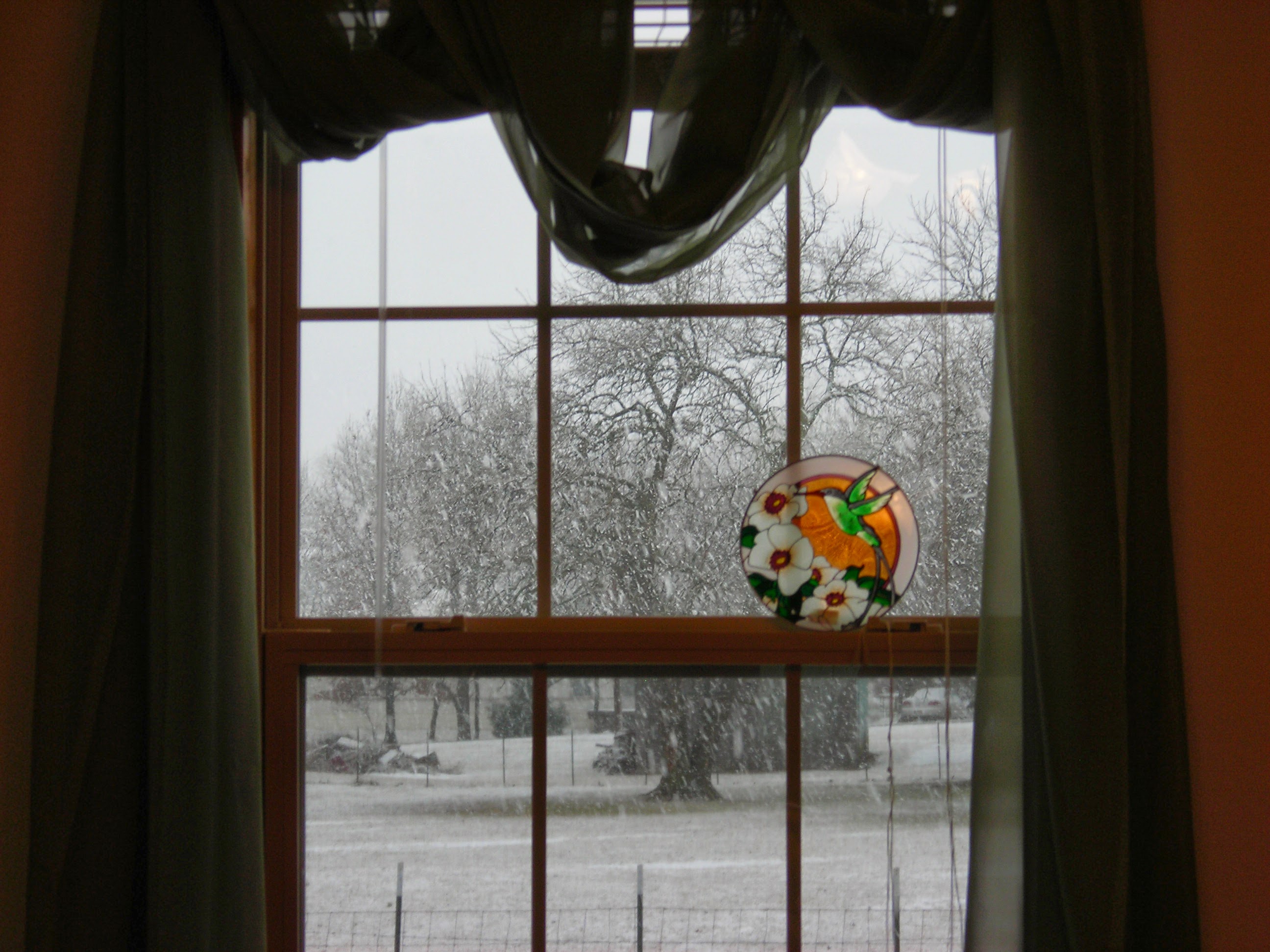
Midwest in Photos: Winter through the window

“When he returned to his front door, he discovered it had locked behind him. He grasped at his pockets for a key, but he was wearing only boxer shorts. He limped around the back of house, to the fountain. Somehow the birdbath resembled the girl from the bowling alley. There was no end to the life inside the bird bath or inside the girl, for her blood and fluids kept flowing and flowing. Above him, at the top of the back stairs, the two women stood wrapped in their winter coats.” –Bonnie Jo Campbell, “The Burn,” American Salvage.

Samantha_Navarro-Winter_through_the_Window

Photo by: Samantha Navarro

|

No Comments

|

Interview: Gary Amdahl

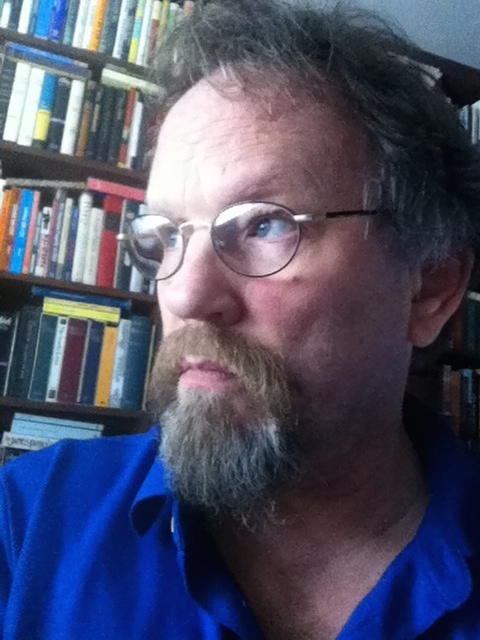
Gary AmdahlMidwestern Gothic staffer Megan Valley talked with author Gary Amdahl about The Daredevils, musing vs. building, radical labor activism and more.

**
Want to get your hands on a copy of The Daredevils? We’re giving away three copies of the book — find any of our posts about the giveaway on Twitter and retweet to be entered to win. Only one book will be awarded per person, but feel free to RT as many times as you want to get multiple entries! Deadline is Sunday, 11/20 at midnight. US only please.
**

Megan Valley: What’s your connection to the Midwest?

Gary Amdahl: I was born in Jackson, Minnesota, on a farm with no running water, in 1956. My mother was born there in 1935, and carried water from well to house every day of her life until she left for college. Her father was born near there in 1890. His father was born near Mankato in 1857. Legend has it he saw the mass hanging of thirty-eight Dakota men in retaliation for the Sioux Uprising of 1862. They were from around Hallingdal, Norway. On my father’s side, my great-grandfather came from near Stavanger, Norway and settled in northeastern Iowa. I graduated from Robbinsdale High School in 1974 and took twelve years to get a B- English BA from the University of Minnesota, at which point I departed the Midwest for good (coming back only for my last play and to get married on Madeline Island in Lake Superior).

MV: You’ve written six books and nine plays; what’s the difference in writing those two types of literature?

GA: That’s a good question, and one I never get tired of thinking about. For starters, in a novel, I think, you can muse, whereas in a play you have to build. In a play, every line has to answer a question for the audience, and ask another one. There’s no time to lose. The audience has to be waiting for the next entrance, but the entrance, when it comes, has to be a surprise. I’m not talking about melodramatic contrivance — although a playwright can have a lot of fun, do a lot of good work with such silliness — I’m talking about actually constructing something with words and gestures that the audience can see taking shape before their eyes, something that holds together but which can’t be predicted. So it’s not quite carpentry and it’s not quite card tricks.

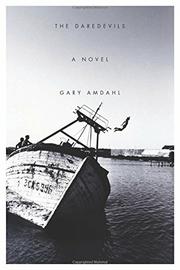
The Daredevils

MV: The Daredevils centers on a man who obsesses between performance and “real” life — how does this relate to the political themes, including radical labor activism?

GA: Wow. Thank you for asking the only question that mattered to me in the end. (Writing The Daredevils took a very long time; please see http://www.necessaryfiction.com/blog/ResearchNotesTheDaredevils for the story of the story.)  Hundreds of great books have been written on this subject, from Erving Goffman’s The Presentation of Self in Everyday Life to Galen Strawson’s Selves, and every major philosopher and sociologist deals with it one way or another; novelists have long played with the alternation of aspects of “the personalities of characters” as they change perforce or by calculation from situation to situation.

So I have this tremendous intellectual and artistic foundation, but I am mainly dealing with personal experience. I was outgoing as a kid, a budding decathlete, socially active and socio-politically adept — if a grade- and middle-schooler can be said to be such a thing, and I think he can — but became other-end-of-the-spectrum shy, and spent my twenties in alcoholic, suicidal despair. But because I was also in the theater, and hanging around with people who didn’t philosophize about acting, but instead simply acted, for better or worse, in sickness and in health, I somehow began to see that there was no self worth speaking of without action, and that if I thought too long about anything, I’d never ever act. My life would be the wholly interior life of the alcoholic. Mental health would become something I couldn’t take for granted. So I began to act in what seemed to me to be desperate, goofy, reckless ways. But to other people, apparently, I seemed to be coming to life.

Long story short: politics is a particularly desperate and goofy and reckless kind of action that affects everybody on the planet willy-nilly. It is also particularly visible, often brazenly and ridiculously so. The actions often seem cowardly or calculated, rather than genuine and brave, which was how I wanted to perceive my own “personal political actions.” The difference between what I came to think of as my personal radicalism and a larger more inclusive political radicalism was just a matter of venue and connection. The difference between radical politics and mainstream/center politics is the same as the difference between an actor and a member of the audience. “Radicalism” isn’t associated with “activism” for nothing (not that they are the same thing — they aren’t). There is a great deal of pressure on all of us to do nothing. And I am generally a proponent of that Pascalian proposition that evil flows from people who are not content to sit quietly in their rooms. But: we are simply not capable of sitting in our rooms quietly forever. I meditate, and I know some Big Meditators: we all agree that you can’t do it for very long, and if you press it, you get weird. There’s a difference between letting it be and not caring, between apathy and disinterest. We have to act because we have bodies. We’ve got great opportunities to go with the flow, to be passive spectators, both of light entertainment (TV, movies, etc.) and heavy entertainment (politics), but in the end, our physicality forces us to act.

Ideally, I can act simply and surely, with a cool head and clean hands so to speak, in a spirit of constant improvisation as the present happens and my brain lets me know that means to me — but only if I improvise. Calculation is forbidden, and much, much worse is expectation of success, expectation of anything, really. If you start depending on and calculating for and expecting success…you are doomed. Wickedness and misfortune can ensue just as naturally as riches and fame. You start to buy into…wait for it…the narrative, and the narrative starts to direct the action rather than the action directing the narrative. A subtle difference, perhaps, but a fundamentally important one. Cool improvisation will always be seen as radical in a passive environment devoted to maintenance of the status quo, even if the status quo isn’t particularly comfortable or desirable; but somewhat paradoxically, cool improvisatory radicalism is always the way to restore comfort to a tormented soul, family, city, country, world. (For example, I’m hard pressed to think of a more radical outfit than Alcoholics Anonymous.)

I say this as a human being whose illusory self is composed of nothing but competing narratives offered up by the people of his time and place — here’s how to succeed, here’s how to be happy, etc. — but also as a dramatist and a novelist. Stanislavsky’s major question was something like “Does the emotion elicit the act or does the act elicit the emotion?” The answer isn’t simple, but it was clear from the start that the actor had to get up on the stage and move before anything else could happen. I’m not a postmodernist (I think most artists reject categories like that, even “artist” when you get right down to it) but I do despise tired conventions, and I have a special dislike for the infantile melodramas that currently dominate our literary narratives. The two main characters in The Daredevils, Charles Minot and Vera Kolessina, are poised just on either side of the line that divides improvisation and narration. Vera, a poor mill girl, has quite a story of success already behind her, and is inclined to want her improvisations to continue to propel her forward toward greater success. And who could blame her? Charles is fantastically wealthy. We have seen countless upper-class twits disgusted by their inherited fortunes, and countless more devoted to them, but I don’t think we’ve seen many who are radically disinterested in them.

MV: Which writers have most influenced your style?

GA: Style, as opposed to inspiration, and including method:  James, Proust, Faulkner, Halldór Laxness, Malcolm Lowry, Patrick White, Pynchon.

MV: In your novel, Charles Minot starts in San Francisco and relocates to the Midwest. What role does setting play in The Daredevils?

GA: I wanted the novel to open with that feeling that San Francisco still has, of vast wealth and land’s-end bohemianism, the Golden West and the corruption, opera and motorcycles, mild climate and wild desires — and then show how ephemeral or indeed illusory it all is. The move to Minnesota was inspired by my growing awareness that nice little Minneapolis was a seat of power every bit as corrupt and wealthy as San Francisco — and they had a Socialist mayor in the middle of it all! Minneapolis was Big Timber, Big Iron, Big Grain in the way that San Francisco is now Silicon Valley. And the state and the Twin Cities were run by men who would have loved to have a clown like Donald Trump as their public face.

MV: What do you wish you had known before you began writing?

GA: I wish I had known that it was more important, and healthier for both body and soul, to write what I could write, and not worry about what I couldn’t write.

MV: As someone’s who written many plays, how did that influence your writing of The Daredevils, which focuses on the themes of performance and theatricality?

GA: I answered this over-thoroughly above, so I’ll just add this: I wanted to say everything about the theater and acting in the novel that I couldn’t say or do in a play. Now of course I wonder how I might adapt the novel to the stage…

MV: What’s the best piece of advice you’ve ever gotten on writing?

GA: This is going to sound arrogant or weird, but…I’ve never gotten a piece of advice on writing. Unless it’s the bromide my near and dear ones have kept handy for decades: don’t let the assholes get you down.

MV: What’s next for you?

GA: The Daredevils sold very poorly, so I am looking for a new publisher. I have three books ready to go: a short novel told entirely in dialogue, Three Clowns, Or, Bellus Spectaculum Gazebo: A Transcript of a Midsummer Night’s Dialogue in Three Acts Concerning the Supreme Fiction; a collection of essays, stories, and poems; and a long novel, The Treaties. I am also looking for a theater to produce the first play I’ve written since 1989: Dharma Comes to Dinner.

**

Gary Amdahl‘s most recent works is a collection of stories, The Intimidator Still Lives In Our Hearts (Artistically Declined Press 2013); two novels, Across My Big Brass Bed (ADP 2014) and The Daredevils (Soft Skull 2016); an essay, Much Ado About Everything: Oration on the Dignity of the Novelist (Massachusetts Review Working Title, 2016), and a play, Dharma Comes to Dinner. He lives in a cracked and dusty test tube filled with fifteen million people that lies between Los Angeles and Palm Springs, with his wife, PEN award-winning writer Leslie Brody, and their dog and cat.

|

No Comments

|

Midwestern Gothic at the Book Fort Fair

bookfortfair
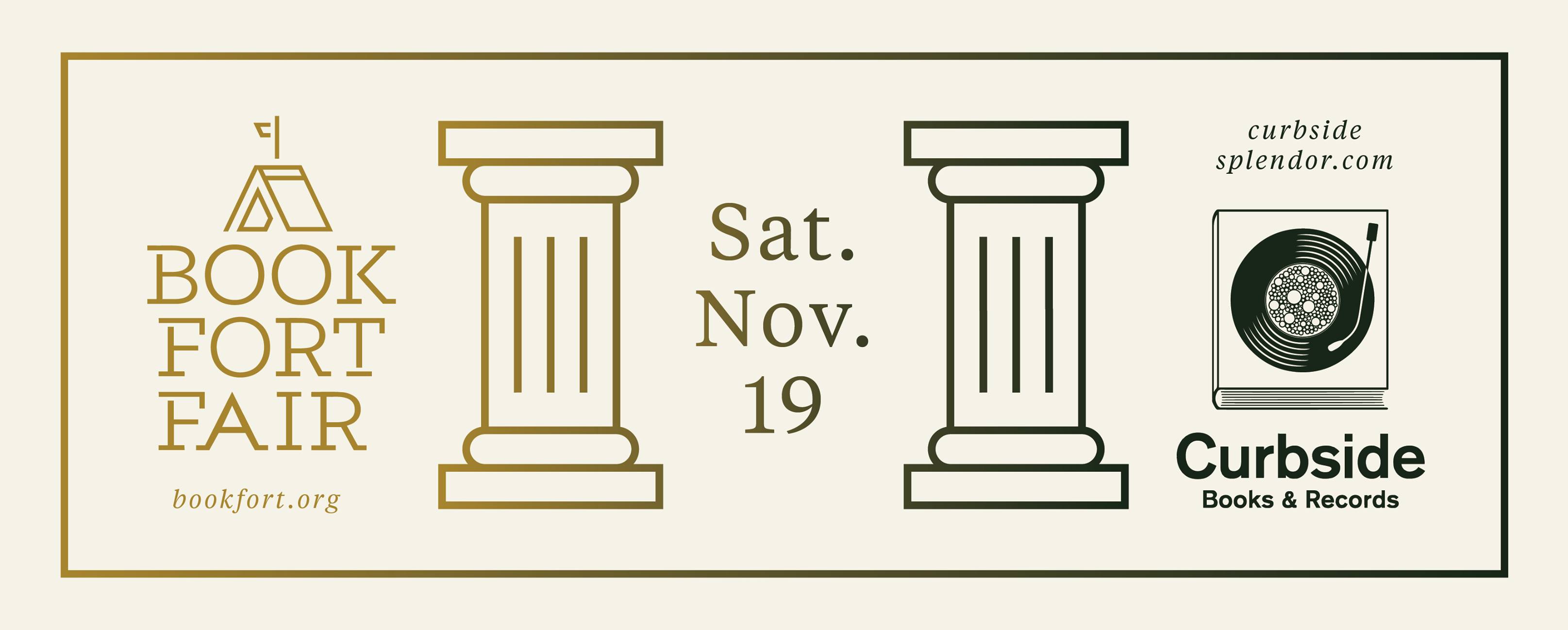
The first annual Book Fort Fair hosted by Curbside Splendor is coming up this Saturday, November 19th! Come stop by the Midwestern Gothic table to say hi to Rob and Jeff!

The event will be a chance to gather the literary community together to chat about the importance of books and publishing, with awesome activities like a letterpress workshop, a button-making station, and more! We’ll be at the event, but even if you don’t come see us, there’s plenty for anyone who appreciates literature.

At the event you can browse and buy books and literary magazines from more than 25 publishers, presses, and organizations! There will also be an all-day DJ and literary-themed cocktails. Yum! Be sure to check out the event’s Facebook page for more info!

Book Fort Fair
Where: Revival Food Hall, 125 S. Clark St., Chicago, IL
When: Saturday, November 19th 11am – 4pm
How: FREE! Just be sure to RSVP here!

|

No Comments

|

Interview: Tiffany McDaniel

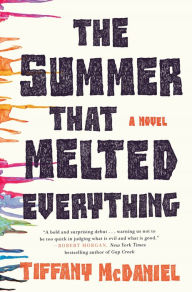
Tiffany McDaniel Midwestern Gothic staffer Lauren Stachew talks with author Tiffany McDaniel about her novel The Summer that Melted Everything, what’s in a name, midwestern gothic as a genre, and more.

**

Lauren Stachew: What’s your connection to the Midwest?

Tiffany McDaniel: I was born and raised in Ohio. I think every author is shaped by the land they come from and the Midwest has certainly shaped my own writing, particularly the southern reaches of the state, which is where my parents were raised. I spent my childhood summers and school-year weekends on the hilly acreage my father was left by his parents. The Summer that Melted Everything takes place in the fictional town of Breathed, Ohio, which is a landscape reflective of my time spent in southern Ohio, where the nights are mythically starred while the hills sing you to sleep. I’ve always said cut me open and fireflies will fly out with blood of rust and some moon-shine magic. How can it not?

LS: Your debut novel, The Summer That Melted Everything, is set in the fictional town of Breathed, Ohio during the summer of 1984 – the year a heat wave scorched the entire town, and the year main character Fielding Bliss befriends the devil, who takes the form of 13-year old boy, Sal. The short synopsis in itself is both compelling and wonderfully unusual. When and how did you formulate the idea for this novel?

TM: The novel started first as a title. It was one of those Ohio summers that was so hot I felt like I was melting. All of me dripping down onto the dandelion ground. I always start a new novel with two things. The title and the first line. These two things determine the course of the story. I never outline or plan the story out beforehand, so the idea evolves with each new page and word that I write. Outlining or planning the story domesticates the idea and I want to preserve the story’s wild soul so it can beat on with the thunder.

The Summer that Melted Everything

LS: The characters in this novel have such beautifully strange names – Fielding Bliss and his father Autopsy, in particular. Why did you prefer these names as opposed to something more conventional?

TM:  I’ve found in my writing that I tend to stray from those conventional names like John or Mary. There’s so much in a name, and using a name as a subtle tool to drive a theme home is something I take advantage of as an author. I feel like the characters already know their names and it’s up to me as the author to name them their truth. In the case of Autopsy, I had seen the word that day I was naming him. We’re all familiar with the word autopsy from crime shows and movies. The dead body on the cold slab. But when I looked up the definition of the word and saw it’s meaning of ‘to see for oneself’ there really was no other name for a man who one day puts an invitation in the newspaper inviting the devil to town.

LS: The language and atmosphere of this novel feel almost cinematic at times. Because you are also a screenwriter, were there any films that provided inspiration or imagery into this narrative?

TM: I do love film and when I write I tend to write with the hope that the story will be translated to the screen. For the most part I’ve always been pretty visual. It’s almost like a movie filming in my head. I can’t say there were any films that provided inspiration for the story. You’ve got to allow your story to be its own self and not the echo of something else.

LS: This novel has been described as “Southern Gothic” by several reviewers, yet both the novel’s setting and your upbringing are in Ohio. Why do you think the qualities of southern fiction have been ascribed to this narrative, as opposed to recognizing its Midwestern environment and perspective? Do you think southern Ohio, and perhaps other parts of the Midwest, exist in a liminal space between these regions, having the ability to hold their identities in both places at once?

TM: I think people who are unfamiliar with southern Ohio will think after reading The Summer that Melted Everything that the story is more southern, just because when we hear that dialect or twang we immediately associate it with the southern portion of the United States, which is a shame because there’s so much culture in the southern reaches of Ohio that most, even those living in the central and northern part of the state, aren’t too aware of. Things like making moonshine and swimming in the creek is something we’ve seen over and over again in southern books, shows, and movies so that particular lifestyle is strongly associated with the south and the south only. Furthermore, I think Midwest Gothic isn’t as ingrained in readers’ minds as Southern Gothic because Southern Gothic is a genre that has been long-established by some of the finest authors we’ve ever had like Harper Lee, Flannery O’ Connor, Carson McCullers, Shirley Jackson, and William Faulkner. Because they are authors who are so prominent, that southern genre has swallowed other gothic genres, Midwest included. It’s unfortunate because there’s so much magic in this land and in its literature. There is its special brand of gothic that rises to its own occasion.

LS: What does a typical day of writing look like for you?

TM: I don’t have a schedule or routine. I don’t set a goal of writing a certain amount of words or pages a day. For me, it’s just about being present and ready. It’s like going out to a big ol’ faucet. Turn that faucet on and just be ready with a big ol’ bowl to catch what comes out.

LS: Which author(s) have had the most influence on your writing?

TM:  I’ve been writing since I was a kid. I grew up on R.L. Stine. His Goosebumps and Fear Street series. I didn’t read the heavyweights of my literary genre until I was older and had actually already had my first novel written, so I can’t say there’s been a particular author or book that has influenced me, but some of my favorite authors are Ray Bradbury, Shirley Jackson, Harper Lee, Donna Tartt, and the poet James Wright.

LS: What’s next for you?

TM: I have eight completed novels and am working on my ninth. The novel I’m hoping to follow The Summer that Melted Everything up with is titled, When Lions Stood as Men. It’s the story of a Jewish brother and sister who escape Nazi Germany, cross the Atlantic Ocean, and end up in Ohio. Struggling with the guilt of surviving the Holocaust, they create their own camp of judgment up in the hills of Breathed, Ohio. Being both the guards and the prisoners, the siblings punish themselves not only for surviving, but for the sins they know they cannot help but commit.

**

An Ohio native, Tiffany McDaniel’s writing is inspired by the rolling hills and buckeye woods of the land she knows. She is also a poet, playwright, screenwriter, and artist. She is the winner of the Not-the-Booker Prize for her debut novel, The Summer that Melted Everything, which is a Goodreads Choice Award 2016 nominee.

|

No Comments

|

Contributor Spotlight: Christi R. Suzanne

christi r suzanneChristi R. Suzanne’s piece “Whispers” appears in Midwestern Gothic Issue 23, out now.

What’s your connection to the Midwest, and how has the region influenced your writing?

I was born in Cleveland, Ohio, but lived there for maybe two years so I don’t remember that. My main connection is my parents who grew up in a small town called Napoleon, Ohio off the Maumee River. We, including my older sister, visited every other summer and got to take trips to Cedar Point with my Aunt and Uncle and cousins. That was the best! We also took our uncle’s boat down the river and visited the local Frosty Boy for some ice cream. We still go back every few years. My most recent visit was just a few months ago for my grandpa’s 95th birthday.

What do you think is the most compelling aspect of the Midwest?

I always found the opportunity to explore a type of nature that was so different from where I grew up in Arizona compelling. I was always scared of it because it seemed like so much was hiding. In the desert it’s pretty flat and the saguaros or prickly pears can’t hide much. It felt dangerous in Ohio to eat berries off the vine when my grandmother or dad took us on walks. Once I told my grandma I felt sick after eating some really good berries. I felt like I ate poison! She laughed at me. I guess I was a city kid from my time in Arizona.

How do your experiences or memories of specific places — such as where you grew up, or a place you’ve visited that you can’t get out of your head — play a role in your writing?

Definitely, Napoleon, Ohio. It’s a place that holds a lot of secrets and a lot of memories for me. I always wanted to know more about the place where my parents grew up. Sometimes to see if it was better than my experience and sometimes because I wanted to know how they came to be the people they are. I have always been curious about origins and how we as humans become who we are. This is great for creative non-fiction.

Ohio is a place that has some really cool old buildings and abandoned farmhouses or barns. There are tons of settings that lend nicely to imagination for my fiction.

I also love Cedar Pointe in Sandusky, Ohio. My aunt and uncle and cousins brought my sister and I along a few times and it was amazing. I’ve used that setting at least once in my writing recently.

I could go on, but I’ll spare you.

Discuss your writing process — inspirations, ideal environments, how you deal with writer’s block.

Generally, I am inspired by some real or imagined event. I also tend to ask a lot of why questions. Like why would someone want to buy a skull from a curiosities store? or what if you thought you saw a crime from atop a ferris wheel? I start with a question and go from there.

As far as ideal environments go I write best in the morning with a cup of coffee. I have a full time job so I mostly write only on weekends, which is unfortunate for my husband who rarely gets to go out to brunch with me, unless it’s after noon, and then you can’t really call that brunch.

Writer’s block? I guess I write through it or think through it. I do a lot of simmering when I’m having trouble with writing. I walk with my dog and let my mind wander a bit. If that doesn’t seem to be working I talk to some of my writer friends or my husband. A good talking it out session usually helps.

How can you tell when a piece of writing is finished?

Sometimes I can’t. However, when I can, I feel something like extra synapses have connected in my brain or some kind of stretching in that area. I think it’s because I was able to convey something the way I wanted to. I feel excited by the prospect that the piece has meaning beyond me and my process and I often get a sense of satisfaction that feels like a sponge sucking up water, maybe that’s the feeling of growing as a writer.

Who is your favorite author (fiction writer or poet), and what draws you to their work?

I’ve always loved Margaret Atwood, but I would also add Octavia Butler and Banana Yoshimoto as well as Yukio Mishima. Other authors include, Roxane Gay (I was blown away by her book Untamed State) and Yoko Ogawa. Oh, there are too many. I like the raw emotion that these authors convey as well as the social and/or cultural implications they often bring to light in their writing.

What’s next for you?

I have a work in progress, a novel, my second long form endeavor. My first has yet to be published, but I’m working on a new project and other short creative non-fiction and fiction pieces as well.

Where can we find more information about you?

www.christi-r-suzanne.com or @christirsuzanne.

|

2 Comments

|

Contributor Spotlight: Toni Nealie

Toni NealieToni Nealie’s piece “The Sediment of Fear” appears in Midwestern Gothic Issue 23, out now.

What’s your connection to the Midwest, and how has the region influenced your writing?

I grew up between the ocean and mountains of Aotearoa, New Zealand and moved to the Midwest as an adult. I write about the plains in contrast to the spectacular landscape I left. I’ve come to appreciate the beauty of the plains: “the muted splendor of the cornfields, nothing flashy or overly dramatic, just a quiet goldenness laid out between the horizons.”

What do you think is the most compelling aspect of the Midwest?

Chicago skyscrapers lined up with the lake rolling out in front — the manmade looks puny compared to nature. The way the storms roll in across the plain. My dog hides under the bed whenever there’s thunder and lightning.

How do your experiences or memories of specific places — such as where you grew up, or a place you’ve visited that you can’t get out of your head — play a role in your writing?

The Miles Between Me is largely about place, borders, distance and different perspectives on upheaval and memory. I use landscape as a way into difficult topics – in “Rupturing” I write about an earthquake in my hometown. The distress caused “when all that is known has been heaved up” refers to the loss of environment and loss in my family. In “The Sediment of Fear” I write about rocks, and wonder how the sediments connect us to our unstable histories, across time and place.

Discuss your writing process — inspirations, ideal environments, how you deal with writer’s block.

Right now I’m trying to generate new work. Clearing deadlines and making space for it is my biggest challenge. I like dreamy solitude when writing. And lots of coffee.

How can you tell when a piece of writing is finished?

When enough has been stripped away or added that it feels complete. I’m slow.

Who is your favorite author (fiction writer or poet), and what draws you to their work?

When I was writing this book, I was reading Maggie Nelson, Pessoa, Rilke, Baldwin… Currently I’m enjoying Chicago poets and fiction writers including Ladan Osman, Roger Reeves, Chris Rice. Ideas and language attract me, the sound, texture and rythym of the words on the page and an attempt to let me see a perspective I hadn’t encountered.

What’s next for you?

I’m coming to the end of six months of readings for The Miles Between Me. I’m co-editing The Sunday Rumpus, Literary Editor at Newcity, and I’m teaching writing. I’m in a pre-writing phase right now – hope to be into the writing soon.

Where can we find more information about you?

Toninealie.com and @tnealie

|

No Comments

|

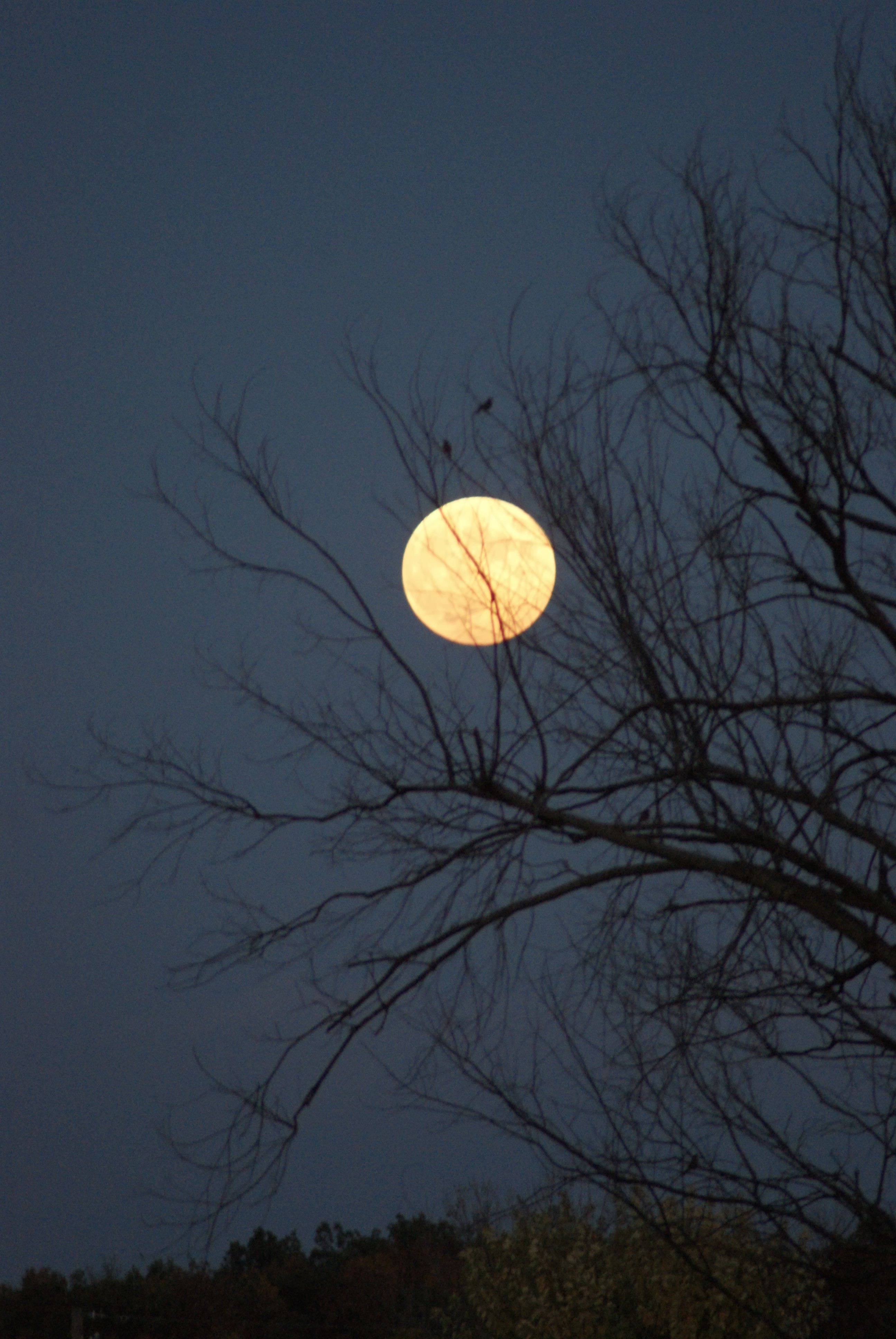
Midwest in Photos: Two birds and the moon

“Beneath the unscrolling story of new sun and stars and then-lonely moon, she began to sing some new possessions into the interior of our house, and between the lake and the woods I heard her songs become something stronger than ever before.” –Matt Bell, In The House Upon The Dirt Between The Lake And The Woods.

Mason_Shreve-two_birds_and_the_moon

Photo by: Mason Shreve

|

No Comments

|

Interview: Alexander Weinstein

alexander weinsteinMidwestern Gothic staffer Kristina Perkins talked with author Alexander Weinstein about his collection Children of the New World, the relationship between technological and interpersonal connection, finding hope in dystopia and more.

**

Kristina Perkins: What’s your connection to the Midwest?

Alexander Weinstein: I’m originally from New York, and came to the Midwest by way of Portland, Oregon (where I was a chef for many years) and Boulder, Colorado (where I finished my undergraduate degree at Naropa University). I first came to the Midwest when I entered Indiana University’s MFA program in Bloomington, and then six years ago I moved to Ann Arbor for my teaching position.

KP: How has the Midwest — as a place, a community, and/or a value system — influenced your writing?

AW: It’s been an interesting mix of compassion, joy, and despair! The final story in the collection, “Ice Age”, came about from the first winter I spent in Michigan. We were covered in perpetual snow and ice, and I felt like I was living through an ice age! There’s also a great deal of urban decay and economically devastated communities throughout Michigan, which has led to the socio-economic and environmental settings which appear in the collection. There have been travesties of justice throughout Michigan. Our governor, Rick Snyder, knowingly switched the city’s water source and so poisoned the families of Flint. So this kind of political crime is far beyond any dystopia I could dream up in my fiction. Detroit, which is nearby, contains post-apocalyptic landscapes while also birthing urban-farming and re-inhabited art and community spaces—and this speaks to a kind of dystopic hopefulness that underlies the collection.

So that’s the element of despair that I’ve felt in the Midwest. As for compassion and joy, I’ve been raising my son here in the Midwest, and our relationship brings a great amount of joy to my life. This element of parenthood plays a big part in the collection. I also think there’s a real genuineness and kindness underlying Midwestern sensibilities. In many ways, there’s a lack of pretentiousness in the Midwest (in particular, the uber-hipsterism which one can find in many coastal cities) and I admire this Midwestern honesty. I remember one winter, when my car went off the road during a snowstorm, there were literally dozens of people who stopped to help me and my family. Perhaps this level of human kindness is present throughout the US, but I’ve noticed it in particular since moving to the Midwest.

KP: Your debut collection, Children of the New World, focuses on the (often times inverse) relationship between technological and interpersonal connection. How would you describe your own relationship to technology — not as only a writer, but as a teacher, father, and community member?

AW: There are a great number of social/political ways that the internet helps us — we learn about social injustices around the world thanks to the internet, and we’re able to protest and create human rights movements due to the networking capabilities technology provides. All of which I use the internet for. One can also download great spiritual talks from thinkers like Ram Das, Rabbi Zalman, Terrance McKenna, or the Dalai Lama. In this way, there’s a wonderful availability of spiritual teachings thanks to technology — and I often listen to these podcasts and find them very enriching.

Of course, the internet isn’t good or bad, it all depends on how we use it. But my fear is that we’re not really using it that well. The endless emailing and texting, the spambot click-bait, and the millions of mini-games out there — it all creates an intense addiction to our devices. I find myself checking my phone 30-40 times a day, at red lights I send off a last text to someone—these are behaviors symptomatic of addiction. So, while I certainly use/need technology on a daily basis, I’ve been making an effort to disconnect. I leave the phone at home now, am considering reinstalling a landline, and try to avoid screen time as much as possible. I’ve even started calling people instead of texting them (what a bizarre idea-right!) And I’ve been working with my son to help him not overuse technology, since I think these issues of addiction are all the more severe for the generations raised with devices.
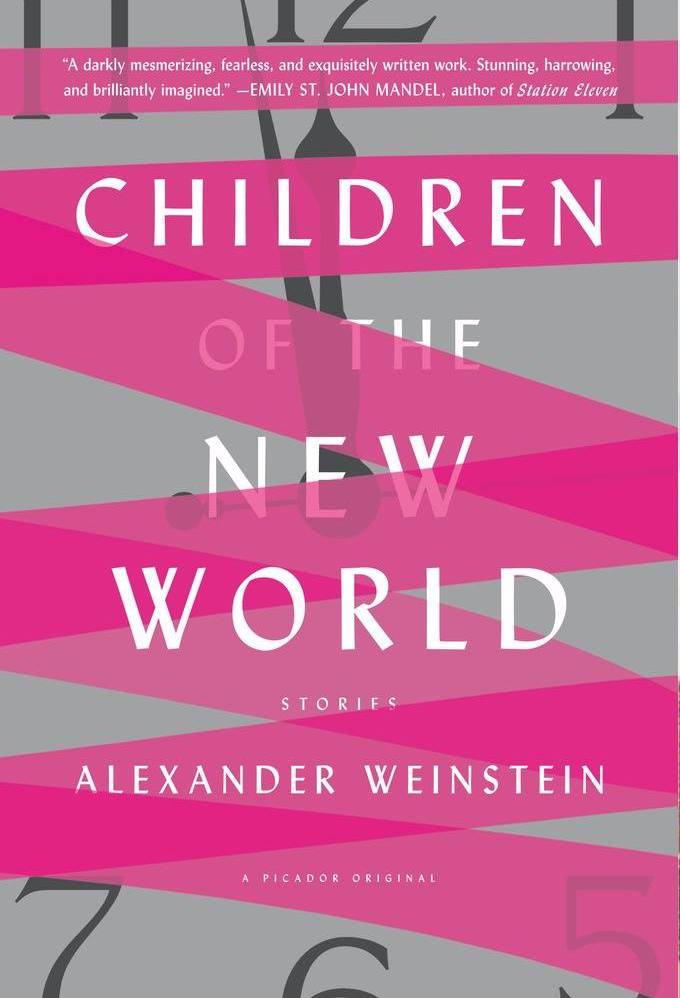
children of the new world

KP: You’ve said in previous interviews that, despite their themes of dystopia, anxiety, and fear, your stories are ultimately hopeful. When crafting your stories, how much are your plots influenced by this sense of optimism?

AW: I put a good deal of importance on hopefulness and human kindness within my writing. I really do want my stories to inspire positive change in the world — whether it’s due to a sense of optimism, empathy, a desire for human love and connection, or for activism. For this reason, it’s particularly hard when I have a darker story come to me.

For example, the story “Heartland” is one of the most devastating stories in the collection. The parents in that story are struggling so deeply, and the decisions they are forced to confront are awful ones that I’d never want anyone to have to make. While writing that story, I really struggled against my own sense of optimism. The story doesn’t match up with my hope for the world, and originally I tried to make the story a humorous one to lighten the mood (if you know the story: a clearly asinine endeavor). This attempt — to superimpose my own philosophical desires on the story — made the story unwriteable for two years. I finally had to get myself out of the way and allow the story to be told in the tone it demanded.

KP: Why do you think science fiction writing places so much emphasis on the dystopian, the post-apocalyptic? Should we make more room for utopian literature? Put another way: what is the relationship between dystopia and utopia, both in Children of the New World specifically and sci-fi generally?

AW: Well, we’re certainly living though rough times. Fracking is making our water flammable, police are killing innocent black people with seeming impunity, there’s a legal system increasingly set up to protect corporations, and in North Dakota, the tribes of all nations have been amassing to protest the seizing of their lands by oil companies and are facing brutality from the National Guard. These are huge social, environmental, and human rights issues (just to name a few). When I look at these issues, I see a world much more dystopic than anything I could come up with. So I think sci-fi writers are often looking critically at the world, and dystopian stories offer social critique and literary activism. Certainly the stories in Children of the New World are working in this vein.

And yet, I’m totally fascinated by this idea of a new utopian literature. In many ways, I feel like our art forms (particularly in the past 40 years) have been largely informed by a kind of ironic/cynical stance. Intellectual acuity has gone hand in hand with a kind of jaded, ironic cynicism. There are many writers who I admire that revel in this cynicism — David Foster Wallace is a prime example. There are of course exceptions to this rule (Italo Calvino and Tom Robbins) but largely we’ve been in the business of cynicism for the past couple decades. This makes me think that there may be an unexplored genre out there: one which utilizes the emotion of unabashed joy as its central motivation. I’ve been thinking a lot about the jubilant story. What does a story look like that takes the tone of a praise poem? A story which sings? This sort of story would somehow have to celebrate the mystery of being alive, of human kindness, of love, compassion, and care. I think the poets are already exploring this terrain much more readily than fiction writers. I really love Ross Gay’s collection, Catalog of Unabashed Gratitude — which has an incredible amount of love and praise for humanity. The question a more utopian literature raises is how one deals with conflict? Perhaps, the very notion that fiction needs conflict is merely a remnant of the older models of narrative (which are intrinsically linked to cynicism). Are there other craft techniques that would supplant the element of conflict in a more utopian literature? I don’t know the answers to these questions, but the idea of the joyous story is always simmering in the back of my mind.

KP: The landscapes of Children of the New World are decidedly futuristic: your characters live in societies where clones, robots, and even virtual sex games are commonplace. Despite this technological futurism, you’ve mentioned that you consider your work more as speculative fiction than traditional sci-fi. Why do you make this distinction? What, to you, are the benefits of this sort of genre hybridity?

AW: Since I don’t get into the actual science behind the technology, my stories don’t fall into the technical category of sci-fi. Scientific believability is often a badge of honor for sci-fi writers — deservedly so — and because of this, I feel that my work is speculative rather than scientific. My focus on the very human dramas of life (the struggle to love well, to be good parents, to navigate relationships) also shares a great deal with the genre of literary realism. So the genre labels of speculative fiction and slipstream work well for covering both of these terrains. All that said, I’m not a huge fan of siphoning literature into genres — I’m much more for letting all genres (sci-fi, detective, mystery, adventure, humor, absurdity, realism) come under the heading of simply “Fiction.”

KP: I was wondering if you could talk a little more about your creative writing program at Martha’s Vineyard. Why did you start it? What drew you to an island off the coast of Massachusetts?

AW: When I first became a writer, I imagined I’d be entering into an actively artistic community, full of late night dinners, philosophical conversations, impromptu poetry readings, etc. And there have been times of such artistic collaboration in my life and also throughout history (the Expatriates in Paris, The Beat Generation, etc.) But I was surprised to find that the writing life was much more solitary than I’d expected, often fraught with faceless rejections, and unfortunately besieged by internal hierarchies and competition. This idea of a hierarchy (and it appears in writing programs where only “the best” student writers get to work with “the most prominent” faculty) was completely antithetical to what I considered an artistic community.

So in 2010 I founded The Martha’s Vineyard Institute of Creative Writing in order to create a summer writing program where writers of all ages and experience levels could work together in a supportive and craft-intensive environment. The founding goals were to minimize competition and nurture cooperation, craft, and community. MVICW is also specifically focused on breaking down the hierarchies and literary egos which can arise in more competitive programs, and promoting a model of inclusivity. Attendees work closely with the visiting faculty, there are evening readings, craft seminars, and faculty and attendees celebrate with a dinner together — so it creates a much more intimate and creative environment (the kind I’d hoped for when I first became a writer).

Every year I’ve been inviting award-winning authors, poets, and literary journal editors to come to MVICW as faculty. Since we are a non-profit organization, our mission is to help writers in financial need, and I’m engaged in fundraising and grant writing to create fellowships for writers who would benefit from the program but couldn’t otherwise afford to come. Over the past seven years we’ve been able to offer dozens of scholarships to writers, and my hope is to eventually have a fully endowed program.

As for Martha’s Vineyard, my family has our home on the island, and so it’s been my home for a long time. The island has a really rich history of supporting literature and the arts, and it’s also one of the most beautiful places I know. So I wanted to share this place, which means so much to me, with other writers.

KP: Who is your favorite contemporary author, and what type of inspiration do you draw from their work?

AW: Can I name more than one? If so: Tom Robbins, Ishmael Reed, Tatyana Tolstaya, George Saunders, Karen Russell, Ludmilla Petrushevskaya, Michael Martone, Steven Millhauser, Victor Pelevin…I could go on. I love how each of these writers experiments with the borders of fiction and the so-called “rules” of literature.

KP: What’s one thing you wish you had known when you first began writing?

AW: The number of rejections inherent in finding success! We’re talking hundreds upon hundreds of rejections — which is par for the course.

KP: What’s next for you?

AW: I’m presently working on my second book with Picador, The Lost Traveler’s Tour Guide, a novel comprised of tour guide entries that describe fantastical cities, museums, libraries, restaurants, hotels, and art galleries — each one a universe unto itself. It works primarily in the vein of Italo Calvino’s Invisible Cities, and Milorad Pavic’s Dictionary of the Khazars. It’s also a kind of autobiography, as each of the destinations is a metaphor for the emotional locations I’ve visited: museums of longing, hotels of joy, cities of heartbreak. Whereas Children of the New World has ties to sci-fi, this new book is rooted in magical realism. All the same, I’m still working with my favorite topics: nostalgia, longing, memory, and love.

**

Alexander Weinstein is the Director of The Martha’s Vineyard Institute of Creative Writing and the author of the short story collection Children of the New World (Picador 2016). His fiction and translations have appeared in Cream City Review, Hayden’s Ferry Review, Pleiades, PRISM International, World Literature Today, and other journals. He is the recipient of a Sustainable Arts Foundation Award, and his fiction has been awarded the Lamar York, Gail Crump, Hamlin Garland, and New Millennium Prize. He is an Associate Professor of Creative Writing and a freelance editor, and leads fiction workshops in the United States and Europe.

|

No Comments

|

Interview: Dan Raeburn

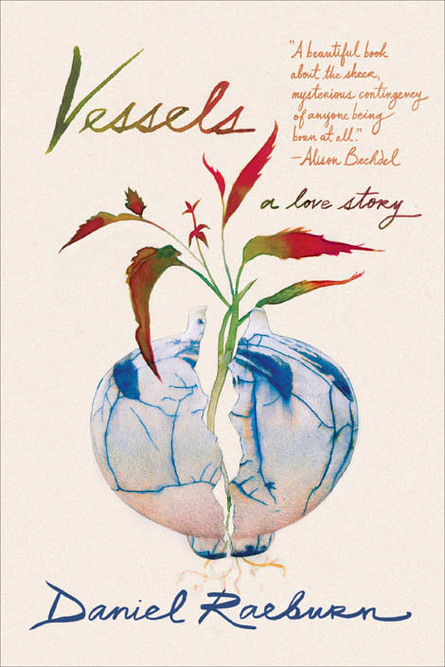
Dan RaeburnMidwestern Gothic staffer Sydney Cohen talked with author Daniel Raeburn about his book Vessels, looking for a home, birth and death and more.
**

Sydney Cohen: What’s your connection to the Midwest?

Daniel Raeburn: I lived in Iowa City for most of elementary school and college. After college I moved to Chicago, where I’ve been for the past 23 years. I think my deepest connection has to be the sound of insects at night. Crickets, cicadas, who knows what whirring and whining so loudly that the summer nights sound electronic. It’s a jungle out there, and every time I hear it I feel like I’m ten years old again, sweating in bed in the dark with the windows open.

SC: Your new book, Vessels, deals with the universal themes of love, loss, and sacrifice in regards to your personal history with building a family. Though these themes can be found in stories all over the globe, how did the Midwest, and its influence, play a role in your experience with them?

DR: The book’s about looking for a home, in part because I felt like I’d never really had one. I start the story when I’m 33 years old; by that point I’ve already moved 24 times in my life. So I’m ready to settle down, to make a home in Chicago. Having kids becomes a part of that, but not in the way I’d imagined. When Bekah’s and my firstborn died it was like an atom bomb exploded, and our apartment in Chicago became ground zero. Instead of trying to move on, to get away to somewhere new, we stayed in that place. We toughed it out. We had more kids there, and at least one more miscarriage. Those births and deaths were a big part of what made our apartment and the city itself our home. To me they’re haunted, but not necessarily in a bad way.

SC: Through your writing of Vessels as a memoir, what was your process of translating your own real life events to literature and prose? Did you write as you experienced things in the moment, or write in reflection of those events?

DR: Both. I wrote most of Chapter Two, which is about the stillbirth, in the nine months that followed it. I published that as a stand-alone story and thought I’d moved beyond it. But I found myself keeping a more or less daily journal for years afterward, just to write down my many thoughts about fatherhood: about Irene, our child who died, and about Willa and Hazel, who were alive and well. I thought that this was a distraction or relief from the book I was really working on, a book about comic books. But eventually I realized that those journals were the book I really cared about. So I went back and distilled them from the original 600 pages or so down to the novella-length memoir. The hardest part, other than cutting, was weaving in the preexisting published piece, making it fit into this much larger and longer story.

Vessels

SC: Your book deals heavily with literal birth and death, telling the story of your and your wife’s struggle with multiple miscarriages as well as two healthy births. Beyond the literal, how does your book approach and discuss figurative birth and death? How did you weave together the literal and the figurative?

DR: This goes back to what I said about Irene’s birthday being ground zero. If my life’s a number line, she’s the zero on it; her death erased everything that had happened to us before. In that sense it was a kind of death for me too; but also a kind of rebirth in that I had to basically start my life over again. I didn’t really realize this until the day, many years later, when I was writing about her and abbreviated her name for the first time: Instead of “the day Irene died,” I wrote “the day I. died.” That’s when it clicked.

SC: Vessels also explores the progression of your relationship with your wife, from your first meeting throughout your building of a family. How did your perspective on your marriage and its dynamic change through the process of writing about it?

DR: When a child dies, it’s almost like something else has to die too. Usually it’s the marriage that produced the child. That was definitely the question in our marriage. Ultimately I realized that I had to end the book on an ambiguous note; to end by making the point that the same thing that broke our marriage had also cemented it.

SC: The Imp, a series of essays spotlighting various underground cartoonists, is your most previous work, published in the late 90s/ early 2000s. In terms of your writing, where were you mentally in the interim between The Imp and Vessels, published in March 2016? Why so long a break between your published works?

DR: Part of the reason is kids. I’ve been extremely busy for the past ten years raising two small children, who give you no rest whatsoever. Another reason is the process I described in the book. I was under contract to write a big book about comics, and after Irene died, my desire to write that book died too. But I didn’t realize it for several years. Once I did I paid back the advance to my publisher and wrote this book instead. Which took forever, in part because the book itself could’ve gone on forever. Every day was a new piece of material, a new development, a new wrinkle. I like to say that it took me a long time to make the book short.

SC: How did the experience of writing about other people, as in The Imp, differ from writing about yourself? Which do you prefer?

DR: No preference. They’re equally difficult, and the truth is that all my writing about cartoonists said as much about me as about the subjects themselves. The true subject of an essay is usually the essayist himself, and my essays about cartoonists were no exception. And the memoir’s not only about me; even though my consciousness is the main character, so to speak, so is my wife, and she’s the hero of the story. Memoirists worry more about their portrait of other people than their portrait of themselves.

SC: What’s important to keep in mind when writing a memoir?

DR: That it’s not about you. It’s about your reader, about her experience as a reader, not necessarily yours as a writer, or even as a character. You have to keep the reader in mind constantly. Most novelists and poets have this problem too. We all do; that’s one of the things that makes writing so difficult.

SC: What’s next for you?

DR: I’m not sure. Teaching full time and reading as many books as I can, that’s for sure. I’d like to go back to writing something that’s journalistic or essayistic, and I’m playing with a few ideas, including a true crime piece. But it’s way too early in the process to say.

**

Daniel Raeburn is the author of Chris Ware, a book of art criticism, and Vessels, a memoir. His essays have also appeared in The New Yorker, The Baffler, Tin House, and in The Imp, his series of booklets about underground cartoonists. He’s been awarded fellowships from the McDowell Colony, the Vermont Studio Center, the Howard Foundation, and the National Endowment for the Arts. He and his wife and daughters live in Chicago, where he teaches nonfiction writing at the University of Chicago.

|

No Comments

|