Interview: Samrat Upadhyay

August 3rd, 2017
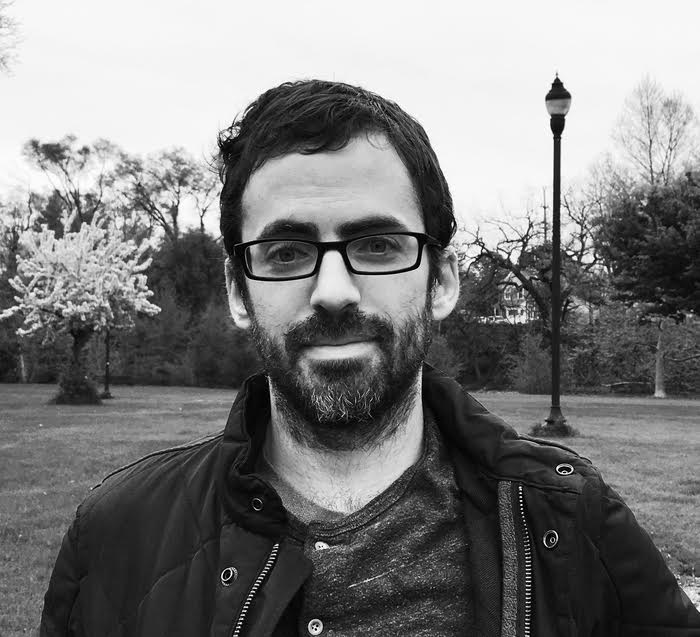
Samrat Upadhyay authorMidwestern Gothic staffer Kathleen Janeschek talked with author Samrat Upadhyay about his collection Mad Country, intersections of Nepal and America, current event writing, and more.

**

Kathleen Janeschek: What’s your connection to the Midwest?

Samrat Upadhyay: Midwest has been my home away from home for the past twenty five years. When I first landed in the U.S. on a cold January evening in 1984, it was in Cedar Rapids, Iowa, to attend school at Coe College. After one semester, I transferred to Ohio’s College of Wooster, from where I earned by BA in English. For my MA, I migrated three hours south to Ohio University in Athens, Ohio, where I earned a degree in Creative Writing. After I spent some time in Nepal and in Hawaii, my first tenure track job brought me back to Ohio, at Baldwin-Wallace College. Now for more than a decade I’ve been a professor at Indiana University in Bloomington. Although I can’t call myself a child of the Midwest, I’m certainly a student of the Midwest. And since I got my US citizenship while in Indiana, I’m a naturalized Hoosier.

KJ: Nepal and Midwestern America are undoubtedly very different places to live in. So what has been the most surprising similarity between the two?

SU: You know, my whole body of work is about seeking commonalities among people. When my first book was published, some reviewers seemed surprised that Nepalis were like Americans: they laugh, eat, worry about their children’s schooling, have sex etc. Speaking specifically of the Midwest, I think there is a openness and approachability to both Midwesterners and Nepalis. Midwesterners are friendly and helpful, and Nepalis are also warm and kind people.

KJ: Do you ever find your depictions of Nepal influenced by your experience in the Midwest?

SU: Living in the quietude of the Midwest has certainly sharpened my sense of Nepal. I am a writer who needs a distance – both of time and place – to write with clarity, and living this far away has enabled me to have perspectives that I otherwise wouldn’t have. More specifically, I was a poor student throughout my college career in the Midwest. In Nepal, I’d grown up middle class, and although my parents weren’t well to do, they’d made sure I didn’t feel any lack. So, this experience of not having enough in America was new to me, and I think it taught me important lessons about human experiences that I was then able to transfer to my Nepali characters.

KJ: When portraying Nepal to a primarily Western audience, what cautions do you take?

SU: I try to be as balanced as I can. I have certain views and opinions, but a work of fiction isn’t about my opinions but about the complexity of people’s lives I depict. Balancing doesn’t necessary mean I’m looking for the other side of the coin in each instance: it simply means turning inward to reach for the truth. Often that’s enough for a truthful and multifaceted portrayal. It’s a question of not blocking your own light.
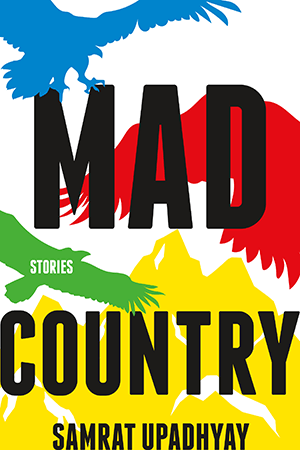
Mad Country book

KJ: In your new collection, Mad Country, there is the story called “America the Great Equalizer,” which is your first story set in America. What made you finally decide to write a story set in America?

SU: “America the Great Equalizer” is my first story fully set in America, although in my previous work my characters have done some traveling to America. When I lecture or do readings in the U.S., my Nepali readers, especially the younger generation, have asked me why I haven’t written about them. My answer has been that Nepal’s hold on me is too strong to break. When Ferguson happened, I began thinking. Race issues in America tend to be couched in the binary of black and white, and the other shades of color are often not a part of the conversation. I envisioned a young Nepali student, with baggage from his own personal life, trying to come to grips with this big racial divide. It seemed like a natural extension of the other stories I was writing during that period. Many of these stories, although set in Nepal, also investigate the various identities that orchestrate our experiences.

KJ: Much of your work – including the previously mentioned story which centers around the death of Michael Brown and the subsequent riots in Ferguson – focuses on recent happenings. What do you consider the advantages and disadvantages of writing about current events?

SU: As I mentioned before, I do need some time and space in order to write about events. With Ferguson, I sensed an urgency, and I hope that urgency is communicated to the reader in my story. When you write about current events, what gets on the page can feel immediate and electrifying. The disadvantages of it are, of course, that you don’t have the wide-angled view, the third eye, that is crucial to a writer.

KJ: Likewise, many of your stories take place at the intersection between the personal and the political. What attracts you to these intersections?

SU: The personal is the political, as societal rules and consensus inform the everyday decisions of our lives. In the U.S. politics often doesn’t seem to matter in our personal lives, but even here you see that it’s the poor and the marginalized, and often the people of color, who are immediately affected by decisions made by those in power. In Nepal, politics feels intensely personal. During the Maoist civil war between 1995 and 2005 for example, even as a Nepali living in the U.S. I felt that it had invaded my personal space. When I spoke on the phone to my parents in Nepal, I’d hear fear in their voices, especially during the time when the Maoists targeted homes of those whose relatives lived in America. In my work, I am interested in how everyday people deal with the consequences of political decisions, how they manage to live, and sometimes live fully and richly, even in the midst of political crises.

KJ: What is the most important element of a sentence for you?

SU: That depends entirely upon what the sentence does. A sentence could purely functional, just to get the information across. Or it could emphasize mood and emotion. But I’m often on the lookout to see if a sentence can impart an image because images linger in the reader’s mind.

KJ: How do you keep your stories expansive and your language sparse?

SU: I like tight and lean – and sometimes mean – prose. The expansiveness has more to do with how you are looking (the vision) than what you are looking with (the medium). If your focus is narrow, then even when you employ expansive language, the focus will remain narrow. I do believe that language can empower us to become far-seeing, even though we might be quite nearsighted in real life.

KJ: What has teaching creative writing taught you about writing?

SU: That I don’t know everything, and that each classroom session is teaching me something.

KJ: What’s next for you?

SU: I am working on a novel. It imagines a radically different Nepal in the aftermath of the real earthquake of 2015.

**

Samrat Upadhyay (samratupadhyay.com) is the first Nepali-born fiction writer to be published in the United States. His debut short story collection Arresting God in Kathmandu was the winner of the 2001 Whiting Writers’ Award and his second short story collection, The Royal Ghosts, won the 2007 Asian American Literary Award. His first novel, The Guru of Love, was a New York Times Notable Book while his second novel, Buddha’s Orphans, was longlisted for the 2012 DSC Prize for South Asian Literature. His 2014 novel, The City Son, was longlisted for the PEN Open Book award. His latest story collection, Mad Country, has been called “brilliant” by Kirkus Reviews and “timely and remarkable” by Publishers Weekly. He is the Martha C. Kraft Professor of Humanities at Indiana University, where he teaches in its MFA program.

Flash Fiction Round 1 Runner-up: “Fame is the Opposite of Love” by Becky Robison

Flash Fiction contest 2017 MG logo
 

During the summer of 2017 we continued our annual Flash Fiction Contest series, inviting authors to respond to three different picture prompts. You can read more about the series here. Round 1 submissions responded to our photo prompt with the following criteria: here.

***

Round 1 Runner-up: “Fame is the Opposite of Love” by Becky Robison
 

We were wed in a world without smartphones and cameras, no pictures of the paper lanterns our guests tossed into the hot night sky the moment we first kissed as man and wife. No witness to our union but imperfect human eyes. I made my dress by tying knots in the sheets I stole from our neighbors’ clotheslines. You borrowed a wool necktie from your father. A pack of fat, happy dogs barrelled out of the woods and ate most of our layer cake. Layers on layers on layers, sweet jelly stuck in their fur. At the reception, Nirvana played an unplugged set, which was all they ever played, since amplifiers and shotguns and radios had never existed. Nobody was famous. Everybody fell in love.

Which is to say, of course, that we were never wed. Paper lanterns are a fire hazard, and Kurt Cobain shot himself in the head. You aren’t that into kissing. But you made the sacrifice for our proposal video, which went viral–more than a million views. Aside from the ugly whip-stitches we pulled in Girl Scouts, I never learned to sew, and the money I put aside from walking people’s needy, neglected dogs won’t buy me any dress, not if I want to eat. Your father hasn’t spoken to you in years. I haven’t spoken to you since you admitted to watching TMZ, then tried to pass it off as a guilty pleasure. You should feel guilty. Nobody asks to be famous. All I ask for is a love as sweet as the songs on the radio.

***

Originally from Chicago, Becky Robison is a graduate of University of Nevada Las Vegas’ Creative Writing MFA program. When she’s not traveling the world and freelancing, she’s working on her novel and serving as Marketing and Social Media Coordinator for Split Lip Magazine. Follow her adventures on Twitter: @Rebb003

|

No Comments

|

Flash Fiction 2017 Round 1 Winner: “Her Mother” by Kate Finegan

Flash Fiction contest 2017 MG logo

During the summer of 2017 we continued our annual Flash Fiction Contest Series, inviting authors to respond to three different picture prompts. You can read more about the series here. Round 1 submissions responded to our photo prompt with the following criteria: here.

***

Round 1 winner: “Her Mother” by Kate Finegan
 

Her mother would worry, waking up before dawn in an empty house. But sixty percent water, that’s what she was; that’s what her mother had told her, and she’d awakened to high tide beneath her skin.

Minnesota has ten thousand lakes—more than that, actually, her mother had taught her—but she was content with the lake she knew by heart. She biked to it, inflatable kayak packed tight in a box bungeed to the rear rack, gravel scattering beneath her twenty-inch tires.

No headlight. Just her, the moon, the mournful call of loons across the lakes. They could be miles away, or feet.

Her father would talk back to loons. He sounded like one of them, throat full of longing. He’d been gone a year; he wasn’t coming back, her mother had taught her.

Before he left, he’d taken her to the magnetic rock, a monolith amidst stumps of a burned-down forest. She’d never been to Paris, but she couldn’t imagine the Eiffel Tower any taller than this great, black rock. She held out her compass, and the needle swung to the rock. She circled it, the needle oblivious to true north. Her father said it was a glacial erratic, dragged far from home in the last ice age. He rubbed the rock the way her mother fingered her mother’s mother’s golden cross necklace she kept locked up in a box at home.

She’d paddled across the open water and come to a stream so narrow the reeds brushed her arms. She couldn’t see the bottom—too dark—but knew golden grass waved a foot beneath her paddle, shimmering blonde hair. She imagined pulling it, pulling and pulling until a woman was reborn from the earth, a buried princess.

Voices. Rustling leaves. Cracking twigs. Light. Orbs floating ahead, just above the water. She stopped paddling, looked down and saw the waving hair, looked ahead and saw a crowd of people flowing off the banks, like zombies, arms outstretched. This lake was small, but deep, and they quickly lost their footing. She recognized her dentist, her doctor, her Sunday school teacher.

They walked into the water; the whole town, it seemed, but not her mother. Her mother had warned her about these lights, how they didn’t really mark a thing, but people would follow them to their deaths in search of hidden treasure. The seekers went under without a splash.

The orbs vanished as quickly as they’d appeared. She paddled over to where they’d been, leaned over the side of the kayak, pushed her oar as deep as she could into the black water, but no hand grabbed it. They were gone, and all that remained was a loon at the bow of her boat. It looked at her, then turned and took off with great difficulty, as if the water were weighted with gold. But that was just how loons took off. Their bones weren’t hollow like other birds’. She’d learned that from her mother.

***

Kate Finegan‘s work has appeared in The Fiddlehead and Halo Lit Mag. She won first place in the 2017 Fiddlehead Short Fiction Contest and is currently working on a historical novel. She lives in Toronto.

|

No Comments

|

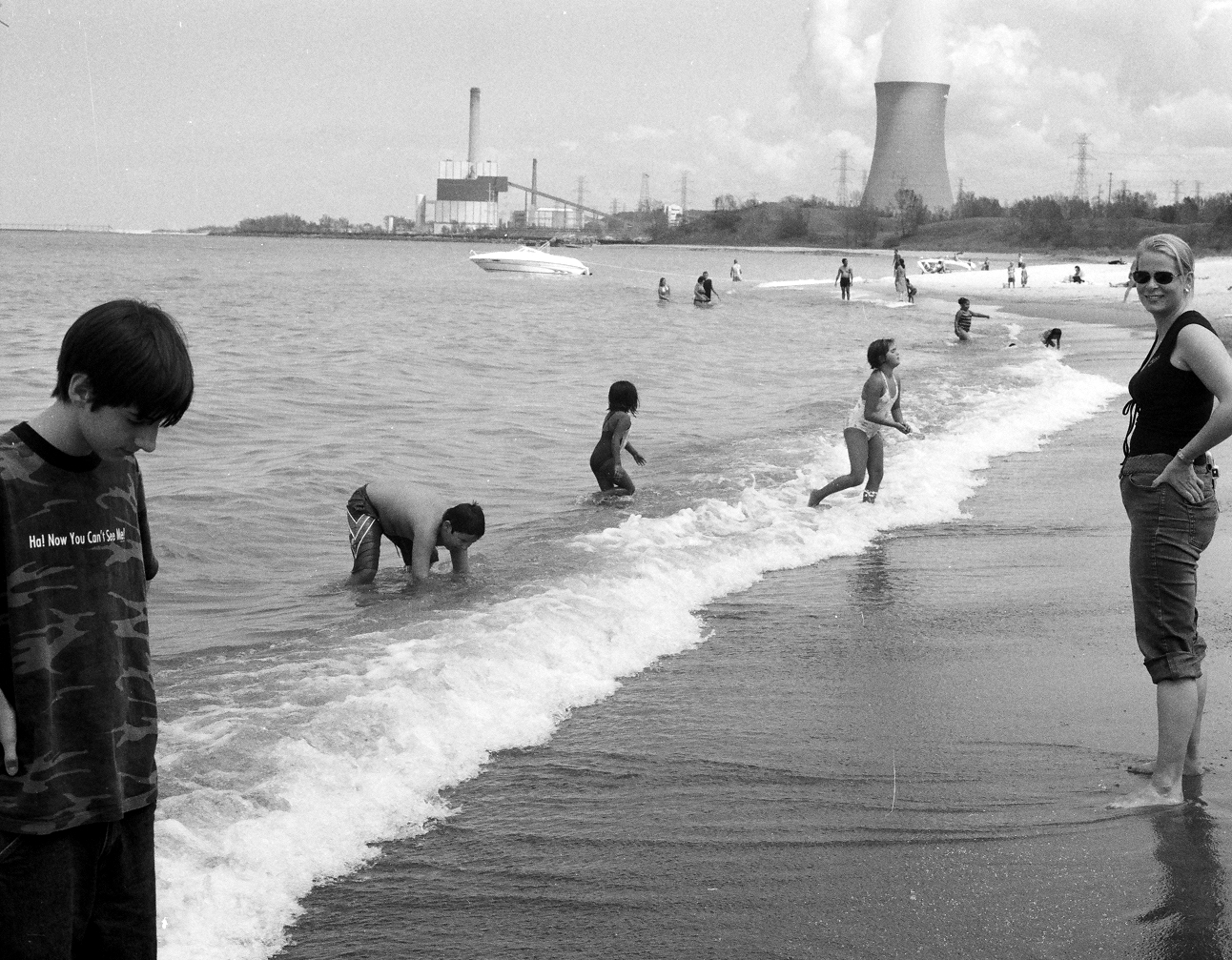
Midwest in Photos: Mt. Baldy Beach, Michigan City, Indiana, 2006

“I had this sudden awareness,’ she continues, ‘of how the moments of our lives go out of existence before we’re conscious of having lived them. It’s only a relatively few moments that we get to keep and carry with us for the rest of our lives. Those moments are our lives. Or maybe it’s more like those moments are the dots in what we call our lives, or the lines we draw between them, connecting them into imaginary pictures of ourselves.” – Stuart Dybek, Paper Lantern.

Photo by: George Stein

|

No Comments

|

Interview: Ian Bassingthwaighte

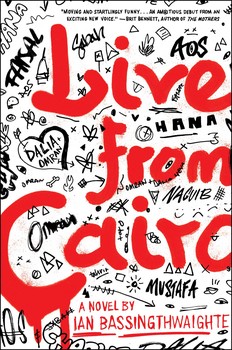
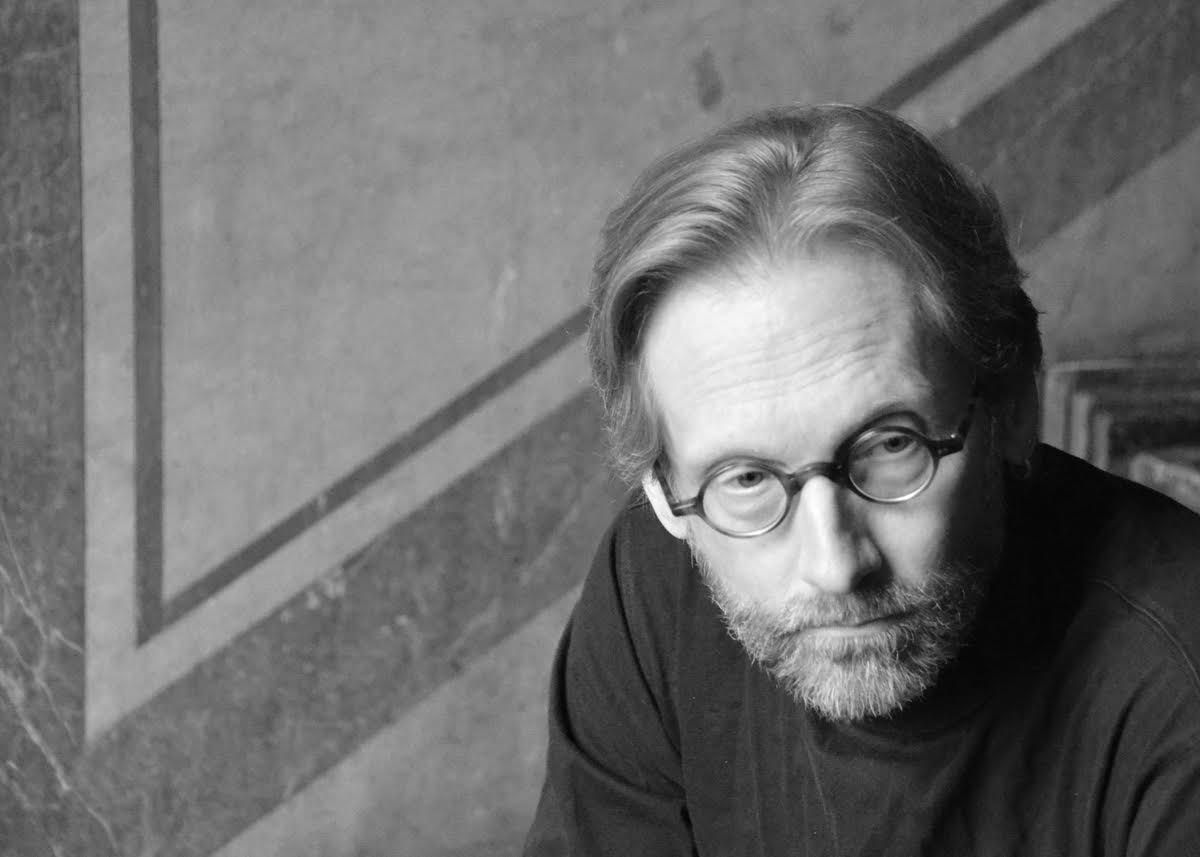
Ian Bassingthwaigthe author photoMidwestern Gothic staffer Meghan Chou talked with author Ian Bassingthwaighte about his book Live From Cairo, perspectives on the refugee crisis, the psychological toll of his work, and more.
**

Meghan Chou: What’s your connection to the Midwest?

Ian Bassingthwaighte: I was born in Minnesota and lived for a few years in Iowa, but moved to the West with my family at such a young age that I don’t have substantial memories of either state. Just vignettes. Blurry, almost dream-like recollections about a neighbor, a yard, a street. I didn’t come back to the region for more than twenty years, after I was fortunate enough to have been accepted into the Helen Zell Writers’ Program at the University of Michigan. This was in 2013. I spent the next two years in Ann Arbor and another two in Ypsilanti. Though my novel isn’t, as the title makes clear, set in the Midwest, much of it was written there. In my apartment, in the library, in the Rackham Building. This shows in small, but important ways. One of my characters is from Dearborn, for example. That character’s mother fled Iraq for Michigan, and ended up working in the library at Wayne State. These choices weren’t exactly conscious; real life just had a way of leaking into my work.

MC: Live From Cairo takes place in 2011 after the ousting of President Hosni Mubarak as Egypt erupts into riots. We follow the struggles of Dalia, an Iraqi refugee seeking asylum in the United States with the hopes of joining her husband in Boston. Live From Cairo unveils the ironies of wartime and bureaucracy in the modern Middle East just as Joseph Heller’s Catch-22 exposed the logical fallacies during World War II. How were you inspired by Catch-22 and what ironies particular to the conflict in the Middle East, and Cairo at the time, did you want to bring attention to?

IB: One of the many quotes from Catch-22 that I love: “The government paid him well for every bushel of alfalfa he did not grow. The more alfalfa he did not grow, the more money the government gave him, and he spent every penny he didn’t earn on new land to increase the amount of alfalfa he did not produce. Major Major’s father worked without rest at not growing alfalfa.” I love it because it reminds me how ill-equipped government and bureaucracy tends to be in A.) identifying the problem and B.) solving it. Take, for example, the refugee crisis. Western countries, which have been starting or exacerbating conflicts in the Middle East for generations, collectively bemoan the violence in the region, pass it off as a religious issue, and all but shut their borders when refugees, who’ve fled their home countries not by choice but by necessity, show up at the figurative door in search of respite. “Go away!” is the rallying cry of the Western world. “Keep your problems to yourself!” It’s absurd. We make refugees, then punish them for existing. It would be worth all the years it took to write this book if even one person who couldn’t see that before reading was thereafter able to.

Live from Cairo book cover by Ian Bassingthwaighte

MC: Hana, a resettlement officer for the United Nations Refugee Agency, and Charlie, a lawyer who works for the Refugee Relief Project, are two characters from very different backgrounds who have a large influence on Dalia’s fate. Both want to help refugees, but since only a limited number of cases can have a good outcome, the decision mostly rests on the power of the individual’s story. How do Hana’s and Charlie’s attitudes toward the refugee crisis change after they meet Dalia and hear her story?

IB: I can’t say too much about that without ruining the plot of the book. What I can say: even stubborn minds will change under the right circumstances. Arriving at those circumstances is largely what this book is about.

MC: Live From Cairo has a diverse cast of characters, including the aforementioned Dalia, Hana, and Charlie, as well as Aos — a protester in Tahrir Square, interpreter for refugees, and Charlie’s friend. How did you create distinct voices for these characters and what perspectives on the refugee crisis do each bring to the story?

IB: Writing believable characters is easier when you’ve born witness to people like them. That’s why I’m so thankful for my travels, for having worked in an office like Charlie’s, for having met, talked to, and befriended very real people who filled the roles likes the ones I’ve written. Lawyers, interns, translators, UNHCR employees, and so on. Having that abundant resource—thousands of memories derived from a powerful, if also painful experience—makes all the difference. There’s less burden on the imagination.

It’s interesting, too, that you ask about the different perspectives each character has on the refugee crisis. The book was designed with that question in mind. Omran, who was lucky enough to have been resettled, is nevertheless stuck in limbo. He’s waiting for his wife, who’s stuck in Egypt. Her lawyer, Charlie, is stuck trying to help them. The inadequacies of the system provide no room to move. Aos, Charlie’s only friend and translator, is stuck between a refugee crisis at work and a failed revolution in the streets literally surrounding the office. Hana, the UNHCR employee, is stuck between her desire to help and her inability. The rules make it impossible for her to act. Though these perspectives are different, they all share a common thread: an overwhelming sense of futility. No matter where you’re standing when you look at the resettlement system, you see a process that doesn’t work as it should. This brings us to the plot’s driving question: how far will the characters go to circumnavigate that broken system?

MC: In 2009, you served as a grantee of the Fulbright Program (an international exchange program dedicated to raising awareness of global issues). As a part of the program, you worked at a legal aid office in Egypt, helping refugees from Iraq, Sudan, and the Horn of Africa. How did your time in Egypt influence your portrayal and understanding of the struggles of refugees from the Middle East?

IB: More than just influencing my portrayal and understanding of the refugee crisis, it fundamentally changed my understanding of who refugees are. These are not people without hope, without humor, without light. These are people with lives in front of them. Futures, if we dare call them that. Characters who were cast in that role had to be round, had to be complicated. No empty shells. No victims who weren’t also something else. A father. A mother. A husband. A wife. An aspiring dancer. Something.

I would be remiss if I didn’t also mention the psychological toll of the work. The New York Times cited the rate of clinical depression among aid workers at double that of American adults. Experience tells me the real number is higher. But I digress. The point I’m trying to make is this: the work never really left my body. Writing this novel has been one way of handling that. So the job was more than just an influence; it was also the impetus.

MC: In addition to writing, you have had photographs published in magazines such as National Geographic. One particular series features photos of Egypt and the Middle East. How did the process of framing the cities and landscapes affect your portrayal of Egypt in Live From Cairo?

IB: Photography is more than just a visual reference. At least, if you’re shooting the photos yourself. Then the ostensibly static images contain smells, sounds, tastes, feelings. They are keys to memories locked away by time. (This is where I admit how long it took me to write Live from Cairo—7 years.) I needed some way to keep Egypt with me after I left. Besides reading and reminiscing with friends, photography was all I had. I suppose, too, that photography affects how I see the world and, by extension, how I describe it. My eyes, and so my pen, are drawn to singular details that reflect the nature of some larger place. Why describe an entire kitchen when you can just describe ants crawling in the sugar bowl? The reader’s imagination will extrapolate the desired shabbiness.

MC: In the past, you have published mostly short stories and nonfiction, so Live From Cairo is your first full-length novel. What advice do you have for writers transitioning from short fiction to longer pieces?

IB: There’s a song I like by First Aid Kit in which they sing, “Now, so much I know that things just don’t grow if you don’t bless them with your patience.” I suggest every budding novelist take that line to heart.

MC: What’s next for you?

IB: I’ve taken a few tentative steps toward a second novel. I’m still interested in immigration, but with an eye toward the future: how borders might look, for example, in a post-apocalyptic environment. Anything else I say about it will almost certainly change. It’s just an idea at this point. A few dozen pages of chicken scratch.

**

Ian Bassingthwaigthe was a Fulbright Grantee in Egypt in 2009, where he worked in a legal aid office that served refugees from Iraq, Sudan, and the Horn of Africa. He has been honored with Hopwood Awards for both novel writing and short fiction. He was also named as a finalist for the Daniel Pearl Investigative Journalism Initiative. His work has appeared in Esquire, National Geographic, The Chicago Tribune, The Sun, Tin House, The Rumpus, and many other publications. Live from Cairo is his first novel.

|

1 Comment

|

Interview: Lance Olsen

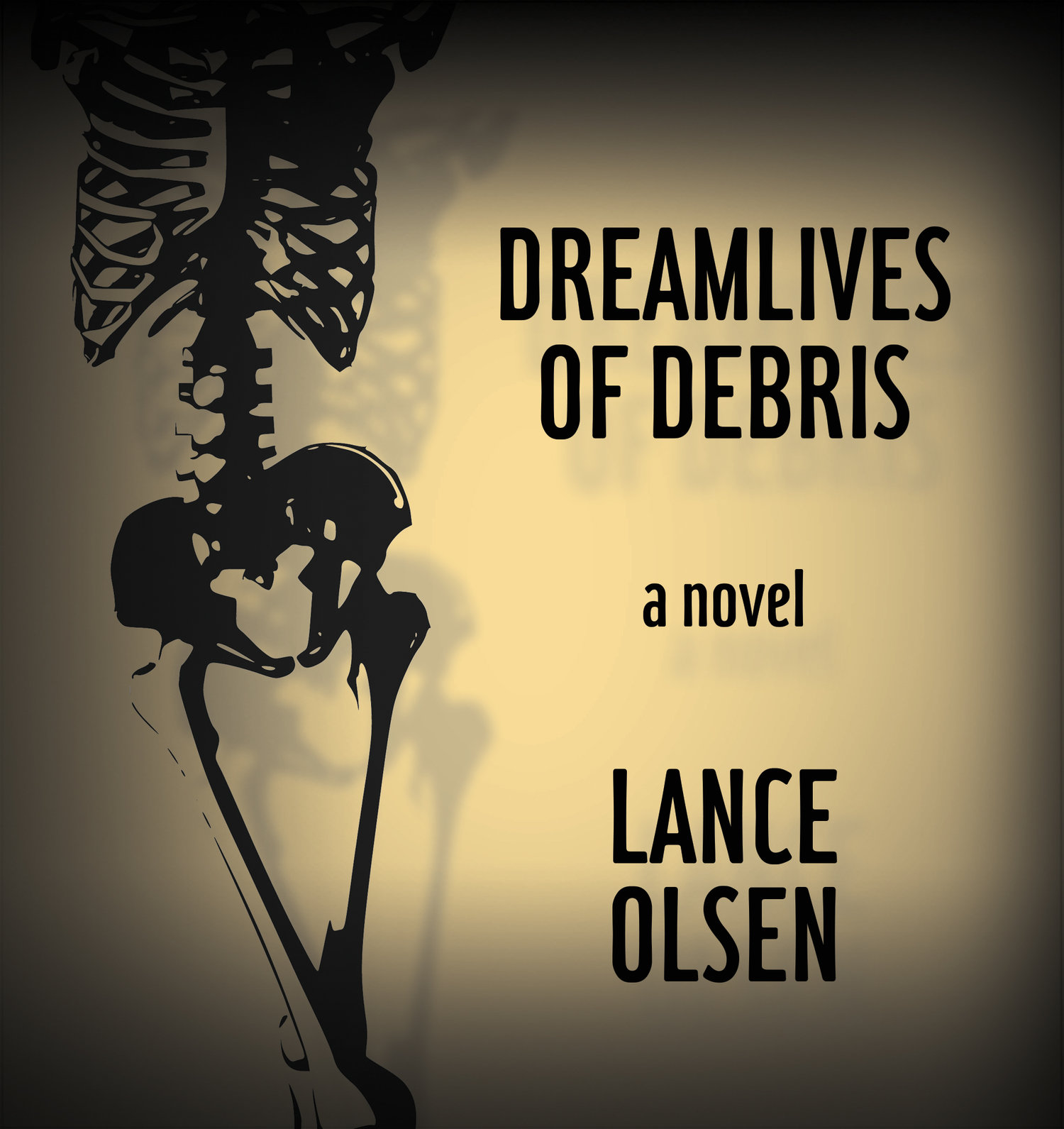
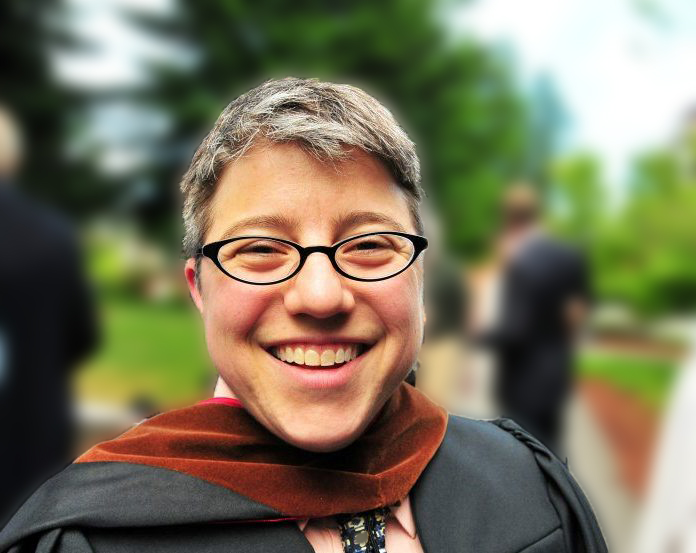
Lance Olsen authorMidwestern Gothic staffer Audrey Meyers talked with author Lance Olsen about his book Dreamlives of Debris, the Minotaur myth, how to navigate a narrative, and more.

**

Audrey Meyers: What is your connection to the Midwest?

Lance Olsen: I was raised in the climate-controlled malls just across the George Washington Bridge from New York City in northern New Jersey. My neighborhood was leafy, middleclass, middle-of-the-road, and head-bangingly bland. From a very early age, I had the strong sense there were other Americas out there to explore.

So when it came time for college, I told my guidance counselor I wanted to major in journalism and asked her where I should apply. She suggested the University of Wisconsin. Madison, I discovered, was the antimatter of my north-Jersey suburb: energetically political, progressive, irreverent, questioning, intellectually exciting. I could feel myself changing every day I was there.

By the time I was ready to apply to grad school, I knew I wanted to be a fiction writer instead of a journalist because we get to make more things up. I asked my creative-writing professor at the University of Wisconsin where I should go. She suggested the Iowa Writers Workshop. There I found an amazing cultural oasis. Iowa City still has one of the best film series I’ve ever encountered and a crazy-good reading series associated with the Workshop. The Workshop itself taught me universes about writing — both by positive and negative example.

Most important, I met my wife, Andi, while studying in Iowa City. She’s an artist and videographer from Des Moines. We spent many hours speeding past those farms separating the two cities and checking out all the Iowas in Iowa.

AM: How has the Midwest impacted your writing?

LO: My first novel, Live from Earth, this story about a couple so deeply in love they don’t let something like death get in the way their relationship, is set in good part in the Midwest — primarily in Iowa City and Des Moines.

When you grow up in one place, then move to and write about another, you experience that new place like a traveler might. That is, you pay attention in a way you don’t, you can’t, when you’ve lived somewhere your whole life. Everything — the smells, tastes, landscape, way people say hello, slight linguistic eccentricities — everything feels different and special.

One of the dictums in the creative-writing classroom, of course, is to write about what you know. But it’s also important to write about what you don’t know, to write like a traveler — not like a tourist, mind you, but a traveler. Or at least that’s something that’s always interested me.

AM: What inspired you to write Dreamlives of Debris?

LO: Since I first heard it as a child, I’ve been drawn to the Minotaur myth. It seems somehow tremendously powerful — this monster, this id, this other, imprisoned below the palace of Knossos: a metaphor, perhaps, for what we need to keep repressed in order as a culture to remain whole and functioning.

The possibilities for how to bring that myth into the contemporary intrigued me, had nipped at my imagination for years.

Dreamlives of Debris book

AM: How did you reinvent the Theseus and Minotaur myth? What were the challenges creating a new perspective on it and how did you make it work?

LO: The central point of view of Dreamlives of Debris — which is part horror tale, part science fiction, part love story, all experimental narrativity — rests with the Minotaur. Here, though, the teratoid isn’t a being with bull’s head and human body, but rather a little deformed girl whose parents have hidden her away at birth in the labyrinth on Crete.

She calls herself Debris, and possesses the ability to hear, see, and feel the thoughts, memories, desires, pasts and futures of others throughout history, from Herodotus to the Silk Route traders to Borges, Derrida, and Edward Snowden. In fact — and this is her problem — she can’t stop herself from receiving all those voices speaking through her. It’s maddening. Literally.

Debris, then, is a kind of living instrument through which time travels, but also an emblem for our lived experience in 2017, in which temporality often feels like a flurry of abrupt slaps.

AM: What do you think there is to gain from retelling a story in an innovative and unique way?

LO: Retelling is an essential part of knowing. Think of Virgil, who re-speaks the Odyssey as the Aeneid, or James Joyce, who re-speaks it as Ulysses, or perhaps the plethora of fairytale reiterations that are so popular these days. In fact, from a certain perspective every narrative is a retelling of former ones to the extent that it is in constant conversation with the genre in which it’s working, which is to say all examples of that genre the author has read, and all the ones he or she hasn’t. Every vampire story is by nature a recapitulation, adaptation, and alteration of all those that went before.

How come? Because by rewriting we re-right. We bring narratives into harmony with the contemporary. Through retellings we un-tell, compose our present rather than simply perpetuating someone else’s past, interrogate the assumptions of received narratives and recast them so they continue to mean for us.

Doing so, we remind ourselves there are always other ways to narrativize our lives, which is to say other ways to live them, other ways to script them than the ones we’ve been taught. That’s an astonishing political, epistemological, and existential act.

AM: How do you make the lessons of the past relevant to the present in Dreamlives of Debris?

LO: Most of us wear our monsters on the inside. My protagonist Debris is just like us, only more so — she wears her insides on her outside. Another way of saying this: I wanted to gender the idea of monstrosity, make Debris a little girl, so that I could explore how our culture has often conceptualized the feminine as the horrendous incarnate in order to contain and silence it in various social labyrinths beneath various poleis.

I was also interested with the labyrinth as an emblem for contemporary experience.

AM: How did you conceptualize Debris’ labyrinth?

LO: The labyrinth takes the form in my novel of an impossible liquid architecture that bears no center and hence no discernable perimeter.

In our post-facts contemporary, one could argue it’s become labyrinth all the way down. I imagine the labyrinth, not just as a structure, then, but as a mode of knowing, a mode of being, an extended and dense metaphor for our current sense of presentness — the impression, for instance, that we are always awash in massive, contradictory, networked, centerless data fields that may lead everywhere and nowhere at once.

These days I’m as committed to building a novel as writing one, so I laid out Dreamlives myself in InDesign. Every page is a perfect square representing a different textual room in Debris’ labyrinth. And each arrives without a page number, so it’s easy to become disoriented, lost, as a reader — just as Debris and her victims become disoriented, lost, within the pages of the novel.

Because Dreamlives of Debris arrives with no conventional location markers, the reader may feel, not only slightly adrift, but also a little freer to jump around, begin to think of reading as a kind of choreography, taking various paths as the mood strikes, for as long as the mood strikes, and then perhaps wandering off in a different direction.

AM: What did you learn about yourself as a writer when creating Dreamlives of Debris?

LO: It’s such a strange undertaking: living with a developing book for two or three years. You’re learning something new about yourself with every punctuation mark you use, let alone about your being in the world — what’s important to think and feel about, why, and how.

At some deep-structure level — and I didn’t think of this until you asked that great question — Debris’ problem is every writer’s, isn’t it: how to construct and navigate a narrative, how to mine the past and present productively, how to put ourselves in spaces outside our comfort zones that enable us to take risks, learn, unlearn, become new people every moment.

What I may have come to understand about myself is that Dreamlives of Debris is a working out, really, what it feels like being a writer.

AM: What’s next for you?

LO: I’m working on a novel titled My Red Heaven. It’s set in Berlin in 1927 — a year that saw the city as a cultural mecca. Of course, it had no idea what lay just a few years away. The novel will take the form of a collage, each chapter a flash-narrative about the people who inhabited Berlin: Otto Dix, Ludwig Wittgenstein, Franz Kafka, Vladimir Nabokov, Ludwig Mies van der Rohe, Arnold Schönberg, and so on, as well as figures history has forgotten: a sommelier, a pickpocket, several ghosts, a serial killer.

The question behind it, really, will be about how pastness occurs only in the incessant process of being un-written, re-written, learned, unlearned, and relearned. That’s something that’s fascinated and troubled me for years in one way or another: the problematization of historical knowledge — how history exists, how it is composed, who does the composing, and to what ends; how history (as is the case with all nonfiction) is a special-case subset of fiction.

Behind that set of concerns, there’s another (and this speaks to that idea of retelling we were just talking about): My Red Heaven functions as an invitation to contemplate our current political crises, from the alarming rise of the populist right and the growth of its politics of paranoia and attacks on progressive thought to its economic and anti-cultural undermining of the arts and humanities.

With that, we’re back to a sort of political thought I first encountered in Madison, Wisconsin, as an undergraduate: the idea that all narratives are political, especially those that call themselves the opposite.

**

Lance Olsen is author of more than 20 books of and about innovative writing, including the novel Dreamlives of Debris (Dzanc, 2017). His short stories, essays, and reviews have appeared in hundreds of journals and anthologies, such as Conjunctions, Black Warrior Review, Fiction International, Village Voice, BOMB, McSweeney’s and Best American Non-Required Reading. A Guggenheim, Berlin Prize, D.A.A.D. Artist-in-Berlin Residency, N.E.A. Fellowship, and Pushcart Prize recipient, as well as a Fulbright Scholar, he teaches experimental narrative theory and practice at the University of Utah and serves as chair of the Board of Directors at the independent press Fiction Collective Two, currently in its 43nd year making fiction making trouble.

|

1 Comment

|

Midwest in Photos: Joy

“I write because I love you enough / to ask for what is terrible: run farther / than your feet can possibly carry your heart.” – Jamaal May, The Big Book of Exit Strategies.

Photo by: John Jeffire

|

No Comments

|

Interview: Amanda Kabak

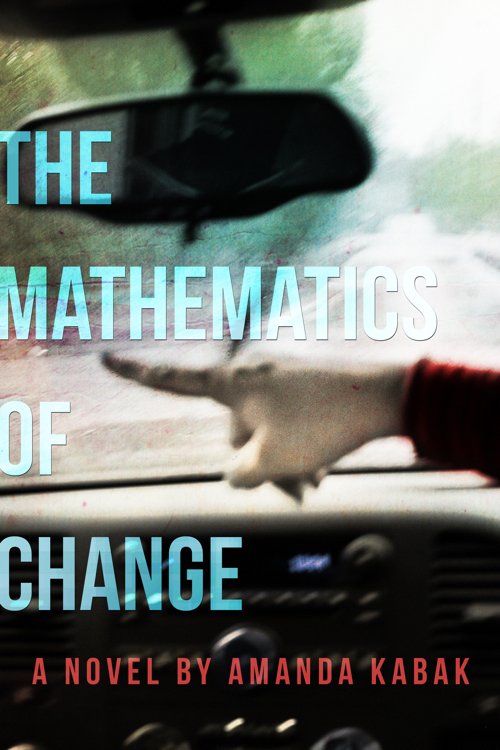
Amanda Kabak author photoMidwestern Gothic staffer Audrey Meyers talked with author Amanda Kabak about her novel The Mathematics of Change, the complications of transitions, not being able to connect, and more.

**

Audrey Meyers: What is your connection to the Midwest?

Amanda Kabak: I grew up in a suburb of Chicago then went to high school in another suburb (or, I should say, at the edge of another suburb – it was mostly corn fields at the time). After high school, I made a great escape to Boston and swore I would never return to the area. 16 years later, I shocked my parents by moving back – to downtown Chicago this time, where I lived for 8 years until I recently moved again.

AM: How has living in the Midwest impacted your writing style?

AK: Growing up, I never quite felt comfortable, not in my own skin, not with my peers, not with suburban Chicago’s uninspiring landscape. I always wanted to get away, either someplace else physically or deep into my own head, but disappearing was practically impossible at that time, in those places, around people who were into everyone else’s business. When I moved to Boston, I felt at home for so many reasons: being in a city instead of a suburb, being around “rude” people who weren’t interested in me or in chatting out of supposed friendliness, the Berkshire Mountains in Western Mass and their welcoming beauty. It wasn’t until I moved there that I fully understood how foreign I had felt before, and it is this feeling of being an outsider, of not quite being able to connect, that informs so many of my stories and characters.

AM: What inspired you to write The Mathematics of Change?

AK: I write in coffee shops almost exclusively, and there was one I used to frequent in Boston where I sometimes saw this woman who was androgynous in the exact way I always wished I could be: tall, whip-thin, angular-but-not-unfriendly face. I have long been a denizen of the in-between, and I admit I was fascinated by this creature, who used to snag a table with her girlfriend to study. She took up a sort of permanent residence in my mind, but it was a couple of years before I built a character around her constellation of physical traits. Not just the traits, but unpacking what those traits mean to those around her, what they may have meant to her own personal history.

The Mathematics of Change Amanda Kabak book cover

AM: What did you learn about yourself as a writer when creating this book?

AK: My whole experience as a writer is a bit of a cosmic joke. I lack both patience and the bent toward perfectionism that helps ease the path over the last 10% of any project, and writing requires both. Writing novels even more-so because the whole process is so prolonged. And yet, I am not myself when I’m not immersed in a long-form writing project. I get antsy and irritable and annoyed each time I reach the end of a short story and have to come up with another idea.

AM: Why are the themes of balance and change important aspects of your book? How do these two concepts interact in your character’s world?

AK: At my last job, my boss started to quote me: “As Amanda says, change is inevitable.” But that doesn’t make it easy, especially on an emotional level. When that change sparks self-reflection and doubt, it is even worse. Yet what are we to do? Entropy tells us, in a sweeping, metaphoric way, that there is no going back, but if change comes too fast for adaptation, we’re sunk as well. Enter the idea of balance. In the midst of change, we must balance holding fast to our idea of ourselves with reevaluating and adjusting. Both Mitch and Carol have these very deep-seated concepts of who they are – of how the decisions they have made in the past shaped what they feel is fundamental to themselves and maybe even their friendship, but they are forced to question this in very difficult ways.

AM: What character development traits are present during a midlife crisis? How did you explore these characteristics as your wrote The Mathematics of Change?

AK: I suspect mid-life crisis manifests differently for different people. I mean, I think I had mine at 19 or 20, but that’s another story. For Mitch and Carol, it is a reckoning. It is an outside force blowing through their lives that whispers, “Is this really what you want? Is this how you want the rest of your life to go? Can you imagine decades more of this?” It’s a frightening thought if you’ve successfully gone 20 or 30 years without much self-examination. There’s so much fear: what if I’ve made a terrible mistake and have to either live with it or try to rectify it? How have I hurt myself or others? How will I hurt myself or others if I try to change things? What will people think of me if I make a change? In the end, it is the attempt to answer the question of who we are at our core and, as a part of that, what is most important to us. Is it achievement? Connection? Family? Happiness?

AM: What drew you to writing about the complications during the transitions of life?

AK: Isn’t life just one transition after another? Over the last 15 years, I’ve had 8 jobs, lived at 7 different addresses in 3 different states, went from being the youngest at whatever company I’m working for to one of the oldest. The only consistent thing has been my sweetheart, and thank god for that! Change forces your hand, removes momentum from the equation, and that’s when things really get interesting.

AM: What life experiences helped you most to gain an understanding of the human condition?

AK: As I’ve said, I’ve always been something of an outsider – in one way, shape, or form. When I was younger, I was consistently just *flummoxed* by other people. They were maddeningly inconsistent, opaque, slippery chameleons. For a long while I was sure I would never understand someone or be fully understood in response. But then I was – or at least thought I was – and then, well, you can guess. Heartbreak is both universal and particular, and working through that was a formative experience for me. It is part of the human condition, as is the experience of being a prisoner of your past. That may be true, but I’ve also learned that despite history and trauma, we abdicate control of our own minds, emotions, reactions, and behavior at our own peril. So much of life is a tug of war between the ego and the id, but gaining mastery over ourselves is at the root of life, don’t you think? Moving consciously through your day, weaving kindness into your interactions (both to others and to yourself), seeing where you need to improve and tuning yourself like an instrument into something better, more gloriously resonant.

AM: What do readers take away from your book?

AK: At the very least, they probably end up knowing more about friction than they used to! But also that you must bend or you’ll break. Oh, and that forgiveness is at the root of change.

AM: What genre would label The Mathematics of Change?

AK: My publishers say it is “new women’s fiction,” but I think of it as straight-up storytelling. There’s something in it for many people, not just women, not just lesbians, not just mothers, not just people of a specific age.

AM: What techniques do you use as a writer to create authentic relationships between characters?

AK: I think of the inevitable gulf between what we think and what we do, what we intend and what actually happens. I write about people who want to be quality human beings but who make decisions that undermine themselves and hurt other people. I drive through dialog past what I intend to where someone says something wholly unanticipated and game-changing. And I get it wrong for about twelve drafts (during which time I think I get it right several times before realizing I’m deluded) until I find the contradictions and idiosyncrasies that make characters fully-realized people. Once that’s in place, when they interact with each other, those interactions will ring true.

AM: What do you enjoy most about being a writer?

AK: For me, writing is communication distilled then expanded. It is taking something so particular and laying down words and sentences and scenes that can evoke that specific experience in a universal kind of way. It is the challenge of pulling someone into a life wholly unlike their own but having them feel this “ah” of recognition. It is the daily exercise of submerging myself in the world I’m creating and the craft of staring out a window or over a barista’s head, trying to deeply imagine, trying to find the just-right word, trying to make this fuzzy thing that sits in my peripheral vision as starkly real as I can.

AM: What’s next for you?

AK: After four years, I’m finally putting the finishing touches on my next novel, and I’ve got one percolating in line behind it, so I guess you know where you’ll find me for the next few years!

**

Amanda Kabak

|

No Comments

|

Contributor Spotlight: Cailin Ashbaugh

Cailin Ashbaugh’s story “The Town Witch” appears in Midwestern Gothic‘s Winter 2017 issue, out now.

What’s your connection to the Midwest, and how has the region influenced your writing?

I grew up in Northern Michigan and have been told that when I talk I sound like I’m from the upper peninsula, Minnesota, with the occasional Wisconsin thrown in for some variety. This region has influenced the settings of my writings, I feel like I’m always trying to capture the cold that doesn’t quite hit your bones.

What do you think is the most compelling aspect of the Midwest?

I’m always drawn to the people and the ways that we interact with one another, it seems like every region of the Midwest that I’ve been in holds it’s own kind of backhanded politeness on the surface, but if someone is actually struggling people will do what they can to help, often anonymously and expecting nothing in return.

How do your experiences or memories of specific places—such as where you grew up, or a place you’ve visited that you can’t get out of your head—play a role in your writing?

I feel like I’m always trying to go back to somewhere in my writing. I’m trying to find a place. I think parts of that place are the woods that I grew up in, the arbitrary circle of pine trees that was a fairy circle, catching frogs with my cousins. I want to capture some sense of wonder and put it into words.

Discuss your writing process — inspirations, ideal environments, how you deal with writer’s block.

I’m not a very disciplined writer, things often come in spurts and I have to convince myself that they are worth sitting down for. In the beginning of a piece it is often scrawled on the back of receipt papers or napkins until I have enough of a character or a place that I need to sit down and let them out.

How can you tell when a piece of writing is finished?

There isn’t an urgency in adding anything else, the story that the character or place needed to tell has been told. I’m also lucky enough to have writer friends to share work with when I think I’m done, and they’ll more often than not tell me I’m wrong and we’ll workshop each other’s stories until they are the best they could hope to be.

Who is your favorite author (fiction writer or poet), and what draws you to their work?

I’ve just finished (yesterday) reading Helen Oyeyemi’s short story “What is Not Yours is Not Yours,” and I’ve always loved magical realism and I think I’ve fallen in love with the ways she presents the world of her stories. Your feet still feel grounded, but there is something off with how the ground feels. When I’m stuck writing I often turn to Woolf for her long and winding sentences. And this is always a very tough question because I have so many favorites it really just depends on the mood and what I need from a piece of writing.

What’s next for you?

I just finished a term as an intern with Milkweed Editions, and between shifts selling groceries I’m waiting to hear back from full time jobs and looking for housing in Louisville, where I will be starting an internship with Sarabande Press in August.

As of late writing has been coming out in spurts on old receipts and napkins under coffee cups but nothing is fleshed out enough to know what will come of it.

Where can we find more information about you?

My portfolio is working itself out of being in shambles at cailinsimone.com

|

No Comments

|

Summer 2017 Flash Fiction Series – Prompt #3

Midwestern Gothic Flash Fiction Contest Series 2017
 

During the summer of 2015 we introduced our Summer Flash Fiction contest series, and we’re thrilled to be continuing it this year! (And you can read all of our winners from 2015 and 2016 here.)

What is it? Our flash fiction series invites writers to write short pieces in response to photos we post.

How does it work? We’ll supply an image from our photography archive and invite writers to respond with flash fiction inspired by the photo, up to 500 words. Remember: You, or your piece, must have a Midwest connection. Each image will be open for submissions for just under 1 week, and we will take a few days for reading and balloting before beginning the next round. At the end of all three rounds, the top 2 entries we feel best represent the photos from each round will be published on the Midwestern Gothic website.

How long is the series? We will be doing this throughout the month of July and early August — which nets out to three rounds of images (three submission periods). Round 3 starts on Monday 7/17, when the third prompt will be posted via blog and social media. Winners will be announced and winning pieces (winner + runner-up) will be posted after the submission periods for all three rounds are finished, in the first week of August.

How do you submit? Send submissions to Ben at ben@midwestgothic.com. Use the subject line “Summer Flash Round X – Author Name – Name of Piece.” For example: Summer Flash Round 3 – Joan Smith – “Eyes of the Wild.” Remember: Include a third-person bio of up to 150 words with your submission.

You can find all guidelines here, including how to submit (and where!). We can’t wait to read your work!

Prompt #3: Take a look at the following photo, and create a piece of flash fiction inspired by it.

Prompt #3 due date (before midnight EST): Saturday July 22, 2017

Prompt #3 winners published: August 14 – August 20, 2017

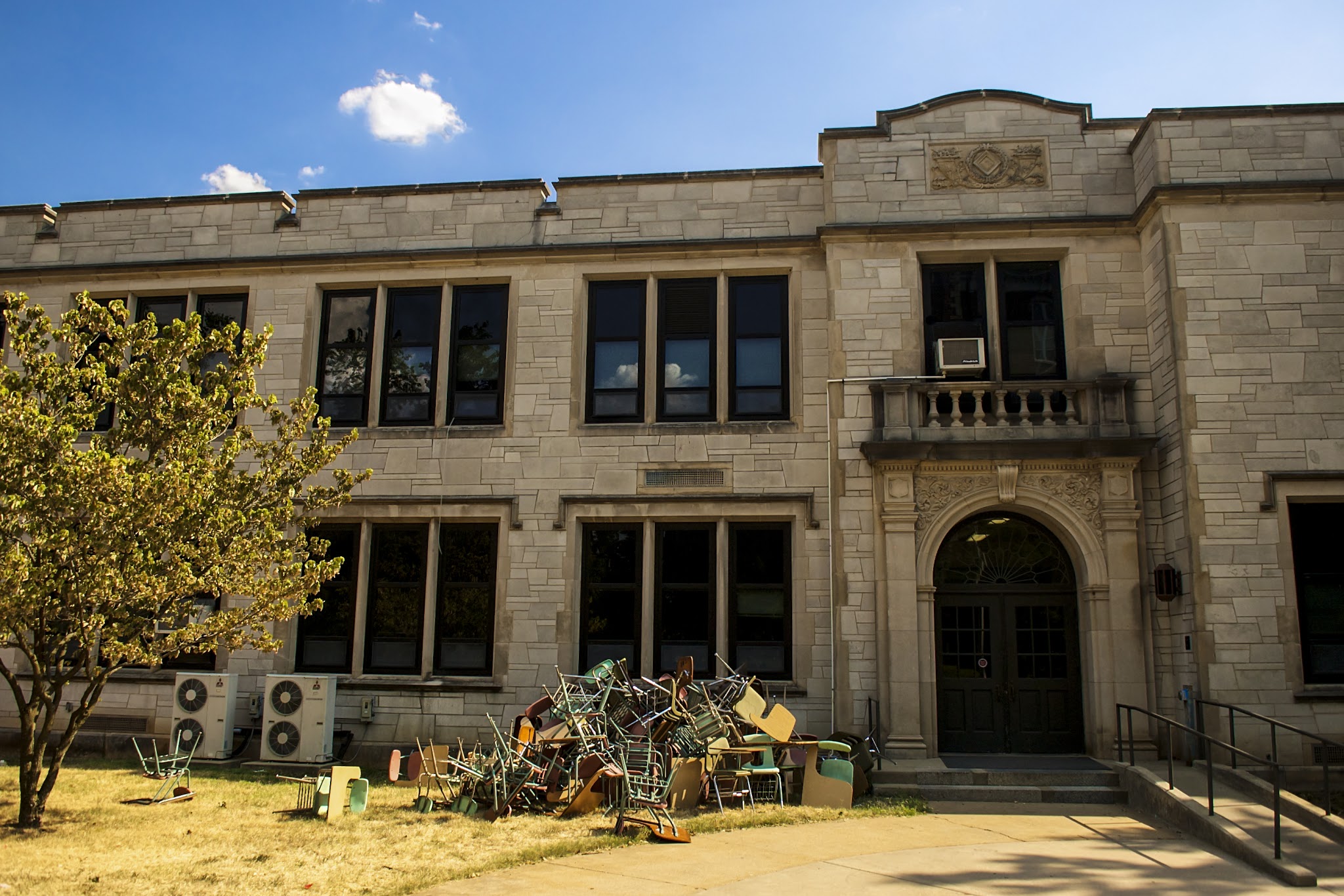
Prompt #3: “The End of an Era” by Brandon Otto

Midwestern Gothic Flash Fiction 2017 - The End of an Era by Brandon Otto
Audible logoOur 2017 Flash Fiction Contest is sponsored by Audible. Get a free 30-day trial and 2 books, on us when you sign up. Start your free trial

|

No Comments

|