Issue 23 cover and contributor listing

September 30th, 2016

Tomorrow, October 1st, brings our last full nonfiction issue. In fact, it brings our last quarterly issue at all. Starting in 2017, Midwestern Gothic is moving to a bi-annual publication.

We are humbled at the talent in the pages of Issue 23: these are essays about life, beautiful and sad and wonderful nonfiction that took us all here at Midwestern Gothic by our collective hands and did not let go. And this is, yes, bittersweet: Our last quarterly issue. We have so many amazing memories, and we have loved devoting an entire issue to nonfiction, a genre we love.

But, nonfiction will be included with every issue of Midwestern Gothic going forward, which is exciting itself, so there is a lot more goodness to come.

With this, we are so happy to present the cover for this Nonfiction issue, Issue 23 (Fall 2016):

issue23_fall2016_cover-1

Cover image copyright (c) Dallas Crow.

And, of course, this stellar line-up of mega-talents:

screen-shot-2016-09-30-at-12-47-38-pm

Pick up a copy of Issue 23, in either print or digital format. We’re excited, and hope you are, too.

Interview: Robert Hellenga

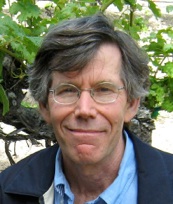
Robert HellengaMidwestern Gothic staffer Giuliana Eggleston talked with author Robert Hellenga about his collection The Truth About Death and Other Stories, the connection between death and love, neutralizing the ‘eye-roll response’ in emotional scenes, and more.

**

Giuliana Eggleston: What’s your connection to the Midwest?

Robert Hellenga: I was born in Milwaukee, Wisconsin, where my father was a commission merchant selling produce that came by boat from the Benton Harbor, MI, produce market, the largest farmer’s market in the US at the time. We spent our summers in Milwaukee, and the rest of the year in Three Oaks, Michigan — a town of 1800 people which, when I was growing up, had two drug stores, a large department store, several grocery stories, a good public library, a museum, a railroad station, a movie theater, and no Wal-Mart.

I attended the University of Michigan, got married, spent a year at The Queen’s University of Belfast, in Northern Ireland, then another year at the University of North Carolina, then Princeton, where I got my PhD. None of these places resonates for me as much as my two childhood home towns — Three Oaks and Milwaukee — and my present home town, Galesburg, Illinois. (And Florence, Italy, where my wife and our three daughters and I spent thirteen months in 1982-1983.)

GE: Your new collection of stories, The Truth About Death and Other Stories, takes place in Galesburg, Illinois and Rome, Italy, both places you have lived at some point in your life. How does where you’ve lived influence how you write about place, as well as other aspects of your writing?

RH: I see, in retrospect, that the Italians who worked for my father on the market in Milwaukee gave me a glimpse (and a taste) of a world very different from small town life in the Midwest (Three Oaks), a life that was more colorful, more pleasure-oriented. Sexual intercourse was regarded as the highest good. They also gave me a taste of la dolce far niente – the sweetness of doing nothing – something very different from the ceaseless striving to get ahead I’ve come to experience as normal.

This polarity has shaped my writing, but it wasn’t till our family spent a year in Florence that I began to think of myself as a Midwesterner. Margot, in The Sixteen Pleasures, and Woody, in The Fall of a Sparrow, are my first self-conscious Midwesterners. And both of them are able to hold their own and flourish in Italy, in a culture older and more cynical and (presumably) more sophisticated than their own.

Push comes to shove in a later novel, The Italian Lover, that brings these two characters together. Margot and Woody, now in their fifties, are in love. Margot wants Woody to stay in Italy, but Woody wants to go ‘home,’ to a small town in Illinois, and he wants Margot to go back to Illinois with him. She could, he suggests, work as a book conservator at the University of Iowa (an hour-and-a-half away). Margot chooses to stay in Florence, but she never gets over “the fear that her true home was elsewhere, that her real life – her true spiritual life – was not here in Italy, here at her work bench in her very own studio on Lungarno Guicciardini, or in her very own apartment in Piazza Santa Croce, but waiting for her back home, back in Chicago, back in the big house on Chambers St., waiting for her to take up where she’d left off.”

And speaking of houses: The houses we’ve lived in have become icons in my imagination — three in the Midwest and one in Italy: the big Victorian house we lived in in Galesburg, which we sold to our daughter and her husband (The Sixteen Pleasures, Philosophy Made Simple); the fantastic apartment in Borgo Pinti where we lived as a family for a year (The Sixteen Pleasures); the house in the woods near Monmouth that we owned for eleven years (Snakewoman of Little Egypt); and our present apartment (The Confessions of Frances Godwin) in Galesburg.
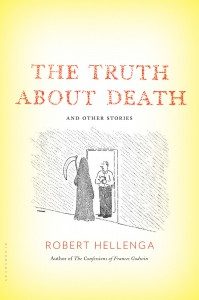
The Truth About Death

GE: The Truth About Death is true to its title, and follows two funeral directors meeting in Rome to prepare the body of a close relative. Did writing from the perspective of people who deal with death often change how you yourself view death? What was most difficult about dealing with this subject?

RH: Hildi, one of the POV characters in The Truth About Death, wants to go into the funeral business with her father because she thinks of the family funeral home as a place where the big questions get asked, if not answered. I like to write about death for the same reason, to address the big questions: On the one hand, death is perfectly natural; on the other hand, as Simon, Hildi’s father, reminds his daughter after they finish prepping the body of Simon’s father: Remember what Father Cochrane says at the beginning of every funeral: “Behold, I show unto you a mystery.” And then he puts his hand on his father’s forehead and says it again: “Behold, I show unto you a mystery.”

Did my own views change? I’ve come to believe, as Hildi does, that there was real value in the way that families used to prepare their dead. Hands-on experience. What would this value be? Hildi doesn’t think it’s something you can “tell.” Her father is skeptical, but in the end, when Hildi is killed in Rome, he holds her hand as the Italian undertaker washes her body. I have not done anything like this myself, but times are changing, and funeral customs are changing. Home funerals in which family members help prepare their dead are becoming easier to arrange.

The most difficult thing? Writing about the death of Olive, the dog. Olive’s death was based on the death of our own dog, Maya, who was diagnosed with liver cancer on a Monday and dead on Thursday. I’d like to read the Oliva passages aloud at a reading, but I can’t even read it to myself without tearing up. I think the special difficulty is that you can’t explain death to a dog. Of course you can’t really explain death to anyone, but with a person you can at least talk things over.

GE: The Truth About Death deals with love alongside of death. How do you see the two aspects of life as needing to be related?

RH: Death, or the prospect of death, is a lens that clarifies our relationships. It puts a lot of pressure on us to do what needs to be done, now. If you love someone, let them know now, before it’s too late. This is the sort of advice, as Margot points out in The Sixteen Pleasures, that you read in Ann Landers. It’s still good advice, however. The irony in The Sixteen Pleasures is that Margot’s mother was trying to tell her family, though we never find out exactly what she wanted to tell them because the tapes she made were blank. The tape recorder had malfunctioned.

It’s hard to do better than the following inscription, which appears (in Latin) in the death notice of Alexander Lenard, the man who translated Willie the Pooh into Latin: “Against the strength of love, you will find no herb. Against the strength of death, no herb grows in the garden.” This is what Woody finally puts on the tombstone of his daughter, who was killed in a terrorist bombing in Italy in 1982.

GE: Your writing seems to very naturally mimic life, drawing the reader into the stories and making them feel deeply, especially with the theme of death. What is your process like when crafting emotional scenes?

RH: On the one hand, I try not to hold anything back. On the other hand, I try to guard against the eye-rolling response. For example: in The Fall of a Sparrow Woody says to the terrorist (a young woman) who placed a bomb in the station in Bologna, the bomb that killed his daughter: “I have to love you because hating you is too hard.” I knew this line could be trouble. I tried to neutralize the eye-rolling response by including a lot of hard things in the scene, by having Woody almost strangle the woman, for example; by having the terrorist woman resemble Woody’s daughter; by trying to show that I was aware of all the complexities of this encounter. I took the line out several times and then put it back in. Several reviewers singled out this scene as one of the best in the book. But the New York Times reviewer, who in fact liked the book, looked up at this point and rolled his eyes: as the novel “winds down doctrine and philosophy prevail, and Woody, supposedly on the brink of self-knowledge, finds himself making pronouncements like, ‘I have to love you, because hating you is too hard.’” Oh well.

Ditto for all big emotional scenes, especially sex scenes. As a writer you put your erotic imagination out on the line for everyone to see. You don’t want your readers to roll their eyes. You need something that goes beyond a blow-by-blow description. Blow-by-blow descriptions are a dime a dozen. You have to give your readers a reason to want to imagine the scene that you’re inviting them to imagine, something beyond prurient interest. Someone has to be learning something, discovering something. And that means that you, as a writer, have to be learning and discovering something too. There’s no formula.

I didn’t hold back in the following passage from Snakewoman, for example, but I tried to provide a context that would ward off the eye-rolling response: After a mutually satisfying experience in bed Jackson, an anthropologist, asks Sunny, a biology student, “What just happened?” She gives him a biological account of her orgasm—pelvic area engorged with blood, muscle contractions, etc. “Why?” she asks. “What do you think happened?”
“You took me inside you,’ he said, ‘and devoured my seed when I was most vulnerable, and you were most triumphant. I explored your dark continent at my own risk. You lured me on. But because I survived the encounter, you will now share your great riches and power with me, because you love me.”
“It wasn’t really funny, but I started to laugh. ‘Is that what really happened?”
“‘That’s what really happened,” he said.
“I thought maybe he was right.”

Sun Times reviewer: “Talk about purple prose. But also talk about how skillfully Hellenga injects humor to reduce the swelling.”

GE: While it may be tempting – and even expected – to write about death with a sense of irony, The Truth About Death deals with it head on, avoiding the classic jokes and fully confronting the reality, emotional impact, and inevitability of death. Why did you choose to write about death this way, and was it difficult to resist the usual cop outs?

RH: Maybe because I’m a Midwesterner. Just kidding. Actually, I’m not just kidding. I’m thinking of a time I was doing research in Bologna. I joined the British Institute so I could use their library. The British Institute doesn’t stock any American novels, only British, so that’s what I read. Everything was ironic. Absolutely everything was undercut by irony: every generous impulse, every act of kindness, every moment of tenderness… After a while I couldn’t take it any more. I complained to the Italian friends I was living with, and Franco said: “That’s because England doesn’t count for much anymore.”

Irony isn’t always a cop-out of course. At its best it’s a way of showing that you’re aware of other ways of looking at whatever you’re looking at.

GE: In this collection of stories you revisit characters from a previous story, “Pockets of Silence” that appeared in The Chicago Tribune in 1989 as well as your debut novel Sixteen Pleasures in 1994. What made you decide to revisit this story in this most recent collection? What was it like continuing a story that started almost 30 years ago? Has time changed how you view the story?

RH: I’ve had more responses (letters and now emails) to this story than to anything else I’ve written. Maybe it’s because the ending took me completely by surprise. I couldn’t figure out what was going to be on the tape that Margot’s mother makes for her family as she’s dying. So I just stopped, left the tape blank.

And maybe the story stays with me because I’m like Margot: I still have unfinished business with my mother, who was a student at Knox College, where I taught English for almost forty years. Too late now.

GE: What’s next for you?

RH: I’m working on a novel about a rare book dealer. I’ve been thinking that I’m in over my head, though today I’m feeling better because I’ve figured out a way to tell part of the story from a woman’s POV. I feel more energized writing from a woman’s POV for a couple of reasons. One, we have three daughters and I’m used to looking at the world through their eyes. And two, women’s stories still have a kind of built-in urgency to them, a sense of breaking new ground, that appeals to me.

I don’t want to say much about it because everything is still in flux. I will say, however, that this summer I’ll be attending the Colorado Antiquarian Book Seminar in Colorado Springs — a week of intensive classes on the rare book business. We’ll see what happens.

**

Robert Hellenga grew up in Three Oaks, Michigan, a typical Midwestern small town, but spent summers in Milwaukee, Wisconsin, where his father, a commission merchant with a seasonal business, handled produce that was shipped there from what was then the world’s largest farmers market, in Benton Harbor, Michigan. The men who worked for his father were almost all Italians, and in retrospect he sees that this is how he got his first sense of Italy as something opposed to small-town Midwestern Protestant culture — a theme that has shaped a lot of his writing.

He met his wife (Virginia) at the University of Michigan, spent the first year of their marriage in Belfast, Northern Ireland, spent a year in North Carolina, and started having children when he was in graduate school at Princeton.

Robert taught English literature at Knox College, in Galesburg, IL, from 1968 to about 2000. During his tenure at Knox he directed two programs for the Associated Colleges of the Midwest, one at the Newberry Library in Chicago and one in Florence, Italy, and spent a year at the University of Chicago on a National Endowment for the Humanities Fellowship. He has spent quite a bit of time in Florence and Bologna, and in 2009 he and his wife spent six weeks in Verona, where Robert was a visiting writer at the University of Verona, and in 2012 they went to Rome for eight weeks.

Robert started writing fiction at Knox, which has a strong creative writing program, published his first story in 1973 and his first novel (after 39 rejections) in 1994. His most recent book is a collection of stories — The Truth About Death and Other Stories — and he is currently working on a novel about a rare book dealer who sets up shop in a small town on Lake Michigan.

|

1 Comment

|

Contributor Spotlight: Andrew Bode-Lang

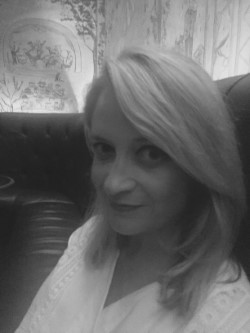
Andrew Bode-LangAndrew Bode-Lang’s story “Body and Soul” appears in Midwestern Gothic Issue 22, out now.
What’s your connection to the Midwest, and how has the region influenced your writing?

Though I now live in central Pennsylvania, I identify firmly as a Midwesterner. My family moved from the Pittsburgh area to Dubuque, Iowa when I was very young, and after another stretch in Pittsburgh we moved to southwest Michigan, where I lived for ten years. I went to college there, fell in love, got married — it’s where my adult life began. And that included writing. Most of my stories are still set in Holland, Saugatuck, Kalamazoo, Chicago (where my family now lives), or in little towns between towns, like Plainwell, MI, where I went to high school. When I write, I find myself standing on the eastern shore of Lake Michigan, searching the horizon for the next thing to appear, even if it’s just the up-lit glow of Milwaukee and Chicago on the low clouds once the sun goes down.

What do you think is the most compelling aspect of the Midwest?

The Midwest holds broad vistas — a stubbled cornfield in midwinter or a Great Lake — and small details you notice only by living with them daily — the barn that lists a little further with each passing year, the aluminum rowboat marooned deep in the woods, the little red sign with white letters along the roadside that reads only “The Little Red Sign with White Letters.” I always appreciated Harry Callahan’s saying that since he didn’t have grand landscapes to photograph, he had to train his lens down — on people, on debris washed up on the lakeshore, any small thing that could be composed. As much as I love taking in a vast expanse, I love even more that the Midwest taught me to notice everything small. The small is where the stories are. Not in a whole life, but in a moment in an afternoon, or a series of those moments.

How do your experiences or memories of specific places — such as where you grew up, or a place you’ve visited that you can’t get out of your head — play a role in your writing?

If I write a house into a story, it’s a specific house — one I lived in, a friend lived in, or one that for some other reason I visited often. I’m sure I could write some original architecture, but the houses are there waiting for my characters to move in, just like the towns or country roads where the houses stand. I might not always name a specific place, but it’s specific to me all the same. I most often begin a story with both a place and the people in it, and those almost always have some relation to the world I know, even if it isn’t my own world.

Discuss your writing process — inspirations, ideal environments, how you deal with writer’s block.

I need to look out a window — just to be able to look up and see something beyond what I’m putting on the page. That helps me to pause so I can keep going. My hope is always that I can keep up with the story, the characters, and their lives and do my honest best for them all as I draft and revise. If I don’t feel I’m doing that, I might walk away for awhile and come back to a story — days or even years later.

How can you tell when a piece of writing is finished?

I don’t really treat anything as finished till it’s been accepted for publication, and I’ve occasionally kept on revising a published story, but I do consider myself “done” with a story if I feel like I’ve told the truth of it and done so to the best of my ability. When it takes a while to find a home for a story, I figure it must not be done, it must not ring true yet, and keep going back to it to see if I can do the job better. This often means that it simply takes me time — maybe a long time — to get a story where it needs to go.

Who is your favorite author (fiction writer or poet), and what draws you to their work?

If I have to pick one, Carson McCullers. No one does a better job of writing from a child’s point of view with all the richness and humanity the characters deserve. Also, she has the best titles. If I can pick a second, John Le Carré — because even the most lyrical story needs a structure, and there’s no better teacher.

What’s next for you?

My fiction chapbook, Field Trips with Exceptional People, is forthcoming from Red Bird Chapbooks, of Saint Paul, MN, in summer 2016. It’s a collection of short-shorts including such adventures as “Traveling by Hot-Air Balloon with Robert Downey, Jr.,” “Washing Skyscraper Windows with Janet Reno” (this one takes place in Chicago), and “Record Shopping with Arnold Palmer.” I’m working on a full-length collection of the same title as well as writing other stories that do not include celebrities as characters.

Where can we find more information about you?

I’d like to know the same thing. It’s why I write stories, and I hope if I write them well enough, I’ll find out.

|

No Comments

|

Contributor Spotlight: Laura Misco

Laura MiscoLaura Misco’s story “Exorcising Mike” appears in Midwestern Gothic Issue 22, out now.
What’s your connection to the Midwest, and how has the region influenced your writing?

I’ve lived in the Midwest for most of my life — in its rural areas, villages, college towns, and large cities. The different fabrics of those places — the culture, customs, landscape, weather, food, people — have informed the way I view everything.

What do you think is the most compelling aspect of the Midwest?

The Midwestern Sensibility: resilient, fun-loving, diligent, fair-minded, true.

How do your experiences or memories of specific places—such as where you grew up, or a place you’ve visited that you can’t get out of your head—play a role in your writing?

As a reader, I love nothing more than to be transported by setting — understanding characters and plot as filtered through place really resonates with me. I keep that in mind when crafting my own backdrops, especially when they’re connected in some way to an actual location or experience. Borrowing the most authentic, singular details matters most.

Discuss your writing process — inspirations, ideal environments, how you deal with writer’s block.

My ideal writing environment is in the dead middle of night, but that doesn’t tend to jive with normal life. Like most, I think, I have to fight for the time. As for writer’s block, the notion of it became a convenient cover for procrastination, so I decided many years ago that it didn’t exist. I’m writing or I’m not, and either way I have to live with it.

How can you tell when a piece of writing is finished?

When I’ve exhausted all opportunities to tinker, it’s done. The goal is to stop messing with a piece before I strangle it to death.

Who is your favorite author (fiction writer or poet), and what draws you to their work?

I love a million writers and don’t have a favorite. For the authority, economy, imagery, and subtle humor, Rebecca Lee’s recent collection Bobcat is about as perfect as one can get.

What’s next for you?

I’m at work on a novel about a Goth teen looking for a do-over.

Where can we find more information about you?

At Foundation in Riverwest.

|

No Comments

|

Midwest in Photos: Red, White and Blue

“Like many buildings in Detroit it had been deserted, left to rot, taking with it a storied history as part of the Arsenal of Democracy.” –Lori Tucker-Sullivan, “Detroit, 2015,” Midwestern Gothic Issue 19.

JawniLundgren-Red, White and Blue - Colchester, Illinois, 2011

Photo by: Jawni Lundgren

|

No Comments

|

Interview: Lawrence Coates

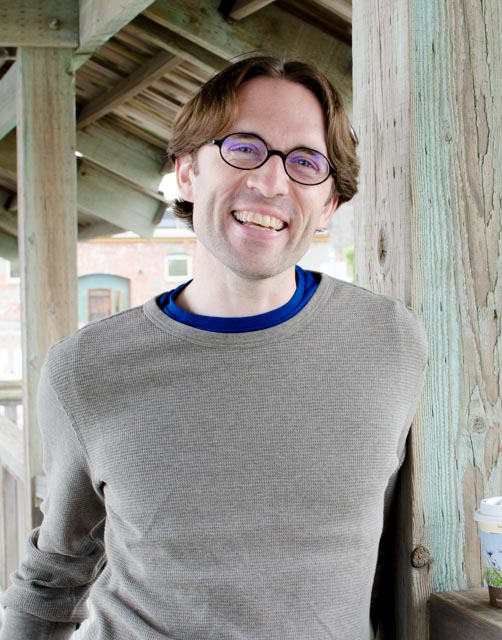
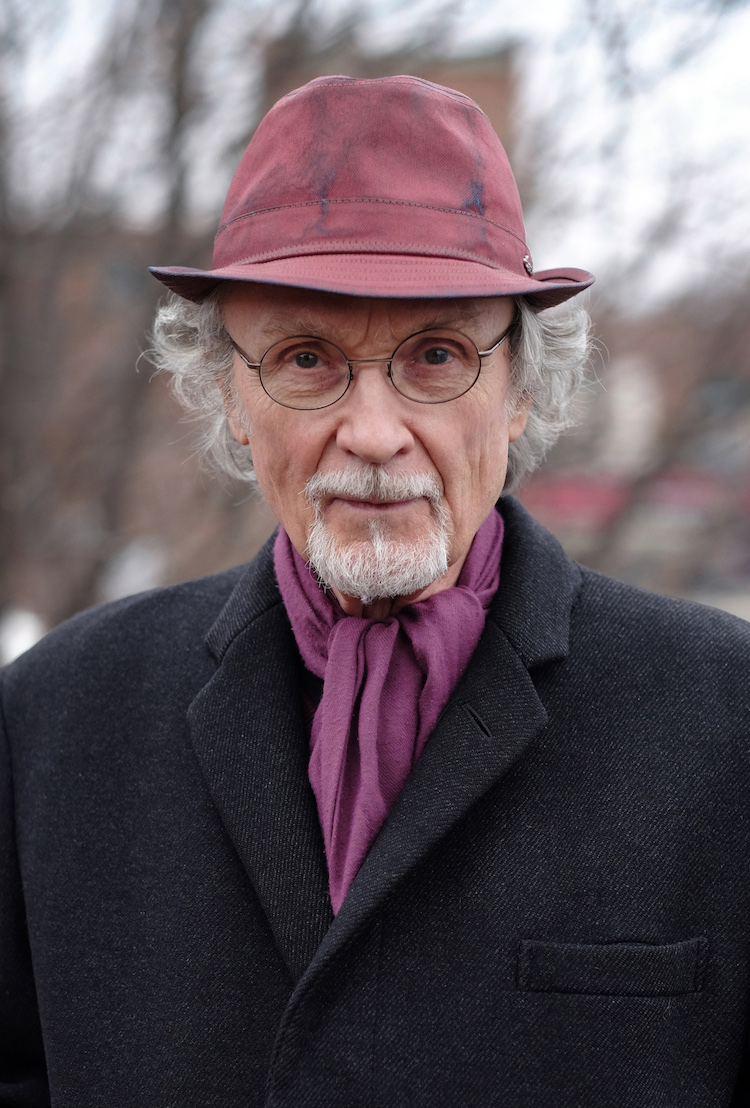
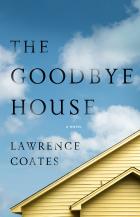
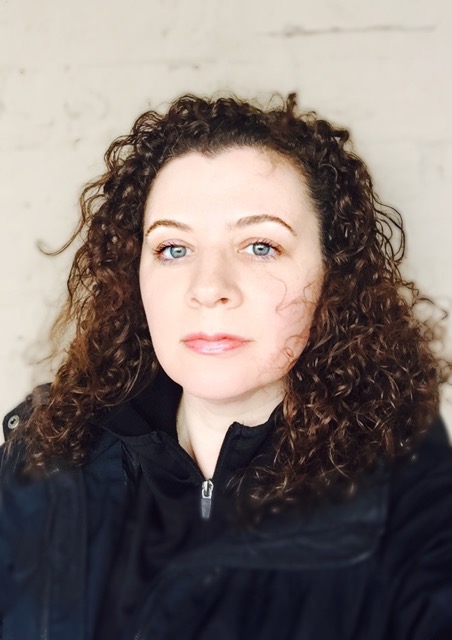
Lawrence CoatesMidwestern Gothic staffer Lauren Stachew talked with author Lawrence Coates about his book The Goodbye House, how his time at sea prepared him to become an author, unsettling characters through specific settings, and more.
**

Lauren Stachew: What’s your connection to the Midwest?

Lawrence Coates: I’ve lived in Northwest Ohio since 2001, in the center of what was once the Great Black Swamp, and I’ve grown to understand Midwestern seasons and landscapes. I’ve also grown to understand something of the culture of this part of the world, in part through my creative writing students. The graduate program recruits nationally, and even attracts international students at times, but there is still a regional flavor to it. And the undergraduate program is made up almost entirely of Ohioans, so the stories I see and the discussions we have about them have given me insight into what it’s like to have roots here.

LS: You grew up in California, and all of your novels are set in Northern California. Now that you live in Bowling Green, Ohio, how did your perception of the Midwest change when you left the West Coast?

LC: It’s true that my novels are set in California, but I have written some short stories set in the Midwest, including “Bats,” which won the Barthelme Prize in Short Prose. I didn’t know much about the Midwest before moving here; I hadn’t spent much time in the region, outside of several trips to Chicago.

I’ve noticed one real contrast with the West since moving here. People who live in the Midwest seem to have settled near where they grew up, whereas people in California have come from around the world. And in the West, there seems to be a restlessness, more inclination to move. Perhaps it’s because of the landscape, the undeniable expanses of open and empty spaces in the West, and the dramatic mountain ranges that beckon people to move on, whereas the landscape here seems more cozy or confining.

And yet, the cultural understanding that one ought to belong and be content in a place can conceal a repressed feeling of estrangement. I think that’s one of the themes running through the work in Midwestern Gothic, and one of the reasons I enjoy the journal. In the short fiction I’ve set here, I’ve usually placed something strange or incongruous into a setting of utmost normality and tried to use that to explore what’s below the surface.

LS: Recently, you received an Ohio Arts Council Individual Excellence Award, as well as an Olscamp Research Award from BGSU. Congratulations! Could you tell us a bit more about these awards? How does this impact your current or future writing?

LC: Thank you. The Olscamp Research Award is really quite an honor. It’s the top research award at the university, and it’s given for scholarship or creative work over the previous three-year period. I applied for it because my work had received a lot of recognition during that span – to a certain extent, that’s just because the stars aligned, and I had a book out in 2012 and two books out in 2015. And the Ohio Arts Council recognition was also very gratifying. Ohio supports the arts in many ways, and I was very pleased to be named along with some other writers whose work I admire, such as BGSU alum Amy Gustine.

Some of my work is historical, and so the funds received from both awards will help finance travel to a couple of archives that are important to me. But what I really hope is that any awards and recognition I receive helps the work find readers. It’s more important to me that somebody reads and enjoys my work than to have a plaque on the wall.

LS: You spent four years as a Quartermaster in the Coast Guard and four more in the Merchant Marine. What led you to become a writer and professor?

LC: I did spend some eight years aboard a series of ships, from the North Atlantic to the South Pacific to the Indian Ocean. But I think I always wanted to be a writer, including during those years when I was at sea.

I was a sailor in the days before the Internet, before smartphones, before DVD’s, and the men I sailed with – and it was 95% men – were great readers and storytellers. I used to stand the midwatch, which means I was on the bridge of the ship between midnight and four a.m., and I remember those long hours under the stars out at sea hearing tales of every sort. And I met all kinds of people aboard ship, people I probably never would have encountered otherwise. On one ship, I bunked with a man who had sailed on ammo ships across the Atlantic during World War II and had been sunk by a U-boat. On another ship, I shared a forecastle with an ex-con who had been in prison for attempted murder, and yet when I knew him he wanted mainly to talk about his grandchildren. I sailed with many veterans of the Vietnam War who had never quite found their footing afterwards, and with a man who lost his job selling Winnebagos during the 1973 Oil Crisis, and then lost his marriage. We swapped books we liked. Lots of thrillers and detective stories, but also the stray Vonnegut novel. I remember one shipmate who loved Ray Bradbury and insisted I read Dandelion Wine. In many ways, my time at sea was great training for a writer.

Yet I wouldn’t have become a writer, I don’t think, unless I had decided at last to go to college and study literature. And once I began my studies, I found such a deep pleasure in it that, in some ways, I never left. For a time, I focused on contemporary Latin American Literature. In graduate school, I originally intended to write a dissertation on Don Quixote before deciding to change to a program at the University of Utah that would allow me to write a novel for my dissertation. In the course of my studies at Utah, I read and studied American Literature, and I found those themes in the novels of Melville and Faulkner that still form the core of my work.

I always enjoyed the teaching that was a part of graduate studies, and I’ve been fortunate to find a good position. I think it’s something of a privilege to teach in an MFA program, and I enjoy working with the talented young writers who come to Bowling Green for two years and then go on to write and publish fine works of fiction.

The Goodbye House

LS: Your most recent novel, The Goodbye House, is set in the aftermath of the early-2000s dot-com bust in San Jose, California, and follows the narratives of three characters whose lives are all affected by this changing landscape. What led you to write about this specific time in recent history?

LC: To some extent, writing about this time period grew naturally from my previous work. My first novel was entitled The Blossom Festival, and it took place in the region around San José in the twenties and thirties, just as the region was beginning to change from an agrarian, orchard-based economy to a more urban economy. The Santa Clara Valley, at one point, was known as The Valley of Heart’s Delight; now it’s known as Silicon Valley. And my first book tried to capture that time when things are beginning to change, even though the characters in the novel might be unaware of what is happening around them.

Setting a novel in the same region in the early 2000s let me explore again a time of great change. I was able to depict the suburban developments that had replaced the orchards, and also link up the last of the World War II generation with the new generation that was coming of age after computers had become commonplace – though a little before the rise of Facebook, Snapchat, and smartphones.

2003, specifically, meant that the novel was set not only in the aftermath of the dot-com bust, but also in the aftermath of 9/11. It was a time when many established verities were being called into question, and that allowed me to unsettle my characters in ways that forced them to act and reveal themselves.

I know that many works of fiction are set in a somewhat undefined present, but I prefer to place novels in specific years because I want to show that the characters are part of a larger world, and that the larger world influences their lives, even though they might not realize it.

LS: You’ve spent nearly twenty years teaching creative writing, both as a professor and a director of the MFA Program at Bowling Green State University. How has the experience of teaching taught you about your own writing?

LC: Teaching creative writing, particularly at the graduate level, has taught me to be very conscious of craft. Because I am frequently reading and responding to works that are in process, I’ve had to develop a vocabulary to describe what is being workshopped. And that vocabulary of point of view, dramatic irony, narrative arcs, the sense of an ending, has inevitably come into my own composition process.

Let me say something briefly about teaching that comes from John Gardner’s On Becoming a Novelist. One of the marks of a bad workshop, he says, is that the teacher tries to “coerce his students into writing as he himself writes.” So when I say I’ve developed a vocabulary to describe work, I don’t intend for that description to be a judgment that something is good or bad. I look at it as a way to help young writers see what the work is doing and allow them to understand for themselves whether it is fulfilling their intent. I think, in the past, I was more judgmental in workshops, and I hope I’ve left that behind.

But to your question – being aware of craft has allowed me to consciously choose an aesthetic stance for a particular work. One of my literary heroes is Virginia Woolf, in part because she was a writer who seemed willing to reinvent herself for each work. So the writer who created To the Lighthouse or The Waves, those shimmering works that depict the individual consciousness of characters, could also create Orlando, a crazy novel that takes place over several hundred years and has a narrative voice not too dissimilar from that used by Henry Fielding in Tom Jones.

In my own work, I chose a more distant omniscient voice for The Blossom Festival, suitable to the epic sweep of the book. In The Master of Monterey, the narrative voice is clearly also a character, sometimes addressing the reader directly. In Camp Olvido, the point of view is more objective, painterly, without judgment, suitable to the deep moral ambiguity at the heart of the book. The Goodbye House, on the other hand, is a more comic novel, and the narrative voice feels free to comment on the characters’ flaws and foibles. It’s a point of view I’ve sometimes called “smart ass omniscience,” very good for comic writing.
So teaching has made me very conscious of craft, and I hope that has served me well in the works I’ve published.

LS: You mentioned in a previous interview that you write on a manual typewriter. What made you choose this method, and why do you feel it’s a better option than the modern computer?

LC: Using a manual typewriter is partly just a personal preference. I like the feel of the keys, and I like the sound of the type hitting the platen. And there’s something nice about a pile of pages that grows a little taller, day by day. It’s much more satisfying than seeing the size of your file go from 48 KB to 52 KB.

However, I also like the fact that I never lose a word or a phrase. There is no delete key. When I type something that I want to revise, I cross it out in pen and continue typing. Then, during revision, my initial impulse is there and present. I tend to complete a draft of a chapter and then enter it into the computer from the typescript. So re-typing the entire manuscript also becomes a part of my revision process.

It’s not something that’s right for everyone, though I sometimes mention that Cormac McCarthy wrote Blood Meridian and all his other works on a portable Olivetti that he bought for fifty dollars at a thrift store. That seems to get people’s attention.

LS: Which author or authors have had the most influence on your writing?

LC: At the top of any list of authors important to me would be William Faulkner. His deep engagement with a particular region and the way the burden of history weighs upon the lives of characters remains a north star for me. Gabriel García Márquez, a writer himself influenced by Faulkner’s work, has been important for me. I decided to learn Spanish in part because of wanting to read One Hundred Years of Solitude in the original. Toni Morrison is another author who consciously places her stories within a historical context that haunts her characters – sometimes literally, as in Beloved.

Ernest Hemingway famously said that all American literature comes from one book by Mark Twain called Huckleberry Finn. I couldn’t disagree more. There has always been a counter-current to Twain in American literature, exemplified by the strangeness of writers like Hawthorne and Melville who found it impossible to represent America through the narrow canons of European realism. And I hope to write work that shares some quality of strangeness with the writers I most admire.

LS: What’s next for you?

LC: I’m working on a novel that takes place over fifty years in an invented city that hovers on the border between Silicon Valley and the Great Central Valley of California. There will be ghosts. That’s about all I can say for now.

**

Lawrence Coates has published five books, most recently The Goodbye House, a novel set amid the housing tracts of San Jose in the aftermath of the first dot com bust and the attacks of 9/11, and Camp Olvido, a novella set in a labor camp in California’s Great Central Valley. His work has been recognized with the Western States Book Award in Fiction, the Donald Barthelme Prize in Short Prose, the Miami University Press Novella Prize, an Ohio Arts Council Individual Excellence Award, and a National Endowment for the Arts Fellowship in Fiction. He is currently a professor of creative writing at Bowling Green State University.

|

No Comments

|

Contributor Spotlight: Chelsea Voulgares

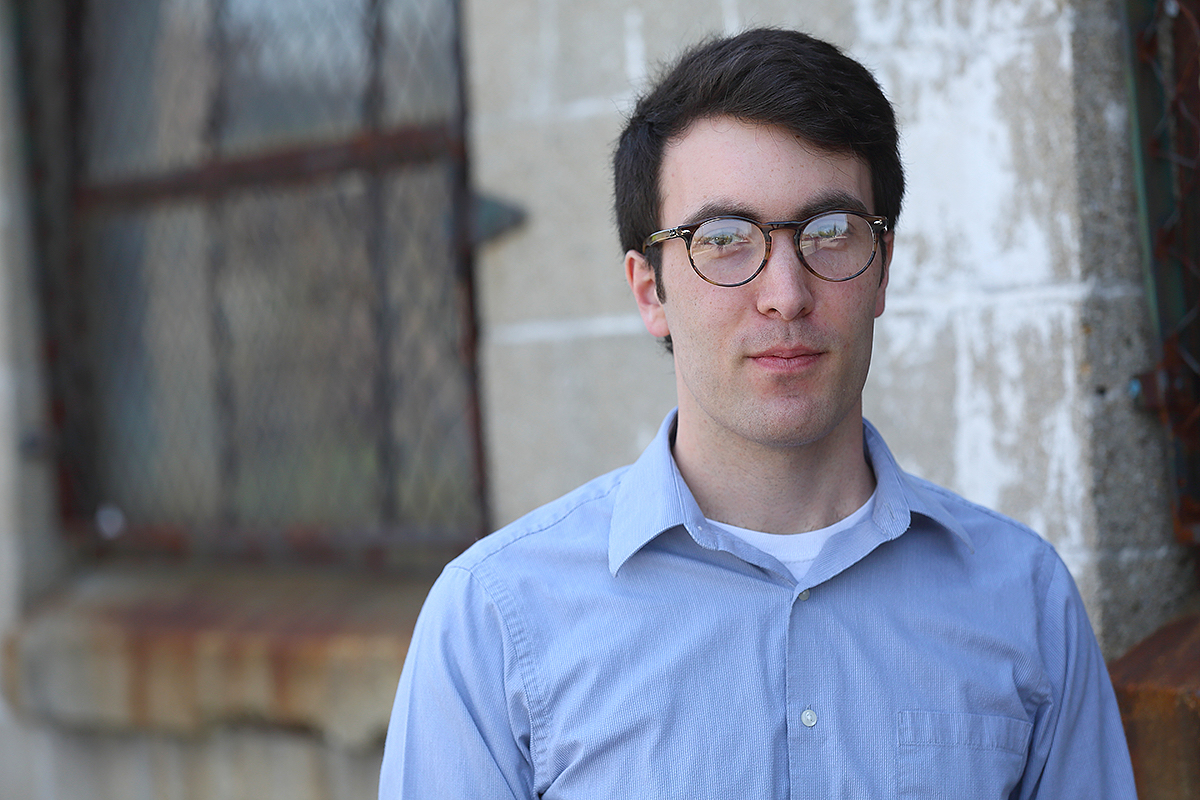
Chelsea VoulgaresChelsea Voulgares’ story “Midnight Walk, 1993” appears in Midwestern Gothic Issue 22, out now.
What’s your connection to the Midwest, and how has the region influenced your writing?

I grew up in a rust belt town in Ohio. I spent every Friday night at a football game, and my best friend lived the next street over, just two houses down. We snuck wine coolers and rented horror movies from the mom and pop video store. So as a kid, I had the quintessential Midwestern experience. I went to college near Cleveland, grad school in Columbus, and moved to Chicago when I started working. I’ve lived my whole life in the Midwest.

What do you think is the most compelling aspect of the Midwest?

The diversity of the people, especially in the larger cities. People tend to think of the Midwest as bland, white bread. There’s some of that. But the Midwest is also a place where you can eat at a sushi restaurant that used to be an Old Country Buffet, with camo-clad deer hunters to your right, a Cuban-American family on your left, and a professor from Uganda across the aisle from you.

How do your experiences or memories of specific places—such as where you grew up, or a place you’ve visited that you can’t get out of your head—play a role in your writing?

I set most of my stories in Chicago, because that’s what I know, what I see every day. When I write about teenagers, though, they end up in small Midwest towns. The micro-fiction published in this issue of Midwestern Gothic is a good example of that. These kids are wandering around a back road in a crumbling town, exploring a local legend and trying to entertain themselves. That kind of environment is integral to my writing because it’s what formed my psyche. Every Ohio town has a ghost or legend, and it’s the job of the young people who live there to investigate those myths.

Discuss your writing process — inspirations, ideal environments, how you deal with writer’s block.

I try to write every day, usually at home in my office. I’ve written in coffee shops too, but I work best when the room is quiet. I don’t suffer from writer’s block because I almost always have a new story I’ve been waiting to write, or an old piece I can revise. I keep a notebook of ideas too, so if I do ever run out, I can pick one from that list.

How can you tell when a piece of writing is finished?

I think most stories are never finished — there’s always something to tweak or hone. But it depends on the piece. Some things feel finished after a second draft, but I have one short story I’ve been working on for three years. I’ve been working on my novel for two.

Who is your favorite author (fiction writer or poet), and what draws you to their work?

There are too many: Atwood, Bukowski, Hurston, Ishiguro, Poe… I read two books this year that are new favorites: Han Kang’s The Vegetarian and Love Me Back by Merritt Tierce. I was drawn to those novels by the contrast between the beauty of the language and the violent and desperate lives of the protagonists. Both are about women fighting to maintain a sense of self, and I’m not sure either of them triumph. They’re both devastated by the world around them, yet each book is gorgeous, transcendent. I hope to one day write something as good as either of those books.

What’s next for you?

I have a novel I need to finish. I have a second novel idea I’d love to start. I’ll keep writing flash fiction. I have a short story idea I want to begin, and I have a couple of stories I need to place in journals.

Where can we find more information about you?

You can find me at www.chelseavoulgares.com, or on Twitter @chelsvoulgares.

|

No Comments

|

Contributor Spotlight: James Figy

James FigyJames Figy’s story “Scavenger Hunt” appears in Midwestern Gothic Issue 22, out now.
What’s your connection to the Midwest, and how has the region influenced your writing?

I was born in Indianapolis and lived there pretty much my entire life. My dad’s family is from northwest Ohio, so we’d drive past northern Indiana’s flat cornfields every few months to visit. Now I live in Minnesota, so I drive past Iowa’s relatively hilly cornfields to visit my folks.

As for how the Midwest has influenced my writing, I’m not really sure. Midwestern writers have influenced my writing a lot. There’s Sherwood Anderson and Kurt Vonnegut to name two, though they’re an odd couple.

The lack of hills, by the way, isn’t any Hoosier’s fault. It was those damn glaciers.

What do you think is the most compelling aspect of the Midwest?

I love the indefinability of the Midwest. It’s urban and rural, diverse and sort of homogenous, exciting and boring. The region’s borders, which states are included — that’s much more subjective than most people think. Growing up, I always thought it encompassed Indiana, Illinois, Ohio, Michigan, parts of Iowa, and Louisville, Kentucky — the part attached to that big bridge, at least. But someone from Missouri or Kansas would say that’s ridiculous, that Ohio belongs to the east, and Kentucky’s in the south, and Indiana — well, people are never really sure what to do with us.

The term Middle West, I read somewhere, was coined to describe Kansas and Nebraska anyway. So Indiana’s more Middle East. But we don’t say that because it would make the governor too nervous to be surrounded by us.

I have to admit, though, this isn’t my original observation. It’s something I first became aware of by hearing Michael Martone at a reading and then later reading a passage about it in his book, Michael Martone. However, I have noticed it more and more since I’m in grad school with people from Iowa and Missouri and Minnesota and people from the coasts whose ideas about where the Midwest is and isn’t are interesting in a whimsical sort of way.

There’s only one geographical truth of the region: Every Midwesterner lives at the dead center of the Midwest. No one’s ever on the edge.

How do your experiences or memories of specific places—such as where you grew up, or a place you’ve visited that you can’t get out of your head—play a role in your writing?

Like the protagonist in my story — and the “antagonist,” too, if you want to call him that — I grew up in church. It was a Church of God, to be specific, which began as a sort of anti-denomination designation, a church without labels. It’s the one based in Anderson, Indiana — not the snake-handling counterpart out of Cleveland, Tennessee.

Church was a twice-a-week fixture in my life for about twenty years. And sometimes I’d be there every day of the week, since I was the part-time janitor. I’d go sweep or wash windows for an hour after my regular construction job. It was a community where I belonged for a large percentage of my life. So I write about church and faith and whatnot a lot.

Discuss your writing process — inspirations, ideal environments, how you deal with writer’s block.

My writing process is a joke. I am so bad at setting a specific time to sit down and crank out x-amount of words. Once I wrote on a park bench; I’d recommend it, if the forecast is clear.

Usually, inspiration hits when I think of something totally ridiculous and think about how I could make it more than just a punchline. For instance, a friend recently asked, “Who even goes to exercise classes at five in the morning?” I replied: “Drunk people.” And a narrative started in my head, two friends on a bender decide they want to make a change, get their lives together, and since they stayed awake all night carousing, it’s now five a.m. and they wander into an aerobics class where one drops a barbell on his foot. Now he can say trying to get your life together is harmful.

Something else happens, obviously, and something more, then a flashback to childhood trauma. Maybe the friends will finally realize they’re in love. The End. I haven’t started writing it yet, but believe me, you’ll want to publish it, too.

My best advice for defeating writers block is, ‘Take a shower, then try again.’ At three showers per day, the drunken aerobics story will probably be ready around 2021. Let’s talk more then.

How can you tell when a piece of writing is finished?

Trick question! Writing is never finished. To decide whether a piece of writing is done enough to send out, though, I read through and ask if it’s good enough that I’ll likely be proud of it in ten years. By which I mean: I won’t in 2030 or whenever try to claim somebody published a bunch of garbage under my name as a sick practical joke. My other method is to try to read through a piece without making a single change. But I like to tinker too much.

Who is your favorite author (fiction writer or poet), and what draws you to their work?

I already spilled the beans, but Kurt Vonnegut is one of my favorite authors. I love how he’s funny and dark yet has something to say, not really a message of hope but definitely with a hopeful bent. There are so many quotable lines in Vonnegut’s work, the “Vonnuggets” as Steve Almond says. One Vonnugget for writers comes from Palm Sunday: “I think it can be tremendously refreshing if a creator of literature has something on his mind other than the history of literature so far. Literature should not disappear up its own asshole, so to speak.” I’ve been thinking a lot about this quote lately. Which, now that I think about it, may mean I missed the point.

What’s next for you?

I have to mow the yard, do my day job, editing, and later I’m going to a Mankato Moon Dogs baseball game. Among other projects, I’m tinkering with a long essay about Winesburg, Ohio.

Where can we find more information about you?

I’m on Twitter (@JAFigy), creating polls about defining issues of our times. For example: “How often do you pour milk on your cereal?” or “How likely are you to respond to this poll?” (Data show that fifty percent of respondents are “Not likely…” to respond.) I also have a sporadically updated website, jfigy.wordpress.com. I like to call it my blague. Okay, enough joking around.

|

No Comments

|

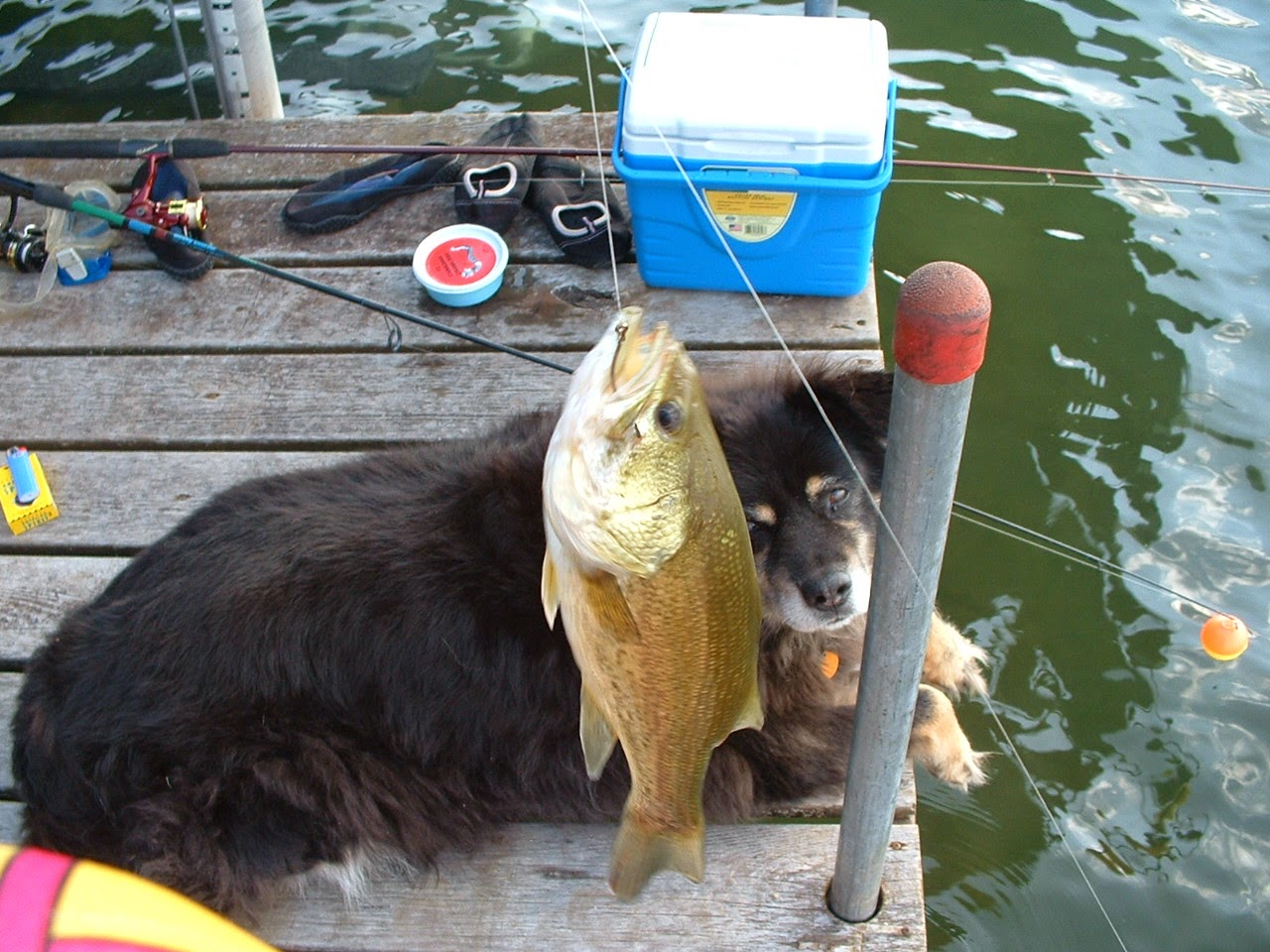
Midwest in Photos: Fisherdog

“Waking at dawn, he was ready to give meaning to simple gestures.” –Claire Tinguely, “Gift,” Midwestern Gothic Issue 13.

Chaunceys_favorite_catch_001

Photo by: Carol Matthews

|

No Comments

|

Upcoming Events – Kali VanBaale / The Good Divide

We have some great events coming up that our followers will want to check out! We hope to see you there!

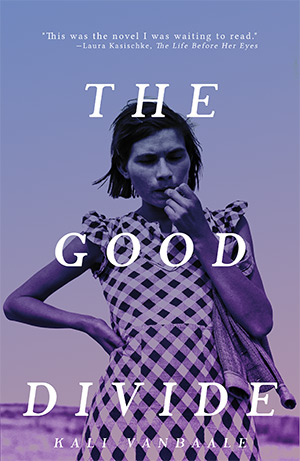
The Good Divide by Kali VanBaale

The Good Divide Book Tour

Kali VanBaale has a series of events coming up for her latest novel, The Good Divide. Don’t miss out on these opportunities to meet her and hear about the novel that has received rave reviews from Publishers Weekly, Book Riot, and Our Front Porch Journal among others.

Upcoming Events:

September 22nd
Where: Dragonfly Books
112 W Water Street, Decorah, IA
When: 7pm
Details: HERE
This reading will be a pre-event for the Luther College Writers Festival, followed by a Poetry Slam at the Elks Lodge opened with a reading by Kali at 8:30pm.

September 23-24th
Luther College Writers Festival
Where: Luther College Campus, Decorah, IA
When: opening panel begins at 4pm on Friday, Sept. 23rd
Details: HERE
Kali will be judging the LCWF undergraduate writing contest for fiction during this festival, and will be on a panel at 3pm Saturday titled “The Storyteller’s Voice: Reading and Conversation.”

October 8th
Iowa City Book Festival
Panel – Writing With Your Thumbs
Where: Robert A. Lee Recreation Center, Social Hall. Iowa City, IA
When: 1pm
Details: HERE

October 8th
Iowa City Book Festival
Reading with John Domini
Where: Iowa City Senior Center, Assembly Room. Iowa City, IA
When: 2:30pm
Details: HERE

November 10th
Ottumwa Public Library Morning Book Club
Where: Ottumwa Public Library, 102 W 4th St, Ottumwa, IA
When: 10am – 11am
Details: HERE

March 20th, 2017
Des Moines Public Library East Side Afternoon Book Club
Where: 2559 Hubbell Ave., Des Moines, IA
When: TBA
Details: HERE

|

No Comments

|