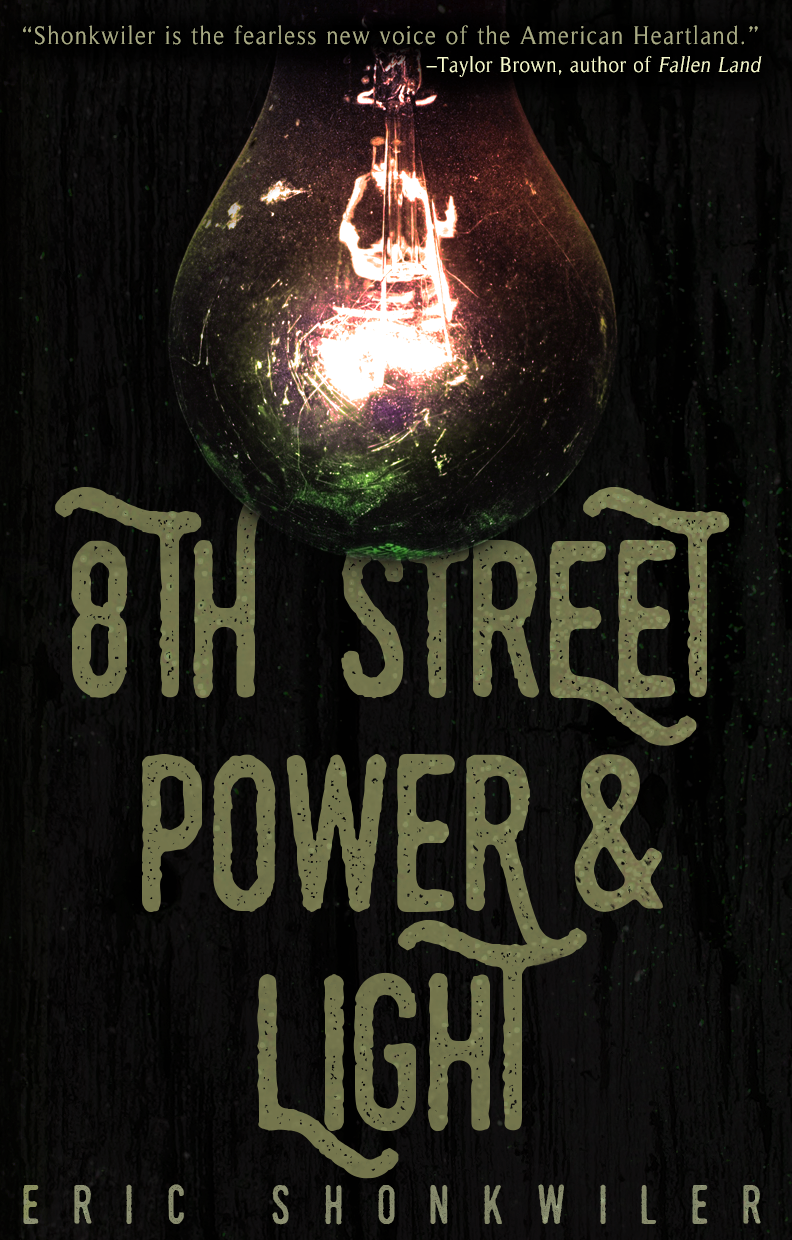
Happy Pub Day to 8th Street Power & Light

October 25th, 2016

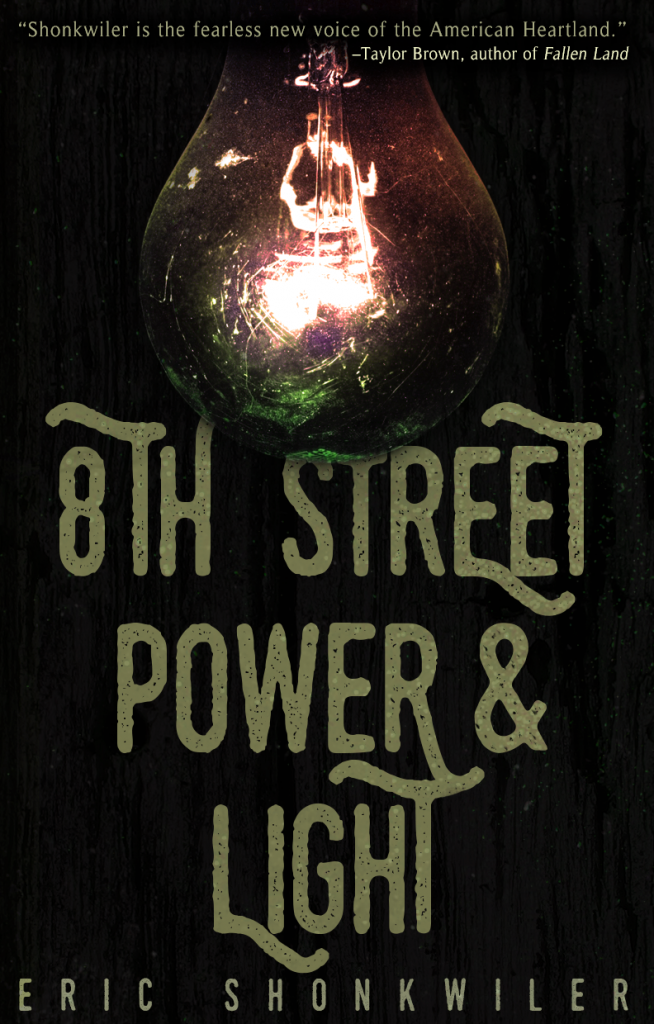
Eric Shonkwiler’s bold second novel 8th Street Power & Light is here for your fall reading pleasure!

Shonkwiler’s writing has received rave reviews from The Los Angeles Review of Books and the Chicago Book Review, plus from acclaimed authors Taylor Brown, Aline Ohanesian, Britta Coleman, Joshua Mohr, Kathy Fish, Berit Ellingsen and more—we are so thrilled to be publishing this follow-up to Eric’s first novel, Above All Men.

From the back cover:

In an abandoned Midwestern city, there’s one last vestige of order and days gone by: 8th Street Power & Light. Part government, gang, and power company, 8th Street tasks Samuel Parrish with keeping the city clear of meth and bootleg liquor. Most nights, Samuel tracks down criminals, while others find him navigating hazier avenues: in between drinking and fighting, he’s falling for his best friend’s girl. But when Samuel rousts a well-connected dealer, he uncovers a secret that threatens to put the city back in the dark.

You can buy the book as a paperback or eBook from major online booksellers. Shop for 8th Street Power & Light. 

Contributor Spotlight: Christine Rhein

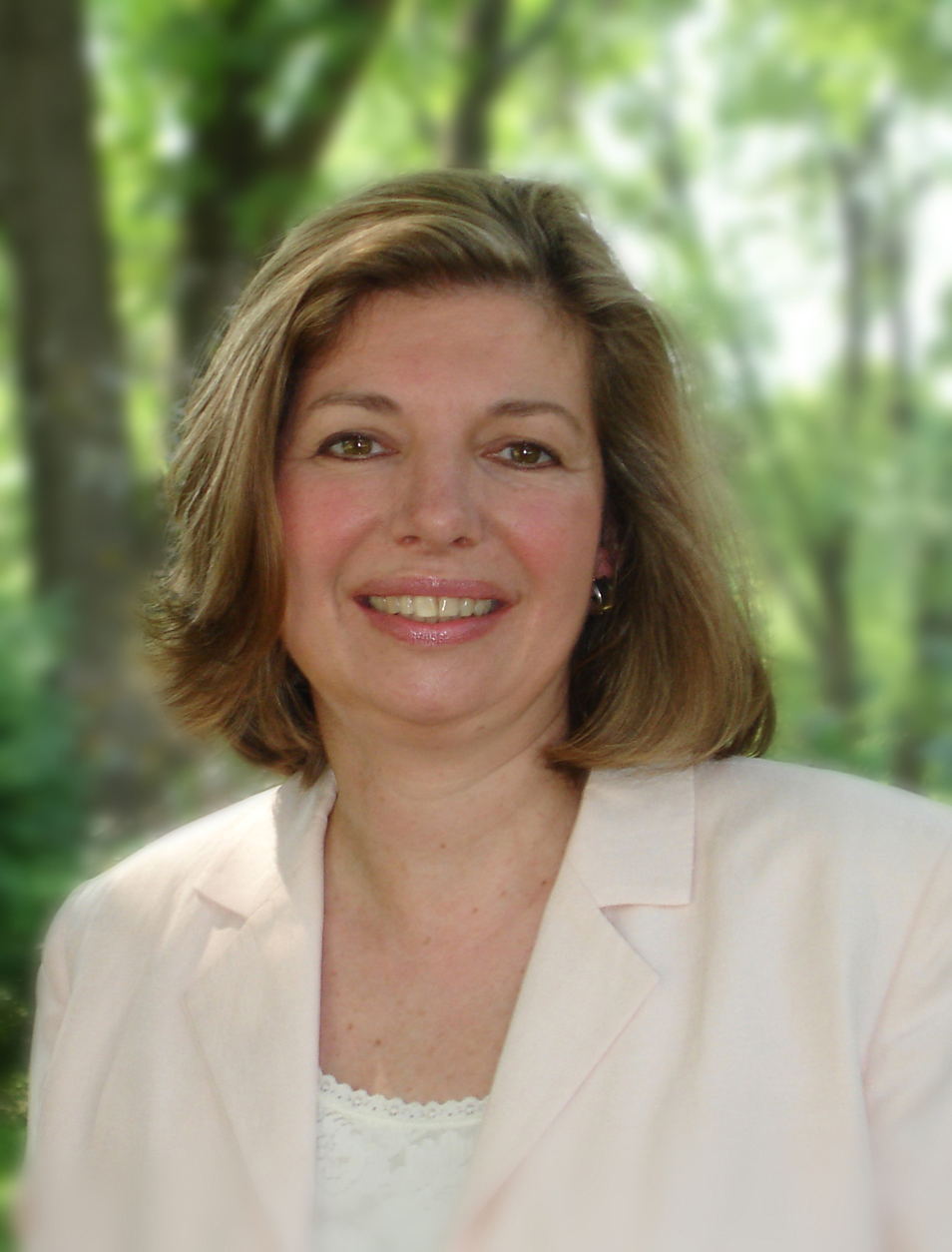
Christine RheinChristine Rhein’s piece “Baptism by Assembly Plant” appears in Midwestern Gothic Issue 22, out now.

What’s your connection to the Midwest, and how has the region influenced your writing?

I was born in Detroit and have always lived in Michigan, a state with many, vibrant writing communities. Being able to attend readings, workshops, and conferences close to home greatly accelerated my development as a writer.

What do you think is the most compelling aspect of the Midwest?

Summer. Followed by spring and fall, and, well, perhaps a day or two of winter.

How do your experiences or memories of specific places — such as where you grew up, or a place you’ve visited that you can’t get out of your head — play a role in your writing?

Place is central to my poems, in large part because my memories are deeply tied to their settings. There are times, however, when a certain place lodges in my head only because I happened to read about it. I’ve never been to the Burning Man festival in Nevada, the Museum of Broken Relationships in Croatia, or a certain Florida mermaid camp, but I’ve written poems about all three. I guess what matters, regardless of the place, is my curiosity to explore it, whether through research and imagination, or through personal experience and emotion.

Discuss your writing process — inspirations, ideal environments, how you deal with writer’s block.

A former engineer might be expected to have a regimented writing process, but no. My writing happens in bursts, both planned and unplanned, with my most productive time in the morning. I need a quiet room for working, but, very often, key phrases and revision strategies come to me when I’m away from my desk. There’s something mysterious and wonderful about how, when the body is busy with routine tasks, the mind is free to meander and stumble upon new thoughts and ideas.

How can you tell when a piece of writing is finished?

My poems rarely come together quickly. I tinker, line by line, again and again, until I can read a poem aloud, all the way through, without stopping anywhere to revise.

Who is your favorite author (fiction writer or poet), and what draws you to their work?

My “favorites list” is very long—and near the top is poet Lisel Mueller. Her book, Alive Together: New and Selected Poems, won the Pulitzer Prize in 1997, the year I seriously began to write. I learned so much about the beauty and intrigue and possibilities of poetry from Mueller’s work. I was also inspired by her personal story. Born in Germany in 1924, she was 15 when she and her parents immigrated to the US and settled in the Midwest. Because my father and mother are also German immigrants, I felt a special connection to Mueller’s poems about family experiences. Over time, I wrote my own family history poems, many about my father’s childhood in Germany during World War II. Those poems became the foundation of my book, Wild Flight. When it was published, I gave a reading in Chicago, and Lisel Mueller was in the audience. I will always be indebted to her and her poetry.

What’s next for you?

I have poems in the current issues of River Styx and The Southern Review and I continue to circulate my second book manuscript. I’ve also begun work on another project — a new series of prose poems.

Where can we find more information about you?

My website has information, poems, and audio links (ChristineRhein.com).

|

No Comments

|

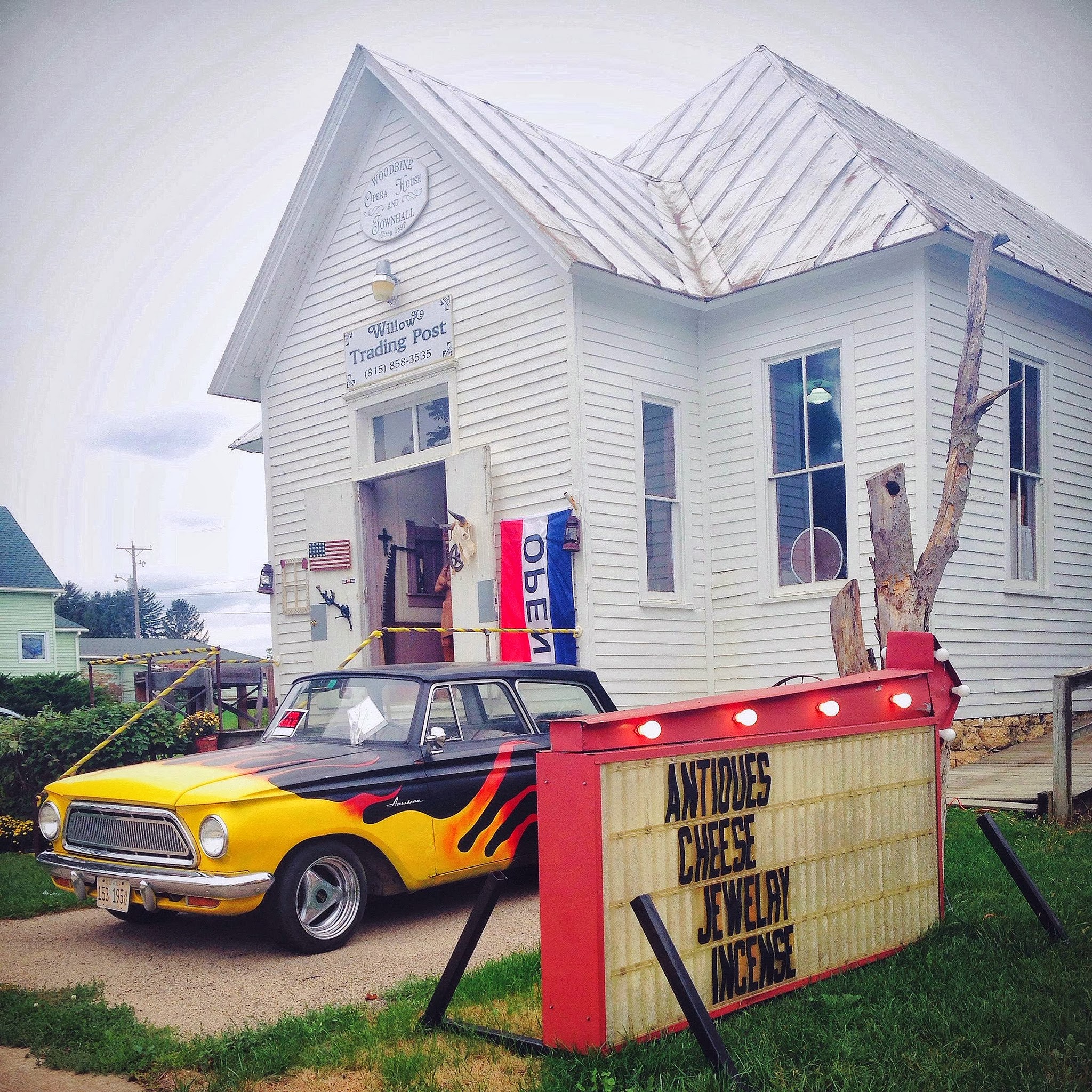
Midwest in Photos: Antiques Cheese Jewelry Incense

“Life, in her experience, had a kind of velvet luster. You looked at yourself from one perspective and all you saw was weirdness. Move your head a little bit, though, and everything looked reasonably normal.” –Jonathan Franzen, The Corrections.

Sera_Hayes-Antiques_Cheese_Jewelry_Incense_

Photo by: Sera Hayes

|

No Comments

|

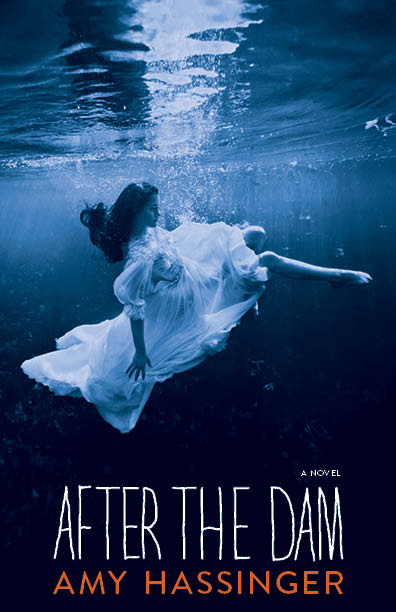
Interview: Amy Hassinger

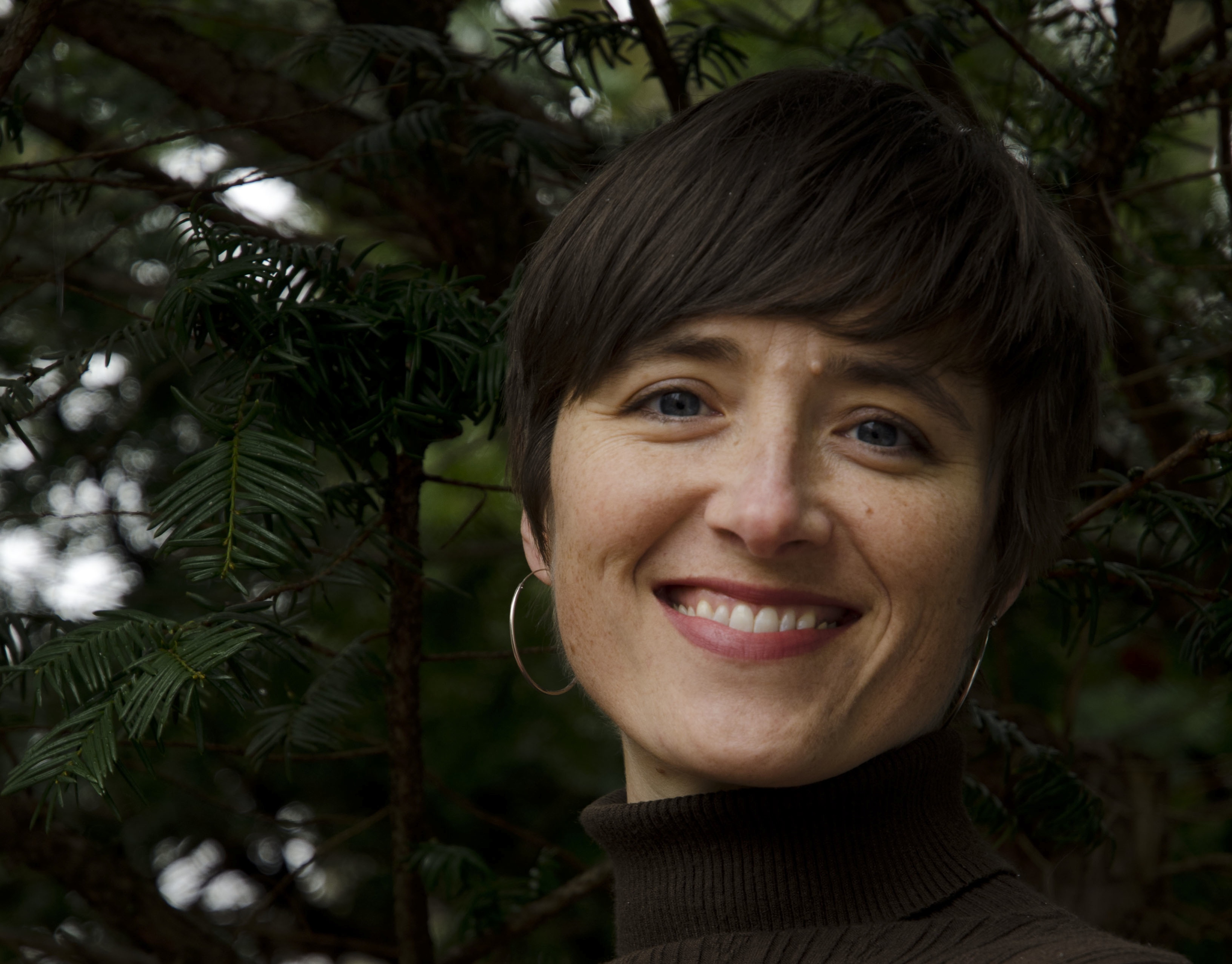
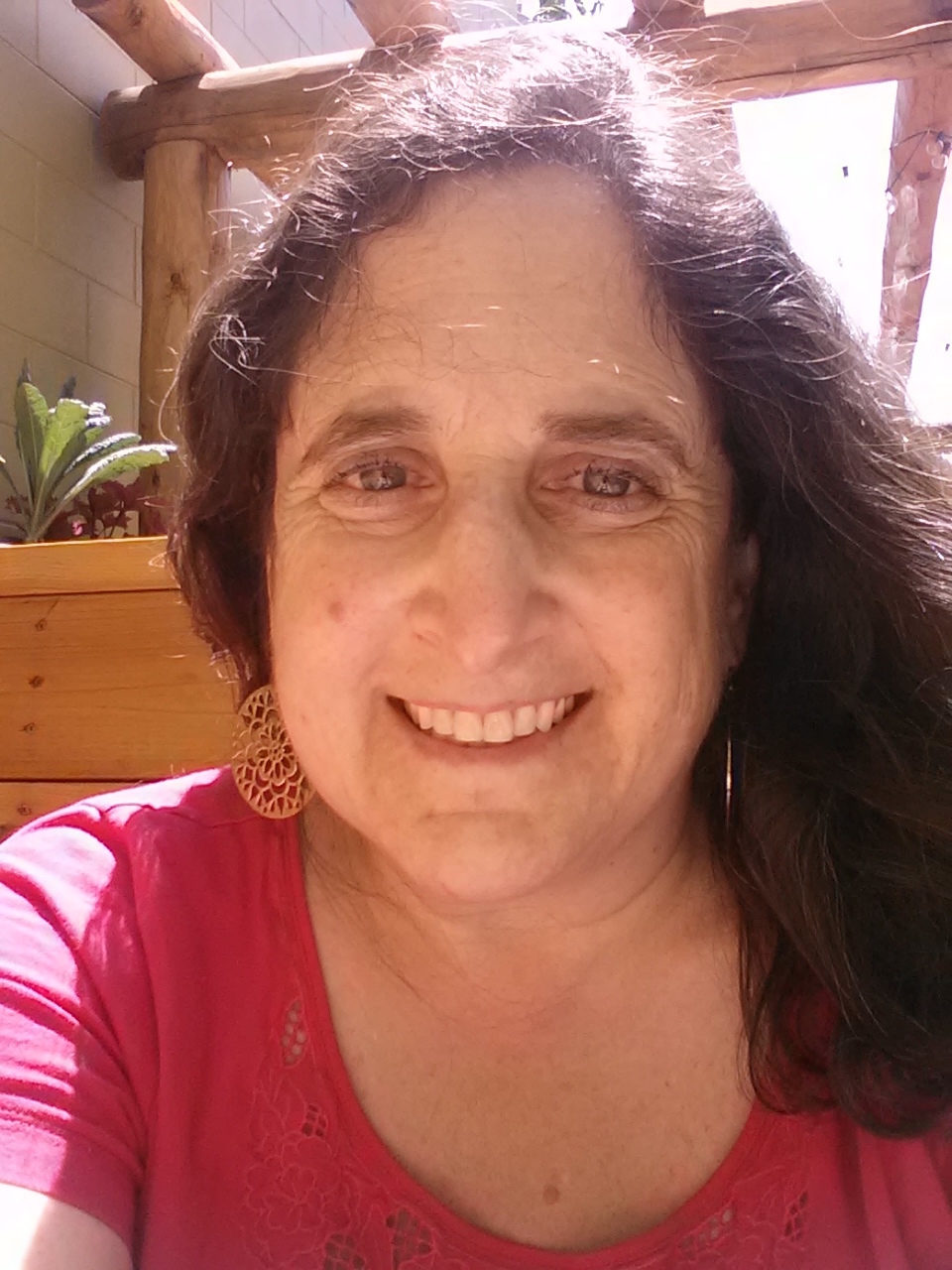
Amy HassingerMidwestern Gothic staffer Megan Valley talked with author Amy Hassinger about her book After the Dam, learning through teaching, commonalities between environment and motherhood & more.

**
Megan Valley: What’s your connection to the Midwest?

Amy Hassinger: I’ve lived in the Midwest since 1999, when I moved to Ames, Iowa from the east coast. Since then, I’ve lived in Ames and Iowa City, Iowa, Okemos, Michigan, and Urbana, Illinois, where I live now. But my roots go deeper: my mother was raised outside of Chicago, and my family has vacationed on a lake in northern Wisconsin going back four generations.

MV: After the Dam is your third novel — how has your approach to writing changed since Nina: Adolescence was published in 2003?

AH: For one thing, my time has grown more fragmented as I’ve taken on more responsibilities (becoming a mother, taking on teaching jobs, editing others’ work, promoting my own). I like to think I’m more efficient with the time I do have, though that’s not always true. My process remains similar. I like to plunge into research on almost any piece I’m working on. I want to get out of my own narrow range of experience and expand the boundaries of self and voice. So I do a lot of reading, lurking in libraries, and web-trawling for an inordinate length of time. Also, talking to people who know something about the world I’m learning about. If it’s a place that’s new to me, I visit it, do my sensory research — taking in the light, the lay of the land, the smells, impressions. And then I’ll dive into the vicissitudes of the drafting process. The research is essential for me — it introduces me to the raw material of my story.

After the Dam

MV: How have your experience as a Faculty Mentor in the University of Nebraska at Omaha’s MFA in Writing Program, teaching at the Osher Lifelong Learning Institute, and a writing workshop leader influenced your own writing?

AH: Teaching has helped me articulate and put names to the things I was doing on a more unconscious level in my own work. I understand the mechanisms of story structure more thoroughly now for having taught them. Workshops require close reading of others’ work, which is always instructive. Having to prepare lectures regularly provides me with a structure within which to explore questions that might be bedeviling me in my own work. So, for example, if I’m having trouble figuring out how to whittle down and otherwise grapple with the enormous amount of exposition I need to fit in my own novel (as a result of all that research!), I’ll take a look at how other writers have handled it, and compile my observations into a lecture. To teach well, you must always be learning. The same is true of writing.

MV: After the Dam was a finalist for the Siskiyou Prize in New Environmental Literature. How do environmental themes fit together with the other major theme of motherhood?

AH: As the title implies, there is a dam at the center of the novel. This dam is both a literal story element — a physical structure that holds back water — and a symbol, a literary structural element. In the book, the construction of the dam transformed its surroundings, causing both ecological damage and social trauma to the local Ojibwe tribe, whose land, ricing grounds, and ancient graves were flooded to create the reservoir. The novel explores both the legacy of this dam as well as its future, and the future of the river it controls.

Motherhood, too, is a kind of radical, even violent transformation. In the novel, Rachel, the protagonist, resists her new identity and its domestic expectations, even as she fiercely loves her baby. She has to be willing to let go of — even destroy — her former pre-mother self in order to embrace the unfolding reality of who she is becoming.

MV: The main characters of your three novels include: a young woman enamored with a priest near the turn of the century in France, a fifteen-year-old girl who becomes a model for her artist mother after the death of her brother, and a young mother who runs away from her husband. How do you create such varied characters and voices?

AH: I guess it goes back to research. As I mentioned earlier, I really am interested in pushing at the boundaries of my own experience. Maybe it’s because I find my own life relatively conventional, maybe it’s because I’m a curious person, maybe it’s because I’m restless and always looking for the next challenge, but a large part of the reason I write (and read) is because I want to explore. Hence the varied subject matter. Of course, the challenge then becomes learning enough about your material to write about it convincingly and well, in other words, getting the details right. That’s the tricky part.

MV: What do you read when you’re not working on your own writing or as a manuscript consultant? How have these affected your writing?

AH: I’m a relatively haphazard reader, a thing I’m always vaguely wanting to change about myself, but never quite getting around to doing. Often I’m reading something that has to do with my work. I produce a weekly micro-podcast called The Literary Life that features the work of Midwestern authors, so I’m always looking for writers to feature. Writers I adore and return to include Virginia Woolf, Louise Erdrich, Andre Dubus, PattiAnn Rogers, Toni Morrison, Aleksander Hemon, Marilynne Robinson, and Gustave Flaubert. Writers I adore and want to read more of include Alice Munro, Kevin Brockmeier, E.L. Doctorow, Rebecca Solnit, Jeffrey Eugenides, Eowyn Ivey, Haruki Murakami, Colm Toibin, Mary Oliver. The list goes on and on!

Each of the writers I’ve read and loved has influenced my work in some way, I’m sure. Virginia Woolf’s Orlando took my breath away and made me want to be a writer when I first read it in college. I still strive (and fail) to plumb the psyches of my characters as deeply as she does. I read Andre Dubus for his depth of compassion, another thing I strive for in my own work. I love Louise Erdrich’s expansive stories and flexibility with point of view. PattiAnn Rogers’ poems are joyous songs of praise and awe at the intricately evolved organisms all around us. Toni Morrison’s Song of Solomon gave me one of my first lessons in novel structure, and her willingness to entertain the magical opened up the possibility of what could be done in a novel. Reading Aleksander Hemon’s sentences is like excavating gems — each one a discovery. Marilynne Robinson’s novels are gorgeous prolonged meditations on spirit and existence; Flaubert’s Madame Bovary is a model of evocative descriptive writing. Each of these people, along with many many others, has taught me something essential about how to write a sentence, a paragraph, a story, a book.

I just finished re-reading Richard Hoffman’s memoir, Love & Fury. All the way through, I found myself admiring his craft — the way he weaves together several different storylines as well as his own essayistic reflections on fatherhood, boyhood, and grandfatherhood, as well as race and class in America. After I set it aside, I immediately was hit with three new ideas of pieces or books I wanted to write. Somehow, reading his book and admiring his craft opened that door for me. Reading is an absolutely essential part of the process, beginning, middle, and end.

MV: What do you wish you had known when you first began writing?

AH: Well, I’m certainly glad I didn’t know how difficult it would be to complete a project, let alone make a living as a writer. Entering it naively was probably the only way for me to do it. I didn’t know better. If I had, I never would have done it.

I don’t think there’s anything I could have known back then that would have smoothed the way. It’s not a smooth way.

MV: What’s next for you?

AH: I’m sitting on a draft of a new novel right now, letting it cool. I’ve got an essay I’m working on about a back infection that almost killed me two years ago, and a couple other short pieces waiting in the wings. After that, I plan to tackle one of several longer-term projects I have in mind. We’ll see what pulls me.

**

Amy Hassinger is the author of three novels: Nina: Adolescence, The Priest’s Madonna, and After the Dam, a finalist for the Siskiyou Prize for New Environmental Literature. Her writing has been translated into five languages and has won awards from Creative Nonfiction, Publisher’s Weekly, and the Illinois Arts Council. She’s placed her work in numerous venues, including The New York Times, Creative Nonfiction, The Writers’ Chronicle, and The Los Angeles Review of Books. She is a graduate of the Iowa Writers’ Workshop and teaches in the University of Nebraska at Omaha’s MFA in Writing Program. She also produces a micro-podcast called The Literary Life that features the work of Midwestern writers. You can find out more about her at www.amyhassinger.com.

|

No Comments

|

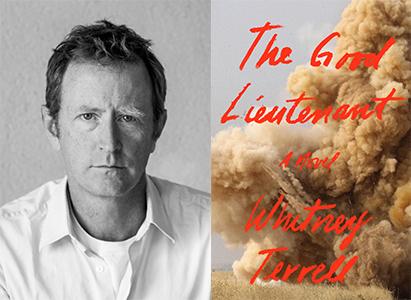
Interview: Whitney Terrell

Whitney TerrellMidwestern Gothic staffer Lauren Stachew talked with author Whitney Terrell about his novel The Good Lieutenant, re-structuring his novel into reverse chronological order, writing from a military-woman’s perspective, and more.

**
Lauren Stachew: What’s your connection to the Midwest?

Whitney Terrell: I was born and raised in Kansas City. My family has been living here since the 1890s, on my mom’s side. And that side of the family moved here from Nebraska so . . . I think it’s safe to say that we are not a coastal family. On my dad’s side, his father grew up in Holton, Kansas, fought in WWI, went to law school at Kansas University and then moved to KC.

LS: Apart from living in the East Coast while attending Princeton University, you grew up and have lived most of your life in Kansas City. How did briefly living in a different region of the U.S. affect your conception of the Midwest?

WT: Like many young writers, I had an excessively romantic view of the East Coast, and New York City in particular. I thought of the Midwest as a place I needed to escape. Going to Princeton as an undergraduate did nothing to dispel this. What did change my conception of the Midwest was moving to New York after graduate school in 1996. I was pretty broke. I had a small shotgun apartment on E. 13th Street—an area that wasn’t yet as gentrified as it is today. I was fact-checking for The New York Observer. I liked living in the city. Loved it, really. I could feel myself being absorbed into its routines.

At the same time, in the mornings before I went to work, I began writing for the first time in my life about Kansas City. These were the opening pages of The Huntsman. On 13th Street, the world I’d left sounded exotic. Nobody there knew what it was like to build a raft and float down the Missouri River, as I’d done when I was sixteen. Nobody there had smelled the inside of a gas-lit hunt club. After fact-checking other people’s writing during the day, I began to look forward to imagining Kansas City in my own words. The feelings, smells, faces, voices, accents, streets, trees, and people of that city—and my awareness of the city over time—that was my material. That was what made me unique. I didn’t realize this until I lived on lucky 13th Street.

LS: Both of your previous novels, The Huntsman and The King of Kings County, address issues of race: the former centers on a young African American who finds his way into Kansas City’s white, upper-class society while searching for answers about his family’s past, and the latter focuses on the relationship between real estate and race in Kansas City. What made you interested in exploring this topic in your novels?

WT: The person I have to thank for that is James Alan McPherson. He was one of my professors at the Iowa Writers’ Workshop and he was an incredibly powerful influence, a deeply caring, thoughtful, and generous mentor—at a time when I really needed a mentor like that. At Iowa, I was writing about Alaska, where I’d spend summers working on seine boats, fishing for salmon. McPherson was encouraging about that book. But in the end, his seminars and his lectures were more important. He was intensely interested in race. We read and discussed all the greats: Ralph Ellison—particularly the essays—Richard Wright, Toni Morrison, Dubois, Walker, Hughes and many, many more. (I’d include McPherson’s own work on this list, though he never did.)

McPherson also insisted that white writers had a responsibility to engage with the subject of race in their own work. He called it the “great American subject.” I can remember a terrific lecture he gave on Melville’s “Benito Cereno,” for example. This had a profound influence on me. Also, his way of talking about race was helpful. He was funny. He teased. He questioned. He was an iconoclast. He led his classes through a never-ending seminar on America’s historical and ongoing attempt to grapple with race and diversity. I took to heart his assertion that, as a white writer, these issues were part of my heritage too. Something I had a responsibility to engage with. Kansas City only became an interesting place for me to write about when I began to view it through this lens. In the 1990s and early 2000s, as I was writing The Huntsman and The King of Kings County, Kansas City and other northern and Midwestern cities like it were basically operating like apartheid states, long after the civil rights era had passed. People in the African-American communities of those cities were well aware of this. So were other writers. But it wasn’t part of our national conversation. It was a buried story—one of many.

For instance, The King of Kings County focuses on how real estate companies used racial covenants to segregate Kansas City. I discovered as I did my research that many people knew about this, but it had been kept out of the official histories of the companies involved—and omitted from the city’s history generally. I wanted to force this history into view, make it visible in narratives that people couldn’t ignore. For a long time, I felt like I’d failed. The books were well reviewed, but outside of Kansas City, maybe, I didn’t feel like they had much effect. Now, after Ferguson, and Baltimore, and Chicago—the painfully long list of cities where we’ve seen protests—these kinds of stories are in focus. People are paying attention. Excellent new books are being published. My students talk about these issues. It’s insane that it has required more than two years of protests, in cities across the country, and the deaths of numerous unarmed black citizens at the hands of the police to get mainstream America, and especially white America, to make this a part of our national conversation. But I’m not surprised. Resistance movements like Black Lives Matter are responding to a deeply seated structural racism that the residents of all these cities had known about for decades. I knew about it. Thanks to McPherson, I was able to write about it in those early novels. The subject has only become more and more urgent. I hope people will revisit those books now.

[Note: James Alan McPherson died this past summer, after this interview was completed. A number of his former students wrote about their memories of him on literary sites and on social media. I wrote my own piece for Literary Hub, which you can find here: http://lithub.com/obama-america-and-the-legacy-of-james-alan-mcpherson/]

LS: Your most recent novel, The Good Lieutenant, opens with a failed Army operation in Iraq led by the main character, Lt. Emma Fowler, and from this point the narrative moves in reverse chronological order. How did you arrive at this structure? Did you always intend for the novel to operate this way?

WT: I wrote the novel in chronological order originally. Never considered going backward. My current editor, Sean McDonald, read the book in that original form. He told me, “Look, the last hundred or hundred and fifty pages of this are good. You just need to get to them more quickly.” The book was over three hundred pages long at the time. Even so, I was fine with his suggestion. I was just glad that an editor thought that there was some part of the book that was worthwhile because by then, I’d been working on it for about six years and still wasn’t happy with it.

So I cut the beginning. I tried to write something new that could be grafted on to those 150 good pages. But it seemed like no matter what I tried, I couldn’t gain any momentum. These scenes were boring, slow, and clunky. I worked at this for six or eight months until finally I realized I just couldn’t do it. Here was this terrific editor—I’d known about Sean for years and really respected the writers he published—who was interested in this book, and had given me this completely reasonable suggestion to fix it, and I was still going to fail. I was sitting right here at my desk on the day that I gave up. It was a beautiful spring day. I was miserable. I had selected the last forty pages of the novel and was trying to imagine how I might be able to turn them into a short story, so I could at least get something out of this project. But no luck. Even in that shortened form, I realized that the ending of the novel was too narrow, too deterministic, too negative. The message was, in essence, “Hey, look, the war turned this woman’s life into a mess.” Not a very original idea. The various chapters of the book were spread around me in a mess. I kept paging through that last scene, hoping to find a way to save it. Somehow, a scene from earlier in the book got mixed in underneath those final pages. When I arrived at it, I actually had an idea. A very rare moment of inspiration. I realized that if I told the story in reverse, the ending wouldn’t be so narrow. Instead, the characters would grow and complicate themselves as they moved away from combat. The novel would have that crucial feeling of expanding outward—without giving up my belief that war is not, in fact, an avenue for character growth.

LS: In 2006 and 2010, you embedded with the U.S. Army in Iraq and covered the war for The Washington Post Magazine, Slate, and NPR. How much of this experience inspired or informed the story and characters in The Good Lieutenant?

WT: Those experiences were crucial. Especially the embed in 2006. In my mind, that’s roughly when the book takes place—though I don’t specify a year in the text. I’ve always been a really place-oriented writer. So just on a basic level, it was extremely important for me to be present in that physical space. Sensory inputs are irreplaceable. What does an Iraqi shopping center look like? What do the road signs say? What’s on TV? I remember attending this one, extremely long meeting at a schoolhouse out in the countryside, outside the wire. The lieutenant colonel from the battalion I’d embedded with wanted to meet with a group of local sheikhs to try to convince them to stop letting insurgents travel through their neighborhood. The text of the conversation is one thing—I have that in my notes. It tells you that neither the sheikhs nor the colonel were fully in control of their territory. They needed each other’s help but didn’t trust each other. They were still trying to figure out what was causing the uptick in violence they were seeing in that area. (The answer was that we were witnessing the beginning of a civil war between the Sh’ia and the Sunnis in that area. But this was only clear in retrospect.)

So that would be the “story” in a journalistic sense. But as a novelist, there are so many other things to see. How the sheikhs dress, the kinds of cigarettes they smoke, the soda they drink, the cell phones they use. There’s a donkey tied up in back of the schoolhouse, braying the whole time. There’s the colonel’s interpreter, wearing an Iraqi Army flag on his shoulder, looking smug and disdainful as he translates what he believes to be yet another digression from one of these sheikhs. Or giving one word translations when the guy has just shouted for several paragraphs. There are the empty cubbies used by the children who have class in that school room. Chalk boards. Kids’ drawings on the walls. A map of the world with the Middle East in the center of the page, just as our world maps at home put America in the center. A bunch of open paint tins stashed in the corner, with the brushes still stuck inside them, as if somebody had just painted the walls of the school room in preparation for the U.S. colonel’s visit. Or maybe they had painted over something they didn’t want the colonel to see.

So yes. It was important.

LS: Was it a conscious choice to have a female frontline officer in this novel? Writing from a male perspective, did you receive any criticism for this decision?

WT: Emma Fowler was the protagonist of this novel from the beginning—even before I ever went to Iraq. I never once imagined the novel as being about anybody else. I knew only a few basic things about her. I knew that she’d been in ROTC and that her mother had left the family when Emma was a young girl, and that Emma had grown up having to care for her brother as a kind of replacement mother. I knew that, as an officer, at least in the beginning of her career, she was a very rule-oriented person. Very much about toeing the line, following procedure, and that she took comfort in that—and that this specific aspect of her character would be challenged as her time in the Army and her time in Iraq progressed. That was it, in terms of facts. I did, however, have this internal, instinctive feeling about what kind of person Emma was. For a long time, this was just a feeling. I could say to myself, “Well, she would react this way in this kind of situation.” Or, “That doesn’t sound like something she’d say.”

The long process of writing the book was in part a process of developing a fully coherent, explicit understanding of this instinctive feeling. Why did Emma care so much about following procedure? How did her past inform her present? What was her ethic?

As for why I chose a female character, it’s honestly difficult to remember with any clarity. It feels like I wanted to write about Emma Fowler specifically. Not just a generic “female officer.” The best I can say is that I knew women were serving in Iraq and Afghanistan in unprecedented numbers. This seemed interesting on its face. And I think it’s always useful, when you are writing about an institution like, say, the Army, to have a character who is part of that institution but at the same time separated from it. And outsider. Draftees played this role in a lot of previous war novels—but of course there were no draftees in Iraq.

So those considerations may have played a role. What I can say, with absolute certainty, is that once I started interviewing and meeting with female soldiers, in Iraq and in the States, I became immediately aware that their stories were fascinating. Their stories were also different than any war story I’d ever read or seen. And beyond that, they felt that their stories weren’t being told. Fortunately, that is changing. Authors like Helen Thorpe, Kristen Holmstedt, Helen Benedict, Kayla Williams, Odie Lindsay, and Cara Hoffman have also published books that address the experiences of female soldiers. I know several female veterans like Teresa Fazio and my former student, Anne Kniggendorf, who are working on books about their military experience. They should be published too. If I can, I hope to help with that. As for the last part of the question, the most gratifying part of this process has been showing the novel to the women who consulted with me on it. Asking them to read it. Talking to them about it afterward. Having them say, “Yes, the book gets this right.”

To me, The Good Lieutenant is a collaborative work, more than anything I’ve ever written. I couldn’t have done it on my own. Women like Major Stacy Moore, former Sergeant Angela Fitle, and Lieutenant Colonel Jen McDonough, all of whom consulted on the book, are its authors too. So are the male soldiers I embedded with like former Captain Nate Rawlings, and Sergeant Travis Parker. I’ve been lucky enough to do events with them on tour, let them talk about their own experiences in person. You can find recordings of these events and interviews on the FSG blog Work in Progress, at New Letters on the Air, and at the Politics & Prose website.

LS: You’ve taught at the University of Missouri-Kansas City since 2004. Is there a piece of advice you always give your students?

WT: Write every day, if possible. Repetitive effort is the best way to solve problems. Try to keep your schedule as clear as possible. Okay, you’ve got to teach, or do whatever’s necessary to pay the rent. Do that. But otherwise, keep your overhead low. Don’t sign up for extra classes in an effort to hurry up and get your degree. Try not to fill your schedule with extracurricular activities. Leave your days open. Dealing with the pressure that open, unscheduled writing time presents is crucial to becoming a writer. An MFA program should be a protected place that is designed to provide you with that kind of time. You should think of this unscheduled time as the most important class you’ll take. You, alone in a room, with nothing to do but write. It takes a long time to get used to living that way. School is where that process begins.

LS: What does a typical day of writing look like for you? Do you have a certain routine or schedule that you stick with?

WT: I drive one of my sons to school and am back at my desk by 8:30. I generally work until 3:00 or 4:00. I go for a run. I eat dinner with my family. I grade papers at night. Rinse, repeat.

LS: What’s next for you?

WT: I’m on a flight to Pittsburg, where I’m excited to do an event with an Iraqi poet, Sabreen Kadhim, at City of Asylum. More generally, another Kansas City novel will be next. I’ve started on it.

**

Whitney Terrell is the author of The Huntsman, a New York Times notable book, and The King of Kings County. He is the recipient of a James A. Michener-Copernicus Society Award and a Hodder Fellowship from Princeton University’s Lewis Center for the Arts. He was an embedded reporter in Iraq during 2006 and 2010 and covered the war for the Washington Post Magazine, Slate, and NPR. His nonfiction has additionally appeared in The New York Times, Harper’s, The New York Observer, The Kansas City Star, and other publications. He teaches creative writing at the University of Missouri-Kansas City and lives nearby with his family.

|

No Comments

|

Contributor Spotlight: Tracy Harris

tracy harrisTracy Harris’s piece “T for Tiberius, Twice is Not Enough” appears in Midwestern Gothic Issue 23, out now.
What’s your connection to the Midwest, and how has the region influenced your writing?

I moved to St. Paul, MN more than 30 years ago to attend law school and because my husband had accepted a job here. Neither of us is from the Midwest — I’m from Boston, he grew up in Austin, TX, we met in Berkeley, and were married and first lived in New York City. Moving here with no ties to the region was tough. People tend not to flock here from other parts of the country (at least not 30 years ago), and I constantly had to explain where I was from and why I was here. And while there is much to admire about the Twin Cities, I was used to bigger, more diverse and more densely populated places. I still miss the excitement of cities like New York or San Francisco. As pleasant as the Twin Cities may be, they do not have that same sense of place or of history.

On the other hand, I have lived here virtually all of my adult life, made wonderful friends, raised my children, and learned to be a creative writer here. Who I am is largely defined by the time I’ve spent in the Midwest, even if much of that time has been spent wondering why living here makes me feel like such an oddball.

What do you think is the most compelling aspect of the Midwest?

The openness. I mean that literally, in that the region feels pretty open in both its natural and urban landscapes: wide prairies, expansive vistas across the lakes, broad streets running even through the core of the cities, and an incredible amount of space left open in shops and restaurants that never would be wasted in a city like New York or Boston. And I also mean open figuratively. I experience the Midwest largely as a void, a bit like the idea of negative space in art. After 30 years I still feel a lack of history, of public identity or spirit, maybe because I didn’t grow up here. But negative space isn’t a bad thing. People define themselves around the void, there are fewer limits, and I think people here are more open to different ways of defining themselves than I ever experienced in big cities on either coast. The relative emptiness of the Midwest somehow seems to have imbued the people with an openness to possibility that I have come to admire a great deal.

How do your experiences or memories of specific places — such as where you grew up, or a place you’ve visited that you can’t get out of your head — play a role in your writing?

As mentioned earlier, a lot of my writing is about being a stranger in a strange land here in Minnesota. I suppose my ideal place is Manhattan, where I lived for just under a year when I was first married; and Paris, which I have only visited but where I still dream of living. Those are magic, beautiful places and really it’s not fair to compare anywhere else to either city. In a sense, however, I think a lot of my writing is informed by the fact that I ended up living in Minnesota and not one of the dream places I’d always imagined for myself.

Discuss your writing process — inspirations, ideal environments, how you deal with writer’s block.

I am a former attorney, and I have training and experience as a journalist. It’s hard for me not to have a plan when I sit down to write; it’s my instinct to want to outline everything. That works fine for legal briefs and news articles; in legal writing especially you always know what you want the outcome to be. But when I started writing creatively I had to learn to let go, to write to the surprise (in the words of Pat Francisco, a wonderful professor at Hamline University). So now, when I start a new piece I may jot down a couple of ideas, but then I just start writing and see what happens. The inspiration may be a particular event or moment that happened, but the writing process centers on figuring out how to tell the story of that event in such a way that a larger truth is revealed.

As far as ideal environments, I can write at home but I’m primarily a coffee shop writer. I like the low hum of activity and music, having other people to stare at, and of course having someone else make the coffee. I can write for a few hours at a time, and then if I get stuck I stop, usually just for the day, or even for several hours. Because I’ve had a lot of jobs that required me to crank out written work whether I was in the mood for it or not, if I decide I’m going to finish a particular piece or section, I’ll usually do it within the deadline I’ve set for myself. If what I’ve written is not good, I can count on my writing group to let me know, and usually once I’ve had some feedback I can start shaping my work into something at least marginally worthwhile.

How can you tell when a piece of writing is finished?

I can’t! I have a wonderful writing group and am fortunate to get lots of varied input on my writing. Sometimes the criticism hurts, but honestly I would not have finished anything without them.

Who is your favorite author (fiction writer or poet), and what draws you to their work?

I’ve probably spent the most time reading Iris Murdoch. I love the complexity of her stories, the depth of her historical, literary and philosophical references (90% of which I know are going right over my head), and her hilarious flair for dialogue. I also recently achieved a life goal and finished reading Infinite Jest by David Foster Wallace. Vastly different subject matter and point of view, but I have to say I love him for pretty much the same reasons. And for DFW, the heartbreaking tenderness of some of his characters.

What’s next for you?

The piece that appears in Midwestern Gothic is one of a series loosely based on the theme of “stupid places I’ve been.” The places I’m writing about are not all stupid, and they are not all in the Midwest, although I’m currently writing an essay about Davenport, Iowa, a beaver and Jackson Pollock. I’ve still got Houston (the NASA Space Center), London (and a search for the Broad Street pump), the Northwest Angle, and plenty more to work on. I am hoping to turn that series into a book-length collection.

Where can we find more information about you?

I am not a huge presence on the Internet but you can look for me on Facebook or Twitter @TracyHarris124.

|

No Comments

|

Eric Shonkwiler Book Giveaway

In celebration of the launch of Eric Shonkwiler’s forthcoming novel, 8th Street Power & Light, we’ll be giving away copies of his debut novel, Above All Men, plus a Grand Prize of the entire Eric Shonkwiler collection!

How can you win a copy of these fantastic books? To enter: Follow us on Twitter and retweet any of the contest tweets between October 17th and 21st.

Here’s some info about 8th Street Power & Light, available now for pre-order and set to be released October 25th:

cover

“Shonkwiler’s world is made of rust. In this relentless novel, no life is safe, no story too far-fetched and no bone unbroken. There is a reckoning coming. You will need a tetanus shot.”
Andrew F. Sullivan, author of WASTE and All We Want is Everything

“Fans of hard-boiled noir will appreciate Shonkwiler’s style, in which spare syntax and tight dialogue rule the day. A star-crossed affair, unfolded with nuance, and the descriptions of a city lit up at night beat with the rhythm of poetry.”
Britta Coleman, author of Potter Springs

Description
In an abandoned Midwestern city, there’s one last vestige of order and days gone by: 8th Street Power & Light. Part government, gang, and power company, 8th Street tasks Samuel Parrish with keeping the city clear of meth and bootleg liquor. Most nights, Samuel tracks down criminals, while others find him navigating hazier avenues: in between drinking and fighting, he’s falling for his best friend’s girl. But when Samuel rousts a well-connected dealer, he uncovers a secret that threatens to put the city back in the dark.

Pre-Order 8th Street Power & Light

We’ll be giving away copies of Above All Men from October 17th through 21st.

We’ll be posting the contest tweet throughout the length of the event…and all you need to do is retweet it! Enter ONCE PER DAY for your chance to win! We’ll give away 2 copies (one print and one ebook) per day Monday – Friday, and a Grand Prize of the Eric Shonkwiler collection that includes ALL his novels: Moon Up, Past Full, Above All Men and 8th Street Power & Light for one lucky winner at the end of the week!

As an added bonus, Eric has graciously agreed to do an interview via Skype for a book club, class, etc. for those who are interested. This particular prize will be separate from the rest of the contest, and only the RTs for that specific tweet will be used to determine the winner. Whereas the rest of the contest runs all week, this part of the contest will only be available on Friday.

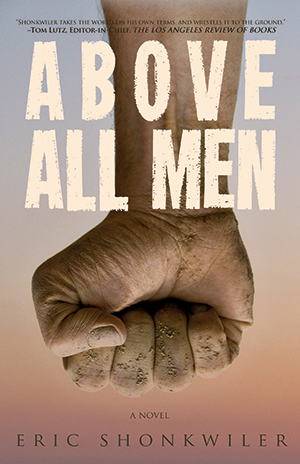
Above All Men by Eric ShonkwilerAbove All Men

“Shonkwiler’s words are brilliantly poetic—quiet creepers that seem stark and undecorated on the surface, but the lines hum with underlying emotion.” – Leah Angstman, Los Angeles Review of Books

“Above All Men is a book you will not find yourself capable of walking away from…It’s a tale of survival as much as it is one of destruction. And Shonkwiler pulls it off effortlessly.” – Lori Hettler, The Next Best Book Blog

Description
Years from now, America is slowly collapsing. Crops are drying up and oil is running out. People flee cities for the countryside, worsening the drought and opening the land to crime. Amid this decay and strife, war veteran David Parrish fights to keep his family and farm together. However, the murder of a local child opens old wounds, forcing him to confront his own nature on a hunt through dust storms and crumbling towns for the killer.

Now for some rules:

Once you retweet the contest tweet you are automatically entered into the drawing for the prizes for that day and the end of the week prize.
Must have a valid Twitter account to enter the giveaway or to be an email subscriber.
You get one entry per day — that means if you RT the contest tweet every day of the contest, you have a shot at winning all the daily prizes, and you get 5 chances to win the Grand Prize at the end of the week.
Winners are chosen by Random.org random number generator after each RT is assigned a number.
Daily winners will be announced on Twitter (the day after), and only RTs from that day will count toward that day’s prize.
If you enter and win a daily prize, you can still enter, once per day, for the rest of the contest duration for a better shot at the Grand Prize. You can only win one daily prize per Twitter account.
All prizes will be paid out at the end of the contest. Winners will be contacted individually.
Winners of paperback books must have their prizes mailed to a U.S. address, or forfeit their prize.

|

No Comments

|

Contributor Spotlight: Alec Osthoff

Alec OsthoffAlec Osthoff’s story “The Tomb of the Pharaoh” appears in Midwestern Gothic Issue 22, out now.
What’s your connection to the Midwest, and how has the region influenced your writing?

I grew up in a small town called Ely, Minnesota along the Canadian border. My parents were both professional sled dog racers, so we spent most of my early winters moving around the Midwest, Alaska, and upstate New York, but Ely was home during the spring, summer, and fall. The town is right outside of the Boundary Waters Canoe Area, so it has incredible scenic beauty. But like many towns in the Midwest, Ely suffers from a crumbled economy built around steel production. This combination of natural beauty and postindustrial decay harmonizes in a really productive way, at least for this writer. I think a lot of my work is trying to make use of that harmony.

What do you think is the most compelling aspect of the Midwest?

The Midwest as a setting doesn’t carry a literary stigma the way some other regions do. For example, I’ve been tinkering with writing short stories that fall somewhere between gothics and grotesques. If these stories were set in the south, they would be called southern gothics, and I would lose a lot of control that I had over the piece. Certain assumptions about my work would already be set, and there would be very little I could do to avoid those expectations. If I did somehow manage to avoid those expectations, then it would be said that I intentionally circumvented them. It wouldn’t be assumed that I simply was interested in other content. To a lesser extent, this is true in other regions as well. The California gothic is becoming more and more popular, and the New England gothic has close ties to Lovecraft and Poe and Robert Chambers. Working with a setting that doesn’t carry that history challenges the writer a bit by cutting off some of shortcuts that are often made.

How do your experiences or memories of specific places — such as where you grew up, or a place you’ve visited that you can’t get out of your head — play a role in your writing?

My story that appeared in this magazine is built almost entirely from my memories of exploring the abandoned buildings of Minneapolis. But usually my own experiences or memories form just the germ of the story, and the bulk of the work is left up to my imagination.

Discuss your writing process — inspirations, ideal environments, how you deal with writer’s block.

Mostly I write at my desk. I’ve only had a laptop for the past month, and I find pen and paper writing tedious when compared to typing, so my ideal writing environment has mostly been my dark, messy, and sad little room. But that suits me. The handful of times I’ve written in coffee shops or bars have always been more distracting than ideal. As for writer’s block, usually I get it in small bouts and I can usually get around it by working in a different medium for a day or two. I write a fair amount of poetry, which I find to be less stressful than prose in part because I don’t feel any pressure to publish it. But poetry also forces me to think about language in a different way, and sometimes that’s what’s holding me back. It’s not that I don’t know what I want the story to do, it’s that I’m struggling with how to write it.

How can you tell when a piece of writing is finished?

I think I can tell when a portion of a story is interesting or doing something new, and I just try to make as many of those moments as I can while keeping the story from collapsing in on itself. There’s a point of critical mass with any story where adding more wouldn’t be helpful, and I try to get there before calling the work done, at least as far as content is concerned. But I can do line edits until they put me in my grave, so I guess I don’t really know when a work is done.

Who is your favorite author (fiction writer or poet), and what draws you to their work?

I’m bad at picking favorites, but right now I am really enjoying the short stories of William Carlos Williams. I think that short stories, more than poetry or nonfiction or long form fiction, can feel stuck in a lot of rules. I find a lot of contemporary anthologies frustrating because many of the stories in them are functioning on the same rhythm and with a lot of the same styles and moves — the content changes, but the execution of that content can be very formulaic. William Carlos Williams is the best at pulling me out of that frustration since he neglected or was completely unaware of any such rules. His stories rarely follow an established arc. His powerful images are hardly ever symbolic for the conflict.

But I’ve also been enjoying a lot of great work recently. Colin Barrett, Kerry Howley, Carrie Lorig, and Yoko Ogawa have all been at the top of my list as of late.

What’s next for you?

Right now I’m writing the rough draft of my first novel as my M.F.A. thesis at the University of Wyoming. The novel is set in a small Midwestern town that shares a lot of similarities to the one I grew up in. Most of my time writing is occupied by that behemoth project for the moment.

Where can we find more information about you?

I’ve had poetry and book reviews appear on the Atticus Review, and those can be viewed online for free. I’m Twitter-less at the moment and don’t have a fan page or website or anything like that, but feel free to add me on Facebook. I’d be happy to talk.

|

No Comments

|

Midwest in Photos: Norwegin American Log House

“A damp, gray sky covered southern Ohio like the skin of a corpse.” –Donald Ray Pollock, Knockemstiff.

Paul_Cutting-Norwegian_American_Log_House

Photo by: Paul Cutting

|

No Comments

|

Announcing 2017 MG Press Titles

We are thrilled to announce two new additions to the MG Press catalog, coming in 2017! Help us celebrate and support these great authors! Pre-order is available for just $1!

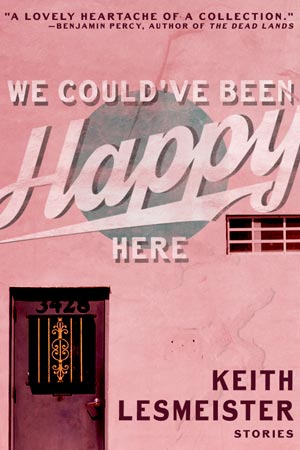
WE COULD’VE BEEN HAPPY HERE by Keith Lesmeister
Release Date: Spring 2017
Read more about We Could’ve Been Happy Here

“A lovely heartache of a collection.” — Benjamin Percy, author of The Dead Lands, Red Moon, Thrill Me, The Wilding and Refresh, Refresh

In his first collection of short fiction, Keith Lesmeister plows out a distinctive vision of the contemporary Midwest. A recovering addict chases down a herd of runaway cows with a girl the same age as his estranged daughter. A middle-aged couple rediscovers their love for one another through the unlikely circumstance of robbing a bank. A drunken grandmother goads her grandson into bartering his leftover booze for a kayak. The daughter of a deployed soldier wages a bloody war on the rabbits ravaging her family’s farm.

These stories peer into the lives of those at the margins – the broken, the resigned, the misunderstood. At turns hopeful and humorous, tender and tragic, We Could’ve Been Happy Here illuminates how we are shaped and buoyed by our intimate connections with others — both those close to us, and those we hardly know.


A WOMAN IS A WOMAN UNTIL SHE IS A MOTHER: ESSAYS by Anna Prushinskaya
Release date: Fall 2017
Read more about A Woman Is a Woman Until She Is a Mother

“Anna Prushinskaya is a fierce and lucid writer.” — Emily Schultz, author of The Blondes

In A Woman Is a Woman Until She Is a Mother, Anna Prushinskaya explores the deep life shifts of pregnancy, birth and motherhood in the United States, a world away from the author’s Soviet homeland. Drawing from inspirations as various as midwife Ina May Gaskin, writer and activist Alice Walker, filmmaker Sophia Kruz and frontierswoman Caroline Henderson, Prushinskaya captures the inherent togetherness of womanhood alongside its accompanying estrangement. She plumbs the deeper waters of compassion, memory and identity, as well as the humorous streams of motherhood as they run up against the daily realities of work and the ever-present eye of social media. How will I return to my life? Prushkinskaya asks, and answers by returning us to our own ordinary, extraordinary lives a little softer, a little wiser, and a little less certain of unascertainable things.
Find out more about our MG Press titles here.

|

No Comments

|