Interview: Sarah Bruni

October 13th, 2016

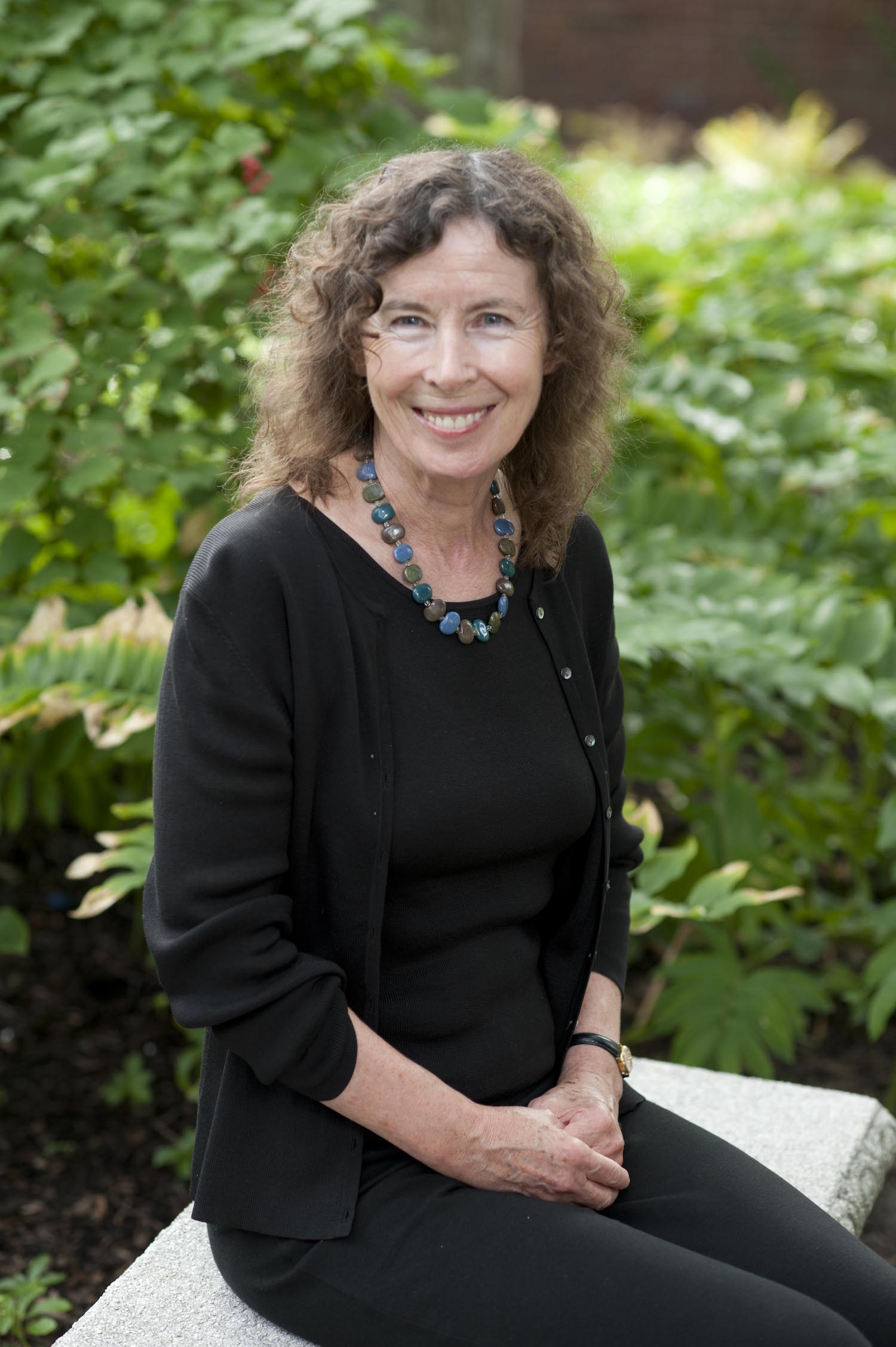
Sarah BruniMidwestern Gothic staffer Sydney Cohen talked with author Sarah Bruni about her debut novel The Night Gwen Stacy Died, mixing comic books and novels, living inside a borrowed story, and more.

**

Sydney Cohen: What’s your connection to the Midwest?

Sarah Bruni: It’s where I grew up and where most of my family still lives, in and around Chicago. I also spent four years in Iowa City during college, and three in St. Louis during and after an MFA program, so although I haven’t lived in the Midwest for nearly a decade, it’s the part of the country where I started reading and writing, where I’ll always have deep personal roots.

SC: Your novel, The Night Gwen Stacy Died, heavily incorporates aspects of the classic Spider-Man comic books through the characters’ names as well as their adventurous spirits. Spider-Man lore is an interesting component of pop culture to incorporate in a novel. What inspired you to weave comic book fiction with your own narrative? What were the challenges of this process?

SB: A character appeared in a short story I was working on and surprised me by introducing himself as Peter Parker. At the time I knew virtually nothing about Spider-Man; I was never a comic book reader. But I was curious about the kind of life history and reading habits that would lead to that particular kind of delusion. When I realized that Peter would become a central character in a larger project, I read a decade or so of Spider-Man comic books, which allowed me access to the fictional world inside of which my character had grown up.
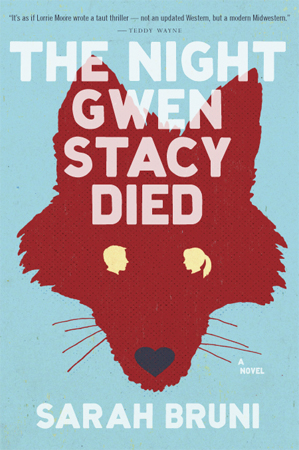
The Night Gwen Stacy Died

The challenging, and compelling, part of working with the narrative spaces of comic books was navigating how the borrowed parts of that fictional world would be grafted onto the working lives of my characters, and how different the result would look through the eyes of Peter and those of my female protagonist, Sheila, as they each interpret and borrow from the parts of the comic books narratives that suit their own needs.

SC: The Night Gwen Stacy Died further plays with and intertwines the genres of fantasy, thriller, and coming of age through character Sheila Gower’s somewhat surreal and mischievous relationship with Peter Parker. What draws you to these genres, and how did you navigate between them to create a cohesive novel?

SB: I can’t say that I was consciously aware of moving between these genres while writing. I think that often as writers we construct the narrative blind, as dictated by the necessity of characters’ motivations, and only later we learn how the work might be classified. In my case, it was news to me that my novel negotiated the borders between thriller, fantasy, and coming of age fiction. I like this intersection, but I can’t say it was ever a clear ambition of mine.

SC: The novel takes place in a journey across the Midwest, from small town Iowa to Chicago. How does the geographic setting of the Midwest influence other aspects of the novel? Besides geography, what elements of the Midwest play a role in the characters’ motivations, personalities, or otherwise?

SB: I feel that in some way each of the protagonists suffers from a kind of Midwestern variety of loneliness in which nothing is necessarily or clearly wrong, or if it is, problems are not discussed. Mostly, I was interested in the tension that existed between a mundane Midwestern working world and a hyperbolic imagined one. After Peter and Sheila flee Iowa for Chicago, not much about their actual day-to-day lives change: they quickly begin working regular hours at mimimim wage jobs similar to those they left behind. There’s a stubborn practicality inherent even in their sense of adventure and change, which strikes me as particularly Midwestern.

SC: Your novel deals largely with the influences that stories have on one’s identity creation, specifically dealing with Peter Parker’s assumption of the classic comic book hero’s name. What interests you about the dynamic of identity and literature? How has your own identity been influenced by the stories you’ve read?

SB: Like a lot of writers, I probably spent too much time reading and observing as a kid, which I’m sure had a direct effect on my gravitation toward writing. I have always been fascinated by the way that literature provides access to other worlds that we can imagine existing inside of and how they influence who we become and the choices we understand as available to us.

In this novel, I wanted to experiment with making literal the idea of living inside a borrowed story, to the extent that the characters’ identities become confused by their relationship to it. I wondered what might happen if a character truly occupied his version of such a story, how the relationship between a personal history and an appropriated one might generate discord as versions of self complement and contradict one another.

SC: The Night Gwen Stacy Died is your debut novel. What surprised or challenged you about your writing process? If you could start over from the beginning, would you do anything differently?

SB: I drafted so many different versions of this book over the course of years. It grew out of a short story collection in which only one story featured the protagonists of the novel. So it surprised me that it grew into a novel at all. Early on, I resisted allowing the book to change significantly throughout those drafts, which made the process toward publication quite a long one. As a writer it can be difficult to learn how to relinquish control of the project and let it grow into something else other than the thing originally envisioned. As much as I might wish to have been more efficient in embracing the project’s shifts, I also understand that my process tends to be very slow and deliberate.

SC: What is your ideal writing environment – the sights, scents, and sounds?

SB: I prefer to write at home in the early morning hours. I have a difficult time working in public places because I’m very easily distracted by any kind of conversation or external stimuli that can drag me pretty quickly away from writing. The most ideal conditions: on a porch or near an open window, with fresh air, endless coffee, and complete silence. I tend to move around a lot and share a variety of living spaces, so I can’t say that those conditions are always, or even often, met.

SC: What’s next for you?

SB: I’m finishing up an MA in Latin American studies and literature at Tulane in New Orleans this fall. The chance to spend a few years studying literature in a tradition outside of the one I grew up with has influenced the way I’m thinking about narrative lately. I’ve been writing a piece that might be growing into a new novel manuscript. That’s my hope for it anyway.

**

Sarah Bruni is a graduate of the University of Iowa and the MFA program at Washington University. She has roots in Chicago, taught creative writing in St. Louis and New York, and volunteered as a writer-in-schools in San Francisco and Montevideo, Uruguay. The Night Gwen Stacy Died is her first novel. She currently lives in New Orleans, where she is pursuing an MA in Latin American studies and literature at Tulane.
Contributor Spotlight: Allyson Hoffman

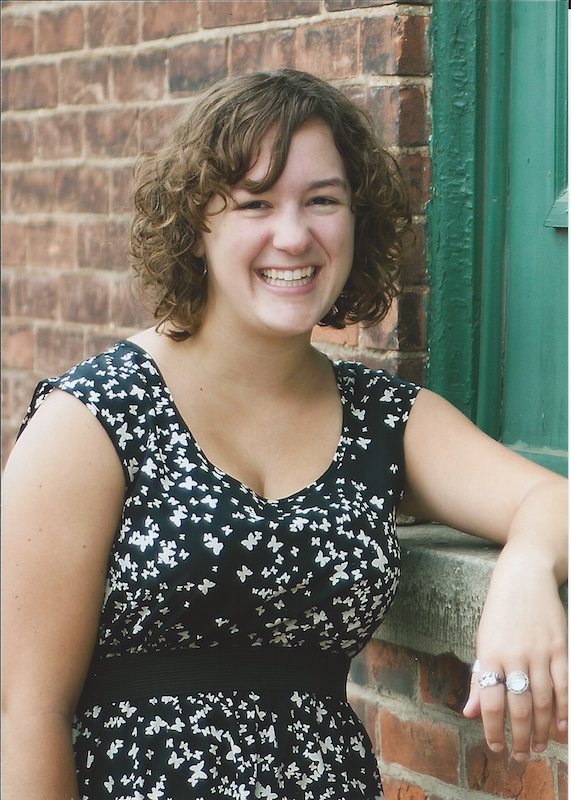
allyson hoffmanAllyson Hoffman’s piece “The Body is Not a Raft” appears in Midwestern Gothic Issue 23, out now.
What’s your connection to the Midwest, and how has the region influenced your writing?

I’m a Michigan native, and I grew up in a very small town. I’m fascinated by the culture and community of small towns, the local businesses, and the everyday conflicts people face. These elements are at the center of my current project: a collection of linked short stories.

What do you think is the most compelling aspect of the Midwest?

Lake Michigan. I grew up going to the lake in the summers, and I think the beaches along Michigan’s west coast are some of the most beautiful places in the world.

How do your experiences or memories of specific places — such as where you grew up, or a place you’ve visited that you can’t get out of your head — play a role in your writing?

I think the change of seasons, especially in small Michigan towns, plays a big role in my writing. The landscapes of the towns and cities I know completely change when the leaves turn red or the cornfields are buried under snow. When I start a story I have to know what season it is, because that sets up the tensions my characters will have to face. I picture the treeline near the house I grew up in, and that helps me see details about the season the reader will need to know.

Discuss your writing process — inspirations, ideal environments, how you deal with writer’s block.

My writing ritual is to listen to Philip Glass’s Metamorphosis (fantastic solo piano) while I write. I know the piece by heart, so it’s comforting and not distracting. In an ideal world I’m half-asleep while I’m writing so I’m using all my energy to write. It means getting up extra early and writing for an hour before the rest of the day gets started.

I always have three or four pieces that I’m working on, so if I get stuck on one I just move to the next one for a few days. I believe in leaving pieces alone for awhile and coming back to them fresh. But in the meantime, I’ve got to be working on something else.

How can you tell when a piece of writing is finished?

I can’t. Sometimes it feels like my pieces are never finished. I could rewrite sentences and change words forever. Deadlines help me work towards as finished as I can be. In both fiction and nonfiction, that’s when the tensions among my characters are clear, and they come to some sort of resolution, whatever that may be.

Who is your favorite author (fiction writer or poet), and what draws you to their work?

Right now I’m drawn to linked short stories, and there’s so many good writers creating fantastic collections.

Louise Erdrich is one of my favorites. Love Medicine is a perfect example of how short stories in a linked collection can be read individually, but when they’re read together they tell a much bigger story.

What’s next for you?

I’m working on my collection of linked short stories, crafting more essays, and have notes for a novel. When I get stuck on one project, I’ll move on to another.

Where can we find more information about you?

I’m on Twitter @AllysonIHoffman

|

No Comments

|

Contributor Spotlight: Samantha Edmonds

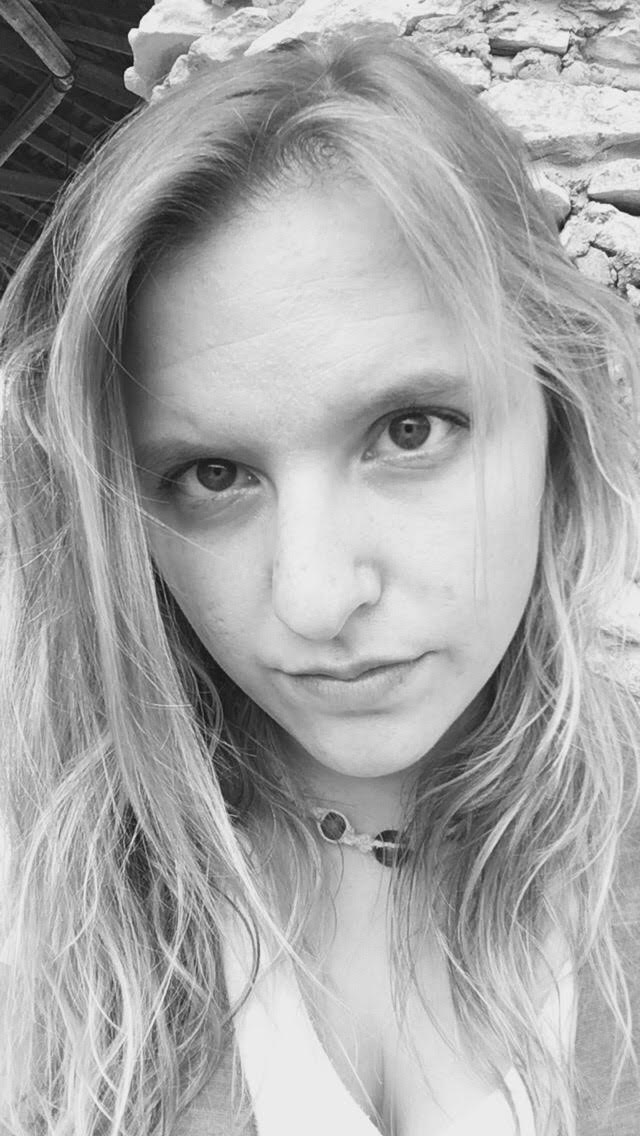
Samantha EdmondsSamantha Edmonds’ story “Icarus Drowning” appears in Midwestern Gothic Issue 22, out now.

What’s your connection to the Midwest, and how has the region influenced your writing?

I’m from southwest Ohio, and with the exception of amazing and always temporary extended trips abroad, I’ve never lived anywhere else. It wasn’t until I met other writers and friends from different places — all having moved to Ohio for school or work — that I began to understand that what I thought of as the “ways of the world” were in fact particular to the “ways of the Midwest.” I realized for the first time that my own habits and interests — pronouncing “t’s” like “d’s” in the middle of words, attending state fairs, vacationing at a lake — were uniquely influenced by the place I’d grown up in; and, more than that, these characteristics weren’t shared by all, but only by those who also lived here. And I turned to writing to process this new understanding of a “Midwestern identity,” and what it might mean for me as a person and as a writer of fiction to have that identity: what stories would I struggle to tell because of this upbringing? And what stories could only I tell because of it?

What do you think is the most compelling aspect of the Midwest?

For me — and this is very evident in my story featured in this issue — it’s the evangelical culture that exists in the Midwest, and the way it permeates so many aspects of life here. It is so deeply rooted in the people living in this area, even those outside of the church, in a way that it doesn’t seem to be anywhere else (except the South). There is such tension between the love taught by Christian evangelism and the judgement embedded in it, and the impact of that tension on those raised by these values and teachings, like I was, is something I spend a lot of time thinking, talking, and writing about.

How do your experiences or memories of specific places — such as where you grew up, or a place you’ve visited that you can’t get out of your head — play a role in your writing?

My experiences, my memories, they don’t just play a role in my writing — they are my writing. If I sit down to write a story with a subject that interests me, but is not close to me, I find I struggle, get blocked, don’t invest. The stories that are most successful, that feel the most like mine, always spring from some experience or memory, and I find myself thinking, “Okay, you can write this, you’re an authority on this, it’s yours.” Like I alluded to in my answer to the last question, I write a lot about the Christian tradition I was raised in —not condemning, not embracing, just exploring — and it has permeated every piece of work I’ve produced recently. I write about finding or losing homes in the Midwest, I write about mothers and daughters, about relationships and religion, things I feel so unsure of that I want to share it, to hear other people say they’re unsure of it, too. Even if I start a fantastical, magical story — about space, for example, which is my latest obsession — it always comes back to that germ of an Ohio home somehow, and I often have a moment in the middle of a story somewhere when I say, “Wow, okay, so this story is about that, too.”

Discuss your writing process — inspirations, ideal environments, how you deal with writer’s block.

A little over a year ago, I started keeping a notebook just for story snippets. Chicken or egg, it was around that time that I found myself paralyzed by a blank Word document on my computer. That’s when I began to form what I’ve since come to embrace as my writing process: that first sentence, the first paragraph, a few scenes, sometimes a whole draft, all written in a notebook before I can even start typing. It often happens in pieces and out of order. I get overwhelmed when I have a too-messy Word document, but I find that I flourish when I have scribbled, torn, half-written pages of a journal in front of me. It feels like a practice round before I really begin, and it takes some of the pressure off.

Also in that journal, and almost the entirety of my inspiration, are phrases and quotes — from other books, from poems or songs or anywhere. Again, they’re rarely complete lines or sentences. What gets me to first begin a new story is often a piece of language I am struck by, something that I think is beautiful or devastating. And from there I craft an entire story, characters, desire, action, everything originating from the language of that line. Sometimes it appears directly in the story (a small line or fragment of plagiarized contraband, I suppose) and sometimes it never does, but a couple of stunning quotes thrown together, for me, carries the emotional momentum that I need to get my own words on a page. Consequently, that’s how I tackle writer’s block, too — by collecting words of others that strike me, I begin to itch to make something striking of my own.

How can you tell when a piece of writing is finished?

I can’t always, is the short answer. But the process looks like this: After I finish a draft, I think, “Yep, that’s done now, good,” even though I know I’m only just getting started. I have to share it with friends, other writers, revise based on that, and even then, after all that, I have to leave it alone for months or I won’t trust my it’s-finished-now-feeling. After it’s been revised (and revised and revised), and I read it over again after a long break, I experience one of two things: an itch to return to it, to keep working, or a sudden feeling of completeness. And when I get that latter feeling, I know that it’s either something and ready to go, or it’s not going to be anything no matter what, but I have to take my chances either way.

Who is your favorite author (fiction writer or poet), and what draws you to their work?

This is, of course, always changing (last year it was Chris Bachelder, before that it was Oscar Wilde), but right now I am completely obsessed with Jenny Offill, and her novels Last Things and Department of Speculation. I first read her in the fall of my first year in grad school, and on a craft level, I was blown away. I had no idea you could write the way she writes and get away with it — so dreamy, eclectic, and shattered, full of awe and wonder and pain, following feeling rather than plot to make story. I was jealous and impressed. More importantly, though, as a reader and not a writer, it was the first time in a long time that I’d felt so completely arrested by a book. I was absorbed in a way that I hadn’t been since I was a kid. In a way, that’s what her work is to me: an awestruck kid, if that kid also had the skills of a master and the capability to suspend the universe with her words. It’s what I love about language and books.

What’s next for you?

I’ve been giving a final polish to a science fiction novella recently, and it feels ready. I’ll be focusing my attention on finding a home for it in the months to come. I’m really excited about it.

As for what I’m writing, I’ve got my head down and my nose buried in several short stories in various levels of completion. Some are linked to this story, “Icarus Drowning,” and many others are not. A lot of them are space-oriented, or magical, and we’ll see where that goes. I know I’m working on a collection, but more than that I’m not ready to say. I don’t want to look up to see where I’m at until I’ve gone a bit farther.

Where can we find more information about you?

I have some other stories published online in venues like SFWP Quarterly and McSweeney’s Internet Tendency. The best way to locate them is to check out my LinkedIn page. Or you can start a conversation with me on Twitter @sam_edmonds122.

|

No Comments

|

Midwest in Photos: Illinois

“There is a loneliness that can be rocked. Arms crossed, knees drawn up, holding, holding on, this motion, unlike a ship’s, smooths and contains the rocker. It’s an inside kind—wrapped tight like skin. Then there is the loneliness that roams. No rocking can hold it down. It is alive. On its own. A dry and spreading thing that makes the sound of one’s own feet going seem to come from a far-off place.” –Toni Morrison, Beloved.

Illinois

Photo by: David Thompson

|

No Comments

|

Interview: Margot Livesey

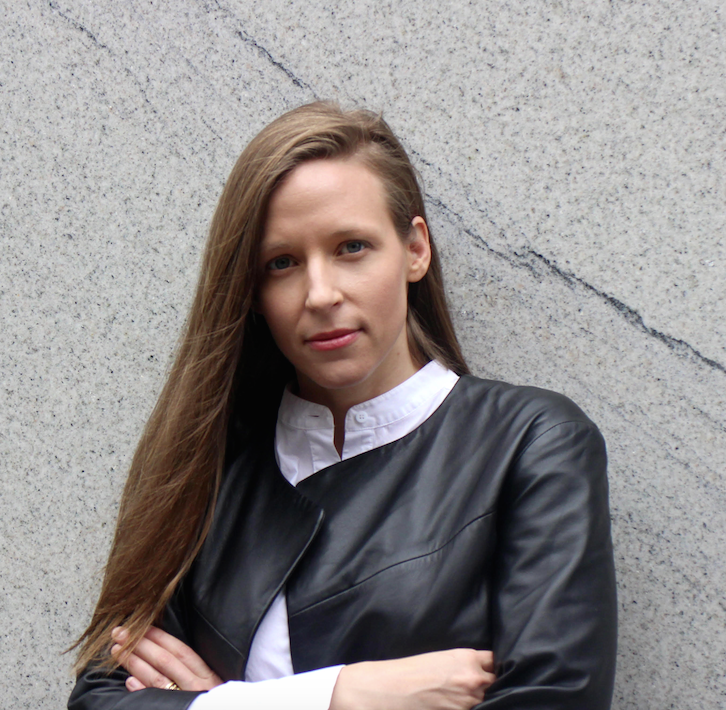
Margot LiveseyMidwestern Gothic staffer Sydney Cohen talked with author Margot Livesey about her novel Mercury, different concepts of sight, a different type of infidelity, and more.

**

Sydney Cohen: What’s your connection to the Midwest?

Margot Livesey: The first summer I visited the States I took a greyhound bus from New York to Chicago and immediately liked the city and the people I met there. All these friends of friends were immediately so kind and welcoming. Many years later I returned to teach at the Iowa Writers’ Workshop. On my first morning in Iowa City, I think this was 1991, I stopped to buy petrol. Only after I had filled my car did I discover that I had no money. I offered to leave my watch and the petrol attendant said no, just come back when you can. That readiness to believe the best of people exemplified my first visit to Iowa City, and those that have happily followed in 2005 and now when I have a permanent position.

SC: Your new novel, Mercury, deals heavily with the thematic concept of sight, both with literal eyesight and figurative blindness. What interests you about the dynamics of sight, and how does sight work to enable or hinder the characters in the novel?

ML: I’ve long been interested in vision, both in a physiological and a metaphorical sense. We call eyes the windows of the soul and we attribute great significance to them. My interest initially stemmed from my many visits to optometrists as I struggled with contact lenses. Better or worse, the optometrists kept asking. Often I couldn’t say. I have also had the good fortune to know several very competent blind people; watching them navigate the world has been a privilege. When I had the idea for Mercury, it occurred to me almost at once that making my protagonist, Donald, an optometrist would give me a wonderful opportunity to explore how there’s more to seeing than seeing. No one’s vision is 20:20.

Mercury

SC: As a native of Scotland who has lived, worked and taught around Europe and the United States, how did your geographic and personal background play a role in the inspiration for Mercury? How has the Midwest influenced your writing?

ML: It’s no accident that Donald, like me, grew up partly in Scotland and longs to spend more time there even while he appreciates many aspects of his American life. Meanwhile Viv, his wife, a wonderful equestrian, grew up in Ann Arbor, works in mutual funds in first New York and then Boston and now runs a stables outside Boston. Even Mercury, the horse that changes everything when he arrives at the stables, has also had a peripatetic life.

I find the land around Iowa City, with its gentle hills and small towns, particularly appealing but I would have to say that the Midwest has influenced me more through its people than its landscapes, but then the people are shaped by the landscape. I do think that a MFA program, like the Iowa Writers’ Workshop, could only exist in the Midwest. In the heart of the heart of the country we are all somewhat protected from the forces of commerce. I like both the ease and the complications of living in a small town where writing is cherished. My association with the program has enabled me to grow as a writer, and to be both stubborn and patient.

SC: What were your inspirations for the dynamic and complex characters of Donald and Viv in Mercury – characters who operate through grief and ambition? Why did you make the characterization decisions you did when portraying the tumultuous intricacies of marriage?

ML: A great deal has been written about sexual infidelity in marriage but I am interested in another kind of infidelity: namely what happens in a long relationship when one partner changes and the other doesn’t. When they meet, Donald and Viv share certain beliefs and values. After Mercury arrives, Viv gradually abandons several of these beliefs in a way that is deeply complicated for Donald. They both find themselves in a situation for which life has in no way prepared them.

SC: You published your first book in 1986 and have written extensively since then. In what ways has your writing evolved since the publication of your first book to your newest? Have these changes largely been in one area, such as writing process or style, or a combination of many aspects?

ML: I have the good fortune to teach wonderful graduate students so I spend a lot of time thinking and talking about their fiction, trying to figure out what makes a story or a novel work. In my own work I keep trying new things in terms of plot, character, structure and language. As Virginia Woolf remarks, the world keeps changing and it’s the job of the novelist to reflect these changes. Mercury is my first novel set entirely in the States and that enabled me to explore themes that I couldn’t in a British setting. And of course I got to write American sentences.

SC: Mercury, as a novel that explores the selfish and corruptive aspects of marriage and human nature, can be described as dark, thrilling, and terrifying – much like gothic literature. What draws you to the genre of gothic fiction?

ML: I don’t think of myself as writing gothic fiction but I am interested in dark coincidences and characters who are just a little larger than life. I love, for instance, Daphne Du Maurier’s Rebecca and Charlotte Bronte’s Jane Eyre, novels in which the heroine finds herself completely misunderstanding a person, or a situation. And I do love a good story. The best gothic novels are like well made machines, everything working together to bring about the moment of revelation.

SC: Of the many books in your repertoire, which was your favorite to write, and for what reason?

ML: Eva Moves The Furniture. The novel is very loosely based on my mother’s life and was written with many false turns and much despair over twelve years. I lost my mother when I was very young and for a long time it seemed that the book I was trying to write about her was also lost. But when I finally wrote the ending, I knew I had reached the place I’d been trying to get to all along. I wrote the last chapter in a single sitting, blinking back tears.

SC: What’s next for you?

ML: I am working on a book of essays about the craft of fiction. It’s called The Hidden Machinery and will come out next summer from Tin House. And, of course, I’m trying to start another novel.

**

Margot Livesey was born and grew up on the edge of the Scottish Highlands. She has taught in numerous writing programs including Emerson College, Boston University, Bowdoin College and the Warren Wilson MFA program, and is the author of a collection of stories and seven novels, including Eva Moves the Furniture and The Flight Of Gemma Hardy. She lives in Cambridge, MA and is on the faculty of the Iowa Writers’ Workshop. Her eighth novel, Mercury, will be published in September, 2016. In July, 2017, Tin House will publish her book about the craft of fiction: The Hidden Machinery.

|

No Comments

|

Contributor Spotlight: Sarah Kasbeer

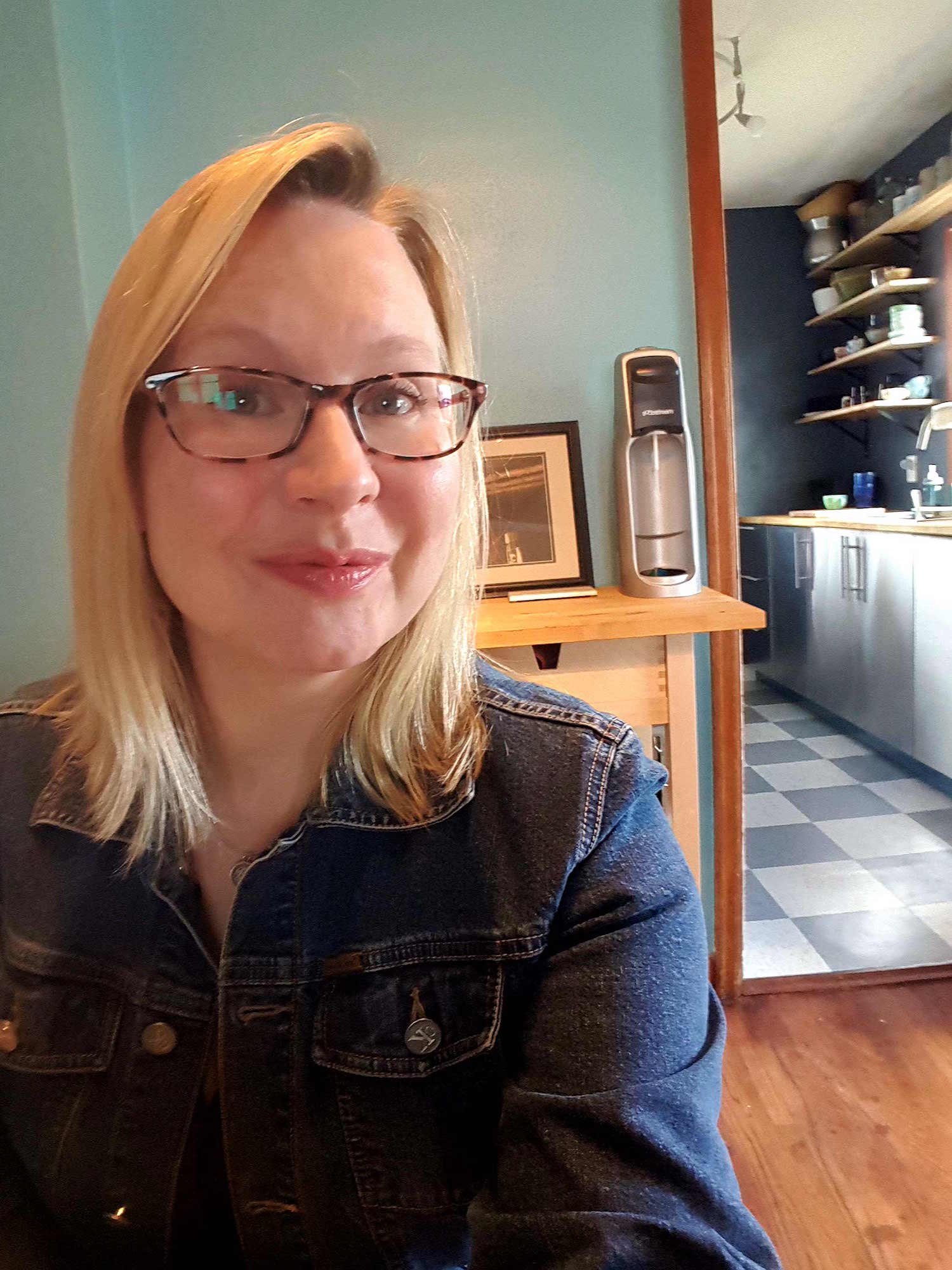
sarah kasbeerSarah Kasbeer’s piece, “Lincoln vs. The Lakes” appears in Midwestern Gothic Issue 23, out now.
What’s your connection to the Midwest, and how has the region influenced your writing?

I grew up in central Illinois, lived in Chicago briefly after college, and then moved to the east coast. Since I spent most of my life in the Midwest, it shines through in my writing — via scenery, characters, and dialogue.

What do you think is the most compelling aspect of the Midwest?

The people, hands down. We are our most valuable export. I feel an instant bond with the Midwesterners, wherever I encounter them.

How do your experiences or memories of specific places — such as where you grew up, or a place you’ve visited that you can’t get out of your head — play a role in your writing?

Place plays an important role in triggering emotional memories for me. Because my parents moved to the west coast while I was in college, I haven’t spent much time in my hometown since. It’s kind of like my childhood memories have been preserved in a time capsule. Maybe I write to release them.

Discuss your writing process — inspirations, ideal environments, how you deal with writer’s block.

I usually think about an idea for a while before I start writing — and have a couple of other pieces I’m also working on. Procrastinating on one is the easiest way to motivate me to work on another. If I really don’t feel like writing, I read, which almost always inspires me. Also: must have coffee.

How can you tell when a piece of writing is finished?

I decide it’s done when I’ve reached a point where it’s not going to get any better without becoming an entirely new piece of writing (unfortunately, sometimes that needs to happen). I try to revisit it over a few months — and let enough time pass to be able to trust myself as an editor.

Who is your favorite author (fiction writer or poet), and what draws you to their work?

Since I write nonfiction, I’m going to choose Jo Ann Beard, who is a novelist and essayist (and also from Illinois). I love her dry sense of humor and sentence-level precision. From a craft standpoint, I’m particularly interested in her use of imagery to guide the reader toward deeper meaning.

What’s next for you?

I’m working on a book of personal essays.

Where can we find more information about you?

You can find links to my work on my website or find me @sarahkasbeer.

|

No Comments

|

Contributor Spotlight: Saara Raappana

Saara RaappanaSaara Raappana’s poem “Pastoral with Lunchables” appears in Midwestern Gothic Issue 22, out now.

What’s your connection to the Midwest, and how has the region influenced your writing?

I grew up in the Upper Peninsula of Michigan, and while I haven’t lived there in awhile, it’s still my default internal landscape. I also lived in Wisconsin — Green Bay, Milwaukee, etc.— for years and years and think of it as my second home state. My husband and I live in southwest Minnesota now, and it’s been very kind to us.

What do you think is the most compelling aspect of the Midwest?

I’ve been trying to think of things that are unique to the Midwest — or at least my portion of it — and, because I’m here right now, it’s hard to distinguish; it’s like trying to smell empty air or taste your own tongue. But I know that even when I’m happily traveling or living elsewhere, I miss the comfort of my Midwest — which is, of course, just the comfort of the culture I grew up in. That culture — which is Yooper culture, so it’s isolated, rural America, plus my family is Finnish American — is actually pretty stoic and melancholy, but there’s a tenaciously optimistic undercurrent. That’s one of the parts that I find most compelling. Plus, the miles and miles of snow.

How do your experiences or memories of specific places—such as where you grew up, or a place you’ve visited that you can’t get out of your head—play a role in your writing?

Well, there’s that default internal landscape thing. If a specific place hasn’t been described or stated, I imagine everything in the U.P.— say, if someone just says, “A woman is walking down a road passing by a house,” the road I see in my head is M-28 in Richmond Township; the house is my grandmother’s house. Also, I think anyone who grew up anywhere near Lake Superior just ends up aching for it, right? I’m irrationally scared of fish and water, actually, but Superior still feels like home.

Discuss your writing process — inspirations, ideal environments, how you deal with writer’s block.

I write in a lot of different ways, and probably the only thing that’s really consistent is that I’m deeply uncomfortable during the initial drafting phase, so I’m usually doing something to distract myself from it: watching TV or movies or sitting in public spaces with a lot of activity (I can’t write to music, though). I draft so I can get to the revision, which I love. I do it obsessively for several days or a week, and then I’m exhausted and so then for a few days I just tinker with old poems or work on submissions — and then I start the process of awful drafting and obsessive revision over again.

How can you tell when a piece of writing is finished?

Finished? Hahahahaha. I keep tweaking long after things have been published and republished. So I guess a piece of writing is only finished when I’ve lost interest in it.

But from a practical standpoint, I do stop revising once nothing in the poem bugs me anymore – which usually means that the poem has a good balance of conversationality and metrics; emotional oomph and linguistic inventiveness; and surprise. But, of course, each poem is its own animal, so mostly I ask myself if the poem feels right; then I put it away for a week or two and ask myself again.

Who is your favorite author (fiction writer or poet), and what draws you to their work?

ONE author? Wow. Well, I’ve been reading Patricia Smith’s Blood Dazzler because it’s devastating and formally acrobatic.

What’s next for you?

I’m going to finish painting the kitchen, and there are a couple of chairs that I’ve been meaning to fix. Also, my latest project *just* came out — it’s a collaborative art-poetry chapbook called A Story of America Goes Walking published by Shechem Press. So I’ve been doing readings to support that. I’m working on a full-length collection that extends the themes of that chapbook.

Where can we find more information about you?

saaramyrene.com! Or you could come to Minnesota and stand in my backyard looking through my office window, but probably then I’ll call the police because that’s super creepy. I can’t believe you were even considering it. Stick to the website, you big weirdo.

I’m also on Instagram and Twitter and Facebook — with varying degrees of success — @saaramyrene. If you’re in Minnesota, I do readings sometimes. Or if you want me to come read in your town, I can probably do that too.

|

No Comments

|

Issue 23 / A Note from the Editors

issue23We are thrilled to announce that Issue 23 (Fall 2016)—our annual nonfiction issue—is here, featuring work from Mark Clemens, Lacey N. Dunham, Dave Essinger, Cal Freeman, Tracy Harris, Allyson Hoffman
Sarah Kasbeer, Dirk Marple, Sahar Mustafah, Micah McCrary, Toni Nealie, Anna Prushinskaya, Stephanie Ratanas, Christi R. Suzanne, Ben Tanzer, Laura Hulthen Thomas, Michaella A. Thornton, Nicholas Ward, and Melissa Wilkins.

Issue 23 is available in paperback ($12) and eBook formats ($2.99), including Kindle, iPad, Nook, and PDF. Buy your copy

Next, some thoughts from Jeff and Rob:
 Issue 23 represents a milestone: this is our last quarterly issue, our last issue of straight nonfiction. Starting in 2017, we’ll be publishing Midwestern Gothic bi-annually, and in each issue will be fiction, poetry, and nonfiction. But Issue 23 represents how we initially viewed nonfiction: with so much reverence that it deserved its own issue. Having the nonfiction issue come out annually was a way for us to explore this style of writing, to be mesmerized by the truth out there—to see our home, the Midwest, through a different, and much-needed-at-times, lens. This is not to say we feel that having nonfiction in each upcoming bi-annual issue is a negative—not at all. We love it so much that we said, from the beginning, with this change, it would be a part of it. Full stop.
I guess what we’re trying to say is this is bittersweet for us, this issue. We believe that bi-annual publications will serve us, and all of you, better. We have been doing this now a long time, going on seven years, and we do love it, but it’s still a small group of us (a core group, and we value and love our staff so, so much), and four issues per year was getting in the way of us being able to…well, do a lot. With bi-annual publications, we’ll have more time to put on contributor events across the country, market and promote issues and writers in the issues, and in general, give back to the writing community that has given us so much.

And yet, we’re sad. This is a new and exciting direction, but it’s impossible to face the future without dwelling on the past. And the past has been wonderful and enriching and so important to us. But, we must grow—we want to grow. Cutting back, in this instance, is growing for us. And this issue…this is a marvelous issue. We could not ask for a better issue to send us off into the great cosmic world that is 2017.

We’re sad, yes, but we’re happy. This is the way to go out—no, better: this is the way to welcome in the new.

We hope you’ll enjoy reading it as much as we did. We hope you’ll help celebrate the Midwest region, these authors and their words.

Thank you.

|

1 Comment

|

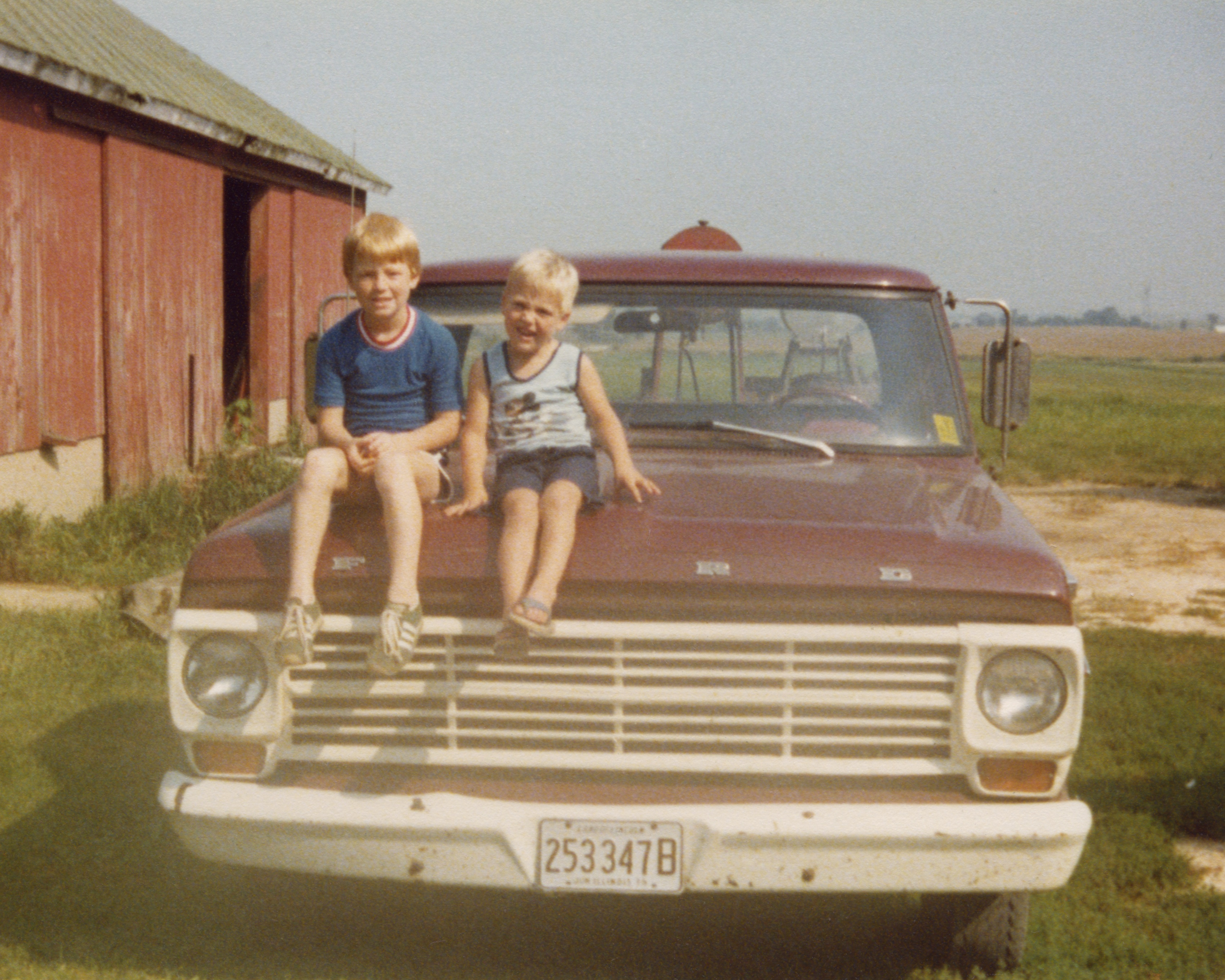
Midwest in Photos: Michael and Matthew

“It was one of those humid days when the atmosphere gets confused. Sitting on the porch, you could feel it: the air wishing it was water.” –Jeffrey Eugenides, Middlesex.

Michael and Matthew

Photo by: Michael Hess

|

No Comments

|

Announcing 2017 MG Press Titles

We are thrilled to announce two new additions to the MG Press catalog, coming in 2017! Help us celebrate and support these great authors! Pre-order is available for just $1!

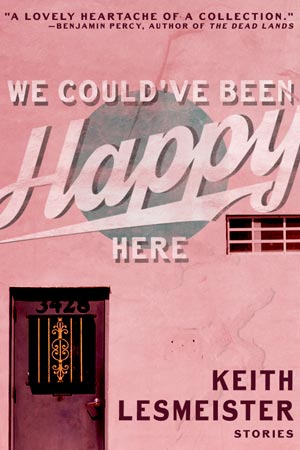
WE COULD’VE BEEN HAPPY HERE by Keith Lesmeister
Release Date: Spring 2017
Read more about We Could’ve Been Happy Here

“A lovely heartache of a collection.” — Benjamin Percy, author of The Dead Lands, Red Moon, Thrill Me, The Wilding and Refresh, Refresh

In his first collection of short fiction, Keith Lesmeister plows out a distinctive vision of the contemporary Midwest. A recovering addict chases down a herd of runaway cows with a girl the same age as his estranged daughter. A middle-aged couple rediscovers their love for one another through the unlikely circumstance of robbing a bank. A drunken grandmother goads her grandson into bartering his leftover booze for a kayak. The daughter of a deployed soldier wages a bloody war on the rabbits ravaging her family’s farm.

These stories peer into the lives of those at the margins – the broken, the resigned, the misunderstood. At turns hopeful and humorous, tender and tragic, We Could’ve Been Happy Here illuminates how we are shaped and buoyed by our intimate connections with others — both those close to us, and those we hardly know.


A WOMAN IS A WOMAN UNTIL SHE IS A MOTHER: ESSAYS by Anna Prushinskaya
Release date: Fall 2017
Read more about A Woman Is a Woman Until She Is a Mother

“Anna Prushinskaya is a fierce and lucid writer.” — Emily Schultz, author of The Blondes

In A Woman Is a Woman Until She Is a Mother, Anna Prushinskaya explores the deep life shifts of pregnancy, birth and motherhood in the United States, a world away from the author’s Soviet homeland. Drawing from inspirations as various as midwife Ina May Gaskin, writer and activist Alice Walker, filmmaker Sophia Kruz and frontierswoman Caroline Henderson, Prushinskaya captures the inherent togetherness of womanhood alongside its accompanying estrangement. She plumbs the deeper waters of compassion, memory and identity, as well as the humorous streams of motherhood as they run up against the daily realities of work and the ever-present eye of social media. How will I return to my life? Prushkinskaya asks, and answers by returning us to our own ordinary, extraordinary lives a little softer, a little wiser, and a little less certain of unascertainable things.
Find out more about our MG Press titles here.

|

1 Comment

|