Announcing the 2016 Lake Prize

May 13th, 2016

The Lake Prize from Midwestern Gothic
We are so excited to announce The Lake Prize for 2016. The Lake Prize is our annual literary prize for fiction and poetry that best represents the Midwest. We have been consistently wowed with submissions, and previous years’ finalists perfectly exemplified our mission: rewarding those who see the beauty of the Midwest, whether that be quiet forests, gutted industrial wastelands, small towns or vibrant urban neighborhoods.

Lake Prize submissions will be open July 1 - August 31, 2016. Entries will be a flat rate of $5—only one entry per person. One winner will be selected for each category, and they will receive $300 and publication in the Winter 2017 issue. One finalist will be selected for each category as well, and they will each receive $100 and publication in the Winter 2017 issue.

We are also excited to announce our 2016 judges:

Emily Schultz

2016 Fiction Judge: Emily Schultz is the co-founder of Joyland Magazine, host of the Truth & Fiction podcast, and creator of the blog Spending the Stephen King Money. Her family hails from Michigan and Schultz grew up across the border in Canada. Her newest novel, The Blondes, was named a best book of 2015 by NPR and Kirkus. Her forthcoming novel, Men Walking on Water, is set in 1920s Detroit and inspired by her family’s rumrunning history. She currently lives in Brooklyn.


Airea Dee Matthews

2016 Poetry Judge: Airea D. Matthews, a resident of Detroit, is the winner of the 2016 Yale Series of Younger Poets for her manuscript collection, simulacra, which Yale University Press will publish in 2017. Her poems and prose have appeared in a number of periodicals and anthologies, such as Best American Poetry 2015, Missouri Review, Muzzle, Indiana Review, Four Way Review, American Poets, Michigan Quarterly Review, Vinyl, Callaloo and elsewhere. She is the Assistant Director of the Helen Zell Writers’ Program at the University of Michigan, Ann Arbor, where she earlier received her MFA in creative writing.


Submissions for the 2016 Lake Prize will open July 1, 2016.

For additional details, plus all guidelines, please visit the official Lake Prize page.

Looking forward to reading your work!

Contributor Spotlight: John Fino

John Fino’s story “Shear Line” appears in Midwestern Gothic Issue 21, out now.

What’s your connection to the Midwest, and how has the region influenced your writing?

I’ve lived in Minnesota for nearly ten years. My wife was born here, and our kids were, too. When I moved here she gave me an ‘official’ Minnesota passport and taught me all about pop, suckers, kittywampus, and the difference in pronunciation between Mary, Merry, and Marry (there is none, apparently). Writing in and about the Midwest has broadened the horizons of my stories, sometimes literally. Even a landscape with no great peaks or canyons holds astonishing character and details. If they go unseen, it’s a failure of the writer, not the place.

What do you think is the most compelling aspect of the Midwest?

The tremendous diversity of the American Midwest is too often ignored, buried under simplistic stereotypes. There are 15,000 years of history here, a thousand generations coming from around the world to make a life in the center of the continent. This dynamic is an endless source of fascinating, untold stories.

How do your experiences or memories of specific places—such as where you grew up, or a place you’ve visited that you can’t get out of your head—play a role in your writing?

I have lived all over the US and around the world, which gives me a well of environments to pick from and then distort horribly. I might wrestle for months about where to set a story, or I might know instantly what place works best. Sometimes I’ll have a place that just begs to be written about, and I’ll dig up what story is contained in it. A sense of place—a grounding of the reader in an environment—is one of the most crucial jobs of the prose writer.

Discuss your writing process — inspirations, ideal environments, how you deal with writer’s block.

I count myself lucky: I’ve never had writer’s block. I can write crappy stories all day long. The hard part for me is character and world building—really knowing the people and place before I start writing. It’s terribly tempting for me to start a story with just an idea, to figure out the who, what, and why as I go. It’s not a wrong way to write, but it makes editing a nightmare. Actually writing, for me, is like lucid dreaming. I’m aware of what I’m writing, I can steer the action, but mostly the story unfolds in my mind’s eye unbidden. And then I read it again and it’s almost always terrible. So I start the endless cycle of editing, trying to find what of a story is worth saving, and how.

How can you tell when a piece of writing is finished?

I don’t think a work of fiction is ever really finished. (My wife and I have decided that my tombstone will read: Finally Stopped Editing.) Even when a piece is published, a great story will mean many things depending on the reader. I believe all stories take place in the reader’s head, not on the page. This means two people will experience two different stories, though the text may not change. A great story has something of an eternal life that evolves as culture and perceptions change around it.

Who is your favorite author (fiction writer or poet), and what draws you to their work?

Thomas Pynchon is my knee-jerk response, if only because of Gravity’s Rainbow and Mason and Dixon. But I recently discovered the genius of Elizabeth McCracken (The Giant’s House) and Eugene Vodolazkin (Laurus). How could I pick just one? What they all share, though, is a complete disregard for reader expectations. They overturn expectations you didn’t even know you had, in the very best ways.

What’s next for you?

I have a slew of projects going. I’m almost finished with a collection of thirteen short stories, of which “Shear Line” is one. I’m in the midst of a final (ha!) edit of a novel, Today for the Blessed, set in a fictional Latin American country. I’ve begun its sequel, And For the Wretched, Tomorrow. I’m researching and world building for a novel set a thousand years ago, with a story that ranges from the shores of Lake Superior to the mound city of Cahokia, in what is now Illinois. That one I’m super excited about—and terrified of. Also, I completed a three-act play called The Hanging of George Kelly, and have two ten-minute plays in the works.

Where can we find more information about you?

You can visit www.johnfino.com for the first chapter of Today for the Blessed, the first two scenes of The Hanging of George Kelly, and a short story or two. You can also see my side hobby of 3d scanning and virtual reconstructions of historic places. Hey, follow me on Twitter, too! @tauricity

|

No Comments

|

Kali VanBaale at Poets & writers

At Poets & Writers, Kali VanBaale was invited to participate in the Writers Recommend series, where she talks inspiration, The Good Divide, and more:

“On the wall in front of my writing desk, I painted the words of Michelangelo: I saw the angel in the marble and carved until I set him free. This quote has become my guide, my emotional center, my touchstone.”

Check it out here!

Pre-Order The Good Divide (and save 20% off the cover price) here!

|

No Comments

|

John McCarthy interviewed at Chicago Review of Books

John McCarthy, whose debut poetry collection Ghost County was published this past March, was recently reviewed at the Chicago Review of Books:

I love the Midwest. I think my work will always be influenced by the Midwest. I feel like the openness of the region lends itself to contemplation. I don’t derive much joy or inspiration from big cities or from being near water like a lot of people do. I know that sounds like a silly thing to say, but I like the ground and I like open uninterrupted space. I like my physicality to be very grounded.

Read the full interview here.

Shop for Ghost County here.

|

No Comments

|

Interview: Emily Henry

Emily HenryMidwestern Gothic staffer Rachel Hurwitz talked to author Emily Henry about her book The Love That Split the World, balancing a very complex character, and more.

**

Rachel Hurwitz: What’s your connection to the Midwest?

Emily Henry: I’ve spent most of my life here! My childhood was mostly split between Kentucky and Ohio, and after I went to college in western Michigan, I came back here. This area definitely feels like home to me.

RH: Your debut novel, The Love that Split the World, has a sort of fantastical element to it, as the world in which Natalie, the protagonist, lives begins to fade into and out of another world, which in a way, allows time to stop. People often speak of how time stops when you’re in love, so why did you decide that this love story had to be told with time actually stalling?

EH: One of very few other goals I had going into the writing process was capturing the feeling of nostalgia you get at the end of one phase of life and on the cusp of the next, the way you miss things even as they’re happening and can feel both eager and afraid to leave your past behind. One of the reasons I’m so drawn to the young-adult category is that everything in that stage of life still feels earth-shattering, ground-breaking, and big. To me, the fantastical elements of the book all felt like natural extensions or progressions of Natalie’s inner world.

What I remember most vividly about my summer after high school (and to a lesser degree any pivotal time since) is the way that time seems to go all wonky: how it seems to stop and start at random, to slip through your fingers no matter how hard you try to hold on, and to speed up no matter how hard you try to slow it. I didn’t set out to write a scene where time literally stops as two people consider falling in love, even though that happened. I just knew that I wanted to write a book about a highly emotional and sensitive girl navigating an unpredictable, intimidating, and magical world. Time changes its pace when she’s falling in love because, I think, that’s really how it feels. And as summer draws to a close, time stutters and jams up and shuts her off from the boy she’s falling in love with because that’s how that really feels too. Sometimes you are simply carried away by passing time and sometimes you can dig in and hold onto moments a little longer than usual.

RH: Similarly, while The Love that Split the World is, as the title would suggest, a love story, it delves into some much deeper issues such as identity, introspection and hallucinations caused by Natalie’s PTSD. How did you balance interweaving these difficult issues together with the sweetness of young love?

EH: First and foremost, this was the book where I said, “I’m going to write my perfect book.” I threw in just about everything I was interested in reading and thinking about at that time and I knew that meant that it might not register with anyone else the way it did with me. I actually didn’t even tell my agent that I was working on it until it was finished because I needed to be certain I could do it, and the only way to do that was to write the whole book.

I’ve always been a huge fan of books, and shows and movies, that feel like puzzles. I especially love stories that read like all these little pieces are being set out one at a time, and they only slide together at the last moment. I wanted to create that kind of book, where all these seemingly disparate elements come together to tell this epic love story. And I don’t necessarily mean a romance. I wanted to create a full image of all the love in Natalie’s life and how it had conspired to bring her to this point. I didn’t want to erase the bad things-the PTSD, the hallucinations, the complications of her identity and the feelings of loss she has over not knowing her biological family-but I wanted to take this very confused, very complex girl and enable her to step back and see her whole story.

In my own life, I’ve found that a lot of the most painful experiences have, years down the road, led directly to the most beautiful, the most meaningful. In a lot of cases, the struggles of life end up being what forges a person. Natalie has this complicated history, complicated feelings about her past and her future. She has a lot of fear.

I imagine most people have wanted to reach back in their lives to their past selves and comfort them, show them that everything would be okay. I wanted to do that for Natalie, and that meant confronting head on all the things that made her feel Not Okay while also drawing attention to all the bright moments, all the love in her life, new and old.
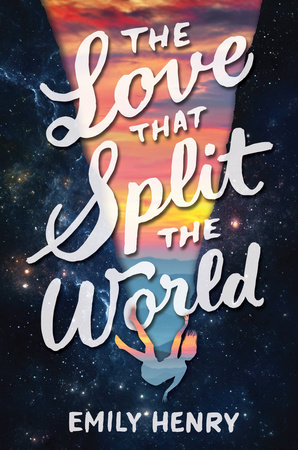
The Love that Split the World

RH: Since this novel is so complex, did you ever struggle with writer’s block? If so, what was your best remedy for it?

EH: I definitely struggle with writer’s block but did less so with this book than others. Probably moreso, I struggled from logic block. Anytime you’re dealing with time travel, there’s a lot that can go wrong logic-wise. In some cases, I was trying to fix inconsistencies and gaps that my editor spotted and in some, I was just trying to figure out how to explain the logic I understood as this book’s Omnipotent Being. Either way, there were a lot of decisions and changes that couldn’t be rushed. I couldn’t just force out a logical explanation and the harder I focused on certain aspects of the book, the harder they became to grasp.

I honestly think the best personal remedy I’ve found for this and other types of blockage is walking away. Physically doing something different, that pulls your conscious mind away from trying to unravel a plot or logic hole. It seems like sometimes, when you shift gears and do something physically active, your subconscious keeps needling away at all your book’s tangles and knots and it does a better job than your conscious mind. I also think “sleeping on it” is a legitimate move. When you’re stuck like that, the last thing you want to do is walk away and leave an issue unresolved but for me that’s always been the best thing: physical activity, sleep, and plain old thought-incubation time.

RH: What is your favorite way to write? Is there a certain coffee shop you sit in, something you drink, a pen and notebook you use, etc?

EH: I’m so easily distracted that I mostly write at home. I can’t even listen to music unless it’s something ambient that I don’t know well enough to be anticipating certain parts or humming along. I write to the sounds of silence or my dog’s snores and I drink more black coffee than anyone should. I actually had to start brewing half-caf (okay, three-quarters-caf) so that I could drink as much as I wanted to without having a complete meltdown later in the day.

I mostly write on the same couch and I ignore all personal hygiene and health standards. I end up eating things like a handful of mini marshmallows, whatever I can grab on my way to get more coffee, and if I have to pee I might accidentally hold it for two hours if I’m really in the zone. I try to draft very quickly because if I lose interest in a project, I’ll rarely go back to it. I also finish a lot of complete first drafts that I don’t care enough about to revise. I know this is why a lot of authors swear by outlines but any time I’ve tried to write from a thorough outline, I feel sort of like I’m writing a book I just read and it’s not all that fun for me. At this point, I’d rather write three books a year and throw two away. I figure even failing at a book is good practice. I’m sure someday I’ll meet a book that demands to be drafted in a very organized and thorough fashion but for now, this is what I prefer.

I also find it really hard to write without windows! Second-floor windows are ideal because there aren’t as many distractions as on the first floor but you can still get some atmosphere. I always find rainy and snowy days the most inspiring.

RH: What inspired you to become an author? Was there one pivotal moment or was it more of a conglomeration of many events in your life?

EH: I think it was mostly just a love of reading that overflowed into a fan art and fan fiction. I was particularly obsessed with K.A. Applegate’s Animorphs series. I was reading the books as they came out so whenever there was time between releases, I did a lot of drawing and writing. I also made an early realization that while you really need another person to play an effective game of make-believe, you can write (or even daydream) a make-believe scenario entirely on your own.

In the third grade, we were assigned to write short stories and mine was twenty-seven pages long. We had to read them in groups and at least one kid in my group fell asleep while I was reading. I’m not sure why that didn’t discourage me more. I was probably just impressed I’d written something long enough to lull a person to sleep. In the fourth grade, we had to write “autobiographies” of ourselves. We had to guess at our future careers and I said I’d either be an author or play in the WNBA. I had not ever, and still have not ever, played a single game of basketball but I was in awe of bad-ass lady athletes and plus, I think all the popular kids at my school played basketball, so there was that.

Apart from a few years where I was convinced I wanted to be a professional modern dancer, I went on wanting to be an author until I finally was one. I’m sure it was a conglomeration of a lot of things, but primarily an overactive imagination and an obsession with the unlikely brought me here.

RH: Your Twitter profile, which you actively use, is filled with pictures of dogs, giveaways, books, and frankly, happiness. How did social media become such a large part of your literary persona? Do you think that having a social media presence is necessary to being a successful writer in the 21st century?

EH: I would like “dogs, giveaways, books, and frankly, happiness” on my headstone someday! I think social media became important to my literary persona partly because I’m a millennial and partly because I’d been told so many times that it did matter in the 21st century. I actually don’t think this kind of presence is necessary to being a successful writer, but I do think it can be a really special thing. Getting to connect with teen readers who loved, and in some cases felt they “needed,” my book has been one of the most humbling and incredible experiences of my life. So much of a writing life is spent entirely alone, just you and whatever project you’re working on, and it’s both gratifying and surprising to encounter the people who love your book as much as you do.

On the other hand, social media can also be a serious distraction and I’ve found that too much connection to the book world while I’m drafting can stunt that free-flowing creative rush with questions about marketability and competition, and all that. For me, it’s been a big adjustment learning to use social media as a published author rather than unpublished one. I think a good rule for social media, and really any other type of self promotion, is to only use it if you enjoy doing so. Otherwise you might just be wasting valuable writing time and energy.

RH: What’s next for you?

EH: My second book, A Million Junes, will be coming out in early 2017! It’s another genre-bending mystery/romance, this time set in Michigan. If The Love That Split the World was my “love and identity book,” A Million Junes would be my “love and grief book.” It’s as close to my heart as my first book is and I can’t wait to be able to share it.

**

Emily Henry is a full-time writer, proofreader, and donut connoisseur. She studied creative writing at Hope College and the New York Center for Art & Media Studies, and now spends most of her time in Cincinnati, Ohio, and the part of Kentucky just beneath it. She tweets @EmilyHenryWrite.

|

No Comments

|

Contributor Spotlight: Curtis Dickerson

dickerson photoCurtis Dickerson’s story “Have My Time” appears in Midwestern Gothic Issue 21, out now.
What’s your connection to the Midwest, and how has the region influenced your writing?

I’ve always lived in southwest Ohio. The majority of that has been in Dayton-where I am now-but I lived in Oxford for several years as a student at Miami University. For me, the midwest’s biggest influence has been the way religion manifests itself here. I was born in the midst of the AIDS crisis and was in junior high when opposition same sex marriage won a second term for President Bush and I had just graduated college when President Obama became the first president to voice support for marriage equality. Ohio-thoroughly purple-plays a not insignificant role in national politics and evangelicals here have a very loud voice. It was a couple in Cincinnati whose struggle this past summer against our 2004 state constitutional amendment eventually won marriage equality nationwide. So, I can’t separate myself and my writing from the politics involved, which very well might be a midwestern trait. I don’t know, I’ve never lived anywhere else.

What do you think is the most compelling aspect of the Midwest?

There’s a very specific way midwesterners tiptoe around what it is they’re trying to say. I see it with my students who are trying to argue something in a paper and I see it at Thanksgiving when a contentious topic comes up and we all clear our throats and change the subject. I don’t think we like confrontation-and that might be me projecting-but I think we recognize a certain value to holding our tongues. Why offend? What’s the point? Plenty of people believe plenty of crazy things and it’s easier to just let them think what they want to think. The exception for me is when those beliefs put into action affect how I get to live my life or how others do-hence gay rights, hence Black Lives Matter-but for the most part, I think there’s something really beautiful that’s at the heart of the midwest: You do you, nobody’s stopping you.

How do your experiences or memories of specific places—such as where you grew up, or a place you’ve visited that you can’t get out of your head—play a role in your writing?

I get hymns stuck in my head all the time. Or worse, songs that we learned to memorize Bible passages. The tune will come first, then the lyrics, and when I realize what the words are, I’m always taken back to this one room in the church where we had Sunday school that had a huge version of the church logo painted on the wall. How are memories connected? For me, smell comes first, or melody. Then I’ll get the words, or a single item, then the whole place is realized. I visited the library near where I grew up recently and the smell was the exact same smell! Not just library smell, musty books, this library in Dayton has such a specific smell that it totally brought me back to summers I hadn’t thought of since they happened. When I’m writing, I’m invested in giving a reader something specific that they may or may not latch onto, but how do you fully realize a space through words? It’s not possible. I think it’s much more realistic to mention something that might remind a reader of something from their own past that can help them fill in the gaps.

Discuss your writing process — inspirations, ideal environments, how you deal with writer’s block.

I’m fortunate in that I always have several projects going at the same time. When one’s not working, I just close that document and open up any of the number of things in process. I set aside time to write most days and I try to read for twice as long as I’ve written. It’s a flawed process in some ways-nothing ever gets finished-but when I sit down to write, there’s always something to work on.

How can you tell when a piece of writing is finished?

I have such a hard time finishing things. When I think it’s done, I’ll send it to one of a few people I have read my work, and they’ll send it back and point out something I didn’t think about and I realize it’s not as finished as I thought. Gore Vidal extensively revised The City and the Pillar seventeen years after its publication, so maybe writing’s never done. I don’t have a good answer to this question, but I’m still in the chrysalis stage as a writer. Ask me when I’m a butterfly.

Who is your favorite author (fiction writer or poet), and what draws you to their work?

This changes so often-a year ago it was George Saunders; two years ago it was Ishmael Reed; three it was Don DeLillo-but right now I’m obsessed with Bret Easton Ellis, who doesn’t get nearly enough scholarly or critical attention. I read him for the first time last summer and since then I’ve read almost everything. The way he captures and reproduces a particular character’s thought process is remarkable. I’ve been doing my own writing thing for a couple years now, but when I read Ellis, it was like the definition of what I had been trying to get at without realizing it. Sexy, dirty, disorienting, hilarious, relentlessly psychological-his work is brilliant.

What’s next for you?

As I said, I have many projects, but none that ever seem to get finished. The story published in this issue comes from a collection I’m putting the final tweaks on, but for now I’m just happy to have had this story selected and to be featured in such good company.

Where can we find more information about you?

I’m on Twitter sparingly (@CurtisNotCurtis) and you’re welcome to direct any fan mail and/or love letters to curtisryandickerson@gmail.com. Other than that, I’ll just be kicking it here in Dayton, Ohio.

|

No Comments

|

Nonfiction submissions are open!

It’s time! Our annual call for nonfiction submissions for Issue 23 (Fall 2016) is open!

While we love fiction and poetry, we couldn’t be more excited about exploring the aesthetics of the Midwest through essays and narratives rooted in experiences. Like fiction and poetry, we’re looking for pieces inspired by the Midwest—good, bad or ugly—pieces that represent the people or places here, your own experiences, things you’ve seen or witnessed—all in the name of helping to catalog the region in a way never done before.

Submissions will be open May 1 - May 31, and we’re looking for creative nonfiction, essays, and anything and everything in-between.

Check out our previous nonfiction issues, Issue 19 (Fall 2015), Issue 11 (Fall 2013).

For guidelines and to submit, head to Submittable Submissions page.

|

No Comments

|

Interview: Jim Krusoe

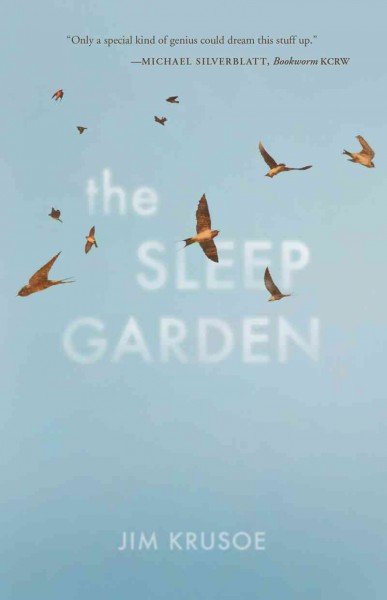
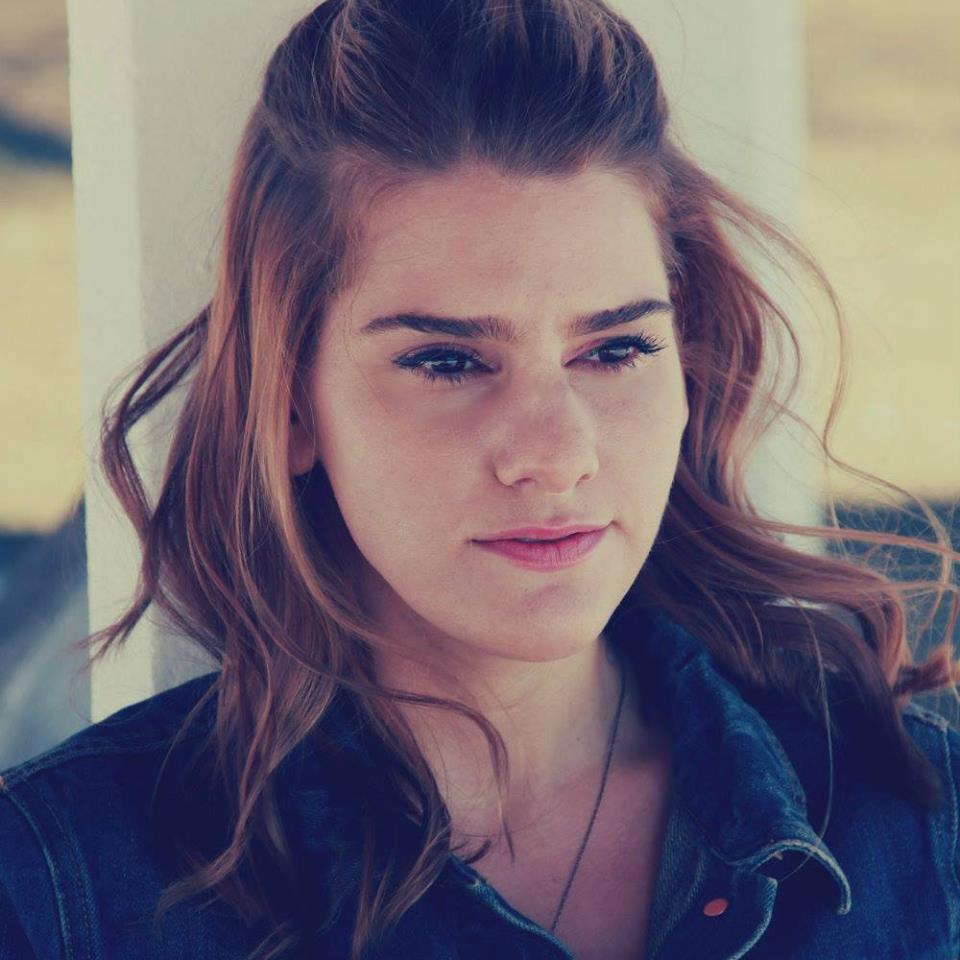
Jim KrusoeMidwestern Gothic staffer Giuliana Eggleston talked with author Jim Krusoe about his novel The Sleep Garden, the underground, the reality of loose ends and more.
**

Giuliana Eggleston: What’s your connection to the midwest?

Jim Krusoe: A long time ago wrote that to grow up in the Midwest: “…was to watch a glass of milk turn sour. Slow. Inevitable. Reputedly healthful,” and by the Midwest I meant Cleveland, where I was raised. Cleveland later resurfaced as the location of my novel, Erased, and it is the Midwest that I have to thank for my almost pathological need not to be bored, having gotten enough of that unhappy feeling in my first seventeen years there to last a lifetime. I suppose in a way I’ve been running from the Midwest in one way or another ever since.

GE: In you new novel, The Sleep Garden, you write several different interweaving stories following five main characters. What were the challenges, if any, in making their stories fit together?

JK: The characters In The Sleep Garden actually were conceived only after I had figured out what the central images of the novel (holes in a lawn, the burrow, a crossbow, the horrible sixties sitcom, “Mellow Valley”) had to do with each other. Unraveling that question took a couple of thousand pages: false starts, trying things out, testing other images I hoped might replace them. Finally, after creating a literary space fit to host characters, these particular ones stepped up surprisingly quickly and began to tell their stories.

Sleep Garden

GE: How did you first conceive of the idea of “the Burrow,” the underground apartment building where your characters reside?

JK: The Burrow itself took some time to emerge, although, like Poe, I’m drawn to things that happen underground—basements, caves, and cellars—the literary equivalent of the subconscious. The first incarnation of the Burrow was actually a building called “The Snail Museum.” It was to be a novel about a young girl, or maybe about the guy who ran it, I couldn’t decide. That draft, along with a dozen other attempts, fell through, but in the end I was left holding a building that was basically a lump, like a snail’s shell. I also thought about Kafka’s “In the Burrow,” Emily Dickenson’s “swelling in the ground,” the legend of the Seven Sleepers, and of course Tolkien, whose references to burrows were important to push away from the minds of readers. Also, there’s a great Indian Burial Mound in Moundsville, West Virginia, that I visited a long time ago and left an impression, mostly of seediness.

GE: What inspired you to write about this unique story concept? What do you hope your readers take away from this narrative about life, death, and everything in between?

JK: Of late I’ve become interested in the permeability of my life. By this I mean that my dreams, the things I’ve done, the stories I’ve read and heard, what I’ve witnessed and what I’ve been told I witnessed, as I’ve gotten older, all seem to take on an equal authority and an equal weight in my mind. In this way, my memories of a friend and the actual friend who might be standing in front of me become almost the same. And then, should my friend die (something that happened in the course of this book) I have to ask how much really, has been taken away and how much remains.

GE: An interesting quality of this novel is its lack of closure for some of the characters. How do you feel the loose ends play into the greater meaning of the novel?

JK: In certain ways the lack of closure allows a story to continue after the book is finished. If you were to ask me about my life, I can’t think of a single instance where closure exists, where something is over and done with. Nor should that be the case. I know that Jesus said, “It is finished,” but obviously he was being optimistic.

GE: Your characters are all very unique, from a retired sea captain to phone-sex worker writing a children’s story. How did you go about crafting each distinct personality?

JK: One of the pleasures of writing a novel is that the writer gets to spend a fair amount of time with each character and so find out more about who they are. Characters for me never start full-blown, but build themselves up over the course of months and years until they are revealed as if they exist wholly outside me. Only later comes the surprise that they’ve been a part of me all along.

GE: What aspect of your novel did you most enjoy writing?

JK: I’m ashamed to say it was probably the silliest part: the six episodes of “Mellow Valley,” a sitcom about a pot farm in the sixties. I had been carrying that idea with me, for no good reason, a long time, and then, when I started to write it down, new parts added themselves to the story. For a long time I couldn’t decide whether or not to cut it. But then I decided to wait and see if it had anything to do with the rest of the novel that had yet to be written, and I was surprised to see that it did. Also—and this is important to me—the world is made up of many levels of seriousness and unseriousness; to leave any one of them out is not a true representation of the world, or at least my world.

GE: Have any authors inspired your writing?

JK: I wouldn’t say writers inspire my writing exactly, but they inspire me with their courage, and inventiveness, and their sense of care. And by inspire I mean that they remind me how far I have yet to travel and the impossibility of my ever getting there. On the other hand, the best I can do is make my writing as good as it can be for me.

GE: What’s next for you?

JK: I just finished a novel I had high hopes for but threw out, so I’m back to struggling with images, trying to unlock those I can’t shake and then find some kind of common concern they represent and to discover what they are trying to tell me. Or what I’m trying to tell myself. It’s an interesting state of mind, one where everything we see can be important or significant, part ecstasy, part paranoia, and part frustration. It’s the first step in creating.

**

Jim Krusoe has published five novels and two books of stories, Blood Lake and Abductions. His first novel, Iceland, was published by Dalkey Archive Press in 2002. Since then, Tin House Books has published five novels: Girl Factory, Erased, Toward You, Parsifal, and in 2016 The Sleep Garden. Jim teaches writing at Santa Monica College as well as in Antioch’s MFA Creative Writing Program. He has also published five books of poems.

|

No Comments

|

Contributor Spotlight: Kate Wisel

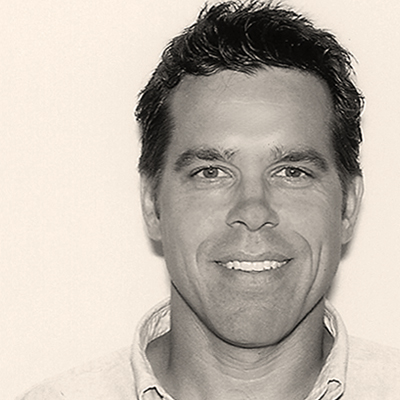
10356772_3005177408477_4205155109034242339_nKate Wisel’s story “The Account” appears in Midwestern Gothic Issue 21, out now.
What’s your connection to the Midwest, and how has the region influenced your writing?

I moved to Chicago from Boston just this year to attend Columbia College’s MFA program. In both a personal and public sense, Boston is steeped in history. Because the stories I write are mainly set in Boston, moving to the Midwest, a place that’s vast and open, has allowed me to see Boston independent from myself. Since I moved I’ve met new characters, wrote from different points of view, and explored the kind of subject matter that I don’t know I would have discovered if it weren’t for the distance.

What do you think is the most compelling aspect of the Midwest?

I’ve never eaten a deep-dish pizza I didn’t like.

How do your experiences or memories of specific places—such as where you grew up, or a place you’ve visited that you can’t get out of your head—play a role in your writing?

I have a talent for conjuring times that don’t exist anymore, also known as chronic nostalgia. I think a lot of people recognize the essence of the past or are comforted by its definitive qualities. Nostalgia can be a great tool for stories if you can turn the essence of a time period into the present and represent these strong, achy feelings as conflicts. The story always turns out to be about something lingering in your subconscious.
I have this memory of my mom waking my brothers and I up in the middle of the night. It was winter and she would put coats on over our PJ’s then buckle us into the van. We’d drive past the Citgo sign, lit up in the dark, and the Charles River. We’d wait for my dad in the back parking lot of his restaurant where I’d see sous chefs sitting on milk crates and smoking. When he finally came out he would come into the car smelling like onions and flour.
I had to write a story about this memory because it felt so sad to me and so important. I figured out the parents in the story were going through a divorce, and had to go through the motions of their marriage to keep their family together. This is not what happened in my own life. It’s not that you solve the past, but by representing it you figure out an alternate version of why it was so distinct and the many ways in which it could have been or gone.

Discuss your writing process — inspirations, ideal environments, how you deal with writer’s block.

I just read Stephan King’s On Writing and his process seems like it would be intimidating to anyone besides himself. I guess I’ve taken the Virginia Woolfe approach by creating a space for myself, literally and figuratively, that feels exciting to stay in for long stretches of time. I just recently painted my white desk turquoise and rearranged the books by the windows. I have my mentor Jenn De Leon’s story that she sent me in a wooden shelf along with some comics from a writing conference I went to. I have my pens and pencils in a washed out salsa jar because that’s what makes me feel good. It’s like nesting. As far as writer’s block, I’ve learned to look at it is as an opportunity. If I’m feeling blank, maybe something is shifting and I need to take a new approach. One of my favorite exersizes is flipping through ten books and writing down the first lines of each story. I just did it now, and found “I worked at the baby store for nine months.” Where’s the writer’s block now?

How can you tell when a piece of writing is finished?

If I knew it would be easier to answer this question. It’s a weird dance where the story knows more than the writer and you’re constantly getting at something. At least for me, once I feel like I’ve caught up to the story and I finally know what it’s about, I then know exactly how it should end, which causes me to go back and sort of redecorate the story so that everything is telling of this one particular theme.

Who is your favorite author (fiction writer or poet), and what draws you to their work?

I think Mary Gaitskill perfectly writes about feelings as if feelings are even comprehensible. No paradox goes unobserved. She creates a language for what we don’t know how to say, or what stays inside of us that we can’t say.

What’s next for you?

I’m writing linked stories for a collection that deals with female fixations and the extents of certain obsessions. I think people, girls in particular, break apart to become whole again, and I’m interested in the breaking.

Where can we find more information about you?

Some of my stories and poems are online. You can also find me on Twitter @Katewisel.

|

No Comments

|

Interview: Rich Fahle

Rich FahleMidwestern Gothic staffer Allison Reck talked with Rich Fahle about his involvement in the Midwest Literary Walk, coming up on Saturday, April 30th from 1-5pm in downtown Chelsea, Michigan.
**

Allison Reck: The Midwest Literary Walk, which you currently help organize, is hosted in Chelsea, Michigan. As a region, what significance do you believe the Midwest has to the literary tradition?

Rich Fahle: Not only is the literary tradition of the Detroit / Michigan region rich—including the likes of Pulitzer Prize winner Jeffrey Eugenides, the great Elmore Leonard, American treasure Joyce Carol Oates, Pulitzer Prize winner and former U.S. poet laureate Philip Levine, and others—but the new talent emerging from the Midwest are some of the most exciting voices in literature. Look at the list of authors and poets living or writing about the Midwest today: Matt Bell (Scrapper), Kyle Minor, David Giffels (The Hard Way on Purpose), J Ryan Stradal (Kitchens of the Great Midwest), Angela Flournoy (The Turner House), Bonnie Jo Campbell, Emily St. John Mandel (Station Eleven), and (for the time being, at least), Roxane Gay. Plus, we can’t forget icons Jane Smiley (Last Hundred Years trilogy), Louise Erdrich, and Marilynne Robinson, a trio of literary lionesses.

Of course, the list of authors at this year’s Midwest Literary Walk are also a fine collection of the writers who either live here or write about the region – Detroit poet Jamaal May, University of Michigan Helen Zell Writers’ Program professor Claire Vaye Watkins, Cleveland native and New York Times bestseller Paula McLain, and National Book Award finalist Christopher Sorrentino, who has written his own Elmore Leonard-infused novel of the Midwest, The Fugitives.

AR: This event has quite an established history, celebrating its 8th year later this month – what was the inspiration to begin the Midwest Literary Walk?

RF: The Midwest Literary Walk was created in 2009 by the prolific Detroit poet M.L. Liebler, who at the time was Chelsea District Library’s Artist-in-Residence. With M.L.s early guidance and a Chelsea Library team that believed that the event could expand and attract more book lovers from around the state, the event grew. Since then, Midwest Literary Walk has consistently featured a thoughtfully selected lineup that celebrates the talents of distinguished Michigan writers and poets, along with writers of national prominence.

Each year, the Midwest Literary Walk builds and expands, attracting larger audiences to multiple venues throughout Chelsea, a town so many in Michigan know as the home of Jeff Daniels’ Purple Rose Theater and the iconic Jiffy plant.

Last year’s event included Angela Flournoy on the cusp of her huge literary year for The Turner House and Edward Hirsch for his beautiful work of poetry, Gabriel: A Poem, and others. This year is no different, with perhaps the Walk’s best lineup ever.

Full lineup can be found here: http://midwestliterarywalk.org/?page_id=914

AR: This event is meant to highlight “the power of literature and poetry in everyday life.” What does this ‘power’ mean to you?

RF: Books, literature, poetry – all have an uncanny ability to shine a light on the issues we struggle with and think about every day: Family, heartbreak, social issues, cultural divides. For me, books have always been the doorway to other cultures and ways of life, to the experiences and perspectives of people I would likely never otherwise see; to issues of the heart that connect more deeply through the written word than other media. Like so many readers, through books I find myself asking questions I wouldn’t know to ask otherwise, and learning I’d probably not discover anywhere else. For me, books provide a place to be thoughtful and mindful, in a way that is more engaging and immersive than any other form of communication.

AR: What has been the most exciting part of coordinating this event for you over the years?

RF: The Midwest Literary Walk team is wonderful and my favorite part about scheduling and working the event – book-loving passionistas all. The team and gang at Chelsea District Library make it most fun. Beyond that, there is a great personal thrill that comes after opening an email that confirms YES, the 2015 National Book Award winner for Poetry Robin Coste Lewis will come to Chelsea, MI to read and discuss her groundbreaking work of poetry. That’s pretty exciting, too.

Midwest Lit Walk

AR: What are you most excited about for this year’s Literary Walk?

RF: I know I sound like a fanboy here, but every hour of this year’s Literary Walk will be spectacular. As I mentioned, Robin Coste Lewis will share her National Book Award-winning book of poetry, The Voyage of the Sable Venus, but even more exciting, she’ll do it in conversation with Detroit poet Jamaal May, one of the most exciting voices in poetry today—and himself the author of a much-buzzed new collection, The Big Book of Exit Strategies (3 pm). Paula McLain will delight the huge number of fans who have read her bestsellers – The Paris Wife and most recently, Circling the Sun (4 pm). And Claire Vaye Watkins – a National Book Award “5 Under 35” honoree, Ann Arbor native now and author of one of the most talked about novels of the past year, Gold Fame Citrus will be wonderful (2 pm). And one of my favorite books of the festival is The Fugitives by Christopher Sorrentino—a National Book Award finalist himself for Trance. I’ll be interviewing Christopher on stage for his portion of the event (1 pm)

AR: Can you tell us more about how you choose which authors and books to feature each year in your event?

RF: Our criteria for which authors to invite to the Midwest Literary Walk is broad. In general, the Midwest Lit Walk team looks for authors that either live or work in the Midwest, or that write about the region—though we do occasionally invite other authors and artists to the event as well. That’s the case with National Book Award winner for Poetry, Robin Coste Lewis, who was born in Compton, CA and raised in New Orleans, but whose work is vital and relevant to all readers. In Robin’s case, we asked Detroit poet Jamaal May to interview Robin as part of her Midwest Literary Walk event, discussing the power of poetry and the role of poetry in our society.

AR: What is your connection to the Midwest?

RF: I’m a born-and-raised in Detroit suburb kid (Grosse Pointe mostly.) I left and lived in Washington, DC for a dozen years, but returned to Michigan to work in the Borders home office in Ann Arbor, leaving a year or so before the sad ending eventually came for Borders. I’ve lived in Chelsea, MI since returning and have been continually impressed with the Chelsea District Library, which sponsors the Midwest Literary Walk. The Chelsea Library has created a model for small libraries all over America, driving literary culture, creating events and opportunities, and staying nimble and experimental.

AR: You also hold the position of Executive Producer and host of Book View Now on PBS, and are the founder and CEO of Astral Road Media. You clearly have a strong interest in the subject, but what do you think is the most compelling aspect of literature as a whole?

RF: My own life and work is an example of the transformative power of books and literature. Working with books has literally changed the course of my life. Each day in my work with authors, booksellers, and publishers, I find so many other examples and stories of books helping educate & inform, open doors, reveal hidden secrets, create new life path, or provide a hint of inspiration to keep pushing forward. For me, the most compelling aspect is the absolute truth that books change lives.

AR: Is there anything else you would like people to know about the Midwest Literary Walk?

RF: Yes! With the Midwest Literary Walk, the idea of literary tourism is alive and well. Besides the actual Midwest Lit Walk events in Chelsea which runs from 1 – 5 pm (totally free and open to the public) we have also created a special event for people in and around Detroit who wish to participate in the Midwest Literary Walk in a different way.

For those people, we’ve put together a very special Detroit Literary Bus Tour, which begins in Detroit at 11 am and includes the last two events of the Midwest Literary Walk in Chelsea.

Detroit has a fascinating literary history featuring some of America’s finest and most decorated writers, a list that includes many of the writers we’ve mentioned previously—Jeffrey Eugenides, Elmore Leonard, Joyce Carol Oates, National Book Award finalist Harriette Simpson Arnow, the Pulitzer Prize winner and former U.S. poet laureate Philip Levine, Robert Hayden, the first African American U.S. Poet Laureate, and one of America’s top-selling authors, crime writer Donald Goines.

Anna Clark, editor of A Detroit Anthology and author of Michigan Literary Luminaries, will host the bus tour, which also includes lunch at 1917 American Bistro before heading to the Midwest Literary Walk events with Robin Coste Lewis / Jamaal May and Paula McLain.

The Midwest Literary Walk is completely free, but the Detroit Literary Bus Tour does have a $53 fee, which covers the lunch portion and transportation to and from Detroit, in addition to the Detroit Lit Tour with Anna.

You can sign up or find out more about the Detroit Literary Bus Tour here: http://midwestliterarywalk.org/?page_id=914

**

Rich Fahle is the Executive Producer of PBS Book View Now, providing national coverage of book festivals and other major literary events for PBS. He’s formerly VP Content and Entertainment for Borders, where he produced digital content with authors and musicians. Prior to Borders, Fahle oversaw media relations and communications as chief spokesperson for C-SPAN, the iconic public affairs network where he helped launch BookTV, and was a long-time manager and bookseller at Kramerbooks, the thriving independent bookstore in DC’s Dupont Circle neighborhood. He is also the founder and CEO of Astral Road Media, a media marketing and distribution company focused on authors and writers. He volunteers as one of the organizers for the Midwest Literary Walk in Chelsea, MI.

|

No Comments

|