8th Street Power & Light reviewed at Chicago Review of Books

November 9th, 2016

Aram Mrjoian recently reviewed Eric Shonkwiler’s 8th Street Power & Light at Chicago Review of Books, and had this to say:

Where Shonkwiler genuinely shines is in his confident syntactical brevity. He is unafraid to make the most of a terse sentence, repeatedly shirking glam for grit, kicking dust pell-mell to cover up any excessive language. In the peculiar wasteland Shonkwiler has created, one wrong choice in diction would sound like the freshly-oiled flute of a virtuoso playing against a demented marching band of spit-clogged, out-of-tune brass. Instead, 8th Street Power & Light leaves prolixity on the shelf, allowing rustic prose and soiled landscapes to emit raw emotion.

Read the full review.

And for more information on 8th Street Power & Light, click here.

Contributor News

Ron Austin (Issue 14) will see his story “Cauldron” appear in the next issue of Story Quarterly, and his story “Muscled Clean Out the Dirt” appear in the next issue of Black Warrior Review.

Dave Essinger (Issue 23) will see his novel Running Out published by Main Street Rag Press in Spring 2017.

Rochelle Hurt (Issue 21) recently saw her new book of poetry, In Which I Play the Runaway, published by Barrow Street Press as the Winner of the 2015 Barrow Street Book Prize.

Michaella A. Thornton (Issue 23) has a lyrical essay about “The Terrible Beauty of Midwestern Road Rage” out right now in Issue 02 in The New Territory Magazine.

Zachary Tomaszewski (Issue 20) will see the publication of his new chapbook Mineral Whisper by Finishing Line Press this coming Winter (December 9, 2016) and is now available for pre-order.

Congrats, all!

|

No Comments

|

Contributor Spotlight: Dave Essinger

dave essingerDave Essinger’s piece “Off Trail” appears in Midwestern Gothic Issue 23, out now.

What’s your connection to the Midwest, and how has the region influenced your writing?

I grew up in Ohio, and did my undergrad at Miami and grad work in Chicago. When I moved to Chicago, I told myself I could still pretty much drive an hour and be out in a cornfield, if I wanted. Though I never really did, that was good to know. I still feel sometimes that the larger culture dismisses the land between both coasts as flyover country, to be ignored or presented in regional stereotype, which made me want to write about everything that happens in the rest of the country, outside of a those scattered urban coastal outposts. I live in NW Ohio now, where I teach at the University of Findlay, and where the breathable air in August is about 75% corn.

What do you think is the most compelling aspect of the Midwest?

The overlooked.

How do your experiences or memories of specific places — such as where you grew up, or a place you’ve visited that you can’t get out of your head — play a role in your writing?

A friend once noted that she always found herself writing about places she no longer lived, and I imagine that, to an extent, most of us do that. Being away from a place gives us a perspective we don’t have while we’re in it, and being an outsider to a place of course sharpens our perceptions. For me, Chicago and Montana, both places I’ve lived briefly, are such places. And only lately, when I’m back where I grew up — went to high school, drove around country roads, went for runs — have I realized that something about the geographic layout, the direction of the light, the smells and birdcalls, has become the generic setting template most of the time when I dream.

Discuss your writing process — inspirations, ideal environments, how you deal with writer’s block.

I believe that it’s essential to write something every day, just to stay engaged with the work. I like to keep several projects going at once, though, so if one’s blocked, there’s always something else I can fiddle with. I have a small pile of poems, two screenplays, and a novel going at the moment, for example. Apparently my ideal environment only occurs in the last ten minutes before I have to be somewhere. I’m late to things, dictating notes in the car. Urgency is important, though, and coming back to scribbled notes, the same thoughts rarely feel as vivid. My kids’ winter swim team practice has just started, so I look forward to getting lots of work done with the laptop, surrounded by humid chlorine-scented air and the terrible high-octane soundtrack from whatever Zumba or Pilates class the Y has that day.

How can you tell when a piece of writing is finished?

I tell my Intro students, “You can stop after you get to some character change,” but sometimes it really is that simple. Or maybe it never is. Publication tends to put a “done” seal on things, but I’ve still dusted off other projects after ten years and rebuilt them. A thing is done when we quit working on it, find another thing more engaging or pressing?

Who is your favorite author (fiction writer or poet), and what draws you to their work?

Murakami’s fantastic, because he’s one of those who just makes it look so easy. Elmore Leonard’s plots are just so much fun to spend time with. And Tolstoy — I could live just about a full life inside War and Peace, and he was doing things structurally with sweeping narrative that I think popular culture is only now independently rediscovering.

What’s next for you?

My novel, Running Out, will be out from Main Street Rag Press in Spring 2017! An elite ultrarunner survives a plane crash with his wife and young daughter in northern Quebec’s remote James Bay Area, and has no recourse but to lace up his trail shoes and set out for help.

Where can we find more information about you?

Guess I should get on that author website soon, huh? For now, I think I’m the only Dave Essinger on Facebook, and I edit the lit mag Slippery Elm at http://slipperyelm.findlay.edu/

|

No Comments

|

Contributor Spotlight: Laura Hulthen Thomas

laura thomasLaura Hulthen Thomas’s piece “Third and Manageable, or Why I Bought My Son a Rifle” appears in Midwestern Gothic Issue 23, out now.

What’s your connection to the Midwest, and how has the region influenced your writing?

I’ve lived in the Midwest most of my life, in Ann Arbor, Michigan after a couple of early years in Wisconsin, but my family originally hails from New England. The Midwest’s influence on my Yankee parents definitely inspired Third and Manageable, my essay for Issue 23 of Midwestern Gothic. From a young age I remember watching the Boston Patriots, as they were called back then, the Green Bay Packers, and the Detroit Lions with my dad and brothers. Maybe I’m not remembering my football very well, but I recall being impressed by the grueling Midwestern power drives down field. The Pack seemed to prefer fighting yard by yard for the touchdown over the quick, long passes the Patriots seemed to favor. At the time, the Midwestern plays struck me as doing things the hard, slow way.

As I grew up, however, I began to see this methodical persistence as capturing the strength and endurance that gets the job done, and done well. It’s not always the flashiest way to score, but, and maybe especially for writers, repetitive and hard won forward progress is the most enduring path to finishing challenging work. It’s interesting that in 1971 the Patriots were renamed to represent their region, New England, while the Packers, the Lions, the Bears, and so on still radiate a local personality tied to the micro-regions around their cities.

What do you think is the most compelling aspect of the Midwest?

I find the fact that you can’t entirely pin the Midwest down most compelling. As a kid, I was always amused to return to New England and see how my Massachusetts and New Hampshire relatives were comfortingly consistent. They shared a love of hard work, pointed political humor, and an opinion on everything down to the hue of the morning dew. Midwesterners embrace hard work, humor, and opinions too, of course, but perhaps because of the greater distances between major cities, and the states, I think of my friends as Detroiters or Chicagoans, Michiganders or Wisconsinites, before I think of us all being Midwestern. I think what ties Midwesterners together is what makes the region elude easy catch-all labels like Yank or Dixie-ite; our identities, and our loyalties, are a friendly but loose collective of distinct places.

How do your experiences or memories of specific places — such as where you grew up, or a place you’ve visited that you can’t get out of your head — play a role in your writing?

Lately I’ve been inspired by places I haven’t seen in a while or may never see again. In southeast Michigan, before disused corn fields became real estate, we kids would horse around in miles of dried corn stalks higher than our heads. We chased our dogs around in those fields, captured flags, built forts. It never occurred to us that anyone actually owned that land. My dog never did know; when a golf course and ritzy subdivision finally replaced our field, he thought all those cool new trash cans filled with goodies were his. This struggle with ownership over something already lost is at the heart of my essay for Midwestern Gothic. It’s tough for mothers, or at least this mother, to realize when your child needs more than what you have the power or right to give; to yield the field to whatever that child needs to build for themselves.

Discuss your writing process — inspirations, ideal environments, how you deal with writer’s block.

“Process” implies a clean and orderly deal, while my writing life is so often a jumble of moments snatched from real life. I work full time, and I also have a couple of teenagers to love. I wish I could write as fiercely as I teach and care for my family, but the everyday stuff is always seeping in to slow progress down. Then again, the seep is where inspiration comes from, so keeping your distance from distraction means missing out on the best stories. Like most writers, I’m split into two selves, the one living in the world, and the one keeping the world far enough away, for just a little while, to get some lines down. Two selves don’t always manage things as gracefully as one self would, believe me!

As for writer’s block, I usually suffer from being stuck when I’m, in truth, afraid to finish something. Maybe the piece is asking me to discover something I wasn’t expecting to disturb. I tell myself to honor the hard work I’ve already put into the piece and get on with it. The cure for writer’s block is never not writing.

How can you tell when a piece of writing is finished?

Most of the time I can’t. Nearly everything I’ve written has crossed numerous finish lines. Writing is a tug of war between deciding it’s time to move on, and discovering new connections and possibilities you hadn’t thought of when the piece first came to life. At some point I’ve had to decide to tuck possibility away, usually in a new story. A story I wrote some time ago, revised many, many times, and published, still has a moment between two characters that feels unfinished. One particular line could hold so much more truth than it does, but what this truth is continues to elude me. Maybe if the truth is evading the writer, the character isn’t meant to discover it. She and I may evade honesty forever, but to this day I go back to that line and wish I knew what it should really say.

Who is your favorite author (fiction writer or poet), and what draws you to their work?

My favorite author is always the one I’m reading now! I’m re-reading ZZ Packer’s short story collection Drinking Coffee Elsewhere at the moment. I love the fact that her stories are like miniature novels, that her characters cross state, and community, lines and push the boundaries of their relationships all on the same journey. In this age of brief fiction, I like that the stories take time to unfold. I also love Packer’s characters, who keep things rolling while offering up fantastic insights into their experience of the world.

What’s next for you?

My short fiction collection, States of Motion, is forthcoming from Wayne State University Press this spring (2017). I’m so excited to see stories that first found such warm, welcoming homes in my favorite literary journals, including (of course!) Midwestern Gothic, come together in one place. I’m happy to see that there is a place in fiction for characters who are as ambivalent as the Southeastern Michigan landscape, those idealists and romantics sprouting, where you least expect them, between the cracks of practicality and respectable behavior.

Where can we find more information about you?

I’m in the world on Facebook and Twitter (@laurahthomas).

If you’d like to find out more about States of Motion, it’s here: http://www.wsupress.wayne.edu/books/detail/states-motion

|

No Comments

|

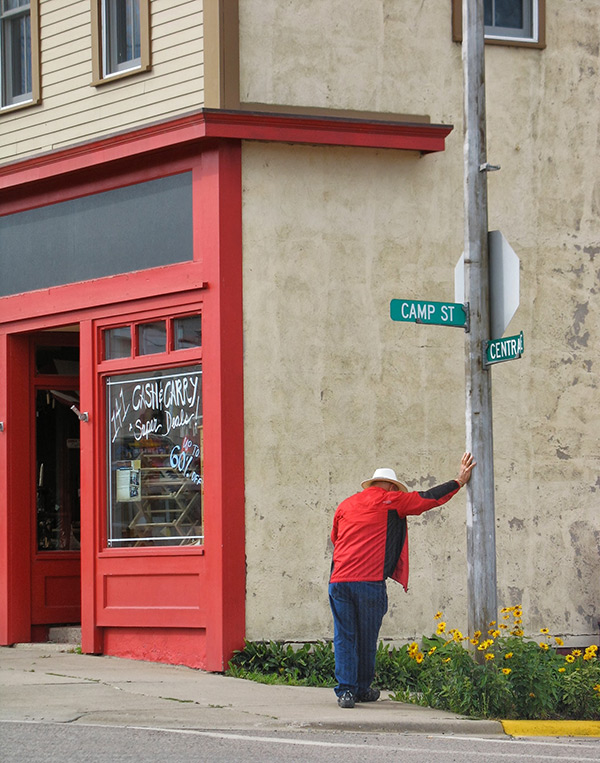
Midwest in Photos: Calling from Ely, Minnesota

“My own life would make a pretty dull story, I think, and I envy him as I drive to work on a cold Minnesota morning across the Mississippi River with its coal barges still struggling upstream like so many of us nowadays.” –Garrison Keillor, Ten Stories for Mr. Richard Brautigan, and Other Stories.

Calling From Ely, Minnesota, Milton Bates

Photo by: Milton Bates

|

No Comments

|

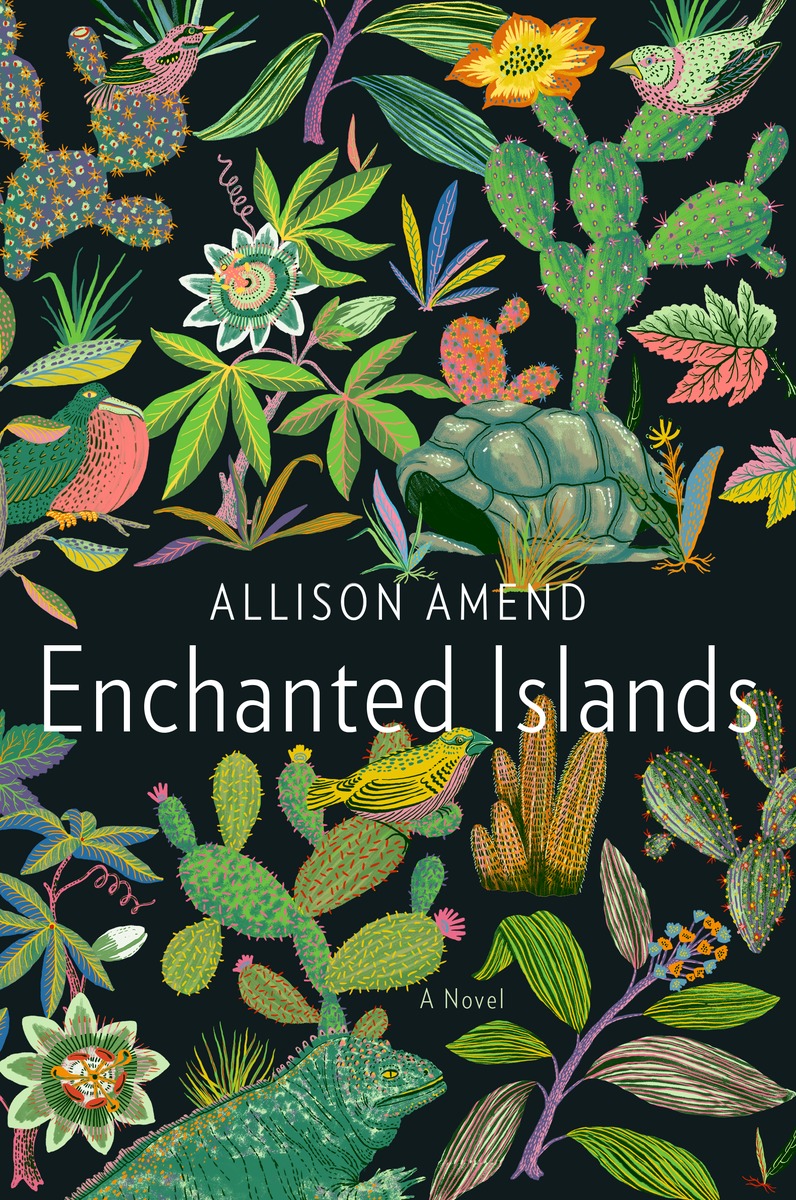
Interview: Allison Amend

Allison AmendMidwestern Gothic staffer Lauren Stachew talks with author Allison Amend about her book Enchanted Islands, honoring a woman’s history, creating a framed narrative, and more.

**

Lauren Stachew: What’s your connection to the Midwest?

Allison Amend: I’m a proud Chicagoan and lifelong Cubs fan. I grew up in Chicago, the product of two Michigan grads, and went to graduate school at the University of Iowa Writers’ Workshop. I may not live in Chicago, but I will forever consider it home.

LS: Apart from growing up in Chicago and attending the Iowa Writers’ Workshop, you also attended Stanford University and now live and teach in New York City. How has living on both the west and east coasts of the U.S. affected the way you think about and understand the Midwest?

AA: I’d lived for a year in Spain before I went to college on the west coast, so I assume there would be no culture shock. I was wrong. It took me a good year to understand the California subtext. Then I moved East and worked in Boston. There was a completely different level of “what I’m actually saying is the opposite of the words coming out of my mouth.” And then I moved to New York, where I thought everyone was yelling at me (they were). I still long for the plain-spoken Midwesterners of my youth. Ironically, living away from the Midwest for so long makes me an even more diehard Midwesterner. I flirt between letting everyone know that the flyover states are worth more than just a layover, and keeping it a secret so that all the Californians don’t move there. (I doubt this will happen; they can’t handle the weather.)

LS: Your most recent novel, Enchanted Islands, is inspired by the memoirs of Frances Conway, an American woman who lived on Floreana, an island in the Galapagos, with her husband, Ainslie, leading up to World War II. What challenges did you face in writing a fictional story about someone real? Did you ever feel limited in sticking to the facts of Frances’s life?

AA: The details of her life outside of her time on the islands are so sparse I felt there was a lot of room for invention. Once my fictional Frances gets to the Galapagos, though, I did feel conflicted. The real Frances and Ainslie lived on Santiago Island for 6 months before the government made them move to Floreana. I had originally followed that timeline and location, and invented an elaborate plot to get them from one island to another, but then I got to the Galapagos and couldn’t visit Santiago Island (only one spot on the island is visit-able, and only via cruise ship). It occurred to me: I’m writing a novel inspired by the voice and courage of a real woman; I can do whatever is best for the book. Then I felt freer to do what was best for the book.

As an aside, some people have expressed concern that it’s appropriation or exploitation to co-opt a historical figure for fiction (though of course it’s done often, especially for television and film). I thought about changing Frances’ name, but then it would just be a thinly veiled version of her and everyone would know who it was based on. I wanted to keep her name to honor her and her wonderful life, and hopefully bring her out of the historical shadows.

Enchanted Islands

LS: Along with Frances’s memoirs, you’ve also traveled to the Galapagos islands – once as a teenager with your parents, and a second time to do research for this novel. At what point did you transition from research into the actual writing of the novel, or did you find yourself writing from the start?

AA: I once received a very good piece of advice from E.L. Doctorow about writing historical fiction. He said not to get bogged down in the research, just to make it up. You can look it up later. And I’ve subscribed to that — I began to write my version of Frances’ story as soon as I discovered her memoirs. And then I filled in the details as I went along. Of course, when I went to the Galapagos (about 3 months before I handed in the manuscript) the book got much better and richer. I was able to make Frances’ world come alive with smells and sounds. Most significantly, I experienced a small slice of the loneliness Frances must have suffered, and I think it made her a deeper character.

LS: The structure of your novel is a frame – the narrative both begins and ends at the final years of Frances’ life, and the pages in between tell the story of her early life and adventures in the Galapagos. Was it always your intention to structure the novel this way, or did it begin as something else?

AA: I did begin writing from the end of Frances’ life, but really only as a way to enter the story (I write knowing full well that at least 30% of what I generate won’t end up in a final version, and that’s a conservative estimate). But then it seemed to work for the book, so I kept it. I’d been studying framed narratives while teaching a class on the novella, a form which uses them frequently, so I think they’re an interesting narrative device. Creating suspense as an author even though the ending has already been revealed is a good challenge.

LS: Which author or authors have had the most influence on your writing?

AA: I cite Jennifer Egan so much she must think I’m obsessed with her. But I love her innovation, her ability to hint at something so much larger than what’s on the page. One of my favorite books is Madame Bovary, for its deep character analysis. Gabriel García Márquez made me want to be a writer (though I write nothing like him). I will also read whatever Margaret Atwood writes. Elena Ferrante’s books, which I read at the end of writing Enchanted Islands, validated my suspicion that female friendship across decades was a topic worth writing about.

My contemporaries, some of them my classmates from Iowa, have had tremendous influence on the writer I have become: ZZ Packer, Adam Haslett, Thisbe Nissen, Irina Reyn, Amy Brill, Laura van den Berg, Michelle Hoover, etc.

LS: As a professor of creative writing at Lehman College, is there a piece of advice you always give your students?

AA: Get a degree in bookkeeping. It’s hard to earn a living as a writer. Also, I subscribe to Anne Lamott’s sh***y first drafts club. Just get it down on “paper.” You can edit it later. Also, the thing that separates writers from people who want to write is the writing. Don’t forget to do it.

LS: What’s next for you?

AA: I get to be the expert on a Galapagos Cruise (New York Times Journeys) next summer. I’ve started a new book based loosely on a hate crime that occurred in Chicago in 2005. So I’m hoping to be spending more time in the Midwest in the near future!

**

Allison Amend, a graduate of the Iowa Writer’s Workshop, is the author of the novels A Nearly Perfect Copy and Stations West, which was a finalist for the 2011 Sami Rohr Prize for Jewish Literature and the Oklahoma Book Award. She is also the author of the Independent Publisher’s Award-winning short story collection Things That Pass for Love. She lives in New York City where she teaches creative writing.

|

No Comments

|

Contributor Spotlight: Micah McCrary

micah mccraryMicah McCrary’s piece “Two Cities” appears in Midwestern Gothic Issue 23, out now.

What’s your connection to the Midwest, and how has the region influenced your writing?

My connection to the Midwest is that I was born in Normal, Illinois, and I lived in that area until I was twenty-one. Then, I moved to Chicago to complete my undergraduate and graduate degrees. The region has been an influence for me in that much of my early writing is focused on a sense of place; oftentimes that’s meant focusing on the places where I’ve lived in Illinois.

What do you think is the most compelling aspect of the Midwest?

The most compelling aspect of the Midwest is that it’s a place, I think, that’s unlike any other place in the United States. The topography is unique, the people have a unique sensibility of things, and way of doing things, that I haven’t seen anywhere else — that’s not to say that they all fit the stereotype that midwesterners are all super polite or super friendly, or anything, but they certainly have a way of carrying themselves that makes the Midwest a pleasant place to be.

How do your experiences or memories of specific places — such as where you grew up, or a place you’ve visited that you can’t get out of your head — play a role in your writing?

I’ve spent quite a lot of time thinking about the places where I grew up. Specifically the houses I grew up in: They keep coming back to me, even though I will write one essay about a particular house or a particular neighborhood and then I’ll write another essay about that same house or the same neighborhood. And I think that what I find as I keep going back to write about these locales is that I’m very tied to my memories of these places. I think that without them I wouldn’t have such a strong compulsion to interrogate the ways that I’ve formed my own identity, and how that has been tied to place itself.

Discuss your writing process—inspirations, ideal environments, how you deal with writer’s block.

Well, for one I don’t really get writer’s block. And two, I love to do my writing around books — bookstores, in the library, you name it. As long as there are stocked shelves, I’m where I want to be.

I’m what I’d call a lazy writer. I don’t write often, certainly not every day, however when I do write I write at least the first draft very quickly. And I’ll be totally obsessed with one subject for a while — maybe that’ll be for a few days, maybe a few weeks, but then I’ll sit down to compose a first draft of something, and that first draft will be on the page in a matter of days. After that, I’ll print out the first draft so that I have a hard copy, give it a week or so before I even look at it again, and then I’ll mark it up comprehensively with a pen. After that, I’ll re-type the whole document from scratch with my markups included, and then I’ll read the new draft out loud to myself, which is very key to my process. When I find that I’ve written something that doesn’t sound the way I sound when I speak aloud, then I change it. This is how I think I’ve developed my sense of voice as I’ve grown and changed as a writer.

How can you tell when a piece of writing is finished?

I don’t think a piece of writing is ever finished. Even with the things I’ve published I know, if I’m being honest with myself, that if I could make further changes to those things, I would.

Who is your favorite author (fiction writer or poet), and what draws you to their work?

If I’m only limited to fiction and poetry, my favorite (living) fiction author is Milan Kundera, and I also adore Katie Farris’s work (in both fiction and translation). My favorite deceased fiction author is J.D. Salinger. My favorite living poets are Anne Carson and Robert Hass (though can I count Anne Carson for fiction, too?). My favorite deceased poets are Rainer Maria Rilke and Arthur Rimbaud. What draws me to their work? With a writer like Kundera, for example, I’m pulled in by the fact that it’s never just a story with him — there’s always something for me to learn, something for me to gain from the background or backstory he gives. He’s very good at giving paratextual information, basically, that reels me in and makes me feel like I’m invested in more than a narrative. And I love poetry that’s easy to see. I love poetry that rolls off the tongue nicely. I love poetry that makes me sit and think about what I’ve just read, after I’ve gone through a single poem. If I can do that, then I know that the poem has hit me.

What’s next for you?

My book manuscript Island in the City has gained some attention in book contests. And though it hasn’t won any of them, I’m still working on that book and trying to get it to a point where I’m comfortable sending it out again. So, I’m now working on revising that manuscript. And I have a few other essays that I’ve been working on that don’t quite fit together seamlessly just yet, but I hope that I’ll be able to assemble them into a collection one day.

Where can we find more information about you?

I “blog” here, and I tweet here.

|

No Comments

|

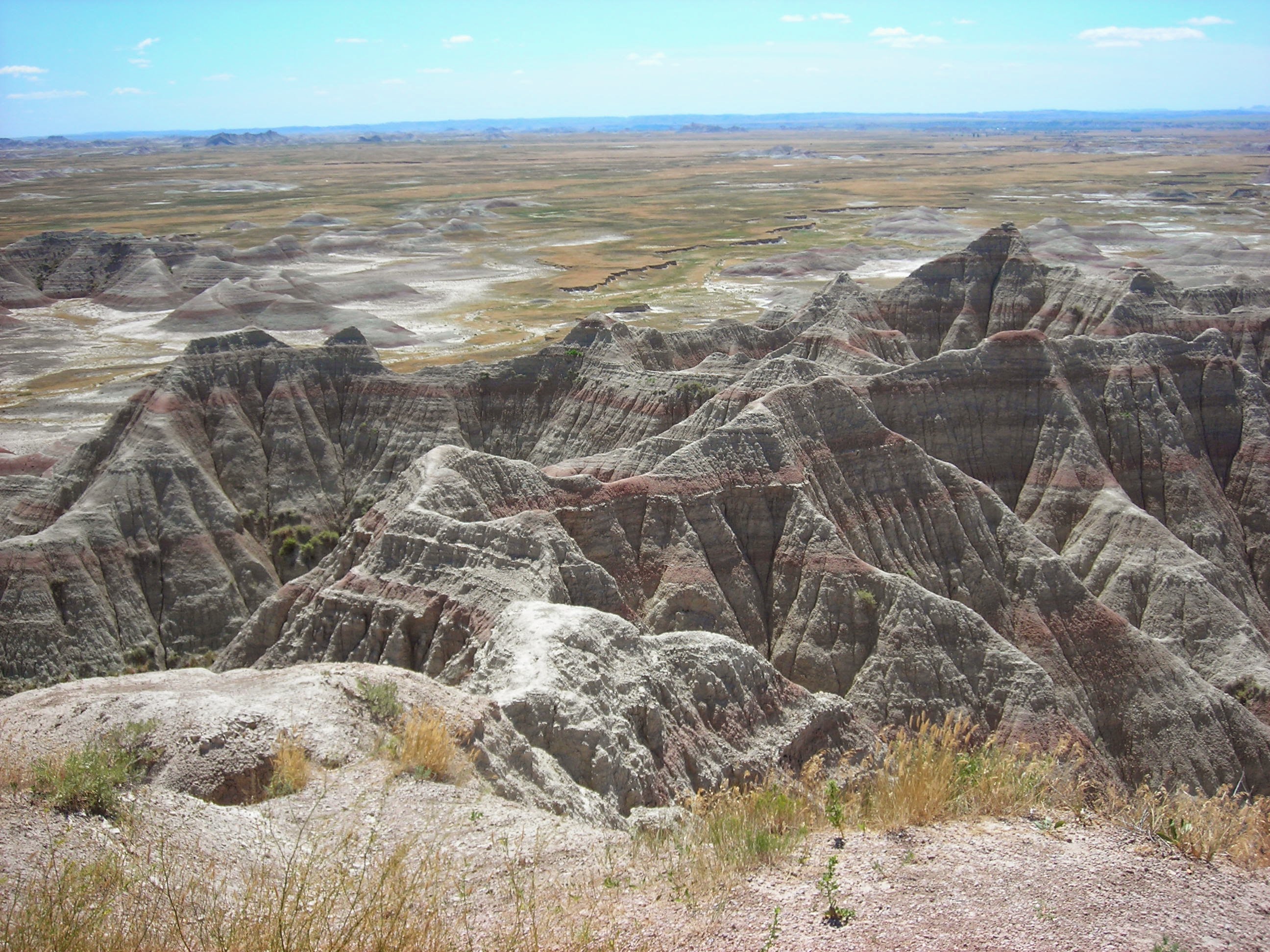
Midwest in Photos: The Badlands, SD

“To think of the Midwest as a whole as anything other than beautiful is to ignore the extraordinary power of the land.” –Curtis Sittenfeld, American Wife.

Samantha_Navarro-The_Badlands__SD__jpg

Photo by: Samantha Navarro

|

No Comments

|

Interview: Theodore Wheeler

Theodore WheelerMidwestern Gothic staffer Allison Reck talked with author Theodore Wheeler about his collection Bad Faith, writing from different points of view, the vulnerability featured in his stories, and more.

**

Allison Reck: What’s your connection to the Midwest?

Theodore Wheeler: I was born in Council Bluffs, Iowa, and have lived in the Midwest my entire life. I also enjoy eating dinner early on the weekends and experiencing all four meteorological seasons. So, solidly Midwestern.

AR: You were a fellow at the Akademie Schloss Solitude in Germany in 2014, but you live in Omaha, Nebraska. Do you think that living in such different environments influenced your writing in some way?

TW: The two places seem pretty similar to me, besides some terrain and weather differences. I imagine that this is mostly due to the fact that the whole time I was in Stuttgart I was working on a novel that’s set in Omaha (mostly), Chicago, and Wisconsin. So even while I was there, Omaha never really left me.

Probably the biggest difference was the language barrier, as I don’t speak German. Even though a lot of Germans do speak English and it’s pretty easy to get by without much German, the experience of living at least partially outside my language was great, and is something I really miss. I think the pace of my sentences are different as a result — that I simplified things a lot, with shorter and halting sentences that build into something more complex and exciting, because of the way I was communicating there.

AR: Your new collection of stories, Bad Faith, includes a diverse group of subjects – from a boy with a disabled father to a biracial man at his white mother’s funeral. How did you manage to write from such different points of view in your stories? Did you notice your writing style changed with each different perspective?

TW: There is some change in style, of course, depending on how close the POV is to the main character and what I’m trying to do with the story. I write around a story a lot during early drafts — doing side histories, biographies, exploring setting — mostly with the idea of finding the voice of the story. Sometimes that voice is very close to a character’s, sometimes not. Part of the appeal of writing fiction is speculating what it’s like to be someone who’s very different. I’m not biracial, I don’t have a disabled father, both my parents are alive. If the story is successful, a great amount of empathy and imagination is necessary, and I hope my writing rises to that occasion. Finding common ground, discovering things about different people–that’s exciting stuff!
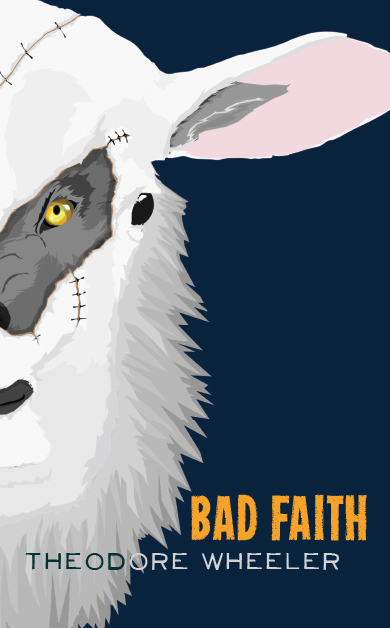
Bad Faith

AR: In addition to writing, you work as a legal reporter for the civil courts of Nebraska – a dramatic departure from fiction writing. How do you cope with the change between writing styles and subject matter? Are there any specific tricks you use in your craft process to redirect your writing to an opposing genre?

TW: I’m not sure that there’s any trick to it. Switching between fiction and reporting hasn’t really been a problem for me. If you look at writing as performance, it’s about engaging the character, the voice that’s required for the task at hand. That sounds utilitarian, and I guess it is. Probably one thing is that I don’t really think about it that much. Also, I almost always take a 15-20 minute nap or go for a walk after writing fiction and before starting my day job. That probably helps switching gears more than anything.

AR: Bad Faith is described as a collection in which “the herd can’t always outpace the predator.” What exactly does this mean to you, in relation to the theme of fleeing or rejecting a contemporary domestic life?

TW: That life is overwhelming a lot of times, particularly in small moments of crisis that short fiction examines. Most of the characters in the book really do try to do right by the people in their lives, but that also makes them vulnerable. Like a straggler too far away from the herd is vulnerable, more or less.

AR: In addition to your newest collection, Bad Faith, you have previously published a chapbook and multiple stories in other literary journals. Now, you also have a novel, Kings of Broken Things, forthcoming in 2017. What do you feel are the advantages (or disadvantages) of having made your debut in short form fiction rather than publishing a novel at the start?

TW: It isn’t this way for everyone, obviously, but I feel like this is the more traditional path for writers, proving their mettle through progressively bigger publications, learning more about the art and business sides and being able to pull off bigger projects. Having the chapbook come out last year allowed me to learn the basics of how to promote a book — things like how to contact booksellers, how to put together a launch party, what kinds of things resonate in a PR pitch — while not really having to worry about sales so much. Nobody’s livelihood was depending on my chapbook sales. That being said, we went through two printings of On the River, Down Where They Found Willy Brown, which felt like a nice victory.

As to having the collection or novel come out first, I feel like it’s pretty similar along these lines. Certainly publishing a book is a big investment for any publisher and I’m grateful for all the time, effort, sweat, and tears Queen’s Ferry Press has put into getting Bad Faith out there. There was a publicist who booked readings, experienced book pros who put it together. But, still, a small operation. Having my novel published with a New York house seems like a different kind of experience, and one I’m enjoying so far.

AR: In the advanced praise for Bad Faith, fellow authors hailed you for your “nuanced understanding of human nature” and said that your stories revealed the “malice, confusion, and ultimate frailty of us all.” Do you agree with this commentary, that your collection exposes humanity as confused, malicious and frail? What did you hope to convey about humanity in writing these stories?

TW: I didn’t really intend to write a mean-spirited book, and I don’t think it is. There’s something really compelling to me about vulnerability, particular those who are willfully exposed and those who try to cover up weakness by being cruel to others. There are a few malicious characters in Bad Faith — notably Aaron Kleinhardt, a criminal element who appears in two stories and seven between-story vignettes — but for the most part these are people who are vulnerable and different, but not really that interested in covering up their frailty.

AR: What’s next for you?

TW: I’m really excited for the release of my debut novel next summer, Kings of Broken Things. It’s set during World War I in Omaha and follows two young immigrants who become mixed up with different elements involved in the Omaha Race Riot of 1919 and the lynching of Will Brown. Hopefully it’s a novel that’s timely and timeless, as the cliché goes. I can’t wait to share it with readers.

Right now I’m working on another novel, tentatively titled From the Files of the Chief Inspector, that features stories of love lost and abandoned set in the context of a post-9/11 domestic spying campaign. It’s coming along.

**

Theodore Wheeler is the author of Bad Faith, a recently-published collection of short fiction, and Kings of Broken Things, a novel that’s forthcoming in 2017. He’s been published in Best New American VoicesNew Stories from the MidwestThe Southern ReviewThe Kenyon Review, and Boulevard, among others, and his story “The Mercy Killing of Harry Kleinhardt” appeared in Midwestern Gothic Issue 8. He lives in Omaha with his wife and two daughters.

|

No Comments

|

Contributor Spotlight: Sahar Mustafah

sahar mustafahSahar Mustafah’s piece “Public Pool” appears in Midwestern Gothic Issue 23, out now.

What’s your connection to the Midwest, and how has the region influenced your writing?

I was born and raised in Chicago. The city and its suburbs of Illinois are teeming with Arab Americans. Next to Detroit, the Chicagoland area has been a first home for Arab immigrants. I write about the experiences of first and second generation Arabs living in the Midwest; this region is a central setting in my stories.

What do you think is the most compelling aspect of the Midwest?

Though we share a collective label of hardworking and salt-of-the-earth folks, I find the Midwest startlingly and richly complex among its communities.

How do your experiences or memories of specific places — such as where you grew up, or a place you’ve visited that you can’t get out of your head — play a role in your writing?

The Chicago of my childhood is right under my skin. The experiences I had on the Southside feel like nostalgic fiction. I grew up with other first-generation kids – Poles, Italians, Mexicans. We all came of age in two worlds. I do find it easier for me to fictionalize those memories. Other times I explore these experiences in fleeting memoir, so to speak.

Discuss your writing process — inspirations, ideal environments, how you deal with writer’s block.

Though I dream about writing for a whole summer at a lake house I can finally afford to rent, I’ve learned that my writing space is not as important as my head space. If I’m fired up, I’m writing – in the kitchen, in bed (my favorite place), at a cafe, at my desk between teaching high school classes.

For inspiration, I still read for pleasure. That is to say, I try not to read as a writer and perpetually compare my own style to brilliant others. This keeps my work separate and valid, rather than agonizing and hard to look at.

No such thing as writer’s block, my MFA professor once proclaimed. Just write about what you are doing in this moment. You will soon find your way back to your current project or you will have started a new trail.

How can you tell when a piece of writing is finished?

I read my work aloud several times. When I don’t stop to fill in a detail or sharpen an image, the work is done.

Who is your favorite author (fiction writer or poet), and what draws you to their work?

Can’t do it! So many compelling voices out there! I’m particularly drawn to female writers of color like Amina Gautier, Laila Lalami, and Chimamanda Ngozi Aditchie. They remind me that there’s always room for a Palestinian American writer like me. Their work also demonstrates that a hyphenated or marginalized writer still needs to be a really good writer; in fact, we must fight harder than our white counterparts to be published.

What’s next for you?

My short story collection, winner of the 2016 Willow Books Grand Prize for fiction, will be published next year. I’m currently at work on my first novel if I can pull myself away long enough from the short story form which I simply adore.

Where can we find more information about you?

www.saharmustafah.com or @saharmustafah

|

No Comments

|