The Good Divide reviewed at Front Porch Journal

September 16th, 2016

Shannon Perri recently reviewed Kali VanBaale’s The Good Divide at Front Porch Journal, and had this to say:

The complicated and precise construction of Jean’s character, set in a time where the choices for women are stark and few, is what makes this book such a thrilling read. Though my heart broke often, I found myself deeply invested. I wanted so badly to reach into the story and hold Jean’s hand. The social worker in me wanted to provide pamphlets of resources (which of course weren’t available then, if they even would be now). I wanted to do something, for her to be less alone. To me, the mark of a good book is one that makes it impossible not to care.

Read the full review.

And for more information on The Good Divide, click here.

Interview: Martin Seay

Martin SeayMidwestern Gothic staffer Lauren Stachew talked with author Martin Seay about his book The Mirror Thief, coordinating three separate stories into one novel, encouraging empathetic openness through fiction, and more.

**

Lauren Stachew: What’s your connection to the Midwest?

Martin Seay: I’m a relative newcomer to the Midwest, having grown up in the western suburbs of Houston. (Specifically in the town of Katy; “the western suburbs of Houston” could plausibly describe an area the size of Connecticut.) My spouse Kathleen Rooney and I bounced around the country for a while — Washington DC, Boston, Provincetown, Tacoma, WA — but we’ve lived in the Edgewater neighborhood on the far north side of Chicago since 2007. Kathleen grew up in the Woodridge–Downers Grove area, and her family hails from Nebraska, so she’s credentialed as a native Midwesterner.

Regional identity — and Midwestern identity specifically — is something that I think about a lot. This is totally unscientific on my part, but I can’t help but think that there’s something in the tension between the natural and built environments in every region that affects the assumptions and the expectations of the people who grow up there, in ways that are so fundamental as to be nearly invisible. I’ve often been struck by how completely domesticated the Midwestern landscape is: just about every square inch of dry land has been shaped and reshaped by human habitation for so long that every space feels like a social space, and therefore one always feels as though one is within the bounds of some society or another here. (In the Pacific Northwest, by contrast, it never felt like we were really part of a society — or at least it felt as though society was something that everyone could exit at will and without much of a fuss.)

LS: In what ways do you feel that living in the Midwest – specifically Chicago – have influenced your writing?

MS: I should confess that the vast majority of my recently-published novel was written before I arrived in Chicago. Since I’ve been living here, most of the writing I’ve done has been essays and criticism of various sorts. (I don’t think this has been a direct consequence of living in Chicago, but rather just of having a full-time office job and an hour-long commute.) I’m about to return to fiction after quite a bit of time away, and I’m interested to see the effect that Chicago has on whatever I end up doing.

One quality of Chicago that has had a significant impact on Kathleen’s and my lives is the vibrancy and openness of the literary scene here, which overlaps in unforced, organic, mutually-beneficial ways with the theater scene, the music scene, the dance scene, the comedy scene, the art scene, etc., and produces a ton of interesting and hard-to-categorize work that lands in the spaces between those more recognizable forms. Beyond the fact that living here has made us aware of a bunch of cool stuff, we have also met a bunch of great people who are very receptive to each other’s pursuits and supportive of each other in creative, professional, and personal terms.

In some ways the fact that many of the city’s most prominent institutions seem to be in danger of collapsing — or of not collapsing, depending on the institution — seems to empower and inspire activities at the small, nimble, independent, subcultural level, which is cool. I think most of us would happily swap some of this great art for a city that’s more just and more functional, though.
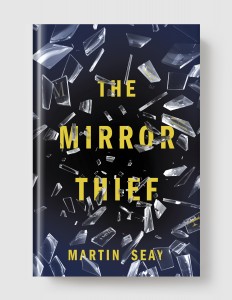
The Mirror Thief

LS: Your debut novel, The Mirror Thief, weaves together three separate stories into one novel, all set in three different versions of Venice. Some reviewers have called this skill “almost miraculous.” How did you manage these various threads as you were writing? Did you draw out maps or charts?

MS: It helped a lot that I had the structure first. Before I had any characters, or much in the way of a plot, I knew I would be writing a narrative split evenly between Renaissance Venice, Beat-era Venice Beach, and more-or-less present-day Las Vegas. I also knew that certain locations or people would appear: the Venetian casino, the Guggenheim Hermitage Museum, and a flooded Mormon town in the 2003 chapters; Alexander Trocchi, Lawrence Lipton, and the Venice West Café in 1958; and Giambattista della Porta, Giordano Bruno, a glass factory, and a bookstore in 1592. I came up with plots that would connect all these elements, and then I came up with characters who could follow the paths I had laid out. Consequently I always knew where I was going (although I was a little foggy on how long it would take me to get there).

I outlined backstory more rigorously than I did the three main storylines that run through the book. I definitely used outlines to keep myself straight on the action taking place in the narrative present, but I tried to be sparing with them; I didn’t want the plot to become too functional, or too much of a glide path for the characters. All my best discoveries came as a result of slowing myself down, not speeding myself up.

LS: What made you choose Venice as the unifying “setting” for this novel?

MS: Venice came first: I knew I wanted to write about Venice before I knew anything else about the novel, or even that it was a novel. I had been to Venice for a couple of days in the late ’90s while doing the post-collegiate-tour-of-Europe thing, and it stayed in my head as a place I that wanted to use as a subject and a setting. (I also knew, of course, that a bunch of people had beaten me to the punch—including heavy hitters like Henry James, Thomas Mann, Daphne du Maurier, and my esteemed former teacher Jane Alison — but I decided to think of this as more of an advantage than a problem.)

A lot of things about the city fascinated me (and still do) — aspects that make it different from any other place, and contrast with other European cities in interesting ways: the primacy of canals over streets, the near-total absence of fortifications, and the distinctively light, permeable, curvilinear nature of the built environment, to name a few. The one fact I learned about Venice during my first visit that struck me the most is that it is not, strictly speaking, built on islands: most of its present-day land was constructed by driving masses of wooden pilings through the lagoon’s sandy bottom into the clay beneath, and almost all of its churches, palaces, squares, and streets are (somewhat tenuously) supported by these pilings. The city is literally built on the water. The blankness of the canvas that the Venetian engineers were working with and the necessary deliberateness of their methods — along with Venice’s complex and ambiguous thousand-year history as a functioning republic — led me to think of it as the city that’s most purely expressive of the will and values of the community that created it: a city grown in a Petri dish, basically. Therefore it seemed like a good lens through which to view other cities, and other human undertakings.

LS: Many reviewers have drawn similarities in your novel to the writings of authors such as David Mitchell, Umberto Eco, and Italo Calvino. Were any of these authors inspirations to you?

MS: Invisible Cities definitely was; I borrowed a passage from it — a fairly cryptic and mind-blowing exchange between Kublai Khan and Marco Polo — as the epigraph of my book. But that’s the only thing of Calvino’s that I’ve read in its entirety: I picked it up shortly after I started The Mirror Thief because I thought it would help me get my head straight about Venice from a conceptual and metaphorical standpoint, which it did. I was drawn to it both because of its unusual engagement with Venice as a subject and because I had recently been interested in the Oulipo, the mostly-European group of avant-garde writers who used various restrictions and quasi-mathematical structures as strategies for generating literature; Invisible Cities comes from the period of Calvino’s participation in the group. (The Mirror Thief didn’t end up being very Oulipian; the only real restriction is the fact that I never used the word “Venice” — or any form of it: no venetian blinds, no Venezuela — in the book. Oulipian novels like Invisible Cities and Harry Mathews’ under-appreciated Cigarettes also inspired me to deploy certain recurring images or concepts as generative and organizing devices — mirrors, mosaics, excrement, pirates, pelicans, mercury, Mercury, the various stages of the alchemists’ Great Work, etc. — but my use of them was not remotely rigorous enough to meet Oulipian standards.)

So far as Mitchell and Eco go, I really enjoyed Cloud Atlas, but it wasn’t an influence: I didn’t read it until after I had finished the manuscript of The Mirror Thief, and it’s still the only thing of Mitchell’s that I’ve read. This is maybe going to sound lame, but although I have definitely been strongly influenced by my idea of what an Umberto Eco novel is like, I’ve never read one: I have copies of Foucault’s Pendulum and The Name of the Rose that I’ve been moving from apartment to apartment with me for years, but I’ve never read either, despite several attempts.

The novels that were probably the biggest influences on The Mirror Thief — to my way of thinking, anyway — are All the Pretty Horses by Cormac McCarthy, My Name Is Red by Orhan Pamuk, The Wind-Up Bird Chronicle by Haruki Murakami, Cat’s Eye by Margaret Atwood, and The Big Sleep by Raymond Chandler. From Hell by Alan Moore and Eddie Campbell ended up being something I thought about a lot while I was writing; so did House of Leaves by Mark Z. Danielewski. Books by Elmore Leonard, Dennis Lehane, and Alan Furst helped me figure out the genre mechanics of the 2003 and 1592 sections. To nail down some of the cadences and the lexicon of the 1592 sections, I also reread a fair amount of Shakespeare. A few nonfiction books were very inspirational, particularly Lipstick Traces: A Secret History of the Twentieth Century by Greil Marcus, The Optical Unconscious by Rosalind E. Krauss, and Secret Knowledge: Rediscovering the Lost Techniques of the Old Masters by the painter David Hockney, which sounds like an instructional book but isn’t.

LS: You spent nearly six years writing The Mirror Thief – what was the most difficult part of the writing process for you?

MS: The most difficult and rewarding part of the process was figuring out the three main characters: working out their backstories, but also and especially developing an understanding of how they would uniquely perceive the world.

This is not something that comes easily for me: I’m a concept-driven writer, and plot and character tend to show up late in the game. I reached a point early on where I needed to pretty much stop writing and just spend a couple of years trying to imaginatively inhabit the fictional world of the book, thinking really hard about my characters’ embodied experience of that world: to consider, for instance, not only what walking down the Las Vegas Strip in March of 2003 would have been like, but specifically what it would have been like for a 39-year-old partially-disabled retired U.S. Marine who spent the previous night sleeping in a chair at Philadelphia International Airport.

Of the many great things about fiction, I think one of the best is its capacity to encourage empathetic openness to others, and to do so by modelling that openness. I wanted to honor that capacity by taking the responsibility of depicting my imaginary people seriously.

LS: What advice would you give to authors who are trying to have their first novel published?

MS: If you can keep your manuscript under 700 manuscript pages, I recommend doing so. Trust me on this one.

But seriously…I should probably mention that The Mirror Thief took me a little under six years to write, and a little over seven years to find a publisher for. This was due in large part to the fact that I was circulating the manuscript in the midst of a recession that clobbered the publishing industry, but there’s really never going to be a time when the major trade houses are going to be tripping over each other to hand out seven-figure advances to unknowns with really long first novels, even if those novels do include swordfights (which, for the record, mine does).

I’m hardly an expert on the publishing industry based on my limited and rather atypical experience, so I can’t provide much in the way of practical advice beyond one very general recommendation: it’s a good idea to develop strategies for keeping your head straight when you move from a process in which you have total, godlike control (i.e. the process of writing) to one in which you have approximately zero control (the process of seeking publication). More specifically, I’d suggest that your strength in navigating the latter process will come from your rigor during the former process: you should be damn sure that you’ve written the book you wanted to write, because confidence in your manuscript will sustain you through long stretches of radio silence and help you make productive use of the feedback you receive from agents and editors.

LS: What’s next for you?

MS: Great question! I have a few ideas for new novels that I’m playing around with; if past experience is any guide, I’ll need to live with them awhile before I know which I’ll pursue. In the meantime, I have several criticism projects — writing on music and film — that I’m excited to work on. I’m very fortunate that The Mirror Thief has gotten quite a bit of positive attention, and it seems to be bringing some interesting opportunities my way. So far it’s been rewarding to just remain open to whatever comes along, and enjoy it while it lasts.

**

Martin Seay’s first novel, The Mirror Thief, was released by Melville House in May. Other writing has appeared recently in Electric Literature, Lit Hub, Publishers Weekly, MAKE, and The Believer. Originally from Texas, he lives in Chicago with his spouse, the writer Kathleen Rooney.

|

No Comments

|

Contributor Spotlight: Daniel Smith

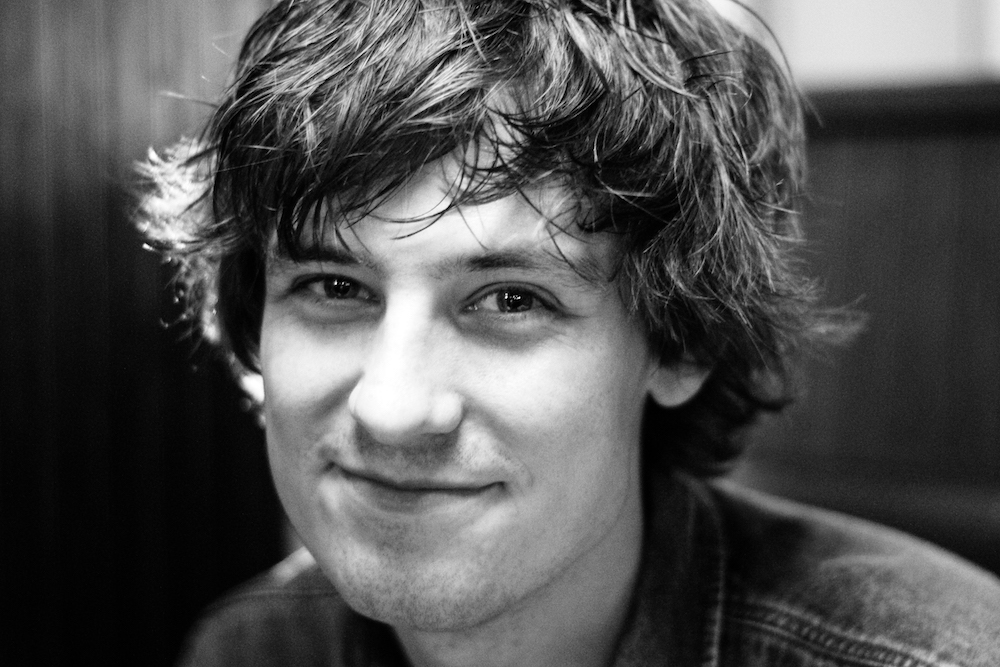
Daniel SmithDaniel Smith’s pieces “Father’s Day” and “Northwestern Illinois In June” appear in Midwestern Gothic Issue 22, out now.
What’s your connection to the Midwest, and how has the region influenced your writing?

A large portion of my life has been centered on the northwestern Illinois dairy farm where I grew up and later farmed for 30 years. It was the quintessential Midwestern family farm where we raised crops and milked cows, the perfect place for my siblings and I to grow up, and later, for my wife, Cheryl, and I to raise our family. The Midwestern family farm provided my experiences, my voice and my window on the world. My work has been one long attempt at capturing all that into words. I found that place, work, and the land of the Midwest were the perfect seedbed for my words.

What do you think is the most compelling aspect of the Midwest?

I could not live without a strong connection between work and home. For most of my life, work was the farm that surrounded the house I lived in. I never commuted – I just walked outside. When I was a child, my dad was always right outside, working. Eventually, I joined him. That is a very Midwestern reality. I valued living in a place strongly connected to work. A place where the seasons changed and with them, the work changed, from planting to harvest to winter chores. The very ground, skies and vistas of the Midwest help form the people and the lives of the region.

How do your experiences or memories of specific places—such as where you grew up, or a place you’ve visited that you can’t get out of your head—play a role in your writing?

The farming life is the basis of my work – how I came to love it, the idea of a home place connected to good land, and eventually, the letting go and moving onto a new life beyond the farm. For many years I wrote the farm work into my poems. Recently, I have been dealing with the emotional cost of leaving a home place. This theme has become prominent in my work. I now realize that one can love more than one place, and leaving a way of life for another does not diminish all one has loved and accomplished. It has been tough but change has as many benefits as steadfastness.

Discuss your writing process — inspirations, ideal environments, how you deal with writer’s block.

Farmers work a lot so I had to combine the work with the writing, or else I would never have found the time. I saw things around the farm, or caught something someone said about the work or the weather, and formed a poem from it. Jim Harrison urged writers to see the world “with a poet’s eye.” I tried to see the farm and the work that way. If I found I wasn’t writing much it usually meant that I wasn’t seeing closely enough. The farm and the work were poetic in their very existence. I brought that poetry into my words. I don’t struggle with writer’s block very much as I have become accustomed to letting the poems come to me as they will. The rest of the time I have always been, and still am, busy working on things beyond the page.

How can you tell when a piece of writing is finished?

There is almost a sixth sense of peace that comes over me that tells me I have said all the poem needs to say. To add more would actually be a detriment, like too much clutter in a beautiful house. Recently, I have been writing in shorter lines using less punctuation, while hoping to capture what I was feeling in fewer words. I am not sure I have all that much that is profound to say other than what I see and what I feel in a moment, so that is what I try to capture as purely as possible.

Who is your favorite author (fiction writer or poet), and what draws you to their work?

At the risk of sounding like a boastful father, I would have to say my son, Austin Smith (austinrobertsmith.com). We share many of the same inspirations and views, but Austin captures them in a rare and beautiful voice. His perceptions of the Midwest have been shaped and altered by extensive travel and scholarship. This gives Austin a unique understanding of the struggles and emotional risks of Midwestern people in a very moving way. Beyond Austin, the poet Gary Snyder has been a major influence on my life, my writing and my view of the world. And I treasure the work of Michael Mott, Dan Gerber and Lucien Stryk.

What’s next for you?

Keep working! Explore new themes now that I am a few years off the farm. Look deeper within and see what I have learned as I age and what might be worth trying to express to others. The type of farmer I was is rapidly disappearing from the Midwest so I would like to capture what was, why it is fading and how we can all deal with the coming changes. I have begun working in the essay form to write about these themes. And after so many years in one place, I want to find new trails and head down them to see where they might lead, though I expect more than one may circle back.

Where can we find more information about you?

I’ve got some catching up to do on such things as website and social media. I am more comfortable with tractors. I’ll get to it and let you know!

|

No Comments

|

Contributor Spotlight: Joe Sacksteder

Joe SackstederJoe Sacksteder’s story “Prep Work” appears in Midwestern Gothic Issue 22, out now.
What’s your connection to the Midwest, and how has the region influenced your writing?

My family is from the South, but we moved around a lot when I was very young, eventually landing in Rockford, Illinois. I went to undergrad in central Minnesota and got my M.A. from Eastern Michigan University.

How has the Midwest influenced my writing? Quite simply, it’s where I received most of my education, both in terms of life and in terms of school. It’s where I survived for a year in a partially renovated barn while working at a rabbit sanctuary and shooting a horror movie that almost turned into a horror story itself. It’s where I learned to play hockey, where my playing career ended and new careers began. It’s where I struggled as a rookie teacher and soon realized that my wonderful students were having at least as big of an effect on my writing as I was having on theirs. Most of the people I love still live there. With the exception of one hurricaned year in Baton Rouge, I’m now residing outside of the Midwest for the first time since I was four years old. Skiing on real mountains and camping in Zion is not so bad a life, but writing about the Midwest still feels like a strange and inexhaustible home.

What do you think is the most compelling aspect of the Midwest?

I’ll resort to a Werner Herzog quote here. I will trust readers to invoke their best Herzog accent: “People are very kind [in the Midwest], very big hearts, down to earth, hardworking, no bullshit, nothing like Hollywood, nothing like the craze in New York or whatever. Good people, solidly on the ground, generous. Everything that’s good about America you would find in the Midwest. And always the very best come from there. Hemingway from Kansas, Marlon Brando from also the Midwest somewhere. Bob Dylan from Minnesota. That’s where the good ones come from.” Of course, that quote comes from his commentary for the film Stroszek, which is the bleakest indictment of America and The Midwest that I can imagine. Herzog tells a story about how, during the filming of Stroszek, he and Les Blank were supposed to meet in a graveyard at night to dig up the grave of serial killer Ed Gein’s mother because they wanted to see whether or not he had exhumed her corpse. So, for me, it’s the warmth and work ethic and the no-nonsense aspects of the Midwest coexisting with the gothic and the insane that is endlessly fascinating.

How do your experiences or memories of specific places — such as where you grew up, or a place you’ve visited that you can’t get out of your head — play a role in your writing?

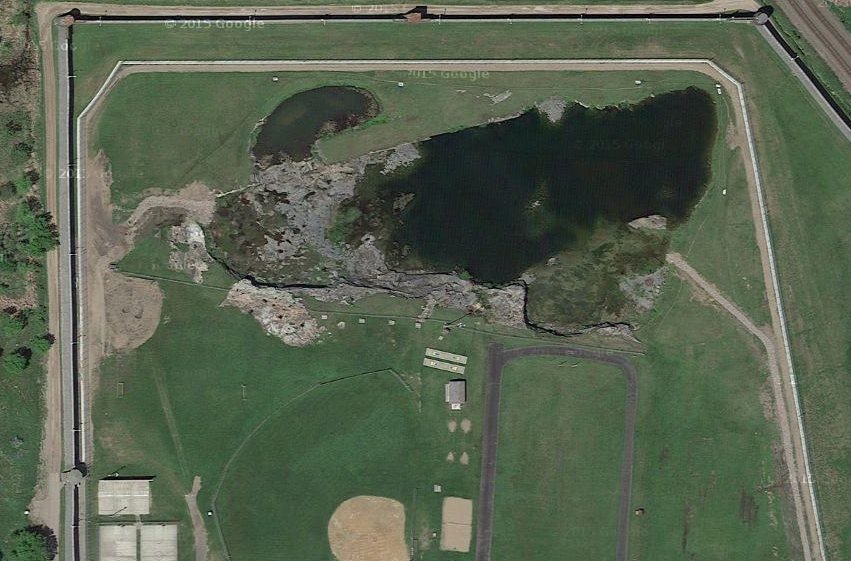
Much of my writing is centered around settings in the Midwest that radiate some ineffable horror or intrigue. I will give one example. In undergrad, I volunteered playing piano at religious services at the maximum security Minnesota Correctional Facility in St. Cloud, a structure with a very strange history. In the 1880s the State of Minnesota bought the region’s first granite quarries, the Breen and Young, and used inmate labor to build what remains the world’s biggest granite wall around the quarries. There are no records that attest to inmate deaths as a result of silicosis of the lungs, but given the mining techniques of the time, I have no doubt that the death toll was high. After the prison was completed, they abandoned the quarry, leaving a steam-powered derrick at the bottom. Rain water gradually turned the quarries into very deep, very clear lakes—as one can see across the state of Minnesota — cold bodies of water in which nothing can live. I couldn’t shake away the place’s nagging history, and it became the historical backdrop of my novel, The Submerged Crane (which is still looking for a home). I mean, Christ…

Joe Sacksteder image
People live here.

One more example. I grew up on a dead-end street in a thickly forested neighborhood with a castle-like convent behind my house. You can bet I’ve used that setting as well.

Discuss your writing process — inspirations, ideal environments, how you deal with writer’s block.

Most people would probably say that I have a terrible writing process: I check social media and/or unmute streaming hockey games between nearly every sentence I type. I used to think that this continual breaking of concentration must surely be having a detrimental effect on my writing — but I actually think it has led to some of my better work. It keeps me from returning to the blinking cursor until the next sentence is fully formed and ready. Usually I write to Brahms set on shuffle or a playlist that contains the following soundtracks: The Assassination of Jesse James by the Coward Robert FordThe FountainThere Will Be BloodThe Hours, and Music for Egon Schiele by Rachel’s.

How can you tell when a piece of writing is finished?

The honest answer is that a piece of writing is probably never finished. But at some point we must part ways. On a micro level it’s all about rhythm. A sentence can convey the exact meaning I want it to, but I will stare at it and stare at it and check Facebook and unmute my hockey game and call my mother as many times as it takes for it to resonate in my bones, for it to achieve the lyric syncopation of natural speech (if that’s what it’s going for). My macro level terror is usually somewhat assuaged by highlighted pages strewn across the floor of my apartment so I can look at the thing like a topography. My cats love this part of the process, especially if I bring out the red string and pushpins.

Who is your favorite author (fiction writer or poet), and what draws you to their work?

The work of my peers and professors at the University of Utah is a source of continual inspiration… though I think I shouldn’t name one of them without naming all of them! (Okay: Rachel Levy’s A Book So Red, Susannah Nevison’s Teratology, Sara Johnson’s Bone Map, and Laura Bylenok’s a/0.) Muriel Rukeyser is probably my favorite writer, as her sequence of poems, The Book of the Dead, combines such diverse material as appropriated court documents and stock quotes with great lyricism to do real work in the world, preserving the memory of the Hawk’s Nest Tunnel Disaster of the 1930s and offering contemporary readers a powerful corollary for ongoing injustices. In terms of more recent work, I’ve been really fascinated by the writing of Bennett Sims, particularly his novel, A Questionable Shape, and his stories in ZoetropeStory, and Conjunctions. His meticulous, Proustian descriptions sustain a sort of surface delight while, at the same time, something more menacing is building in the background to shock you out of your delight.

What’s next for you?

My story in Midwestern Gothic, “Prep Work,” is an excerpt from my “completed” novel HACK HOUSE, which is awaiting representation / publication. It comes out of the six years I spent working as a house painter in southeast Michigan before moving to Utah to pursue my PhD. The Hack House is a real house my crew worked on, built in 1888 using money from this weird electric sugar refining scandal in New York City. The widow of the fraud’s main perpetrator hid his death from investors so that construction of the house could continue unabated. My book combines the house’s true history with a contemporary story of class conflict, inflected by elements of horror from the workers’ contact with hazardous materials.

I also have an album / chapbook coming out soon from Punctum Records (as The Young Vish). I’ve been obsessed with Werner Herzog’s voice for a long time, and in this album I collage his DVD director’s commentary with my own electronic and chamber compositions.

Where can we find more information about you?

Tracks from Fugitive Traces can be found on SleepingfishQuarterly Westtextsound, and The Collagist. I write film reviews for The Rumpus, and my stories are forthcoming in Booth, Bateau, and North Dakota Quarterly. On Hobart, you can read about my attempts to reproduce the menu of the Soup Nazi or getting scored on by Justin Bieber at drop-in hockey.

|

No Comments

|

Midwest in Photos: The Great Iron Ox

“In a field where an elephant once stood a tractor turns over the same dirt year after year stroking limestone instead of lost Buddha beads.” –Stacey Post, “Down by the River,” Midwestern Gothic Issue 13.

Thomas_Doyle-The_Great_Iron_Ox_jpg

Photo by: Thomas Doyle

|

No Comments

|

Interview: Julie Lawson Timmer

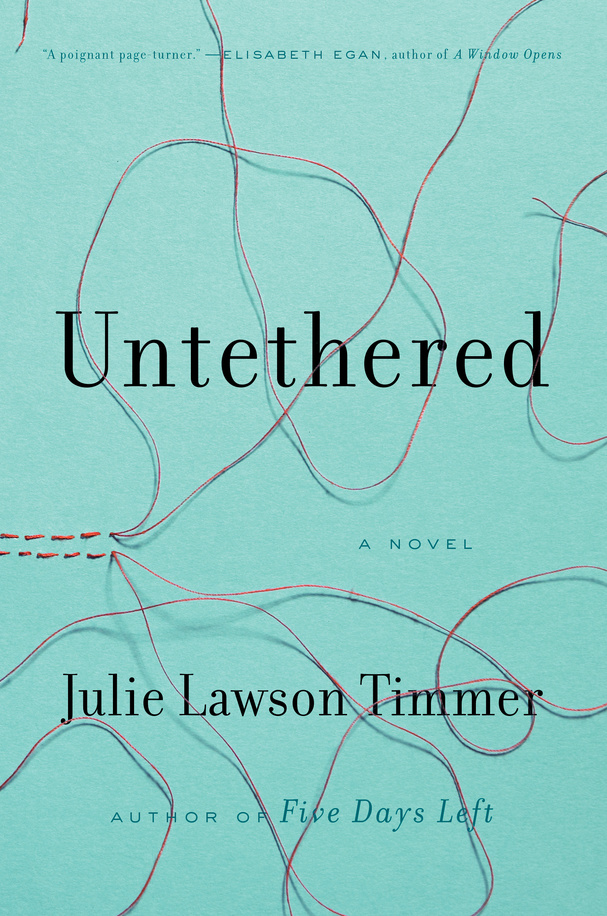
Julie Lawson TimmerMidwestern Gothic staffer Lauren Stachew talked with author Julie Lawson Timmer about her novel Untethered, complicated familial bonds, juxtaposed sentiments toward one’s Midwestern hometown, and more.
**

Lauren Stachew: What’s your connection to the Midwest?

Julie Lawson Timmer: I live here! Since 1998, I’ve lived in Michigan – in Dearborn for the first 2 years and in Ann Arbor for the rest.

LS: Your most recent novel, Untethered, grapples with questions about family bonds, loss, and the rights and limitations of laws. How did you find yourself drawn to these questions, and what made you feel the need to explore them in the form of a novel?

JLT: In Untethered, the main character, Char, is a stepmom. Char’s husband dies before the book begins, and we’re left with the question of who Char’s stepdaughter, Allie, should live with: Char, who has raised Allie full-time for the past 5 years, or Allie’s bio mom, Lindy, who lives across the country and has never been all that interested in parenting. The trick is that Char has no legal rights to Allie – most stepmoms don’t have legal rights to their stepchildren – while Lindy now has sole rights. I was drawn to this question because I’m a stepmom myself, and it has often occurred to me that if something were to happen to my husband, I might never see my stepchildren again.

The other legal/family question in Untethered deals with adoption and “rehoming,” a practice where adoptive parents give their adopted child away to strangers – often over the Internet, with no legal oversight and no background checks. I read a Reuters article about rehoming a few years ago and was shocked to hear this is happening in the United States, and with some regularity. I wanted to explore that in a novel in part to open people’s eyes to this practice, which many are unaware of.

Untethered

LS: Do you feel that the novel’s Midwestern setting is intrinsic to the story? What made you choose to set the story in Michigan?

JLT: Yes, I do feel that in Untethered, the setting is intrinsic to the story. One of the characters is an automotive engineer, so Michigan was a natural choice. Another character chose to move away and has a certain amount of derision for Michigan, the automotive industry, the weather, while those characters who stayed are proud to live here. I think there’s an element of that in many people’s lives – those who love a place and choose to stay, and those who can’t wait to get as far away as possible. I think that element is pervasive in a place like Michigan, which is auto industry heavy and experiences some extreme weather in the winter; those are the kinds of things some people want to escape from, while others are proud of Michigan for the fact that it has the auto industry and a northern feel.

LS: Your first novel, Five Days Left, features a character who is a lawyer, and you yourself are a lawyer as well. How much of your own life and personal experiences inform your writing? Do you find this is something you gravitate towards intentionally, or does it tend to appear naturally in your writing process?

JLT: Nothing I write is autobiographical, while at the same time, everything I write is drawn from some aspect of my life – something I have lived through, or thought about, or wondered about. I wanted Mara, my character in Five Days Left, to have a hard-charging, demanding career in which a workaholic would thrive, and because I know the law well and know it fits that bill, it was a natural choice of profession for me to assign to Mara.

LS: When you moved from Ontario, Canada to Michigan how did your perspective as a writer shift?

JLT: I moved to the states in my early 20s, before I started writing, so I don’t think I went through a shift in perspective in terms of writing. Almost everything else about my life changed, though; the states and Canada are very, very different places to live. I like having a great depth of experience of life on both sides of the border. One of the main characters of my first novel grew up in Canada and then moved to the USA. I meant to talk a lot more about that experience in the book, but other plot lines took over. Perhaps I’ll explore that subject more in a future novel.

LS: Southwestern Ontario, where you grew up, and southeastern Michigan, where you live now, are regionally and climactically quite similar, even though they are separated by a national border. Do you feel that there are resemblances between these two places, or do you see them as inherently different?

JLT: Certainly there’s a similar look and feel to both places in terms of topography and weather. But the international border does make a big difference, at least to me. People on both sides of the border may agree on things like Gordie Howe being the greatest hockey player ever, but there are significant political, social and cultural distinctions, and when I’m back home in Canada, I am almost constantly aware of that.

LS: How can you tell when a piece of writing is finished?

JLT: Usually it’s when I’m making changes that no longer add value – taking out commas and then putting them back in, etc. Once you’re into those superficial kinds of edits, it’s time to stop working on the project, in my view.

LS: What’s next for you?

JLT: I have a new book coming out next summer. It’s called Mrs. Saint and the Defectives, and it tells the story of a 40-something divorcee who moves in, along with her teenage son, beside an irascible, elderly, French Canadian woman, Mrs. Saint, who takes it upon herself to identify and correct the flaws in those around her, whether they want her to or not. Soon, I’ll start working with my editor on revisions to that book. In the meantime, I’ve completed research and begun drafting a fourth book. Details about that when I’m further along!

**

Julie Lawson Timmer grew up in Canada and earned a bachelor’s degree from McMaster University and a law degree from Southern Methodist University. She is the author of Five Days Left and lives in Ann Arbor with her husband and children.

|

No Comments

|

Contributor Spotlight: Garrett Dennert

Garrett DennertGarrett Dennert’s story “Trisomy” appears in Midwestern Gothic Issue 22, out now.
What’s your connection to the Midwest, and how has the region influenced your writing?

Born and raised in rural West Michigan. I’ve moved away for awhile on two separate occasions, but am currently back in the area. And, truthfully, I think that, no matter the zip code, it’ll continue to greatly influence my writing — I find that the idea of place has a strange way of doing that, if not in setting, most definitely in characterization and tone. I’ve written pieces where the characters have absolutely no ties to the Midwest, but end up as characters displaying Midwestern traits, whether it be in speech, a nonverbal cue, or even a philosophy. Maybe the best way that I can explain it is that you write what you know, and you’re certain not only of what your home is, but how your home makes you feel. And, in this way, it makes your home oddly portable — I take the Midwest with me everywhere that I go, and so does my writing.

What do you think is the most compelling aspect of the Midwest?

Honestly, I think it’s the terrain. There’s a lot of space between things, between buildings, between towns. Open space that’s, for the most part, flat, and inviting. There’s room to stretch your legs in the Midwest, room to sprint, room to shout in joy or in anger. And, in between, there’s a lot of room to imagine. To imagine mountains, to imagine deserts, to imagine worlds both real and fictional.

How do your experiences or memories of specific places—such as where you grew up, or a place you’ve visited that you can’t get out of your head—play a role in your writing?

While there’s certainly some variance here, I think that the majority of the time I write because I badly want to understand something. And, more often than not, that “something” is an emotion — I want to study it from several angles and within several settings, and I want to see how it differs from character to character over time. So in this way, experiences and memories are the driving force, and it’s only when I find an answer of significance that I’m able to let it rest.

Discuss your writing process — inspirations, ideal environments, how you deal with writer’s block.

There was a time that I’d proudly answer this question with, “I don’t really experience writer’s block.” But I can’t anymore. Writer’s block happens with me because life happens—the younger version of me, the wrongfully entitled version, would’ve scoffed at the idea of writer’s block because he had yet to experience a lot of things. Writing was his only thing. But, because writing will always be such a big part of my life, I’ve found ways around it, and I find that, to defeat writer’s block, you have to have systems in place. A professor of mine, Sean Prentiss, once told us that it was of the utmost importance to write for an hour every day. Just one hour, the idea being: make writing a priority and establish a routine here and now so that it feels weird to deviate from it down the road. And, recently (hopefully Sean reads this and grins with the pride that can only come from getting through to a thick-headed student), that’s what I’ve started to do, and I think that it’s paying off. Because trying to write while maintaining full-time employment, while trying to maintain a social life, while trying to be a good partner, friend, son, brother, and overall human… well, there’s just no way else that I can do it. Chaos doesn’t seem to work for extended periods of time.

How can you tell when a piece of writing is finished?

I can’t. I just can’t. I mean, I’ve reached certain points in the lifecycle of a piece where I’m certain that it’s not only ready to be submitted, but that it’s ready to be accepted. It happens months after the first draft. And then a year after the first draft. And then sometimes three years. And on and on. But I think that that’s why it feels so damn good to have someone else accept the work — it’s more than them just telling me that it’s good; they’re telling me that I can move on to something else. Whether it’s someone in the publishing world, or it’s someone in my own home, I think that, if not for someone other than me saying that a piece is finished, I fear that I’d just be editing that piece until I’d croak.

Who is your favorite author (fiction writer or poet), and what draws you to their work?

Dave Eggers. I think the guy takes some heat, and I’m cool with that, but when I examine the trajectory of his career, I can’t help but admire him. It’s more than just his words. He used his words as a starting off point and has since successfully wrestled his way into several cool ventures, and I think it’s a great way to see what will be expected of tomorrow’s writer: an entrepreneurial flare may be required to find and sustain the success you seek.

What’s next for you?

Hopefully fun things! I’ll soon be starting a podcast about movies with a longtime friend of mine, and I hope to have my book-length works in the hands of readers sometime soon.

Where can we find more information about you?

Folks can find me on Twitter at @garrettdennert, or they can visit my portfolio, garrettdennert.wordpress.com.

|

No Comments

|

Midwest in Photos: Walk Out to Winter (Chicago)

“He asked if she would remember how the sunset was its own explosion out here.” –Zach Fishel, “Going Away,” Midwestern Gothic Issue 13.

MikaWells-Walk Out to Winter Chicago

Photo by: Mika Wells

|

No Comments

|

Interview: Zoe Zolbrod

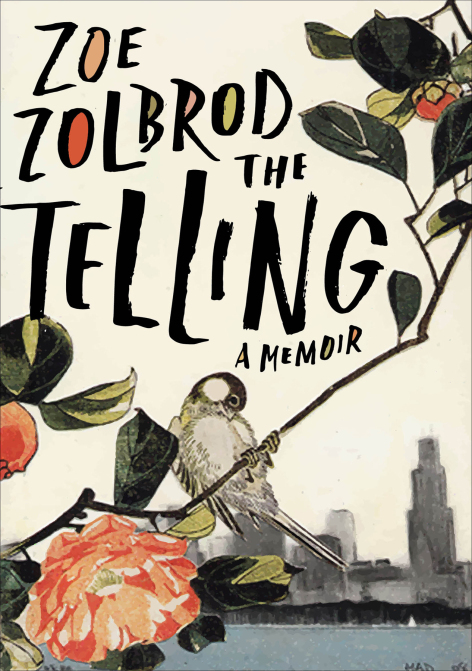
Zoe ZolbrodMidwestern Gothic staffer Lauren Stachew talked with author Zoe Zolbrod about her memoir The Telling, making the internal external, readers’ responses to a multifaceted literary work, and more.
**

Lauren Stachew: What’s your connection to the Midwest?

Zoe Zolbrod: I was born in Northwestern Pennsylvania, in a town that was close to the Ohio border. In many ways, the culture was more midwestern than East Coast. To seal the deal, I went to Oberlin College in Ohio, and then moved to Chicago where I’ve been ever since.

LS: In what ways do you feel that living in the Midwest, particularly Chicago, has influenced your writing?

ZZ: As a small town girl who’d always longed to live in a city, I’ve had quite a love affair with Chicago. It’s both huge and cosmopolitan but also connected to the Great Lakes and weather of my youth in a way that makes me feel rooted. It made such an impression on me in my early years here, when I explored with relish, taking everything in. That period gave me a store of rich memories to draw on. I’ve set many a scene in neighborhoods where I’ve lived and along Lake Michigan, and there are more to come. And both my publishers are based here. I very much feel like a Chicago writer.

LS: The Telling has, in some interviews, been referred to by different titles, such as What to Tell, and Memory Scales. What made you decide on The Telling as the final title?

ZZ: Yes, the title kept changing during the time I was shopping the book. My agent and I were looking for something that was memorable and descriptive while also evocative. It was acquired by Curbside Splendor under Memory Scales — which was maybe the third title we’d tried — but almost immediately I balked at it, because the book is less about memory and more about making the internal external. I bounced ideas off my editor, agent, and writers group until we came up with The Telling, which I’ve felt good about ever since.

The Telling

LS: The Telling is your first memoir, while your previous works have been a novel and essays. Was it difficult to switch to a different form of writing for this memoir? How did you prepare for writing a memoir versus writing fiction?

ZZ: The form itself didn’t give me too much trouble. Maybe that’s because I’d been writing essays in between finishing the novel and starting the memoir, and in some ways the memoir seemed a combination of both of those, a mix of ideas, facts, and scene. The most valuable craft book I read – actually, it might be the only one – was The Situation and the Story, by Vivian Gornick.

LS: You’ve said in a prior interview that when you began writing this memoir it “wasn’t uncommon to get an ‘oh, a victim narrative’ response or attitude” from people.” Did you find that this response changed once it was published?

ZZ: The reviews and comments have been very gratifying, because people seem to have no trouble reading this as a multifaceted literary work, rather than a stereotypical recovery narrative.

LS: When you are writing, are there specific physical places that you prefer that make you feel the most inspired?

ZZ: Perfect writing conditions for me are to be alone in a little house or cabin in the woods. I finished the first draft of the book at my sister-in-law’s cabin in Pennsylvania, and I completed the revisions in my neighbor’s summer cabin in Wisconsin.

LS: What’s one thing you wish you had known when you first began writing?

ZZ: Hmm. I’m not sure there’s any original piece of knowledge that would have helped me at the beginning, but somewhere in the middle there I could have used a kind nudge from my older self telling me not to wait for more perfect conditions, to keep pecking away.

LS: What’s next for you?

ZZ: I’m looking forward to getting back to a novel that I started last year and have set aside. The best parts of writing for me aren’t in the promotion, they’re in the immersion, and I want to find a way to get back to it.

**

Zoe Zolbrod is the author of the memoir The Telling (Curbside Splendor, 2016) and the novel Currency (Other Voices Books, 2010). Her essays have appeared in Salon, Stir Journal, The Manifest Station, Lit Hub, and The Rumpus, where she is currently the Sunday co-editor. She gradated from Oberlin College and received an M.A. from the University of Illinois at Chicago’s Program for Writers. Born in Western Pennsylvania, she now lives in Evanston, IL, with her husband and two children.

|

No Comments

|

Contributor Spotlight: Sharon Kunde

Sharon Kunde Sharon Kunde’s pieces “Illinois Elegy (Elegy #15)” and “Prodigal” appear in Midwestern Gothic Issue 22, out now.

What’s your connection to the Midwest, and how has the region influenced your writing?

I was born in a small town in the Corn Belt, near I80 in northern Illinois. Something in the openness of the land and sky made me want to write. I wrote a book of poems for the Illinois Young Authors Contest in the mid-eighties and wrote obsessively in the journal my fourth-grade teacher assigned. I’ve never lost that feeling of wanting to put it all into words.

What do you think is the most compelling aspect of the Midwest?

A sea covered the Midwest during the Paleozoic period. Growing up, I often felt like I was at the bottom of that sea. This feeling was reinforced by a local and/or family culture that valued stoicism and taciturnity. I write into those feeling of stillness, planetary time, and terrifying self-containment.

How do your experiences or memories of specific places—such as where you grew up, or a place you’ve visited that you can’t get out of your head—play a role in your writing?

Riverside graveyards, cornfields, and improbable superhighways form a substratum of setting in much of my writing – even poems set in Santa Monica Beach, the Cajon Pass, Joshua Tree, or suburban LA.

Discuss your writing process — inspirations, ideal environments, how you deal with writer’s block.

I write because I have something to say to someone, and for whatever reason, direct address in speech isn’t appropriate – maybe it’s physically impossible, maybe I need time and space to craft what I’m trying to say, maybe because the addressee I have in mind is temporally split (I like to write to my future and past selves, for example). When I’m stuck, I read: the best inspiration is other people’s poems, poems that invite a response or that offer a promising element of form. David Lynch calls these “hopeful puzzle pieces” and I think he gets his from his subconscious. Mine tend to come from other poems.

How can you tell when a piece of writing is finished?

I haven’t figured that one out yet.

Who is your favorite author (fiction writer or poet), and what draws you to their work?

I am in love with the poetry of John Engman, Amy Gerstler, Joanna Klink, Claudia Rankine, Meriweather Clarke, Mary Karr. I’m always finding new loves.

What’s next for you?

Finishing my dissertation and revising a chapbook.

Where can we find more information about you?

Throughhike.wordpress.com, on Twitter as naturegrrrl, http://www.acls.org/research/fellow.aspx?cid=216d3204-57f0-e511-9434-000c29879dd6, and http://www.humanities.uci.edu/commons/slide_det.php?id=396.

|

No Comments

|